Biophilic Interior Design: How to Bring Nature Into Every Room (With AI Before & After)

You spend 90% of your life indoors. That’s not a lifestyle choice. It’s what the EPA reports for the average person. And yet most indoor spaces look nothing like the natural environments our brains evolved to thrive in. White walls, synthetic materials, artificial light, zero greenery.
Our articles are still written by humans!
Get human written articles in your Google feed.
Biophilic design fixes that disconnect. It’s not about scattering a few succulents on a shelf. It’s a systematic approach to bringing natural elements (light, plants, organic materials, earthy colors, natural textures) into every room of your home. And the data behind it is hard to ignore.
A 2024 study published in the International Journal of Environmental Research and Public Health found that biophilic interiors reduce cortisol levels by up to 37% and increase self-reported well-being by 15%. A separate Human Spaces report covering 7,600 workers in 16 countries showed that people working in environments with natural elements report 15% higher creativity and 6% higher productivity.
In 2026, biophilic design is the single biggest trend in interior design. Every major publication, from Architectural Digest to Elle Decor to Homes & Gardens, has it on their trends list. But most guides give you vague advice like “add more plants.” This guide gives you a room-by-room blueprint with specific materials, plants, costs, and AI visualizations so you can see exactly what biophilic design looks like in your actual space. It sits alongside the wider shift toward natural, tactile interiors we cover in the 2026 interior design trends guide and the organic luxe and warm minimalism movements.
Biophilic design in 30 seconds
- What it is: designing rooms around nature, real plants, natural light, wood, stone, linen, and earthy color, not just a plant in the corner.
- Why it works: peer-reviewed studies link it to up to 37% lower cortisol, 15% more creativity, and 6% higher productivity.
- Where to start: maximize natural light first, then add real plants, then swap synthetic materials for wood, stone, and linen.
- Budget: roughly $340–$690 gets 80% of the effect across a whole home. A full room makeover runs $1,500–$5,000.
- See it first: upload a room photo to MeltFlex and preview a biophilic version of your actual space in 30 seconds before buying anything.
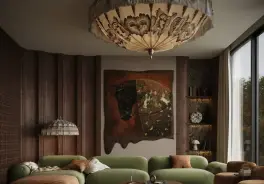
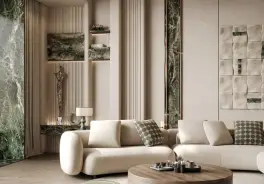
What Is Biophilic Design? (And Why It’s More Than Just Plants)
The term “biophilia” was coined by biologist Edward O. Wilson in 1984 to describe the innate human tendency to seek connections with nature. Biophilic design translates that instinct into architecture and interiors.
It rests on three pillars:
- Direct nature: Real plants, water features, natural light, fresh air flow
- Natural materials: Wood, stone, clay, wool, linen, cork, and bamboo, materials that look, feel, and smell like the outdoors
- Nature-inspired patterns: Organic shapes, fractal patterns, earthy color palettes, biomorphic furniture forms
The difference between biophilic design and “putting a plant in the corner” is that biophilic design is holistic. It considers light, air, texture, sound, and visual connection to nature across every surface and decision in a room. A single monstera won’t do it. A room where the flooring, textiles, furniture materials, window treatment, and greenery all work together, that’s biophilic design.
The 2026 Biophilic Color Palette
Biophilic color schemes draw directly from landscapes. The 2026 palette leans into:
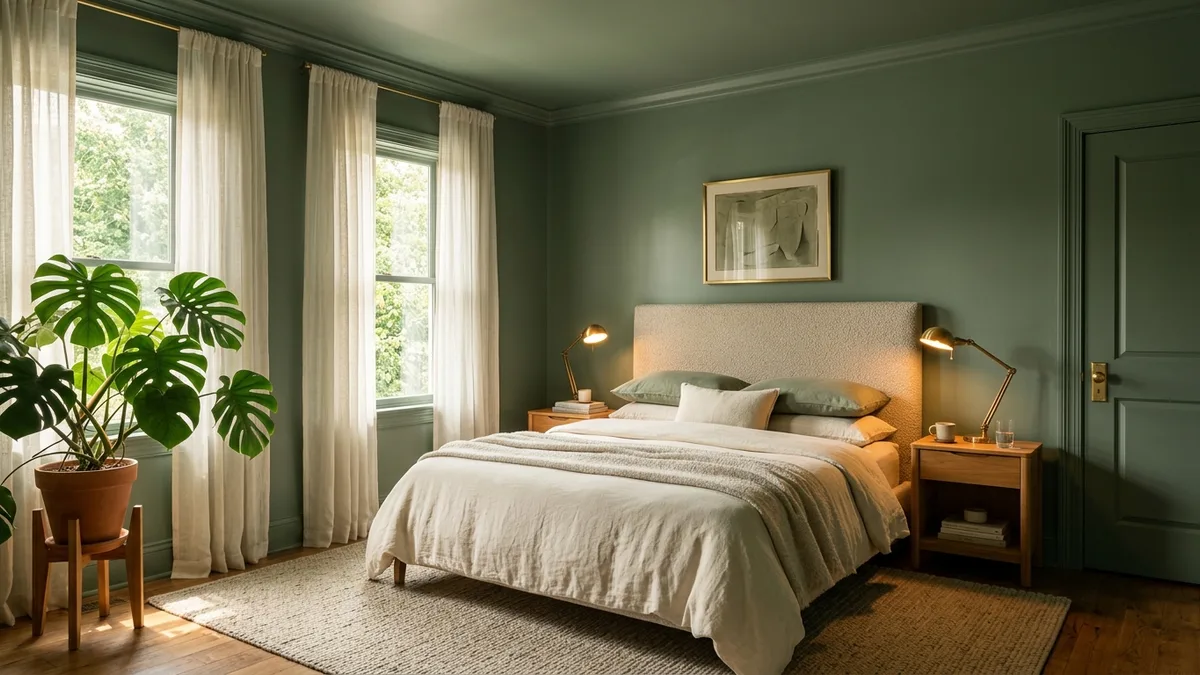
- Sage green and olive: The dominant wall color for biophilic rooms. Calming, grounding, and it pairs with everything natural
- Warm clay and terracotta: Earth tones that replace the cold grays of the 2010s (see why designers are retiring grey)
- Sand and warm white: Soft neutrals that let natural materials shine
- Forest green and deep moss: For accent walls and statement pieces
- Warm wood tones: Oak, walnut, and teak for furniture and flooring
The rule: if you can find the color in nature without looking hard, it belongs in a biophilic room. Skip neon, stark white, and cool gray. They signal “synthetic” to the brain, even subconsciously. If you want help landing on a specific shade, the guide on how to choose paint colors with AI walks through testing undertones in your own light.
Room-by-Room Biophilic Design Guide
Each room in your home serves a different purpose, so the biophilic approach changes. Here’s how to apply it everywhere, with specific plants, materials, and cost ranges. Use the summary table first, then jump to your room below.
Living Room: The Social Sanctuary
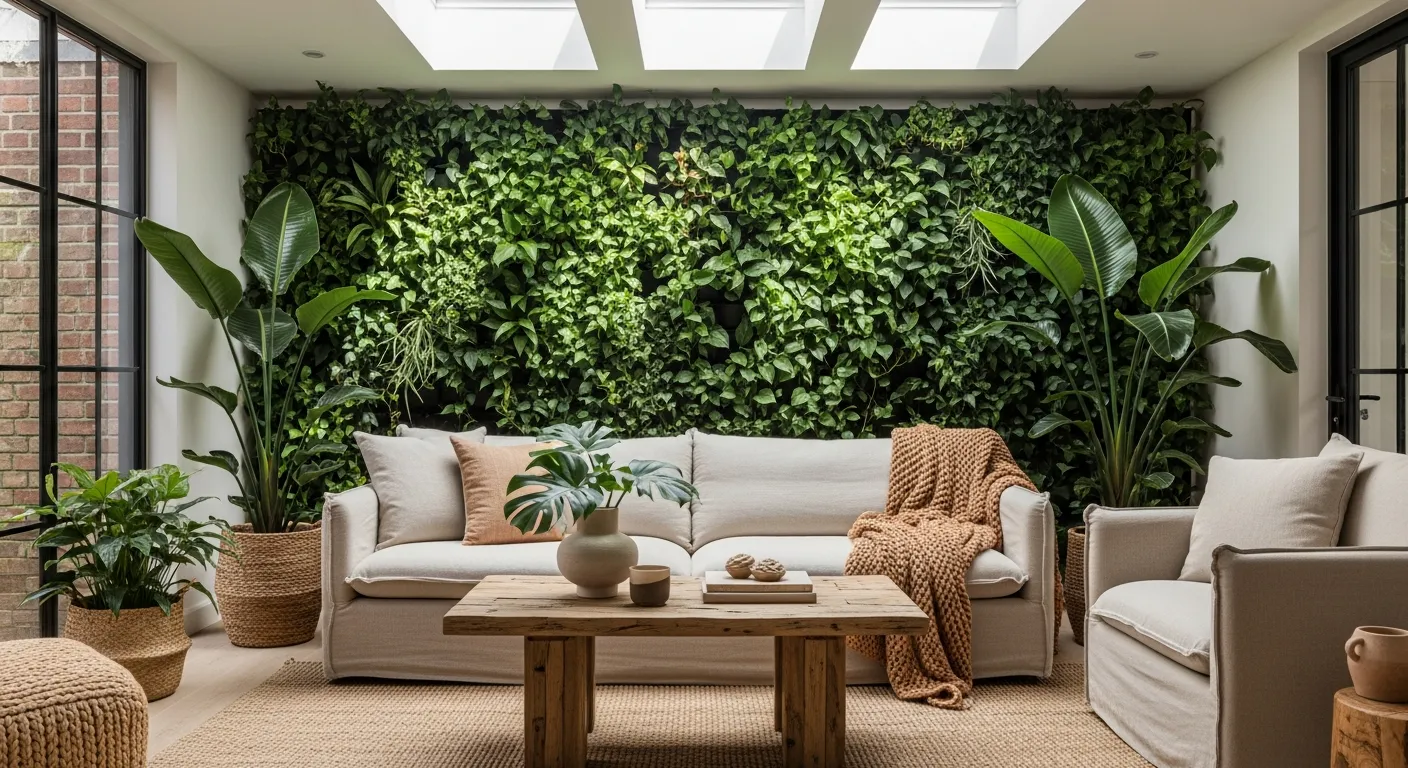
The living room is where biophilic design makes the biggest visual impact. It’s your largest social space and the room guests see first. For layout ideas beyond the greenery, the AI living room design prompts covers arrangement and style.
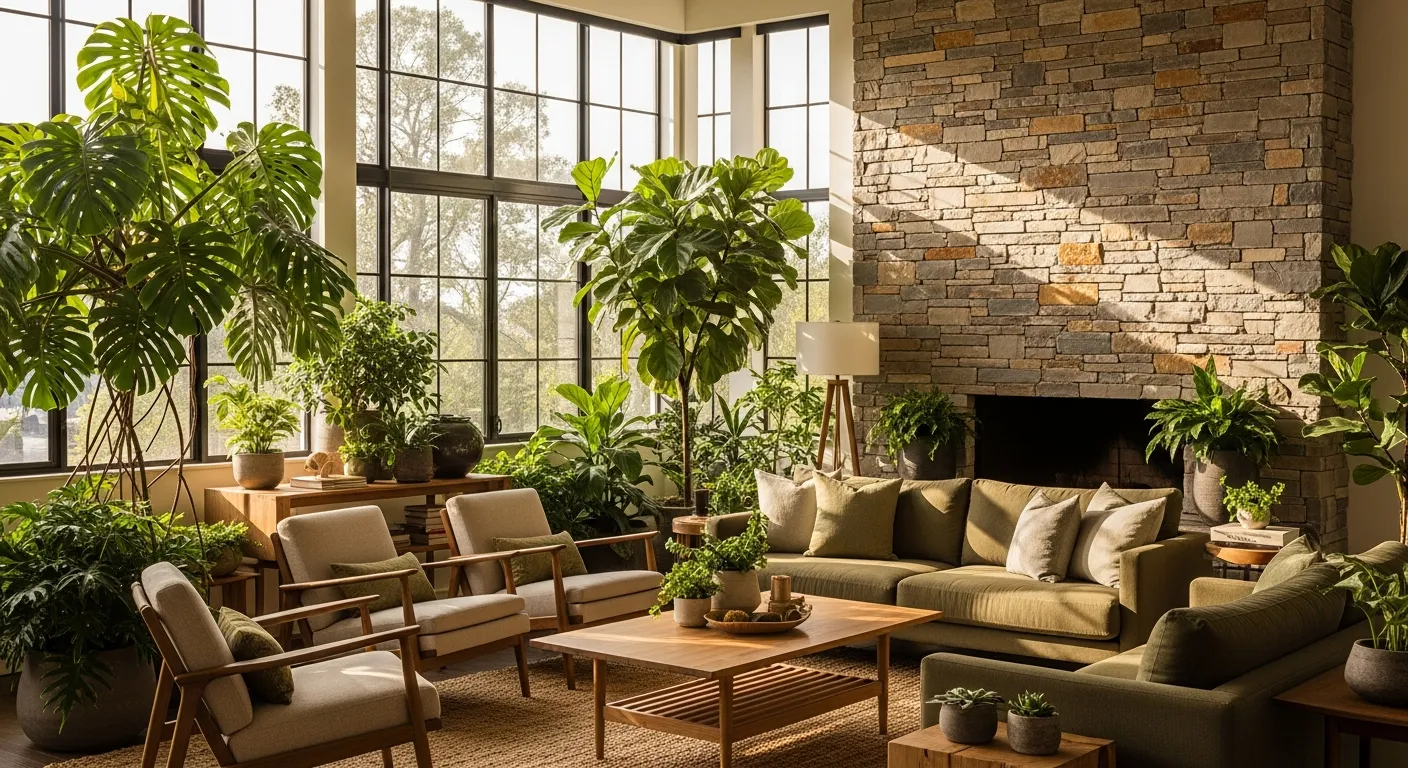
- Statement plants: Monstera deliciosa, fiddle-leaf fig, or bird of paradise as floor plants. One large plant (5–6 ft) costs $50–$150 and anchors the room
- Vertical garden or living wall: A 4x4 ft living wall panel starts at $200 for a DIY system (Florafelt, WALLY) or $800–$2,000 professionally installed. This is the single most impactful biophilic element
- Natural flooring: Hardwood, bamboo, or cork flooring. If you have carpet, layer with a jute or wool rug ($150–$400)
- Furniture materials: Reclaimed wood coffee table, linen or cotton-blend sofa upholstery, rattan accent chair. Avoid plastic, chrome, and high-gloss finishes
- Window treatment: Sheer linen curtains or bamboo blinds that filter light without blocking it. The goal is maximum natural light penetration
- Accent elements: Stone coasters, ceramic planters, driftwood sculpture, natural fiber throw blankets
Budget range: $300–$800 for plant and textile refresh | $2,000–$5,000 for a full biophilic living room makeover
Bedroom: The Restful Retreat
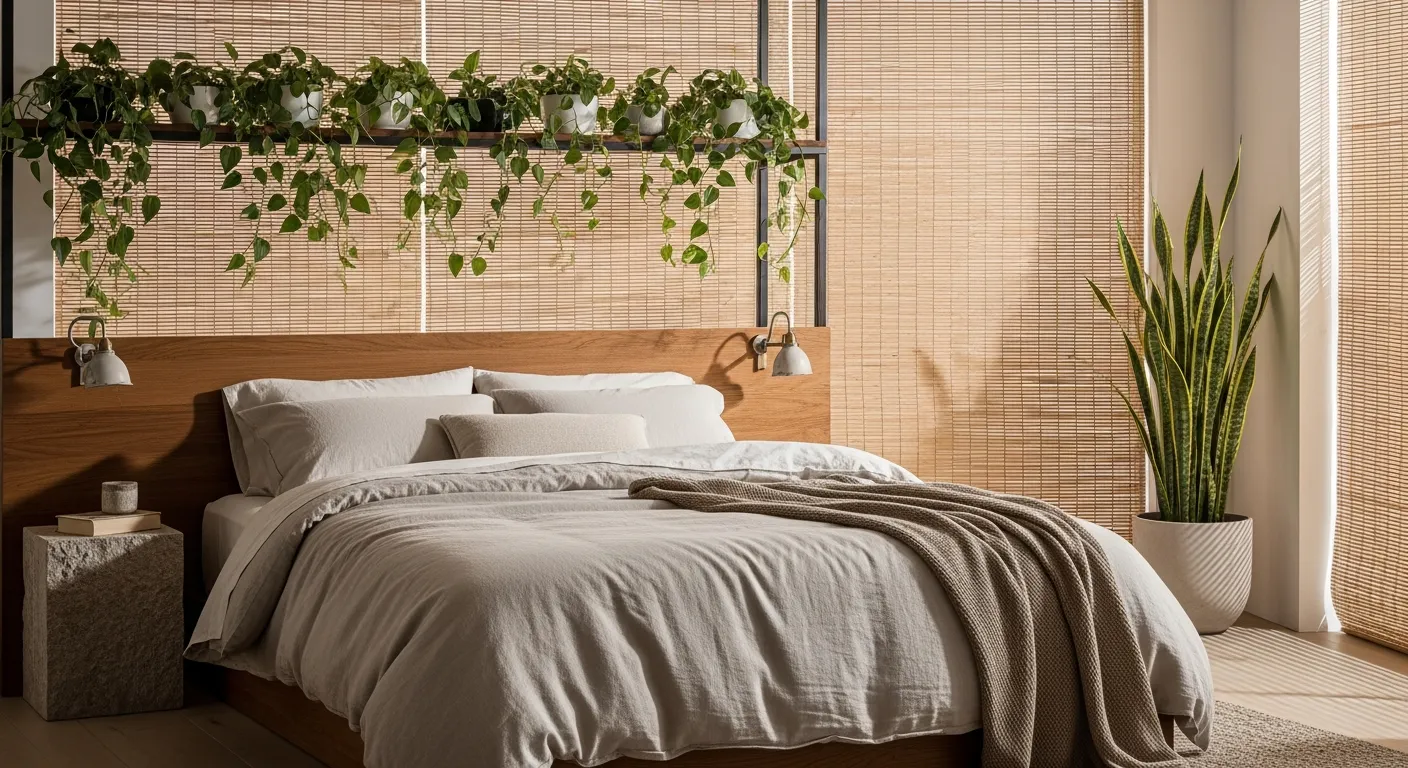
Biophilic bedrooms optimize for sleep quality and calm. Research from Fjeld et al. (2024) found that bedrooms with natural materials and plants improve sleep quality scores by 12% compared to conventional bedrooms. For the full picture on restful bedrooms, see the master bedroom design guide.
- Air-purifying plants: Snake plant (converts CO2 to oxygen at night), peace lily (removes formaldehyde), or lavender (promotes relaxation). These are scientifically backed for bedroom use
- Organic bedding: 100% organic cotton or linen sheets in warm neutrals like sand, oatmeal, and sage. A good organic cotton set costs $80–$200
- Wooden headboard: Reclaimed wood or live-edge headboard becomes the room’s focal point ($200–$800)
- Natural light control: Bamboo roman shades or linen blackout curtains. Biophilic design maximizes daylight during waking hours but allows darkness for sleep
- Texture layers: Wool throw at the foot of the bed, jute rug underfoot, cotton or linen pillow covers in earth tones
- Sound element: A small tabletop fountain ($30–$80) adds the calming sound of flowing water
Budget range: $200–$500 for bedding and plant refresh | $1,500–$4,000 for a full biophilic bedroom
Kitchen: The Nourishment Hub
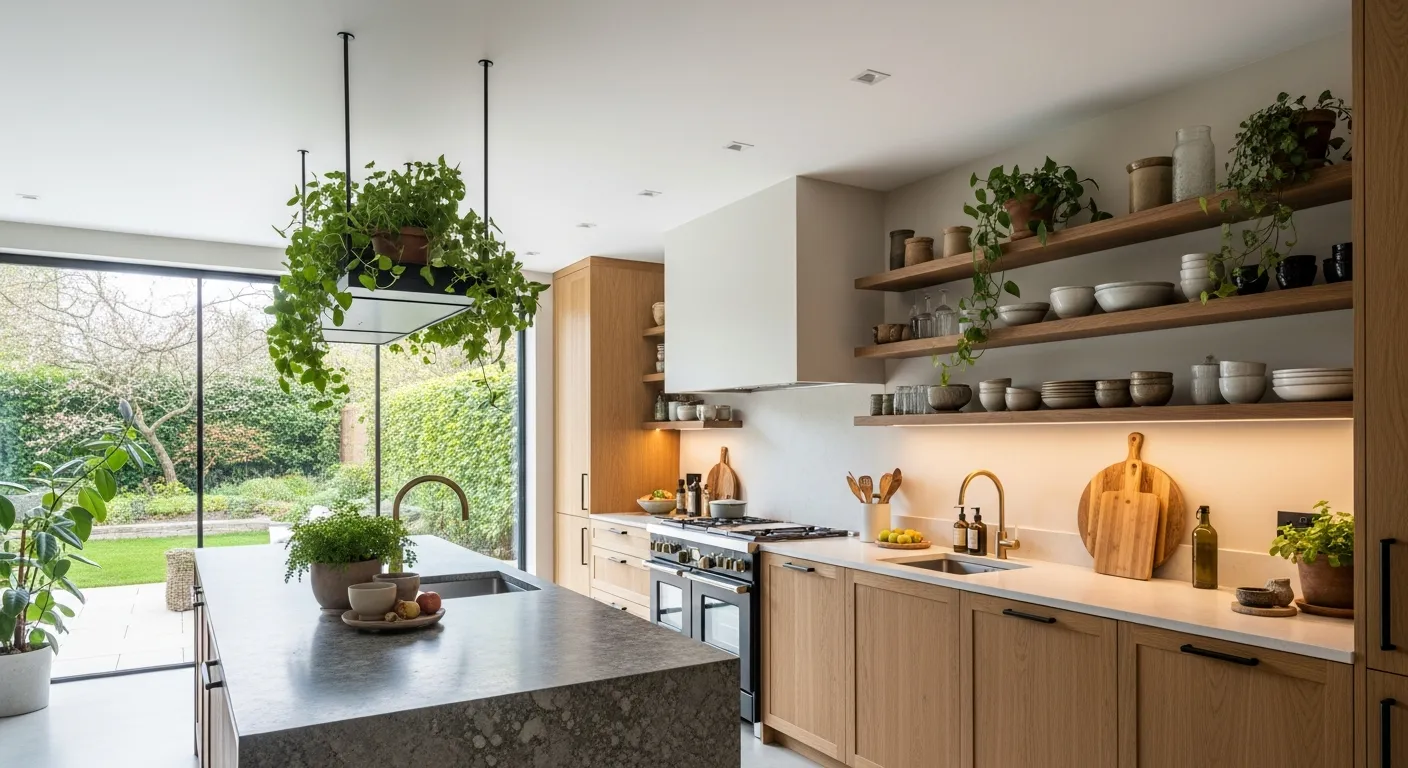
The kitchen is where biophilic design becomes functional. Living herbs replace decorative-only plants, and natural materials are chosen for durability alongside beauty. For layout and finishes, pair this with the AI kitchen design guide.
- Hanging herb garden: Fresh basil, rosemary, mint, and thyme over the island or near the window. Wall-mounted planter systems start at $40–$100
- Countertops: Natural stone (marble, granite, quartzite) or butcher block. These cost more than laminate but last decades and define the biophilic look
- Open shelving: Replace upper cabinets with open wooden shelves to display ceramics, plants, and natural-material kitchen items
- Window priority: The kitchen window matters more in biophilic design than any other room. If possible, keep it above the sink. A garden view while washing dishes reduces perceived drudgery
- Material details: Bamboo cutting boards, wooden utensils, linen dish towels, terracotta pots, handmade ceramic bowls
Budget range: $100–$300 for herb garden and accessories | $3,000–$10,000 for countertops and open shelving renovation
Bathroom: The Spa Sanctuary
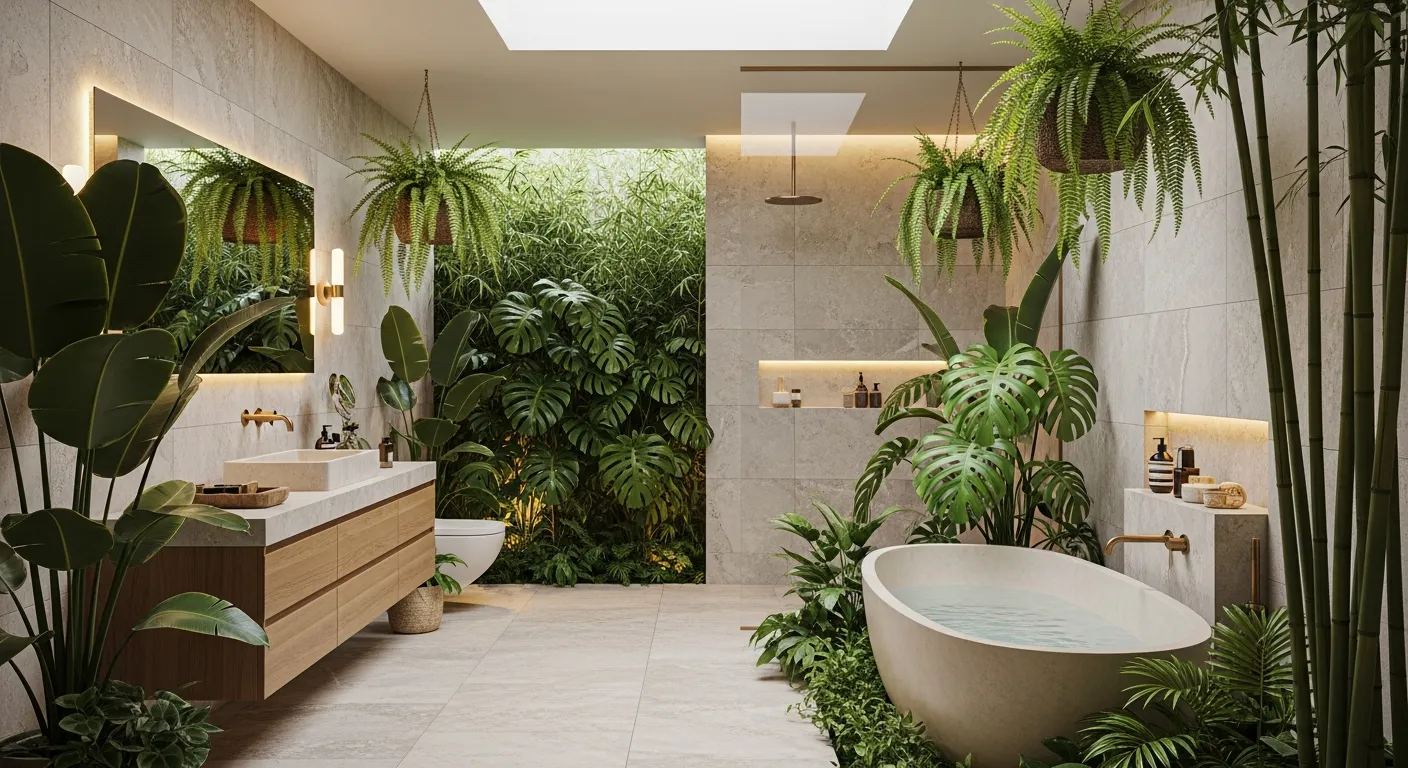
Bathrooms have a natural advantage for biophilic design: water is already the central element. The key is amplifying that connection and adding materials that make the space feel like an outdoor spa. The bathroom renovation guide covers the wider layout and fixture decisions.
- Humidity-loving plants: Boston fern, pothos, air plants (tillandsia), or a small bamboo palm. These thrive in bathroom conditions without extra care
- Natural stone: Pebble floor tile in the shower, stone vessel sink, or a travertine accent wall. Pebble shower tiles cost $8–$15/sq ft installed
- Wooden vanity: Teak or reclaimed wood vanity. Teak is naturally water-resistant and develops a beautiful patina ($400–$1,500)
- Rainfall showerhead: Mimics the experience of standing in rain. Ceiling-mounted rainfall heads start at $80–$200
- Natural light: Skylight or frosted window. If neither is possible, use warm-temperature LED (2700K–3000K) to simulate natural light
- Organic products: Natural soap bars, eucalyptus branches hung on the showerhead, organic cotton towels, bamboo bath mat
Budget range: $100–$300 for plants and accessories | $2,000–$8,000 for stone and wood renovation
Home Office: The Productive Retreat
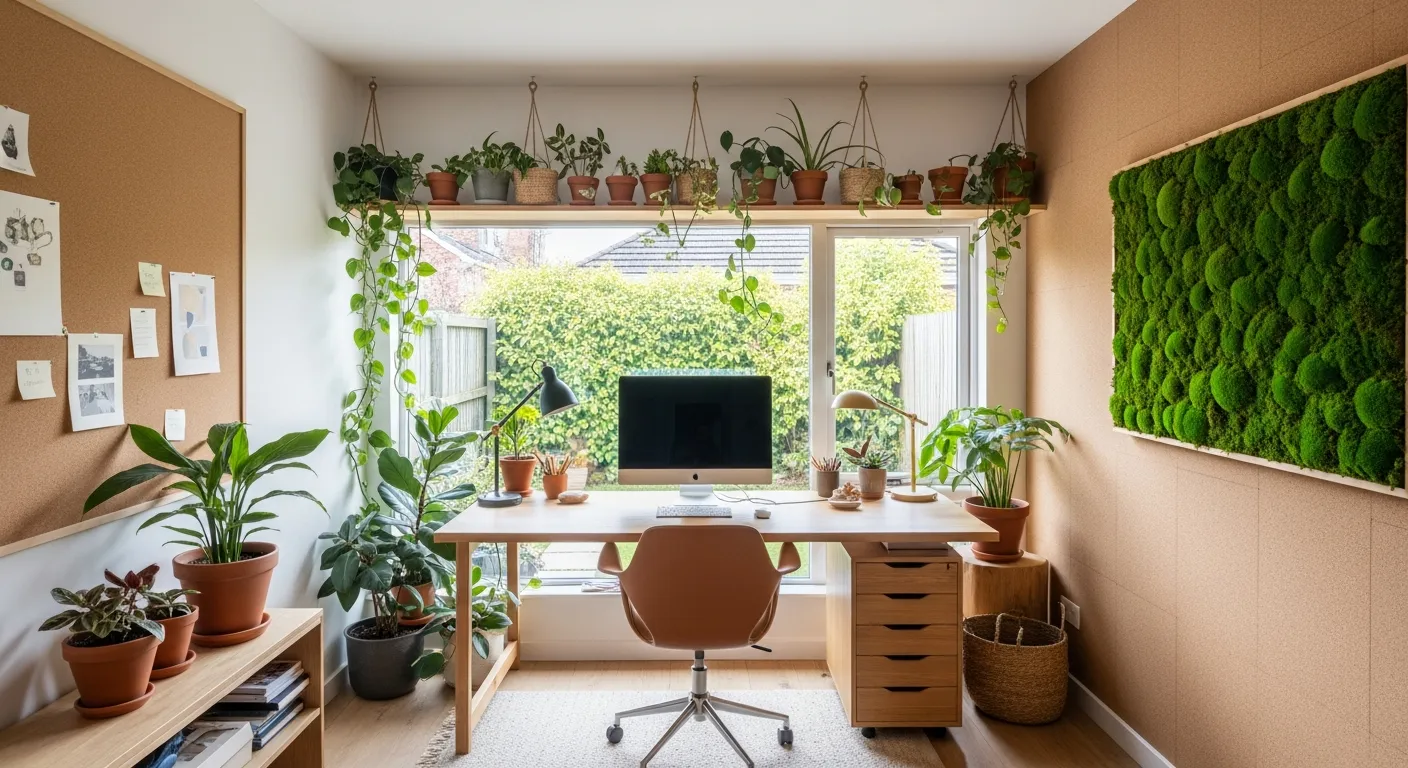
This is where the productivity data is strongest. The Human Spaces study found that workers in biophilic environments report 15% more creativity and 6% higher productivity. If you work from home, this room has the highest ROI. Combine these ideas with the room by room design guides for desk placement and storage.
- Desk position: Near the largest window, facing or perpendicular to it, never with your back to the window. Natural light on your workspace reduces eye strain and improves alertness
- Low-maintenance desk plants: ZZ plant, pothos, or succulents. These survive neglect and still improve air quality and visual calm
- Moss wall panel: Preserved moss panels ($30–$80 for a 12x12” panel) require zero maintenance (no watering, no light) and add instant biophilic texture
- Natural desk material: Solid wood desk (oak, walnut, pine) over particleboard or glass. A simple wooden desk costs $200–$600
- Cork pinboard: Replaces a plastic whiteboard with a natural material. Cork is naturally antimicrobial and looks better as it ages
- Acoustic elements: Wool felt acoustic panels or dense plant groupings absorb sound and improve focus in open-plan homes
Budget range: $100–$300 for plants and accessories | $800–$2,500 for desk, shelving, and moss panel
If you are starting the office from scratch, this walkthrough explores several home office designs with MeltFlex before anything is bought. Ask for a wood desk by the window and plants on the shelves, and you get the list above as a picture.

A render will happily put a fiddle leaf fig in a dark corner. Check the light before you buy the plant.
Before & After: AI Biophilic Room Transformation
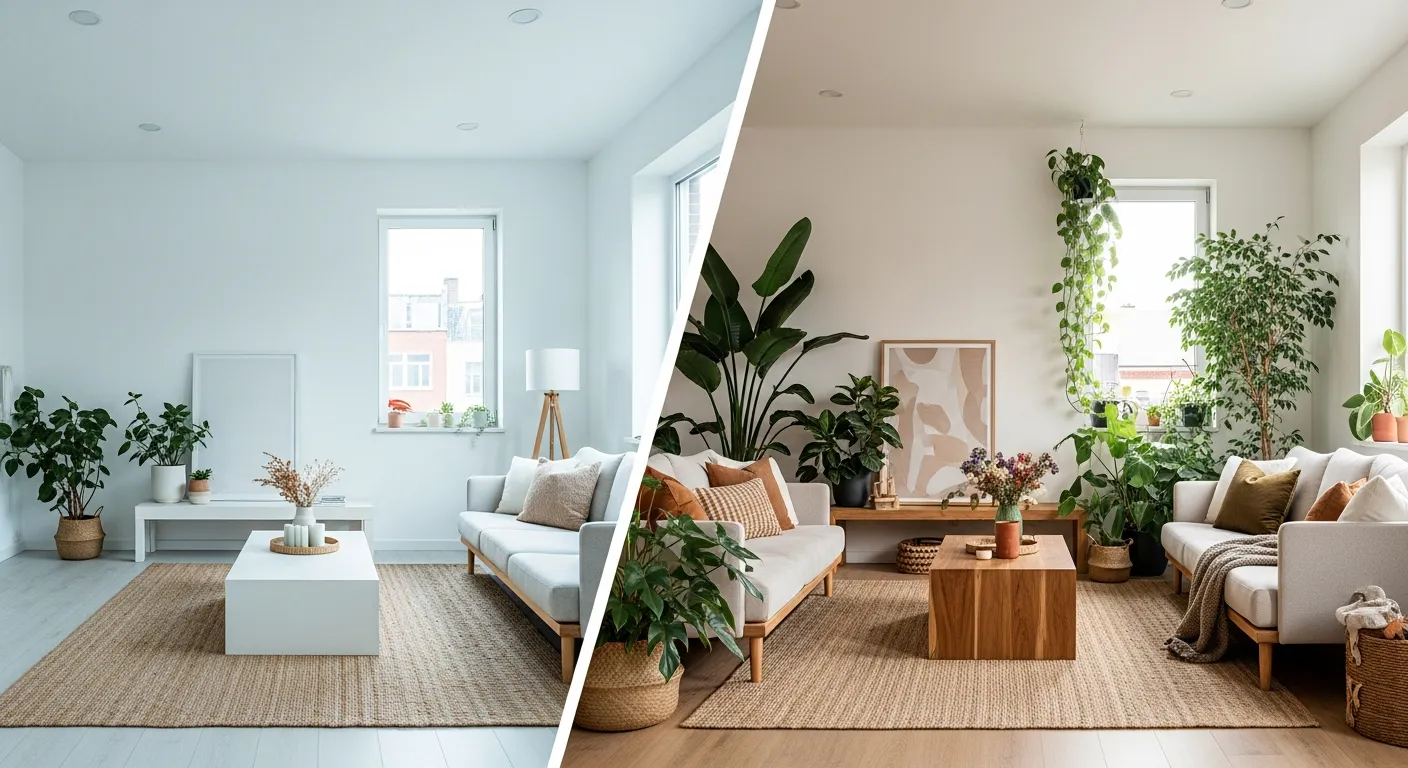
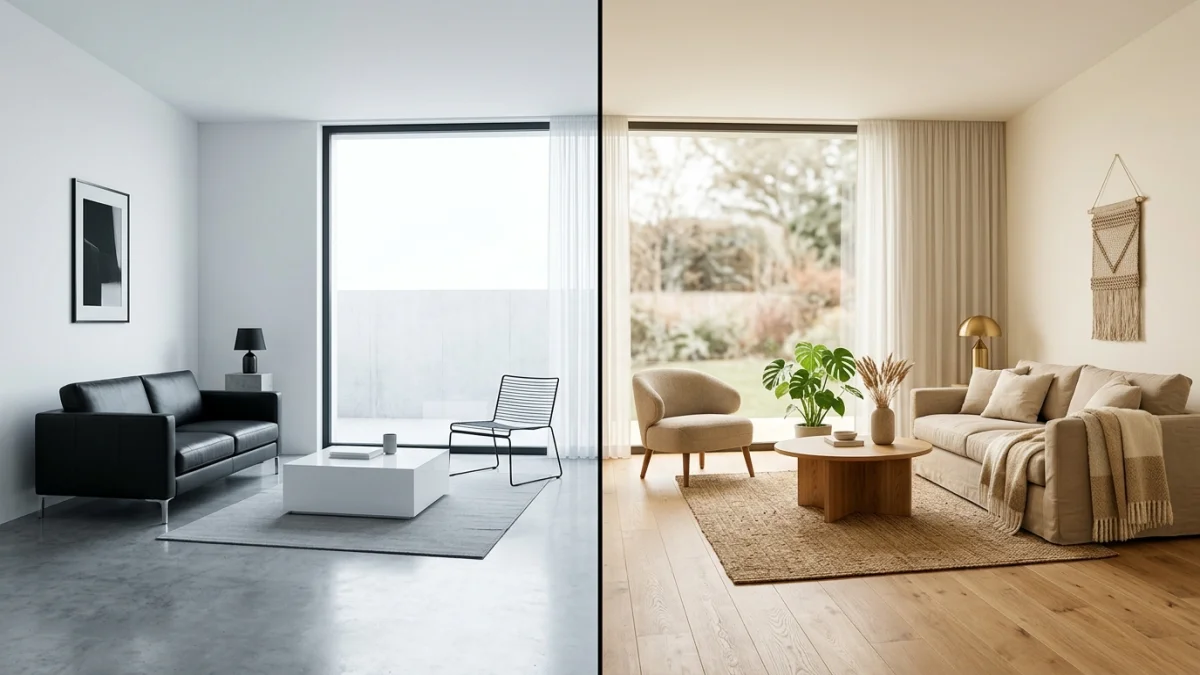
The left image shows a typical room: white walls, no plants, synthetic materials, cold lighting. The right shows the same space reimagined with biophilic principles: a living wall, natural wood furniture, linen textiles, warm earth tones, and abundant greenery.
This is exactly the kind of transformation you can visualize with AI before spending a single dollar. Upload a photo of your room to MeltFlex, select a nature-inspired or biophilic style, and see your space transformed in under 30 seconds. Try three or four variations before deciding what to actually buy.
Biophilic Design on a Budget: The $500 Starter Guide
You don’t need to gut your house. Here’s how to get 80% of the biophilic effect for under $500 across your entire home:
Total: $340–$690. This budget-friendly approach focuses on the highest-impact biophilic elements: real plants, natural textiles, and organic materials. You can add more over time, a wooden coffee table here, a stone accent there, but these basics alone will transform how your home feels.
5 Biophilic Design Mistakes to Avoid
- Fake plants only: Artificial greenery misses the air-purifying and psychological benefits. Use real plants where you can, and supplement with high-quality faux only where live plants can’t survive (zero-light corners)
- Ignoring natural light: Heavy curtains, furniture blocking windows, and cool-toned artificial light undo biophilic benefits. Light is the most impactful biophilic element, so prioritize it over everything
- Mixing natural and synthetic randomly: A wooden table next to a chrome chair next to a plastic planter creates visual confusion. Commit to natural materials within each vignette
- Overwatering indoor plants: More indoor plants die from overwatering than underwatering. Research each plant’s needs, and use self-watering pots ($8–$20) for peace of mind
- Forgetting the non-visual senses: Biophilic design includes sound (water features, wind chimes), touch (textured natural fabrics), and smell (fresh herbs, natural wood scent). Don’t just make it look green. Make it feel alive
How to Visualize Biophilic Design in Your Room With AI
The biggest risk in any redesign is buying things that don’t work together or don’t fit your space. AI visualization eliminates that risk:
- Take a photo of your room as it is right now, messy is fine, the AI adapts
- Upload it to MeltFlex
- Select a nature-inspired or organic style
- Get a photorealistic visualization in under 30 seconds showing your room with biophilic elements
- Try 3–4 variations: heavy greenery vs. minimal plants, dark woods vs. light woods, with or without a living wall
- Use the visualization as your shopping list, buy only what you see working in your actual space
This approach saves the average homeowner $800–$2,000 in returned furniture and regretted purchases, based on National Retail Federation data showing 20–30% of furniture bought online gets returned.
Try biophilic design in your room free →
Frequently Asked Questions
What is biophilic interior design?
Biophilic interior design is a design philosophy that incorporates natural elements (plants, natural light, organic materials like wood and stone, water features, and earthy color palettes) into indoor spaces. The goal is to strengthen our connection to nature, which research shows reduces stress by up to 37%, improves focus, and increases overall well-being.
How much does biophilic interior design cost?
Biophilic design can fit any budget. A basic approach (indoor plants, natural textiles, rearranging for more natural light) costs $200–$500 per room. A mid-range makeover (reclaimed wood furniture, stone accents, multiple plants) runs $1,000–$3,000 per room. A premium biophilic redesign (living walls, water features, custom natural materials) costs $5,000–$15,000+ per room. AI tools like MeltFlex let you visualize any option for free before spending.
What are the best plants for biophilic interior design?
The best plants depend on the room. Living rooms: monstera, fiddle-leaf fig, bird of paradise for statement pieces. Bedrooms: snake plants, peace lilies, lavender for air purification and calm. Kitchens: hanging herbs (basil, rosemary, mint) for function and beauty. Bathrooms: ferns, pothos, air plants that thrive in humidity. Home offices: ZZ plants, rubber plants, succulents for low-maintenance greenery.
Can I do biophilic design in a small apartment?
Absolutely. Small spaces actually benefit most from biophilic design. Use vertical space with wall-mounted planters and hanging plants. Choose natural materials for furniture you already need (wooden desk, stone coasters, linen curtains). Maximize natural light by keeping windows unobstructed. Even a single large plant and switching to warm, natural-tone textiles transforms a small room.
How do I visualize biophilic design in my room before buying anything?
Upload a photo of your room to MeltFlex and select a nature-inspired style. The AI will generate a realistic visualization showing your actual room with natural materials, plants, and organic textures in under 30 seconds. This lets you experiment with different biophilic approaches before spending any money.
Keep Reading
- Organic luxe interior design, the high-end cousin of biophilic that layers natural materials with a more polished finish.
- Warm minimalism, for a pared-back version of the same natural, tactile palette.
- Color drenching, if you want to build a room around a single earthy sage or clay tone.
- Scandinavian design guide, the Nordic take on light, wood, and calm.
- How to choose paint colors with AI, for nailing the exact green, clay, or sand.
- Fall 2026 interior trends, where foraged branches and dried arrangements do the seasonal, biophilic work.
- Try biophilic design in your own room, upload a photo and see it in 30 seconds.



)