Dining Room Design Ideas: 20 Trends, Layouts & AI Tools to Plan Your Perfect Dining Space (2026)

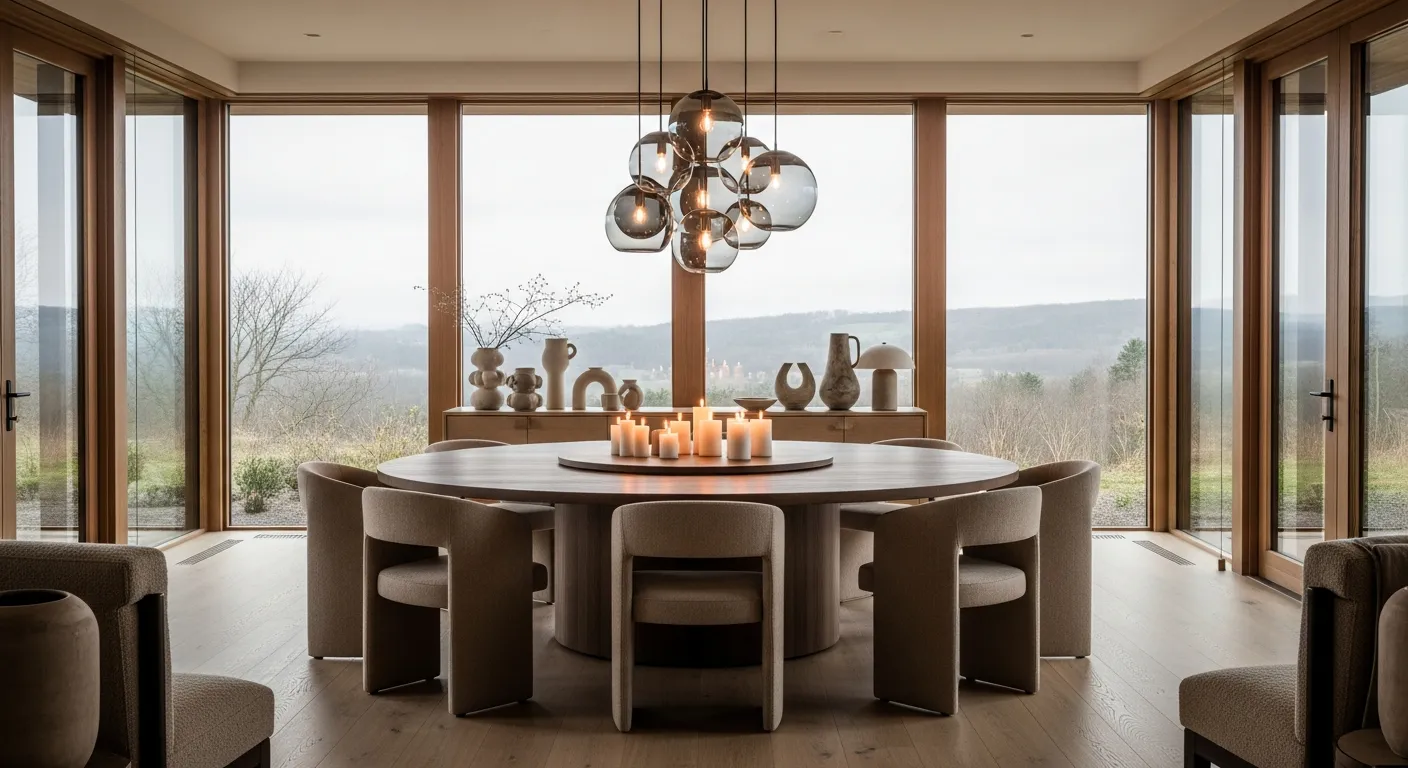
The dining room is having a moment. After years of being absorbed into open-plan living:a corner of the kitchen, a table pushed against a wall:dedicated dining spaces are back. Not the formal, stuffy dining rooms of the 1990s. The 2026 dining room is warm, moody, multipurpose, and designed around one thing: bringing people together.
Whether you have a dedicated dining room, a dining nook, or a corner of your living room that doubles as your eating space, the right design choices transform it from “just a table and chairs” into the room everyone gravitates toward.
This guide covers the 20 most impactful dining room design ideas for 2026:from trending styles and layouts to specific furniture, lighting, and color choices:with real cost data and AI visualization tips so you can see each idea in your actual space before buying.
The 8 Biggest Dining Room Trends in 2026
1. The Round Table Revival
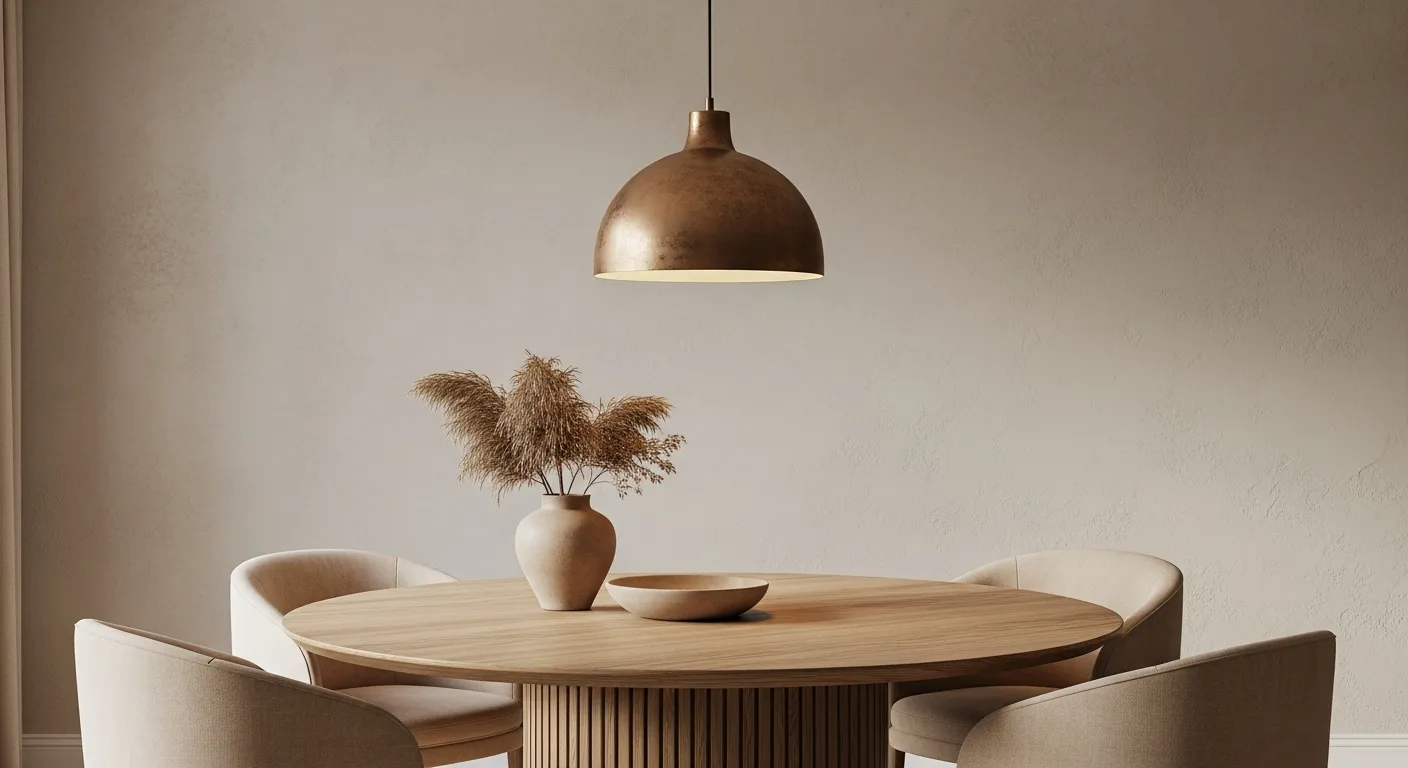
Round dining tables are the single biggest dining furniture trend of 2026. After decades of rectangular dominance, designers are choosing round tables for three reasons:
- Better conversation: Everyone faces everyone. No head-of-table hierarchy, no shouting across a 6-foot rectangular surface
- Space efficiency: A 48-inch round table seats 4–6 in the same footprint where a rectangular table seats 4. Round tables save roughly 20% of floor space
- Curved trend alignment: 2026 design is moving toward organic, curved silhouettes across all furniture. Round tables are the natural anchor
What to buy: Natural wood round tables in oak or walnut are the top choice. Avoid high-gloss or glass:the 2026 preference is warm, tactile, and matte. A solid wood 48” round table costs $400–$1,200 depending on quality.
2. Statement Lighting That Sets the Mood
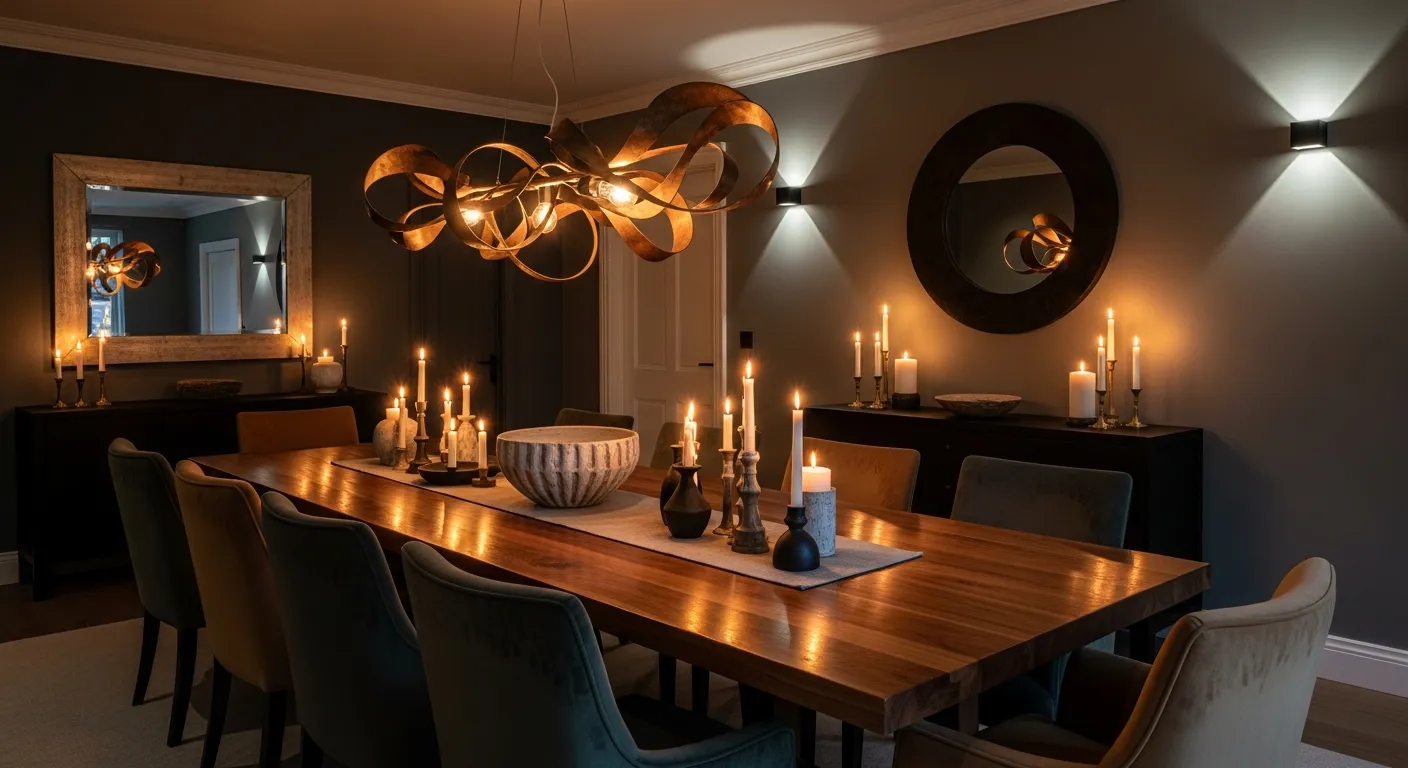
In 2026, the pendant light above the dining table isn’t just functional:it’s the room’s centerpiece. The trend has shifted from single pendants to clusters, sculptural fixtures, and oversized statement pieces.
- Pendant clusters: 3–5 pendants at varying heights over a rectangular table. Creates visual drama and layered light ($150–$500 for a cluster set)
- Oversized sculptural fixtures: A single large fixture (24–36” diameter) makes a room feel intentionally designed. Materials trending: brass, rattan, handblown glass ($200–$800)
- Warm color temperature: 2700K LED bulbs are the standard for dining. Anything above 3500K feels like an office. Dimmer switches are non-negotiable:they let you shift from homework lighting to dinner-party atmosphere
Pro tip: Hang your pendant 28–34 inches above the table surface. Too high and it loses intimacy. Too low and tall guests bump their heads.
3. Moody Color Palettes
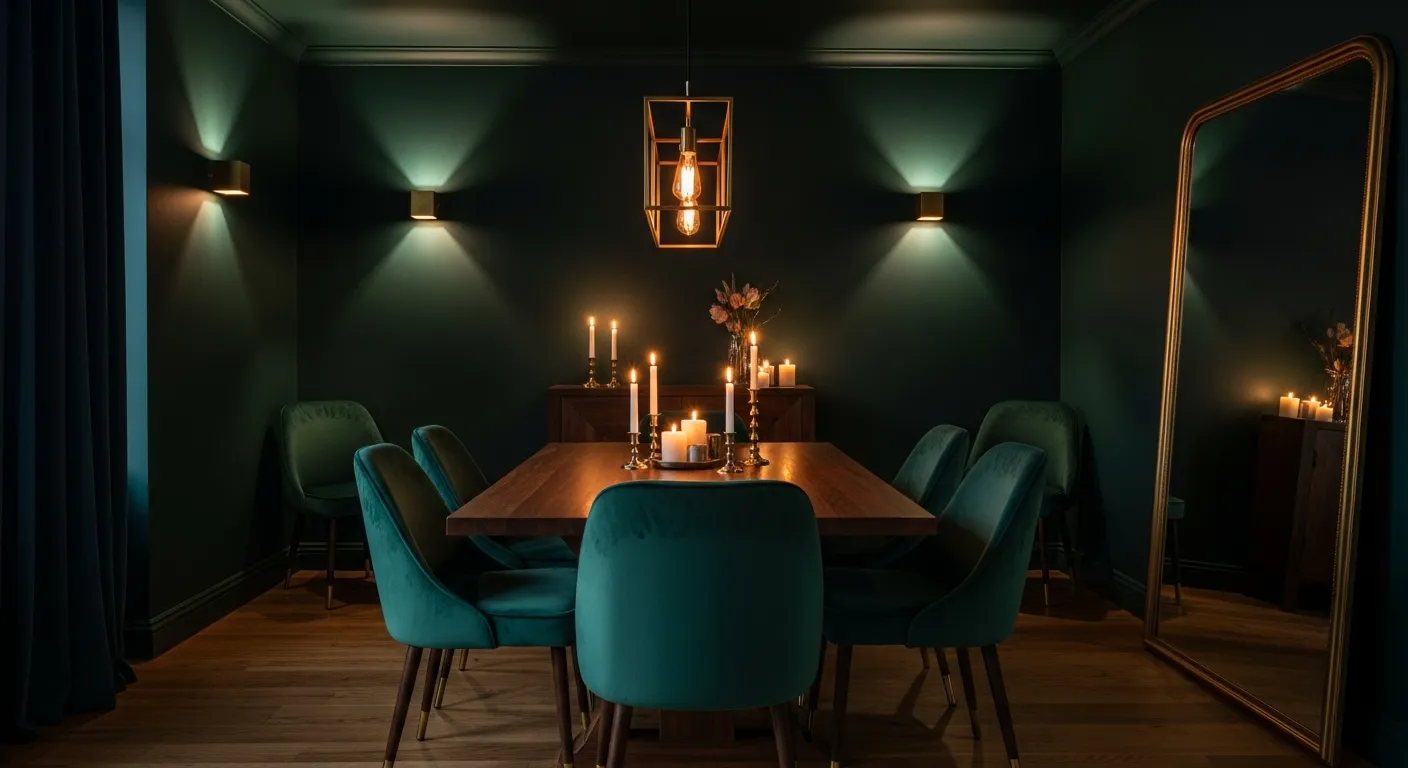
The all-white dining room is officially over. 2026 dining rooms embrace deep, saturated colors that create warmth and intimacy:especially important for rooms designed around evening meals.
- Dark sage and forest green: The dominant dining room wall color of 2026. Works with wood furniture, brass hardware, and warm lighting
- Deep navy and charcoal: For a more dramatic, formal dining atmosphere. Pair with lighter wood tones to prevent the room from feeling too heavy
- Warm terracotta and clay: Earthy warmth that makes a room feel like a Mediterranean bistro. Pairs beautifully with natural stone and linen
- Rich burgundy and wine: Bold, unexpected, and trending fast in 2026. Best as an accent wall behind the table
Rule of thumb: Paint the dining room one shade darker than feels comfortable. Dining rooms are primarily used in evening light, and colors that look bold in daylight become perfectly warm and enveloping at night.
4. The Rise of the Dining Nook
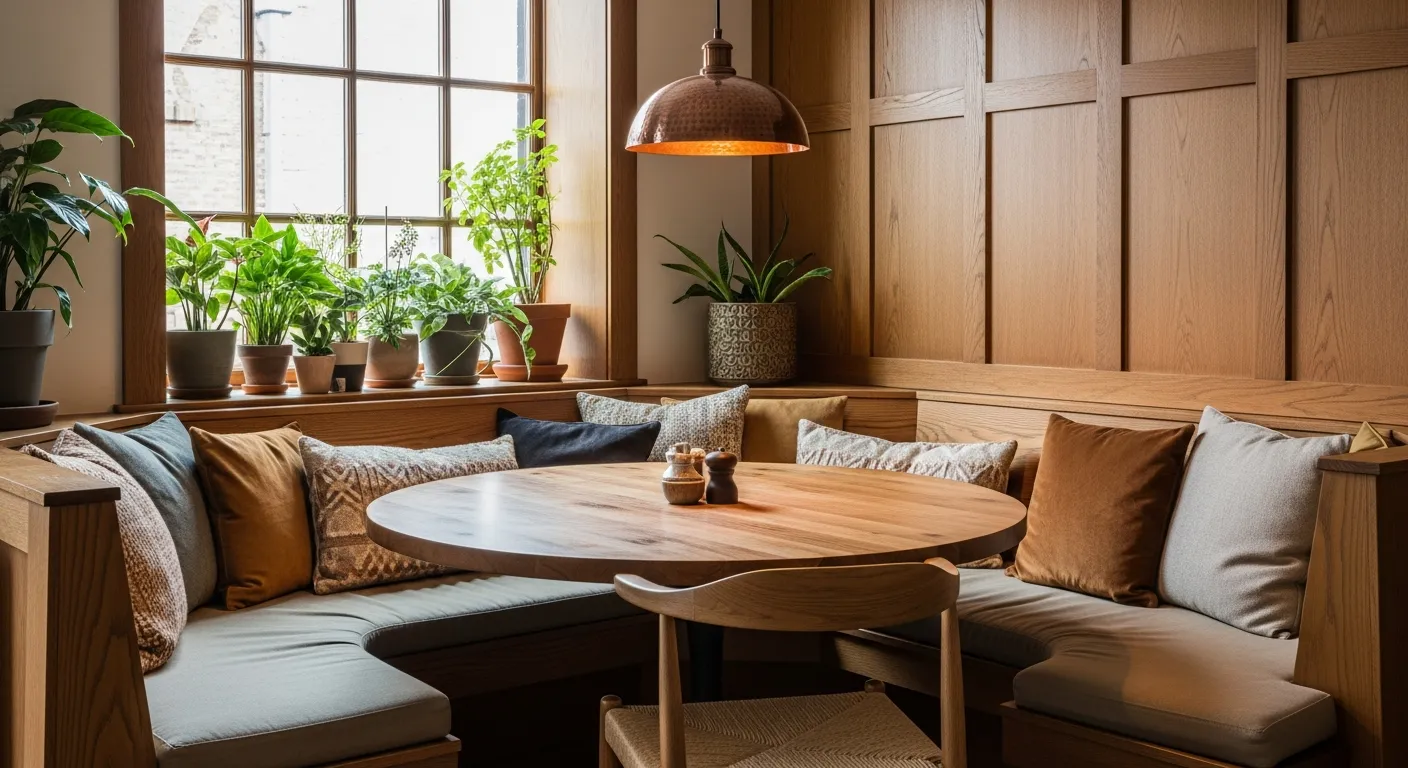
Not everyone has a dedicated dining room:and 2026 design celebrates that reality. The dining nook is a compact, intentional eating area that makes small spaces feel deliberately designed rather than compromised.
- Built-in banquette: An L-shaped or U-shaped bench against the wall saves 30–40% of floor space compared to chairs on all sides. Add storage underneath for linens or rarely-used kitchen items ($500–$2,000 custom-built, $200–$500 DIY with IKEA hacks)
- Round table + bench combo: A 36–42” round table with a bench on one side and two chairs on the other seats 4–5 in a space where a traditional setup only fits 2
- Cushions and textiles: The banquette gets comfortable with 3” foam cushions in linen or velvet. This turns an eating area into a spot where people actually want to linger
- Pendant overhead: Even a nook deserves a statement light. A single pendant 28” above the table defines the zone and separates it visually from the kitchen
5. Multipurpose Dining Spaces
The 2026 dining room does double and triple duty. It’s where you eat dinner, but also where kids do homework, where you work on your laptop on Saturday morning, and where board games happen on Sunday night.
- Expandable tables: A round table with a leaf that extends to oval seats 4 daily and 8 for gatherings. Several Scandinavian brands offer this at $500–$1,000
- Comfortable chairs: Upholstered dining chairs (not hard wood) encourage people to stay. If you’re going to work at the table, comfort matters ($80–$200 per chair)
- Ambient + task lighting: A dimmer-controlled pendant for atmosphere plus a floor lamp or wall sconce for reading and working
- Built-in storage: A credenza or sideboard along one wall stores placemats, candles, games, and laptop chargers. Keeps the table clear for whatever it needs to be
6. Warm Wood Finishes Everywhere
Cool-toned furniture (gray wash, white lacquer, glass) is out. 2026 dining rooms are defined by warm, rich wood tones:oak, walnut, teak, and acacia.
- Table material: Solid wood with visible grain. Matte or satin finish:never high-gloss. Live-edge tables remain popular for a more organic feel
- Mixed wood tones: It’s okay (and intentional) to mix wood species in 2026. A walnut table with oak chairs and a teak sideboard creates depth and character
- Avoid: Particle board with wood-print laminate, glass tabletops, and chrome legs. These signal “2015 transitional” rather than “2026 warm organic”
7. Curated Eclectic Style
The 2026 dining room isn’t a showroom set where everything matches perfectly. Designers are mixing periods and origins on purpose:a mid-century table with contemporary sculptural chairs, vintage brass candlesticks next to handmade ceramic plates.
- Mismatched chairs: Deliberately mixing 2–3 chair styles around the table (same color family, different silhouettes) creates visual interest. This also lets you buy on a budget:thrift stores, estate sales, different IKEA models
- Vintage + modern mix: One statement vintage piece (a sideboard, a mirror, a light fixture) alongside modern basics. This layered look tells a story
- Textured walls: Grasscloth wallpaper, limewash paint, or wood paneling adds depth that a flat painted wall can’t match. Limewash paint is the most accessible option ($40–$80 per gallon)
8. Open Plan Dining Done Right
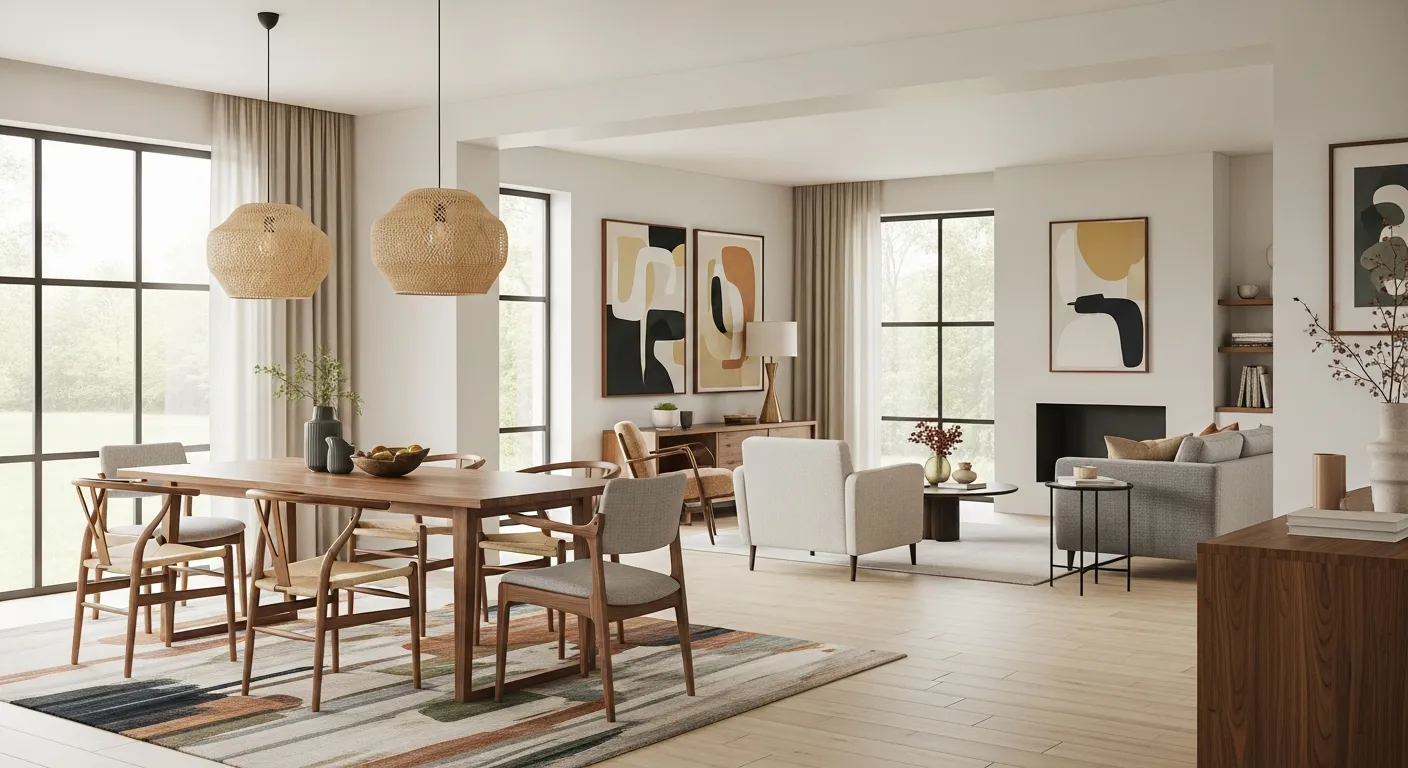
If your dining area shares space with the living room or kitchen, defining the zone visually is everything. Without clear boundaries, the dining table becomes a dumping ground instead of a destination.
- Area rug: A rug under the dining table (extend 24” beyond the chair line on all sides) visually separates the zone. Choose a flatweave for easy cleaning ($100–$400)
- Pendant light: The single most effective zone-definer. A statement light above the table tells the eye “this is the dining area”
- Color shift: Paint the dining wall one accent shade different from the living area. Even a 2–3 shade difference creates visual separation
- Back-of-sofa placement: If the dining table sits behind the sofa, use a console table or low bookshelf as a physical divider between zones
Small Dining Room Ideas That Actually Work
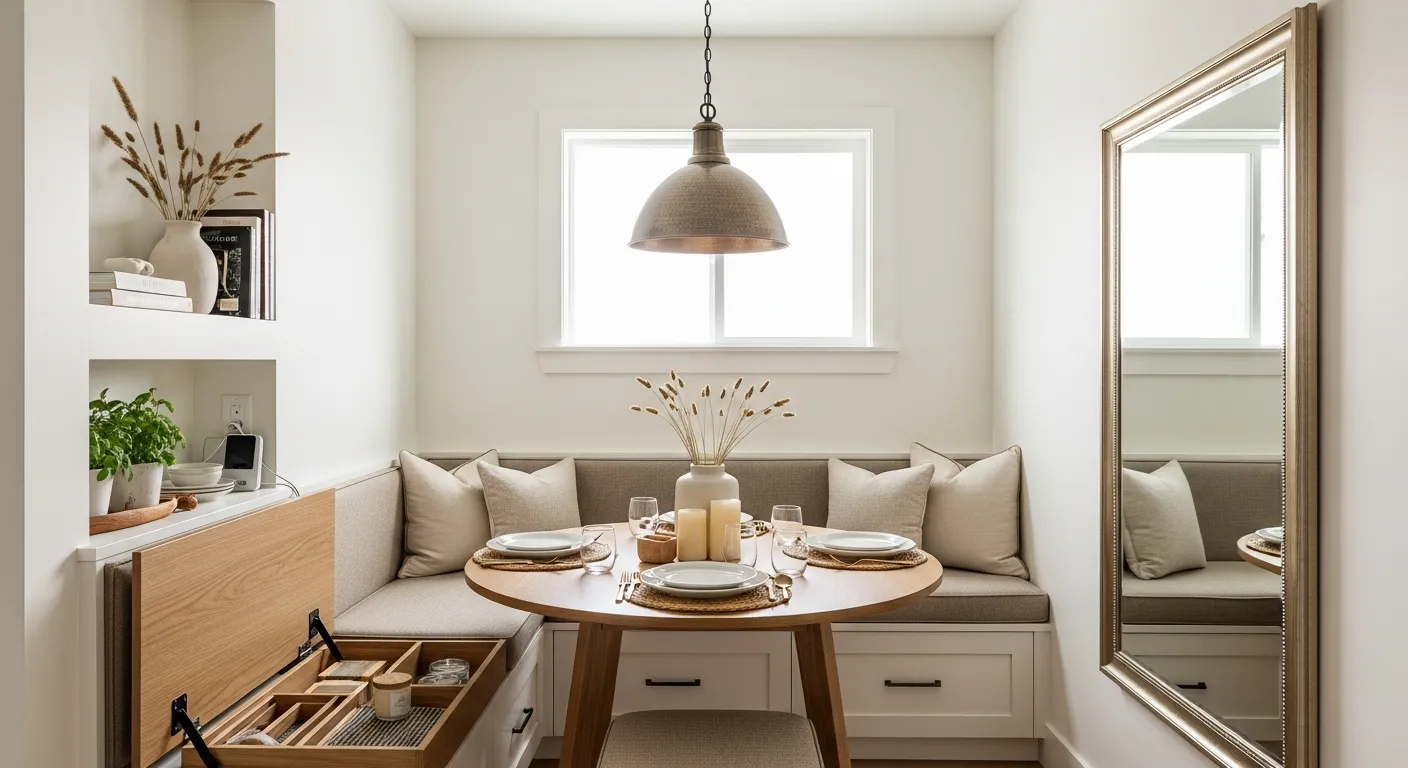
If your dining room is under 120 square feet (a 10x12 room or smaller), every design decision needs to work harder. Here are the strategies that actually create space:
| Strategy | Space saved | Cost |
|---|---|---|
| Round table instead of rectangular | ~20% floor area | $0 (same price, different shape) |
| Bench on one side instead of chairs | 18–24 inches of depth | $100–$300 |
| Wall-mounted shelving instead of sideboard | 12–18 inches of floor depth | $50–$200 |
| Large mirror on one wall | Doubles visual space | $50–$300 |
| Pendant light instead of floor/table lamp | Entire floor footprint of lamp | $50–$200 |
| Drop-leaf or extendable table | Seats 2 daily, 4–6 when needed | $200–$600 |
The combination of a 42” round table + one bench + two chairs + pendant light + mirror transforms an 8x10 foot room into a dining space that seats 5 comfortably and feels twice its size. Before you buy, double-check the table clears your walls and chairs with our visual guide to what size furniture fits your room.
How Much Does a Dining Room Makeover Actually Cost?
| Budget level | What’s included | Total cost |
|---|---|---|
| Refresh | New pendant light, paint, table decor, chair cushions | $300–$800 |
| Mid-range | New table, 4–6 chairs, lighting, rug, wall treatment | $2,000–$5,000 |
| Premium | Custom table, designer chairs, statement lighting, built-in storage, wallpaper | $8,000–$20,000+ |
The highest-impact single purchase is lighting. A $200 pendant light changes a dining room more dramatically than a $2,000 table, because lighting controls the atmosphere:and atmosphere is what makes people want to sit down and stay.
Before & After: AI Dining Room Transformation
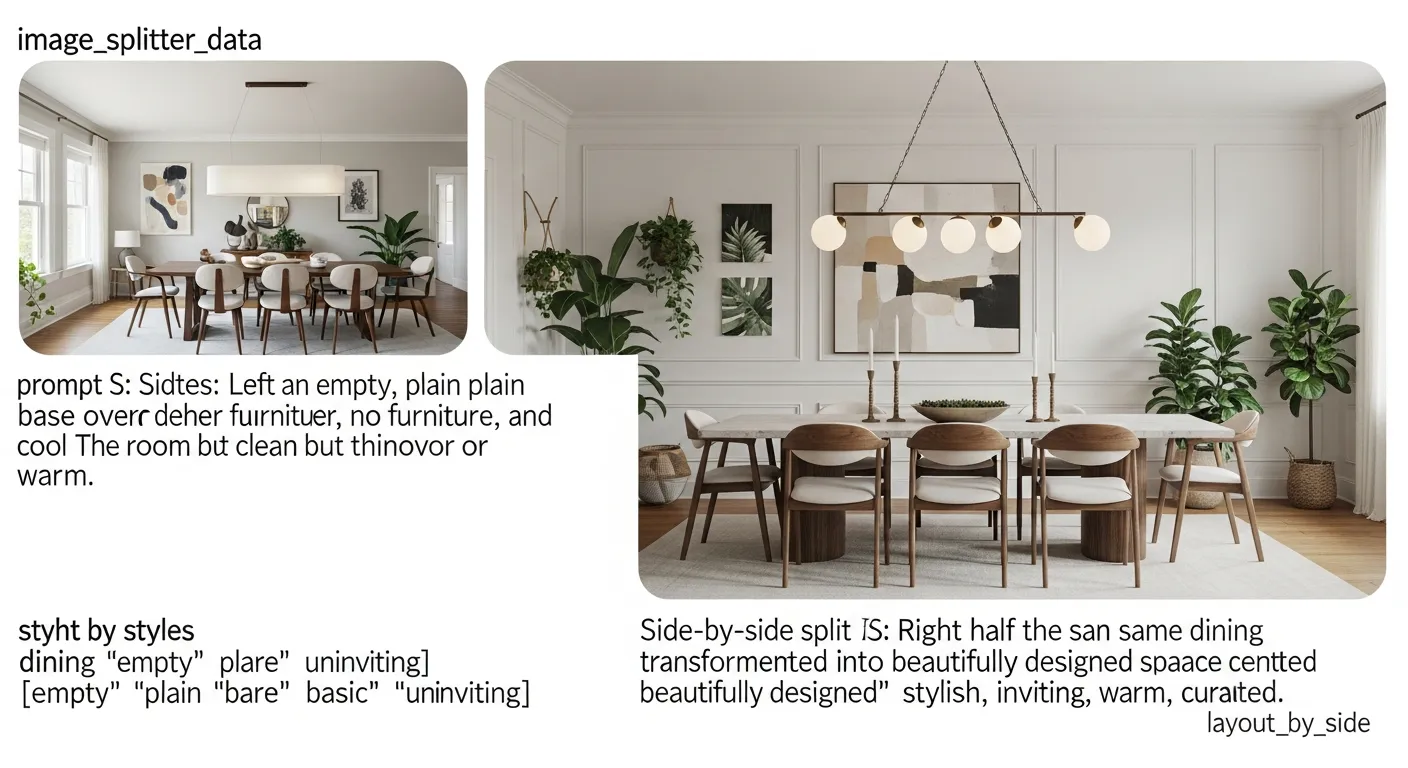
Empty dining room on the left. The same room after AI-generated design on the right:statement table, upholstered chairs, pendant lighting, wall art, plants, and a warm color palette that makes the space inviting.
This is the fastest way to test dining room ideas before committing to any purchase. Upload a photo of your room to MeltFlex, choose a style, and see your space transformed in under 30 seconds. Try different table shapes, color schemes, and lighting options until you find the design that fits your room and budget.
How to Design Your Dining Room With AI (Step by Step)
- Photograph your room: Stand in a corner and capture as much of the space as possible. Include the floor, ceiling, and all walls visible from that angle
- Upload to MeltFlex: Select “Room Redesign” or “Furnish Empty Room” depending on your situation
- Choose your style: Modern, Scandinavian, Farmhouse, Japandi, or any style from the guide above
- Review the AI design: The AI will place a table, chairs, lighting, and decor appropriate for your room’s dimensions and style
- Iterate: Try 3–4 different styles. A round table in one, rectangular in another. Moody walls in one, warm neutrals in another
- Use it as your plan: The visualization becomes your shopping list and layout guide:you know exactly what to buy and where to place it
Design your dining room free →
Frequently Asked Questions
What is the biggest dining room trend in 2026?
The biggest dining room trend in 2026 is the return of the round table. Round tables promote better conversation, fit small spaces more efficiently, and align with the curved furniture trend dominating 2026 design. A 48-inch round table seats 4–6 comfortably and works in rooms as small as 10x10 feet.
How do I design a small dining room?
For small dining rooms: choose a round table (saves 20% floor space vs. rectangular), use a bench on one side instead of chairs, add a mirror to expand visual space, use pendant lighting instead of floor lamps to save surface area, and stick to light warm colors. A well-designed 8x10 foot space can comfortably seat 4–6 people.
How much does it cost to redesign a dining room?
A budget dining room refresh (new lighting, paint, accessories) costs $300–$800. A mid-range redesign (new table, chairs, lighting, and decor) runs $2,000–$5,000. A premium dining room overhaul (custom furniture, designer lighting, wallpaper, built-in storage) costs $8,000–$20,000+. AI visualization tools like MeltFlex let you plan the perfect design before spending.
What size dining table do I need?
Allow 24 inches of table width per person and 36 inches between the table edge and walls for comfortable chair movement. A 48-inch round table seats 4–6. A 60-inch round seats 6–8. A 72-inch rectangular table seats 6. A 96-inch rectangular table seats 8. For small rooms, round tables are the most space-efficient option.
Can AI help me design my dining room?
Yes. Upload a photo of your dining room (or empty room) to MeltFlex, choose a style, and get a photorealistic AI visualization in under 30 seconds. You can try different table shapes, chair styles, lighting options, and color schemes before buying anything. This prevents expensive mistakes like ordering a table that’s too large for the room.
Once the table and lighting are settled, the wall above the credenza is the dining room’s biggest open opportunity: our plate wall ideas guide shows how to turn it into the room’s focal point without a hint of farmhouse kitsch, and the accent wall guide covers the paint-and-material route.

