I moved into a new apartment last month. Empty rooms. White walls. No furniture. The logical next step was to hire an interior designer — except designers charge $2,000 to $8,000 per room, and I had four rooms to furnish.
So I tried the alternative everyone keeps talking about: AI interior design. I uploaded photos of my empty apartment to an AI tool, picked styles I liked, and let the algorithm do what a designer would charge me $15,000+ for. Here is exactly what happened — the results, the costs, and where AI still falls short.
The Experiment: One Room, Five AI Redesigns
My apartment has a bright, sun-filled room with white walls, built-in shelving, light hardwood floors, and large windows with blinds. A blank canvas — the kind of space millions of people face after moving in.
First, I started with the room as it was — furnished with an existing bed, shelves, and decor. Then I used the AI to remove all furniture, giving me a completely empty room. From there, I uploaded that empty photo to MeltFlex and asked for five different styles. Each redesign took less than 30 seconds.
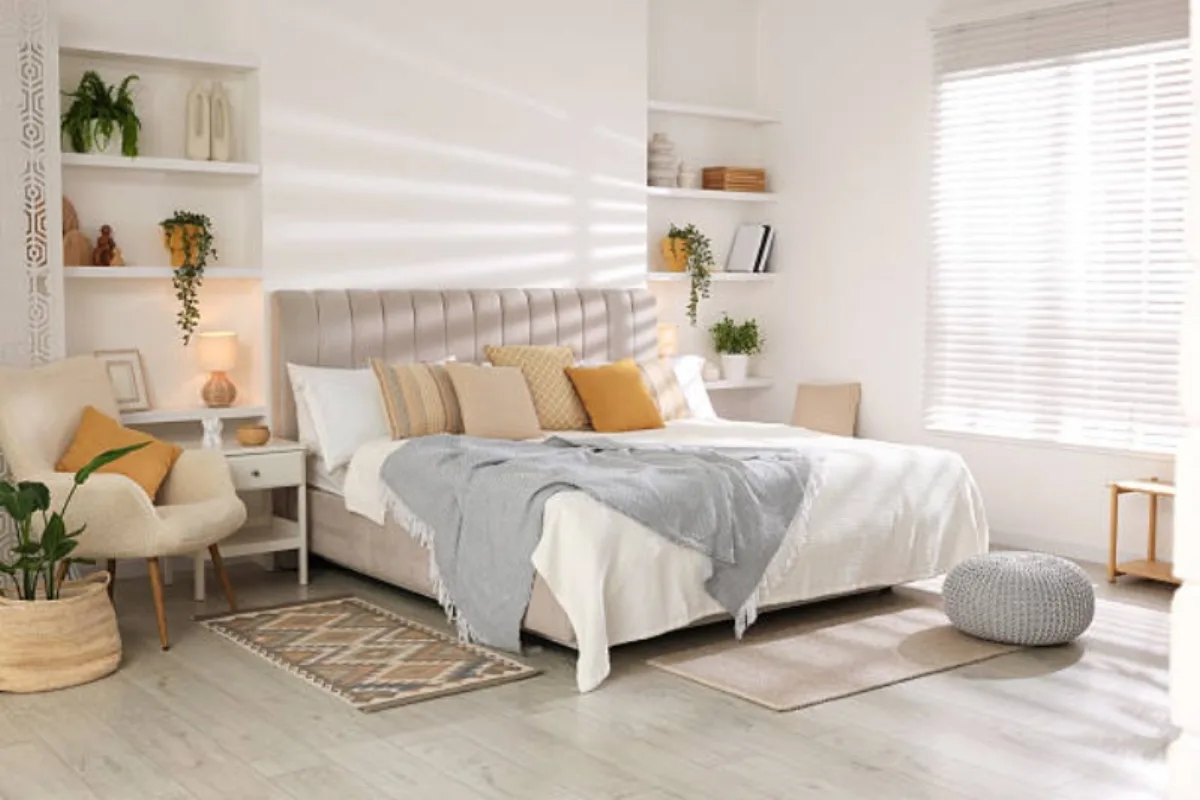
The original room — a nice bedroom, but I wanted to explore completely different styles.
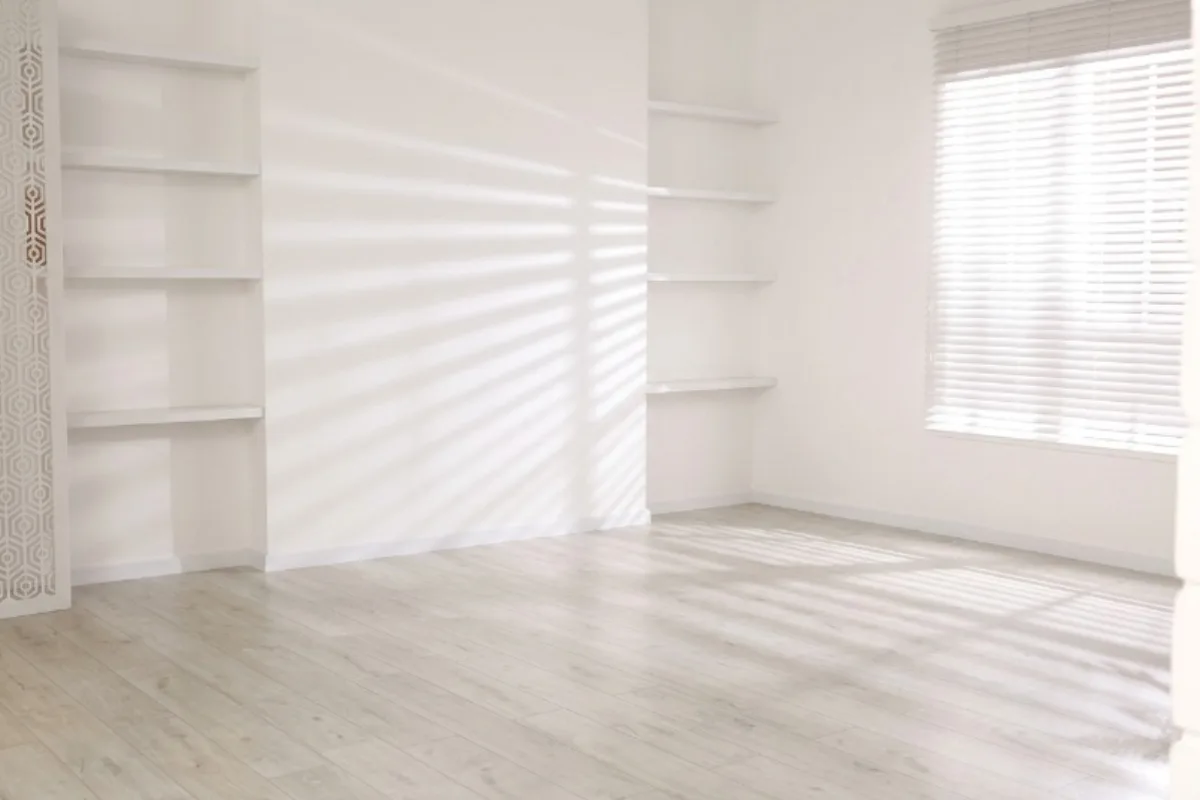
After AI furniture removal — a blank canvas ready for redesign.
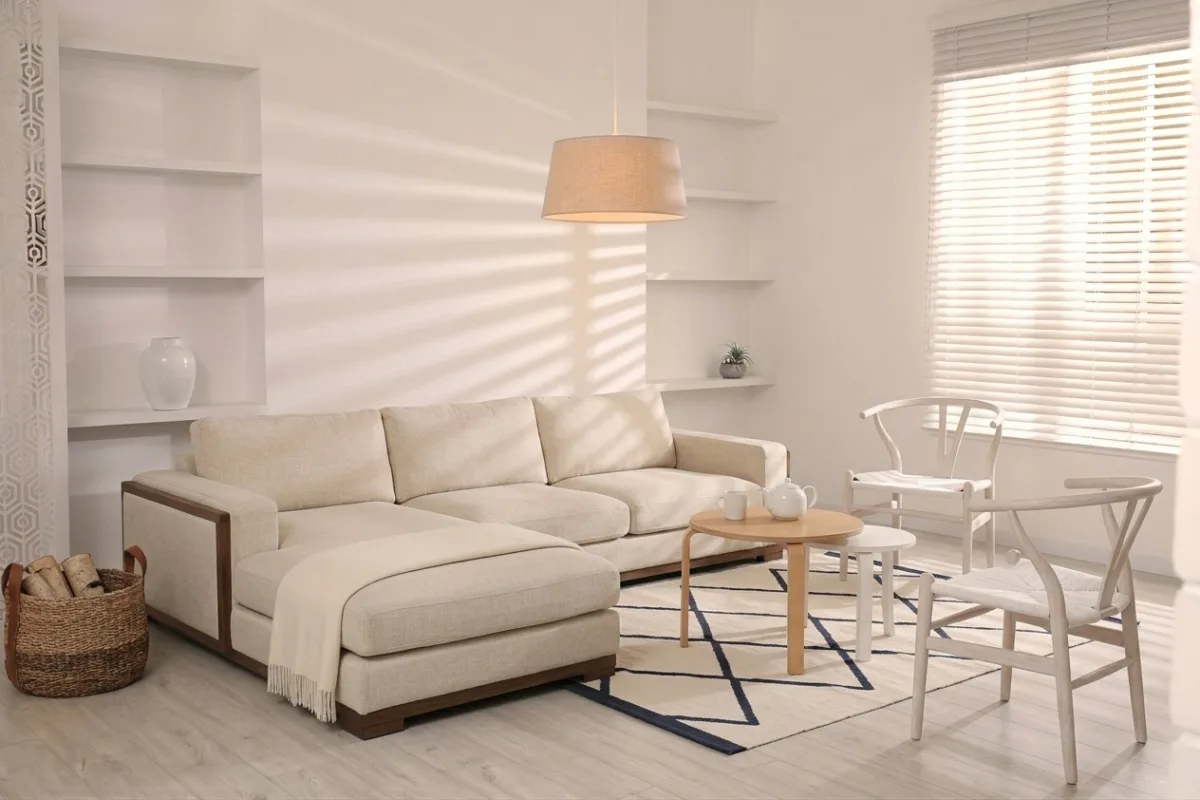
Result 1: Scandinavian Living Room
The AI placed a cream linen sectional sofa with a wood-frame base, a pair of round nesting coffee tables in natural oak, and two wishbone dining chairs by the window. A linen drum pendant light hangs from the ceiling. The shelving is styled with ceramics and a subtle woven basket adds warmth. A geometric area rug ties it all together.
What impressed me: the AI understood the room's natural light from the large windows and chose warm, light-toned furniture that complemented it. It did not try to put a dark leather sofa in a sun-drenched room — a mistake I have seen human designers make.
Total furniture cost (real prices): $2,450
Result 2: Modern Industrial
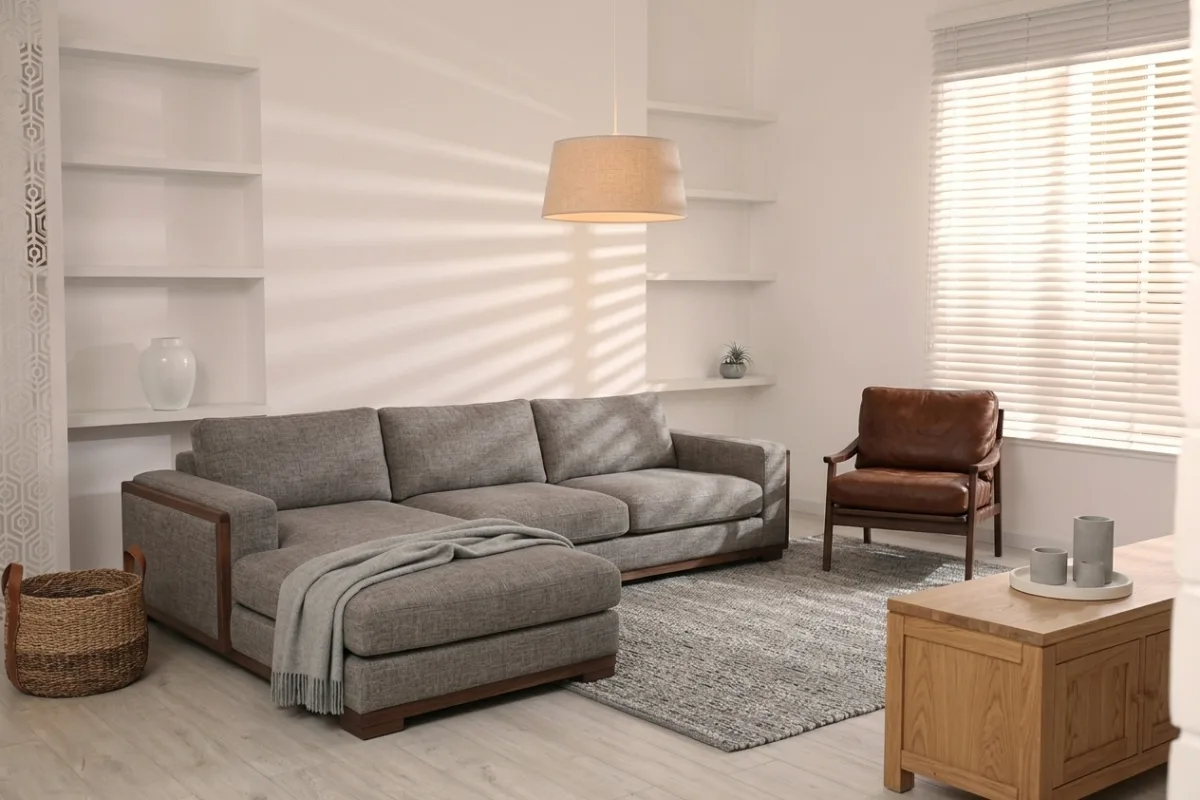
Same room, completely different mood. The AI swapped in a large grey herringbone-textured sectional, a cognac leather mid-century armchair, and a rustic oak storage chest as a side table. The rug is a muted grey weave. Concrete-toned candles on the chest add texture without clutter.
This is where AI shines: seeing the same space in radically different styles takes 30 seconds instead of 3 weeks. A designer would charge you for each concept board revision. AI lets you flip through 25 styles in the time it takes to make coffee.
Total furniture cost: $3,200
Result 3: Coastal Dining Room
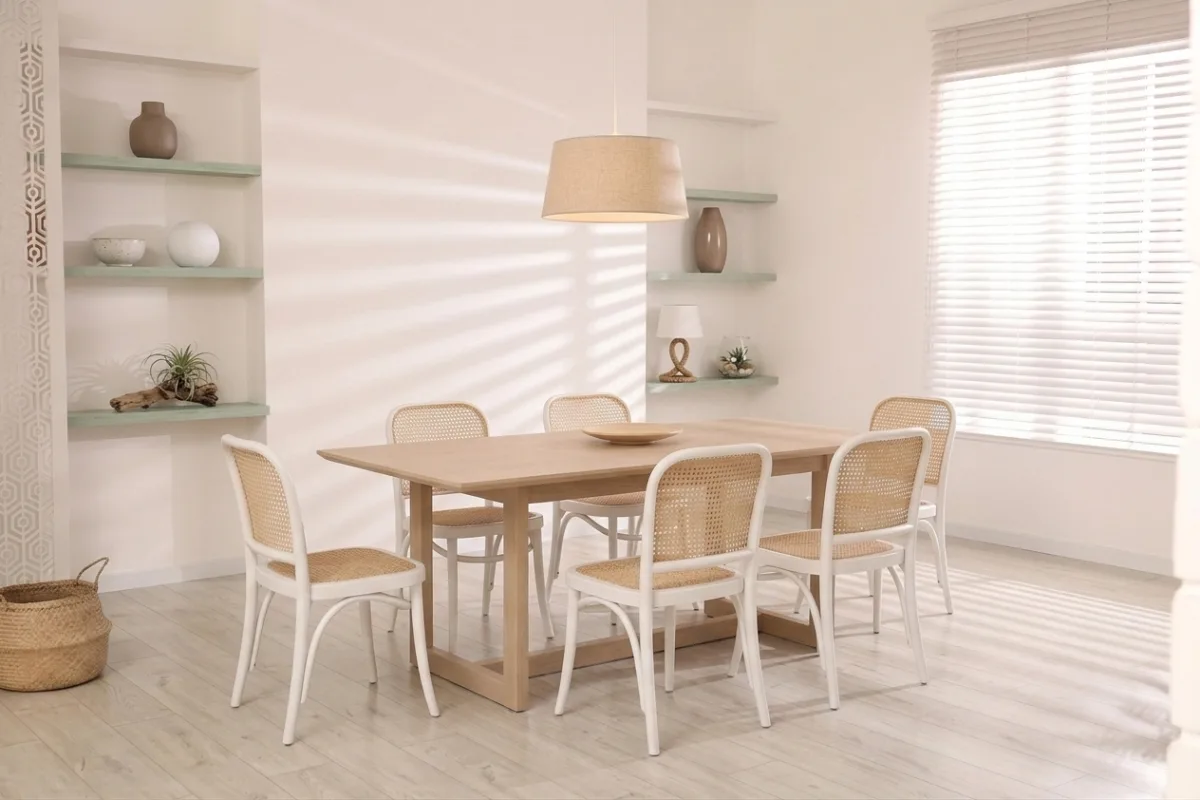
The AI reimagined the space as a dining room instead of a living room — proof that it understands room function, not just aesthetics. Six white rattan-back chairs surround a light oak trestle dining table. The shelving is styled with driftwood accents, ceramic vases, and a small succulent. The overall palette is sand, cream, and sage.
Total furniture cost: $1,950
Result 4: Minimalist Bedroom (Sage)
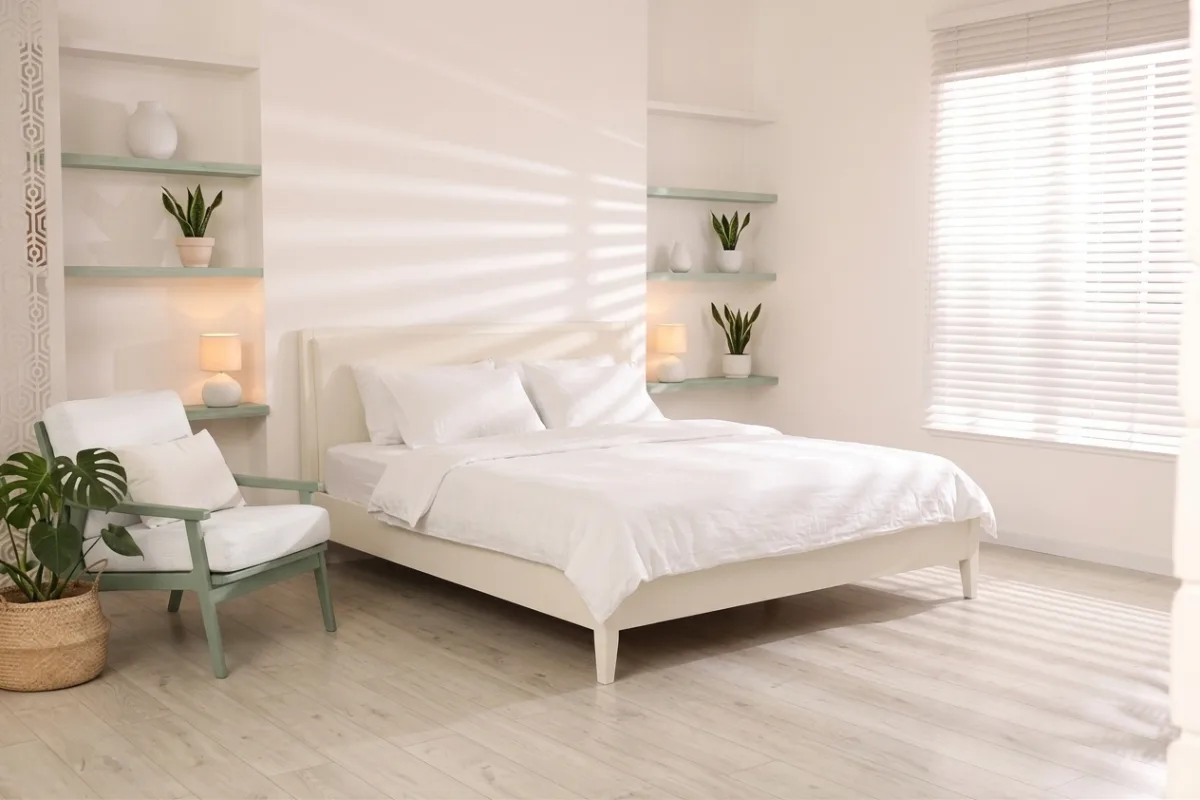
The minimalist version was the most surprising. The AI placed a clean white platform bed with a low headboard, flanked by sage-green floating shelves styled with plants and ceramic lamps. A mint-toned accent chair with a monstera plant fills the corner. The shelves are mint-tinted glass — a detail I would never have thought of.
Minimalism is about what you leave out, not what you put in. This AI got it right.
Total furniture cost: $1,800
Result 5: Warm Earthy Bedroom (Terracotta)
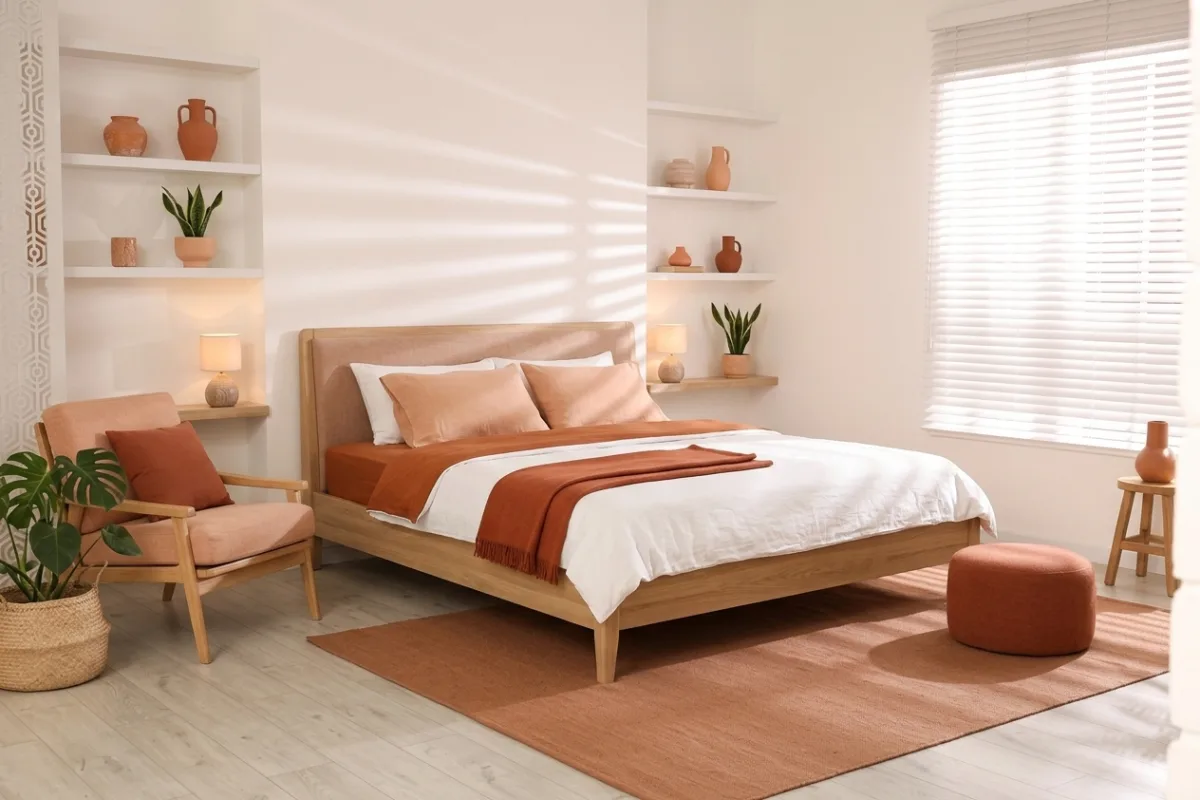
Same room, completely different energy. The AI chose a natural oak platform bed with a wood headboard, terracotta bedding and throw, a peach-toned accent chair, and a rust-colored area rug. The shelving is styled with clay pots and terracotta ceramics. A wooden stool and round pouf complete the look.
Warm tones, natural materials, organic shapes. It feels like a desert retreat — in the same white-walled apartment.
Total furniture cost: $2,100
What I Learned About AI Room Design
What AI Does Better Than Designers
- Speed: 30 seconds vs. 2–6 weeks for a concept board
- Cost: Free vs. $2,000–$8,000 per room
- Options: 25+ styles to compare vs. 2–3 from a designer
- Real products: Every piece is buyable with actual prices and price comparison across IKEA, Amazon, and Wayfair
- No markup: You buy furniture at retail price, not designer-inflated pricing
- No commitment: Try it free before deciding. No consultation fees or retainers.
What Designers Do Better Than AI
- Spatial problem-solving: Awkward layouts, structural limitations, and multi-room flow are still better handled by experienced humans
- Custom sourcing: If you want a one-of-a-kind vintage piece or custom upholstery, AI cannot help
- Project management: Coordinating contractors, managing deliveries, and handling installations requires a human
- The last 10%: Arranging books on a shelf, choosing the right throw pillow texture, hanging art at the perfect height — these finishing touches still benefit from a trained eye and physical presence
The Verdict
For my apartment, AI handled everything I needed. Five completely different designs from the same empty room — in under 3 minutes total. I picked the Scandinavian living room, bought the furniture shown in the render, and spent $2,450 on a fully furnished space. An interior designer would have charged $3,000–$5,000 just for the design plan — before I bought a single piece of furniture.
The furniture fits. The proportions work. The room looks exactly like the AI render. And I did the whole thing on my phone during my lunch break.
How to Try It Yourself
If you are curious about AI room design, here is the fastest way to test it:
Step 1: Take a photo of your room with your phone. It can be empty or furnished. Natural lighting works best — take the photo during the day with curtains open.
Step 2: Go to MeltFlex and upload your photo. Pick a design style — or describe what you want in your own words.
Step 3: Wait 30 seconds. The AI generates a photorealistic redesign with real furniture, real prices, and purchase links from IKEA, Amazon, and Wayfair.
Step 4: Compare styles. Try Scandinavian, then Industrial, then Minimalist. Each takes 30 seconds. Find the one that feels right.
Step 5: Buy what you see. Every piece in the render is real. Compare prices across stores. Order directly.
No credit card. No signup for your first design. Just upload a photo and see what your room could look like.
Try MeltFlex free — redesign your room in 30 seconds
Common Questions About AI Room Design
Does it work with furnished rooms?
Yes. Upload a photo of a room that already has furniture and the AI will restyle it — swapping out your existing pieces for new ones in your chosen style. You do not need an empty room to start.
Can I use it for real estate virtual staging?
Absolutely. Upload photos of empty listings and the AI stages them with realistic furniture in seconds. Traditional virtual staging costs $100–$300 per photo and takes 1–3 days. AI staging is free and instant.
Does the AI work with any room type?
Living rooms, bedrooms, dining rooms, home offices, kitchens, bathrooms, nurseries, and outdoor spaces all work. The AI adapts furniture and styling to each room type automatically.
What if I do not like the result?
Try a different style. Add a text prompt describing what you want changed — "warmer tones," "smaller sofa," "add a reading nook." Each regeneration takes 30 seconds. Unlike a designer revision that costs $100–$200, AI iterations are free.

