Short answer: in 2026 you must clearly disclose any virtually staged or digitally altered listing photo, label it on the image, and make the original unaltered photo available. California’s AB 723 made this a state law on January 1, 2026; NAR guidance and most MLS rules require it everywhere else. Get it wrong and you risk listing removal, board fines, license complaints, and civil liability if a buyer feels misled.
Our articles are still written by humans!
Get human written articles in your Google feed.
This guide is the full version of that answer: the California AB 723 altered-image law, the Colorado AI update (delayed to 2027 under SB 189), NAR best practices, a state-by-state table, where the disclosure has to travel (Zillow, Redfin, and social included), and a practical checklist you can follow for every listing. It also clears up the viral “$250 per photo” MLS rumor that sent thousands of agents searching. Updated July 2026 with the signed Colorado SB 189 and current CRMLS enforcement guidance.
New to virtual staging itself? Start with our AI virtual staging guide for real estate and the cost data versus physical staging, and if you are staging with Gemini rather than a dedicated tool, the prompts that keep a listing photo compliant, then come back here to keep every listing compliant.
This guide is written for real estate professionals and links to the primary sources throughout. It is general information, not legal advice. Rules change and vary by state and MLS, so confirm your obligations with your broker, your local MLS, and a qualified attorney before you rely on any single point here.
FreeUpload listing photo · freeStage my listing photo for freeUpload an empty room and MeltFlex furnishes it for the listing, walls, windows and floor untouched. Your first AI design is free, no card needed.


Is the “$250 Per Photo” MLS Fine Real?
In early 2026 a post went viral on X claiming that “starting tomorrow, any real estate agent who deletes photos from the MLS will be fined $250 per photo deleted.” It spread fast, and thousands of agents searched to find out whether they were suddenly at risk. Here is the honest answer.
The $250-per-photo fine is real, but it is not new and it is not a 2026 law. It is a long-standing rule at a number of MLS systems (including SmartMLS, connectMLS, and several REALTOR® boards) that charges roughly $250 for each photo improperly removed from a listing. The viral post made it sound like a brand-new nationwide penalty switching on overnight. It is not. It is an existing MLS policy that varies board by board.
Just as important: this fine is about deleting photos, not about virtual staging. MLS rules generally stop you from removing listing photos so that a property’s real condition and history stay transparent. Most MLSs only let you remove or replace a photo to reflect a seasonal change, a genuine improvement to the home, or to swap in a higher-quality version of the same shot.
People mixed up the “$250 per photo” rumor with California’s new AB 723 altered-image law because both hit the headlines around January 1, 2026. They are two separate things. The $250 fine is an MLS rule about deleting photos. AB 723 is a state law about disclosing digitally altered or virtually staged photos. The rest of this guide covers the rules that actually apply to virtual staging, starting with AB 723.
Why Virtual Staging Disclosure Matters More Than Ever
Virtual staging is not new. Agents have been digitally adding furniture to empty room photos for years. What has changed is the quality. AI-generated staging is now photorealistic. In many cases, buyers cannot tell the difference between a physically staged room and a virtually staged one.
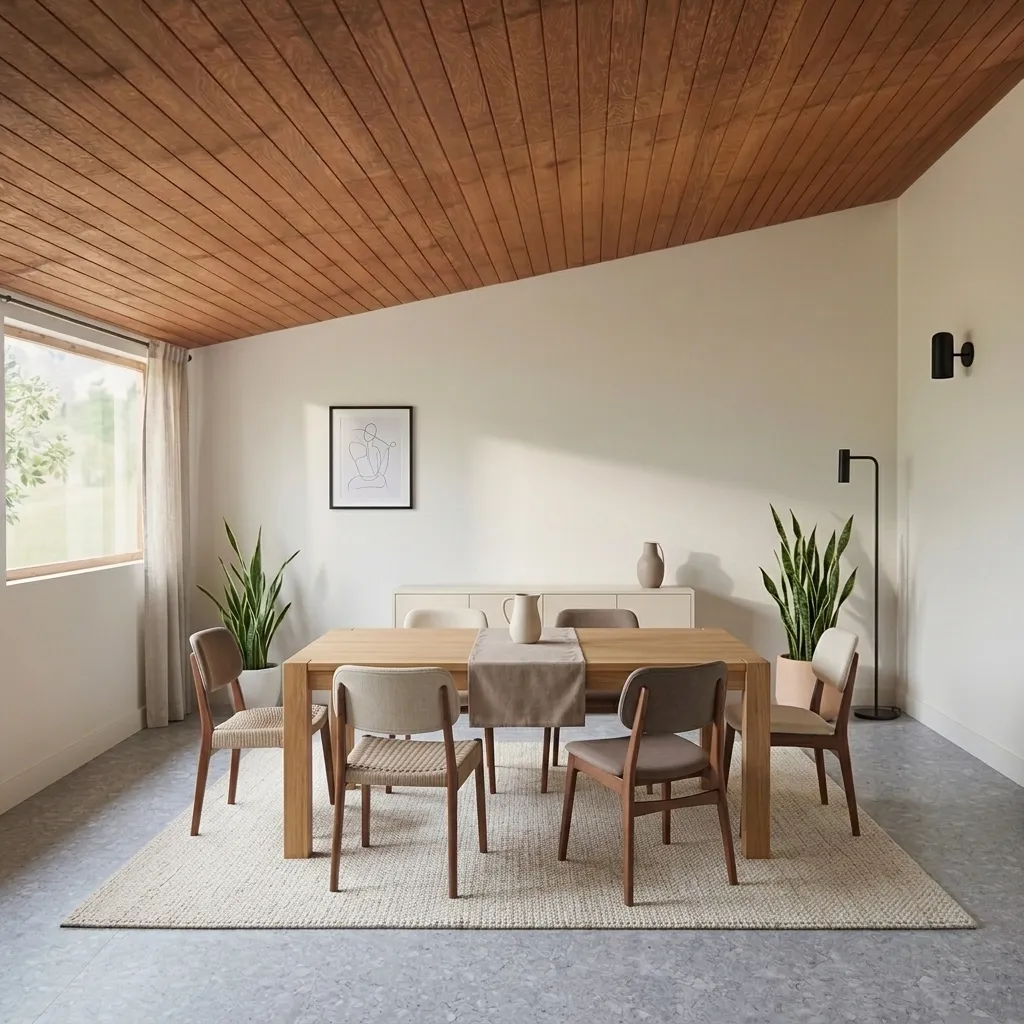
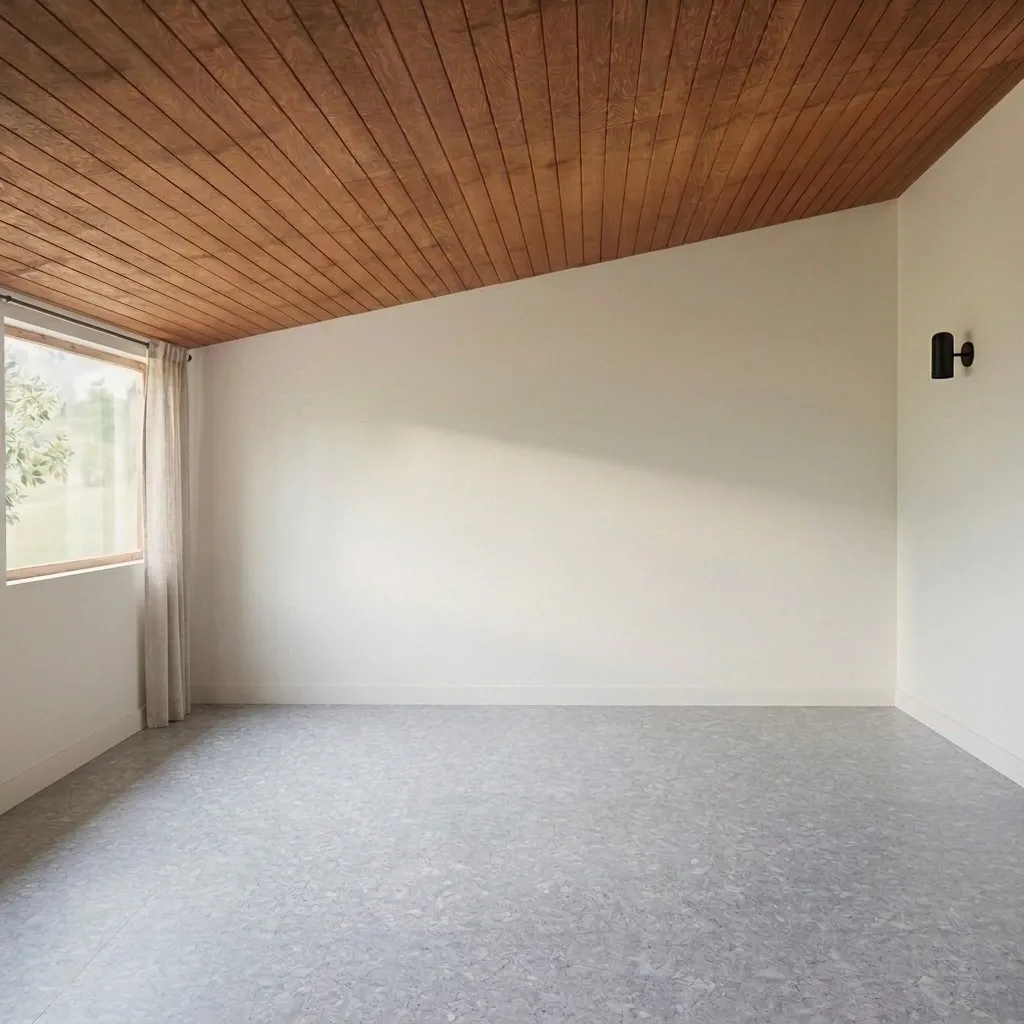
Look at the two images above. The first is the actual empty room. The second is the same room after AI virtual staging. The difference is striking, and that is precisely why disclosure is required. A buyer browsing listings online would reasonably expect to walk into the furnished room, not the empty one.
That is exactly why regulators stepped in. Buyer frustration with misleading, AI-enhanced listing photos has become a documented headache, covered directly by the financial press in stories like Yahoo Finance’s “Weary homebuyers have a new headache: misleading AI listing photos.” When a buyer walks into a home expecting the warm, furnished living room they saw online and finds an empty concrete box, trust breaks down, and increasingly that breakdown ends in a formal complaint. California is simply the first state to write the fix into law.
The risk is not hypothetical. Agents have lost listings, faced board complaints, and paid settlements over photos that buyers felt were deceptive. The solution is not to stop using virtual staging, it is to disclose it properly every single time.
Staging is also not the only edit that trips this. Removing a seller’s clutter, changing a floor or converting a daytime exterior to dusk are all alterations in the same sense, and they go out unlabelled far more often than staging does because they feel like tidying rather than inventing. Our guide to AI real estate photo editing draws the line job by job: which edits are corrections that need no disclosure, and which ones put you here.
California AB 723: The Strictest Virtual Staging Law in the U.S.
California Assembly Bill 723 was approved by the Governor on October 10, 2025 and took effect on January 1, 2026. It is the first state law to specifically address digitally altered real estate photographs and it carries the most serious consequences.
Prefer to hear it from a working real estate photographer? Nathan Cool breaks down what the 2026 disclosure rules mean for your listing photos, and where agents keep getting it wrong:

Video: Nathan Cool Photo on the 2026 AI-photo disclosure rules. Helpful primer, though always confirm the specifics against your own state and MLS.
What AB 723 Requires
Any real estate licensee who uses photographs that have been digitally altered to add, remove, or modify physical features of a property must provide clear written disclosure to prospective buyers. This covers:
- Virtually staged photos (adding furniture to empty rooms)
- AI-generated room redesigns (changing wall colors, flooring, fixtures)
- Digitally removing items from photos (decluttering, removing damage)
- Enhancing exterior photos (adding landscaping, changing sky)
- Any AI or software modification that alters the appearance of the property
What Are the Penalties?
This is where most of the online panic comes from, so here is the measured reality. AB 723 requires disclosure, but as of early 2026 the law itself does not set a fixed dollar fine, and major MLSs are enforcing it through correction rather than penalties. CRMLS, the largest MLS in California, states there is currently no fine for a violation and that its Compliance team will simply contact you to fix the listing, though its Rules Committee has said it will revisit fines during 2026.
That does not make it risk-free. Undisclosed alteration can still lead to:
- MLS sanctions from your local board, including listing removal and board-specific fines
- Complaints to the California DRE and possible disciplinary action for misrepresentation
- Civil liability if a buyer relied on misleading photos and can show they were harmed
The law applies to all California real estate licensees: agents, brokers, and teams. It also applies to photos created by third parties (photographers, staging companies, AI tools) if the licensee uses them in a listing without disclosure.
How to Comply with AB 723
The law requires clear written disclosure but does not specify exact language. Based on early guidance from the California Association of Realtors (CAR), the safest approach is:
- Add a conspicuous text overlay or caption on every altered image: "Virtually Staged" or "Digitally Altered"
- Make the original, unaltered image available. On the MLS, place it directly before or after each altered photo. On sites you control you can link to it, and AB 723 also accepts a public URL or QR code that leads to the original. This pairing is the exact mechanism CRMLS and other California MLSs now require, not a vague "available on request"
- Include a written disclosure in the listing remarks: "Some photographs in this listing have been digitally altered and do not represent the current physical condition of the property"
- Apply it everywhere the photo appears, not just the MLS. AB 723 covers your website, social posts, print flyers, and email marketing, anywhere an altered image is published
- Document your disclosure process for each listing in case of complaints
Watch the Before and After That Becomes Your Disclosure
The single cleanest way to stay compliant is to hand buyers the empty room and the staged version together. That pairing is the disclosure. Here is what it looks like in practice: an empty room furnished from one photo in about twenty seconds, with the original shot preserved so you can show both side by side.

The empty room and the staged result from one upload. Publishing both is the gold-standard disclosure under AB 723 and most MLS rules.
Want to see the same idea across several looks? Our one empty room, 6 AI designs walkthrough shows how a single before shot can anchor multiple staged versions, each one disclosed against the same original.
Colorado's AI Law: Delayed, Not What You Heard
You may have read that Colorado's AI Act would force agents to label AI-staged photos starting in mid-2026. That timeline changed. On May 14, 2026, Governor Polis signed SB 189, which pushed the effective date from June 30, 2026 back to January 1, 2027 and significantly narrowed the law's scope.
The revised law focuses on AI used in consequential decisions about housing, such as leasing eligibility or lending, rather than marketing images. So the widely reported "June 2026, $20,000 per violation" deadline for staging photos is no longer accurate. For now, virtual staging in Colorado is governed mainly by NAR guidance and local MLS rules, the same as most states.
It is still worth watching. The disclosure-and-transparency direction is clear, and the 2027 date will arrive. But do not let the original headlines push you into thinking there was a staging-specific fine taking effect this summer.
NAR Guidelines and MLS Rules: The National Standard
Even if your state does not have a specific virtual staging law, you are almost certainly bound by NAR guidelines and your local MLS rules. These have tightened considerably in the past two years.
NAR Best Practices (Updated 2025)
The NAR Code of Ethics already governs this through Article 12 and Standard of Practice 12-1, which require that any electronically altered image be presented so it is not misleading and that the alteration is disclosed. In practice that means:
- All virtually staged photos should carry a clear label visible to consumers
- Original unaltered photos should be available for buyers to view
- Virtual staging should not misrepresent the condition, size, or features of a property
- Agents are responsible for disclosure even when a third party created the images
- Items that are part of the sale (fixtures, built-ins) should not be digitally added or removed
Common MLS Virtual Staging Rules
MLS rules vary by board, but the most common requirements across major MLS systems include:
- Watermark requirement: Many MLSs now require a visible watermark on every virtually staged image
- First photo rule: Several MLSs require that the first listing photo be an unaltered image of the property
- Description disclosure: Written disclosure in the listing description is required by nearly all MLS systems
- Separate photo category: Some MLSs require virtually staged photos to be uploaded to a separate category from regular photos
- No structural alterations: Most MLSs prohibit digitally adding or removing structural features (walls, windows, countertops)
Check your local MLS rules directly. Policies change frequently and violations can result in fines ranging from $500 to $5,000 per listing, plus temporary or permanent removal from the MLS.
What Exactly Counts as Virtual Staging?
This is where agents get confused. Not every photo edit is virtual staging, but more edits than you think fall under disclosure requirements. Here is how to think about it:
Requires Disclosure
- Adding furniture to an empty room
- Replacing existing furniture with different pieces
- Changing wall colors, flooring, or fixtures digitally
- Adding landscaping, outdoor furniture, or pool features
- Removing clutter, personal items, or damage from photos
- AI-generated room redesigns of any kind
- Sky replacement or seasonal changes to exterior photos
Generally Does Not Require Disclosure
- Standard photo editing: brightness, contrast, white balance adjustments
- HDR photography composites
- Lens distortion correction
- Removing temporary items that are not part of the property (cars in driveway, trash bins)
When in doubt, disclose. Over-disclosure protects you. Under-disclosure exposes you.
The Disclosure Checklist: Every Listing, Every Time
Use this checklist for every listing where you use virtually staged or AI-altered photos:
- 1. Label every altered image. Add a visible text overlay reading "Virtually Staged" or "AI-Generated Rendering." Place it where it is readable but does not obscure the image.
- 2. Include unaltered photos. Upload the original empty room or current condition photos alongside staged versions. Ideally, pair them so buyers can see the before and after.
- 3. Write a listing description disclosure. Add a sentence like: "This listing includes virtually staged photographs. These images have been digitally altered and do not represent the current physical condition of the property."
- 4. Check your MLS rules. Follow any specific formatting, watermark, or category requirements from your local MLS board.
- 5. Inform buyers at showing. If a buyer mentions the photos during a showing, verbally confirm that the staging is digital. First-time buyers especially may not understand virtual staging.
- 6. Document everything. Keep a record of which images were altered, when disclosure was made, and how. This protects you if a complaint is filed months later.
- 7. Review third-party work. If a photographer, staging company, or AI tool created the images, you are still responsible for disclosure. Review every image before uploading.
Copy-and-Paste Disclosure Language
You do not need to draft this from scratch. Below are three field-tested disclosures you can drop straight into a listing. Pick the one that fits, and always adjust to your local MLS wording. The most defensible version names what is fake and points to the original photo, which is also what California AB 723 asks for.
Short version (listing description, minimum):
“Some images have been virtually staged to show the potential of the space. The property is being sold in its current, unfurnished condition.”
Specific version (recommended, names the alteration):
“Photos marked ‘Virtually Staged’ include digitally added furniture and decor. These rooms are vacant. Furniture and accessories are not included in the sale. Please review the original photos and tour the property to confirm current condition.”
AB 723 / strict-state version (links to the original):
“This listing contains digitally altered images. Furniture, decor, and finishes shown may have been added or modified and do not reflect the current condition of the property. The original, unaltered photograph of each staged room is included in this listing [or: available at the link/QR code provided].”
On the image itself, keep the watermark short and legible: “Virtually Staged” in a corner, high-contrast, roughly 4 to 6 percent of the image height. That single word carried in the pixels is what survives syndication, screenshots, and paid ads.
Where Disclosure Has to Travel: Zillow, Redfin, and Social
One of the most common questions agents ask is whether disclosure stops at the MLS. It does not. Your MLS syndicates listings out to Zillow, Redfin, Realtor.com, and dozens of other portals, and a photo that is labeled on the MLS can lose its caption once it is pulled into a different feed. The rule most boards now apply is simple: the disclosure has to travel with the image, not stay behind on the listing page.
- Zillow and Redfin: Both expect virtually staged photos to be identified. The safest move is a visible watermark burned into the image itself, because a caption you add on the MLS may not carry over when the listing syndicates. A staged photo that shows up unlabeled on Zillow is still a compliance problem even if you labeled it at the source.
- Realtor.com and other portals: Treat every portal as if it strips your captions. If the word "Virtually Staged" is part of the pixels, it survives syndication everywhere.
- Social media and paid ads: AB 723 and NAR guidance both apply to marketing beyond the MLS. An Instagram reel or a Facebook ad using a staged photo needs the same label as the listing. This is the step agents forget most often.
- Email and print flyers: Same standard. If the altered image is published anywhere a buyer can see it, the disclosure goes with it.
The practical takeaway: bake the label into the image. A watermark cannot be stripped by a syndication feed, an ad platform, or a screenshot, which is exactly why it is the one method that keeps you covered on every surface at once.
How AI Virtual Staging Tools Handle Disclosure

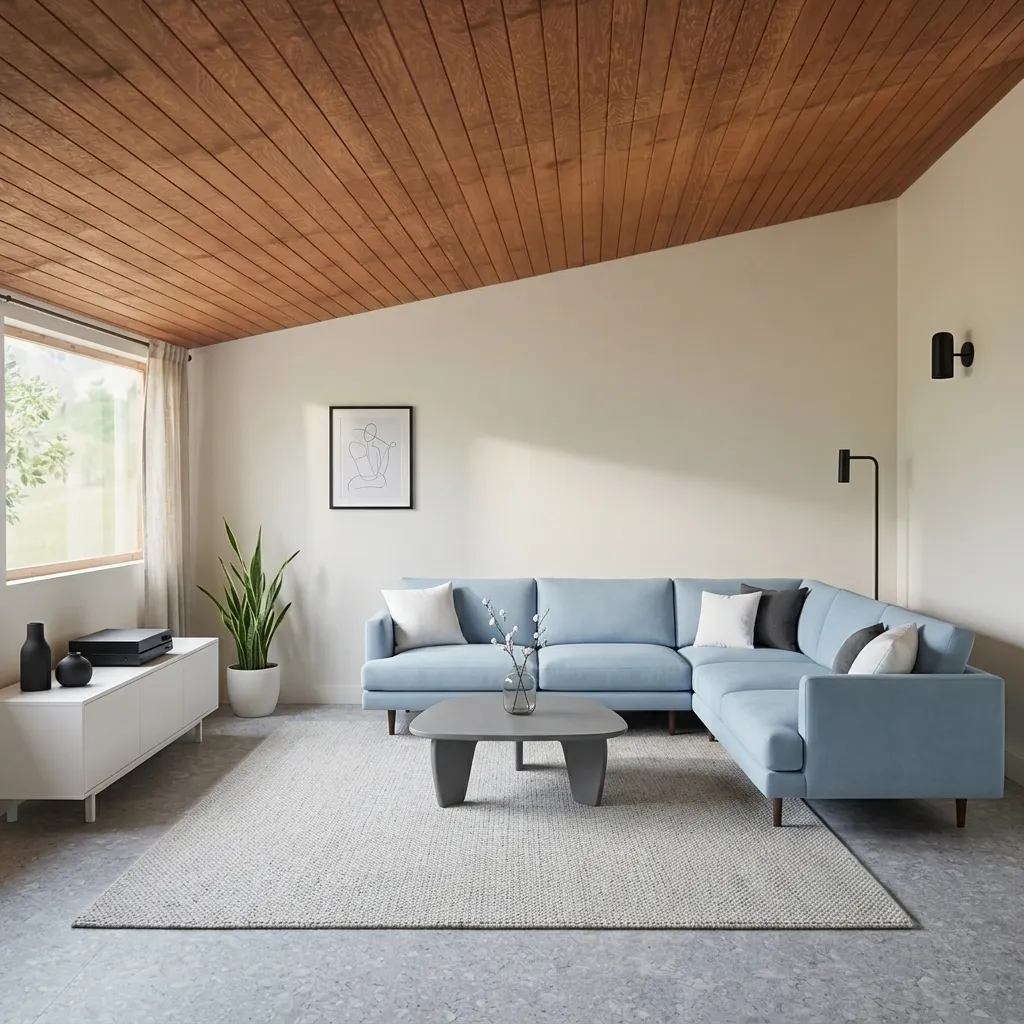
The same empty room staged as a living room and a bedroom. Both are photorealistic. Both require disclosure. And both demonstrate why including the original empty photo alongside staged versions is the gold standard for compliance.
The best AI staging tools are designed with compliance in mind. When choosing a virtual staging tool, look for these features:
- Original photo preservation: The tool should save your original upload so you always have the unaltered version
- Easy before-and-after comparison: Being able to show the empty room next to the staged version is the clearest form of disclosure
- Realistic proportions: AI that places furniture at accurate scale reduces the risk of misrepresenting room size
- Real furniture: Tools like MeltFlex use real, shoppable furniture with actual dimensions, so the staging reflects what could physically exist in the space
The worst practice is using AI to add structural features that do not exist, such as a fireplace, an island, or an extra window. This crosses the line from staging into misrepresentation, and no amount of disclosure makes it acceptable.
What Happens When Agents Get It Wrong
Three real scenarios from 2025 that illustrate the consequences:
Scenario 1: An agent in Los Angeles used AI to stage an empty condo. The photos showed a fully furnished modern apartment. No disclosure was included. The buyer scheduled a showing expecting the furnished space and felt deceived when they arrived to bare walls. A complaint was filed with the local board. The agent received a $2,500 fine and a written warning from the DRE.
Scenario 2: A team in Denver digitally removed water stains from a ceiling in listing photos. The buyer discovered the stains during inspection and claimed the photos were deceptive. The seller's agent argued it was "minor editing." The buyer's agent filed a complaint. The listing was pulled, and the deal fell through.
Scenario 3: An agent in Dallas used AI to change the wall color and flooring in listing photos to show "potential." Buyers arrived expecting hardwood floors and found carpet. The agent had included a small disclosure in the listing text, but buyers argued it was not prominent enough. The MLS issued a warning but no fine, because the disclosure, while minimal, technically met the board's requirements.
The takeaway: even when you disclose, make the disclosure impossible to miss. Burying it in the listing description is not enough.
State-by-State Overview: Where the Rules Are Tightest
More states are expected to follow California and Colorado with specific legislation. Illinois and Washington have active bills as of early 2026. Regardless of your state, following the disclosure checklist above keeps you compliant everywhere.
The Bottom Line for Agents
Virtual staging is one of the highest-ROI tools in real estate marketing. AI staging costs under $5 per photo and helps listings sell faster. None of that value goes away because of disclosure rules.
In fact, transparent disclosure builds trust. When you show a buyer the empty room and the staged version side by side, you are saying: "This is what the space is, and this is what it could be." That is not deceptive, it is helpful. It is the reason staging works in the first place.
The agents who will get in trouble are the ones who try to pass AI-staged photos as real photography. The agents who will succeed are the ones who use AI staging openly, disclose it clearly, and let the quality of the staging speak for itself.
Everything above is US law. If you market property inside the European Union, a second and stricter regime applies on top of it: Article 50 of the EU AI Act has required a visible label on AI generated and AI manipulated images since 2 August 2026, with no MLS-style carve-outs. The EU AI Act rules for AI generated images cover who counts as a deployer, where the label has to sit, and why a restaged listing photo is the clearest case in the whole Act.
Start staging your listings with MeltFlex’s free virtual staging AI tool. You get 1 free staged photo, photorealistic results in 20 seconds, and your original photos preserved for the side-by-side disclosure that keeps you compliant. For listing videos, the AI video walkthrough tool turns the staged photo into a moving tour buyers can scrub through.
Sources and Further Reading
Every legal claim in this guide traces back to a primary source. Check the ones that apply to your state and MLS, because the details do change:
- California AB 723, full bill text (California Legislature), the altered-image disclosure law, approved October 10, 2025, effective January 1, 2026.
- CRMLS Digitally Altered Image Guidance and FAQs, how California’s largest MLS enforces AB 723, including the current no-fine, correction-first stance.
- NAR Code of Ethics, Article 12 and Standard of Practice 12-1 on truthful advertising and disclosing electronically altered images.
- Yahoo Finance: Weary homebuyers have a new headache, misleading AI listing photos, press coverage of the buyer-trust problem driving these rules.
Frequently Asked Questions
Is the $250-per-photo MLS fine real?
Partly. The $250-per-photo fine for deleting photos from the MLS is a real but long-standing rule at several MLS systems (such as SmartMLS and connectMLS), not a new 2026 nationwide law. A viral X post made it sound brand new. It applies to deleting photos, not to virtual staging, and is separate from California AB 723.
Do I have to disclose virtual staging on listing photos?
Yes. Most MLS systems require clear disclosure. Starting January 1, 2026, California AB 723 requires licensees to disclose digitally altered photos and show the original image alongside. NAR guidelines recommend labeling all virtually staged images.
What is California AB 723?
Assembly Bill 723 requires California real estate licensees to disclose when listing photos have been digitally altered, and to show the original unaltered image directly before or after the altered one. It covers virtual staging, AI redesigns, and any modification that changes the appearance of a property. As of early 2026 it sets no fixed fine, and large MLSs enforce it through correction.
What happens if I do not disclose virtual staging?
Consequences include listing removal, board-specific MLS fines, complaints to your state real estate board, and civil claims from buyers who feel misled. AB 723 itself sets no fixed fine as of early 2026, but compliance is enforced and repeated misrepresentation can escalate to disciplinary action.
How do I properly label virtually staged photos?
Add a visible text watermark on the image itself reading "Virtually Staged." Include a written disclosure in the listing description. Provide original unaltered photos alongside staged versions. Follow your local MLS formatting requirements.
Does MeltFlex help with disclosure?
MeltFlex preserves your original uploaded photos so you always have the unaltered version for side-by-side comparison. The tool generates clearly labeled AI-staged images using real furniture at accurate scale.
Are the rules different in each state?
Yes. California has the strictest law (AB 723). Colorado passed an AI law but delayed it to January 2027 under SB 189 and narrowed it away from staging photos. Most other states rely on NAR guidelines and local MLS policies. Always check your local MLS rules for specific requirements.
Do I have to disclose virtual staging on Zillow and Redfin?
Yes. Disclosure has to travel with the image, not stay on the MLS listing page. When your MLS syndicates to Zillow, Redfin, and Realtor.com, a caption you added at the source can be dropped. The safest method is a visible "Virtually Staged" watermark burned into the image itself, so it survives syndication, social posts, and paid ads. The same standard applies to Instagram, Facebook, email, and print flyers.



)