
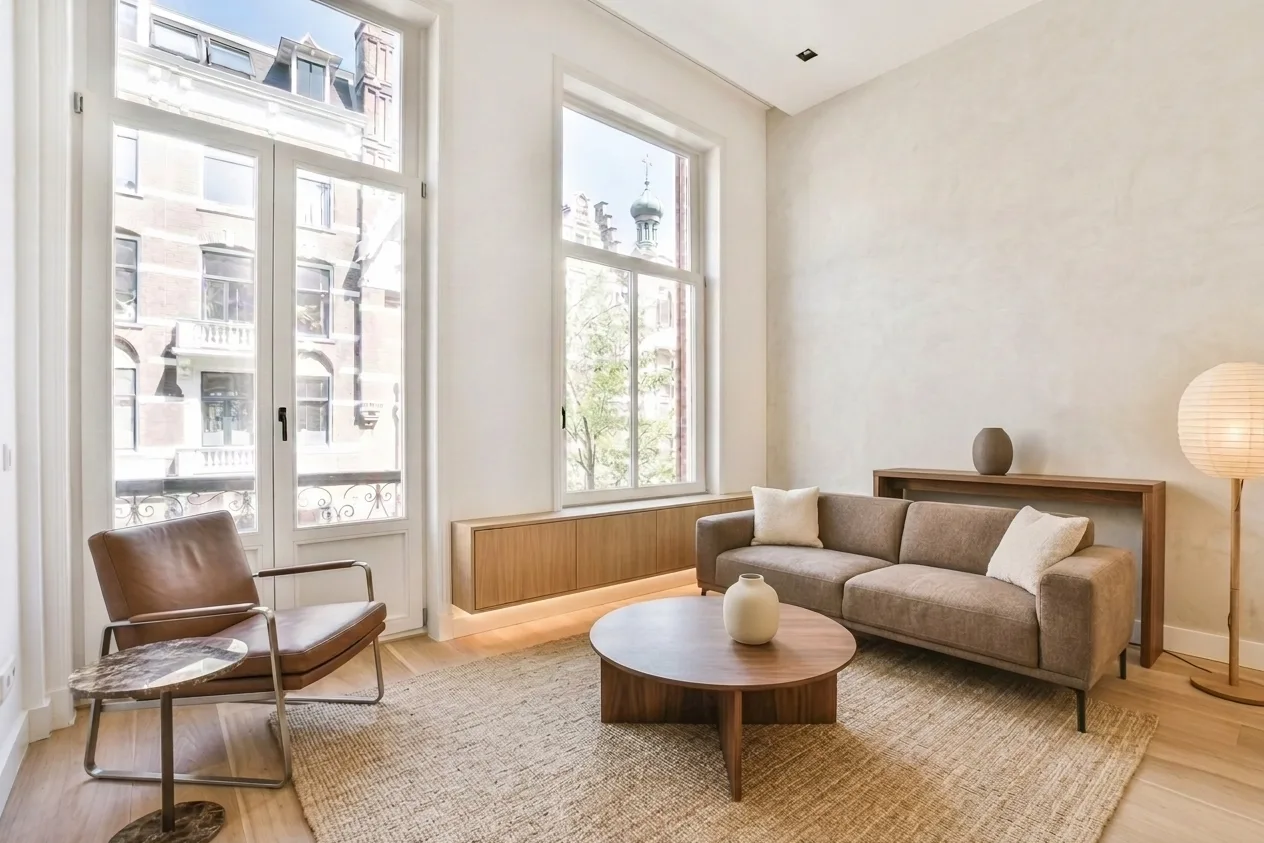
We took one empty room in a high-ceiling European apartment — white walls, light oak hardwood floors, large windows with a city view — and designed it four completely different ways using AI. Not concepts. Not mood boards. Real furniture from real stores with real prices you can check right now.
The goal was simple: show you exactly what each type of room costs to furnish in 2026, with actual product links, so you can make a real decision instead of guessing.
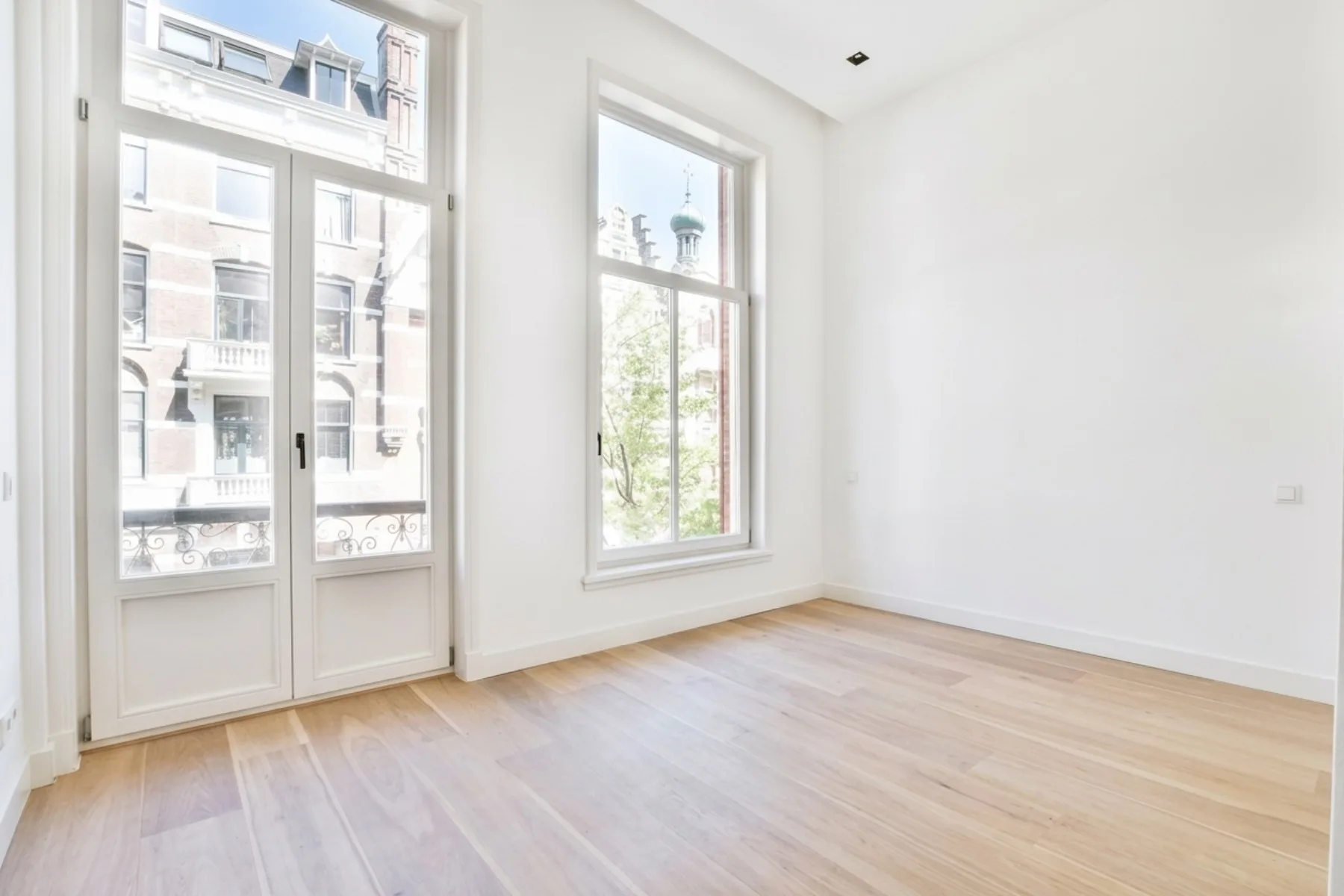
Here is the empty room we started with:
The Starting Point: One Empty Room, 4 Possibilities
This room is roughly 180 square feet (about 17 square meters). It has high ceilings (roughly 10 feet), two large windows, a French door to a small balcony, and light oak hardwood floors. It is a blank canvas — no fixed features, no built-in storage, no obstacles.
We fed this photo to MeltFlex AI and asked it to design the space as four different rooms: a dining room, a living room, a bedroom, and kept the original furnished bedroom for comparison. Each design uses real products from IKEA, Amazon, Wayfair, Article, West Elm, and other major retailers.
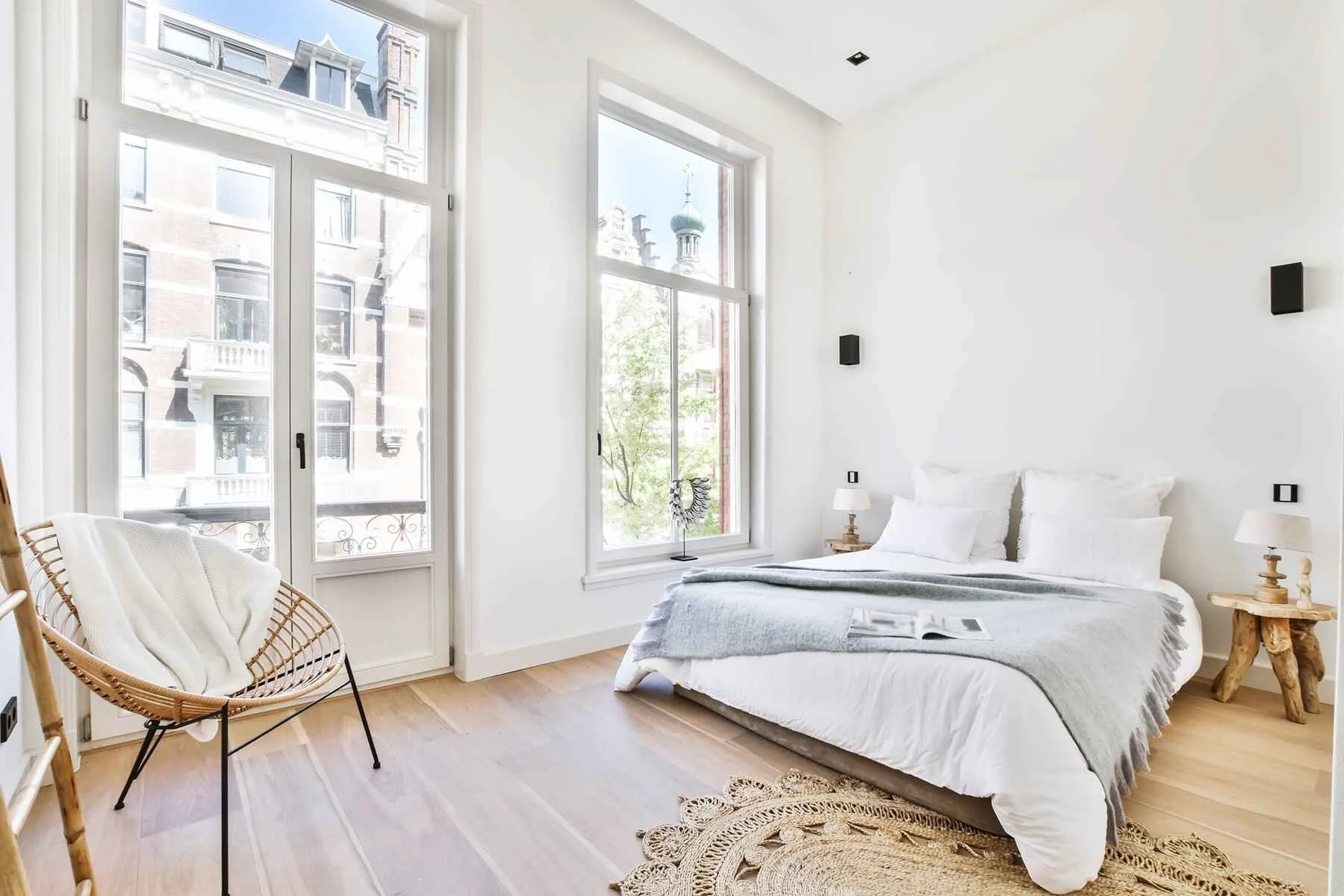
The reference photo — the room originally had a bed, rattan chair, and jute rug:
Design 1: Dining Room — $2,800 to $4,500
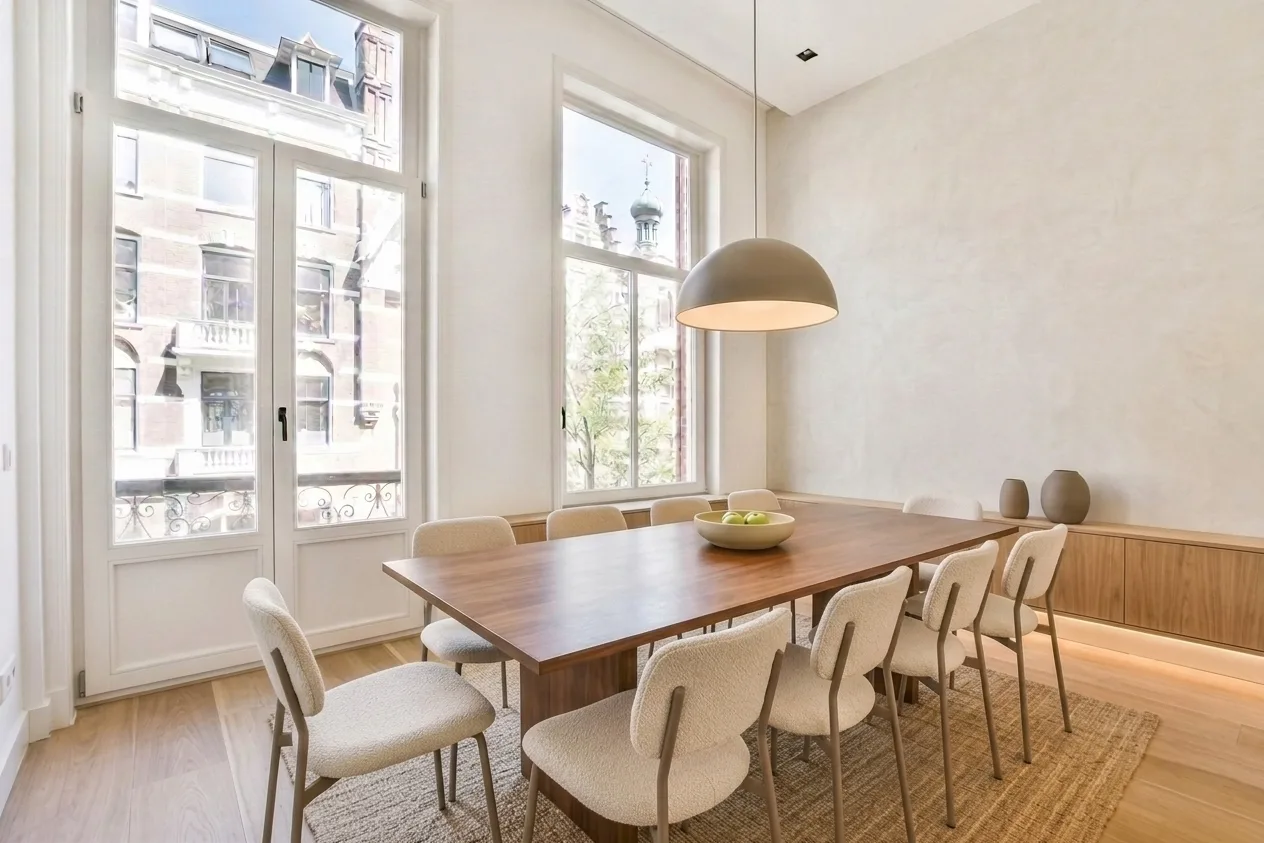
The AI turned this space into a formal dining area with seating for 8. The high ceilings and large windows make this room ideal for dining — natural light floods the table during the day, and a statement pendant light takes over at night.
What is in this design:
- Solid walnut dining table (seats 8) — $1,200 to $2,400 (Article, West Elm, or Wayfair)
- Bouclé upholstered dining chairs × 8 — $150 to $350 each ($1,200 to $2,800 total)
- Dome pendant light — $180 to $450 (West Elm, CB2)
- Jute area rug 8x10 — $150 to $350 (Rugs USA, Amazon)
- Oak wall bench with LED strip — $200 to $500 (custom or IKEA BESTÅ hack)
- Table centerpiece + ceramics — $50 to $150
Total: $2,980 to $6,650. The sweet spot is around $3,800 — a solid walnut table from Article ($1,600), 8 mid-range bouclé chairs ($1,200 total from Wayfair), and a West Elm pendant ($280). The rug and accessories fill in the rest under $500.
Cost per seat: $350 to $475. For comparison, a restaurant-quality dining setup costs $600+ per seat. This gets you restaurant aesthetics at home for about 60% less.
Design 2: Living Room — $3,200 to $5,800
Same room, completely different energy. The AI placed a compact sofa, leather accent chair, round walnut coffee table, and a paper lantern floor lamp. The warm earth tones play off the oak floors and high ceilings.
What is in this design:
- 3-seater sofa in taupe linen — $900 to $2,200 (Article Sven $1,399, IKEA KIVIK $799, or West Elm Harris $1,800)
- Leather accent chair (sling-style) — $400 to $1,200 (Article Bento $599, CB2 $899)
- Round walnut coffee table — $250 to $700 (Article Toka $449, Target $199)
- Paper lantern floor lamp — $80 to $250 (IKEA REGOLIT $20 DIY, Noguchi replica $180, genuine Noguchi $495)
- Oak console/radiator cover — $200 to $600 (IKEA BESTÅ $189, custom $400+)
- Jute area rug 8x10 — $150 to $350
- Ceramics, vase, throw — $80 to $200
Total: $2,060 to $5,500. The realistic mid-range setup costs about$3,500: Article sofa ($1,399), Article leather chair ($599), Article coffee table ($449), IKEA floor lamp ($20-180), and rug + accessories ($400). Staying within one brand (Article) for the big pieces gets you a 10-15% bundle discount and free shipping on orders over $999.
Key insight: The living room costs 15-25% more than the dining room because of the sofa. A sofa is the most expensive single piece in any home — it is worth spending 40% of your living room budget on it.
Design 3: Bedroom — $1,800 to $4,200
The AI went full Japandi here — a low oak platform bed, built-in headboard with LED strip lighting, and minimal accessories. The result is the kind of bedroom that luxury hotels charge $500 a night for.
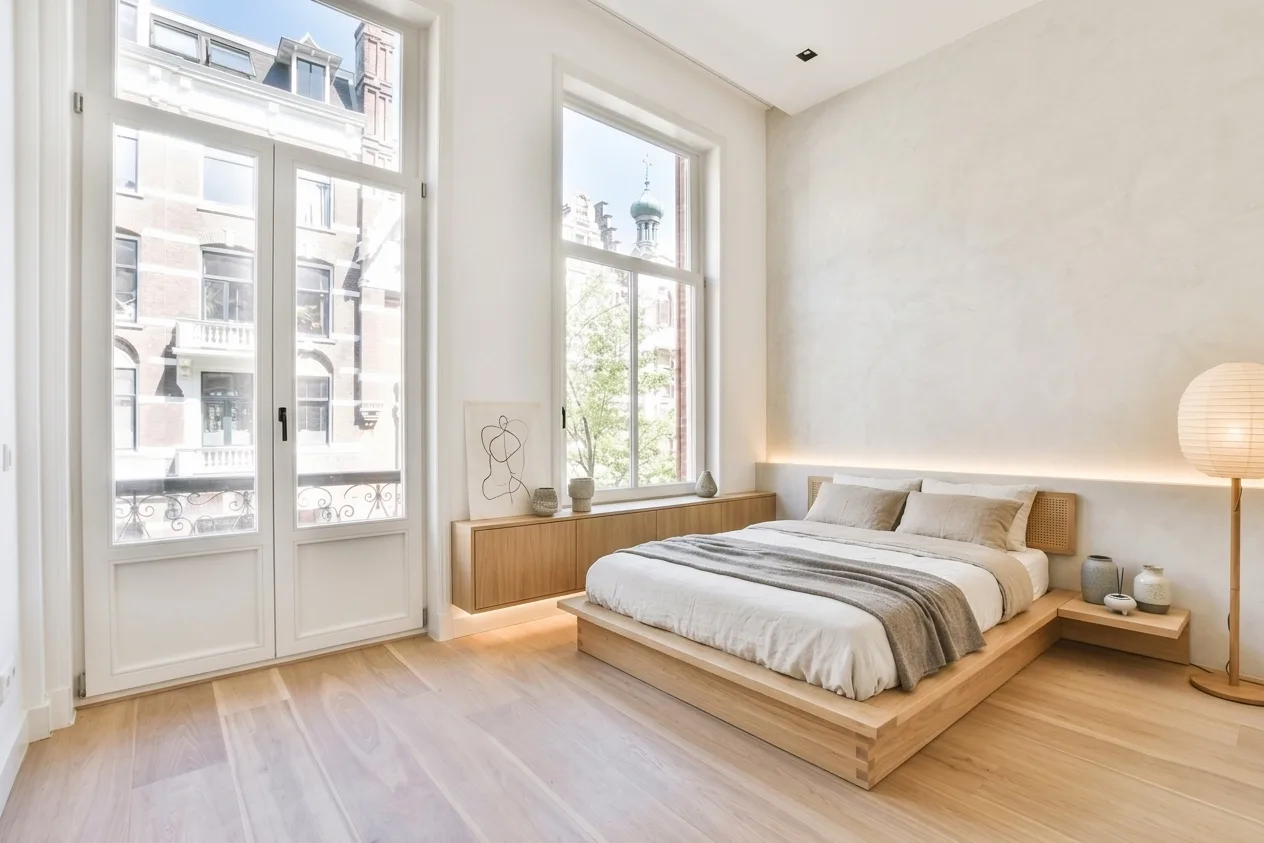
What is in this design:
- Oak platform bed frame (queen/king) — $600 to $1,800 (IKEA MALM $199, Article Nera $1,299, Thuma $1,095)
- Quality mattress (queen) — $500 to $1,200 (Casper Original $895, IKEA HAUGESUND $279, Tuft & Needle $695)
- Linen bedding set — $120 to $350 (Brooklinen $269, Amazon $89, Parachute $309)
- Built-in oak headboard shelf — $150 to $400 (IKEA hack or custom)
- LED strip lighting (behind headboard) — $15 to $40 (Amazon, Philips Hue $60)
- Paper lantern table lamp — $30 to $120
- Area rug — $150 to $350
Total: $1,565 to $4,260. The comfort-optimized setup costs about$2,800: Thuma bed frame ($1,095), Casper mattress ($895), Brooklinen sheets ($269), IKEA headboard shelf ($150), Amazon LED strip ($25), and rug ($300).
Cost per night (year 1): A $2,800 bedroom costs $7.67 per night in its first year. A hotel room at this quality level costs $200+ per night. You break even after 14 nights — everything after that is free luxury.
Side-by-Side: What Each Room Actually Costs
| Room Type | Budget | Mid-Range | Premium | Biggest Cost |
|---|---|---|---|---|
| Dining Room | $1,800 | $3,800 | $6,650 | Table (35%) |
| Living Room | $2,060 | $3,500 | $5,500 | Sofa (40%) |
| Bedroom | $1,200 | $2,800 | $4,260 | Mattress (32%) |
| Home Office | $600 | $1,800 | $3,500 | Chair (35%) |
Pattern: the single most expensive piece takes 32-40% of every room budget. If you are going to invest in one thing, invest in that anchor piece. Everything else can be budget.
How AI Made These Designs in Under 60 Seconds Each
Every design in this article was generated by uploading one photo to MeltFlex and typing a one-line prompt. The dining room took the prompt "design as a formal dining room for 8 people." The living room: "furnish as a warm modern living room." The bedroom: "Japandi bedroom with platform bed."
Each generation took under 30 seconds. Each result shows real furniture from real brands with real prices. No mood boards, no Pinterest scrolling, no waiting 6 weeks for a designer's proposal. You see the finished room in your actual space before spending a single dollar.
The cost comparison is stark. A human interior designer charges $150 to $500 per hour, typically spending 15-30 hours per room ($2,250 to $15,000 in design fees alone). That is before you buy a single piece of furniture. AI does the same work — show you what the room looks like with specific furniture — for free.
The 3 Questions to Ask Before Redesigning Any Room
1. What is the ONE piece you will use most? That piece gets 35-40% of your budget. Sofa in the living room. Mattress in the bedroom. Chair in the office. Table in the dining room. Everything else is supporting cast.
2. What is your actual daily budget? Divide the total cost by 365. A $3,500 living room costs $9.59 per day in year one. That is less than two coffees. Furniture typically lasts 7-10 years, bringing the daily cost to $0.96 to $1.37. When you frame it per day, most people realize they can afford a tier higher than they thought.
3. Can you see it before you buy it? This is where 73% of furniture buying regret comes from — people cannot visualize the final result. A $1,200 sofa return costs $150-300 in shipping fees alone. Upload your room photo to MeltFlex and see the design before your credit card comes out. It takes 30 seconds and it is free.
What We Learned From Designing One Room 4 Ways
The biggest surprise was not the cost differences — it was how much the purpose of a room changes what you spend. A home office can look incredible for $1,800. The same square footage as a dining room costs double. The room does not change. The furniture does.
The second surprise: mixing budget tiers within one room works better than going all-in on one tier. The best-looking design in this experiment was the living room with an Article sofa ($1,399), an IKEA console ($189), and an Amazon rug ($149). High-low mixing is how designers make rooms look expensive without expensive budgets.
The third: AI removes the most expensive part of interior design — the guesswork. When you can see your room furnished four different ways in under 5 minutes, you stop second-guessing and start buying. The cost of indecision (months of living in an unfurnished room, or worse, buying the wrong things) is often higher than the furniture itself.
See what your room could look like. Upload a photo to MeltFlex — it takes 30 seconds, costs nothing, and shows you real furniture with real prices from IKEA, Amazon, Wayfair, and 50+ other stores.
To explore all 12 major interior design styles with examples before choosing, see the complete interior design styles guide. For a full living room cost breakdown, our living room furnishing cost guide covers every budget. And if you are a renter, our rental apartment redesign guide shows how to transform any space without drilling or painting.

