
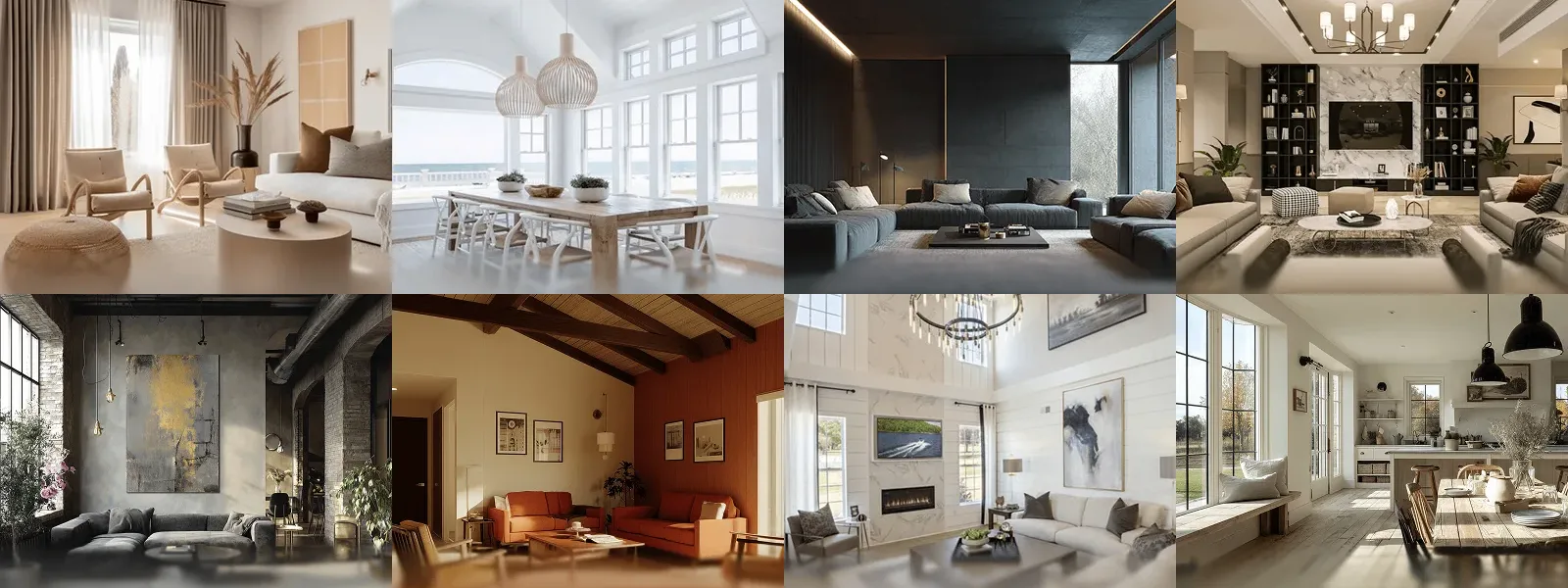
It is midnight and you are still scrolling. Every saved pin looks nothing like the one before it. One minute you are in love with the raw concrete and exposed pipes of an industrial loft. The next you cannot stop staring at a creamy Scandinavian living room with little more than a sofa and a plant in it.
Sound familiar? You do not have a design problem. You have a decision problem. And you are far from alone. Most people can point at a room they love but cannot name the style, never mind recreate it at home.
So let us fix that. Below are the 8 most popular interior design styles of 2026, each with a real AI-rendered example, the details that actually define it, and an honest read on who it suits. By the end you will know which one fits you, your life, and your space. No design degree required. Want even more inspiration first? Our interior design examples gallery shows all 15 popular styles across living rooms, bedrooms, and kitchens.
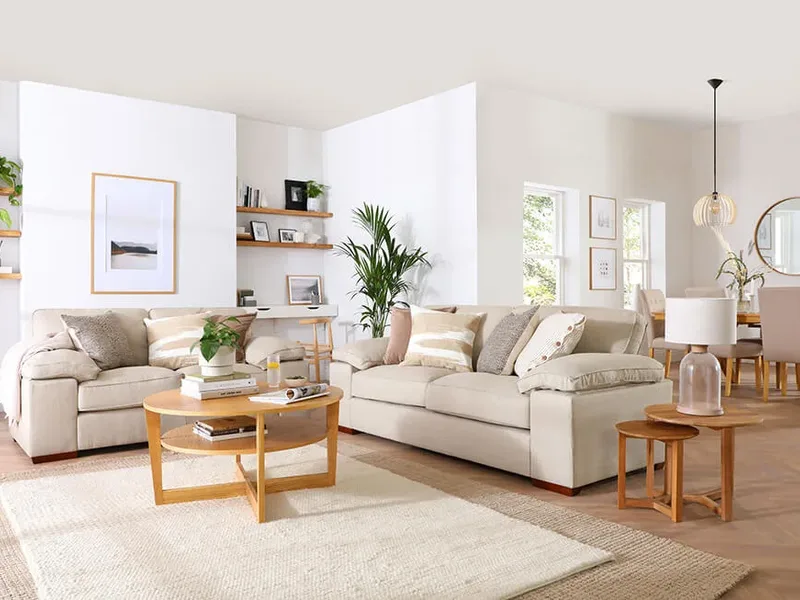
1. Scandinavian Interior Design
Search popularity: 27,000+ monthly searches
In three words: Warm, functional, light
Scandinavian design grew out of the Nordic countries in the 1950s as a quiet rebellion against long, dark winters. The idea is simple. Build bright, warm spaces from natural materials, clean lines, and furniture that earns its keep. Nothing extra, no ornament for the sake of it. Every object has a reason to be in the room.
Key Characteristics
- Color palette: White walls, cream, beige, and warm grey, with the odd muted pastel
- Materials: Light oak, birch, linen, wool, cotton, and sheepskin
- Furniture: Clean lines, tapered legs, almost no ornamentation, function first
- Lighting: As much daylight as possible, pendant lamps, and candles for that hygge glow
- Accents: Plants, woven baskets, ceramic vases, and soft textile throws
Best For
Small to medium apartments, families who want a low-maintenance home, and anyone chasing a calm space that looks effortlessly pulled together. It is the number one choice for new-build apartments because it sits so naturally against neutral walls and light wood floors. For the full 2026 palette, real costs, and room-by-room examples, see our Scandinavian interior design guide.
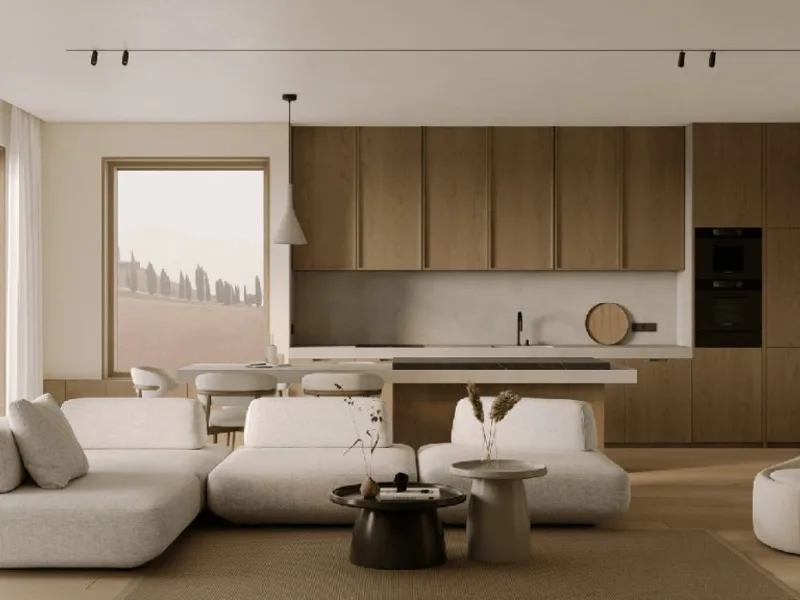
2. Japandi Interior Design
Search popularity: 13,500+ monthly searches (fastest growing)
In three words: Intentional, earthy, serene
Japandi is what happens when Japanese wabi-sabi, the idea that there is beauty in imperfection, meets Scandinavian functionalism. It is the most deliberate style on this list. Every object is chosen on purpose, and the empty space between things is treated as part of the design rather than a gap to fill.
Key Characteristics
- Color palette: Earth tones such as sand, stone, clay, charcoal, sage green, and warm white
- Materials: Raw wood, bamboo, rattan, stone, linen, and handmade ceramics
- Furniture: Low to the ground, organic shapes, visible craftsmanship, nothing mass-produced
- Philosophy: Less is more. Empty space is intentional, not unfinished
- Accents: A single piece of statement pottery, dried branches, woven textiles, stone objects
Best For
Minimalists who find pure white minimalism a little cold. People who love craftsmanship and natural imperfection. It works beautifully in small spaces too, because the less-is-more rule keeps clutter out by default. Learn the full approach in our Japandi interior design guide.
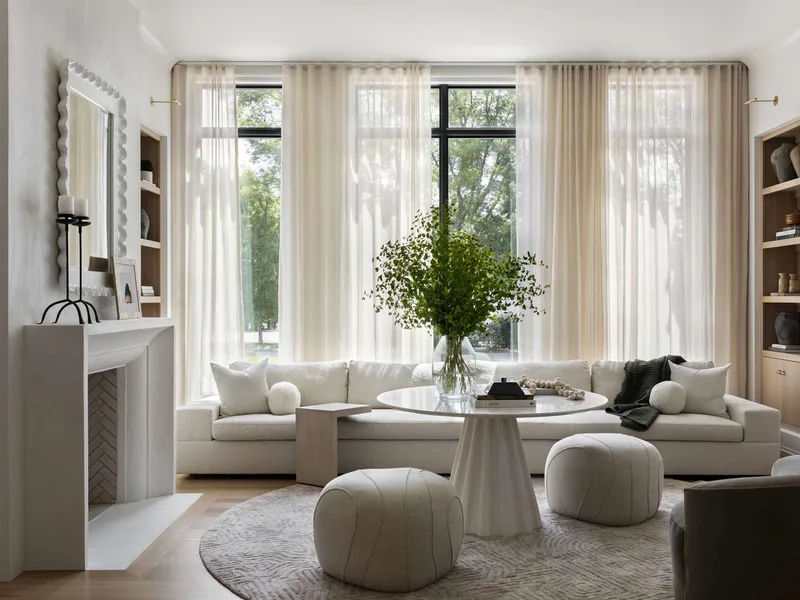
3. Modern Contemporary Interior Design
Search popularity: 33,000+ monthly searches
In three words: Current, sleek, versatile
People mix up "modern" and "contemporary" constantly, but they are not the same thing. Modern points to a specific era, the Mid-Century period of the 1950s and 60s. Contemporary means right now. It moves with the trends and pulls the best bits from several styles at once. For the full breakdown, with the two styles applied to the same real living room, bedroom and home office, see our complete modern vs contemporary interior design guide.
Key Characteristics
- Color palette: Neutrals as the base (grey, white, cream) with one or two bolder accents
- Materials: A deliberate mix, wood with metal, marble with glass, leather with concrete
- Furniture: Curved sofas, round tables, statement lighting, and contrasting textures
- Key trait: Sophisticated without feeling stiff. Lived-in luxury
- Accents: Abstract art, sculptural objects, high-quality textiles, the occasional bar cart
Best For
People who do not want to commit to one strict rulebook. Larger rooms that can carry mixed textures and a few statement pieces. Urban apartments and lofts. See how contemporary styling reshapes a room in our living room design guide, or browse the modern interior design guide for the 2026 palette and real room examples.
4. Minimalist Interior Design
Search popularity: 22,000+ monthly searches
In three words: Stripped, essential, precise
Minimalism takes "less is more" all the way to the edge. Where Scandinavian softens a room with textiles and Japandi warms it with craft, minimalism strips everything back to pure function and form. If it does not serve a purpose, it does not get to stay.
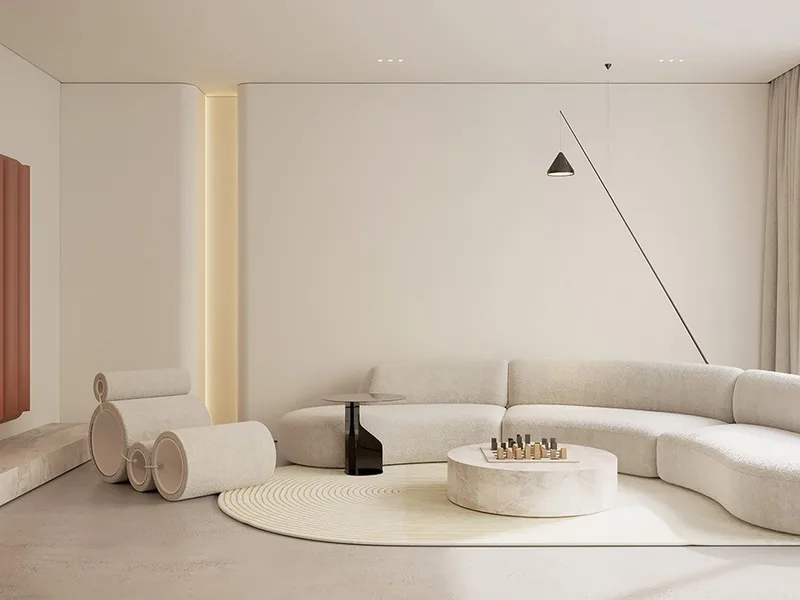
Key Characteristics
- Color palette: Monochrome, white, black, and grey, sometimes one warm neutral
- Materials: Polished concrete, smooth wood, glass, and matte metal
- Furniture: Geometric shapes, flush surfaces, hidden storage, no visible clutter
- Rule: Every item is intentional. The decoration is structural, not added on
- Accents: Almost none. A single plant, one piece of art, clean surfaces
Best For
People who find peace in empty space, who keep a tidy home by nature, and who genuinely own less by choice. It shines in modern architecture with strong lines and big windows. One honest warning: real minimalism takes discipline, because a single cluttered shelf breaks the whole effect. Our minimalist interior design guide walks through how to get the look without the room feeling bare.
5. Industrial Interior Design
Search popularity: 18,900+ monthly searches
In three words: Raw, urban, exposed
Industrial design celebrates the parts most styles try to hide. Unfinished materials and structural bones become the feature. Born in converted factories and warehouses, it turns pipes, ductwork, brick, and concrete into the things you actually want people to notice.
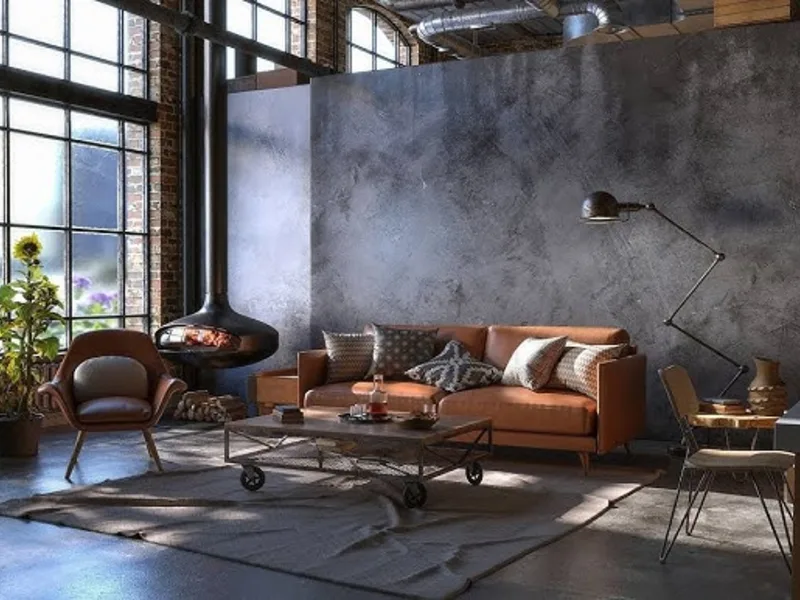
Key Characteristics
- Color palette: Dark and moody, charcoal, black, rust, dark brown, and concrete grey
- Materials: Exposed brick, raw concrete, weathered steel, reclaimed wood, and leather
- Furniture: Metal-frame tables, leather sofas, factory-style shelving, and Edison bulbs
- Architecture: Open plans, high ceilings, visible ductwork, and large windows
- Accents: Vintage signs, metal artwork, worn rugs, and mechanical objects
Best For
Loft apartments and open-plan spaces with high ceilings, and anyone who loves raw texture and does not mind a darker palette. It is the one style to be careful with in small apartments, since the heavy materials and dark tones can make a compact room feel like a cave. See it done well in our industrial interior design guide.
6. Mid-Century Modern Interior Design
Search popularity: 14,800+ monthly searches
In three words: Organic, timeless, iconic
Mid-Century Modern, or MCM, points to the design movement that ran from the 1940s to the 1960s. Think Eames chairs, teak sideboards, and that very particular shade of burnt orange. It is one of the most durable looks ever made. Furniture from this era still reads as current 70 years on.
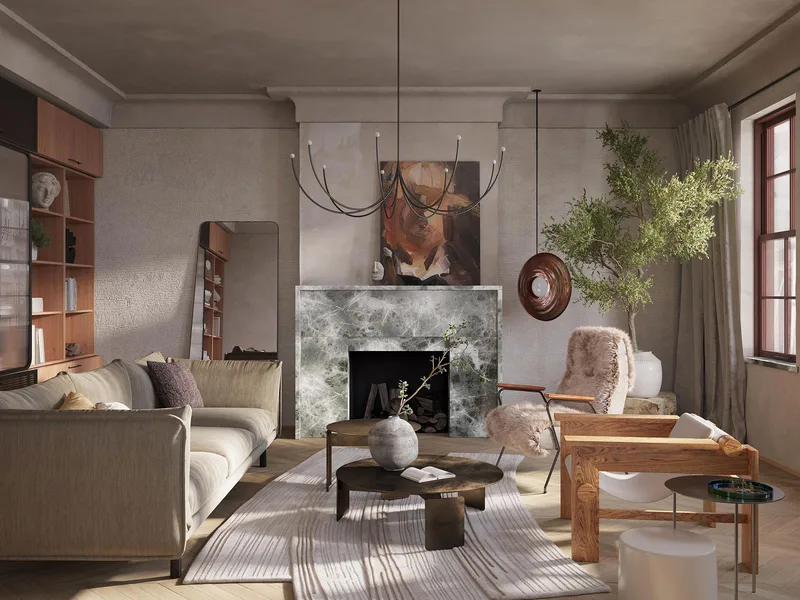
Key Characteristics
- Color palette: Warm neutrals with bold accents, mustard yellow, olive green, burnt orange, and teal
- Materials: Teak, walnut, rosewood, molded plywood, brass, and wool
- Furniture: Organic curves, splayed tapered legs, low profiles, and molded forms
- Icons: The Eames Lounge Chair, the Noguchi coffee table, the Arco floor lamp
- Accents: Sunburst clocks, abstract art, globe pendant lights, woven wall hangings
Best For
Design lovers who care about history and craft. It pairs happily with both modern and traditional architecture. A quick mixing tip: MCM pieces work as accents in almost any style, and a single Eames chair can lift a plain Scandinavian room in an instant. Want to see it beside the other looks? Compare them in our interior design examples for the 15 most popular styles.
7. Bohemian Interior Design
Search popularity: 9,100+ monthly searches
In three words: Layered, eclectic, collected
Bohemian, or Boho, is the polar opposite of minimalism. It is maximalism with purpose, layers of textiles, patterns gathered from different cultures, objects picked up on travels, and a more-is-more attitude that somehow still feels like one coherent room.
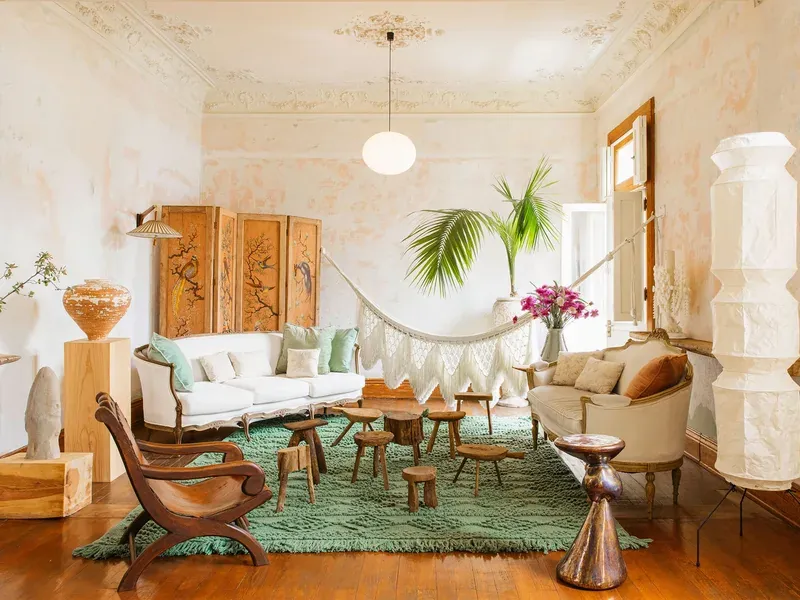
Key Characteristics
- Color palette: Rich and warm, terracotta, burgundy, forest green, gold, purple, and mixed patterns
- Materials: Macrame, rattan, kilim rugs, embroidered cushions, fringe, and tassels
- Furniture: A mix of vintage and handmade, low seating, floor cushions, hanging chairs
- Philosophy: Collected over years, not bought in one trip. Every piece has a story
- Accents: Plants everywhere, candles, crystals, travel souvenirs, books stacked as decor
Best For
Free spirits, travelers, and collectors. People who cannot stand a matching set. Larger rooms that can soak up the visual density. It is also one of the most budget-friendly looks around, since it thrives on thrift finds, flea market pieces, and a bit of DIY. Get the layered look right with our bohemian interior design guide.
8. Modern Farmhouse Interior Design
Search popularity: 8,200+ monthly searches
In three words: Rustic, cozy, approachable
Modern Farmhouse blends rustic country charm with clean contemporary lines. Home renovation shows pushed it into the mainstream, and it has become one of the most widely adopted styles going, big across North America and increasingly common in Europe too.
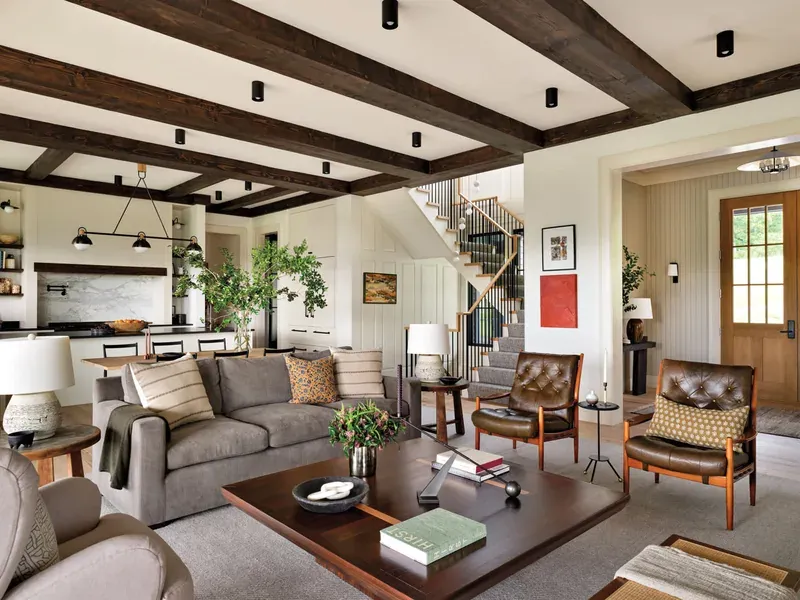
Key Characteristics
- Color palette: White and warm wood, black accents, with sage green or dusty blue as quiet color
- Materials: Shiplap walls, reclaimed barn wood, natural stone, wrought iron, and linen
- Furniture: Farmhouse dining tables, upholstered armchairs, open shelving, apron-front sinks
- Architecture: Barn doors, exposed beams, board-and-batten walls, and large pendant lights
- Accents: Mason jars, woven baskets, greenery, and galvanized metal containers
Best For
Families who want a warm, welcoming home. It suits houses and suburban properties better than urban apartments. It is also easy to pull off on a budget, since many farmhouse touches, open shelving, painted furniture, and baskets, are DIY-friendly. See the full breakdown in our modern farmhouse interior design guide.
Interior Design Styles Comparison: Which One Fits Your Space?
Still torn? Use this side-by-side comparison to narrow the field down to one or two contenders:
| Style | Best Room Size | Budget Level | Maintenance | Best For |
|---|---|---|---|---|
| Scandinavian | Any | Mid | Low | Small apartments, families |
| Japandi | Small to Medium | Mid to High | Low | Minimalists who want warmth |
| Contemporary | Medium to Large | Mid to High | Medium | Style-conscious urbanites |
| Minimalist | Any | Mid | High (discipline) | Tidy, intentional people |
| Industrial | Large or lofts | Mid | Low | Loft dwellers, urban style |
| Mid-Century Modern | Any | High | Medium | Design enthusiasts |
| Bohemian | Medium to Large | Low to Mid | High (clutter risk) | Travelers, collectors |
| Modern Farmhouse | Medium to Large | Low to Mid | Medium | Families, suburban homes |
How to Mix Interior Design Styles (Without Creating Chaos)
Here is the thing almost no one admits: very few real homes are one pure style, and that is completely fine. The way to mix without making a mess is the 70/30 rule.
- 70% dominant style sets the overall mood through wall colors, the main furniture, and flooring
- 30% accent style adds the personality through lighting, textiles, and one or two statement pieces
Pairings that genuinely work:
- Scandinavian with Industrial (a warm base with raw accents)
- Scandinavian with Mid-Century Modern (Nordic calm plus iconic furniture)
- Contemporary with Japandi (modern versatility plus natural materials)
- Minimalist with Industrial (stripped back plus raw texture)
- Bohemian with Mid-Century Modern (collected objects plus iconic shapes)
What to avoid: Minimalist with Bohemian (the philosophies fight each other), Industrial with Farmhouse in a small room (both are heavy), and any attempt to juggle more than three styles at once.
How to Preview Any Style in Your Room with AI
Wondering how Scandinavian would actually look in your living room versus Japandi? You do not have to guess anymore. AI interior design tools let you see any style in your real space, in seconds rather than weeks. MeltFlex is a free AI interior design app built to do exactly this.
The process is short:
- Upload a photo of your empty or furnished room to MeltFlex
- Choose a style, Scandinavian, Minimalist, a custom look, or describe your own aesthetic
- Generate a photorealistic render and see the room fully styled in about 30 seconds
- Compare styles by generating three to five variations and seeing which one clicks
- Browse real furniture, because every piece you see comes from a real product catalog with pricing and dimensions
This is far faster and cheaper than hiring an interior designer (typically €2,000 to €10,000) or buying furniture and hoping it matches the picture in your head. You see the finished result before spending a cent. Our complete AI home design guide walks through the whole thing step by step.
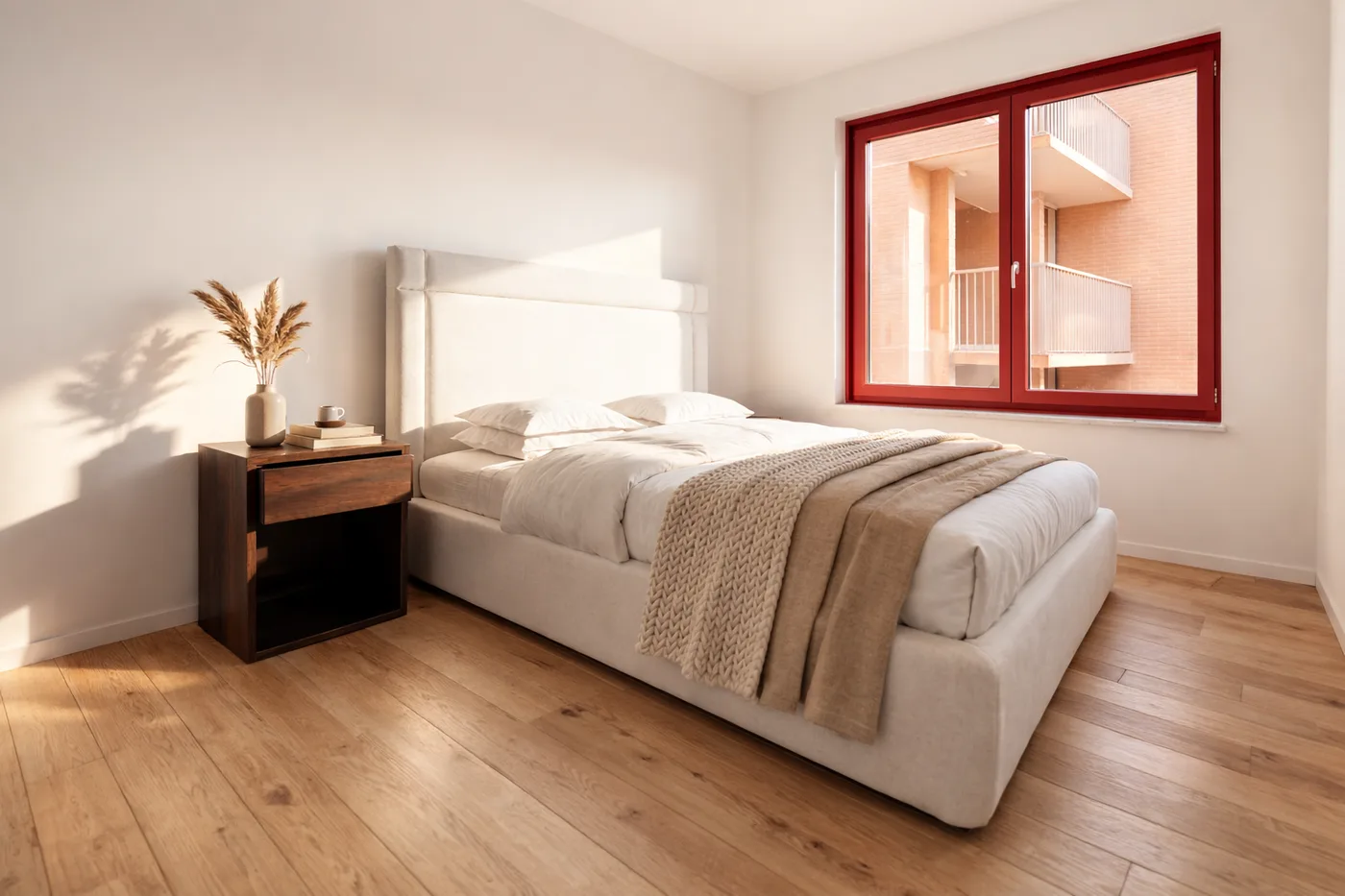
The bedroom above is a new-build apartment styled in warm Scandinavian using AI. The same room could just as easily be rendered in Japandi (lower bed, darker wood, earth tones), Minimalist (white bed, bare nightstand, monochrome), or Contemporary (upholstered headboard, abstract art, mixed metals). Want to see how that plays out? Explore bedroom design ideas with AI.
Which Interior Design Style Should You Choose?
When clients ask me this, I send them four questions. Your answers usually point straight to the style before you have even finished thinking about it.
- How do you actually live? Kids and pets call for forgiving styles like Scandinavian or Farmhouse. Living alone and craving order leans toward Minimalist or Japandi.
- What is your space like? A small apartment suits Scandinavian or Japandi. A loft suits Industrial or Contemporary. A house with a garden suits Farmhouse.
- What is your budget? Tight budget points to Bohemian or Farmhouse, both DIY-friendly. Mid budget points to Scandinavian. A bigger budget opens up Mid-Century Modern or Contemporary.
- What do you keep saving on Pinterest? Your saves give away your taste before you do. If 80 percent of them are warm, neutral, and pared back, you are Scandinavian or Japandi at heart.
Still on the fence? The quickest way to settle it is to see each style in your own room. Upload a room photo to MeltFlex, generate renders in three different styles, and your gut will tell you almost instantly. Our room redesign from a photo guide shows the full process.
Frequently Asked Questions
What are the most popular interior design styles in 2026?
The most searched styles in 2026 are Scandinavian (warm minimalism), Japandi (a Japanese and Scandinavian fusion), Modern Contemporary, Minimalist, Industrial, Mid-Century Modern, Bohemian, and Modern Farmhouse. Scandinavian and Japandi are trending highest because both lean on natural materials and functional simplicity.
How do I find my interior design style?
Pay attention to what you naturally gravitate toward. Clean lines and neutral tones point to Scandinavian or Minimalist, warm textures and earthy colors point to Bohemian or Japandi, and bold contrasts with raw materials point to Industrial. The fastest shortcut is to upload a room photo to an AI design tool and preview a few styles directly on your own space.
What is the difference between modern and contemporary interior design?
Modern points to a specific era, Mid-Century Modern from the 1950s and 60s, with organic shapes, warm wood, and clean lines. Contemporary means of the moment. It shifts with current trends and borrows from several styles at once. Contemporary is fluid, while modern is a fixed historical look.
What is Japandi style?
Japandi combines Japanese minimalism with Scandinavian warmth. It leans on natural materials such as wood, stone, and linen, muted earth tones, functional furniture, intentional simplicity, and visible craftsmanship. It has been the fastest-growing interior design style through 2025 and 2026.
Can I mix interior design styles?
Yes, and most real homes do. Pick one dominant style for roughly 70 percent of the room and accent with another for the remaining 30 percent. Scandinavian with industrial lighting works well, and so does modern with bohemian textiles. Just avoid blending more than three styles in a single space.
What interior design style is best for small apartments?
Scandinavian and Japandi suit small spaces best because they favor light colors, functional furniture, and minimal clutter, which makes rooms feel larger and more open. Heavy industrial or densely layered bohemian looks can crowd a tight room, so use them sparingly in small spaces.
How can I preview different interior design styles in my room?
Upload a photo of your room to an AI interior design tool like MeltFlex. The AI generates photorealistic renders in different styles, from Scandinavian to Minimalist to a custom look you describe, so you can compare how each one feels in your actual space before changing anything.
What is the most timeless interior design style?
Scandinavian and Mid-Century Modern age the best. Both have stayed popular for more than 60 years because they prioritize function, natural materials, and clean proportions, the kind of fundamentals that rarely fall out of fashion.
Start Designing Your Room in Any Style, Free
You do not need to commit to a style on paper. You do not need mood boards or endless Pinterest folders. And you definitely do not need to pay a designer to tell you what "works."
Upload a photo of your room to MeltFlex and watch it transform into any style in about 30 seconds. Generate Scandinavian, Minimalist, or any custom aesthetic you can describe. Browse real furniture from real brands. Then buy only the pieces you actually fall for.
For more room-specific guidance, explore our guides on living room design, bedroom design, whole-house interior design, 47 interior design ideas, and AI virtual staging for real estate.

