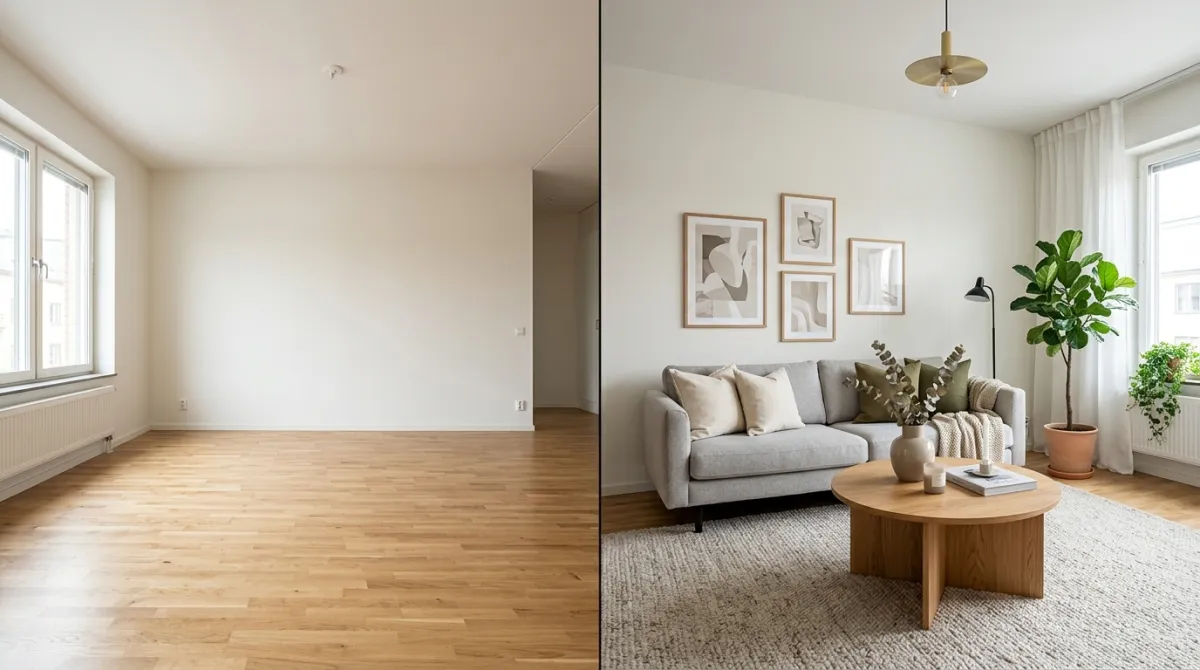


At YIT Slovakia’s headquarters in Bratislava:the day the partnership became official
Our articles are still written by humans!
Get human written articles in your Google feed.
Buying a home you have never walked through is one of the biggest financial decisions a person can make. In Slovakia’s fast-moving residential market, that is exactly what tens of thousands of buyers do every year:committing to off-plan apartments based on flat 2D floor plans and a handful of generic architectural renders.
In May 2026, three of Slovakia’s most established real estate companies:YIT Slovakia, Herrys, and VI Group:adopted MeltFlex AI to solve this problem. This article breaks down who these companies are, what problem they faced, and how AI apartment visualization changes the economics of selling homes that have not been built yet.
YIT Slovakia: 281 Apartments in Zwirn, Each With Its Own Visualization

YIT is a Finnish construction and development company with over 110 years of history. They operate across Finland, the Baltics, Czech Republic, Slovakia, and Poland. YIT’s Slovak division, based in Bratislava, is responsible for some of the city’s most ambitious residential developments.
Their current flagship is Zwirn:a large-scale mixed-use development with 281 apartments and 103 residential units in central Bratislava. The project features brick-clad residential buildings, landscaped inner courtyards, and an architectural style that references the area’s industrial past while delivering contemporary living standards. For context on what AI visualization looks like in practice, our bedroom makeover guide shows the technology applied to a single room.
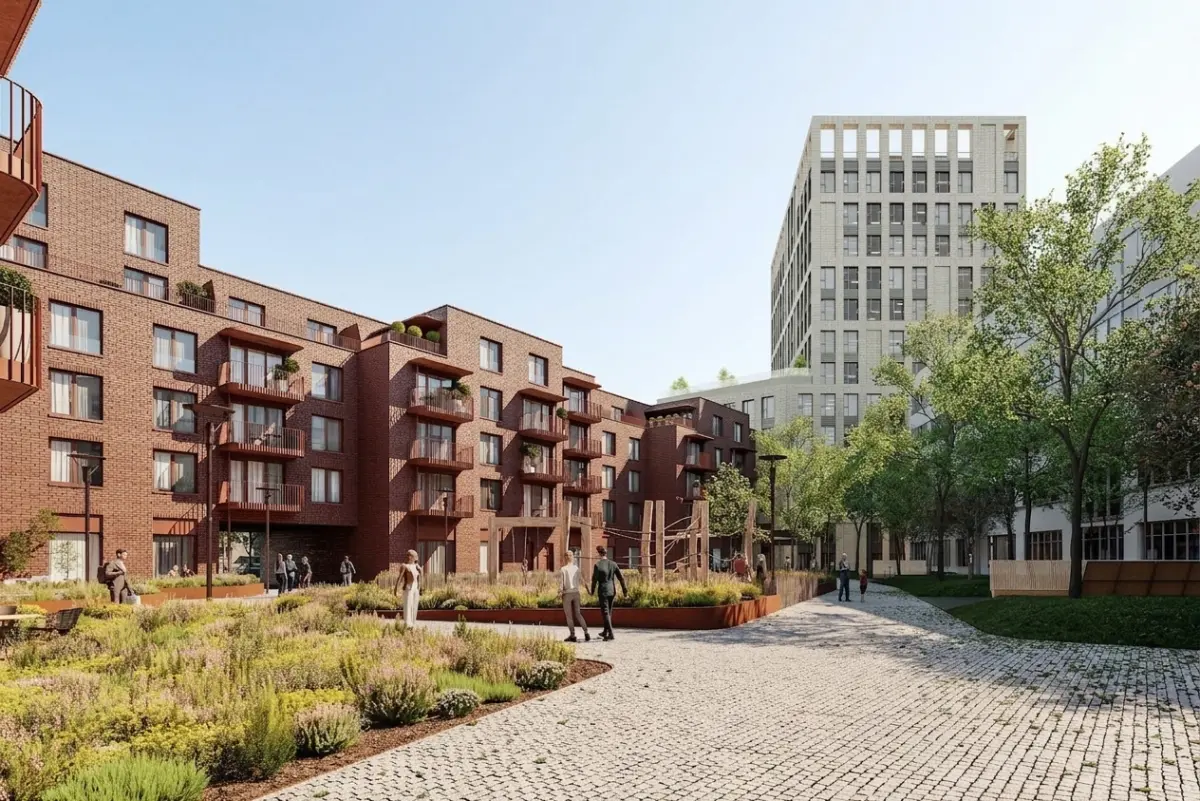
YIT Zwirn in Bratislava:281 apartments across multiple brick-clad buildings with landscaped courtyards. Image credit: YIT Slovakia
The Visualization Challenge at Scale
A project with 281 apartments means 281 different homes. Different layouts, different orientations, different views from every window. The traditional approach to marketing these units is a printed floor plan with dimensions and one or two show-flat renders that represent the “typical” apartment in the building.
The problem is obvious: a 58-square-meter two-bedroom facing east feels nothing like a 72-square-meter corner unit facing south-west. A flat 2D plan with measurements does not communicate how either space will feel once furnished. Buyers must do the mental work themselves:imagining where the sofa fits, whether a dining table works by the window, and how the bedroom looks with a double bed and nightstands. Research from the National Association of Realtors shows that 81% of buyers say staging makes it easier to visualize a property as their future home. But traditional staging only works for completed, physical spaces.
MeltFlex converts every individual floor plan into an interactive 3D interior design with real furniture. Each buyer sees their specific apartment:correct room proportions, natural light direction, furniture placed to scale:not a generic render of a model unit. For a deeper look at how this floor-plan-to-3D conversion works, our 3D room planner guide walks through the full process.
With a traditional 3D rendering agency, visualizing every apartment in Zwirn would cost tens of thousands of euros and take months. MeltFlex generates the same result in seconds per unit. That is the difference between showing buyers one generic show flat and showing every buyer their home.
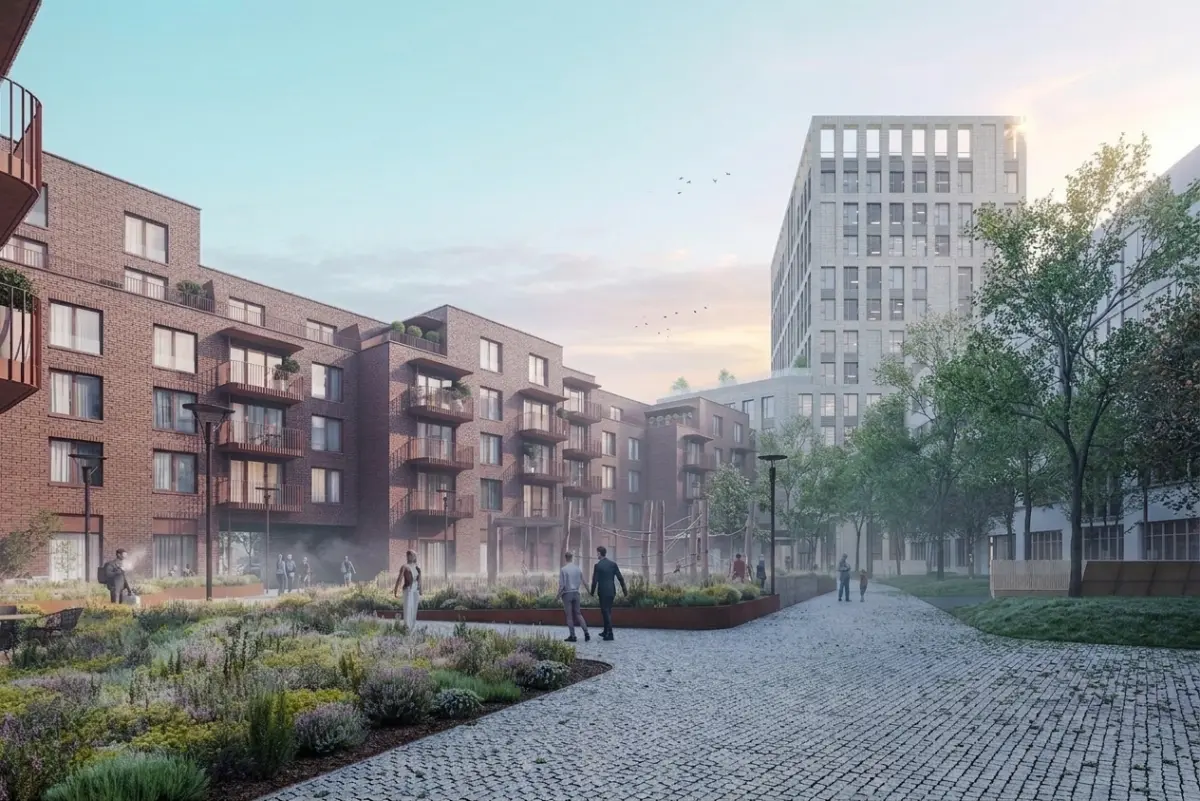
Zwirn’s inner courtyard at golden hour. Image credit: YIT Slovakia
Herrys: 800 Transactions a Year, Every Listing Visualized

Herrys is one of the most recognized real estate agencies in Slovakia. They close 800 transactions per year, have served over 15,000 clients, and act as the exclusive sales partner for premium Bratislava developments including UNO Poštová Residence and Metropolis.
Agencies face a different challenge than developers. Developers build the product. Agencies sell it. A Herrys agent walks a buyer through a property and needs to bridge the gap between what the apartment looks like now:often bare concrete or empty rooms:and what it could be once the buyer moves in.
From Imagination to Visualization
Before AI visualization, showing the potential of an empty apartment relied entirely on the buyer’s ability to imagine. An agent could describe furniture placement, suggest wall colors, and point out where natural light enters. Some buyers can picture the result. According to the NAR, only 19% of buyers’ agents say their clients can visualize an empty property as their home without help. The other 81% need to see it.
MeltFlex lets Herrys agents generate a fully furnished visualization from any listing’s floor plan. The AI produces photorealistic interior designs with real furniture, accurate proportions, and realistic lighting. An agent can pull up the furnished view on a tablet during a viewing or embed it directly in the online listing. For agencies looking at the broader trend, our guide on AI virtual staging for real estate photography covers how this technology is reshaping property marketing worldwide.
At 800 transactions per year, even a small improvement in conversion speed compounds dramatically. That is why Herrys did not pilot MeltFlex on a handful of listings:they deployed it across their entire team.
VI Group: Top-6 Developer, 75% Pre-Sold Before Construction

VI Group is one of the top 6 residential developers in Slovakia. Their latest project, Terrasy in Rača, is a development of 150 apartments across 3 residential buildings on the northern edge of Bratislava, surrounded by the vineyards of Malé Karpaty.
The key number: 3 out of 4 units in Terrasy sold before the walls went up. Seventy-five percent of buyers committed to a home they had never walked through. They made a six-figure decision based on floor plans, renders, and trust in the developer brand.
Better Visualization Reduces Buyer Anxiety, Not Just Sales Time
If VI Group already sells 75% of units before construction, why adopt AI visualization? The answer goes beyond sales speed. A buyer who commits to an apartment they have never physically entered carries uncertainty through the entire construction period. Will the living room feel spacious enough? Is the bedroom going to be dark? Did I pick the right layout?
These doubts create friction:delayed signatures, last-minute layout changes, and cancellations that cost the developer both time and money. When buyers see their exact apartment furnished to scale with realistic lighting, the purchase shifts from a leap of faith to a confident, informed decision. They can show the visualization to their family. They can start planning furniture months before handover. That confidence translates directly into fewer cancellations and smoother transactions.
For a deeper look at how AI room makeovers transform empty spaces into furnished homes, our before-and-after guide shows real examples.
AI Visualization vs Traditional 3D Rendering: A Direct Comparison
One of the most common questions developers ask is how AI visualization compares to the traditional 3D rendering agencies they already work with. Here is a direct, honest comparison based on real industry pricing and timelines:
Traditional rendering agencies produce beautiful work. For a hero image on a billboard or a show-flat centerpiece, they remain the gold standard. But when a developer needs to visualize every apartment in a 150-unit or 281-unit project, each with its own unique layout, traditional agencies cannot deliver at that scale within a realistic budget or timeline. That is the gap AI fills.
For a broader look at how AI virtual staging compares across the industry, our comprehensive guide covers pricing, quality, and use cases from resale to new-build.
What This Signals for the Central European Real Estate Market
The residential real estate market in Slovakia:and across Central Europe:has shifted decisively toward off-plan sales. New developments routinely sell 50% to 80% of units before construction finishes. Buyers commit based on floor plans, location, and developer reputation. The physical product does not exist at the moment of purchase.
This creates a growing visualization gap. Developers invest millions into architecture, landscaping, and build quality:but the buyer’s first experience of their future home is often a flat PDF with room dimensions. The mismatch between the quality of the product being built and the quality of how it is presented is significant.
When three established companies:representing different segments of the market (developer, agency, top-tier developer):all adopt the same AI visualization technology within the same month, it reflects a market-level recognition that buyer expectations have changed. Flat floor plans are no longer enough. Buyers in 2026 expect to see their home before they buy it, even if it has not been built yet.
MeltFlex AI in action:converting a floor plan into a fully furnished 3D visualization
Try It: See What Your Floor Plans Look Like Furnished
Whether you are a developer selling hundreds of off-plan apartments, a real estate agency presenting listings to buyers, or a homeowner planning your next move:MeltFlex works the same way for everyone. Upload a floor plan, and the AI converts it into an interactive 3D room design with real furniture from real brands at real prices.
YIT Slovakia, Herrys, and VI Group adopted MeltFlex because the value was immediately clear to their teams. Try MeltFlex AI for free and see the same result with your own floor plan.
For more on how MeltFlex was built and who is behind it, read our founders’ story. For practical guides on using AI for interior design, explore our posts on one empty room transformed into 6 AI designs and AI interior design prompts that actually work.