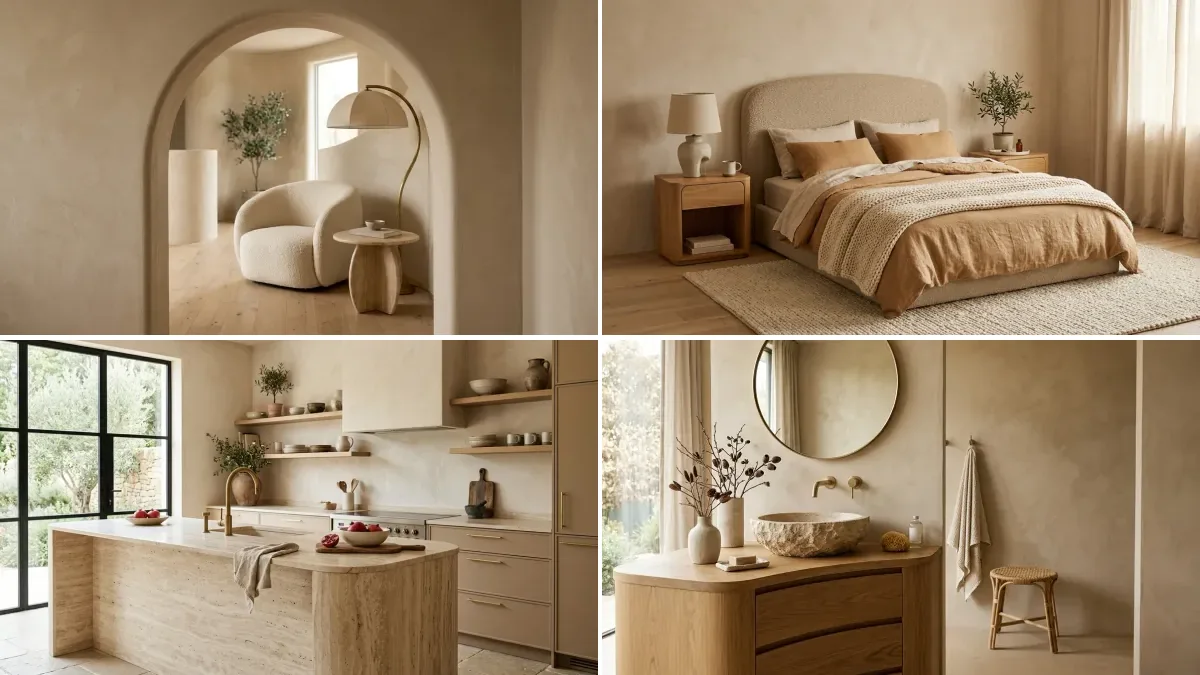
Every year the trend lists arrive, and most of them just rename last year's ideas. 2026 is different, because something real has shifted. After a decade of safe grey-and-white minimalism, the dominant mood has swung hard toward warmth, texture, and personality. Designers polled for 2026 overwhelmingly favor warm earthy color over cool grey, and brass over chrome, and the most-shared rooms all share one quality: they look collected and lived-in rather than staged.
Our articles are still written by humans!
Get human written articles in your Google feed.
This is the curated list of the 12 interior design trends that actually define 2026, not a random roundup. Each one links to a deeper guide if you want to go further, and at the end you will find what is fading, plus the fastest way to try any of these on your own room before you spend a cent. Let's get into it.
The 12 trends at a glance
- Organic luxe, warm natural materials with high-end polish.
- Unexpected red theory, one earthy red accent finishes a room.
- Warm minimalism, clean and calm but never cold.
- Color drenching, one rich tone on walls, trim and ceiling.
- Curved & sculptural furniture, soft rounded forms everywhere.
- Dark, moody rooms, deep enveloping color for drama.
- Biophilic design, nature brought indoors.
- Statement wallpaper, pattern as a focal point again.
- Quiet luxury, understated, timeless quality.
- Warm earthy neutrals, beige and caramel replace grey.
- Collected maximalism, layered, personal, characterful rooms.
- Brass everything, warm metal over cold chrome.
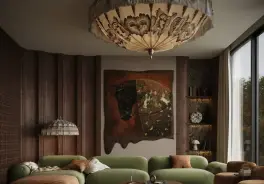
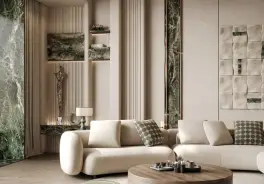
Watch: try a 2026 trend on your own room in seconds
Reading about a trend is one thing; seeing it on your actual room is another. Here is MeltFlex restyling a real living room in seconds, the same one-photo workflow you can use to test any look on this list before you buy a single thing.

MeltFlex restyling a living room, test any 2026 trend on your own space before you buy.
One newer look worth adding to the list: Afrohemian, where African craft and global textiles like Adire and mudcloth meet bohemian warmth. It is one of the fastest-rising trends of the year and runs on the same earthy, handmade instinct as organic luxe and warm minimalism.
The 12 trends, compared
1. Organic luxe
Organic luxe is the look most designers name as 2026's defining style: warm earthy palettes, curved sculptural forms, and tactile natural materials like plaster, travertine, oak, and bouclé, all finished to feel high-end yet restorative. It is luxury without the coldness. If you read one trend in depth this year, make it this one. Read the full organic luxe guide.
2. The unexpected red theory
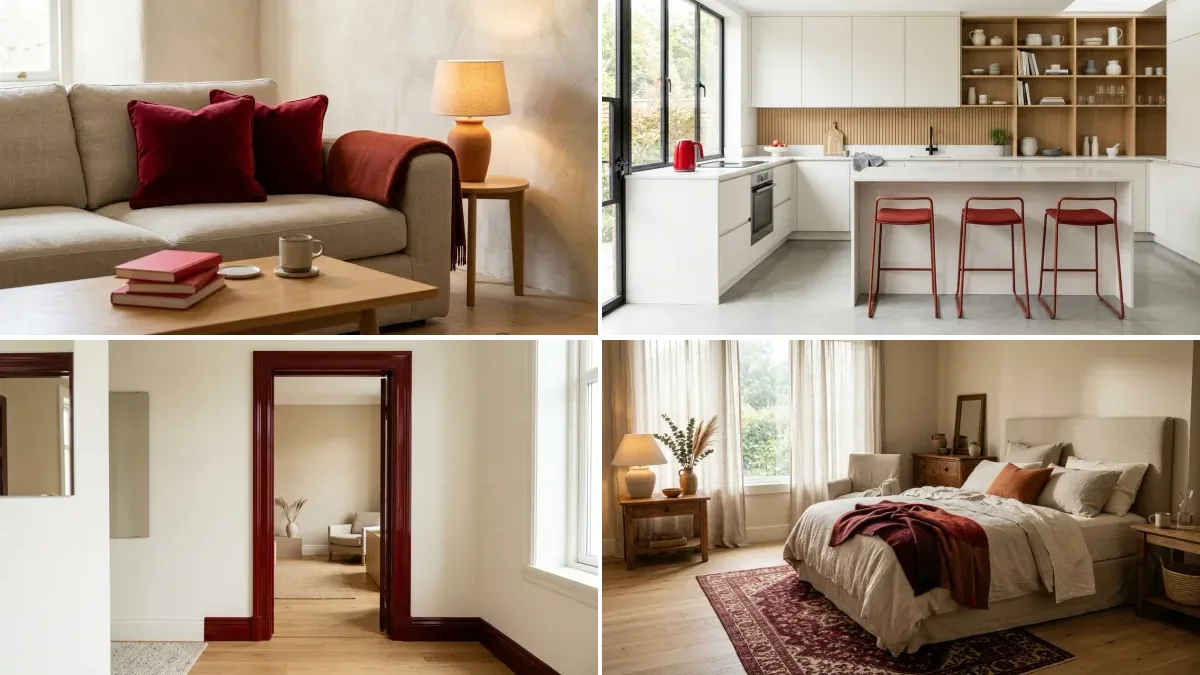
Still going strong two years after it went viral, the unexpected red theory says a room is never quite finished until you add one small, deliberate touch of red somewhere unexpected. The 2026 version leans earthy, oxblood, terracotta, and brick rather than bright cherry, so it sits naturally beside warm neutrals. It is the cheapest, fastest trend on this list to try. Read the full unexpected red theory guide.
3. Warm minimalism
Minimalism did not die, it warmed up. Warm minimalism keeps clean lines and uncluttered space but trades cold white and grey for plaster tones, warm wood, and soft layered lighting, so a room reads calm and cozy rather than clinical. It is the gentle middle ground between bare minimalism and full organic luxe. Read the full warm minimalism guide.
4. Color drenching
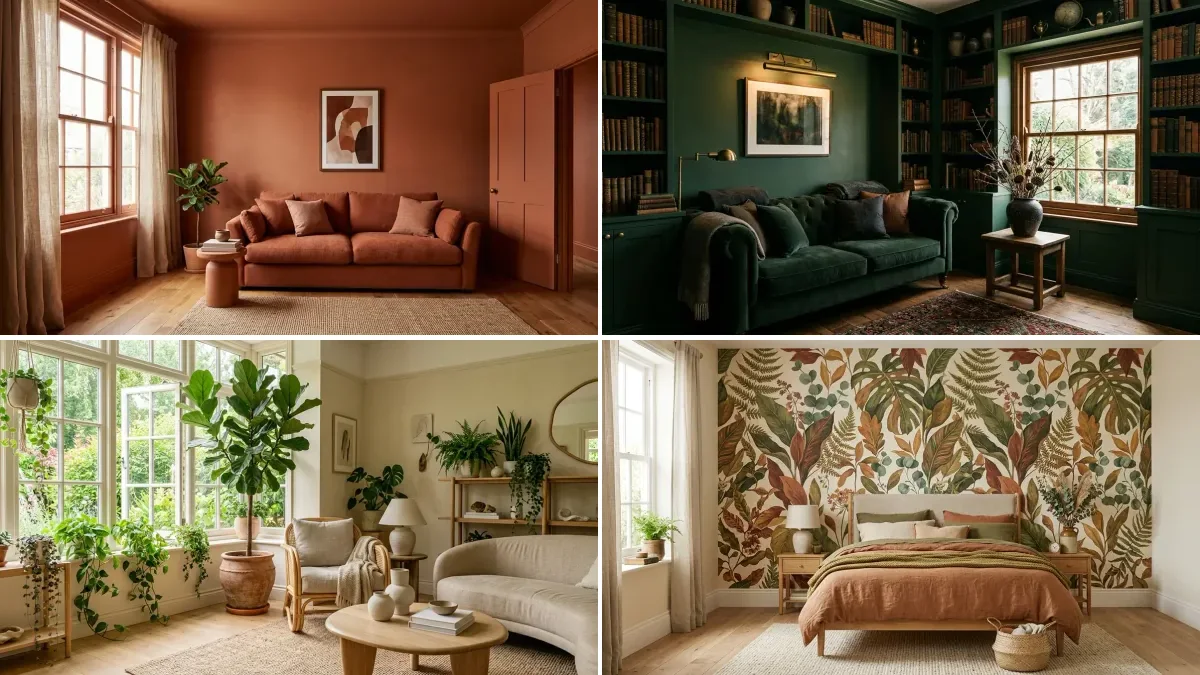
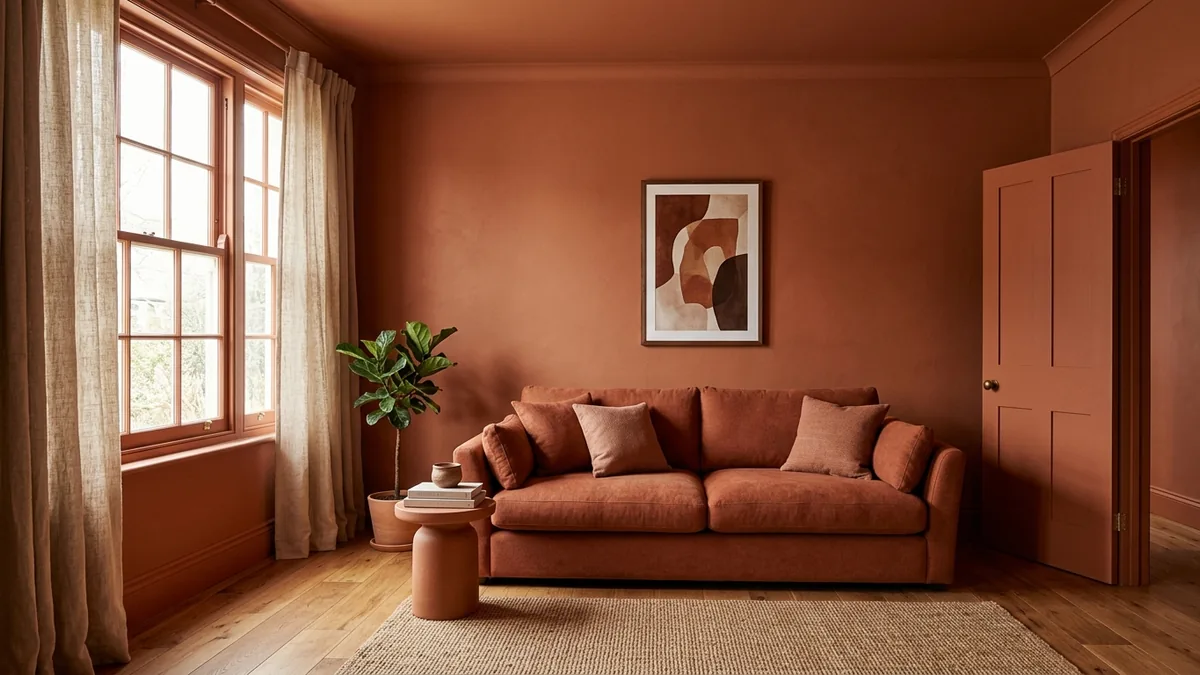
Color drenching means painting the walls, trim, doors, and often the ceiling in a single rich tone, wrapping a room in one immersive color. It makes small rooms feel intentional and large rooms feel dramatic, and it is one of the boldest, most photographed moves of 2026. Read the full color drenching guide.
5. Curved and sculptural furniture
The boxy, hard-edged furniture of the 2010s is out. Curved sofas, arched doorways, rounded kitchen islands, circular tables, and sculptural lighting are everywhere in 2026, because rounded forms read as softer and more welcoming. A single curved anchor piece can shift a whole room from rigid to relaxed, which is exactly how the softer, warm industrial look uses one curve to break up hard metal and concrete. Read the full curved furniture guide.
6. Dark, moody rooms
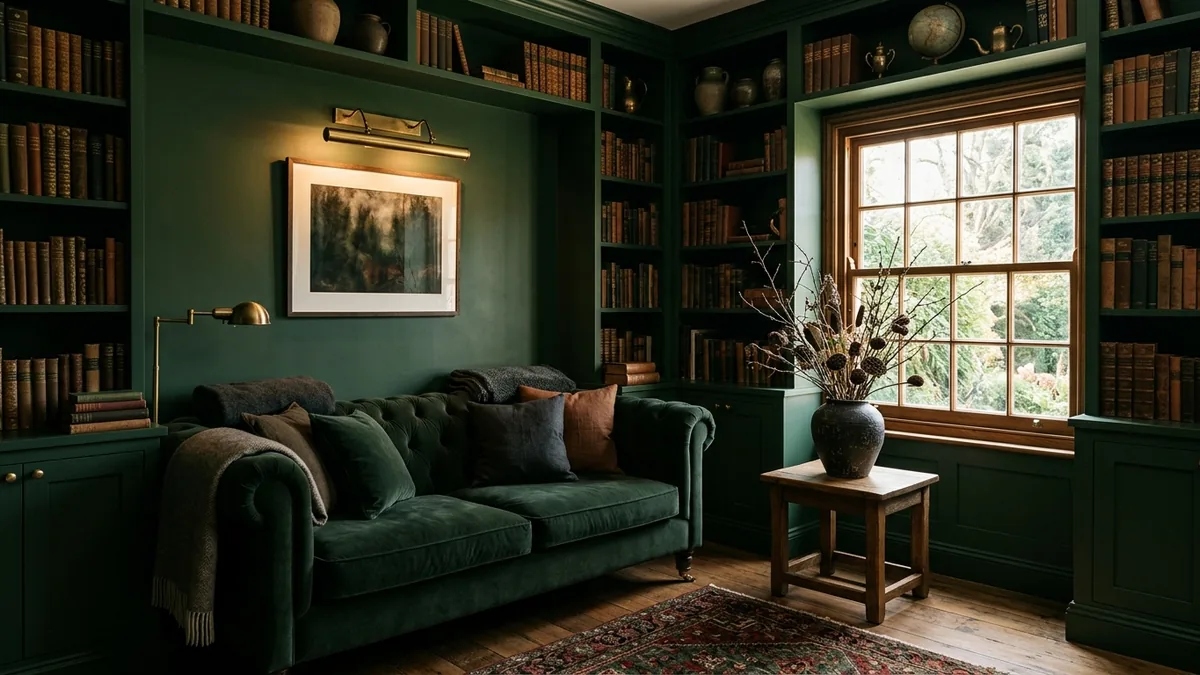
As an antidote to years of bright white, deep enveloping color is having a moment: charcoal, forest green, oxblood, and inky blue on walls and joinery to create rooms that feel intimate and dramatic. It works best in spaces you want to feel cocooning, like a study, dining room, or bedroom. Read the full dark and moody guide.
7. Biophilic design
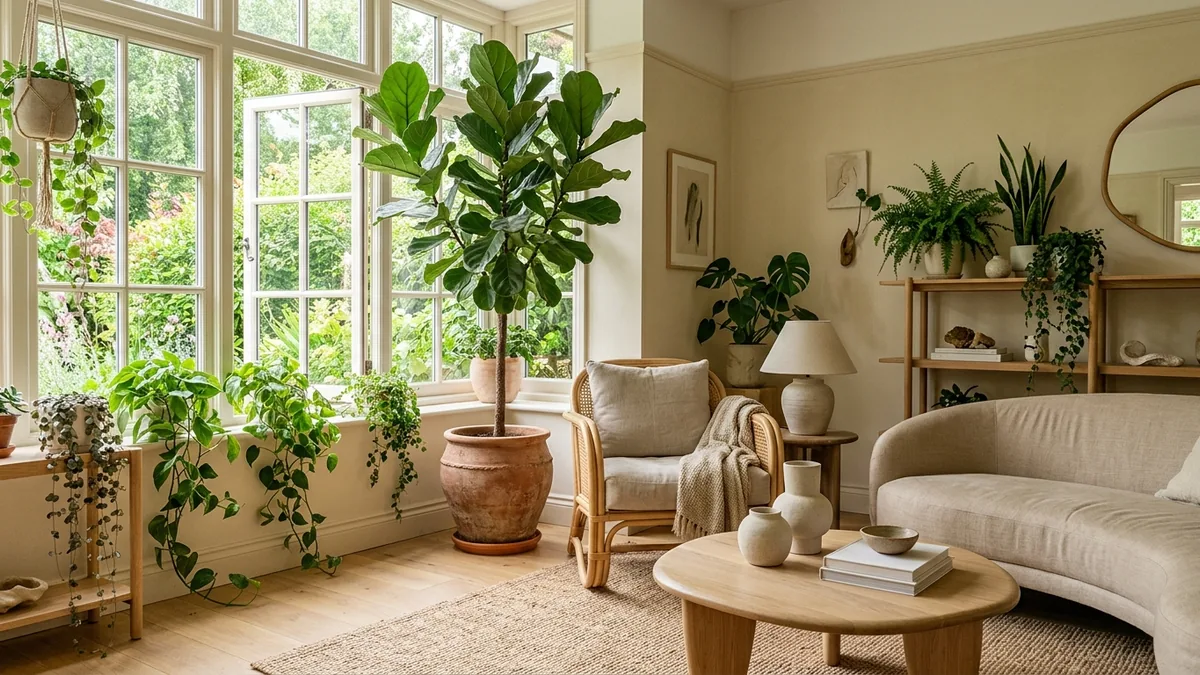
Biophilic design brings nature indoors through plants, natural light, organic shapes, and natural materials, and its popularity keeps climbing as people chase calmer, healthier-feeling homes. It overlaps neatly with organic luxe and is one of the most wellness-driven trends of the year. Read the full biophilic design guide.
8. Statement wallpaper
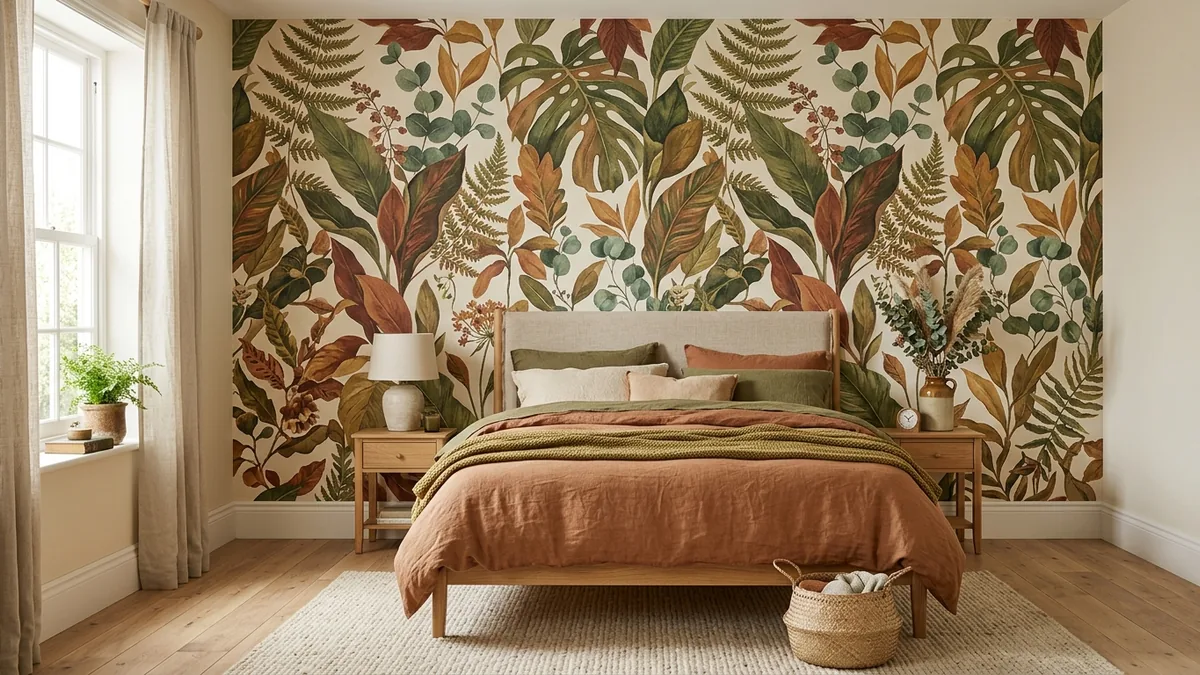
After years of plain walls, wallpaper is back as a core design feature, used to set mood and personality rather than just cover a wall. Expect bold botanicals, textured grasscloth, and large-scale patterns on a single feature wall or a whole room. Read the full 2026 wallpaper trends guide.
9. Quiet luxury
Quiet luxury is the understated, no-logo, timeless-quality look: beautiful materials and impeccable proportions with nothing shouting for attention. It remains a strong 2026 direction and pairs naturally with warm minimalism and organic luxe. Read the full quiet luxury guide.
10. Warm earthy neutrals replace grey
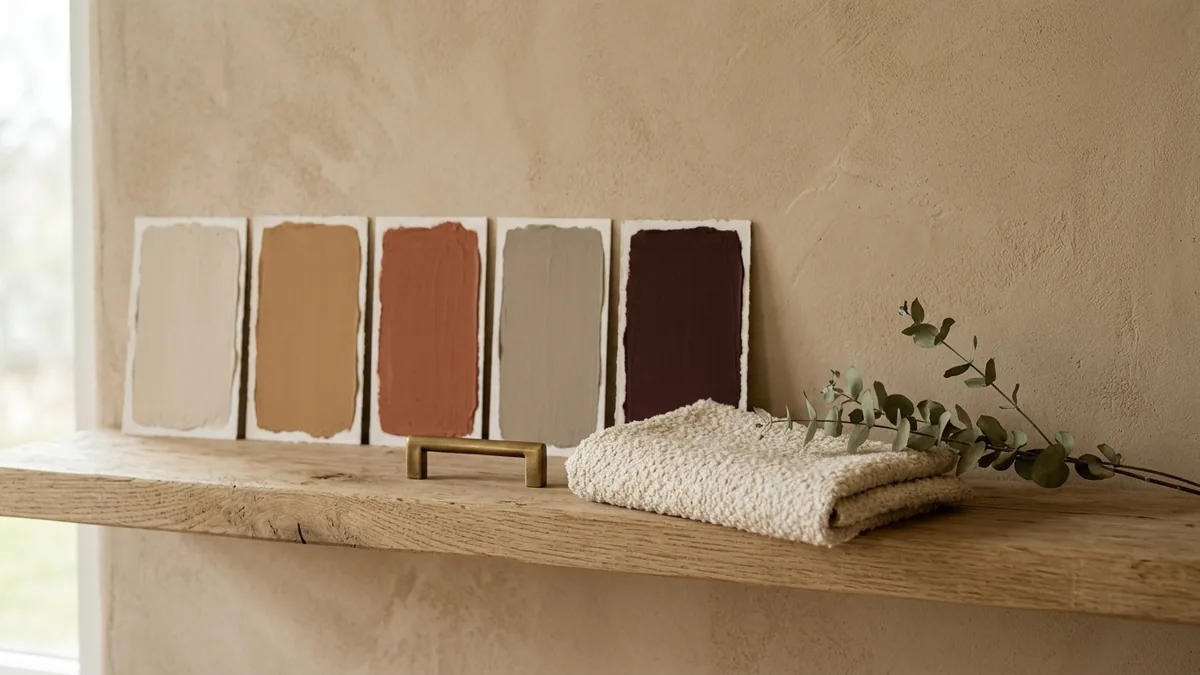
The biggest color story of the year is not a single shade but a shift: friendly warm beige, oat, caramel, and greige are replacing cool grey and stark white across walls and upholstery. If you do one thing to feel current, warm up your neutrals. See where the experts landed in our 2026 color of the year guide and 2026 wall color trends.
11. Collected, characterful maximalism
On the opposite end from minimalism, a collected look is rising: layered art, mixed woods and metals, vintage finds, plate walls, and personal objects that give a home soul. The point is not clutter but character, rooms that look gathered over time rather than bought in one trip. It is the clearest sign that anonymous, matchy interiors are over.
12. Brass over chrome
A small detail with a big effect: warm brass has overtaken cold chrome as the metal of 2026, on taps, handles, lighting, and frames. Swapping shiny silver finishes for brass is one of the cheapest ways to make a room feel current and warm, and it ties directly into the year's overall move toward warmth.
What is fading in 2026
- Cool grey-and-white minimalism. The defining look of the 2010s now reads cold and dated.
- All-white kitchens. Warm wood, clay tones, and color are taking over.
- Cold chrome finishes. Replaced by warm brass almost everywhere.
- Matchy fast-furniture sets. The collected, mixed look has won.
- Sterile open plans with no zones. Defined, broken-up spaces are back in favor.
One caveat worth saying out loud: trends are a starting point, not a rulebook. A home you love that breaks every trend here is a better home than a perfectly on-trend room you do not. Use this list for ideas, not pressure.
That list is the short version. If you came here because something specific in your house is bothering you, the long version is a feature-by-feature verdict on what is out of style in 2026, covering shiplap, granite, cherry cabinets, vertical blinds, barn doors and fifteen more, including the six the internet is wrong about.
How to try any 2026 trend on your own room first
Here is the practical problem with every trend list: a look that is stunning in a magazine can fall flat in your actual room, because your walls, floor, light, and proportions change everything. Curved sofas, color drenching, and statement wallpaper are also expensive or hard to undo, so guessing is risky.
The fix is to test before you commit. With MeltFlex you upload a photo of your real room and try any of these trends on it directly: warm up the palette, color-drench a wall, drop in a curved sofa, add an earthy red accent, compare two trends side by side, all in seconds. It keeps your real walls, windows, and layout, so what you see is what you would actually get, and the furniture is real and shoppable. You follow the trends you love and skip the ones that do not suit your space, without spending a cent to find out.
Test the 2026 trends on your own room
- Keeps your real room. Upload one photo and try any trend on your actual space.
- Compare trends side by side. Organic luxe vs warm minimalism vs dark and moody, on your room.
- Test the risky calls. Color drenching, curved sofas, bold wallpaper, before you buy or paint.
- Real, shoppable furniture. Love a piece you see? You can actually buy it.
Frequently asked questions
What is the number one interior trend for 2026?
Organic luxe is the look designers name most often, but the bigger story is the overall shift to warmth: warm earthy neutrals, natural materials, curves, and brass replacing cool grey and chrome.
What colors are in for 2026?
Warm earthy neutrals, oat, caramel, terracotta, and greige, with earthy red, sage, and clay accents. Cool grey and stark white are on the way out.
Is grey still in style in 2026?
Cool grey is fading fast, replaced by warm beige and greige. Warm-leaning greiges still work, but the cold, blue-grey look of the 2010s now reads dated.
How do I make my home look current without spending much?
Warm up your neutrals with paint and textiles, swap chrome for brass, add one curved piece, and layer in natural texture. Small, swappable changes deliver most of the on-trend feeling for little money.
Which 2026 trend is easiest to try?
The unexpected red theory, one earthy red accent costs little and is fully reversible, and warming up your neutrals. Both are low risk, especially if you test the look in your room first.
If there is one through-line to 2026, it is warmth: warmer colors, softer shapes, richer textures, and rooms that feel personal instead of staged. You do not have to chase all 12 trends. Pick the one or two that speak to you, test them on your actual room, and commit only to what genuinely works in your space. Try the 2026 trends on your own room and see your home in the new year's best looks before you spend anything. When the season turns, that same warmth reads strongest in autumn, so see which of these hold up in our critical guide to fall interior design trends for 2026. For where design is heading beyond this year, read the future of AI interior design.