62% of renters in the US live in studios or one-bedrooms. The average studio in New York is 460 square feet. In San Francisco it is 380. In most European cities it is under 300. You have one room that needs to be a bedroom, a living room, a dining room, and sometimes a home office, all at once.
The typical person spends 3 to 6 weeks furnishing a studio apartment. They browse 40+ hours on Pinterest and Instagram. They order $1,200 to $2,500 worth of furniture, return 30% of it (the industry average for online furniture returns), and lose $150 to $400 in shipping and restocking fees. That is before they even have a room they like.
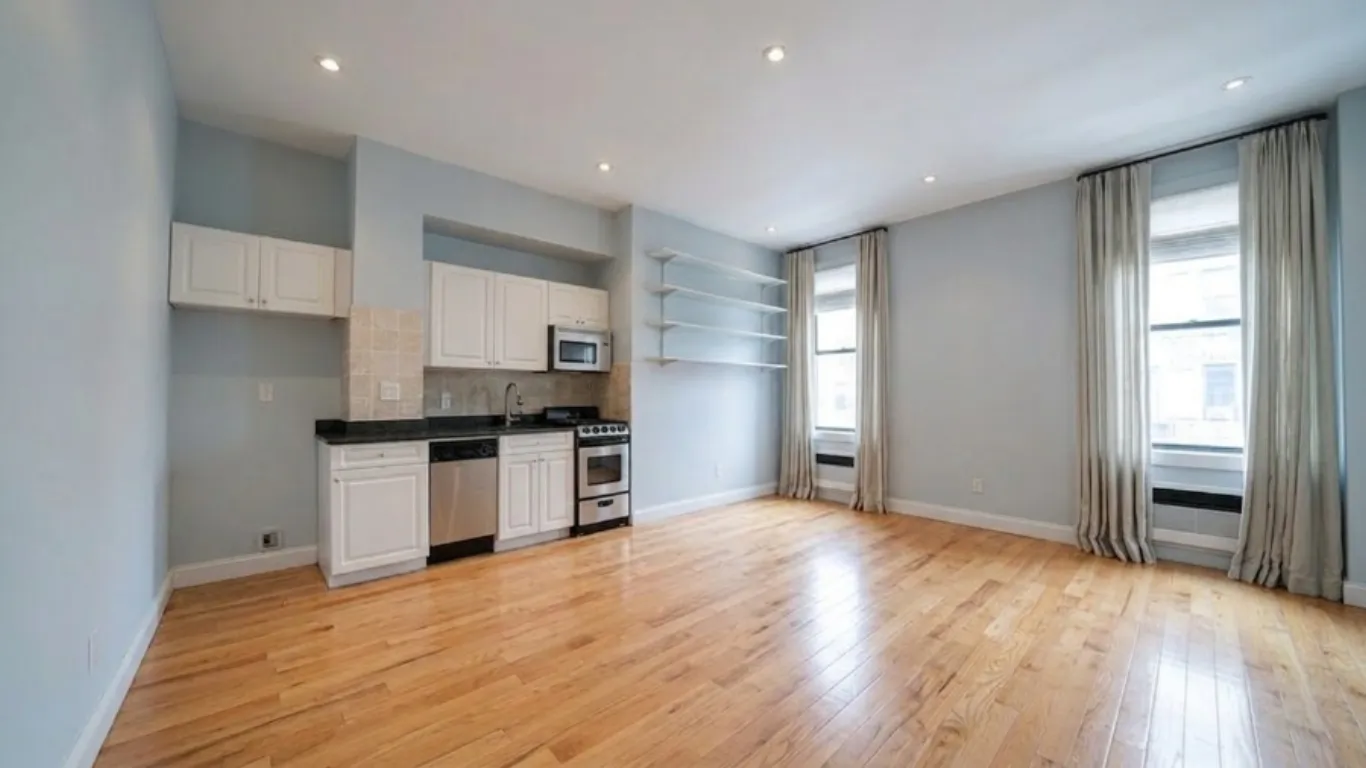
We took one completely empty studio apartment, roughly 350 square feet with a small kitchenette, hardwood floors, blue-grey walls, and two large windows, and used AI to generate 5 completely different furnished layouts. Total time: 2 minutes and 30 seconds. Total cost: $0.
Here is the empty room we started with:
Why 78% of Studio Renters Get Their First Furniture Order Wrong
According to a 2025 survey by Apartment Therapy, 78% of people who moved into a studio bought at least one piece of furniture that did not fit or looked wrong in the space. The top reasons: the sofa was too wide (34%), the bed blocked a walkway (22%), or the dining table made the room feel cramped (18%).
The problem is simple. You cannot visualize 3D space from 2D product photos. A sofa that looks compact on Amazon turns out to be 87 inches wide and blocks your only window. A bed frame that looked sleek in the showroom eats 40% of your floor space.
AI solves this by showing you the furniture in your actual room before you buy it. Upload one photo of your empty studio and see it fully furnished in 20 seconds. Do not like the layout? Try another style. Want to see how a bigger sofa fits? Regenerate. You make all your mistakes digitally, for free, instead of physically with $200 return shipping fees.
Here are the 5 layouts we generated from that one empty room.
Layout 1: Warm Scandinavian Studio
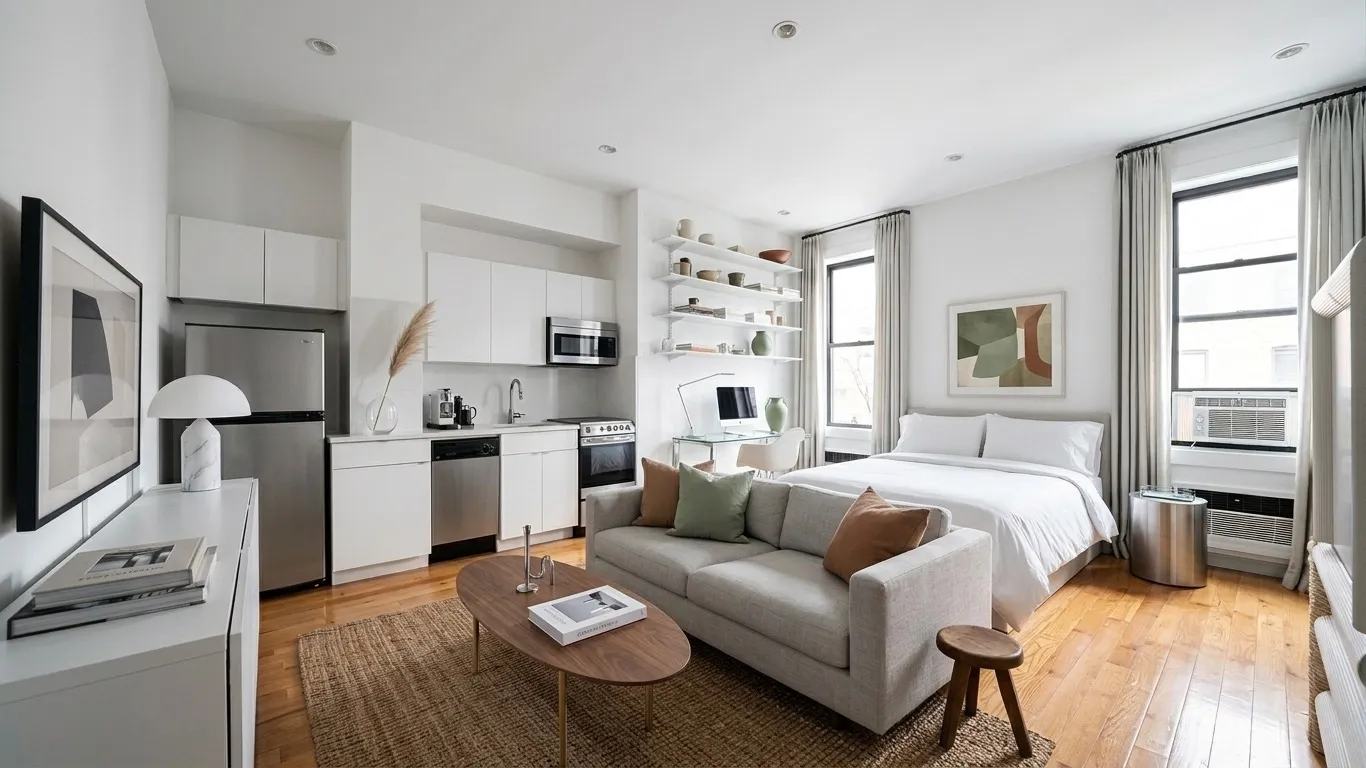
The first layout leans into warm Scandinavian minimalism. A compact cream sofa acts as the divider between the sleeping and living zones. A round walnut coffee table keeps the center open. The queen bed sits against the far wall with simple white bedding and a woven throw.
Key details: the jute rug anchors the living area without making the floor feel busy. Open shelving above the kitchenette adds storage without visual weight. A small desk by the window doubles as a workspace. This layout works for anyone who wants the space to feel calm, bright, and uncluttered.
Estimated cost: $2,200 to $3,500
Sofa ($600 to $900), bed frame ($300 to $500), coffee table ($120 to $250), rug ($80 to $180), desk ($150 to $300), lighting ($100 to $250), bedding and accessories ($200 to $400).
Layout 2: Cool Modern Studio
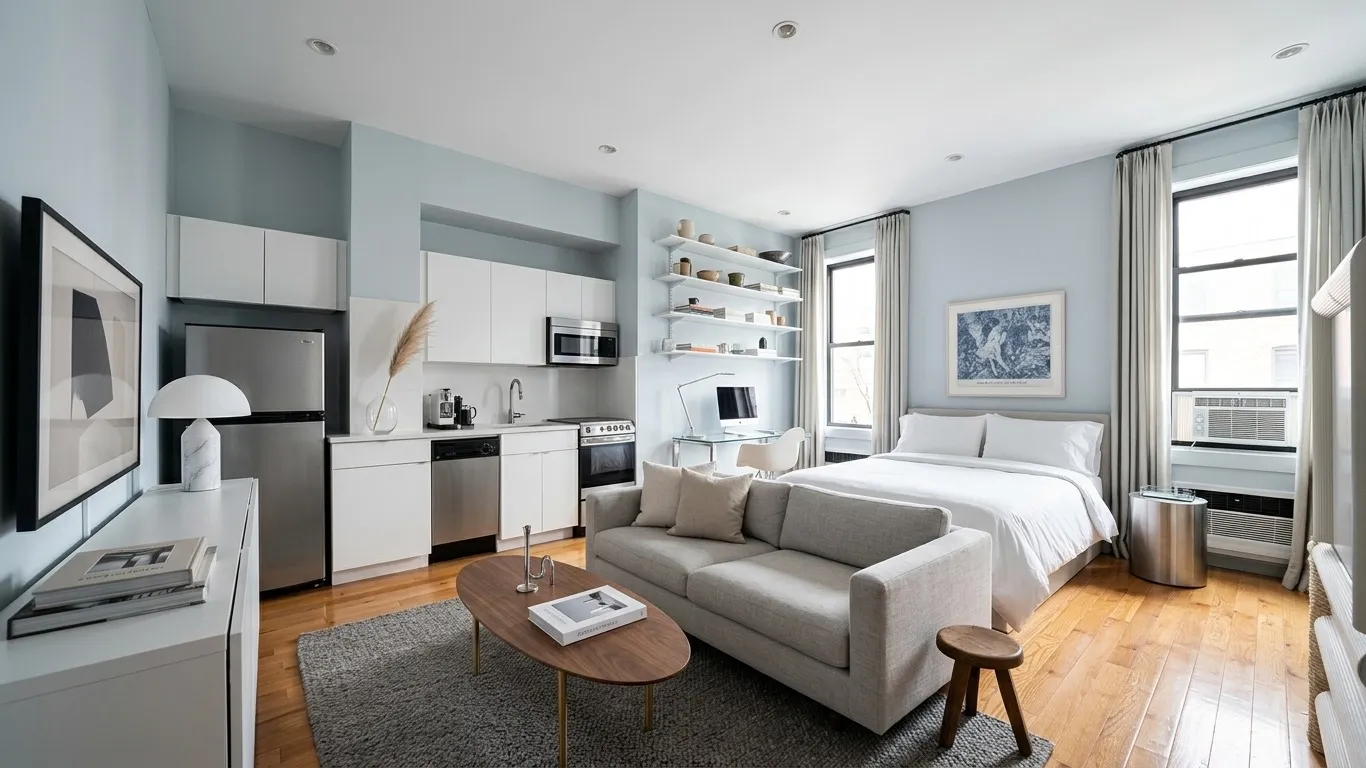
This layout keeps the same basic arrangement but shifts the palette to cooler tones. A light grey sofa, a soft grey area rug, and muted blue accents on the bed create a cohesive monochromatic look. The furniture is more streamlined with cleaner edges and less texture.
Interior designers charge $150 to $300 per hour for color palette consultations. A typical studio consultation runs 2 to 4 hours ($300 to $1,200). With AI, you can test 10 different color palettes in under 5 minutes. Notice how the same room feels completely different just by changing the color temperature. The warm version feels cozy and inviting. The cool version feels sleek and modern. Same 350 square feet, same furniture positions, radically different mood.
Estimated cost: $2,400 to $3,800
Sofa ($700 to $1,100), bed frame ($350 to $550), coffee table ($130 to $280), grey area rug ($120 to $250), desk ($150 to $300), lighting ($120 to $280), bedding and accessories ($250 to $450).
Layout 3: Earthy Tones with Character
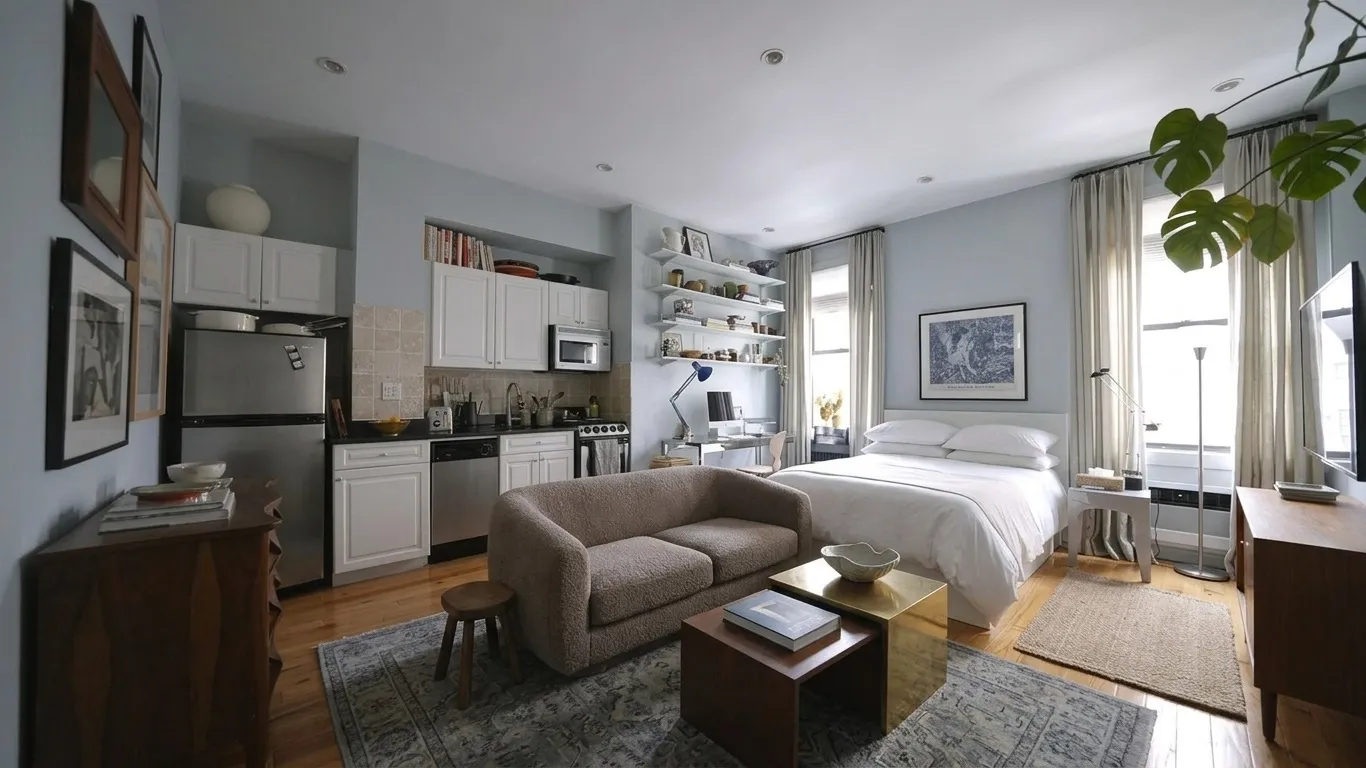
The third layout introduces warmer earth tones and more personality. A wooden dresser near the kitchenette adds storage. Plants bring life into the corners. The rug has more texture and pattern. The overall feel is less showroom, more lived-in.
This is a great option for anyone who feels that minimalism is too cold. You still have a clean layout with clear zones, but the materials and accessories give the space warmth and depth. According to a 2025 Houzz survey, 67% of homeowners now prefer warm earth tones over cool greys, a complete reversal from 2020 when cool palettes dominated 72% of new projects.
Estimated cost: $2,800 to $4,200
Sofa ($600 to $900), bed frame ($350 to $500), wooden dresser ($250 to $450), coffee table ($180 to $350), vintage-style rug ($150 to $300), plants and pots ($80 to $200), lighting ($120 to $280), bedding and accessories ($300 to $500).
Layout 4: Calm and Coastal
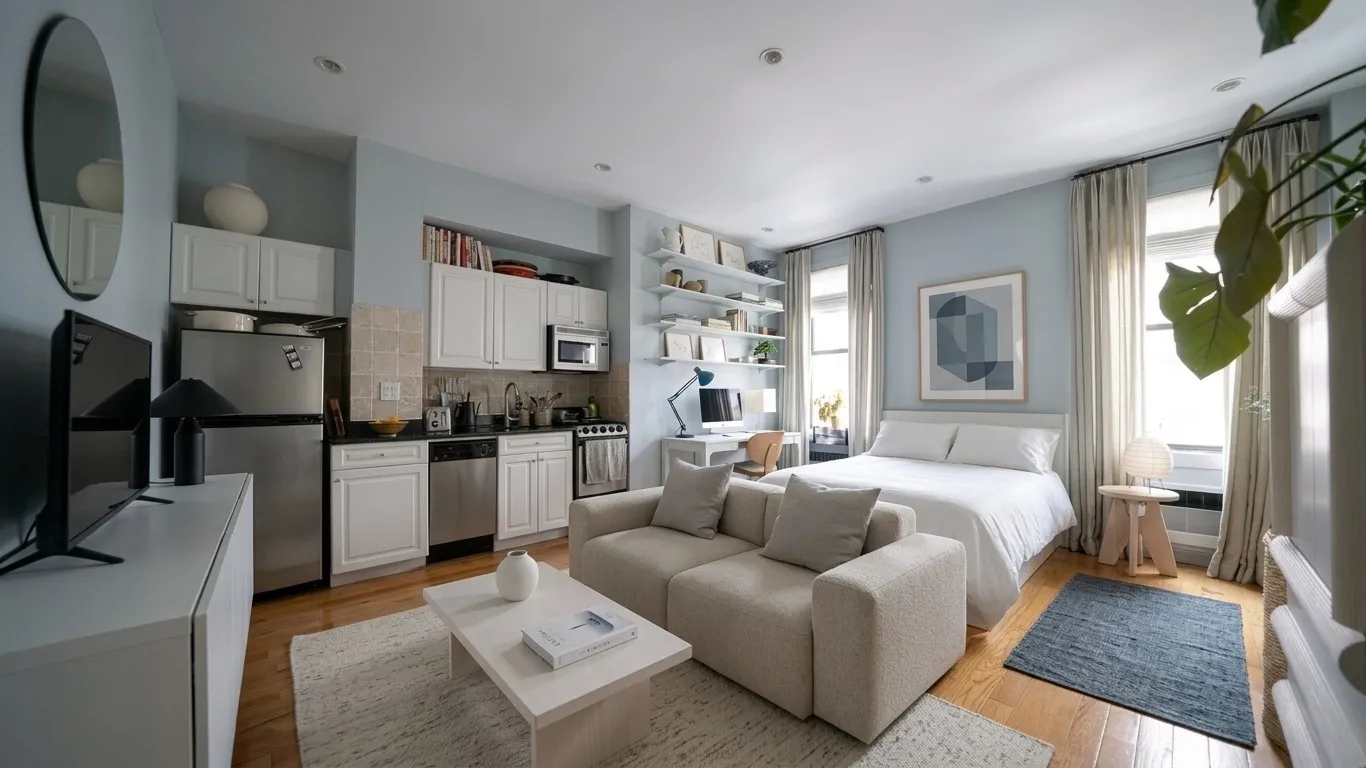
Layout four goes coastal without being cliché. No seashells or anchor prints. Instead it uses cream upholstery, soft blue textiles on the bed, a round mirror to bounce light, and natural fiber accents. The palette stays neutral with just enough blue to suggest the ocean without screaming beach house.
This is the lightest and airiest of all five layouts. Research from the Journal of Environmental Psychology found that rooms with light, cool color palettes are perceived as 25 to 33% larger than identical rooms in dark colors. If your studio gets good natural light (like this one with its two large windows), leaning into a light palette makes 350 square feet feel closer to 450.
Estimated cost: $2,100 to $3,300
Sofa ($550 to $850), bed frame ($300 to $450), coffee table ($100 to $200), round mirror ($60 to $150), rug ($80 to $180), lighting ($100 to $250), bedding and textiles ($250 to $400), accessories ($100 to $250).
Layout 5: Bold Navy Accents
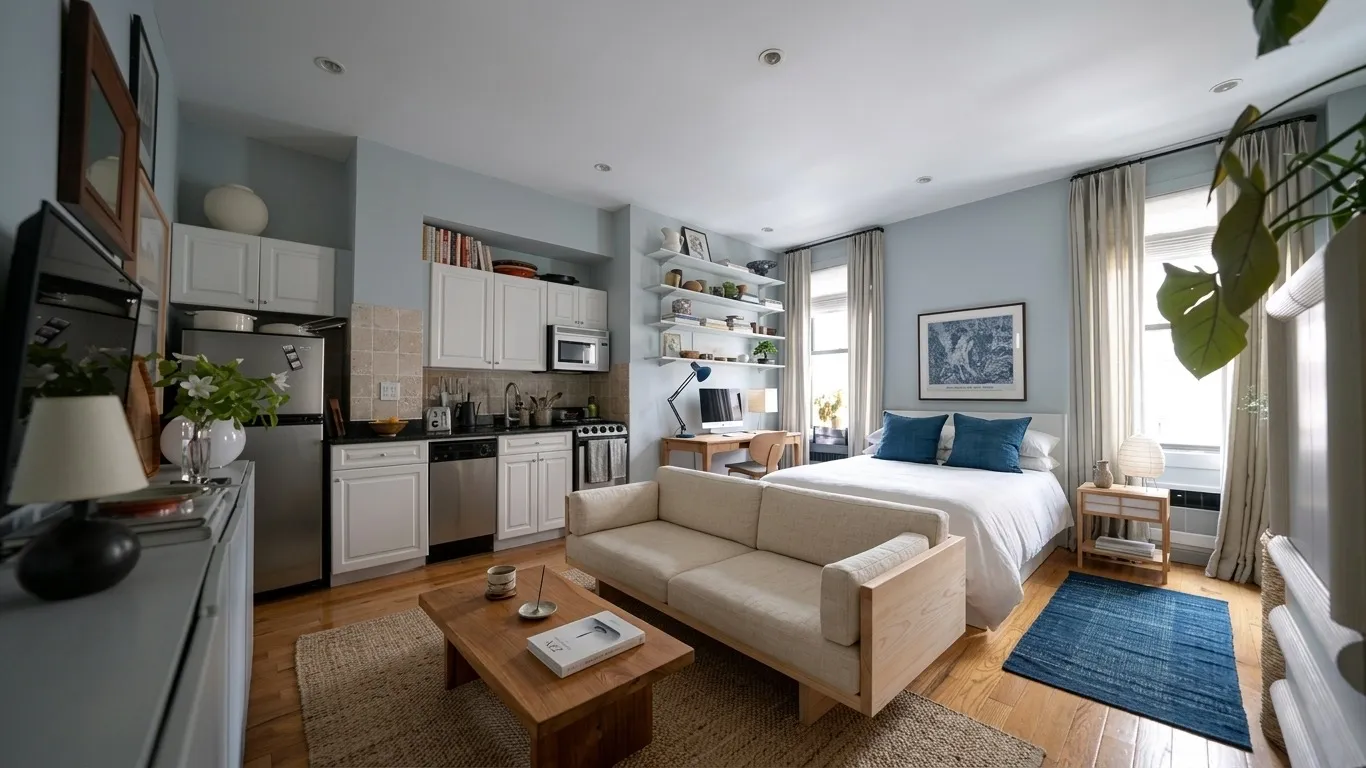
The final layout adds contrast. A deep navy rug defines the living zone. Blue throw pillows tie the bed and sofa together. The wooden coffee table adds warmth to prevent the blue from feeling cold. This is the most visually striking of the five. It has the most personality.
This layout proves that studios do not have to be all-white to feel spacious. A bold rug in a dark color actually anchors the space and makes the lighter walls recede, creating a sense of depth. According to Pinterest Trends data, searches for "navy accent room" grew 185% year over year in 2025.
Estimated cost: $2,300 to $3,600
Sofa ($600 to $900), bed frame ($300 to $500), coffee table ($150 to $300), navy area rug ($120 to $280), throw pillows ($60 to $120), lighting ($100 to $250), bedding and accessories ($250 to $450).
The Numbers: 5 Layouts Compared
Here is what each layout costs to build in real life, from cheapest to most expensive:
| Layout | Style | Low Estimate | High Estimate |
|---|---|---|---|
| 4 | Coastal | $2,100 | $3,300 |
| 1 | Scandinavian | $2,200 | $3,500 |
| 5 | Navy Accents | $2,300 | $3,600 |
| 2 | Cool Modern | $2,400 | $3,800 |
| 3 | Earthy Tones | $2,800 | $4,200 |
The average across all 5 layouts: $2,360 to $3,680. For comparison, hiring an interior designer for a studio consultation and furniture plan costs $1,500 to $4,000 for the design fee alone, on top of the furniture cost. That means AI saves you 40 to 100% on the design side while giving you 5x more options to choose from.
How We Made These 5 Designs in Under 3 Minutes
Every design in this post was generated using MeltFlex AI. Here is the exact process and time per step:
- Upload a photo of your empty room (5 seconds)
- Choose a style or describe what you want in plain English (10 seconds)
- Get a photorealistic render (20 seconds generation time)
- Click on any furniture piece to see real products from IKEA, Amazon, Wayfair, and 50+ other stores with prices and purchase links
Total per design: about 35 seconds. Total for all 5: 2 minutes and 30 seconds. Cost: $0 on the free tier.
Compare that to the traditional approach: 40+ hours of browsing, $150 to $400 lost to returns, 3 to 6 weeks of stress. AI reduces furniture planning from weeks to minutes and eliminates the 30% return rate that costs the average studio renter $200+ per move.
To explore all 12 major interior design styles with examples before choosing, see the complete interior design styles guide. For a full living room cost breakdown, our living room furnishing cost guide covers every budget. And if you are a renter, our rental apartment redesign guide shows how to transform any space without drilling or painting.
For help sizing furniture correctly in a small space, see our visual guide to furniture sizing. If you want to see what makes a small room feel larger, our 12 tricks for making a small room look bigger covers the most effective techniques. And for renter-specific design — no drilling, no painting — our rental apartment redesign guide shows 5 complete AI transformations.
Try it free with your own room. Upload a photo and see your studio furnished in 30 seconds.