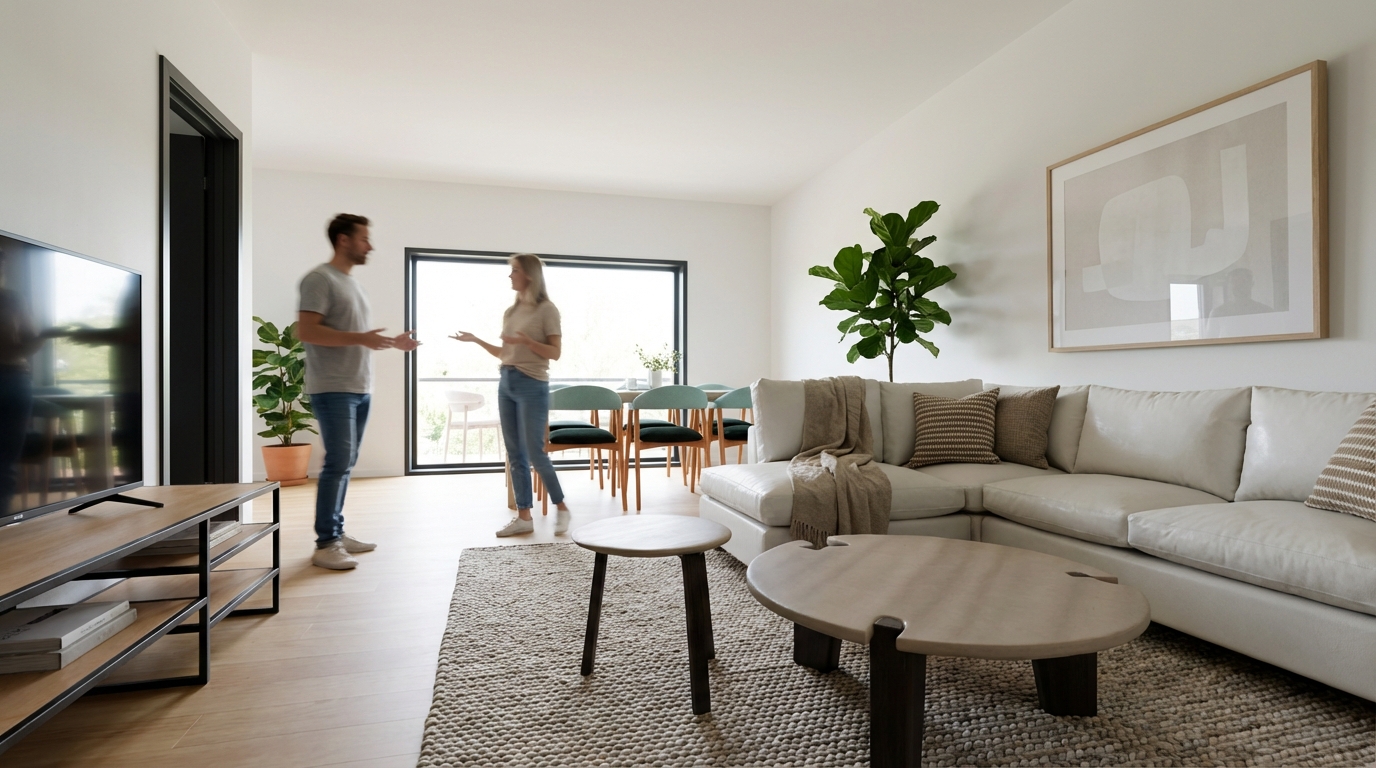
Moving into a new apartment is exciting, but choosing furniture can be overwhelming. With hundreds of options and the constant fear of buying something that doesn't fit, many people end up with mismatched furniture they don't love — or worse, pieces that are too large for the room. Here are five practical, tested tips for furnishing your new apartment the right way, with real examples showing how AI visualization tools can save you from expensive mistakes.
1. Measure Your Rooms Before Buying Any Furniture
This sounds obvious, but it's the single most common mistake people make when furnishing a new apartment. Before browsing any furniture store, measure your rooms carefully. Note door widths (your furniture needs to physically fit through them), window positions, electrical outlet locations, and any architectural features like columns, radiators, or uneven walls.
The best approach is to start with a digital floor plan. You can photograph your apartment's architectural drawing and upload it to an AI tool like MeltFlex, which converts it into an accurate, dimensioned layout automatically. This gives you exact room sizes and lets you plan furniture placement digitally — before spending a single euro.
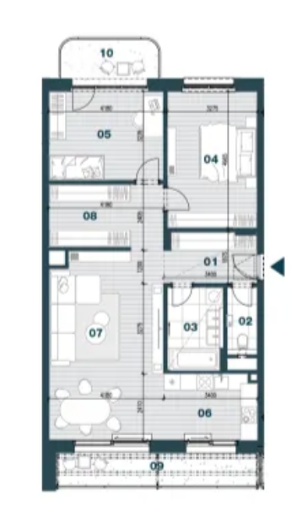
The floor plan above shows a multi-room apartment with each room numbered and measured. Having this level of detail means you'll know instantly whether that 220 cm sofa fits your living room, or whether you need the 180 cm version instead.
2. Start with the Biggest Furniture Pieces First
Don't buy a coffee table before you have a sofa. When choosing furniture for a new apartment, always start with the largest pieces in each room — the bed for the bedroom, the sofa for the living room, the dining table for the kitchen area. These anchor pieces define the room's layout and determine how much space is left for everything else.
Modern furniture comparison tools make this much easier. Instead of visiting five showrooms, you can browse multiple options side-by-side and see exactly how each one looks in your room. Here's an example — comparing beds for a bedroom:
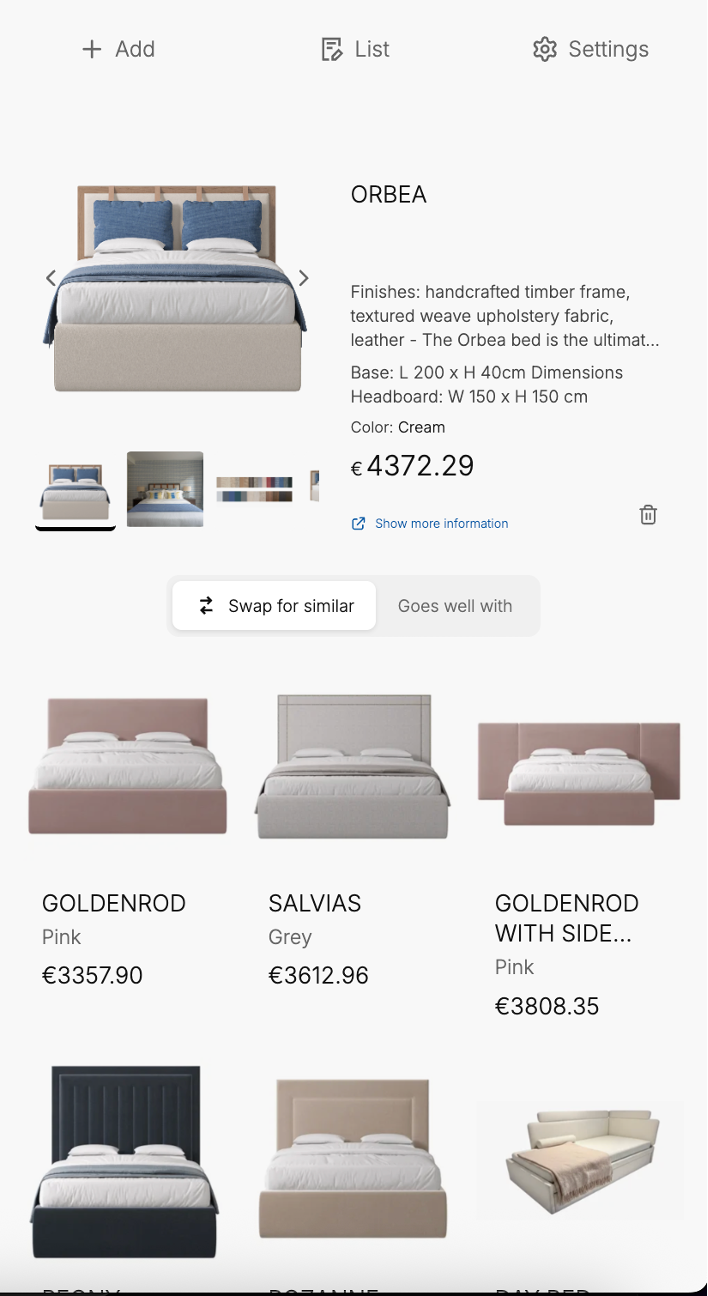
With tools like MeltFlex, you can browse real furniture from curated brands, see prices immediately, and use the “Swap for similar” button to cycle through alternatives. The ORBEA at €4,372, the GOLDENROD at €3,357, or the SALVIAS at €3,012 — each fits differently in the room, and you can see the difference instantly.
3. Use 3D Visualization to See Furniture Before You Buy
This is where modern technology truly saves you from expensive mistakes. Instead of trying to imagine how furniture will look in your space, use a 3D room planner. Upload your floor plan, place furniture virtually, and see exactly how everything fits together — proportions, colors, spacing, and style.
Here's a real example. We placed a bed with white bedding in a bedroom and then swapped it for a different variant with blue bedding. Both are shown from the same top-down 3D angle:
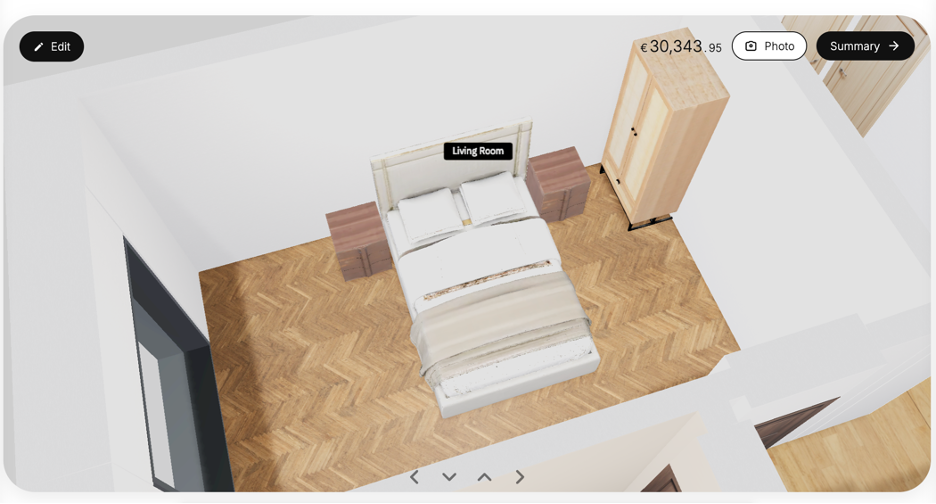
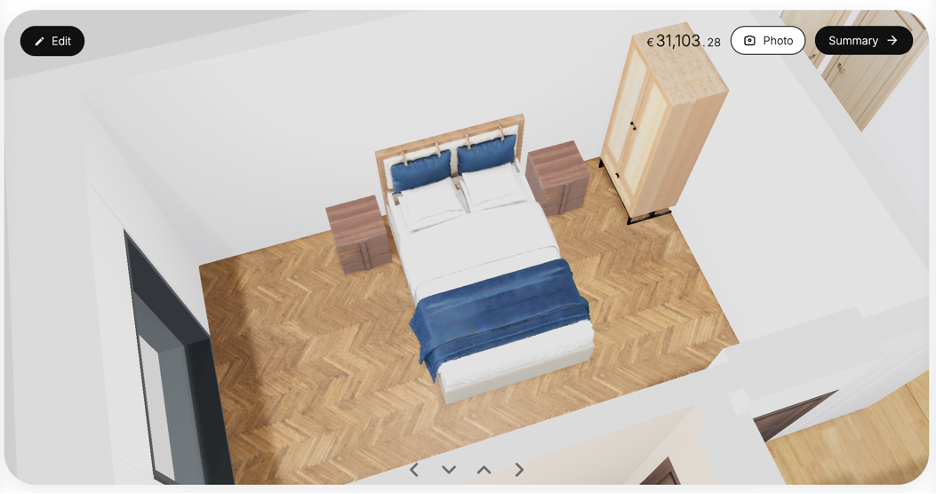
Notice how swapping just the bedding changes the entire feel of the room. The white variant feels light and minimal, while the blue version adds warmth and contrast against the herringbone floor. In a physical store, you'd never be able to compare these side-by-side in your actual room.
But the real magic is the photorealistic render. Once you're happy with the layout,MeltFlex generates a photorealistic image of your room that looks like a professional interior design photo:
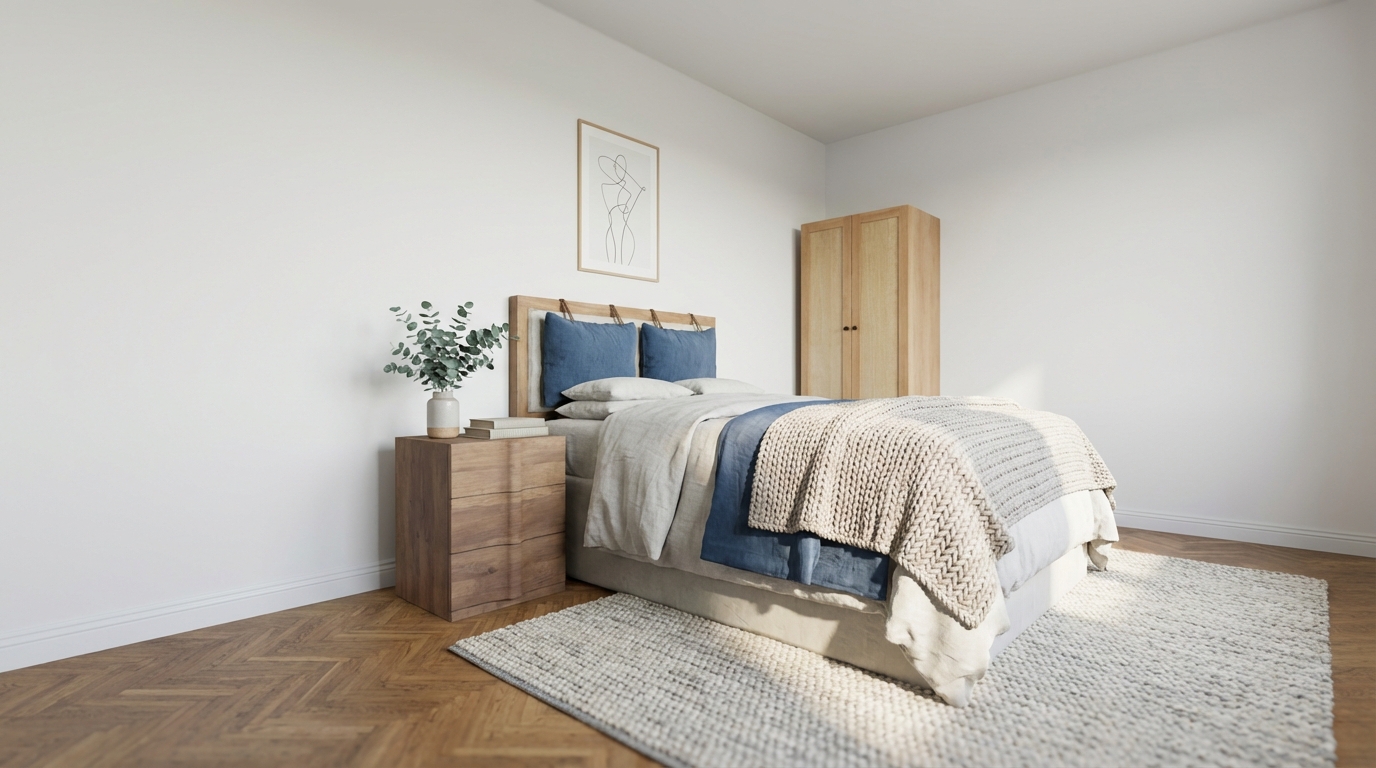
This is the same room, same furniture, same layout — but now rendered with realistic lighting, textures, and styling. You can see exactly how your bedroom will look before buying a single item. The wooden headboard, the knit throw, the plant on the nightstand — everything is shown at real-world scale and proportion.
4. Plan for Traffic Flow Between Furniture
A well-furnished room isn't just about individual pieces — it's about how you move through the space. Leave clear pathways between furniture. Standard walkways should be at least 90 cm wide. The space between a sofa and coffee table should be about 45 cm — close enough to reach your drink, far enough to walk around comfortably. Behind dining chairs, allow 80 cm so people can sit down without bumping into walls.
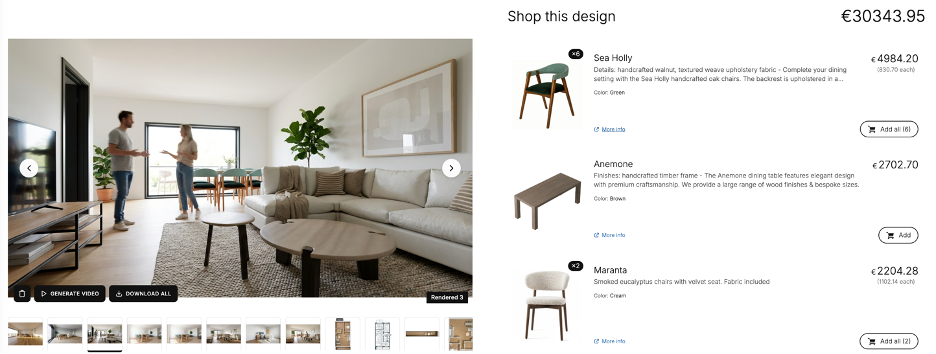
The image above shows a living room designed in MeltFlex with the “Shop this design” panel open. You can see how the sectional sofa, coffee table, dining chairs, and TV unit are positioned with clear walking paths between them. The total cost of the design (€30,343.95) is visible at a glance, and every single item — the Sea Holly sofa, the Anemone table, the Maranta chair — is a real product you can browse and order directly.
In a 3D room planner, traffic flow problems are immediately obvious. If a hallway between the sofa and wall is too narrow, you'll see it. If the dining table blocks the path to the balcony, you can drag it to a new position in seconds. This is especially critical in smaller apartments where every centimeter matters.
5. Invest in Quality for Furniture You Use Every Day
Not all furniture needs to be premium. But the pieces you use every day — your mattress, your office chair, your sofa — are worth investing in. A good mattress lasts 10 years and you spend a third of your life on it. A quality office chair prevents back problems if you work from home. A well-built sofa keeps its shape after thousands of hours of use.
When evaluating quality, check the product details carefully — materials, dimensions, construction, and warranty. Here's what a detailed product page looks like:
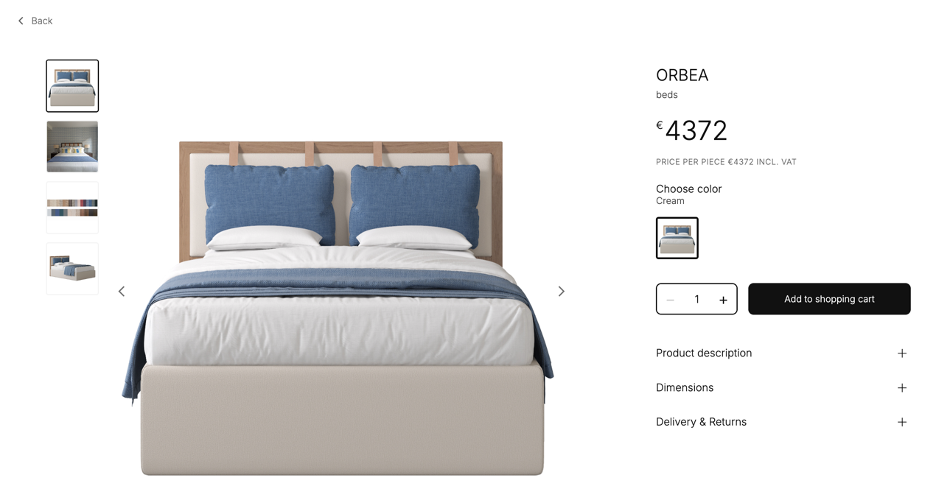
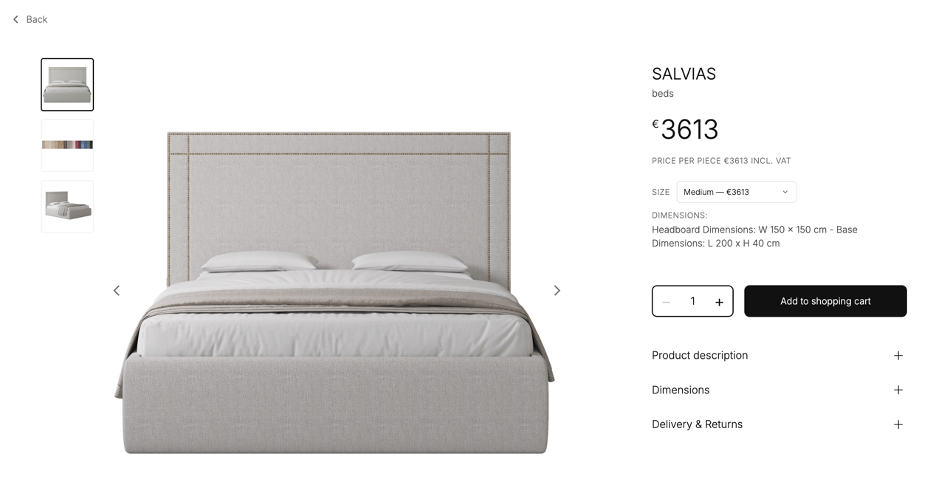
The ORBEA (€4,372) features a handcrafted timber frame with textured upholstery — a premium choice for daily use. The SALVIAS (€3,613) offers a clean, minimalist design at a lower price point with detailed dimensions (W 150 × H 150 cm headboard, L 205 × H 40 cm base) so you know exactly what you're getting. Both show product descriptions, dimensions, and delivery information upfront —browse the full catalog to compare options at every budget level.
For decorative items, accent tables, and accessories, you can absolutely go budget-friendly. These pieces are easy to replace when your taste changes or when you move to a new apartment.
Bonus: Take Your Time Furnishing Your Apartment
You don't have to furnish your entire apartment at once. It's actually better to live in a space for a few weeks and understand how you use it before making big purchases. You might discover that you need a larger dining table for hosting friends, or that your living room works better with two armchairs instead of a large sectional.
Start with the essentials — a bed, a place to sit, and a table to eat at. Then gradually add pieces as you understand your daily routines and develop your personal interior design style. AI tools like MeltFlex make it easy to plan ahead — design your entire apartment in 3D, save your layout, then buy pieces one at a time as your budget allows. Your 3D design stays saved, so you always know what comes next.
Frequently Asked Questions
How do I know if furniture will fit in my apartment?
Measure your rooms carefully and use a 3D room planner like MeltFlex. Upload your floor plan, place furniture virtually, and see exact proportions — including walking space between pieces — before buying anything. The 3D view shows your room from every angle so there are no surprises on delivery day.
What furniture should I buy first for a new apartment?
Start with anchor pieces that define each room: a bed for the bedroom, a sofa for the living room, and a dining table for the kitchen area. These large pieces determine the layout and available space for everything else. Buy smaller items later once you understand how you use the space.
Can I compare different furniture options in my room before buying?
Yes. AI tools like MeltFlex let you place different furniture variants in your 3D room and swap between them instantly. You can compare a €3,000 bed versus a €4,000 bed in the exact same room, see how each affects the layout, and generate photorealistic renders of each option to make a confident decision.
How much space should I leave between furniture pieces?
Standard walkways should be at least 90 cm wide. Leave about 45 cm between a sofa and coffee table — close enough to reach comfortably, far enough to walk past. In a dining area, allow 80 cm behind chairs so people can sit down and stand up without bumping into walls or other furniture.
Before buying, see how AI shows you the exact result in your room — our one room, 4 designs guide shows how different furniture choices transform the same space. For precise sizing before any purchase, use our furniture sizing visual guide. And for full cost estimates by room and style, our living room furnishing cost guide covers real 2026 prices.

