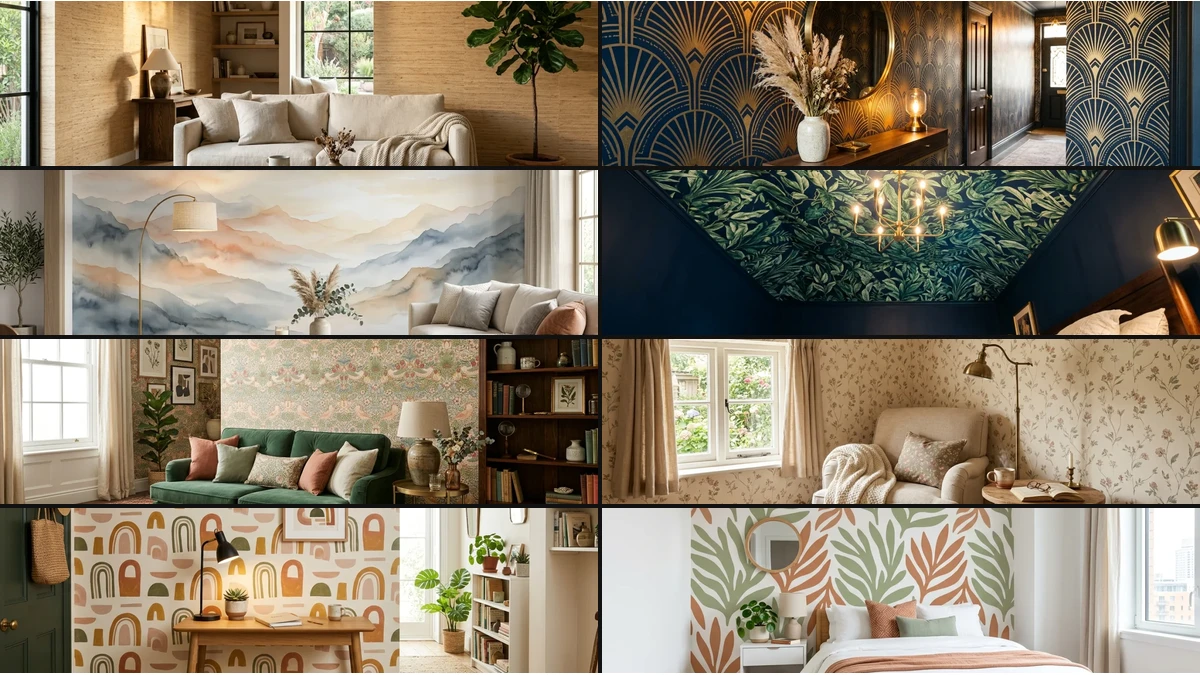
The biggest wallpaper trends for 2026 are textured grasscloth, Art Deco revival, panoramic murals, ceiling wallpaper, heritage patterns, cottage cool, soft geometrics, and peel-and-stick removable wallpaper. These eight styles dominate everything from designer showrooms to rental apartments right now.
Our articles are still written by humans!
Get human written articles in your Google feed.
The numbers confirm the comeback. The global wallpaper market hit $2.4 billion in 2024 and is projected to reach $2.9 billion by 2030. Google searches for “mural wallpaper” surged over 1,150% in 2025. Online retailers report peel-and-stick wallpaper sales up over 50%. As designer Caroline Zamadics puts it: “We’re all tired of solid gray rooms, and we’re craving more color and pattern.”
This guide covers every trending wallpaper style for 2026:what each looks like, why it works, which rooms it suits, the best brands to buy from, and how to preview wallpaper ideas in your own room with AI before spending a cent.
FreeUpload photo · freeRepaint my walls for freeUpload a photo and MeltFlex changes the wall colour or finish, with the furniture and layout untouched. Your first AI design is free, no card needed.
Watch: 2026 Interior Trends, What's In and What's Out
Wallpaper is riding a bigger 2026 shift toward warmth, texture, and pattern. In this widely watched forecast, designer Rebecca Robeson walks through what is coming in and what is on the way out, which sets useful context for the eight wallpaper trends below.

Video: “Interior Design Trends 2026 (What's In & What's Out)” by Rebecca Robeson.
1. Textured Wallcoverings:Grasscloth, Linen, and Embossed
Texture is one of the defining themes of 2026. Grasscloth, linen-look papers, faux plaster finishes, bouclé fabrics, sisal, and embossed patterns are surging in popularity. These wallcoverings add depth and dimension through tactile surfaces that interact with light and shadow, changing appearance throughout the day.
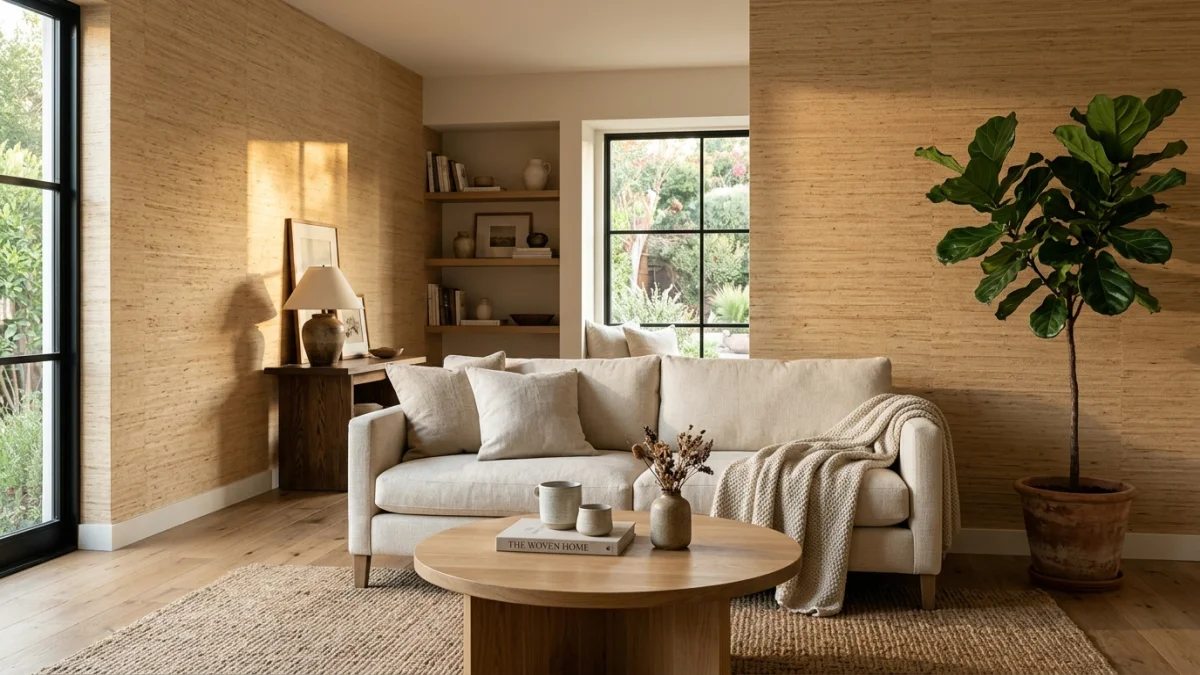
Grasscloth wallpaper in warm sand:the woven texture changes appearance as light moves across it
Flora Daly, lead designer at Harlequin, says it plainly: “Textural wallpapers, and designs that create a true fabric-on-the-wall effect are becoming a key trend for 2026.” Flat, shiny walls are definitively out.
Why it works: As daily life becomes increasingly virtual, physical environments are becoming hyper-tactile to compensate. A grasscloth wall in a bedroom adds warmth without busy patterns. A linen-texture paper in a dining room creates sophistication without competing with the table setting.
Best rooms: Bedrooms, dining areas, living spaces, entryways. Deep blue grasscloth in a niche or alcove is particularly effective.
Color palette: Warm neutrals, clay tones, soft browns, warm creams, faded greens. Matte sheens dominate.
Key brands: Tempaper (faux grasscloth and metallic finishes), Farrow & Ball, Phillip Jeffries, Thibaut.
2. Art Deco Revival:Gold, Geometry, and Glamour
Art Deco is the single most popular wallpaper style in 2026 by sales volume. Fan motifs, stepped patterns, sunburst designs, and bold geometric compositions in metallic gold, brass, and bronze are experiencing a full revival. The 2026 interpretation blends 1920s glamour with contemporary art influences.
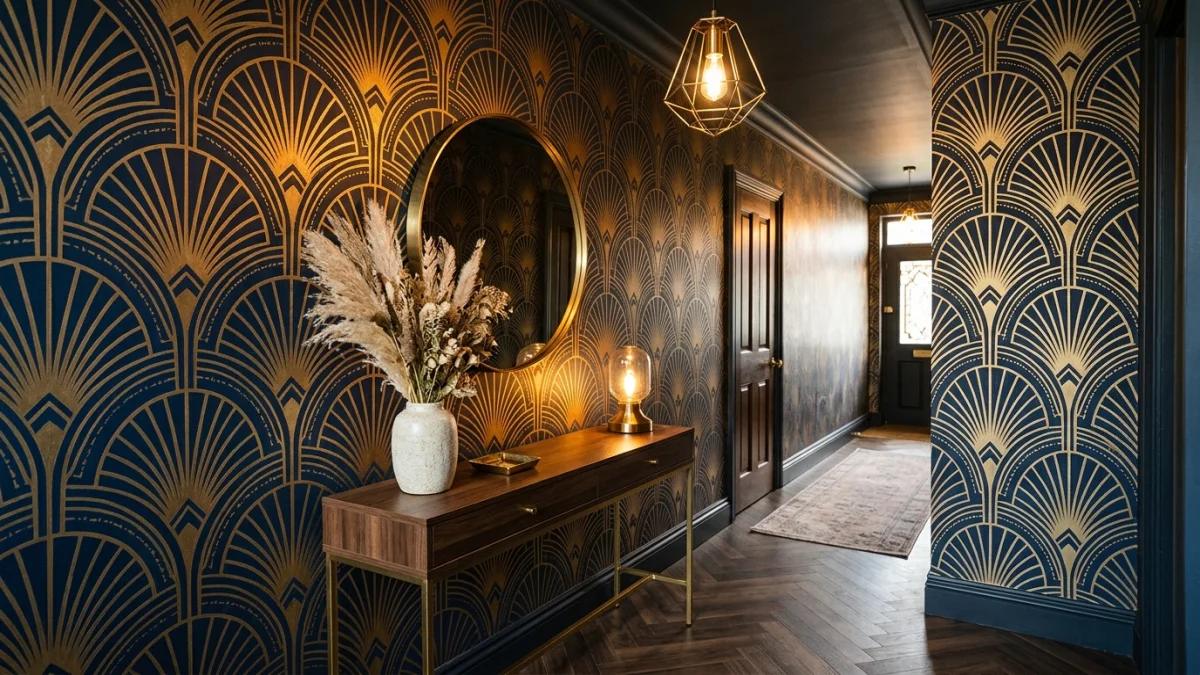
Art Deco revival:gold fan motifs on midnight navy create instant glamour in an entryway
Why it works: Art Deco provides visual drama with structured symmetry that feels both retro and modern. The metallic accents catch light and add movement to walls. It is opulent without being cluttered:a single Art Deco wall can anchor an entire room.
Best rooms: Dining rooms, entryways, bedrooms, powder rooms:anywhere that benefits from glamour and a sense of occasion.
Color palette: Metallic gold, brass, and bronze. Jewel tones like midnight blue, emerald green, burgundy, and plum. Dramatic black and gold contrasts. Softer combinations of antique pink and pearl grey.
Key brands: Cole & Son (theatrical geometric Art Deco prints), Farrow & Ball (Tourbillon wallpaper), York Wallcoverings, Graham & Brown.
3. Panoramic Wall Murals:Rooms That Tell Stories
Panoramic murals stretching across entire walls are a defining visual of 2026 interiors. These large-scale designs create immersive, narrative-driven spaces:panoramic landscapes, trompe l’oeil architecture, sweeping garden scenes, misty mountains, coastal cliffs, and abstract landscapes that create the illusion of depth.
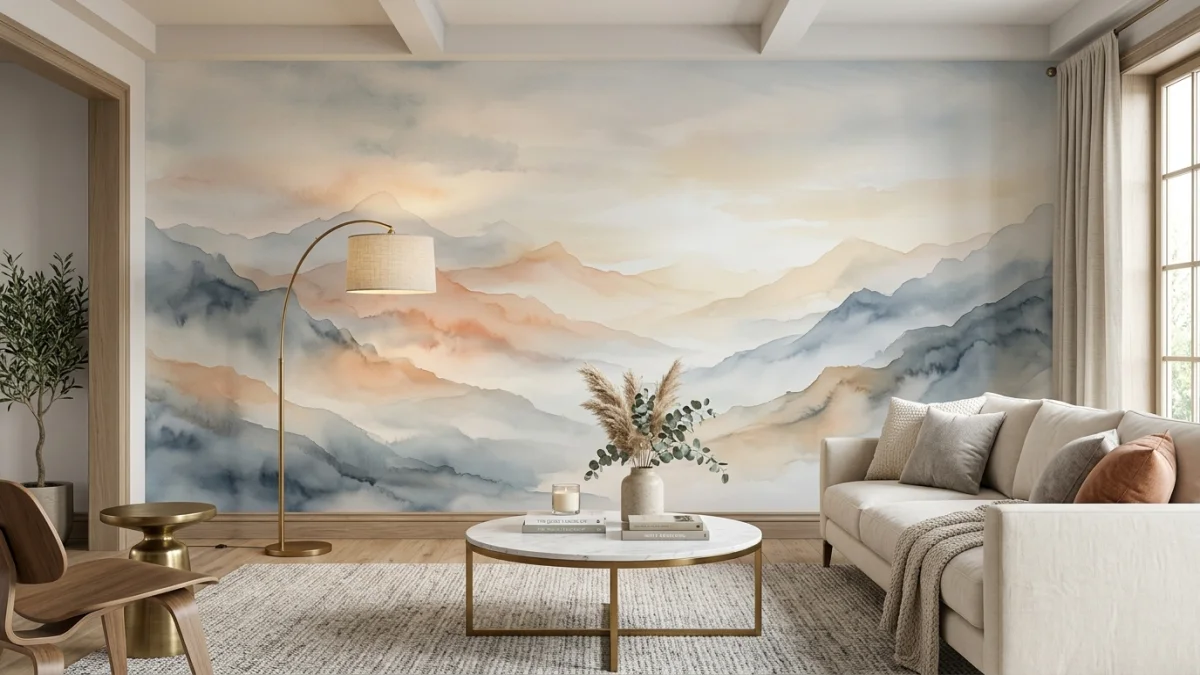
Panoramic mountain mural in watercolor tones:the wall creates an illusion of infinite depth
Graham & Brown named “Eternal City”:inspired by the Pink City of Jaipur:as their Mural of the Year for 2026. The trend is clear: walls are becoming canvases, not backgrounds.
Why it works: Murals turn rooms into living narratives rather than static backdrops. They can make even small rooms feel spacious by creating visual depth. Abstract landscapes are preferred over photographic ones for a more artistic, timeless quality.
Best rooms: Bedrooms, home offices, living rooms, dining rooms. Particularly effective as a single feature wall behind a bed or sofa.
Color palette: Misty blues and greys for landscapes, warm terracottas for architectural scenes, soft watercolor tones for botanical murals, muted earth tones for abstract pieces.
Key brands: Graham & Brown, Tecnografica, Rebel Walls, MuralConcept.
Want to see how any of these wallpaper styles would look in your room? Upload a photo to MeltFlex and try Art Deco, grasscloth, panoramic murals, or any style:the AI generates a photorealistic preview in seconds.
4. The Fifth Wall:Ceiling Wallpaper
Forget accent walls. In 2026, the ceiling is where the real statement happens. Designers are treating the “fifth wall” as a true design layer, and accent ceilings are replacing accent walls as the new bold move. “Color drenching”:covering walls, trims, doors, and ceiling in the same color family:creates seamless, immersive environments.
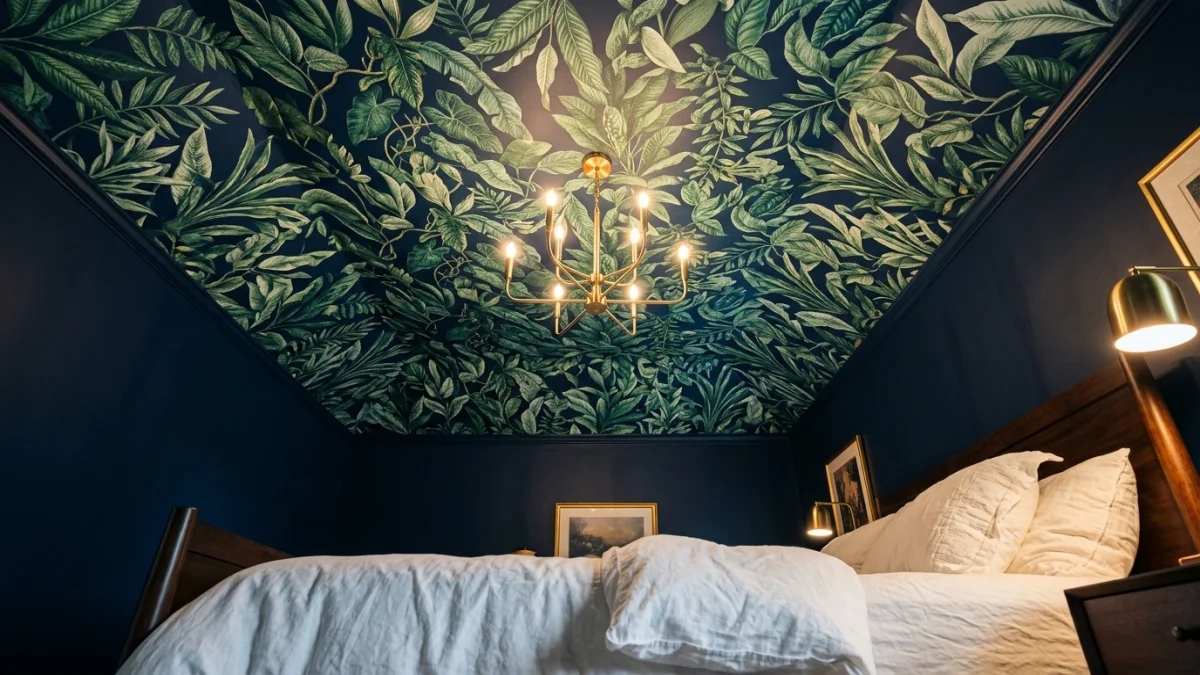
The fifth wall:botanical ceiling wallpaper turns a bedroom into an immersive cocoon
Why it works: Ceilings occupy significant visual space but have been ignored for decades. Your eyes naturally travel upward throughout the day. Ceiling wallpaper adds unexpected drama, can disguise quirky architecture, and gives a room a finished, designed feel that painted ceilings rarely achieve.
Best rooms: Bedrooms (starry night effects or soft botanicals), dining rooms (dramatic patterns), powder rooms (full immersion), hallways.
Color palette: Navy blue for sophisticated drama, forest green for natural serenity, terracotta for warmth, charcoal gray for modern elegance. Geometric patterns, botanical prints, and 3D textures all work on ceilings.
Key brands: Milton & King (dedicated ceiling wallpaper category), Rebel Walls. Peel-and-stick brands now make ceiling application significantly easier than traditional paste.
5. Heritage Revival:Chinoiserie, Toile, and William Morris
Heritage wallpapers are back, and they are not ironic. Chinoiserie landscapes, delicate toile scenes, opulent damasks, neoclassical motifs, and William Morris Arts & Crafts patterns are being reimagined in modern colorways. Delft tiles with their blue-and-white pastoral scenes are returning too. Classic William Morris motifs now appear in unexpected palettes like blush pinks, sage greens, and warm terracottas.
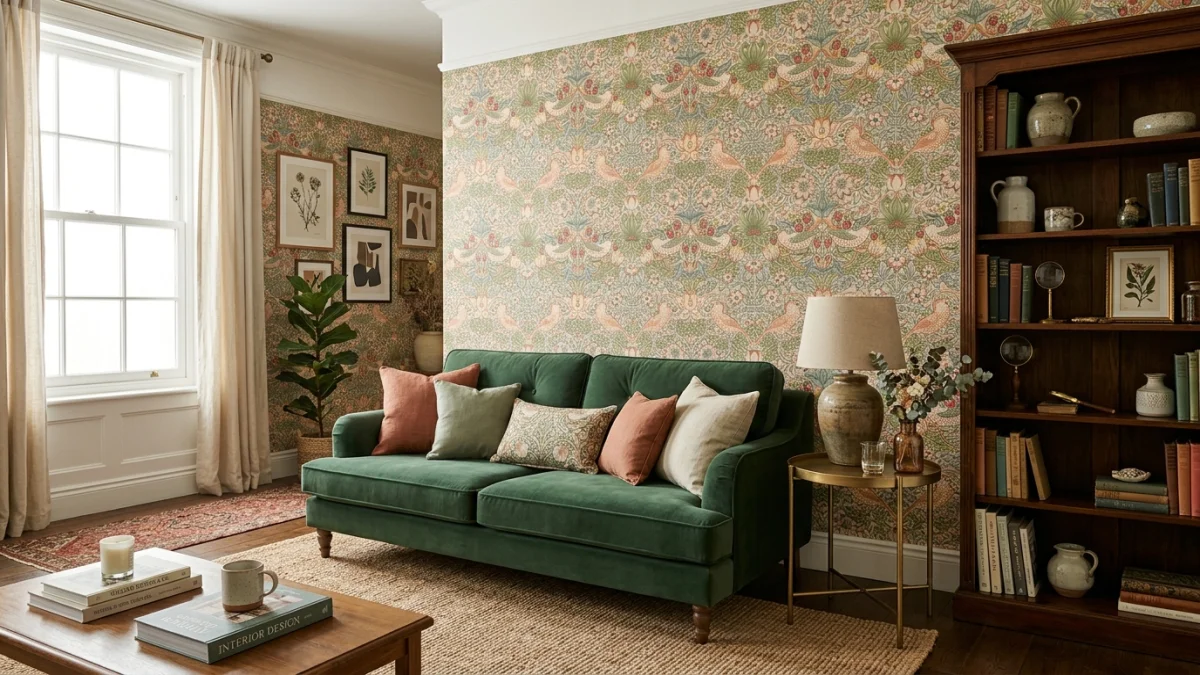
Heritage revival:William Morris patterns reimagined in modern sage green and blush tones
Why it works: Consumers want spaces that feel personal, layered, and alive with history. The principles of the Arts & Crafts Movement:sustainability, authenticity, handcrafted quality:resonate strongly in 2026. These patterns have survived a century of design trends because the craftsmanship and composition are genuinely excellent.
Best rooms: Living rooms, dining rooms, bedrooms, libraries, entryways.
Color palette: Blue-and-white (Delft/chinoiserie), blush pinks and sage greens (Morris reimagined), warm terracottas, deep navy and gold combinations.
Key brands: Cole & Son (iconic heritage patterns), Morris & Co (original William Morris designs), House of Hackney, de Gournay (hand-painted chinoiserie), Farrow & Ball.
6. Cottage Cool:Warm, Earthy, and Grounded
A refined take on cottagecore that acts as an architectural layer rather than a focal point. Cottage cool wallpapers support daily life with warmth and approachability:soft botanicals, delicate floral motifs, and tactile textures in earth tones. The broader color trend is unmistakable: clay, terracotta, soft gold, warm beige, deep green, mocha, espresso, and truffle tones dominate 2026.
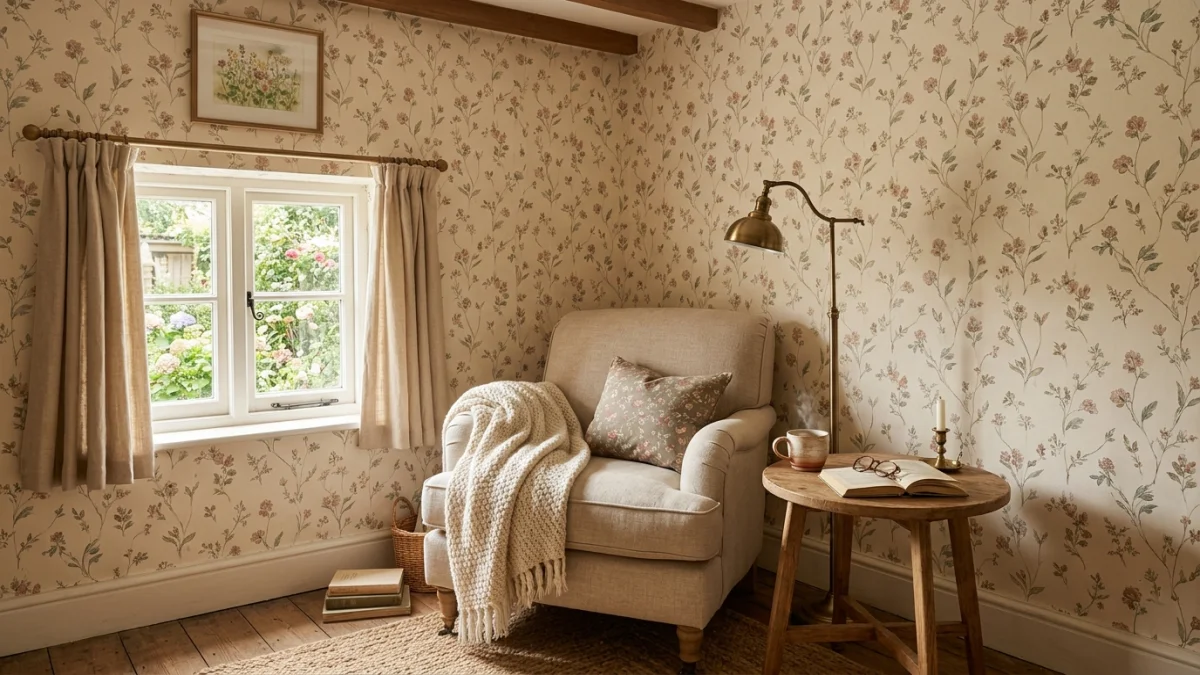
Cottage cool:soft botanicals in warm earth tones create a grounded, comforting space
Benjamin Moore’s Color of the Year 2026 is Silhouette:a charcoal-infused espresso that epitomizes this shift toward rich, grounding browns. Graham & Brown chose Divine Damson, a plum-purple. Both point in the same direction: warmth over coolness, earth over sky.
Why it works: These wallpapers create emotionally grounded, comforting spaces. They recede into the background, letting furniture and daily life take center stage. After years of stark white walls, warm tones feel like a collective exhale.
Best rooms: Bedrooms, reading nooks, kitchens, home offices:spaces that prioritize ease and focus.
Color palette: Warm beiges, sand, camel, terracotta, ochre, coffee brown, dove grey, mocha, espresso, divine damson (plum-purple).
7. Soft Geometrics:Organic Shapes Over Harsh Lines
Geometry is not going away, but it is evolving. The 2026 version is less about harsh precision and more about human mark-making. Patterns feel organic, irregular, and rhythmic:arches, hand-drawn lines, soft curves, and artisanal imperfections. Think 70s-inspired geometrics in blush, ochre, and terracotta rather than sharp black-and-white chevrons.
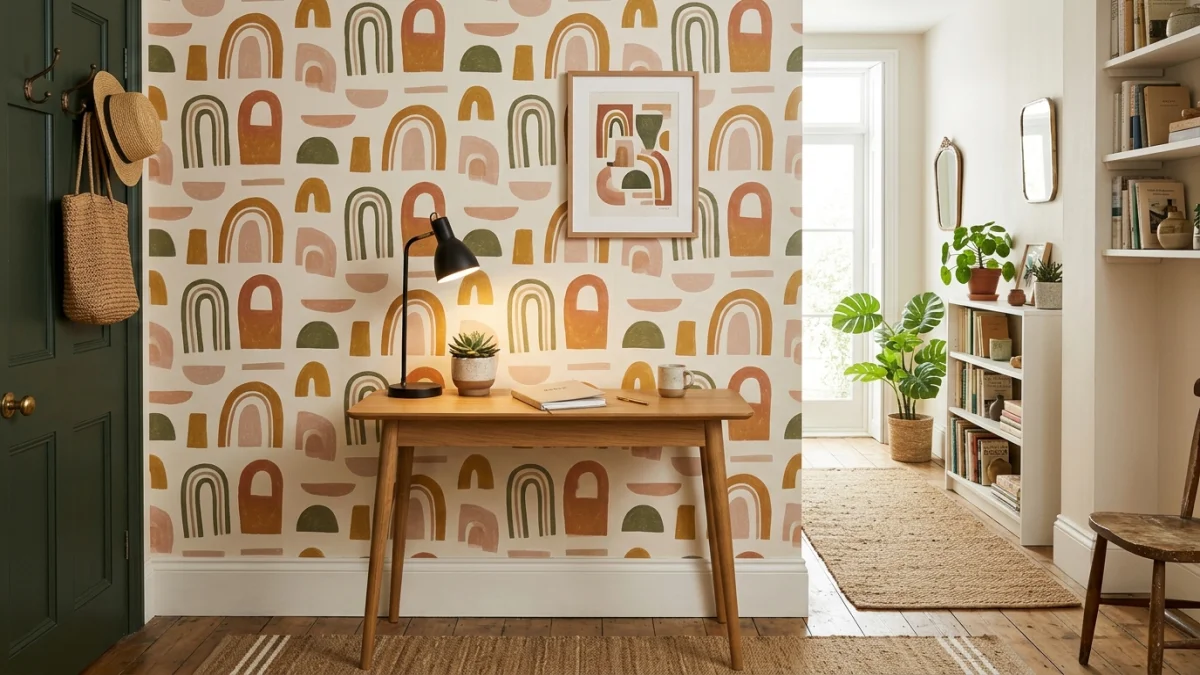
Soft geometrics:hand-drawn arches in warm 70s tones replace harsh machine-perfect patterns
Designer Jade Joyner draws the line clearly: “Bold geometric shapes had their moment, but they can feel harsh and dated now, especially in small spaces.” The replacement is craft-inspired geometry that has warmth and personality.
Why it works: Hand-drawn aesthetics give perennially popular patterns like stripes more charm and personality. The organic quality prevents the wallpaper from feeling rigid or institutional. These patterns add structure to a room without dominating it.
Best rooms: Hallways and entryways (stripes add perceived height), home offices, bedrooms, kitchens.
Color palette: 70s-inspired: orange, chocolate brown, mustard, olive green, terracotta. Modern takes: blush, ochre, sage, persimmon, cool blue.
Key brands: Cole & Son, Farrow & Ball, Bobbi Beck.
8. Peel-and-Stick:Commitment-Free Transformation
Peel-and-stick wallpaper is no longer a compromise. It is mainstream. The technology now supports every trending design:murals, florals, grasscloth textures, Art Deco metallics, botanicals:in removable formats that install without paste or tools and come off cleanly without wall damage.
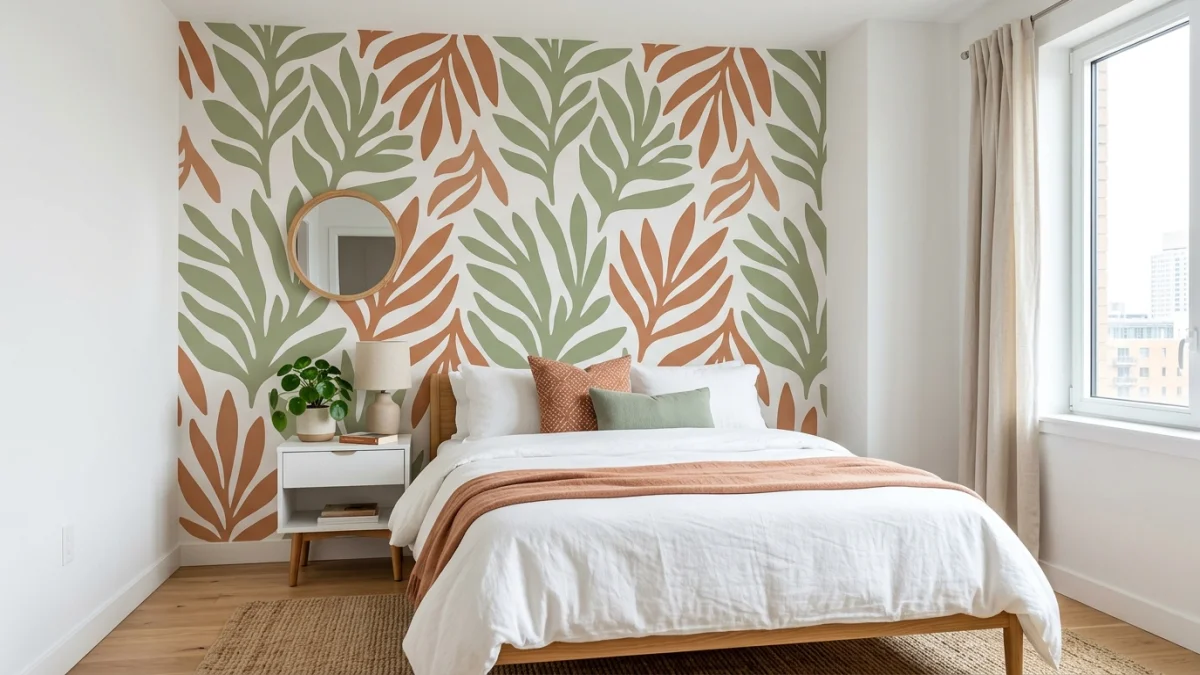
Peel-and-stick accent wall:one removable wallpaper panel transforms a rental bedroom
The numbers confirm the shift: 42% of millennials prioritize non-permanent design modifications. Hashtag volume for peel-and-stick wallpaper has grown 300% over the past three years. The removable wallpaper market is estimated at $2.26 billion in 2026.
Why it works: Renters, commitment-phobes, and trend followers can now update their walls with every season. Want biophilic maximalism this year and Art Deco next year? Peel it off and start fresh. No paste, no professional installation, no landlord negotiations.
Best rooms: All rooms, but particularly bedrooms, bathrooms (washable options), kitchens, and rental apartments.
Key brands: NuWallpaper (available at Target and Amazon, budget-friendly from $15), Tempaper (unique textures, faux grasscloth), Spoonflower (3+ million independent artist designs with custom upload option), Wall Blush, CostaCover, Wallshoppe.
All 8 Wallpaper Trends at a Glance
What Is Out for 2026
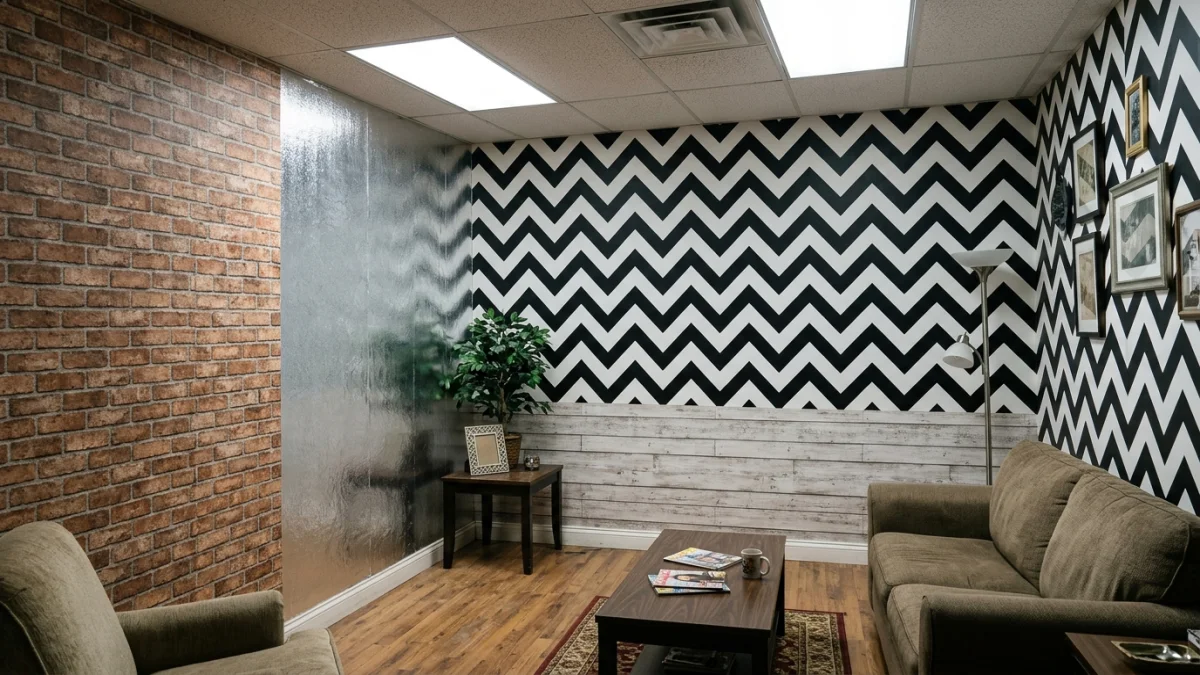
Faux textures, bold chevrons, and glossy metallics:wallpaper styles to avoid in 2026
Knowing what to avoid is as important as knowing what is trending. Designers across the industry agree on these wallpaper styles to skip in 2026:
- Faux textures that mimic wood paneling, brick, or stone:they read as cheap and gimmicky
- Large-scale chevron patterns:firmly outdated
- Faux flocked damask:overly formal and visually heavy
- Glossy metallic finishes:too harsh and artificial. Matte metallics are the replacement
- Shiplap wallpaper:cheapens a room rather than adding character
- Harsh repetitive bold geometrics:the rigid, machine-perfect kind that dominated 2018 to 2022
Room-by-Room Wallpaper Guide
Powder Room
The best room to take risks. Bold colors, wild patterns, full-wall murals, dramatic Art Deco:everything works in a powder room because the space is small enough that even the boldest wallpaper does not overwhelm. Pair with brass fixtures for maximum impact.
Bedroom
Biophilic murals with oversized leaves and moody backgrounds are the top choice. Textured wallpapers like grasscloth and linen add warmth without visual noise. Dark, luxurious palettes:navy, charcoal, forest green:create a cocoon effect that promotes better sleep.
Kitchen
Textural elegance with damask designs, subtle metallic inks, or tile-effect wallpapers with washable finishes. Kitchens are becoming warmer and more living-room-like in 2026, and wallpaper is a key tool for that transformation. Always choose washable or wipeable options near cooking areas.
Living Room
Panoramic murals or oversized florals on one feature wall, paired with solid-color paint on remaining walls. Heritage revival patterns like chinoiserie and William Morris work beautifully behind a sofa. Art Deco in gold and navy creates instant sophistication for entertaining.
Hallway and Entryway
Stripes (vertical, soft geometric) add perceived height in narrow hallways. Heritage patterns create a memorable first impression. Bold murals turn a pass-through space into a design moment that sets the tone for the entire home.
How to Preview Any Wallpaper Trend in Your Room
The biggest risk with wallpaper is commitment. Even peel-and-stick wallpaper costs time and money to install. You need to see how a pattern, color, and scale will look in your actual room:with your lighting, your furniture, and your proportions:before buying 8 rolls of something you saw in a showroom.
Upload a photo of your room to MeltFlex and describe the wallpaper style you want. Try “bedroom with dark moody floral wallpaper” or “living room with Art Deco gold geometric wallpaper” or “dining room with chinoiserie wallpaper.” The AI generates a photorealistic visualization showing the wallpaper in your actual space within seconds.
Generate three or four variations. Compare biophilic versus moody florals versus textured grasscloth. See which one your room can carry and which ones fight your existing furniture. This takes two minutes and eliminates the guesswork that makes wallpaper shopping stressful.
For more on the color trends driving wallpaper choices, read our Color of the Year 2026 comparison. For room-specific design guides, check our posts on bedroom design, living room design, and kitchen design. And for renters wondering how to transform a space you do not own, see our Airbnb and rental staging guide.



)