AI Living Room Makeover: One Empty Room, 4 Designer-Level Styles in Under 60 Seconds
Here is the uncomfortable truth about interior design: most people spend $3,000 to $15,000 furnishing a living room based on a Pinterest board and a gut feeling. No way to preview how the furniture will actually look in their specific room. No way to compare styles side by side. Just hope and a credit card.
The result? A 2025 survey by the American Society of Interior Designers found that 62% of homeowners regret at least one major furniture purchase within the first year. That is a sofa you do not love, a dining table that overwhelms the room, or a color palette that clashes with your floors.
AI changes the equation entirely. You upload one photo of your empty room. In under 60 seconds, you see it fully furnished in any style you can imagine. Not a rough sketch. Not a mood board. A photorealistic image that looks like it was shot by an interior photographer.
To prove it, we took one real empty living room and generated 4 completely different designer-level styles. Total time: 47 seconds per design. Total cost: $0.
The Starting Point: An Empty Room With Good Bones
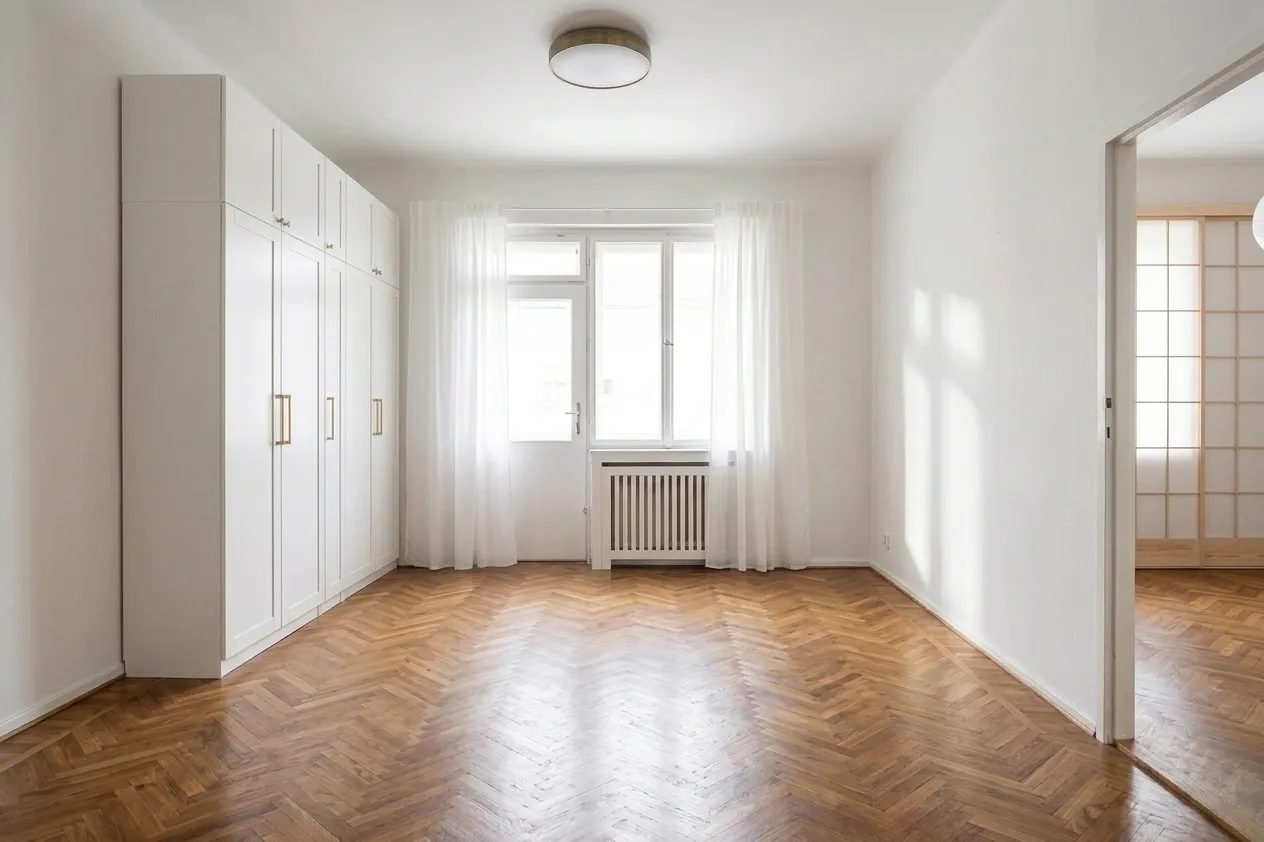
This is our blank canvas. A real living room with beautiful herringbone hardwood floors, white walls, built-in white cabinets, and a large window flooding the space with natural light. Through the doorway on the right, you can see into an adjacent bedroom.
It is a lovely room with great architectural bones. But it is also completely empty. And this is exactly the problem 82% of people face when apartment hunting or moving into a new place, they cannot visualize what the room could become (National Association of Realtors, 2025).
Let us fix that. Four styles, one room, zero furniture purchases required.
Style 1: Classic Scandinavian With Blue Accents
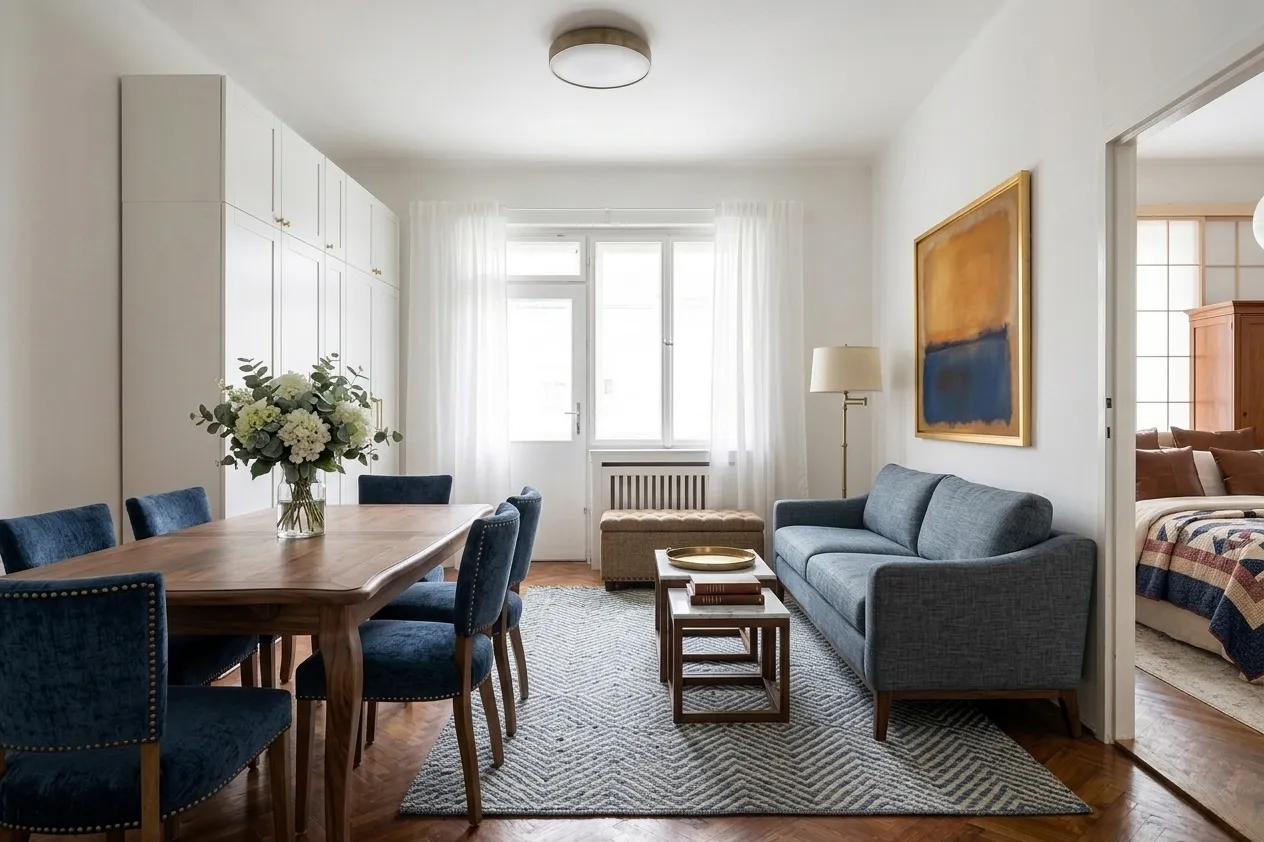
The first transformation goes classic Scandinavian, the most popular interior design style in Europe and increasingly in North America. A warm walnut dining table paired with deep blue velvet dining chairs creates a sophisticated dining area on the left. A blue-grey sofa with nested coffee tables anchors the living area on the right.
Notice how the AI handles the details. A large abstract painting in deep blue and gold tones ties the color palette together. A woven herringbone rug defines the living zone. A floor lamp and a vase of hydrangeas add the finishing touches that make a room feel designed, not just furnished.
Why this works: Scandinavian design focuses on functionality and warmth. The blue accent color adds personality without overwhelming the neutral base. According to Houzz trend data, blue remains the most popular accent color in living rooms for the third consecutive year, chosen by 34% of homeowners in their 2025 survey.
Best for: Families and couples who want a space that feels both elegant and livable. The dining-living combination maximizes a single room without feeling cramped.
Style 2: Japandi, Where Japan Meets Scandinavia
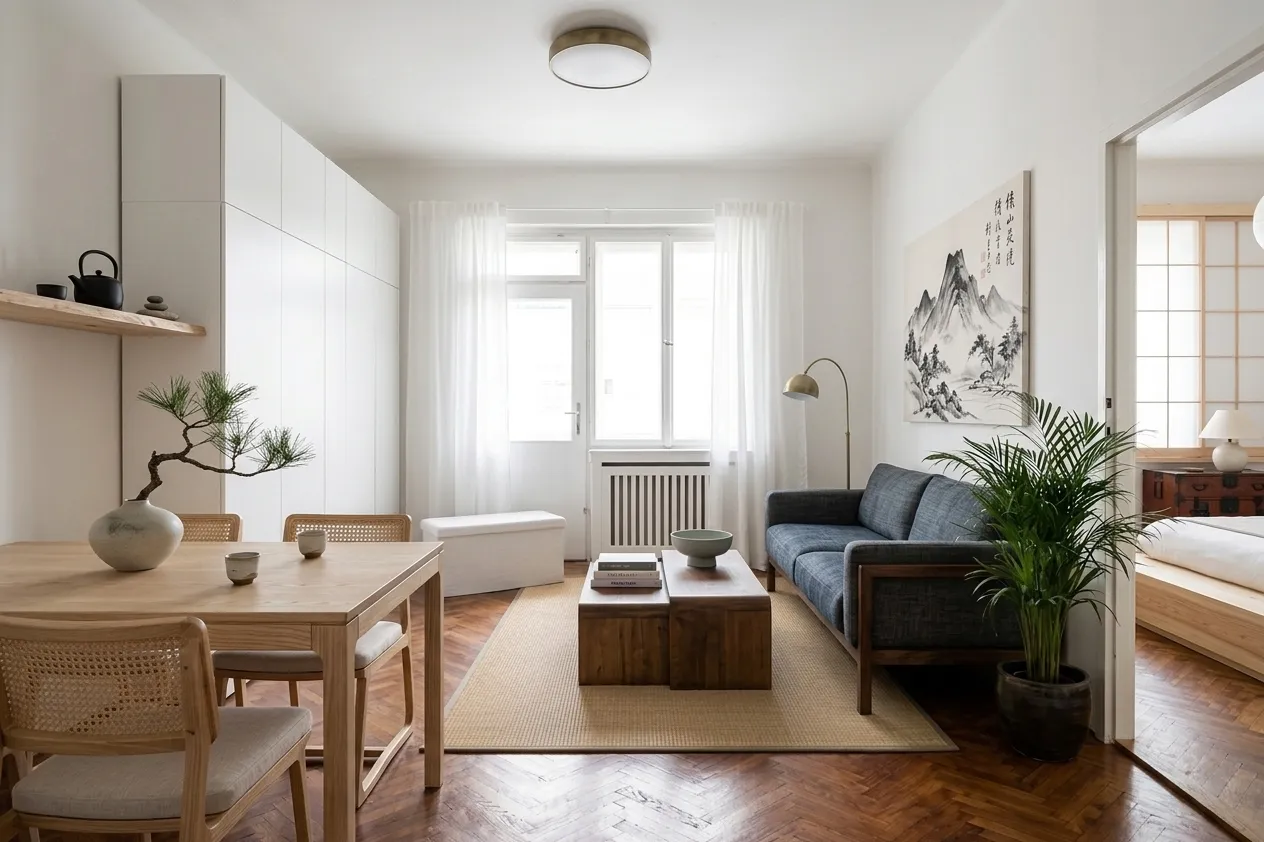
Same room, completely different energy. The Japandi style merges Japanese minimalism with Scandinavian warmth, and the result is a space that feels almost meditative. A natural wood dining table with rattan-backed chairs replaces the formal dining set. A deep indigo linen sofa sits low against the wall.
The standout elements: a Japanese ink landscape painting on the wall, a sculpted bonsai pine tree on a floating shelf, and a chunky reclaimed wood coffee table. A sisal rug in natural tan grounds the space. The color palette is exclusively earth tones, warm wood, cream, sage, and indigo.
Why this works: Japandi is the fastest-growing interior design trend globally. Google searches for "Japandi interior design" increased 340% between 2023 and 2025. The style emphasizes wabi-sabi, the beauty of imperfection, which means every piece should feel intentional and slightly organic. No mass-produced look.
Best for: Minimalists who do not want their rooms to feel cold. People who value craftsmanship, natural materials, and calm. Remote workers who need a home environment that reduces visual noise.
Style 3: Modern Minimalist in Warm Neutrals
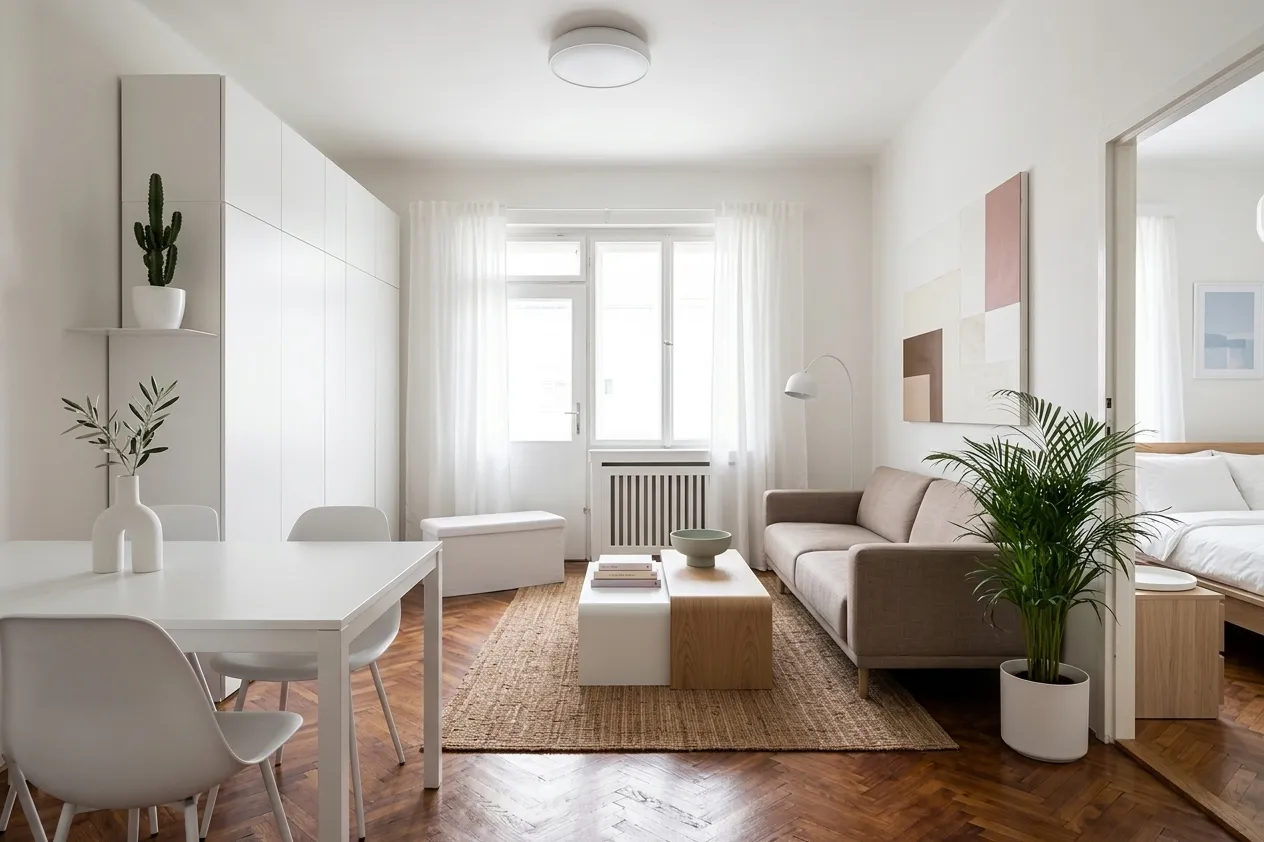
Minimalism does not mean empty. This third transformation proves that a minimalist room can feel warm, inviting, and complete with fewer pieces. A beige linen sofa with clean lines sits on a natural jute rug. A white dining table with light grey chairs keeps the eating area airy. A single geometric art piece in soft pink and terracotta adds warmth without clutter.
The plant game is subtle but effective, a tall cactus on a floating shelf, an olive branch in a white ceramic vase. Even the coffee table is minimized to a white cube. Everything in this room has a purpose. Nothing competes for attention.
Why this works: Research from the Princeton Neuroscience Institute shows that visual clutter reduces your ability to focus and process information. For people who work from home (now 35% of the workforce), a minimalist living room is not just an aesthetic choice, it is a productivity decision. Fewer objects means less cognitive load.
Best for: Young professionals, studio apartment dwellers, and anyone who wants a home that feels spacious regardless of actual square footage. The warm neutral palette (as opposed to stark white minimalism) prevents the room from feeling clinical.
Style 4: Warm Bohemian With Teal Accents
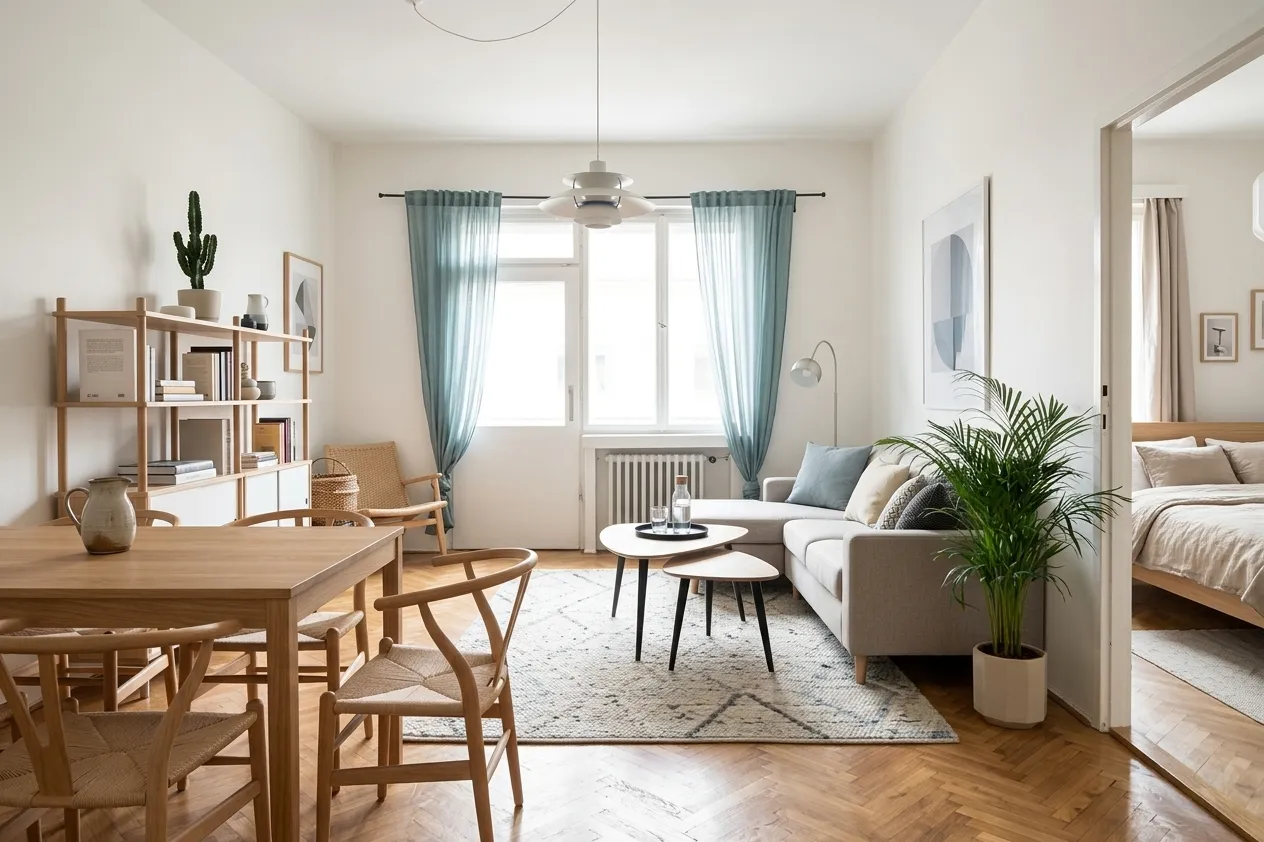
The final transformation embraces the bohemian spirit, layered textures, eclectic furniture, and a bold color statement. Sheer teal curtains replace the white ones, instantly changing the room's entire mood. A cream corner sofa with patterned throw pillows anchors the seating area. Wishbone dining chairs in natural wood surround a solid oak table.
An open wooden bookshelf filled with books, ceramics, and a cactus creates a personal gallery wall effect. A geometric Moroccan-style rug adds pattern and warmth. A ceiling fan replaces the flush-mount light, adding a relaxed, lived-in feel.
Why this works: Bohemian interiors perform exceptionally well on social media. Interior design posts with boho styling get 47% more engagement on Instagram than other styles (Later.com Social Media Report, 2025). The style also forgives mismatched furniture, making it ideal for people who furnish gradually over time or shop secondhand.
Best for: Creative personalities, Airbnb hosts looking for memorable spaces, and anyone who wants a home that tells a story. This is the style that gets compliments from every guest.
Same Room, 4 Realities: What This Means for You
Look at those four designs again. Same walls. Same floors. Same windows. Same room dimensions. But four completely different homes. Four different lifestyles. Four different emotional responses when you walk through the door.
This is why trying before buying matters so much in interior design. A Scandinavian room and a Japandi room can use the exact same square footage and create opposite feelings. Without visualization, you are choosing blindly.
| Style | Color Palette | Mood | Best For |
|---|---|---|---|
| Scandinavian | Blue, walnut, cream | Elegant and warm | Families, entertaining |
| Japandi | Earth tones, indigo | Calm and meditative | Minimalists, remote workers |
| Minimalist | Beige, white, blush | Spacious and clean | Small spaces, professionals |
| Bohemian | Teal, oak, cream | Eclectic and personal | Creatives, Airbnb hosts |
How to Do This With Your Own Room
The process takes less time than making coffee:
- Take a photo of your room. Empty or furnished, the AI can remove existing furniture if needed. Shoot from a corner for the widest angle. Use natural light.
- Upload it to MeltFlex. The AI analyzes your room's architecture, lighting, and proportions automatically.
- Pick a style or describe what you want. Choose from presets like Scandinavian, Modern, Japandi, Industrial, or type a custom description like "warm bohemian with teal and natural wood."
- Generate and compare. Each design takes about 20 seconds. Generate 4 or 5 different styles and compare them side by side. Save the ones you love.
That is it. No interior designer appointment. No $200 consultation fee. No 3-week wait for mood boards. You see your room in any style, right now, for free.
The Real Cost of Choosing Wrong
Interior design mistakes are expensive to fix. The average cost of returning a sofa is $150 to $400 in shipping fees alone, if the store even accepts returns. A dining table that does not fit the space? That is $800 to $2,000 you cannot get back. Paint that looks different on the wall than it did on the swatch? That is a weekend of repainting plus $100 in materials.
According to a 2025 Homes & Gardens consumer survey:
- 62% of homeowners regret at least one major furniture purchase
- 41% say the furniture "looked different in person" than expected
- 28% bought furniture that did not fit the room's proportions
- 19% chose a style they grew tired of within 6 months
Every one of these mistakes is preventable with a 20-second AI visualization. See the furniture in your actual room before you buy. See the style in your actual space before you commit. The math is simple: spending 60 seconds previewing designs saves thousands in regret purchases.
Why This Matters More for Small Apartments
In a 200 square meter house, a furniture mistake is annoying. In a 45 square meter apartment, it is catastrophic. A sofa that is 20cm too long can block a walkway. A dining table that seats 6 in a room meant for 4 makes the entire space feel cramped.
Small spaces have zero margin for error. Every piece of furniture must earn its place. AI visualization is most valuable exactly where the stakes are highest, compact rooms where proportions, scale, and layout matter more than aesthetics.
The four designs in this article prove the point. Each one uses the same compact living room and achieves a completely different result. The Japandi and minimalist designs make the room feel larger. The Scandinavian and bohemian designs make it feel warmer. Same square meters, dramatically different experiences.
Try It Now, Your Room, Your Styles
Every hour you spend scrolling Pinterest boards for living room inspiration is an hour you could spend looking at your actual room in those styles. AI does not replace your taste, it lets you test it. See the Scandinavian option. See the minimalist option. See the bold option. Then decide with confidence instead of hope.
Upload a photo of any room to MeltFlex and see what your space could look like. 1 free design, 20 seconds per result. No signup required for your first try.
For more design comparisons, check our 4 styles one living room guide, our complete interior design styles guide, or browse real transformations in the creations gallery.

