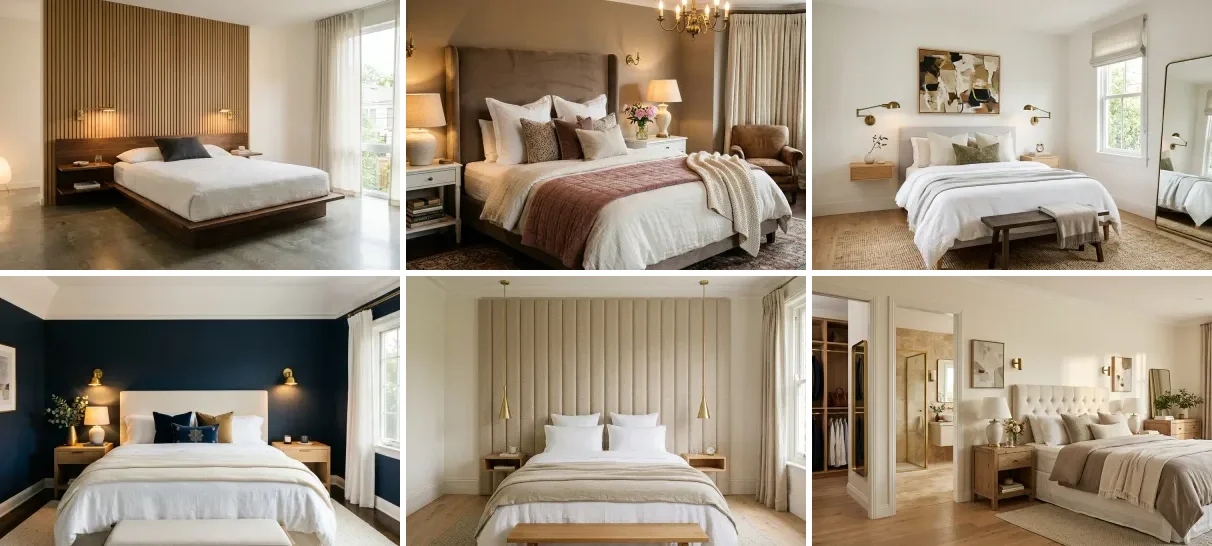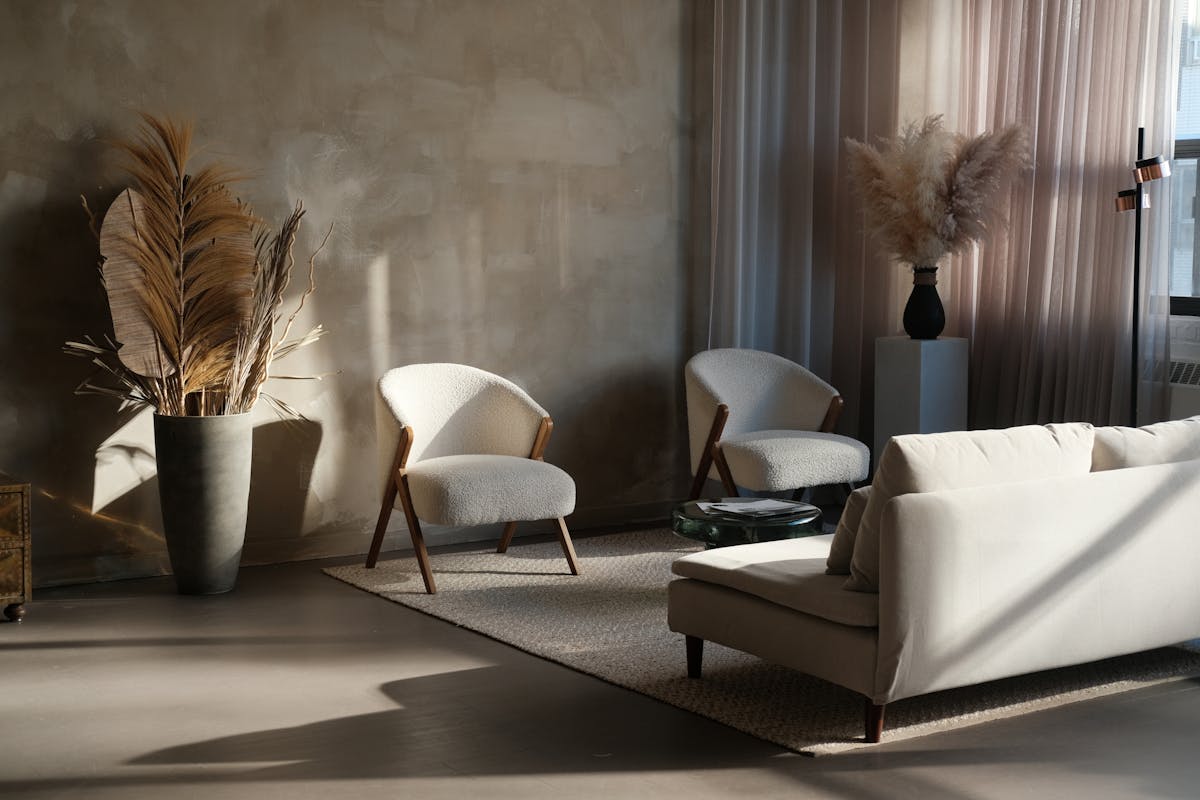
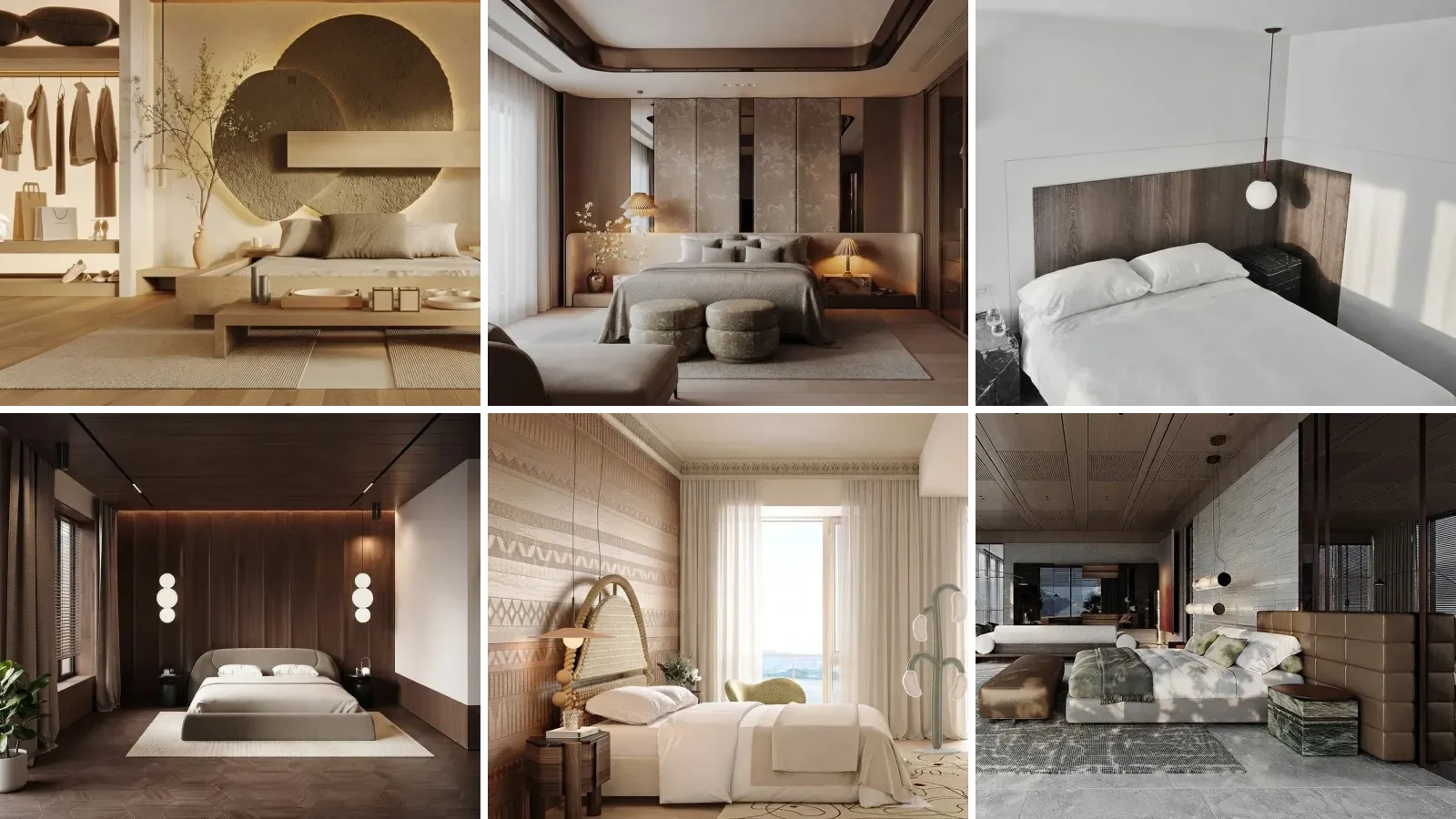
The fastest way to design a bedroom with AI: upload your floor plan or a photo of the room, let the AI build a 3D model, test bed sizes and layouts against your real dimensions, try styles like japandi or warm contemporary, and generate a photorealistic render of the result. The whole loop takes minutes and costs nothing to start, which is why AI has replaced both guesswork and mood boards as the first step of bedroom planning. This guide walks through that workflow and the design decisions behind it: styles, layout rules, small-bedroom tactics, furniture sizing, and the mistakes that ruin otherwise good rooms. For bed placement and the clearances behind it, the bedroom layout guide takes one empty room through three placements.
Our articles are still written by humans!
Get human written articles in your Google feed.
Your bedroom is the most personal room in your home. It is where you start and end every day, where you recharge, and where your design choices have the biggest impact on how you feel. Getting your bedroom interior design right is not just about aesthetics, it directly affects your sleep quality, your morning routine, and your overall well-being. If you already know the direction and just want the words to ask an AI for it, our 35 copy and paste bedroom design prompts cover every brief from small rooms to couples and kids.
But planning a bedroom is harder than it looks. Will that king-size bed leave enough room for nightstands? Does the wardrobe fit against that wall? How will different colors and flooring actually look in your space? In 2026, AI interior design tools answer all of these questions before you spend anything. In this guide, we cover the best bedroom design ideas, practical layout tips for every room size, and show you exactly how to preview your dream bedroom in 3D.
FreeUpload photo · freeRedesign my room for freeUpload a photo and let MeltFlex design your space. Your first AI design is free, no card needed.“The most expensive bedroom mistake we see is bought, delivered and assembled before anyone checks the clearances. Sixty centimeters beside the bed is the whole difference between a bedroom and a corridor with a mattress, and it costs nothing to check in 3D first.”
Branislav Hrivnák, Co-Founder, MeltFlex
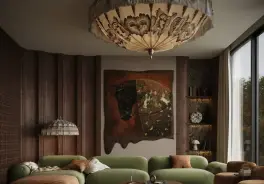
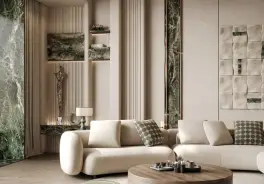
Bedroom Interior Design Styles for 2026
The right style sets the tone for your entire bedroom. Here are the most popular bedroom design styles trending in 2026:
Modern Minimalist
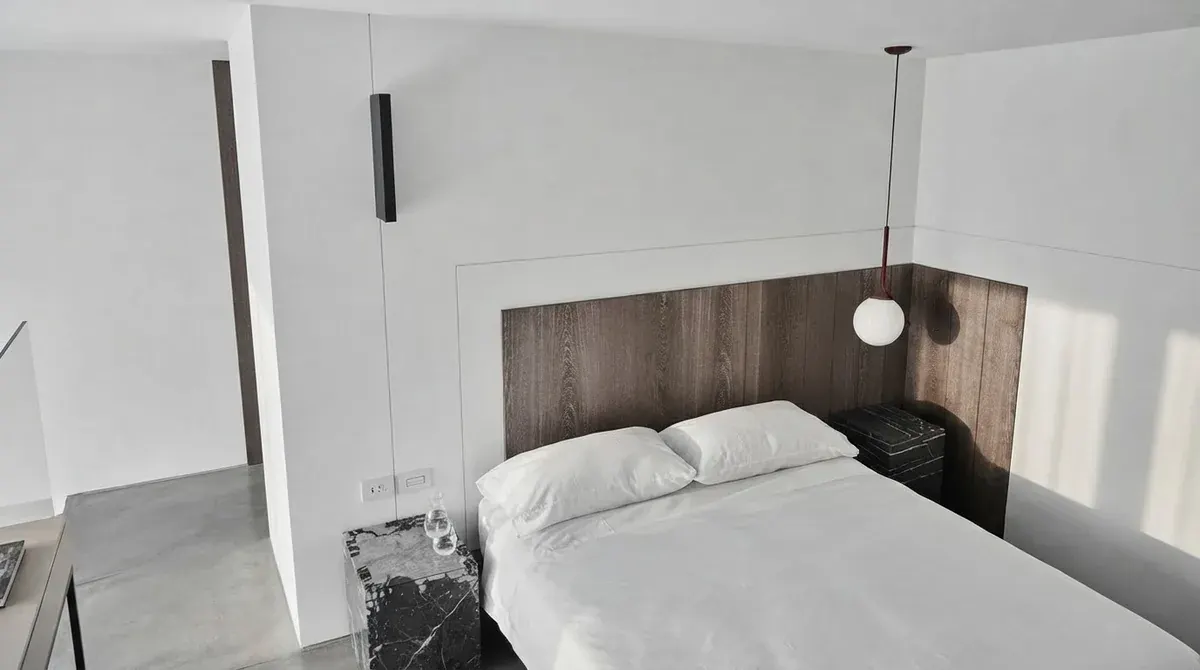
Less is more in a minimalist bedroom. A clean-lined bed frame, two nightstands, soft neutral tones, and nothing else competing for your attention. The focus is on quality materials, linen bedding, solid wood furniture, and thoughtful lighting. This style is the top choice for small bedroom ideas because the lack of visual clutter makes any room feel more spacious.
Scandinavian
White walls, light wood floors, cozy layered textiles, and functional simplicity. A scandinavian bedroom feels like a warm cocoon, think chunky knit throws, sheepskin rugs beside the bed, and pendant lights with soft warm glow. This style works beautifully in apartments of any size, and because it leans on textiles rather than furniture, it is the cheapest style on this list to execute well.
Warm Contemporary
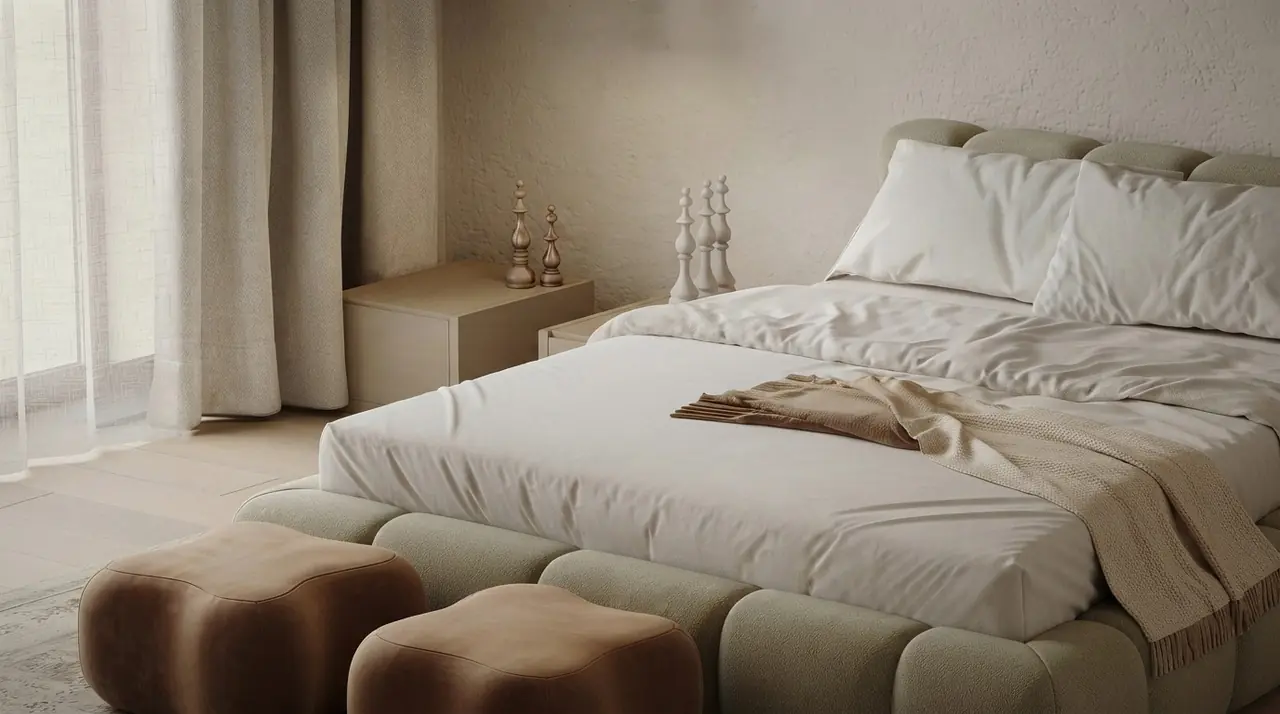
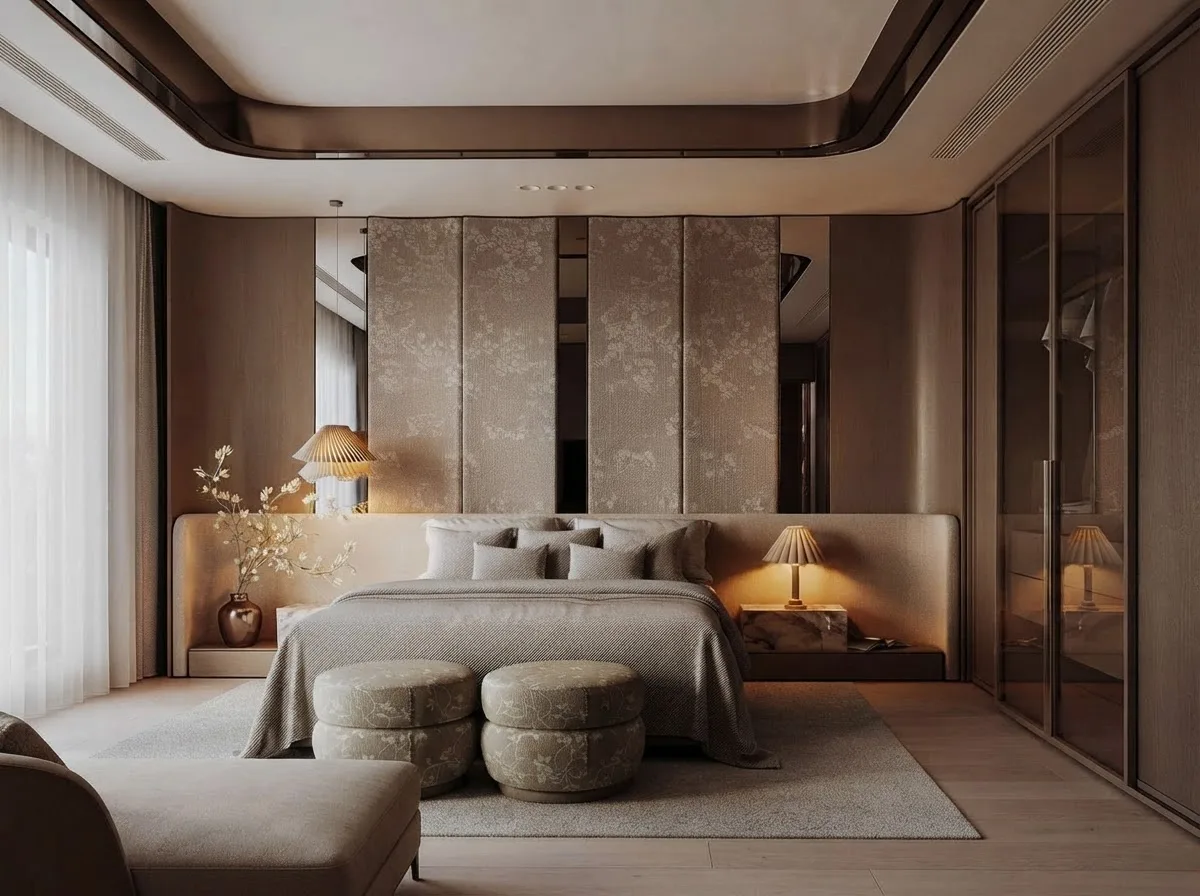
The dominant modern bedroom design trend of 2026 combines clean architecture with warm, tactile materials. Upholstered bed frames in boucle or linen, walnut nightstands, jute rugs, and earthy color palettes, beige, cream, warm grey, and terracotta accents. The result is a bedroom that looks editorial but feels deeply comfortable.
Japandi
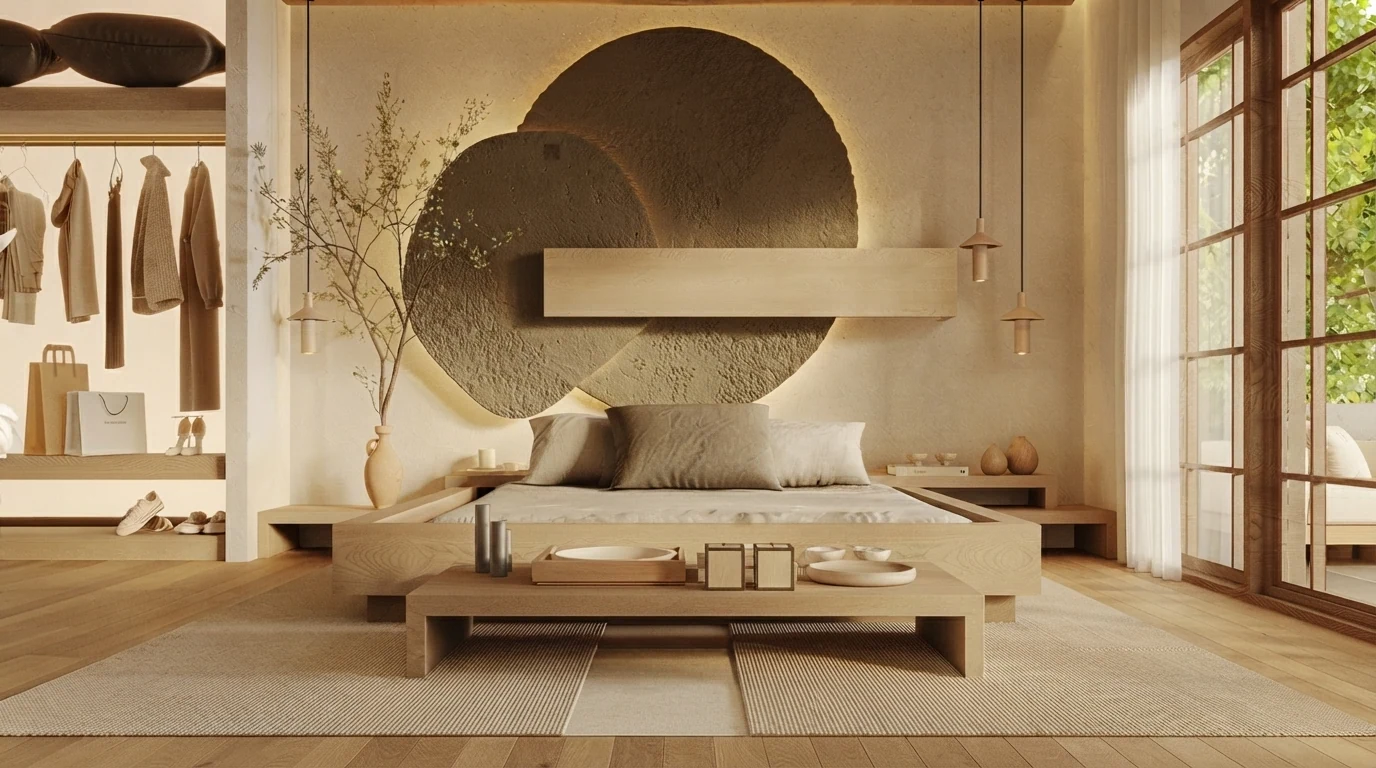
Japanese minimalism meets Scandinavian warmth. Low-profile platform beds, natural materials like oak and rattan, muted earth tones, and an intentional absence of decoration. A japandi bedroom interior design creates a meditative, spa-like atmosphere that promotes restful sleep. Our japandi style guide covers the full principles if this is your direction.
Mid-Century Modern
Tapered wooden legs, organic shapes, rich wood tones, and pops of muted color. Mid-century modern bedroom furniture, like walnut dressers and splayed-leg nightstands, adds character without overwhelming the space. This style is perfect for those who want their bedroom to feel curated and timeless rather than trendy.
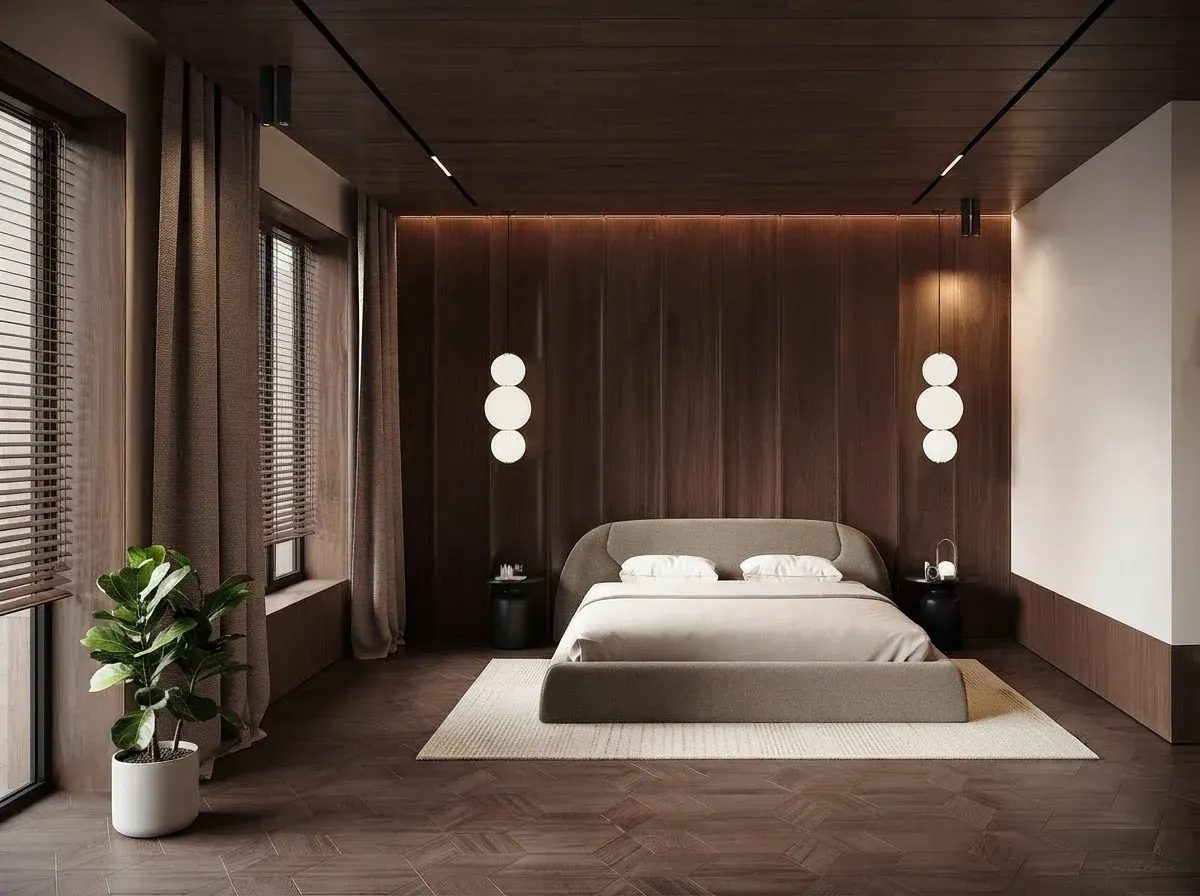
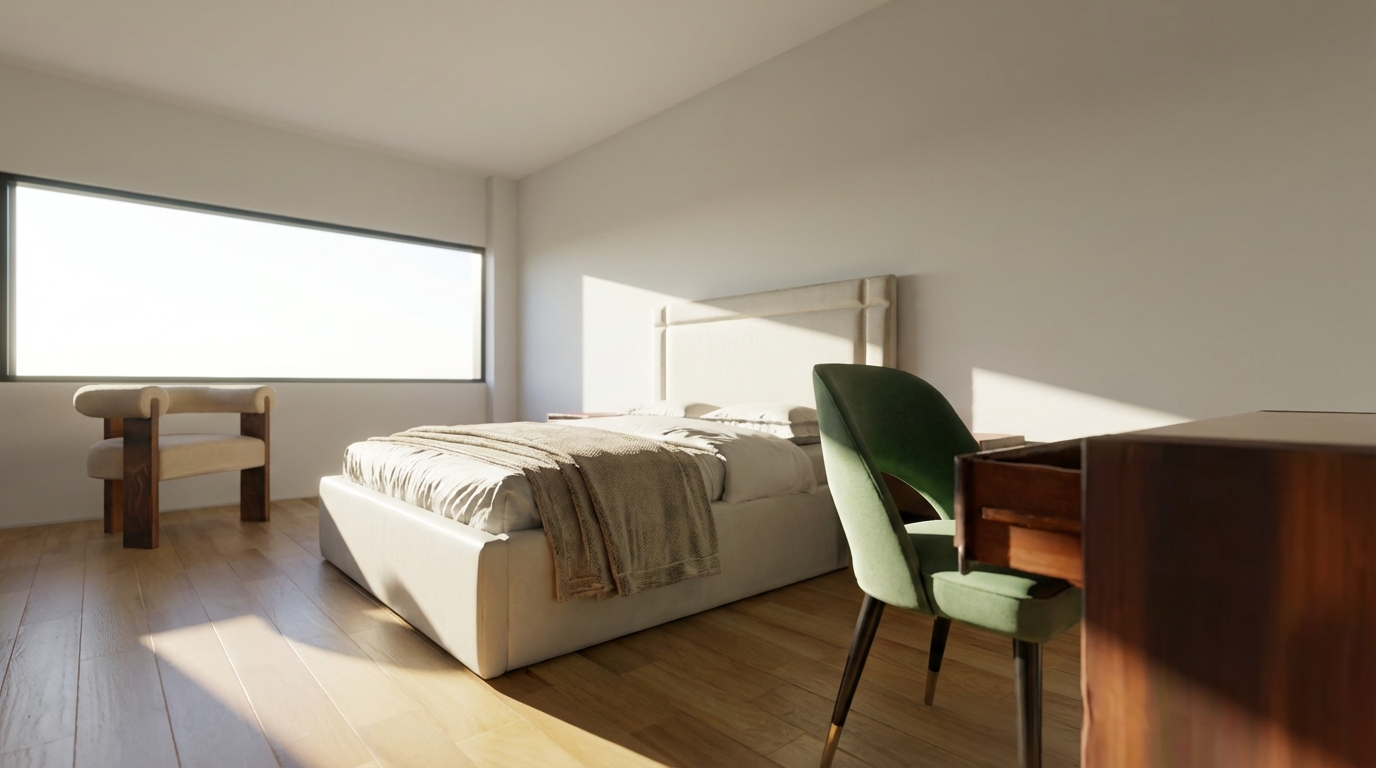
All five style renders above are from our bedroom creations gallery, generated with the MeltFlex engine; browse it for more directions and the plain-language request each room started from.
How to Plan Your Bedroom Layout
A great bedroom design starts with the layout. The placement of your bed determines everything else in the room. Here is how to plan it properly:
1. Start with the Bed Position
The bed is the largest piece of bedroom furniture and should be placed first. The standard rule: center the headboard against the longest wall, away from the door. This creates a natural focal point and leaves room for nightstands on both sides. In a small bedroom, you may need to push one side against a wall, a 3D room design tool helps you see whether this works before moving anything.
2. Ensure Clear Pathways
Leave at least 60 cm (2 feet) on each accessible side of the bed for comfortable movement. For the main pathway from the door to the bed, 90 cm is ideal; professional space-planning guides like Homes & Gardens’ bedroom clearance guide recommend the same 24 to 36 inch range. If your bedroom has a closet door that swings open, make sure nothing blocks it. Upload your floor plan to MeltFlex and test the clearance in 3D, you will immediately see if your bedroom layout works.
3. Zone Your Space
If your bedroom is large enough, create zones beyond sleeping: a reading corner with an accent chair and floor lamp, a work area with a small desk by the window, or a dressing area near the wardrobe. Even in master bedroom ideas, keeping the sleeping zone distinct from activity zones improves both function and visual flow.
4. Plan Storage First, Decorate Later
Decide where your wardrobe, dresser, and any other storage will go before thinking about decor. Storage is non-negotiable; decor is flexible. In smaller bedrooms, a wardrobe along the wall opposite the bed is the most space-efficient placement. For walk-in closets, make sure the door clearance works with your bedroom layout.
Small Bedroom Ideas That Maximize Space
A small bedroom does not have to feel cramped. With smart planning, even the most compact room can feel comfortable, organized, and stylish. Here are the best small bedroom ideas that interior designers recommend:
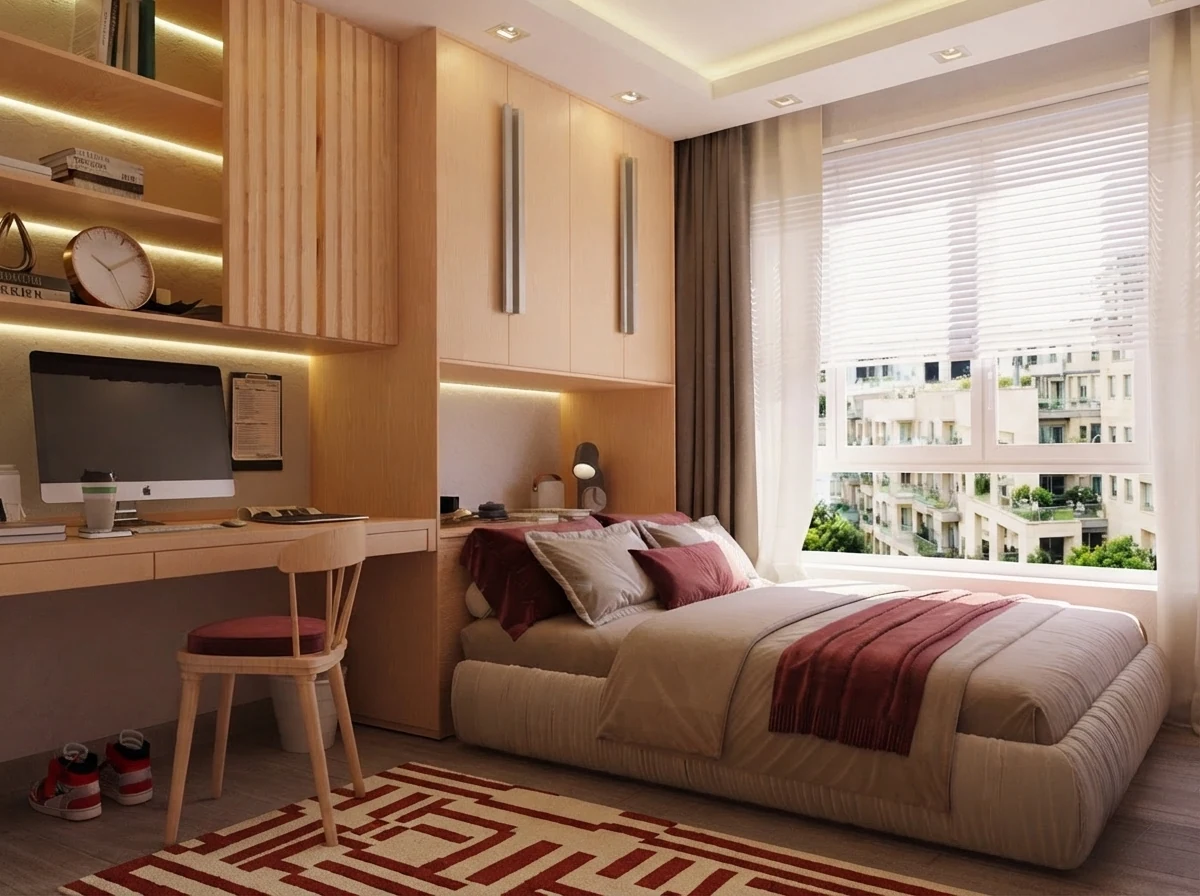
Choose the right bed size. This is the single most impactful decision. A queen-size bed in a 9 sqm room will leave almost no floor space. Consider a double (140 cm) instead, or even a well-designed single with premium bedding for a guest room. Use a 3D room design tool to place different bed sizes in your actual floor plan and compare. The difference between a queen and a double might give you room for a nightstand you thought was impossible.
If you are unsure whether a specific bed will even make it through your hallway and door, run the dimensions through our free furniture fit calculator before ordering; it has presets for every standard bed and box spring size.
Use the bed for storage. Beds with built-in drawers underneath, ottoman beds with hydraulic lift storage, or simply raising the bed frame to fit storage boxes underneath. In a small bedroom, the space under the bed is prime real estate, do not waste it.
Go vertical with storage. Wall-mounted shelves above the headboard, tall narrow wardrobes, and hooks on the back of the door. When floor space is limited, the walls become your storage solution. Avoid bulky dressers; a slim chest of drawers or a wall-mounted floating shelf serves the same purpose with a smaller footprint.
Keep colors light and consistent. White, light grey, soft beige, and pale wood tones reflect light and make walls feel further away. Use the same color palette for walls, bedding, and furniture to create a sense of continuity. With MeltFlex, you can test wall colors in your 3D model to see exactly how they affect the perception of space.
Minimize furniture to essentials. A bed, one nightstand, and a wardrobe. That is all a small bedroom truly needs. Every additional piece should earn its place. If you need a desk, look for a narrow wall-mounted option or a nightstand that doubles as a work surface.
Bedroom Furniture Essentials
Choosing the right bedroom furniture is about balancing comfort, function, and proportion. Here is what every bedroom needs and how to choose well:
The Bed Frame
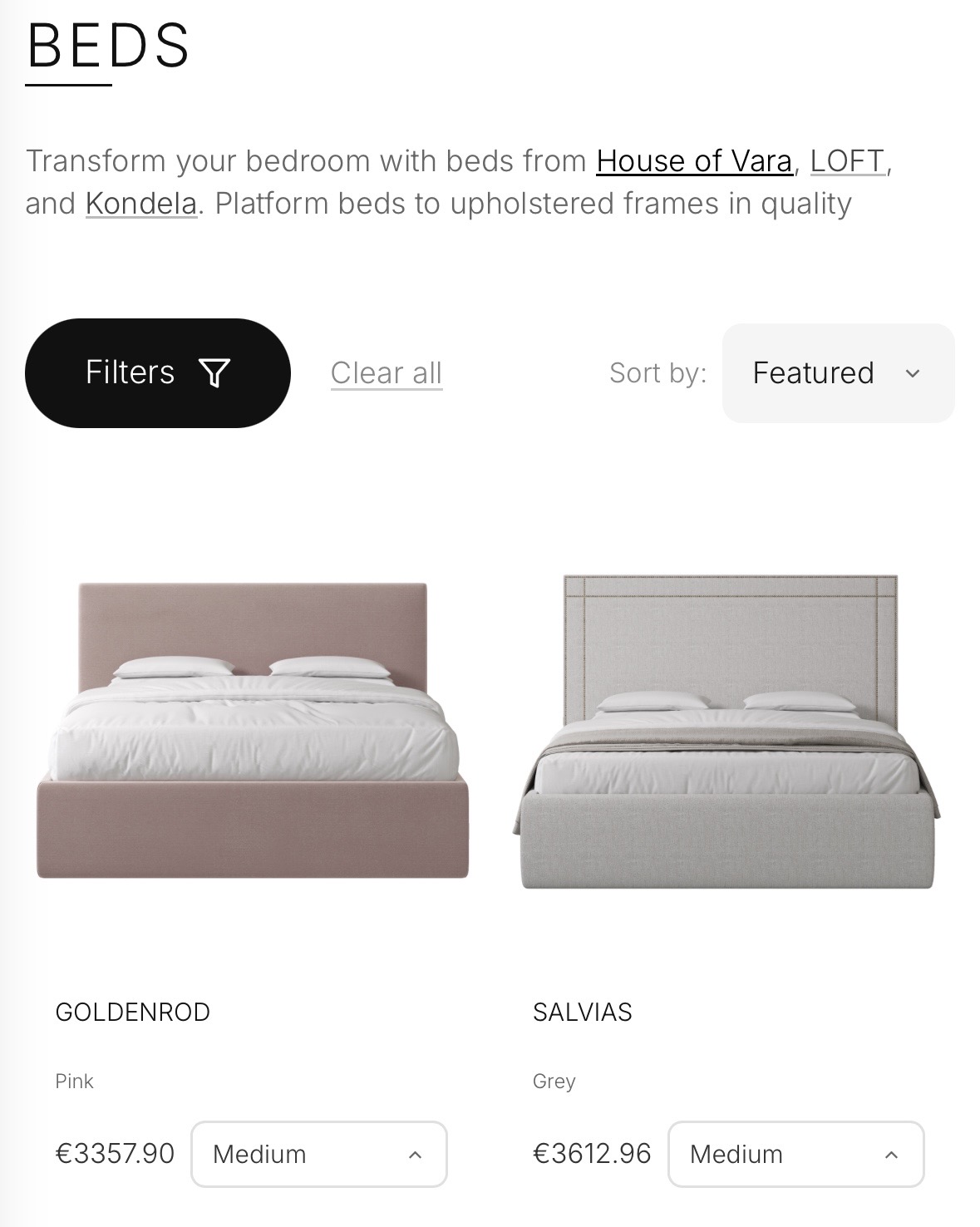
Your bed frame is the centerpiece of your bedroom interior design. It sets the style and determines how the rest of the room feels. Upholstered frames in fabric (linen, boucle, velvet) add softness and warmth. Wooden frames bring natural texture. Metal frames create an industrial or minimalist feel. Choose based on your style, and always check dimensions, not just the mattress size, but the full frame footprint including headboard overhang.
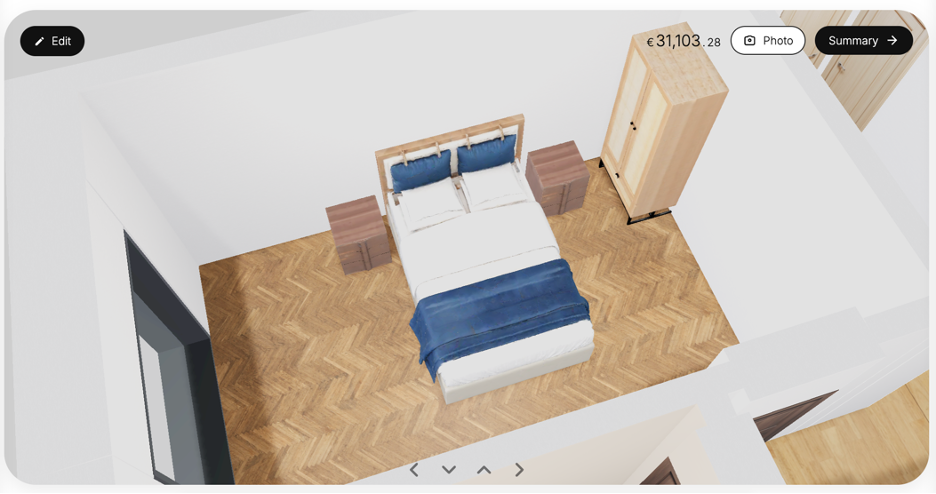
On MeltFlex, you can browse real beds from the built-in furniture catalog, IKEA pieces on the free tier and additional brands on paid plans, with real prices and real dimensions. Place them directly in your 3D bedroom model to see exactly how they fit.
Nightstands
A nightstand should be roughly the same height as your mattress top. It needs to hold at minimum a lamp, your phone, and a glass of water. In a small bedroom, a floating wall-mounted shelf can replace a traditional nightstand and free up floor space. For master bedroom ideas, matching nightstands on both sides create symmetry and balance.
Wardrobe or Closet
If your bedroom does not have a built-in closet, a freestanding wardrobe is essential. Measure the available wall space carefully, a wardrobe that is too deep will make the room feel tight. Standard depth is 60 cm; slim-depth options at 45 cm work well for smaller rooms. Place the wardrobe in your 3D room design to check that the doors can open fully without hitting the bed.
Lighting
Bedroom lighting should have at least two layers: ambient (a ceiling light or pendant) and task (bedside lamps for reading). Avoid harsh overhead lighting, use warm-toned bulbs (2700K-3000K) for a restful atmosphere; the Better Sleep Council recommends warm light in the evening because cooler, blue-heavy light suppresses melatonin and delays sleep onset. In a modern bedroom design, wall-mounted reading lights or pendant lights hanging on either side of the bed replace table lamps and save nightstand space.
Bedroom Decor Ideas That Transform the Space
Once your layout and furniture are in place, decor brings your bedroom interior design to life. Here are the highest-impact bedroom decor ideas:
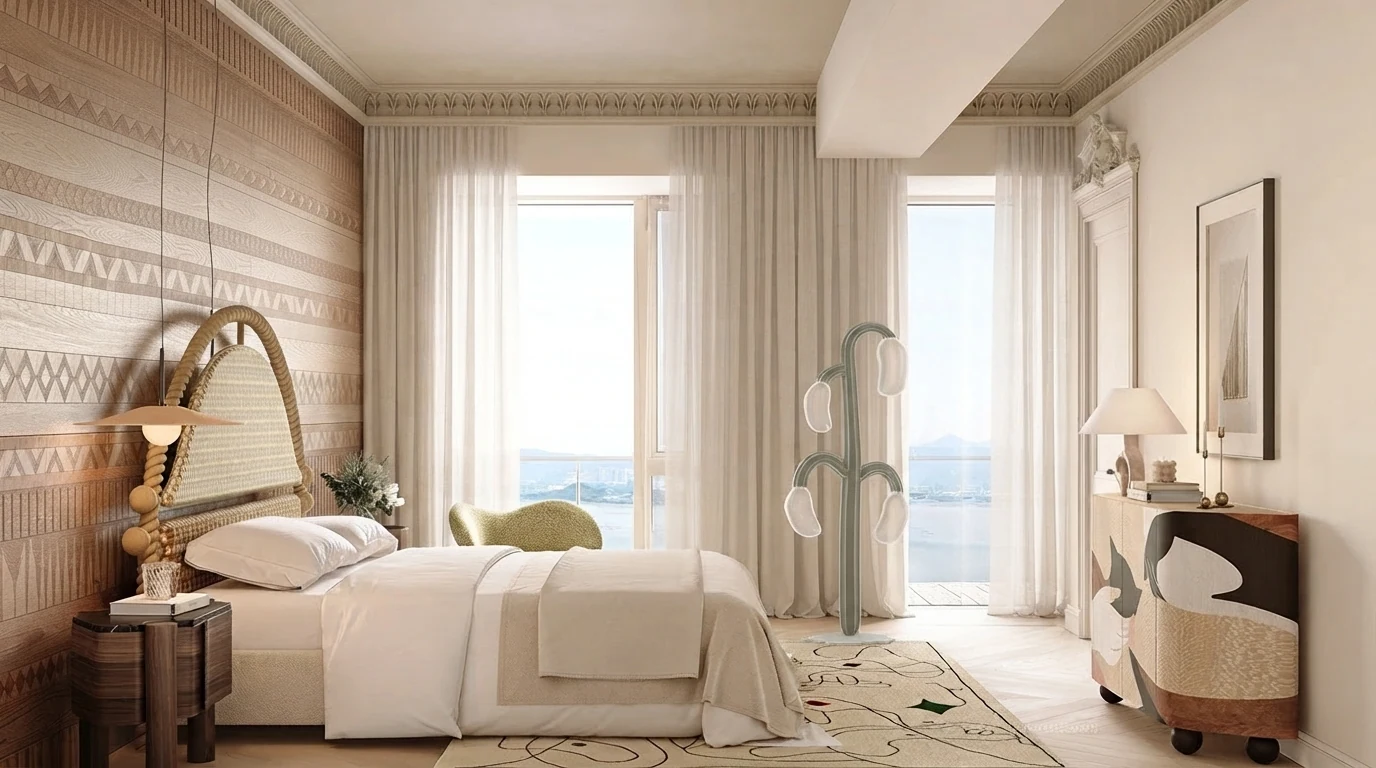
Bedding. Premium bedding is the single best investment you can make in your bedroom. Linen sheets in summer, flannel in winter, and a quality duvet that drapes well. Layering, a fitted sheet, flat sheet, duvet, and a knit throw at the foot of the bed, creates that hotel-like look that defines luxury bedroom design.
A rug under the bed. A large rug that extends at least 60 cm beyond each side of the bed gives you a soft landing when you step out in the morning. In a minimalist bedroom, a natural jute or wool rug adds texture without competing with the clean design. Choose a rug large enough, too small makes the room feel disjointed.
Wall art above the headboard. A single large piece of art or a pair of symmetrically placed prints centered above the headboard creates a finished look. Keep it simple, abstract art, line drawings, or photography in neutral tones work for most bedroom styles. Hang it so the center of the art is at eye level when standing.
Plants. A snake plant on the nightstand, a trailing pothos on a high shelf, or a larger plant like a fiddle leaf fig in an empty corner. Plants add life to any bedroom design and several varieties, notably snake plants and pothos, actually improve air quality while you sleep.
Curtains. Floor-to-ceiling curtains make the room feel taller. Hang the rod as close to the ceiling as possible, and let the curtains just barely touch the floor. For sleep quality, choose blackout curtains in a color that matches your wall tone. This is one of the most underrated bedroom decor ideas, it transforms both the look and the function of the room.
How to Design Your Bedroom with AI
Traditionally, bedroom interior design meant either hiring a professional designer (expensive) or guessing (risky). You would buy a bed online, hope it fits, order nightstands that might not match, and paint the walls a color that looked different on the swatch than on the wall. In 2026, AI interior design tools remove all of that uncertainty.
Here is how to design your bedroom with AI using MeltFlex:
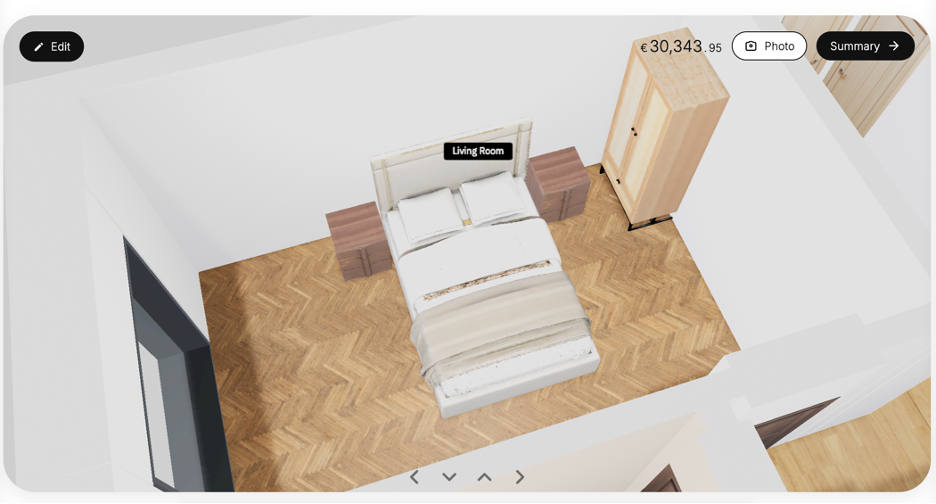
- Upload your floor plan. Take a photo of your apartment floor plan, whether it is an architect drawing, a builder plan, or even a hand sketch. The AI automatically detects all rooms, walls, doors, and windows and converts your 2D plan into an interactive 3D room design. Your bedroom appears as a real 3D space with accurate dimensions.
- Place real bedroom furniture. Browse real beds, nightstands, wardrobes, desks, and chairs from the in-app catalog, every piece has real prices and real dimensions. Place the bed in your 3D bedroom and see exactly how much space remains for nightstands and walkways. Try a king-size, then swap to a queen to compare.
- Customize the room. Change wall colors, try that sage green accent wall you have been thinking about. Swap the flooring from carpet to hardwood or herringbone parquet. Adjust everything until it matches your vision for the perfect bedroom design.
- Generate a photorealistic render. With one click, the AI generates a photorealistic image of your bedroom, with natural lighting, realistic shadows, and true-to-life material textures. The result looks like a professional interior photograph, and each catalog piece in it links to a real product page.
The entire workflow takes minutes. You can experiment with different bedroom design layouts, color combinations, and furniture options without spending anything, and when you find the design you love, open each item’s product page straight from the design.
Two honest caveats from using this on our own rooms. First, the render is a visualization, not a measurement: trust the 3D view for dimensions and the render for mood, not the other way around. Second, the first render is rarely the final one. Plan on regenerating two or three times with a sharper prompt, especially for unusual layouts like sloped ceilings or L-shaped rooms, which the AI still handles worse than plain rectangles.
Have a Photo Instead of a Floor Plan?
You do not need a floor plan to start. If your bedroom already exists, take one well-lit photo from the doorway and let the AI redesign it directly: same walls, same window, new furniture, new palette. This photo-first route is faster when you want a style change rather than a layout change, and it keeps everything that is real about your room, the proportions, the light direction, the ceiling height.
To see what that looks like in practice, our one room, six designs experiment runs a single photo through completely different styles, and the virtual staging guide shows the same trick applied to an empty room. If you are working with a larger space, the master bedroom design guide goes deeper on seating areas, symmetry and statement walls. And if you are not sure which style is yours in the first place, the interior design style quiz narrows it down in ten questions.
Master Bedroom Ideas for Larger Spaces
If you have a larger bedroom (15+ sqm), you have the luxury of creating a truly multifunctional space. Here are master bedroom ideas that make the most of extra square meters:
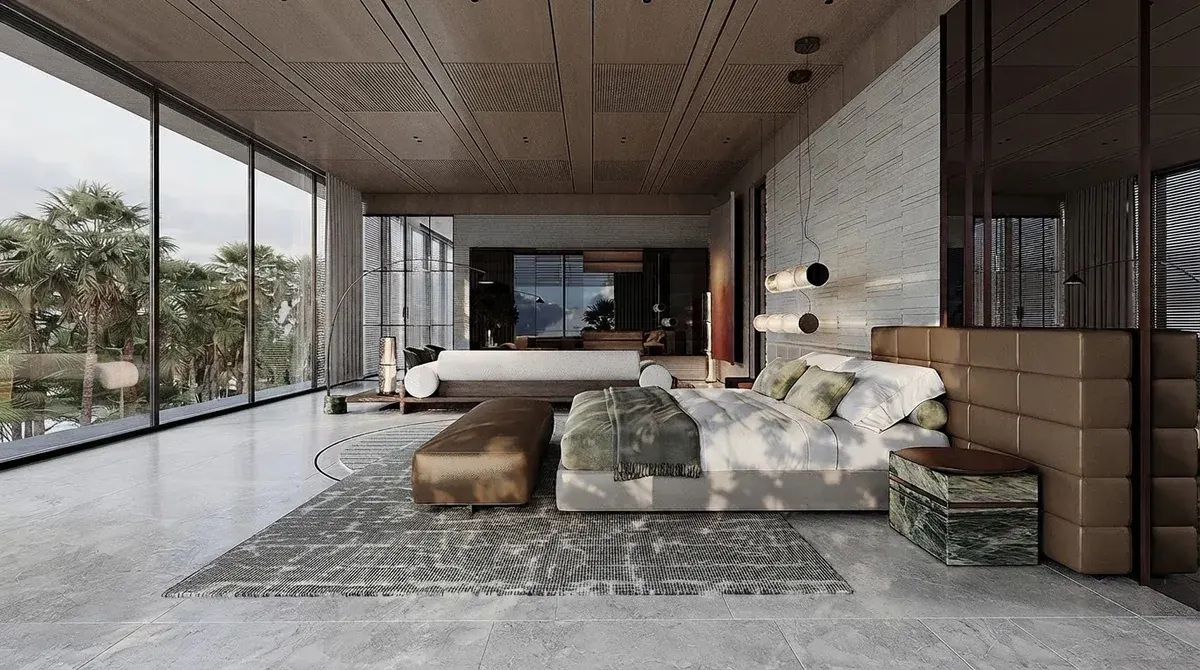
Create a seating area. An accent chair or a small loveseat at the foot of the bed or by the window turns your bedroom into a private retreat. Add a side table and a reading lamp and you have a cozy spot that is separate from the sleeping area. This is the defining feature of a well-designed master bedroom.
Add a workspace. A desk by the window, ideally facing natural light, creates a dedicated work area without needing a separate home office. Keep the desk minimal and use a chair that complements your bedroom interior design style rather than a typical office chair.
Use symmetry. Matching nightstands, matching lamps, and matching proportions on either side of the bed create a sense of calm and order. Symmetry is the simplest way to make a master bedroom look polished and professionally designed.
Invest in a statement headboard. In a large bedroom, the headboard is the focal point. An oversized upholstered headboard in a rich fabric, a wooden panel headboard that extends to the ceiling, or a headboard with integrated lighting transforms the entire room. Use a 3D room design tool to preview how different bed frames and headboard styles look in your actual space.
Bedroom Design Mistakes to Avoid
Even experienced decorators make these common bedroom interior design mistakes. Interior designer Nick Lewis covers the most frequent ones, and how to fix each, in a video watched over 950,000 times:

Video: “Bedroom Design Mistakes (And How to Fix Them!)” by Nick Lewis.
Choosing a bed that is too big. The most common mistake. A king-size bed in a room that cannot support it leaves no space for nightstands, walking, or opening wardrobe doors. Always test the bed size in a 3D room design tool or measure carefully before ordering. If walking around the bed feels tight, size down.
Ignoring the ceiling light. A bare bulb or basic builder-grade fixture makes the entire room feel unfinished. Replace it with a pendant, a semi-flush mount, or even a simple drum shade. This small change has an outsized impact on how the room feels.
Forgetting about curtain length. Curtains that stop at the window sill or float above the floor look cheap regardless of the fabric. Floor-length curtains, hung at ceiling height, are the standard for any well-designed bedroom.
Pushing the bed into a corner. Unless space absolutely demands it, centering the bed with access from both sides is always better. Climbing over your partner to get out of bed every morning gets old fast. Use your floor plan and a 3D planner to find a layout that gives both sides access.
Skipping the rug. Bare floors beside the bed, especially cold tile or hardwood, make the bedroom feel unfinished and uncomfortable. A rug grounds the bed, adds warmth, and completes the bedroom design.
Start Designing Your Bedroom Today
Whether you are furnishing a new apartment, upgrading your master bedroom, or making the most of a small bedroom, it all starts with seeing your space clearly. Upload your floor plan to MeltFlex, explore your bedroom in 3D, place real furniture from real brands, and generate photorealistic renders to see exactly what your new bedroom will look like.
No design experience needed. No cost to start. Just your floor plan and a few minutes. Try the AI home design tool free and turn your bedroom design ideas into reality.
Frequently Asked Questions
What is the best bedroom interior design style?
The most popular bedroom design styles in 2026 are modern minimalist, Scandinavian, warm contemporary, japandi, and mid-century modern. The best style depends on your space and preferences. AI interior design tools like MeltFlex let you visualize each style in your actual bedroom in 3D before committing to any purchases.
How can I design my bedroom with AI for free?
Upload your floor plan to MeltFlex and the AI converts it into an interactive 3D room design. Place real bedroom furniture from curated brands, beds, nightstands, wardrobes, desks, change wall colors and flooring materials, and generate photorealistic renders. Completely free.
How do I design a small bedroom to look bigger?
Use light wall colors, choose a bed with storage underneath, keep furniture minimal, add mirrors, and maximize natural light. A 3D room design tool like MeltFlex helps you test different layouts and bedroom furniture sizes to find the optimal arrangement for your small bedroom before buying anything.
What size bed should I get for my bedroom?
For a small bedroom (under 10 sqm), use a single or small double. For a standard bedroom (10-15 sqm), a double or queen fits well. For a master bedroom (15+ sqm), a king-size works. Upload your floor plan to MeltFlex and place different bed sizes in your actual 3D room to see exact proportions before purchasing.
What furniture do I need in a bedroom?
Essential bedroom furniture includes a bed frame, nightstand(s), wardrobe or closet, and good lighting. Optional additions: dresser, desk, accent chair, full-length mirror. Use MeltFlex to place each piece in your 3D room design and see exactly what fits before buying.
Before buying anything, see how AI redesigned a real bedroom in 4 completely different styles, including cost estimates for each. For help choosing the right furniture size, use our visual guide to furniture sizing. And if you want to explore all major design styles side by side, the complete interior design styles guide covers all 12. Designing for a baby? See our 10 nursery design ideas.