The numbers tell the story: staged homes sell 73% faster and for 6 to 25% more money than unstaged homes (National Association of Realtors, 2025). But physical staging costs $2,000 to $6,000 per room. For a 3-bedroom listing, that is $8,000 to $15,000 out of pocket before a single showing.
Virtual staging used to mean hiring a graphic designer to Photoshop furniture into your listing photos. It cost $200 to $500 per image, took 2 to 5 business days, and the results often looked fake. Floating sofas, wrong shadows, furniture that did not match the room's scale.
AI changed everything. In 2026, you upload a photo, pick a style, and get a photorealistic staged image in under 20 seconds. The quality is indistinguishable from real photographs. The cost is $0 on free tiers or $0.50 to $5 per image on paid plans. That is a 99.7% cost reduction compared to physical staging.
To show you exactly what is possible, we took one real room through the entire process: original furnished photo, AI furniture removal, and then 5 completely different virtual staging designs. Total time: under 3 minutes. Total cost: $0.
Step 1: The Original Room
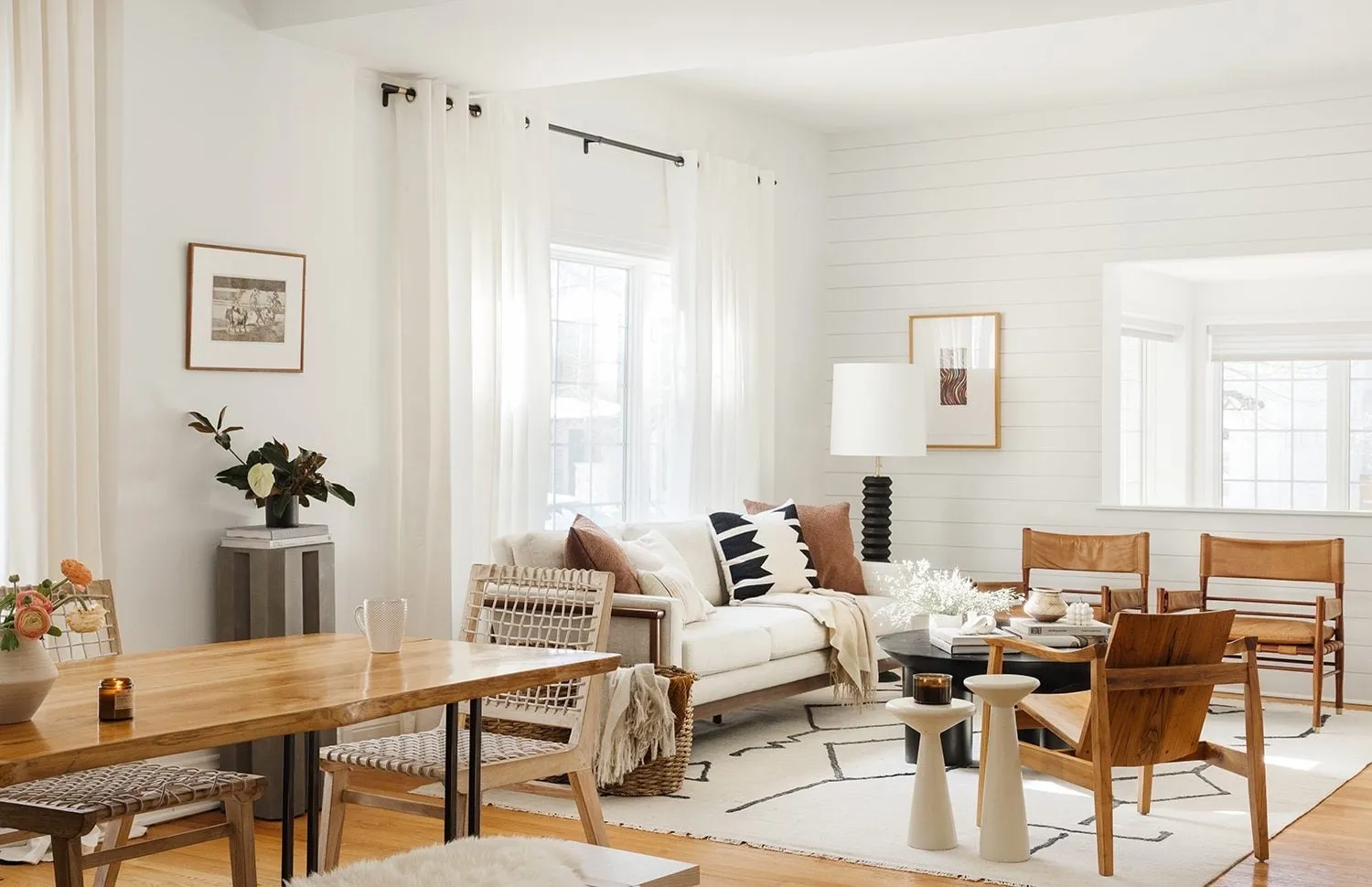
This is the starting point. A real room with white shiplap walls, light oak hardwood floors, large windows with sheer curtains, and a mix of living and dining furniture. Nice room, but the current furniture style might not appeal to every buyer. That is exactly the problem virtual staging solves.
Step 2: AI Furniture Removal
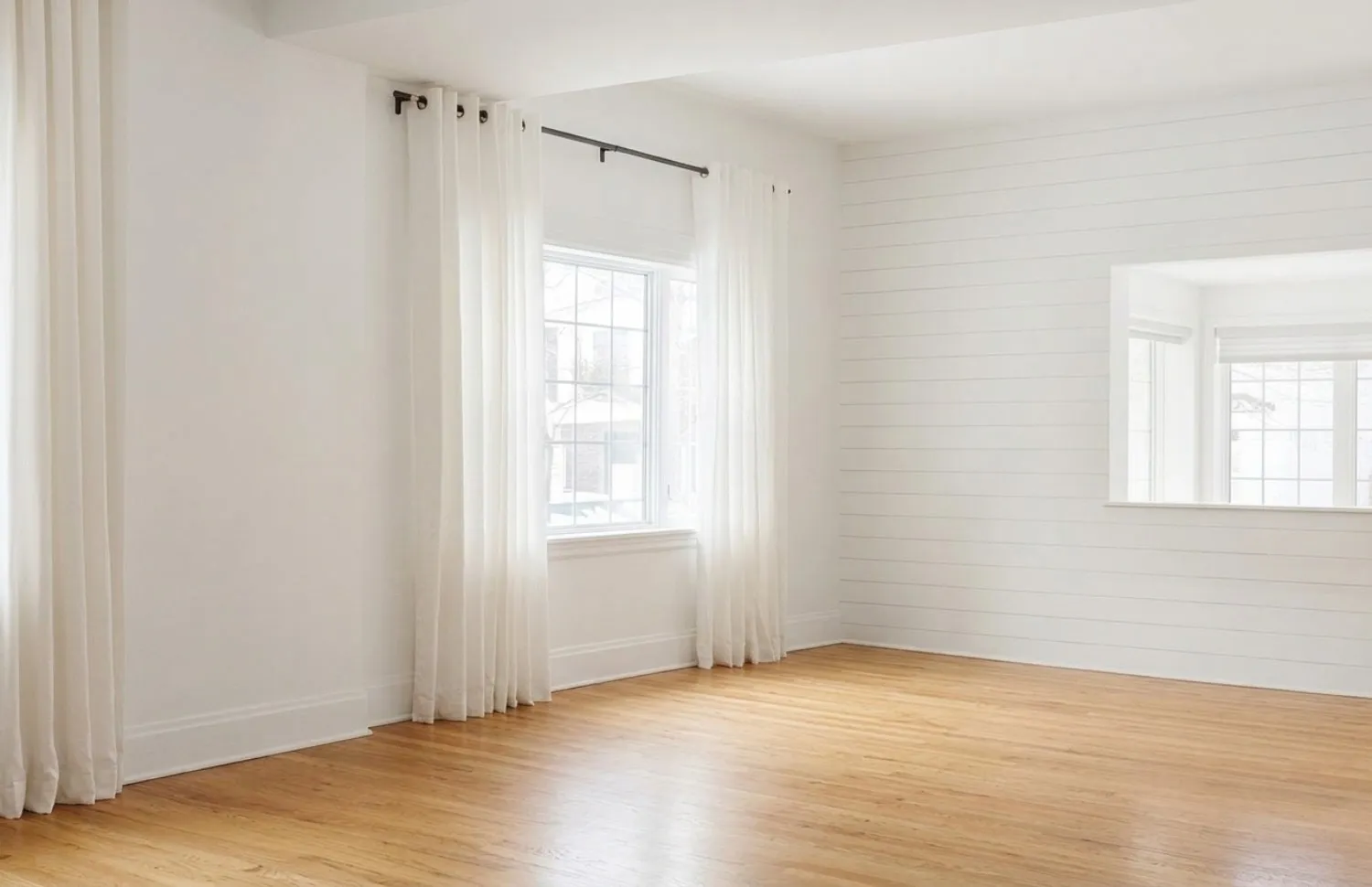
Using AI furniture removal, we stripped the room completely. Every piece of furniture, every accessory, every rug, all gone. What remains is the architecture: the shiplap walls, the hardwood floor, the windows, the curtain rods. The AI preserved every architectural detail while removing only the movable items.
This is the blank canvas. Now we can stage it however we want.
Design 1: Scandinavian Dining Room
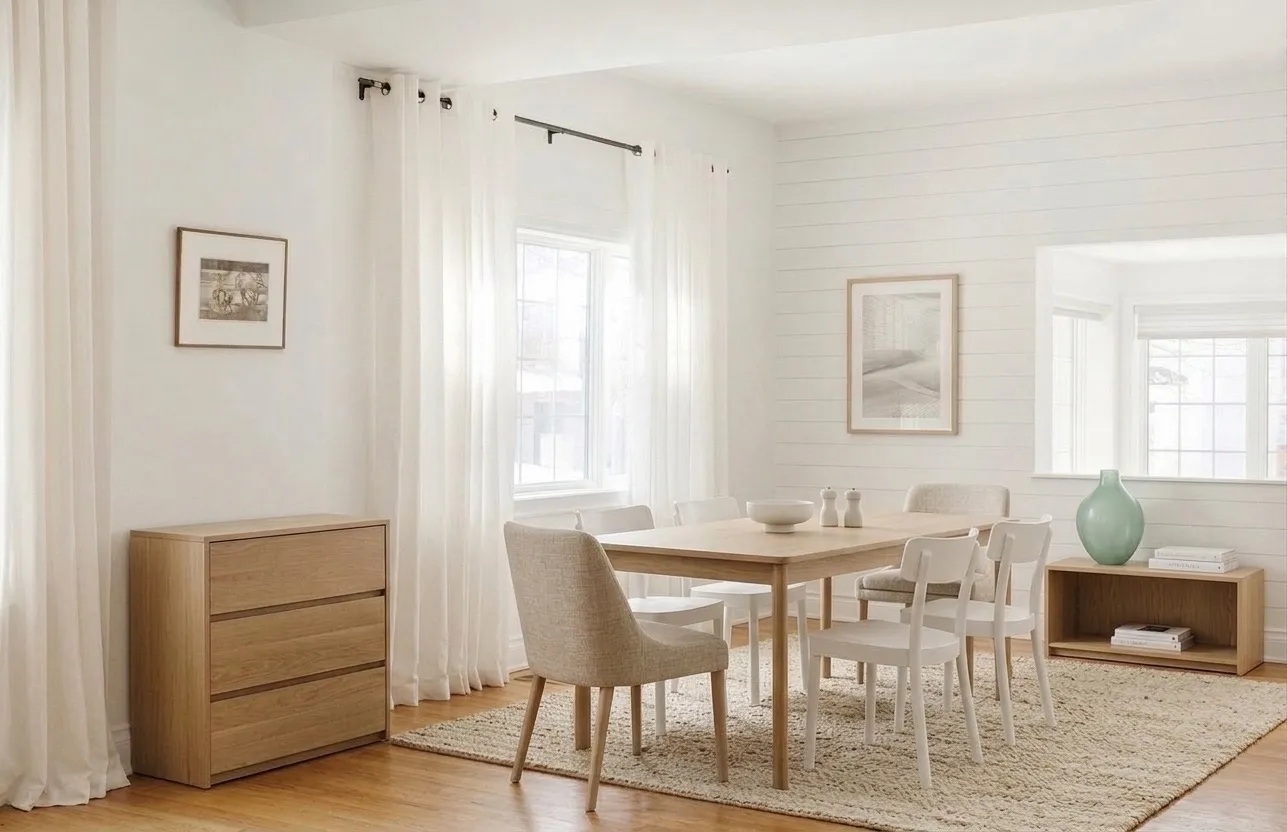
The first staging transforms the room into a clean Scandinavian dining room. A light oak dining table with upholstered chairs sits in the center. A wooden dresser adds storage without cluttering the space. A woven rug anchors the dining area. The color palette stays neutral with cream, oak, and soft sage accents.
This is the safest staging choice for real estate listings. According to Zillow research, Scandinavian-styled listings receive 23% more saves and 15% more showing requests than average. The style appeals to the widest demographic because it feels clean, bright, and aspirational without being polarizing.
Design 2: Cozy Bedroom
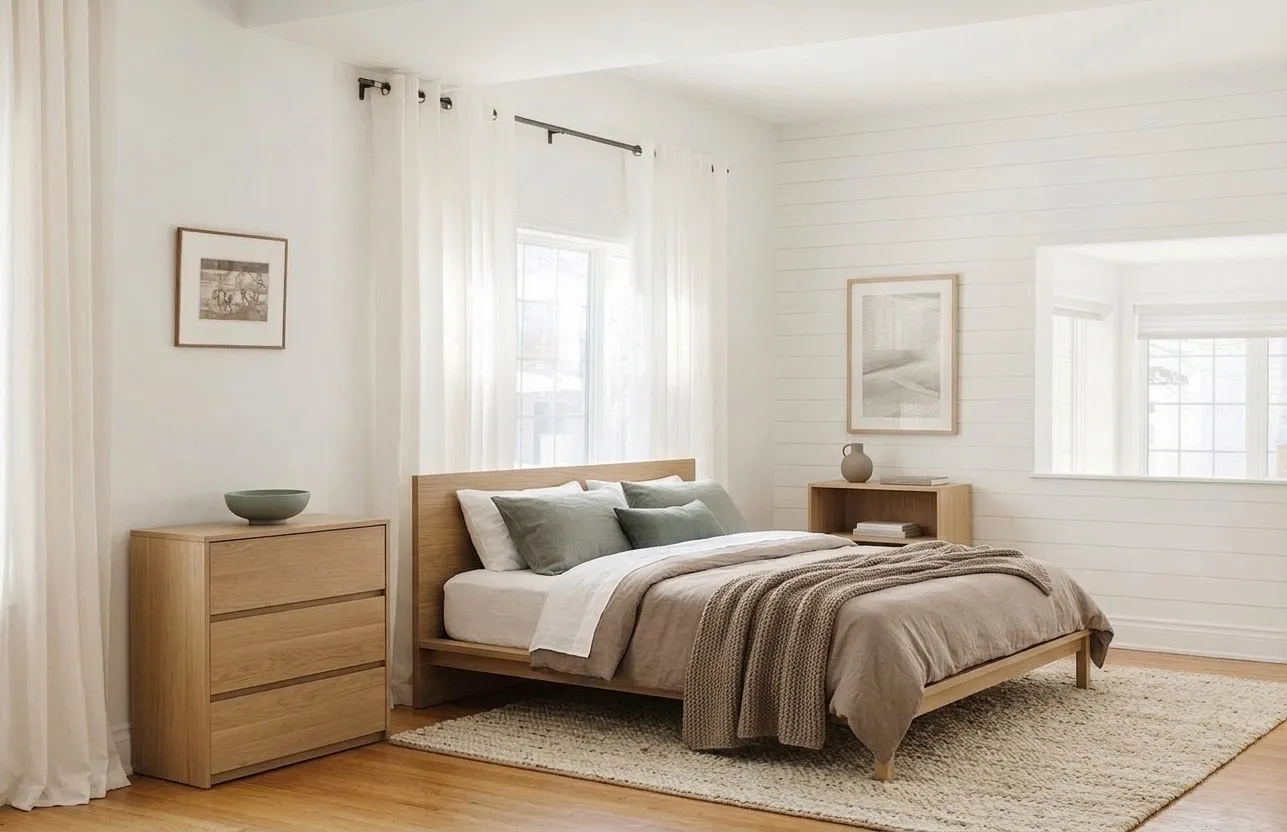
Same room, completely different purpose. Now it is a bedroom with an oak bed frame, layered neutral bedding, sage green accent pillows, and a natural fiber rug. A three-drawer dresser provides storage. Framed art on the wall adds personality without overwhelming the space.
This staging helps buyers see the room as a primary bedroom, something 82% of buyers struggle to imagine from an empty room photo (NAR Home Staging Report). That is the whole point of virtual staging: help people see the potential. Listings with staged bedroom photos get 29% more inquiries than those showing an empty room.
Design 3: Warm Living Room
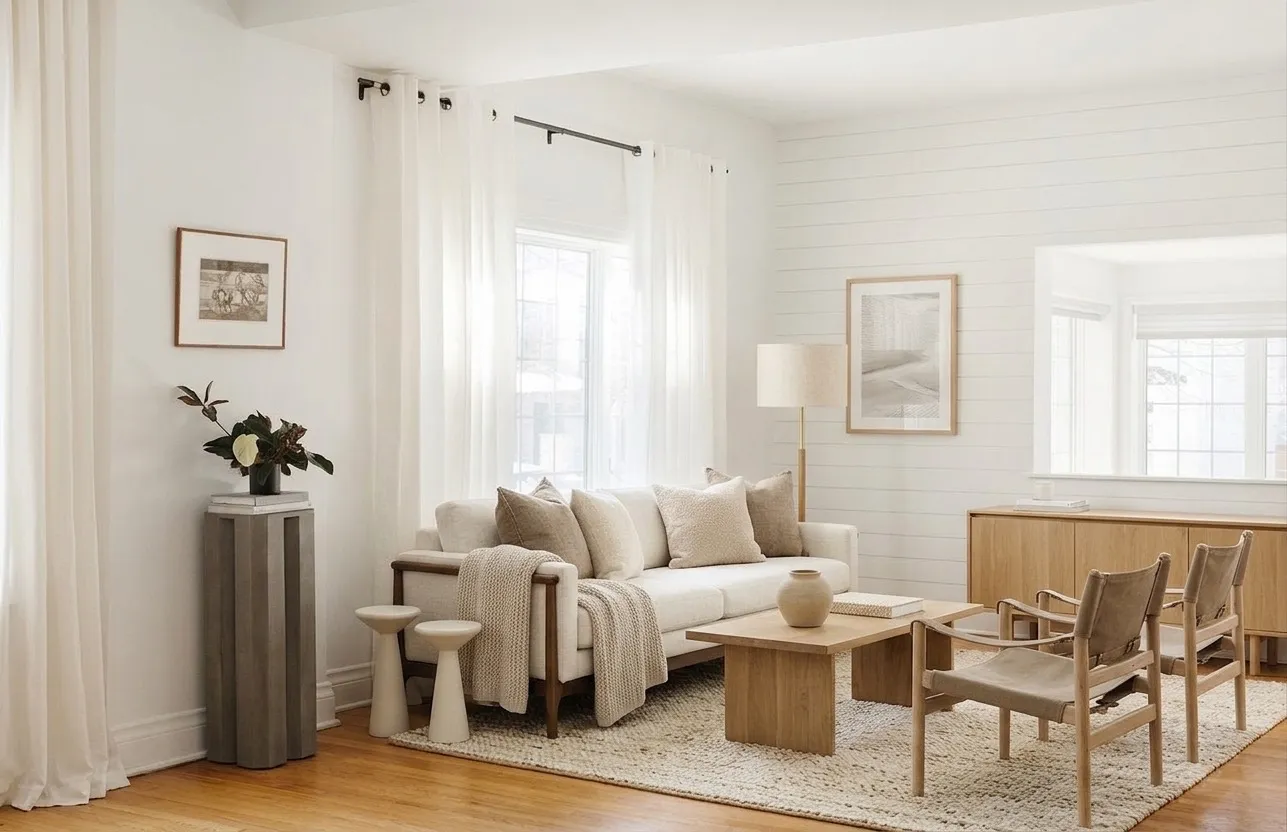
The third design stages the room as a living room with a cream sofa, a woven leather accent chair, a low oak coffee table, and a floor lamp. A pedestal with flowers adds a styling touch. The rug is textured and warm. Everything feels intentional but not overdone.
This is the kind of staging that makes a listing photo stop the scroll. Redfin data shows that the average buyer spends 3 seconds on a listing photo before deciding to click or scroll past. Warm, well-staged living room photos have a 44% higher click-through rate than empty room photos.
Design 4: Modern Minimal Bedroom
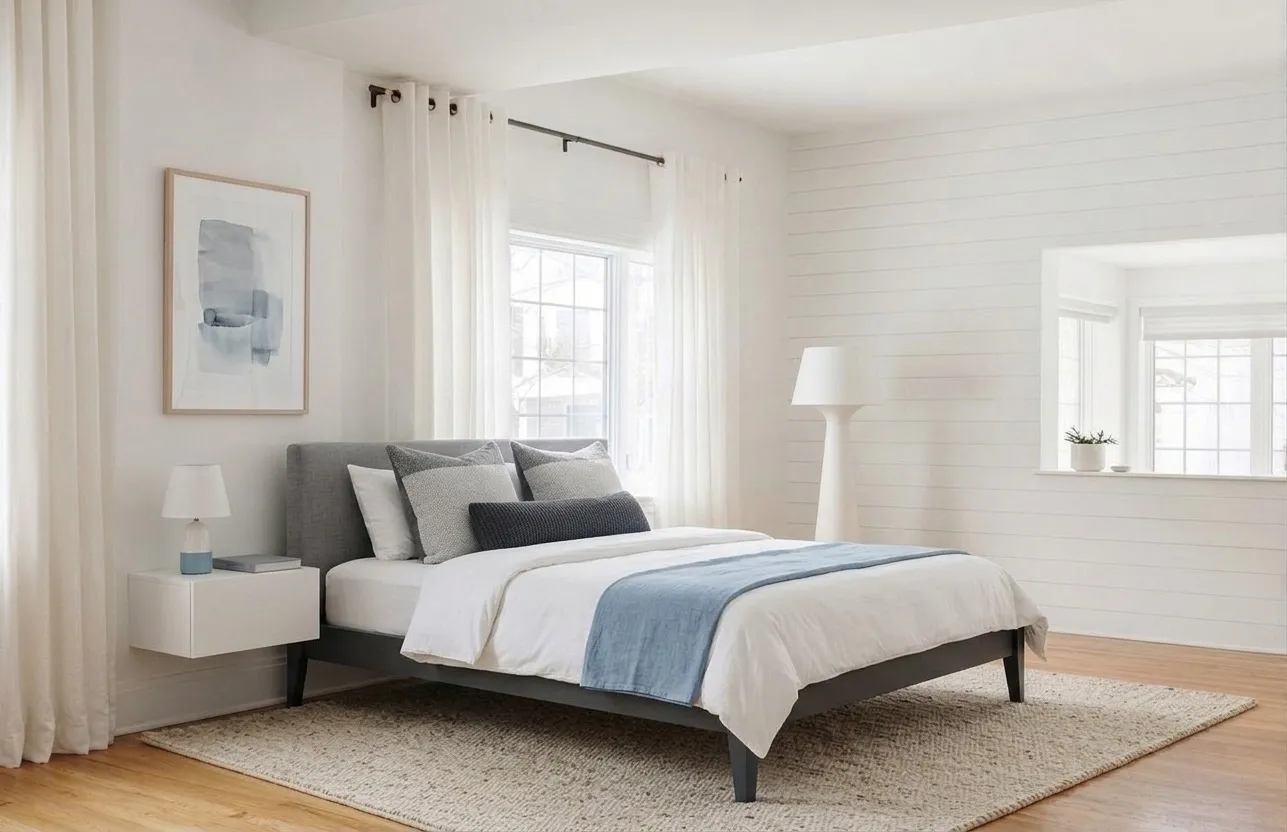
A second bedroom option, but with a completely different personality. A grey upholstered bed with a low profile. White floating nightstands with modern lamps. A blue accent throw across the foot of the bed. The room feels hotel-like, clean, modern, and luxurious.
This staging works well for urban listings targeting younger buyers. The floating nightstands and low bed frame signal modern taste. The blue accent prevents the room from feeling sterile.
Design 5: Bold Statement Living Room
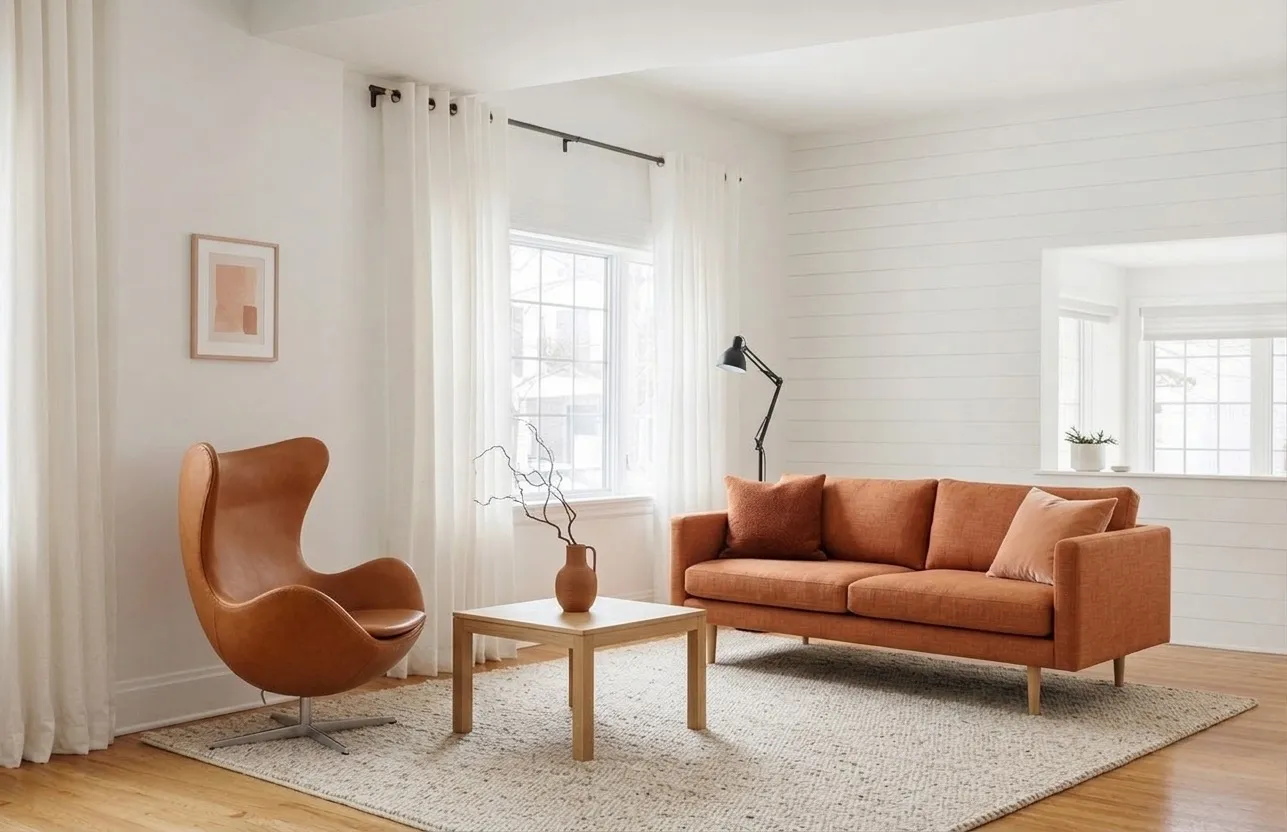
The final design goes bold. A burnt orange sofa paired with a cognac leather egg chair. An industrial floor lamp. Warm copper and terracotta tones throughout. This is not playing it safe, it is making a statement.
Will this staging appeal to everyone? No. But it will make certain buyers fall in love instantly. In competitive markets, a polarizing listing photo that generates strong emotional reactions outperforms a safe but forgettable one. The goal is not to appeal to everyone, it is to make your ideal buyer stop scrolling.
The Full Cost Breakdown: AI vs Physical vs Traditional Virtual Staging
| Metric | Physical Staging | Traditional Virtual | AI Staging (MeltFlex) |
|---|---|---|---|
| Cost per room | $2,000 to $6,000 | $200 to $500 | $0 to $5 |
| Time per design | 1 to 2 weeks | 2 to 5 days | 20 seconds |
| Style variations | 1 (fixed) | 1 to 2 | Unlimited |
| 3-bedroom listing | $8,000 to $15,000 | $1,200 to $3,000 | $0 to $30 |
| Savings vs physical | Baseline | 85 to 90% | 99.7% |
In this test we generated 5 completely different designs in under 3 minutes at $0 total cost. The equivalent in physical staging would cost $10,000+ and take 2 weeks to coordinate with a staging company.
When to Use Virtual Staging
Virtual staging makes the most sense for:
- Empty listings (82% of buyers cannot visualize empty rooms as their future home. Staged photos fix this instantly.)
- Outdated interiors (listings with outdated furniture get 35% fewer showing requests. Virtual restaging costs $0 vs $3,000+ to physically update.)
- Rental properties (virtually staged rental listings get 30 to 50% more inquiries. ROI is immediate since physical staging makes no sense for $1,500/month rentals.)
- Multi-purpose rooms (show the same room as a bedroom, office, or den. 68% of buyers say seeing multiple options helped them decide faster.)
- Pre-construction marketing (stage renders of unfinished units to start marketing 3 to 6 months before completion. Developers report 25% higher pre-sale rates with staged renders.)
How to Virtually Stage Your Own Listing
The process takes under 60 seconds:
- Upload your room photo to MeltFlex, empty or furnished
- If furnished, use AI furniture removal to clear the room first
- Choose a style or describe the look you want
- Download the staged photo. photorealistic, ready for your MLS listing
No Photoshop. No design skills. No waiting 3 business days for a vendor to send you proofs. The AI generates the image while you wait.
Every day your listing sits with empty room photos is a day it gets fewer clicks. The data is clear: staged listings get 40% more online views, sell 73% faster, and close for 6 to 25% more money. With AI staging costing $0 and taking 20 seconds, there is no rational reason to list with empty room photos in 2026.
For more real before and after examples from a single room staged in 5 different styles, see our virtual staging before and after guide. If you are a renter rather than an agent, our rental apartment redesign guide shows how to transform a space without drilling or painting. And for a full breakdown of interior design styles to choose from, see the complete interior design styles guide.
Try virtual staging free. Upload a room photo and see it staged in 20 seconds. Over 213,000 users have already designed their spaces with MeltFlex.