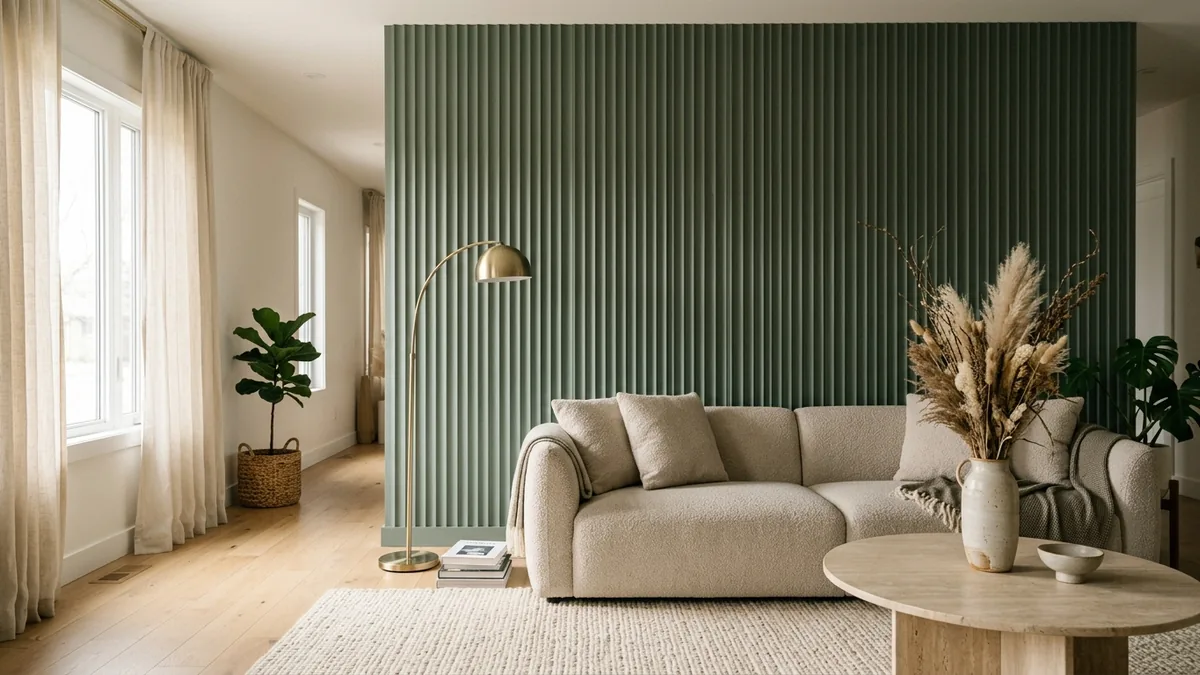
The accent wall is not dead. It evolved. The flat-painted single-color accent wall that dominated the 2010s is out. But textured accent walls (wood slats, limewash plaster, stone cladding, wallpaper murals, and architectural paneling) are more popular in 2026 than accent walls have ever been.
Our articles are still written by humans!
Get human written articles in your Google feed.
In Opendoor’s 2022 Home Decor Report, a survey of 800 US homebuyers, 77% said they were captivated by brightly colored accent walls. The global wall decor market is projected to grow from $32.7 billion to $46.8 billion by 2032. People want statement walls. They just want smarter ones.
This guide covers 35+ accent wall ideas organized by room, material, and budget: from a $30 peel-and-stick renter solution to a $4,000 floor-to-ceiling stone installation. Every idea includes what it costs, where it works best, and how to preview it in your actual room with AI before committing.
FreeUpload photo · freeRepaint my walls for freeUpload a photo and MeltFlex changes the wall colour or finish, with the furniture and layout untouched. Your first AI design is free, no card needed.
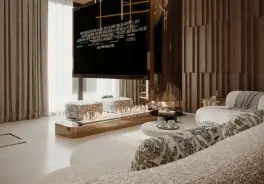
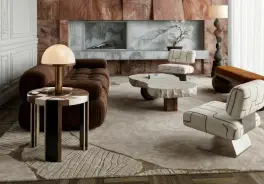
Are Accent Walls Still in Style in 2026?
Yes, but not the painted kind. One wall in a flat contrast color, with the other three left builder white, is what designers call dated in 2026. Accent walls built from texture and material (wood slats, limewash, stone, murals, tile) are more popular than they have ever been. So the honest answer depends on which kind of accent wall you mean.
Nate Berkus put it bluntly: “Accent walls show a lack of commitment.” Emily Henderson’s rule: “If you have four plain walls, don’t just paint one a different color.” Homes & Gardens listed accent walls among the “quickest ways to date a room” in their 2026 trend report. The Everygirl included them in their “10 Interior Design Trends on Their Way Out” list.
What they all mean is the same thing: painting one wall navy blue while the other three stay builder white looks like you ran out of paint. That version of the accent wall (flat paint, one color, no texture) is the one that feels dated.
But here is what is actually happening on the ground. Wood slat accent walls are in every design magazine. Limewash plaster walls are all over Pinterest and Instagram. Stone cladding behind fireplaces is a standard upgrade in new builds. Panoramic mural wallpaper is a $2.9 billion market. These are all accent walls. They just use texture and material instead of color alone.
The alternative that many designers now recommend is color drenching, which means painting walls, ceiling, trim, and doors all in the same color. It creates immersion instead of a focal point. But color drenching requires commitment (and a lot of paint), while an accent wall remains the lower-risk, lower-cost way to transform a room. Both have a place in 2026. The key is choosing the right approach for your space. And if you only came to settle the argument, the quick answer to are accent walls still in style settles it with the survey numbers.
Accent walls are rarely the only thing in a room carrying a date stamp, and they are usually not the worst offender either. We ran the same verdict test across twenty more features people keep asking about, from shiplap and speckled granite to vertical blinds and barn doors, in what is out of style in 2026, with before and after renders of the same room for each swap.
How to Choose the Right Accent Wall
Picking the wrong wall is the most common accent wall mistake. These five rules will save you from it.
If the accent colour you want is one you saw in a photo, the free paint color finder reads it off the picture and names the closest paint before you buy a sample.
1. Pick the Focal Point Wall
The accent wall should be the wall your eye lands on first when you enter the room. In a living room, that is usually the wall behind the sofa or the fireplace wall. In a bedroom, it is the headboard wall. In a dining room, it is the wall behind the table. If no wall has a natural focal point, choose the wall directly opposite the entrance: it is the first surface anyone sees.
2. Follow the Architecture
Walls with built-in features (a fireplace, built-in shelving, an alcove, or an arched niche) are natural candidates because the architecture already draws attention there. Emily Henderson recommends treating built-ins as your accent wall: painting shelving in a bold color is more intentional than painting a blank wall.
3. Avoid Walls Broken by Doors or Windows
A wall with two doors and a window gives you three interrupted sections of accent color that look fragmented. Choose the most continuous, unbroken wall in the room. If every wall has interruptions, consider a textured material like wood slats that reads as intentional even on a smaller section.
4. Test With Light First
The accent wall should get enough light to show off its color or texture. A dark accent wall on a wall that never gets natural light will look like a void. Before committing, observe the wall at morning, midday, and evening: the same color looks completely different in warm sunset light versus cool morning light. If the wall is naturally dark, go with a lighter texture (limewash, light wood) instead of dark paint.
5. The Renter Exception
If you are renting, the rules shift. Your accent wall should be the most visible wall from your main living area, regardless of architecture, because you need maximum impact from a reversible treatment. Peel-and-stick wallpaper, removable panels, and fabric wall hangings all work. Focus on the wall you see the most rather than the wall guests see first.
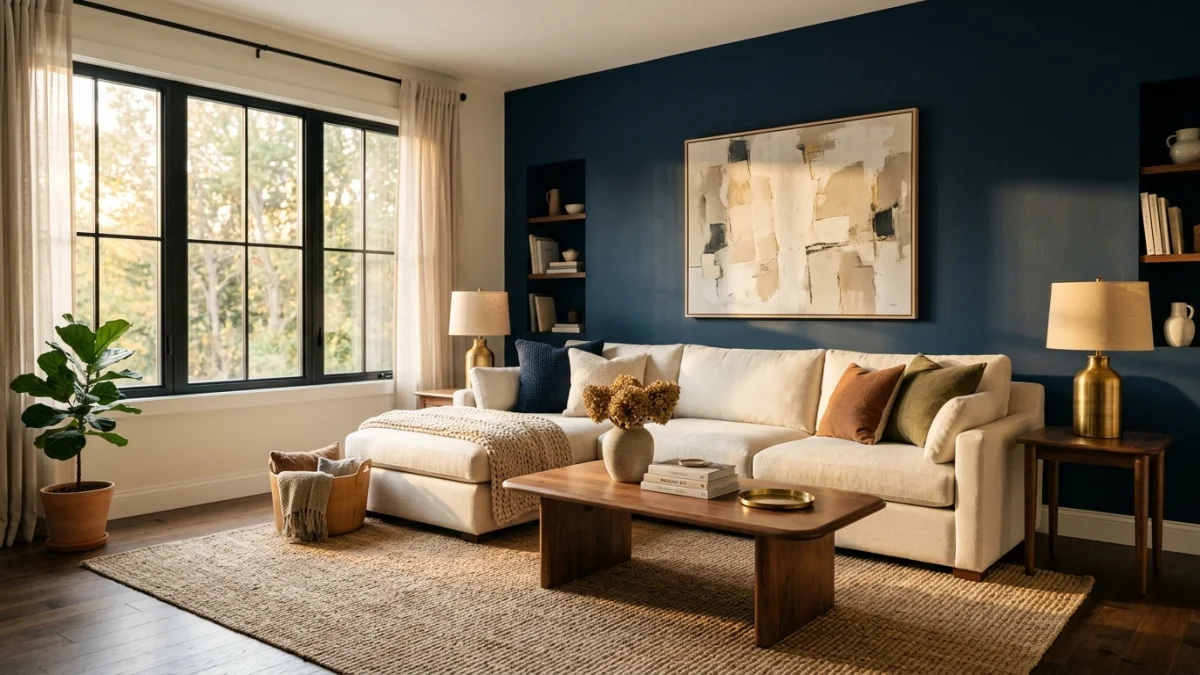
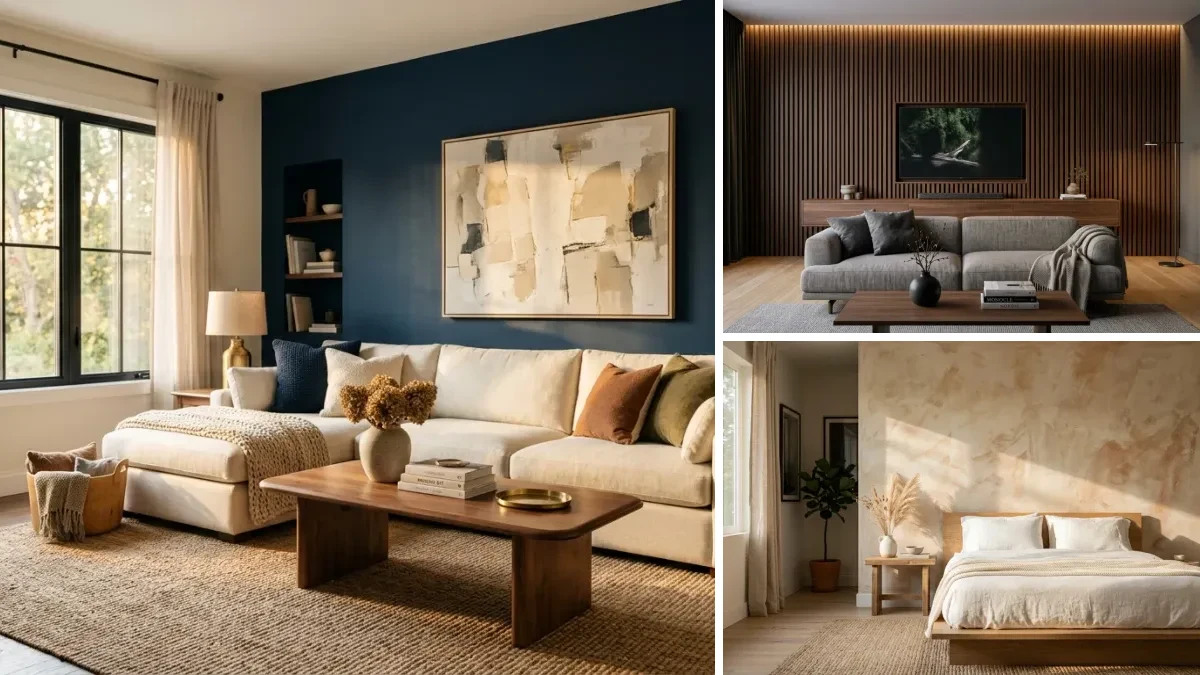
Deep navy behind a cream sofa: the warm accessories prevent the dark wall from feeling cold
Living Room Accent Wall Ideas
The living room is where accent walls have the most impact because it is the room guests see first and the room you spend the most waking hours in.
Navy Blue Behind the Sofa
Hale Navy HC-154 by Benjamin Moore is the most specified accent wall color by interior designers in 2026. It works with warm wood, brass hardware, cream textiles, and both modern and traditional furniture. Navy is dark enough to create drama without feeling oppressive. Pair it with warm white on the remaining walls: not bright white, which creates too harsh a contrast.
Wood Slat Media Wall
Vertical wood slats behind a TV or media console have become the default accent wall in modern living rooms. Walnut and smoked oak are trending in 2026, replacing the lighter natural oak that dominated 2024. Slats add texture, hide TV wires, and create a visual frame for the screen. DIY kits from Amazon start at $150 for a single wall. Custom installations run $800 to $2,500.
The cheaper version of the same effect is storage rather than cladding: a floating run of wall-mounted cabinets or a boxed-in bookcase wall, painted the same colour as the wall it sits on. Our IKEA hacks guide prices out a media wall and a full library wall this way, both well under the cost of a custom slat install.
Cheaper still, and the reason it keeps coming back: a board and batten wall is the same vertical rhythm in painted pine, about 150 to 260 dollars in materials for a 12 foot wall. That guide has the batten spacing calculator and the cut list.
Limewash in Warm Clay
Limewash creates an organic, imperfect plaster effect that changes with light throughout the day. Warm clay, terracotta, and mushroom tones are the most popular limewash colors for 2026. Unlike flat paint, limewash has natural depth and movement that makes a wall feel alive. Portola Paints and ROMA are the go-to brands. Cost: about $80 to $120 per gallon, and one gallon covers approximately 300 square feet.
Stone Cladding Behind the Fireplace
Natural stone or stacked stone veneer behind a fireplace adds texture and perceived value that no paint can match. Warm-toned limestone and travertine are replacing the cool-gray ledgestone that was everywhere five years ago. Veneer panels (thinner, lighter, less expensive) achieve the same look as full stone at roughly half the cost:$15 to $25 per square foot installed.
Panoramic Mural
A full-wall landscape mural (misty mountains, abstract watercolors, botanical scenes) turns the wall into art. Google searches for mural wallpaper surged over 1,150% in 2025. The living room wall behind a sofa is the ideal placement because the mural becomes the room’s focal point without competing with the TV. See our wallpaper trends 2026 guide for specific brands and styles.
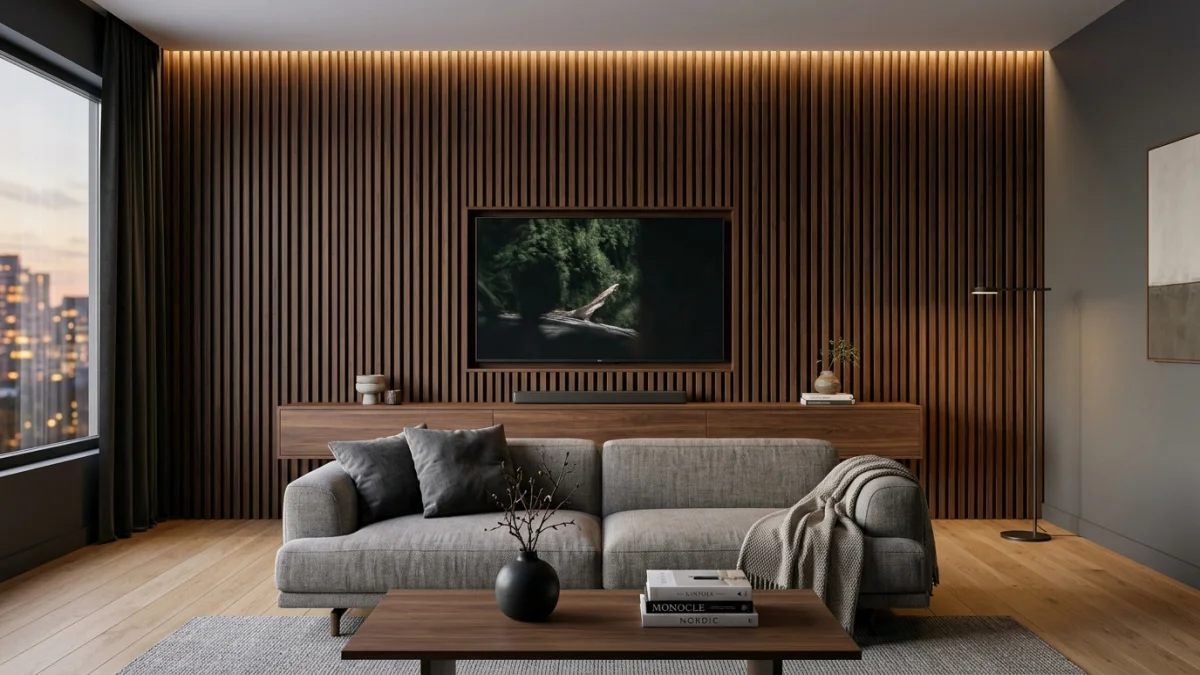
Walnut wood slats create a warm frame for the TV:the dominant accent wall trend of 2026
Bedroom Accent Wall Ideas
Bedroom accent walls serve a different purpose than living room ones. They should support relaxation and sleep while adding visual interest. The headboard wall is almost always the right choice because you face away from it while sleeping: the drama is there when you walk in but does not stimulate you while trying to fall asleep.
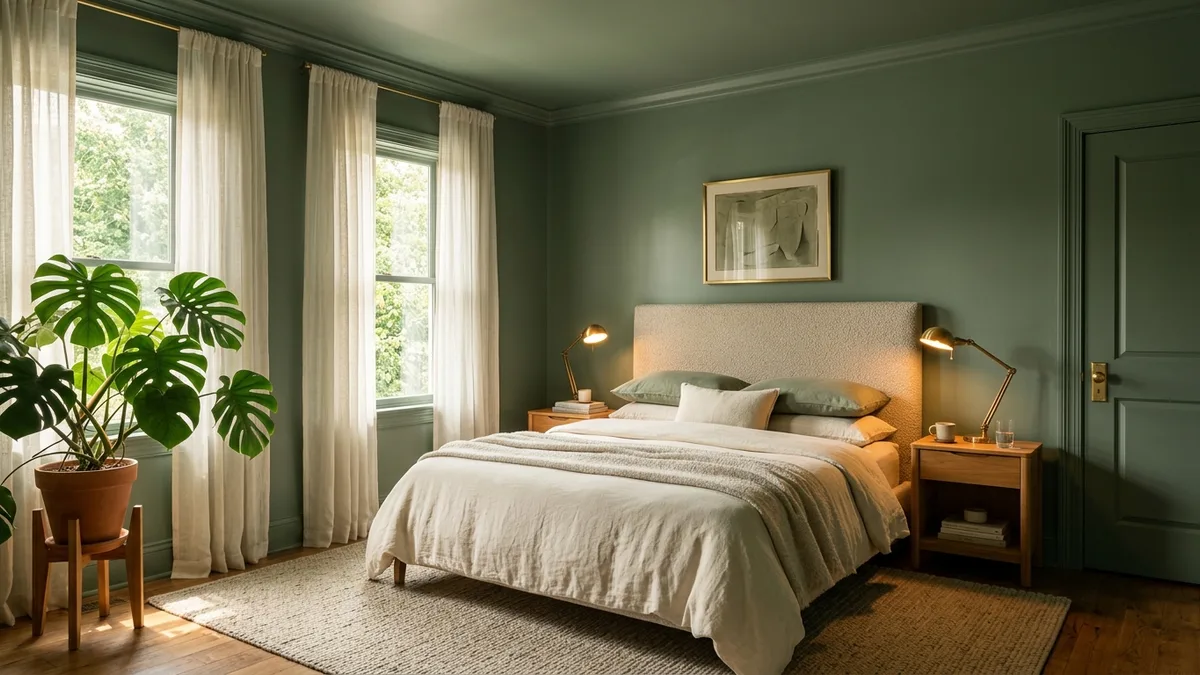
Deep Sage Behind the Headboard
Sage green is the most popular bedroom accent wall color of 2026. It is calming enough for sleep but distinct enough to feel like a deliberate design choice. Evergreen Fog SW 9130 by Sherwin-Williams is the specific shade designers reach for most. Pair it with white linen bedding and light oak furniture for a Scandinavian feel, or with dark walnut and cream for warmth.
Upholstered or Fabric-Paneled Wall
Extending the headboard material across the entire wall creates a hotel-suite effect. Bouclé, linen, and velvet panels mounted on a plywood backing absorb sound (improving sleep) and add softness to the room. This is one of the most luxurious-looking accent wall treatments and costs $600 to $1,500 for a standard king headboard wall.
Dark Cocoon Effect
Painting the headboard wall a deep color (charcoal, midnight navy, or forest green) and extending it onto the ceiling creates an enveloping cocoon effect. This is color drenching applied to a single wall. The dark surface wraps around you without darkening the entire room. It works best in bedrooms with at least one large window on a side wall. If you would rather change the surface than the colour, our comparison of limewash vs Venetian plaster covers the mineral finishes and what each one costs.
Peel-and-Stick Wallpaper
Removable wallpaper behind the bed is the fastest bedroom transformation available:30 minutes to apply, zero damage when you remove it. Botanical prints, abstract watercolors, and linen-texture patterns are the most popular for 2026. Budget: $40 to $120 for a headboard wall depending on brand.
Kitchen Accent Wall Ideas
Kitchen accent walls require moisture-resistant materials and finishes. Semi-gloss or satin paint is essential. The best kitchen accent wall location is the wall behind open shelving, behind the range, or the backsplash wall extended floor to ceiling.
Terracotta Behind Open Shelving
A warm terracotta or rust wall behind floating shelves is one of 2026’s most photographed kitchen looks. The earthy color makes white dishes, wooden cutting boards, and green plants pop. Benjamin Moore’s Silhouette (their 2026 Color of the Year) works here as a moodier alternative.
Floor-to-Ceiling Tile
Instead of a standard 18-inch backsplash, running tile from counter to ceiling on one wall creates a powerful accent without paint. Zellige tiles in white, sage, or terracotta are the most popular choice. The handmade imperfections in zellige tiles catch light and add texture that machine-made tiles cannot replicate. Cost: $15 to $30 per square foot installed.
Dark Charcoal Behind Floating Shelves
A dark wall behind floating shelves creates depth and makes the shelves appear to float in space. Charcoal or very dark green works better than black: black absorbs too much light in a kitchen. This treatment costs nothing more than a gallon of paint and makes a standard kitchen look custom.
Bathroom and Powder Room Accent Wall Ideas
Powder rooms and small bathrooms are the best rooms for bold accent walls because the small size limits your commitment. A powder room accent wall costs less material, takes less time, and creates more impact per square foot than any other room.
Bold Wallpaper in the Powder Room
A dramatic wallpaper (oversized florals, tropical prints, Art Deco geometrics) in a powder room is one of the safest bold design choices you can make. The room is small enough that the pattern does not overwhelm, and guests only spend a few minutes there. Moisture-resistant vinyl wallpaper is essential for any bathroom application.
Floor-to-Wall Marble Tile
Continuing the same marble or porcelain tile from the floor up one wall creates a seamless, spa-like effect. The visual continuity makes small bathrooms feel larger because the eye does not stop at a transition line. Porcelain tiles that mimic marble cost a fraction of real marble and are more practical in wet environments.
Dark Paint With Brass Hardware
A dark accent wall (deep green, navy, or charcoal) behind the vanity, paired with brass or gold fixtures and a warm-toned mirror, creates a moody, sophisticated look. Dark colors in small bathrooms actually work well because they blur the corners and make the boundaries of the room less obvious. The key is adequate lighting: add at least two sconces flanking the mirror.
Home Office Accent Wall Ideas
Your home office accent wall has a job beyond looking good: it is your video call background. The wall behind your desk chair is the one the camera sees.
Blue for Focus
Research consistently shows that blue environments improve focus and cognitive performance. A muted powder blue or dusty blue-gray accent wall behind your desk creates a calming, professional backdrop. It reads well on camera (important for Zoom and Teams calls) and promotes concentration during focused work. Avoid bright or saturated blues: aim for dusty, muted tones.
Built-In Shelving as the Accent
A wall of built-in shelving or a large bookcase is the accent wall. Styled with books, a few objects, and a plant, it creates the kind of background that makes people on video calls ask “where did you get that bookshelf?” Paint the back panel of the shelves a different color from the frame for added depth.
Acoustic Felt Panels
Acoustic panels in earth tones (tan, sage, charcoal) serve double duty: they absorb sound for clearer video calls and create a modern, textured accent wall. Brands like Felt Right and BAUX offer panels in geometric shapes that install with adhesive strips. Budget: $200 to $600 for one wall. They are also renter-friendly. One thing they will not do is stop a neighbor’s noise coming through the wall: felt absorbs echo inside the room, it does not block sound, which is the difference our guide on how to soundproof a room starts with.
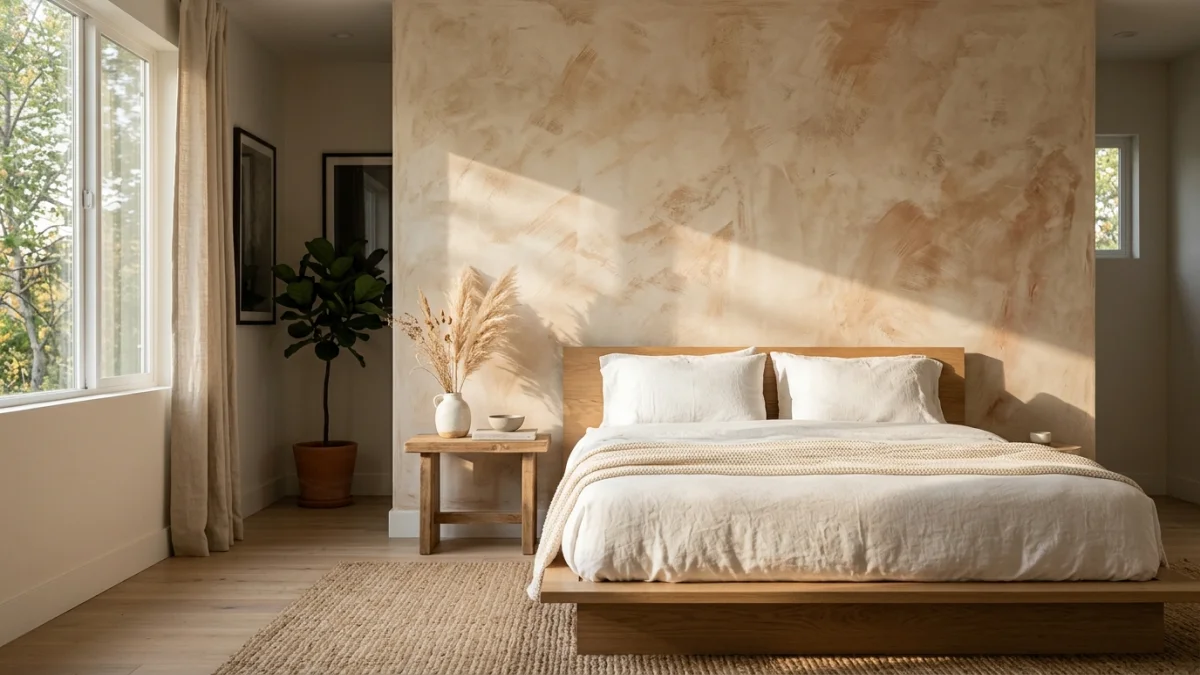
Limewash in warm clay: the organic texture shifts with light throughout the day
Accent Wall Ideas by Material
Wood Slats and Paneling
The most popular accent wall material of 2026. Vertical slats in walnut, smoked oak, or dark-stained pine add warmth and texture. Slats can be installed as DIY kits ($150 to $400) or professionally ($800 to $2,500). They work behind TVs, beds, and in entryways. In 2026, the trend is moving toward darker wood tones and wider slats with more spacing.
Limewash and Plaster Finishes
Limewash paint creates a hand-applied, slightly uneven plaster effect that looks like an Italian villa wall. It works on any painted surface and requires minimal prep. One coat gives a subtle wash; two to three coats create a richer, more layered effect. Best colors for 2026: warm clay, mushroom, terracotta, and dusty rose. Portola Paints and ROMA are the industry standards.
Stone and Brick
Real stone veneer and exposed brick remain timeless accent wall materials. Stacked stone in warm tones (cream, travertine, sandstone) is replacing the cool-gray ledgestone of previous years. If your space has original brick, cleaning and sealing it is one of the most cost-effective accent walls possible: the material is already there.
Wallpaper and Murals
The wallpaper market is projected to reach $2.9 billion by 2030. For accent walls specifically, panoramic murals, oversized florals, and textured grasscloth are the top picks. Read our complete wallpaper trends guide for the eight biggest styles of 2026 with brand recommendations.
Tile
Tile accent walls are surging in 2026, especially in kitchens and bathrooms. Zellige tiles, large-format marble-look porcelain, and geometric hex tiles create accent walls that are both decorative and functional. Tile is waterproof, heat-resistant, and virtually maintenance-free. The key cost driver is installation: tile itself runs $5 to $20 per square foot, but professional installation adds $10 to $20 per square foot.
Peel-and-Stick for Renters
Removable peel-and-stick wallpaper, adhesive wood panels, and stick-on tile decals let renters create accent walls without any permanent changes. Quality has improved dramatically: modern peel-and-stick wallpaper is virtually indistinguishable from traditional wallpaper. Budget: $30 to $120 per wall. The adhesive removes cleanly without pulling paint, which means no deposit risk. For more renter-friendly ideas, see our Airbnb and rental staging guide.
Watch: redesigning a wall with AI
Want to test an accent wall before you commit? This clip restyles a wall in seconds from a single photo, so you can preview color, material and paneling risk-free.

An accent wall restyled from one photo in MeltFlex.
Best Accent Wall Colors for 2026
The color palette for 2026 accent walls leans warm, earthy, and muted. Cool grays and bright whites are definitively out. Here are the specific colors designers are specifying most:
- Hale Navy HC-154 (Benjamin Moore): The gold standard for navy accent walls. Deep, warm, works with everything from modern to traditional.
- Evergreen Fog SW 9130 (Sherwin-Williams): A muted sage-green-gray that is calming without being boring. The most popular bedroom accent wall color.
- Silhouette AF-655 (Benjamin Moore 2026 Color of the Year): A charcoal-infused espresso that reads as sophisticated and warm. Works as paint or limewash.
- Terracotta and warm clay tones: Not a single brand color but a family. Look for Canyon Dusk S210-4 by Behr or Cavern Clay SW 7701 by Sherwin-Williams.
- Dusty olive green: A warm, muted green that sits between sage and army green. Try Rosemary SW 6187 by Sherwin-Williams or Olive Sprig PPG1125-4 by PPG.
- Warm charcoal: Not black, not gray. A warm charcoal like Wrought Iron 2124-10 (Benjamin Moore) adds drama without the harshness of pure dark colors.
Colors to avoid in 2026: cool grays (they feel sterile), bright primary colors (they look juvenile), and any color with a strong blue undertone unless it is intentionally navy. The direction is firmly toward warmth.
For a deeper look at how 2026 colors work together, see our guide to choosing paint colors with AI and the color drenching trend guide. The same warm shift is happening outside the house too, and our 2026 exterior house colors guide shows it on one real facade, repainted seven ways.
How Much Does an Accent Wall Cost?
Costs vary dramatically by material. Here is what to expect in 2026:
Best value: Limewash gives you the most visual impact per dollar. A $100 DIY limewash wall looks like a $2,000 plaster job to anyone who does not know the difference. Worst value: Professional painting of a single flat color: at $300 to $750, you are paying mostly for labor on a job that takes 30 minutes to DIY.
How to Preview Your Accent Wall Before Committing
The biggest risk with any accent wall is realizing it does not work after you have already painted, tiled, or wallpapered. This used to mean buying sample pots and testing patches. Now AI can show you the result in seconds.
Upload a photo of your room to MeltFlex’s free AI wall texture tool and describe the accent wall you want: “navy accent wall behind the sofa” or “warm terracotta limewash on the fireplace wall.” The AI generates a photorealistic visualization showing the accent wall in your actual space with your existing furniture and lighting. You can compare multiple colors and materials side by side before spending anything.
This is especially useful for decisions where the stakes are high: choosing between two similar colors, deciding whether to go dark or textured, or testing whether a bold wallpaper will overwhelm a small room. A 30-second AI preview can prevent a $500 mistake.
5 Accent Wall Mistakes to Avoid
1. Choosing the Wrong Wall
The accent wall should be the focal point, not a random wall. Painting the wall behind the TV when the fireplace wall is more prominent creates visual confusion. The room has two competing focus points, and neither wins. Pick the one wall that draws the most attention and commit. If the two are the same wall because the television is mounted over the hearth, read whether a TV above a fireplace is a good idea first, since that decision usually settles the accent wall for you.
2. Ignoring the Lighting
Dark accent walls absorb light. If the wall does not receive natural light or if the room has only overhead lighting, a dark accent wall will look like a hole rather than a feature. Add targeted lighting (picture lights, sconces, or LED strips along the ceiling line) to illuminate the accent wall specifically. For help with this, see our AI lighting prompts.
3. Using the Wrong Paint Finish
High-gloss paint on an accent wall highlights every imperfection in the drywall. Matte or eggshell is almost always the right choice for painted accent walls. Save satin or semi-gloss for kitchens and bathrooms where you need moisture resistance.
4. Too Many Accent Walls
If every wall is an accent wall, no wall is an accent wall. One accent wall per room maximum. In an open floor plan, one accent wall for the entire connected space. Two competing accent walls visible from the same viewpoint cancel each other out.
5. Not Considering What is on the Wall
A bold accent wall behind a gallery of colorful art creates visual noise. A textured stone wall behind a patterned sofa competes for attention. The accent wall should complement what sits in front of it, not fight with it. Dark walls work best with light furniture and minimal wall art. Busy wallpaper works best with simple furniture and no additional wall decor.
Ready to see your accent wall before committing? Upload your room photo to MeltFlex and try different accent wall colors, textures, and materials on your actual walls. It takes 30 seconds and it is free. Test three ideas before you pick one: the right accent wall is the one that makes you stop scrolling and say “that’s it.”
Accent Wall Questions, Answered
Which wall should be the accent wall in a room?
Choose the wall that naturally draws attention when you enter the room. This is usually the wall behind the sofa in a living room, the headboard wall in a bedroom, or the wall with a fireplace. If no wall has a clear focal point, pick the wall directly opposite the entrance. It is the first thing anyone sees when they walk in. Avoid walls broken up by multiple doors or windows.
Are accent walls outdated in 2026?
The flat-painted single-color accent wall is considered dated by most designers in 2026. Textured and architectural accent walls (wood slats, limewash plaster, stone cladding, wallpaper murals and 3D panels) are more popular than ever. The accent wall has evolved from a color choice into a material and texture statement. The appetite is real: in Opendoor’s 2022 Home Decor Report, 77 percent of 800 surveyed US homebuyers said they were captivated by brightly colored accent walls.
Should an accent wall be lighter or darker than the other walls?
An accent wall should almost always be darker or more saturated than the surrounding walls. A lighter accent wall against darker walls looks accidental rather than intentional. The general rule is three to five shades darker than your main wall color. If your walls are white, almost any color works as an accent. If your walls are already a mid-tone, go noticeably deeper rather than slightly different.
What is the best paint finish for an accent wall?
Matte or eggshell finish works best for painted accent walls because it absorbs light evenly and hides imperfections. Satin works in kitchens and bathrooms where moisture resistance matters. Avoid high-gloss for accent walls. It reflects light unevenly and highlights every bump in the drywall. For limewash and plaster finishes, the naturally uneven texture is the point and no additional finish is needed.
How much does it cost to create an accent wall?
A painted accent wall costs $30 to $80 in materials if you do it yourself, or $300 to $750 with a professional painter. Limewash runs $80 to $200 DIY. Wood slat kits cost $150 to $400 and custom professional slat walls $800 to $2,500. Wallpaper is $50 to $300 per wall for mid-range brands, plus $200 to $500 for installation. Stone veneer runs $1,000 to $4,000 installed and tile $800 to $3,000. Peel-and-stick options for renters cost $30 to $120 per wall.
Can I do an accent wall in a rental apartment?
Yes. Peel-and-stick wallpaper removes cleanly without wall damage. Removable wood slat panels and fabric wall panels attach with adhesive strips. Self-adhesive tile stickers and removable wall murals are also renter-safe options. If you want paint, some leases allow it if you repaint to the original color before moving out. Always check with your landlord first.
What is color drenching and how is it different from an accent wall?
Color drenching means painting the walls, ceiling, trim, and sometimes doors all in the same color or color family. It creates an immersive, enveloping effect that makes a room feel cohesive. An accent wall highlights one surface against a neutral background. In 2026, many designers favor color drenching over traditional accent walls, but the two techniques do different jobs. Accent walls create focus. Color drenching creates atmosphere.
Do accent walls increase home value?
It depends on execution, and the hard data is thin. The most cited study, Zillow’s 2017 paint color analysis of more than 32,000 listing photos, found that homes with light blue to soft gray-blue kitchens sold for $1,809 more than expected, but it measured whole-room color, not accent walls. For resale, natural materials such as stone, wood and subtle texture in muted tones are the safer choice. Bold, highly personal colors can put buyers off.
What are the best accent wall colors for 2026?
The most recommended accent wall colors for 2026 are Hale Navy HC-154 by Benjamin Moore, Evergreen Fog SW 9130 by Sherwin-Williams, terracotta and warm clay tones, deep sage green, warm charcoal, and dusty olive. Earth tones dominate the trend. Benjamin Moore named Silhouette AF-655, a blend of espresso with charcoal notes, as its 2026 Color of the Year. Avoid bright primary colors and cool grays, which feel dated.
How can I see what an accent wall will look like before painting?
Upload a photo of your room to MeltFlex AI to see a photorealistic preview of your accent wall in different colors and materials. The AI preserves your actual room dimensions, furniture, and lighting so you can compare options before buying a single can of paint. You can test multiple colors and materials side by side in seconds.
Keep reading
For more wall and room design ideas, explore our color drenching guide, plate wall ideas for 2026, mirror wall ideas for 2026, 2026 wallpaper trends, dark and moody interior design guide, the Neo Deco trend guide, and AI furniture placement and room layout. And once the walls are done, the surface below them is next: see the 2026 flooring trends guide.