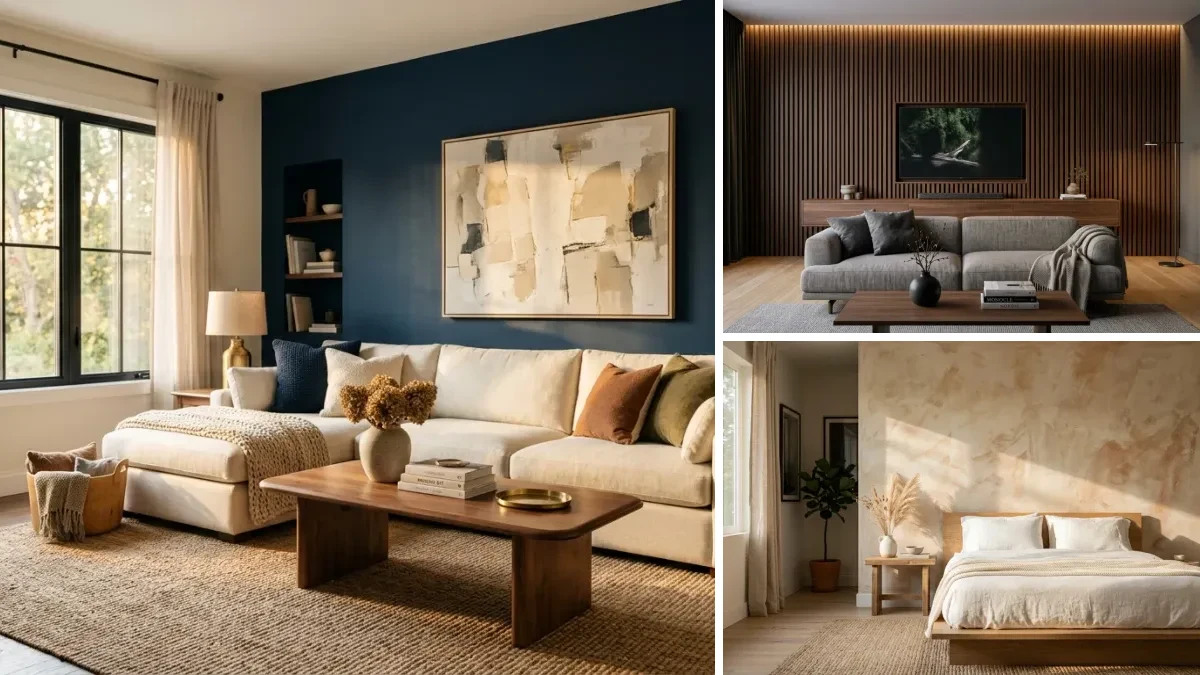
Dark and Moody Interior Design: How to Create Dramatic Rooms That Actually Feel Cozy

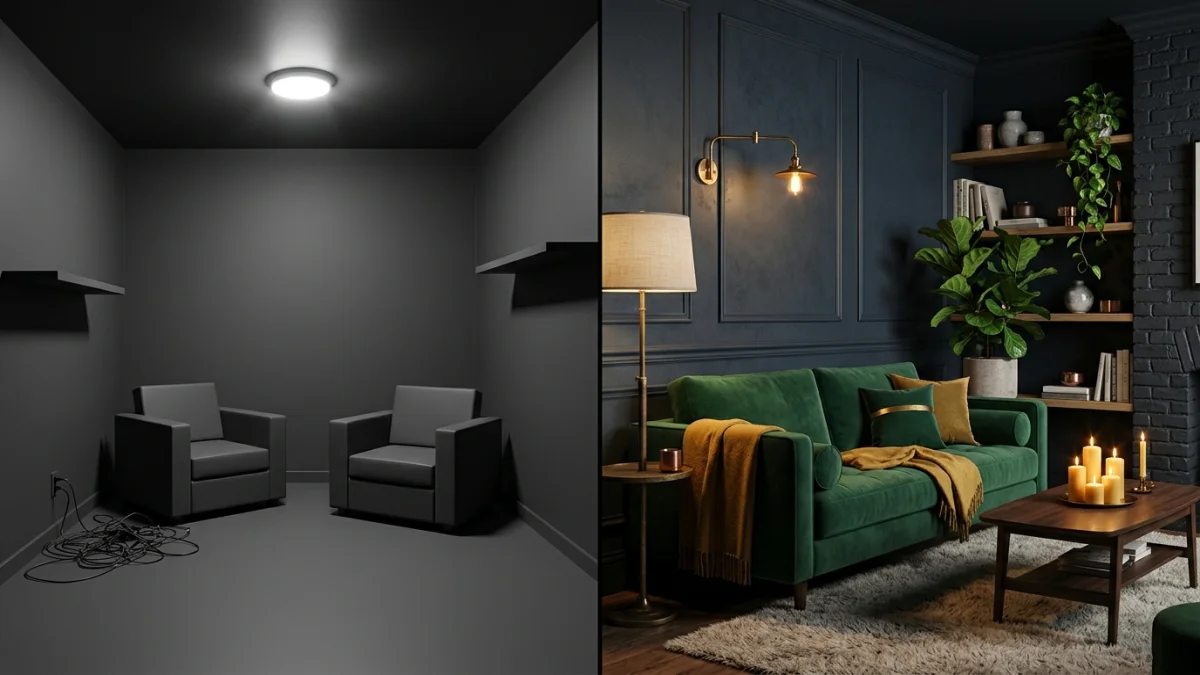
There is something that happens when you walk into a room with deep, dark walls and warm, low lighting. You exhale. Your shoulders drop. The world outside stops mattering for a second. It is the same feeling you get in a candlelit restaurant or a library with wood paneled walls, and most people assume they could never recreate it at home.
Our articles are still written by humans!
Get human written articles in your Google feed.
They are wrong. But they are also right to be cautious, because dark interiors done badly look like a cave where happiness goes to die. The line between “dramatic and cozy” and “dark and depressing” comes down to a few specific decisions that most design articles never explain properly.
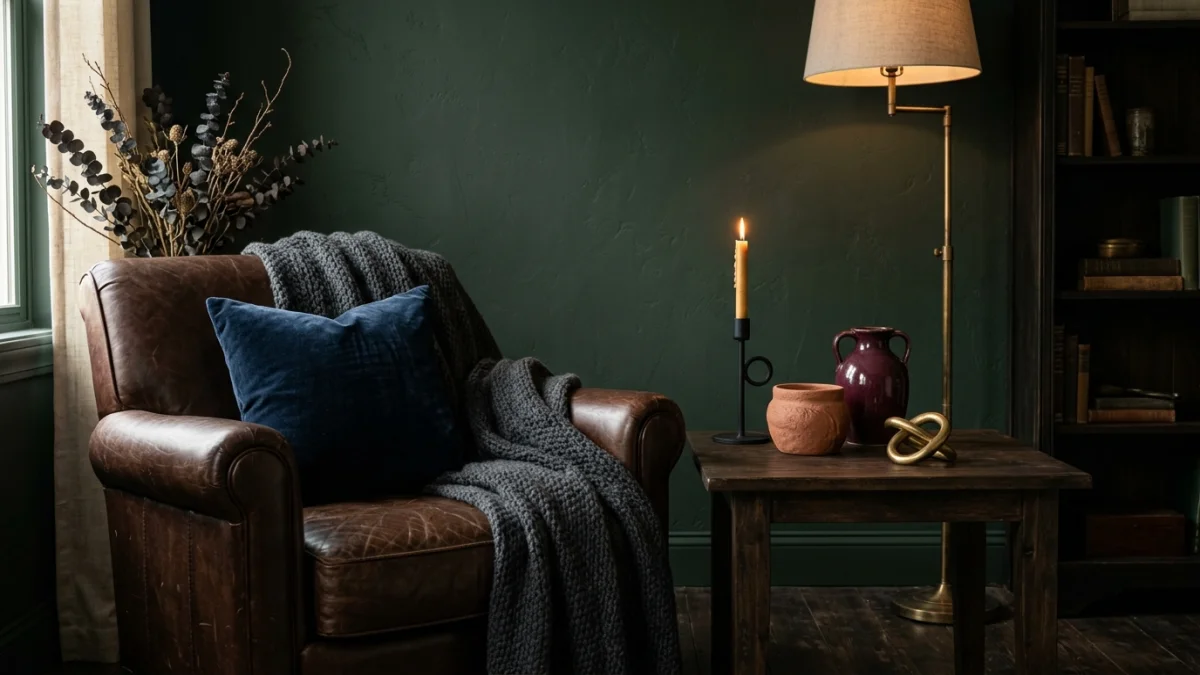
The formula, up front: pick a dark color with a warm undertone (deep green, chocolate, warm charcoal, midnight navy), paint everything including trim and ceiling, light the room with at least three or four separate warm sources at 2700K, mix at least three textures that catch light differently, and add two or three large plants. Do those five things and a dark room feels like a luxury hotel bar. Skip any one of them and it starts sliding toward basement. The rest of this guide unpacks each decision, with the exact paint colors designers use.
Hans Lorei of Hans Lorei Design captures the appeal: “I always want to feel something when I walk into a space and I believe it’s ok for some rooms to be darker.” That word, “feel,” is the whole point. Dark interiors are not about aesthetics alone. They are about creating rooms that produce an emotional response.
 FreeUpload photo · freeRedesign my room in dark, moody styleUpload a photo of your room and MeltFlex restyles it in dark, moody style, with furniture that fits the space. Your first AI design is free, no card needed.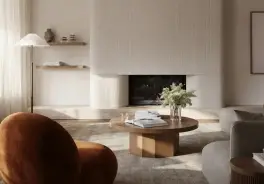
Why Dark Rooms Make You Feel Calm (the Science Behind It)
The appeal of dark interiors is not just taste. There is a real psychological mechanism at work.
A study published in the Journal of Environmental Psychology found that darker interior colors can create a surprisingly calming effect. The reason is straightforward: dark surfaces absorb light rather than reflecting it, which reduces the total amount of visual information your brain needs to process. In a world where we are constantly bombarded by bright screens, notifications, and artificial lighting, a dark room gives your nervous system permission to slow down.
Alicia Cheung of Studio Heimat in San Francisco goes deeper: “Perhaps it takes us all the way back, like to the womb. It’s embracing the darkness or lack of light, instead of feeling like it’s missing something.”
This is why dark rooms work so well as retreats. Bedrooms, reading nooks, home offices, bathrooms. Spaces where you want your brain to stop scanning and start resting. If you are interested in more on how room design affects your mood and sleep, our room by room design guides goes deep on the research.
The Dark Moody Color Palette for 2026
Not all dark colors are equal. The ones that work for interiors have warm undertones. The ones that fail are too cool, too flat, or too close to true black.
Here is the palette that professional designers keep coming back to:
- Deep forest green. The most popular dark color in 2026 interiors. It reads as rich and natural, works in any room, and pairs beautifully with brass and warm wood.
- Chocolate brown. Underrated and making a strong comeback. It is warm by nature, pairs with leather and natural stone, and creates a library or study feel instantly.
- Charcoal with warm undertones. Softer and more livable than black. Look for charcoals that pull slightly brown or green, not blue or purple.
- Midnight navy. Elegant and deep. Works especially well in bedrooms where you want a cocoon effect.
- Deep burgundy or wine. Bold but surprisingly easy to live with. Creates instant warmth and pairs well with all wood tones.
- Brass and gold as accent metals. Chrome and silver disappear in dark rooms. Brass catches warm light and creates the subtle glow that makes dark spaces feel alive.
If you want to skip the guesswork at the paint store, these are specific, widely available colors that designers reach for again and again. Every one of them has a warm or muted undertone that works under 2700K lighting:
Buy sample pots of two or three, paint A4-sized patches on two different walls, and look at them in the morning, at midday, and under your lamps at night. Dark colors shift more with light than any other paint category.
Nadia Watts, a designer based in Denver, explains why going all in works better than accent walls: “Dark colors, especially when color drenched by painting trim and ceilings the same color, ground a room. They make a space feel cozy and enveloping, which creates that sense of peace we are all looking for.” We cover that technique in depth in our color drenching guide.
This is a crucial point. A single dark accent wall often makes a room feel off balance because it creates a heavy visual anchor on one side. But when you paint everything (walls, trim, ceiling, even doors) the same dark tone, the boundaries of the room dissolve and the space actually feels more expansive and unified. If the door is where you want to start, our guide to black interior doors and how to preview them shows the effect on its own first. For more on how paint colors work in practice, see our paint color guide.
Dark and Moody, Room by Room
Living Room
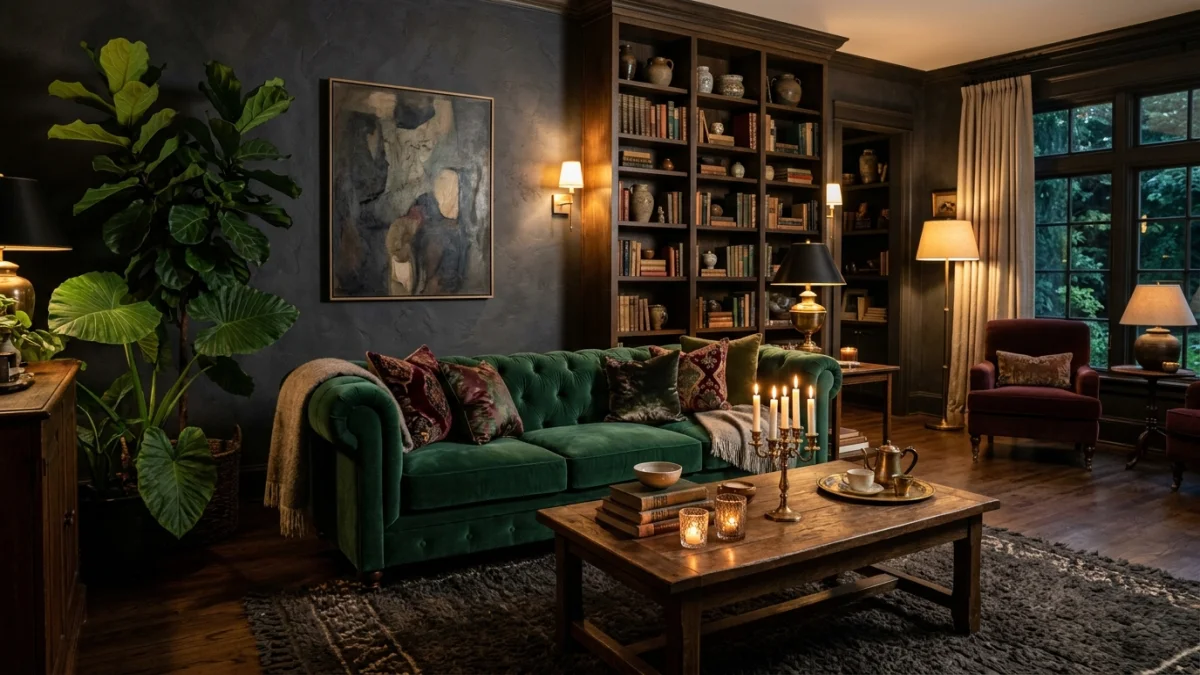
The moody living room is the signature room of this trend. It is where you can go boldest because living rooms are used in the evening when dark colors come alive under warm artificial light.
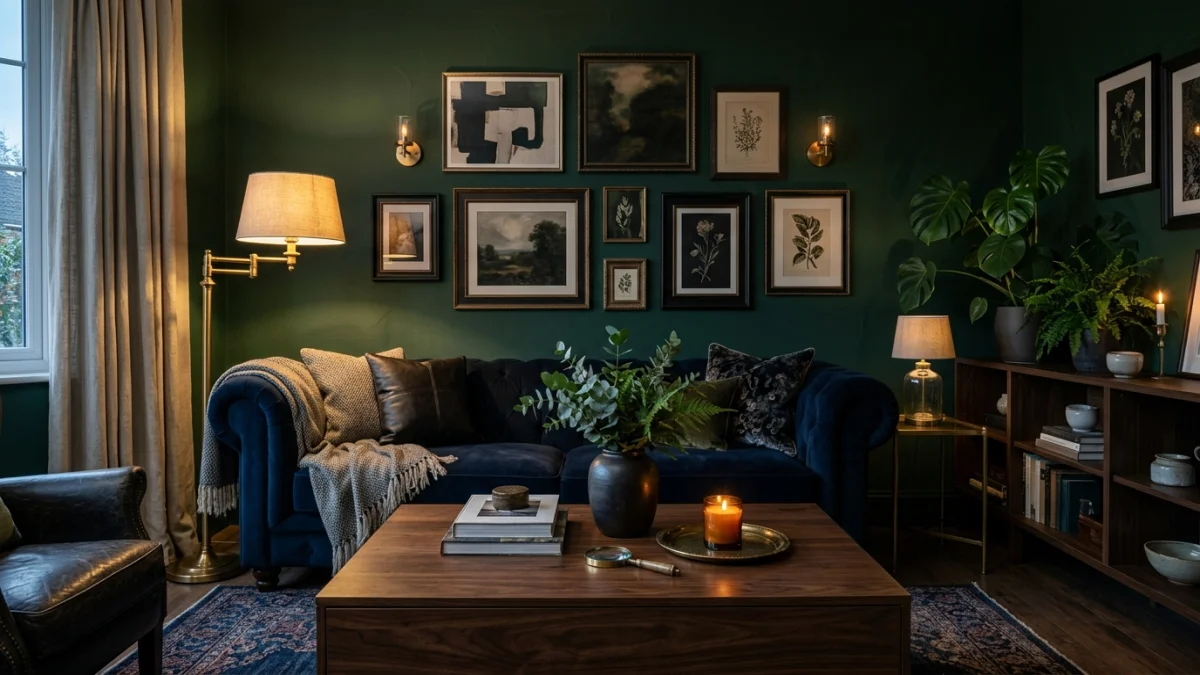
Start with walls in deep green or charcoal. Add a velvet sofa in a complementary dark tone (emerald, navy, or burgundy all work) and ground it with a textured rug in deep, mixed tones. Dark wooden bookshelves filled with actual books and a few ceramic pieces create instant character.
The lighting does the heavy lifting. Brass wall sconces, a statement pendant, table lamps at different heights, and candles scattered on surfaces. Each source creates a pocket of warmth and the shadows between them give the room its depth and drama.
Green plants are non negotiable. Large leafy plants (fiddle leaf fig, monstera, bird of paradise) provide the organic contrast that prevents a dark room from feeling heavy. The green reads as life against the dark backdrop. For more living room ideas, check our AI living room design prompts.
Bedroom
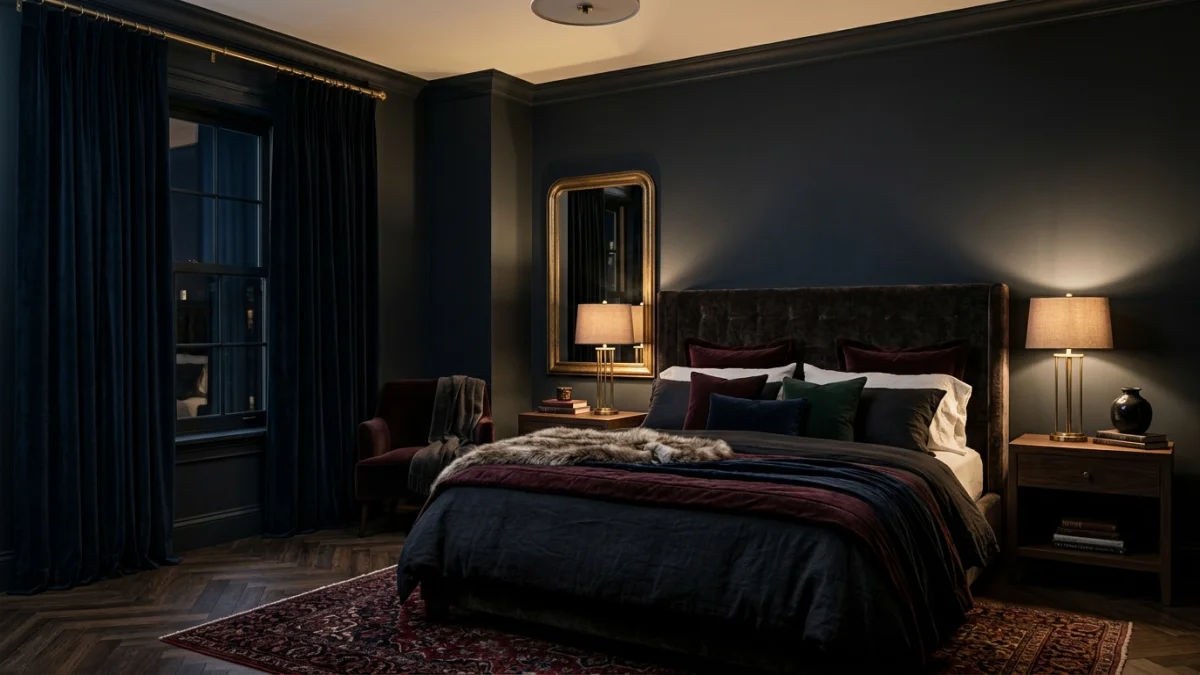
Dark bedrooms might be the best application of this entire trend. The science supports it: reducing visual stimulation and light exposure before sleep improves sleep onset and quality. A dark room is literally what your brain wants at night.
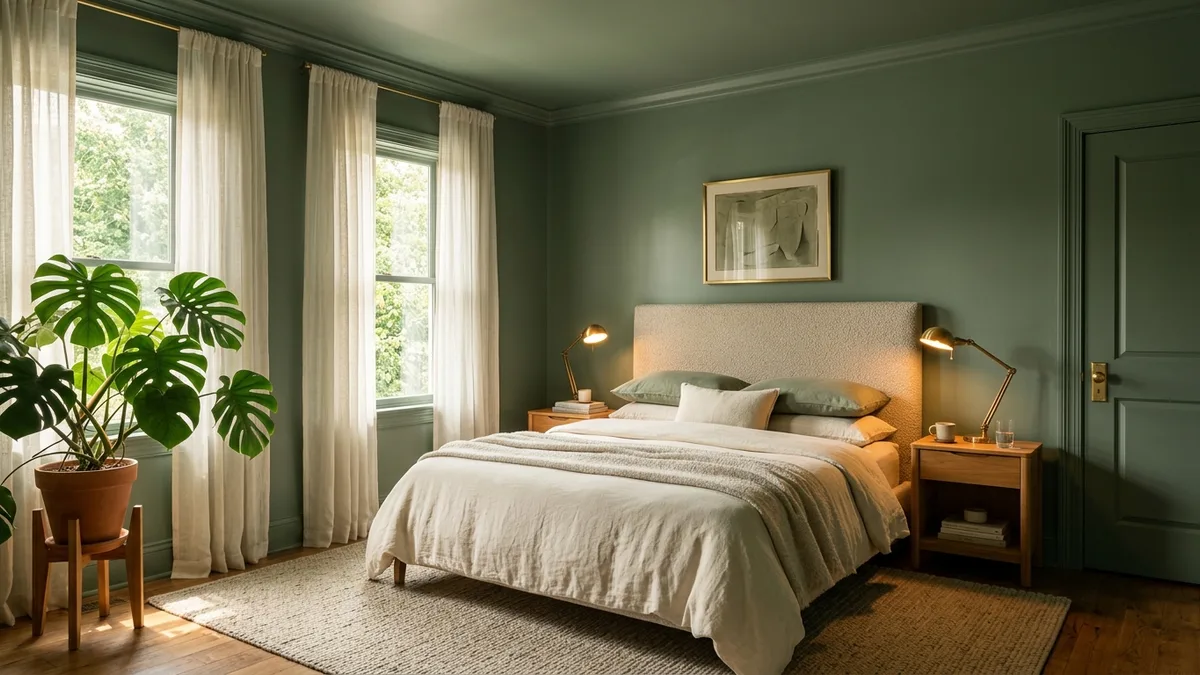
Midnight blue and deep charcoal are the strongest colors here. Paint everything, including the ceiling. Add a bed with a tall upholstered headboard in dark velvet for a focal point. Dress the bed in deep, rich tones (burgundy, forest green, or navy linen) and layer textures generously.
The bedside lamps should be the primary light source, not the ceiling fixture. Choose lamps with warm bulbs (2700K) and brass or dark metal bases. Warm metals like brass and bronze do a lot of the heavy lifting here, the same way they warm a hard industrial shell in our metal interior design guide. A large mirror with a brass frame reflects the lamp light around the room, preventing it from feeling closed in. For more bedroom ideas, see our bedroom design guide.
Bathroom
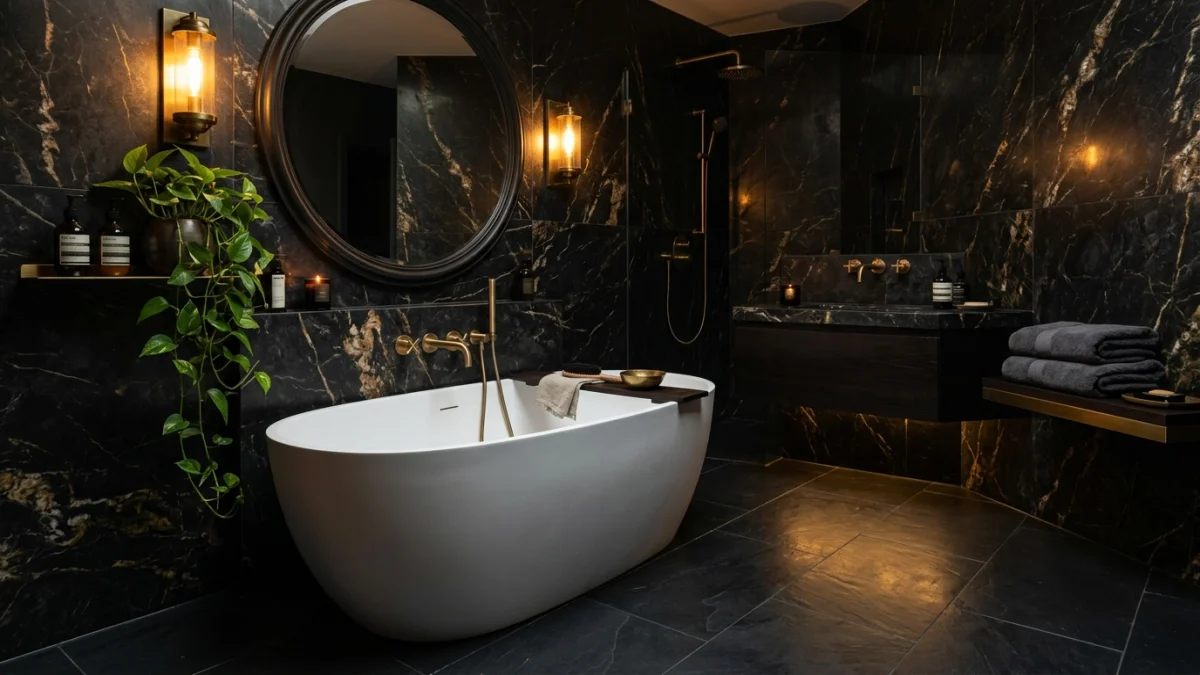
A dark moody bathroom creates an instant spa feeling that bright white tiles never achieve. The contrast between dark surfaces and warm light reflections produces the kind of atmosphere you experience in high end hotel bathrooms.
Dark marble, black tile, or deep terrazzo on walls and floor. Brass fixtures (faucet, towel bars, shower hardware) create warm highlights against the dark backdrop. If you have a freestanding bathtub, let it be the contrast point in white or soft cream against the darkness around it. A dark bathroom like this is also the easiest room to turn gothic for October: a velvet curtain, black florals and flameless candles, as in our gothic Halloween bathroom ideas.
Lighting here is all about wall sconces at face height (never overhead downlights, which create harsh shadows on your face and kill the mood). A trailing pothos or philodendron adds life. For more bathroom inspiration, see our bathroom design guide.
Home Office and Study
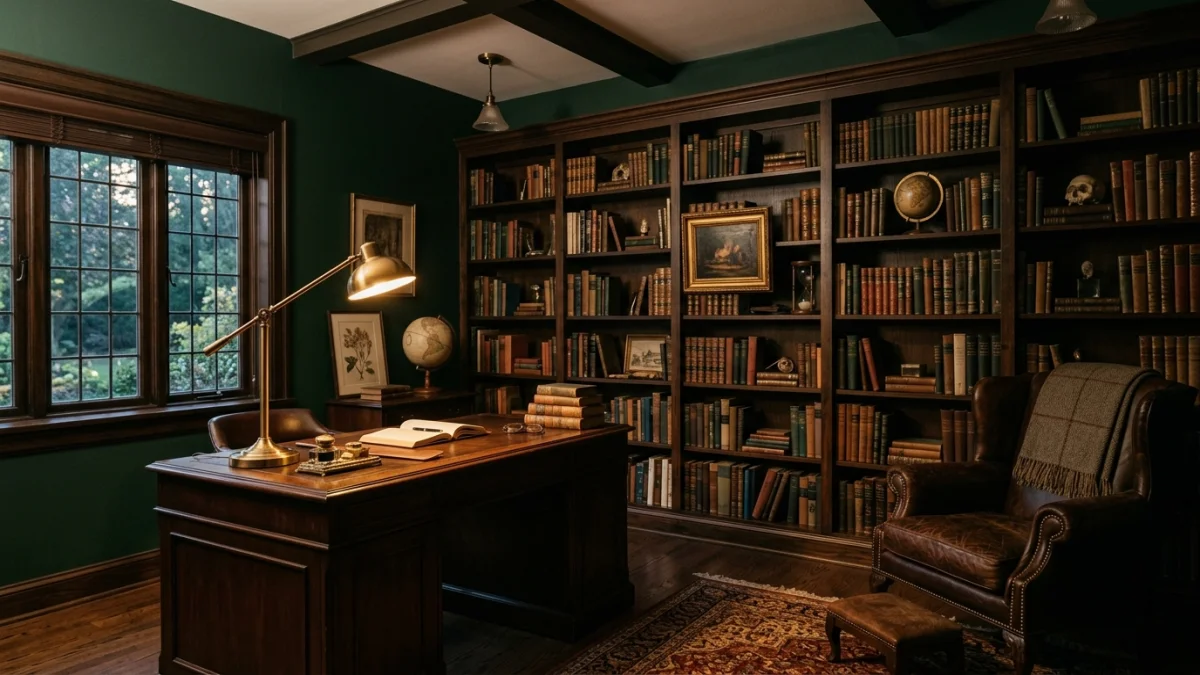
This is where dark moody design meets the dark academia aesthetic, and the result is a room that makes you actually want to sit down and think.
Deep forest green or chocolate brown walls. A large dark wooden bookcase that dominates one wall. A leather armchair or quality desk chair. A brass desk lamp that throws focused warm light onto your work surface. An oriental or vintage patterned rug adds complexity underfoot without visual chaos.
The psychology here is real. Dark surfaces reduce visual distractions, which paradoxically makes it easier to focus. Your brain has less environmental information to process, so more cognitive resources are available for actual work. For home office layout tips, see our room by room design guides.
Lighting: The One Thing That Makes or Breaks Every Dark Room
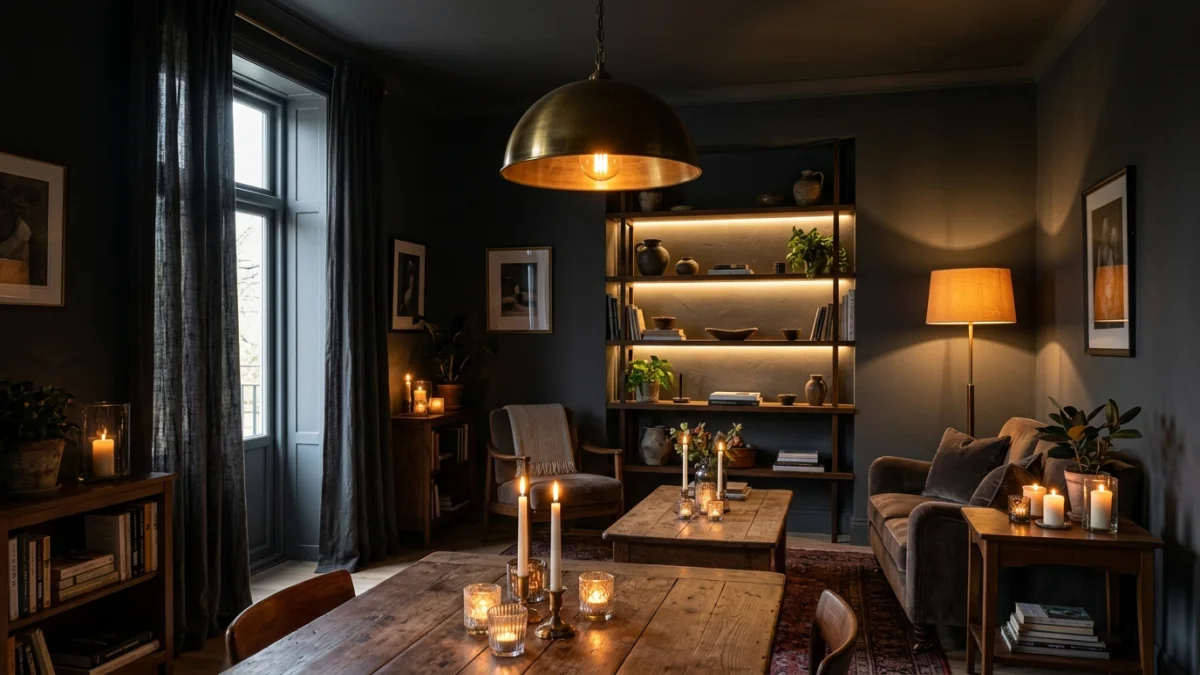
This is not an exaggeration: lighting is the difference between a dark room that feels like a luxury retreat and one that feels like a basement. If you get the color palette right but the lighting wrong, the whole room fails.
The rule is layers. Multiple sources, multiple heights, all warm.
- Layer 1: General ambient. A pendant lamp or chandelier provides the base. This should be on a dimmer so you can turn it down (or off entirely) in the evening.
- Layer 2: Mid level warmth. Table lamps and floor lamps at eye level or below. These create the pools of warm light that give a dark room its atmosphere. Brass or glass shades let light through and create glow.
- Layer 3: Accent and mood. Candles (real ones), an LED strip behind a shelf or mirror for subtle backlight, a picture light above artwork. These create depth and prevent dark walls from looking flat.
- Layer 4: Natural light. Do not block your windows. Dark curtains should frame the window, not cover it during the day. The interplay between natural daylight and dark walls is what makes moody rooms feel alive rather than gloomy.
Every bulb in the room should be 2700K to 3000K (warm white). A single cool white bulb will make the entire room look wrong. This is non negotiable.
Seven Mistakes That Make Dark Interiors Look Bad (and How to Avoid Them)
Denise Morrison of Morrison Interiors offers wise advice for beginners: “Start small by using moody shades in a powder bath or on an accent wall before going big. Pair them with warm, adjustable lighting to bring out the richness and depth of the color.”
Here are the mistakes that ruin dark rooms:
1. Only one light source. A single ceiling fixture in a dark room creates harsh downward shadows and makes the space feel like a cave. You need at least three to four separate sources of light.
2. Everything the same shade of dark. If your walls, furniture, rug, and curtains are all the same flat dark tone, the room looks two dimensional. Mix dark greens with navy. Pair charcoal walls with chocolate leather. Use brass and cream as relief. Variety within darkness creates richness.
3. No texture contrast. Matte wall plus matte fabric plus matte rug equals visual deadness. You need surfaces that interact with light differently. Velvet catches light. Brass reflects it. Matte walls absorb it. Wood grain scatters it. That interplay is what makes a dark room feel alive.
4. No greenery. Plants are the most important accessory in a dark room. Without something living and green, dark rooms feel lifeless. Two to three plants minimum. Large, leafy varieties have the most impact.
5. Cool white bulbs. Even one cool toned bulb (4000K+) will make a dark room look gray and institutional instead of warm and dramatic. Check every bulb in the room.
6. Too much matching furniture. A dark room where every piece of furniture is from the same set looks like a furniture showroom. Mix eras, materials, and sources. A vintage leather chair next to a modern velvet sofa next to a brass floor lamp tells a story.
7. Ignoring the ceiling. White ceilings in a dark room create a lid effect that makes the walls feel like they are closing in. Paint the ceiling the same color as the walls (or a shade lighter). This is what designers call color drenching and it is what makes dark rooms feel enveloping rather than enclosing. If you want to go further and make the ceiling the feature itself, our statement ceiling guide shows how.
Watch a Real Dark Moody Makeover, Start to Finish
Reading about layered lighting is one thing; watching a bright, flat living room turn into a moody space over a weekend makes the decisions click. This makeover walks through the paint, the lighting layers, and the texture choices in real time.
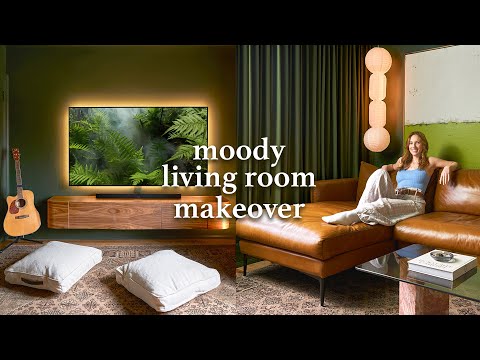
A full moody living room makeover from start to finish. Video by TheSorryGirls on YouTube.
See What Dark and Moody Looks Like in Your Room
The biggest barrier to going dark is fear. Fear it will look bad. Fear it will feel depressing. Fear you will spend money on paint and hate it.
Anand Sheth, architect and designer in San Francisco, suggests thinking beyond paint: “Bring the color into your home’s palette and add this color through as many materials as possible, not just paint. Think of tile, light fixtures, countertops, wallpapers, concrete sinks, enamel plumbing hardware, and colored glass.”
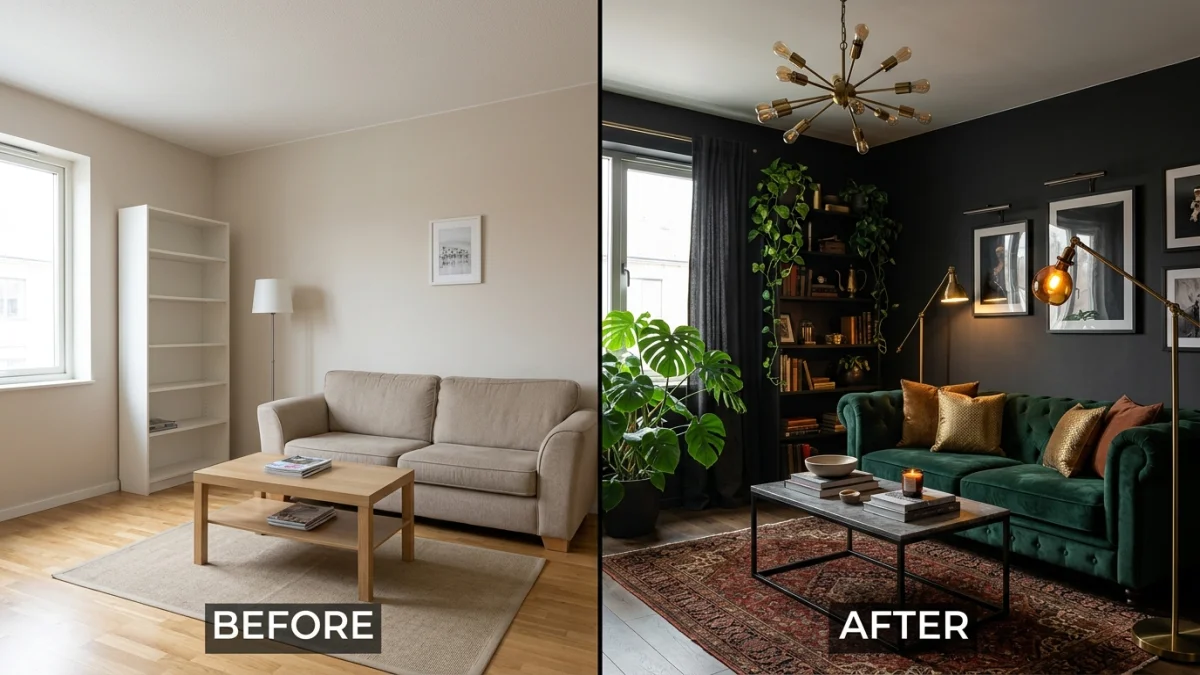
Before you commit to anything, upload a photo of your room to MeltFlex and see what dark moody looks like in your actual space. Try deep green, navy, charcoal, and chocolate brown. See how each one interacts with your floor, your window light, and your existing furniture. You can test more ideas in five minutes than you could with paint samples in a week.
Dark Is Not a Risk. Bad Lighting Is.
The design world spent a decade telling everyone to paint everything white. That era is ending. The rooms that feel the most like home in 2026 are the ones with depth, warmth, and a little drama.
Dark walls are not the risk. Bad lighting is the risk. Flat, textureless rooms are the risk. Going dark without a plan is the risk. But if you layer your lighting, vary your materials, add greenery, and commit to warm tones throughout, you will create a room that makes every guest ask “who designed this?”
Start with one room. A powder room or a bedroom. Test the colors in MeltFlex first. Then paint. Then light it properly. You will never go back to white.
For more design style inspiration, explore our guides on interior design styles, modern design ideas for 2026, accent wall ideas, and color of the year 2026. This deep, saturated palette peaks in autumn, so see it applied seasonally in our critical fall 2026 interior trends guide. Not sure dark and moody is your style at all? Our interior design style quiz narrows it down in ten questions.