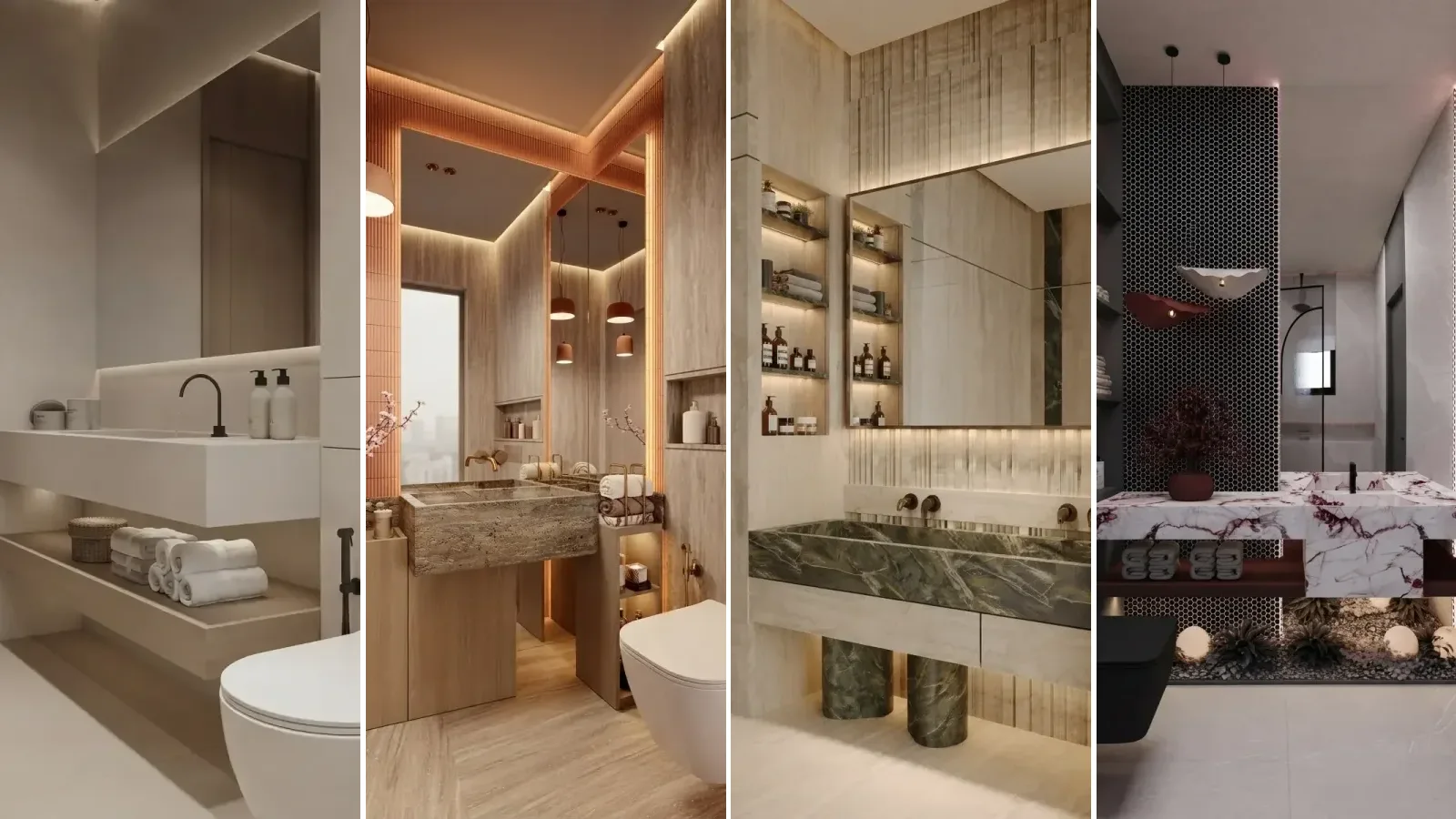
Renovating a bathroom is one of the most expensive home improvements you can make, and one of the hardest to undo. The average bathroom remodel costs between €8,000 and €15,000, yet nearly 30% of homeowners say they regret at least one design decision after the work is done.
Our articles are still written by humans!
Get human written articles in your Google feed.
The problem is almost always the same: people commit to tiles, fixtures, and layouts they have only seen in a catalog or a contractor's sketch. They cannot picture how it will actually look in their space until the grout is dry.
This guide covers 20 bathroom design ideas for 2026, from trending styles and smart layouts to material choices and color palettes. To make it real, we took one ordinary bathroom and redesigned it in 7 completely different styles using AI, so you can see what each trend actually looks like in a real room, not just a mood board. Every render below was made with our free AI bathroom design tool, so you can run the same experiment on a photo of your own bathroom before committing to a remodel.
FreeUpload bathroom photo · freeRedesign my bathroom for freeUpload a photo of your bathroom and MeltFlex redesigns the tiles, vanity and fixtures in the same room. Your first AI design is free, no card needed.
The Starting Point: One Bathroom, Seven Transformations
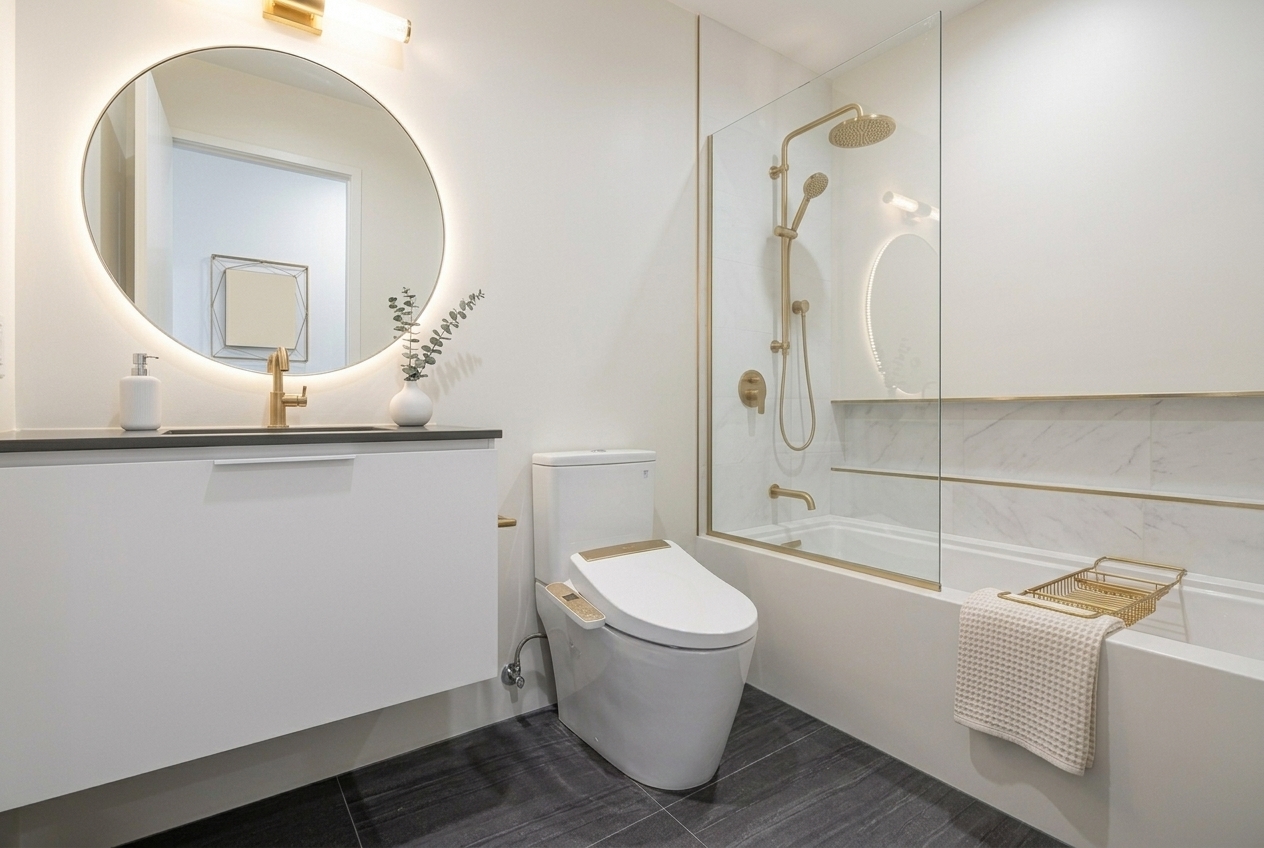
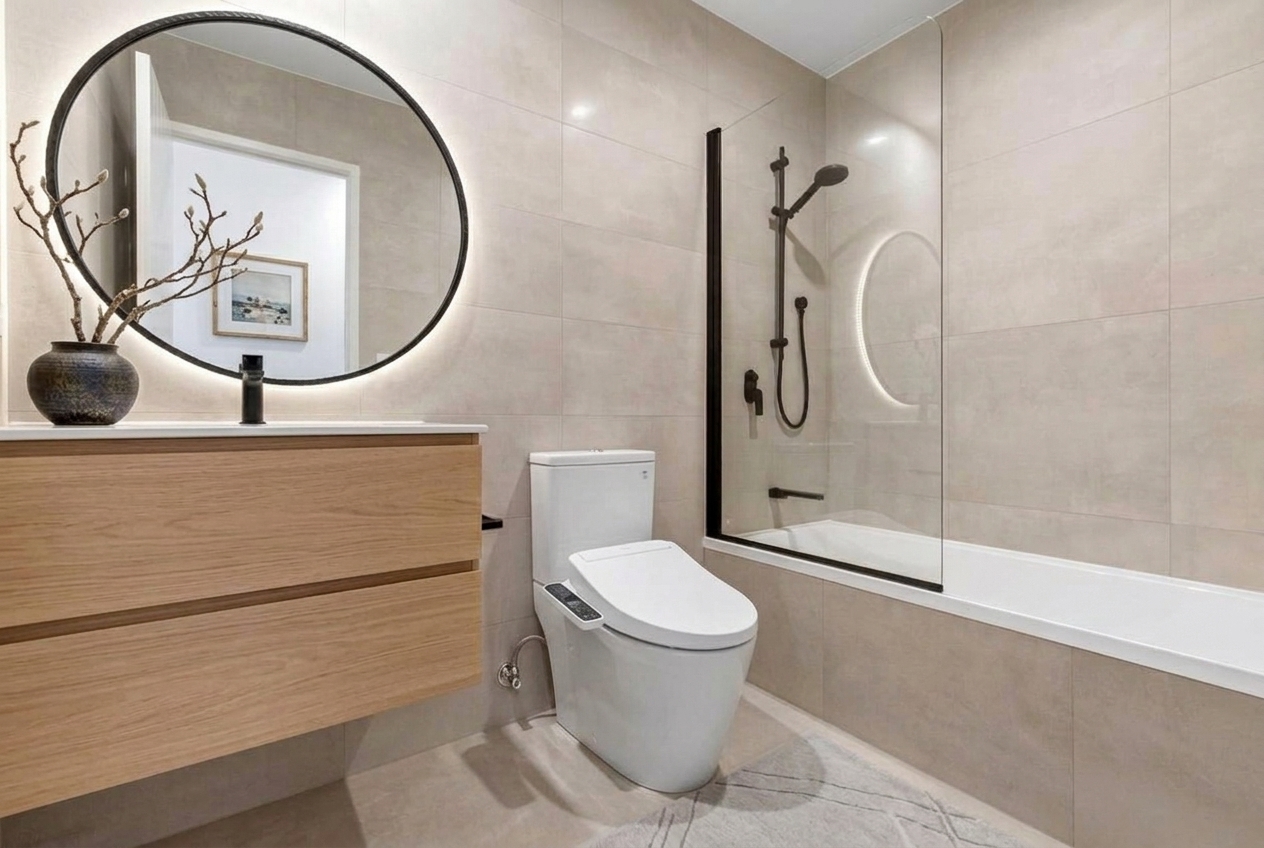
This is the bathroom we started with, a standard beige-tiled room with a white floating vanity, black fixtures, and a bathtub with glass screen. Clean and functional, but generic. The kind of bathroom you find in most new-build apartments.
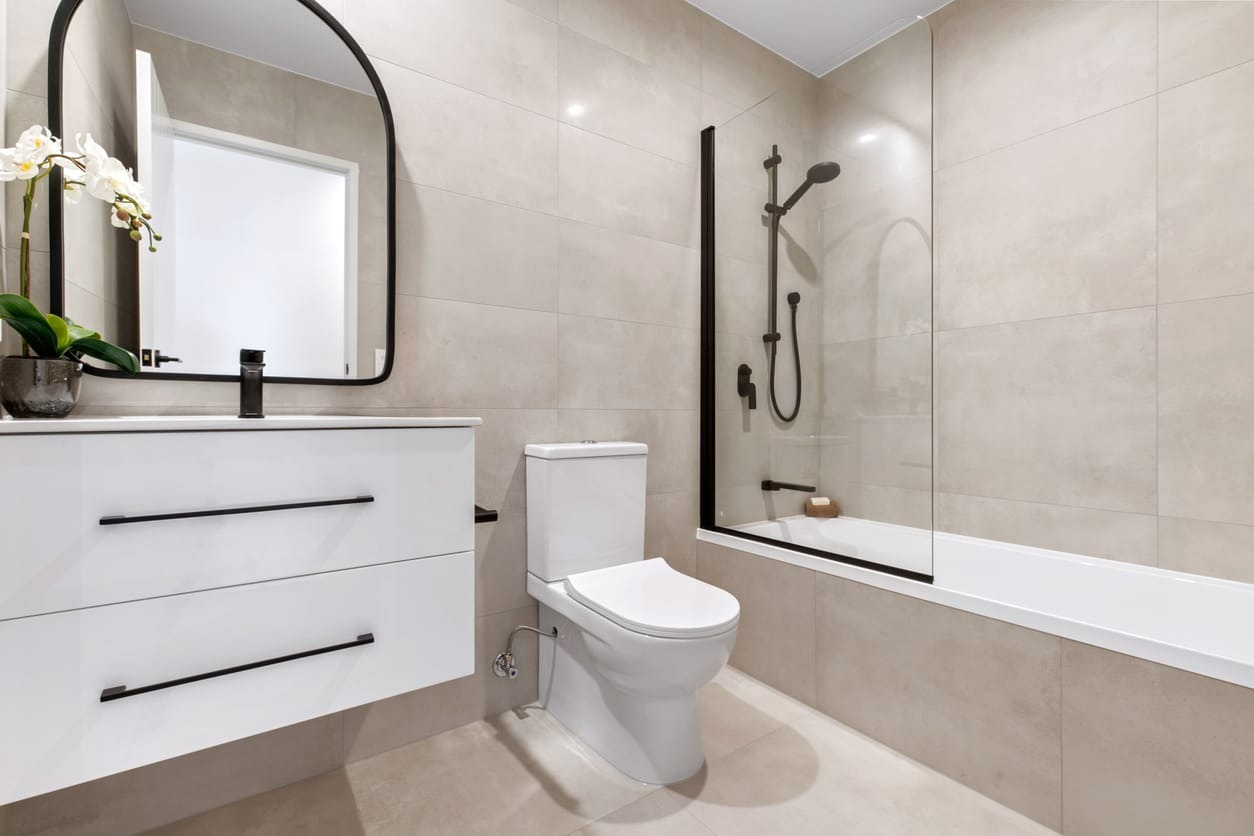
We uploaded this single photo to MeltFlex and asked the AI to redesign it in 7 different styles. Every render below is generated from this exact same room, same layout, same dimensions, completely different look. This is what AI bathroom visualization can do in under 30 seconds per style.
Bathroom Design Styles Trending in 2026
1. Scandinavian Warm Minimalism
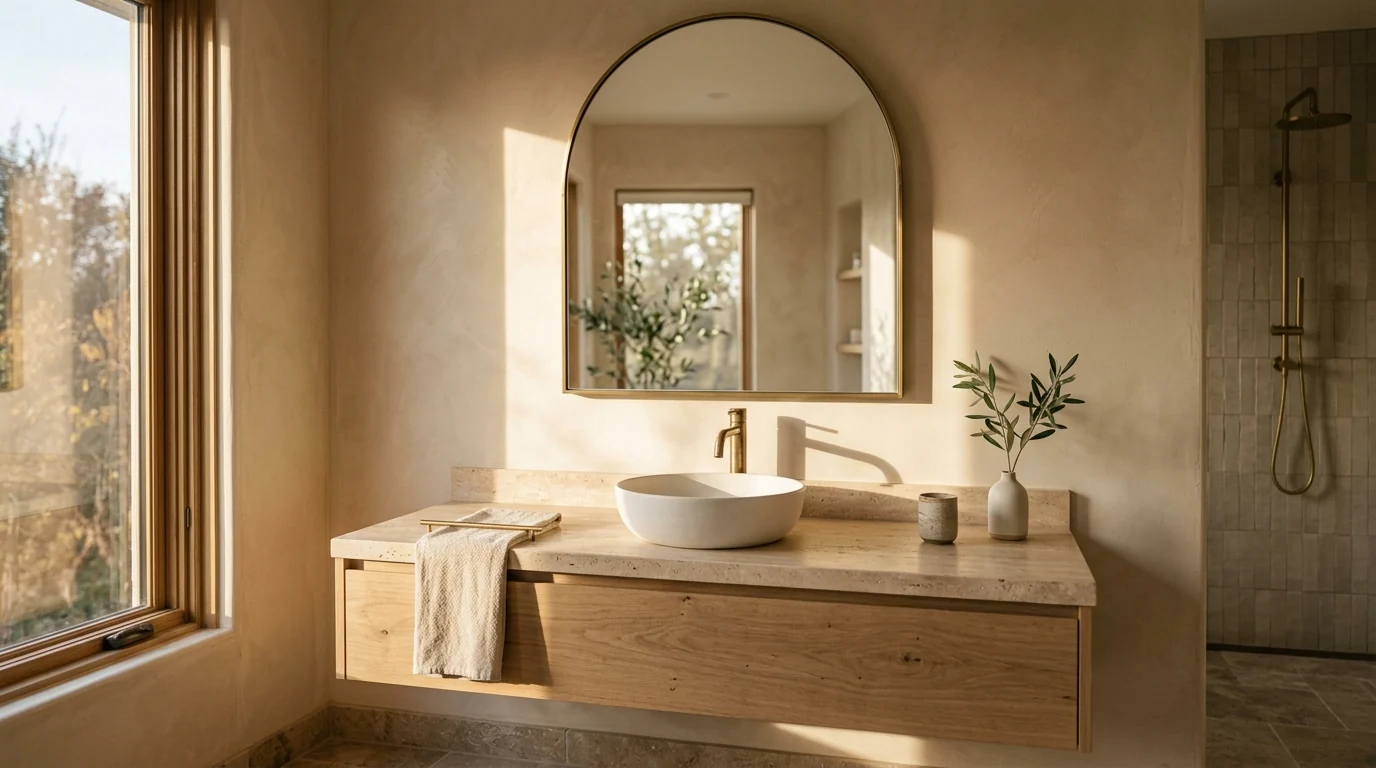
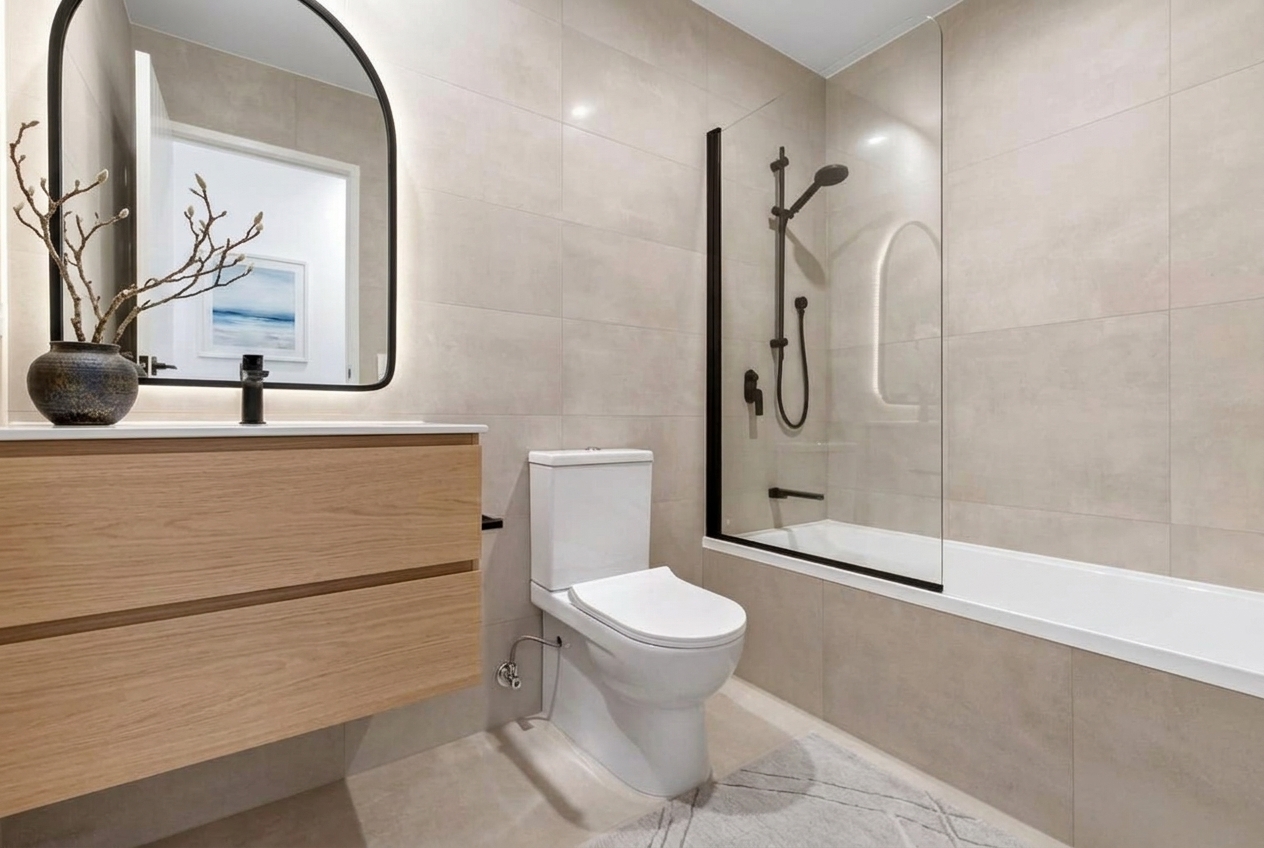
The dominant trend of 2026 takes clean lines and adds warmth through natural materials. Light oak vanity, warm beige tiles, matte black fixtures, and a backlit arched mirror, a combination our bathroom mirror ideas guide breaks down piece by piece. The key is restraint, every element earns its place, and the neutral palette creates a sense of calm.
This style works in any size bathroom and ages well, no trendy colors to regret in three years. Notice how the same room feels more refined with just a material upgrade on the vanity and a curated shelf arrangement.
2. Modern Minimalist with Dark Floors
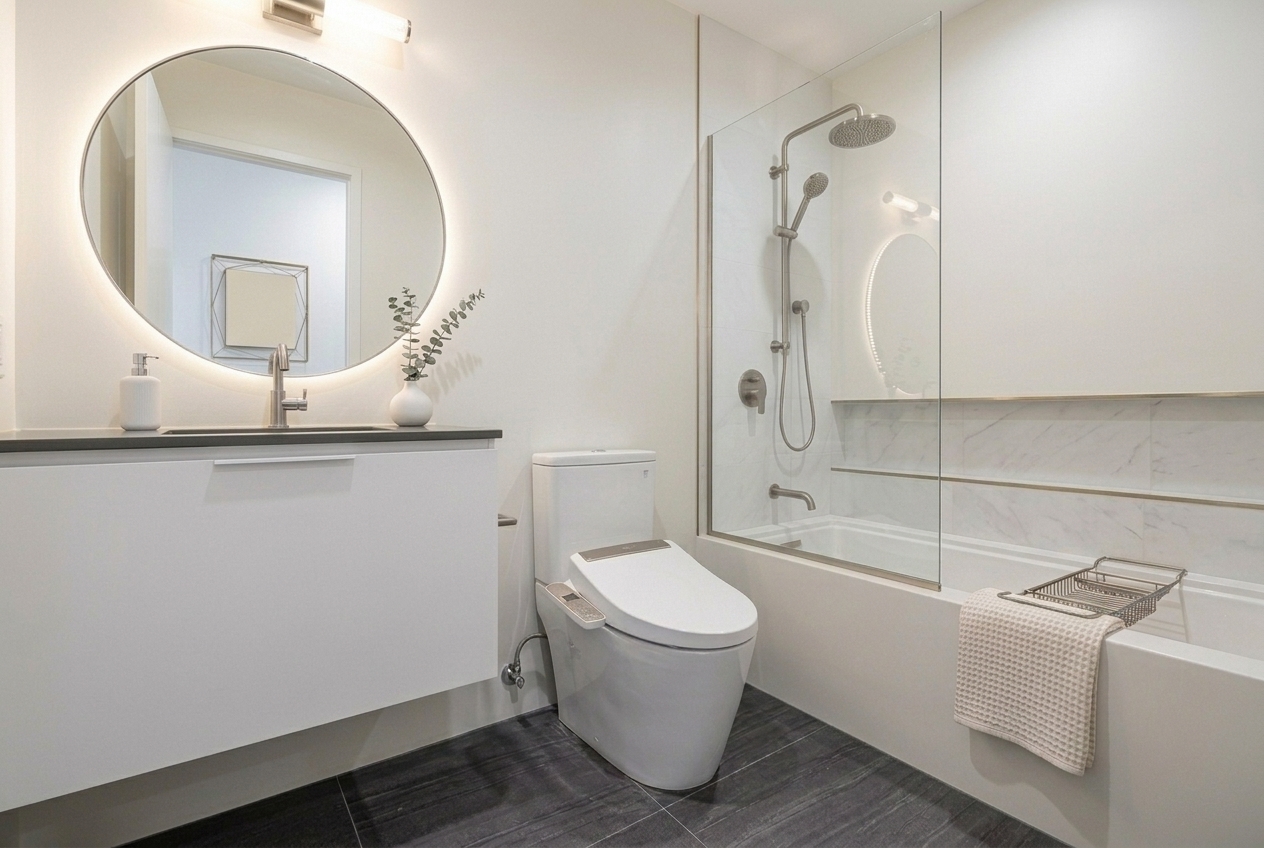
White walls and marble accents paired with dark charcoal floor tiles create a striking contrast. Silver fixtures, a round backlit mirror, and a clean white vanity with dark countertop keep everything sharp and contemporary. The dark floor anchors the room while the white upper half feels spacious.
This palette is popular in urban apartments where the bathroom doubles as a personal retreat. The minimal decor, a single eucalyptus stem, a white soap dispenser, is intentional, not empty.
3. Spa-Inspired Luxury with Brushed Gold
The same room with brushed gold fixtures instead of silver transforms into a luxury hotel bathroom. Gold taps, gold shower rail, gold-framed glass screen, and warm LED backlighting on the mirror. The marble shower niche with gold trim adds a designer touch that looks far more expensive than it is.
The cost difference between silver and gold fixtures is typically only €200–€500, but the perceived value increase is enormous, especially for resale. A well-executed gold-and-white bathroom can return 60–70% of its renovation cost when selling.

4. Bold Color: Deep Green with Brass Accents
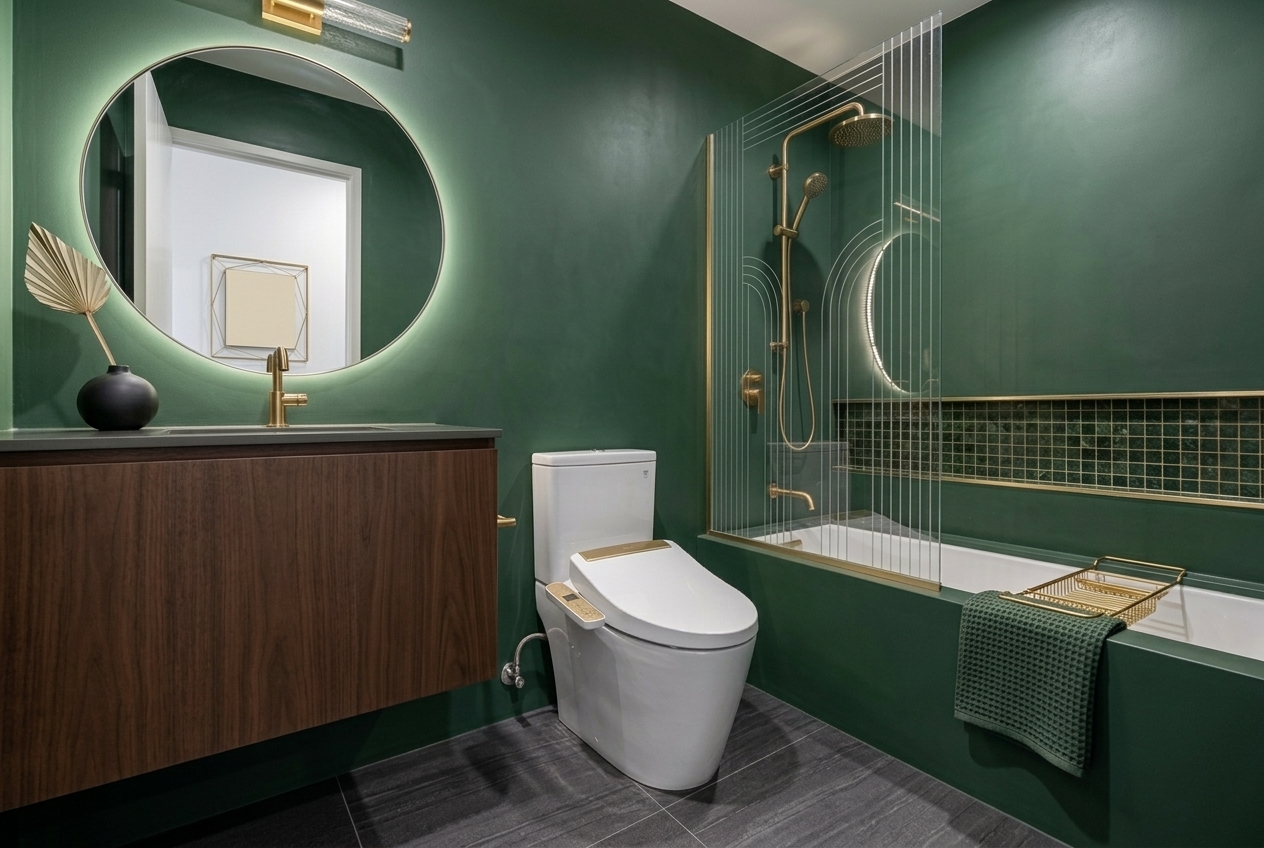
After years of all-white bathrooms, color is back. This transformation shows deep green walls paired with a walnut wood vanity and brushed brass fixtures. The green mosaic tile niche in the shower area and a reeded glass screen add texture and depth.
This is where AI visualization becomes essential, seeing dark green on your actual walls versus a tiny paint swatch in a showroom are completely different experiences. The AI render shows exactly how the color interacts with your lighting, floor, and room proportions.
5. Green Marble Statement
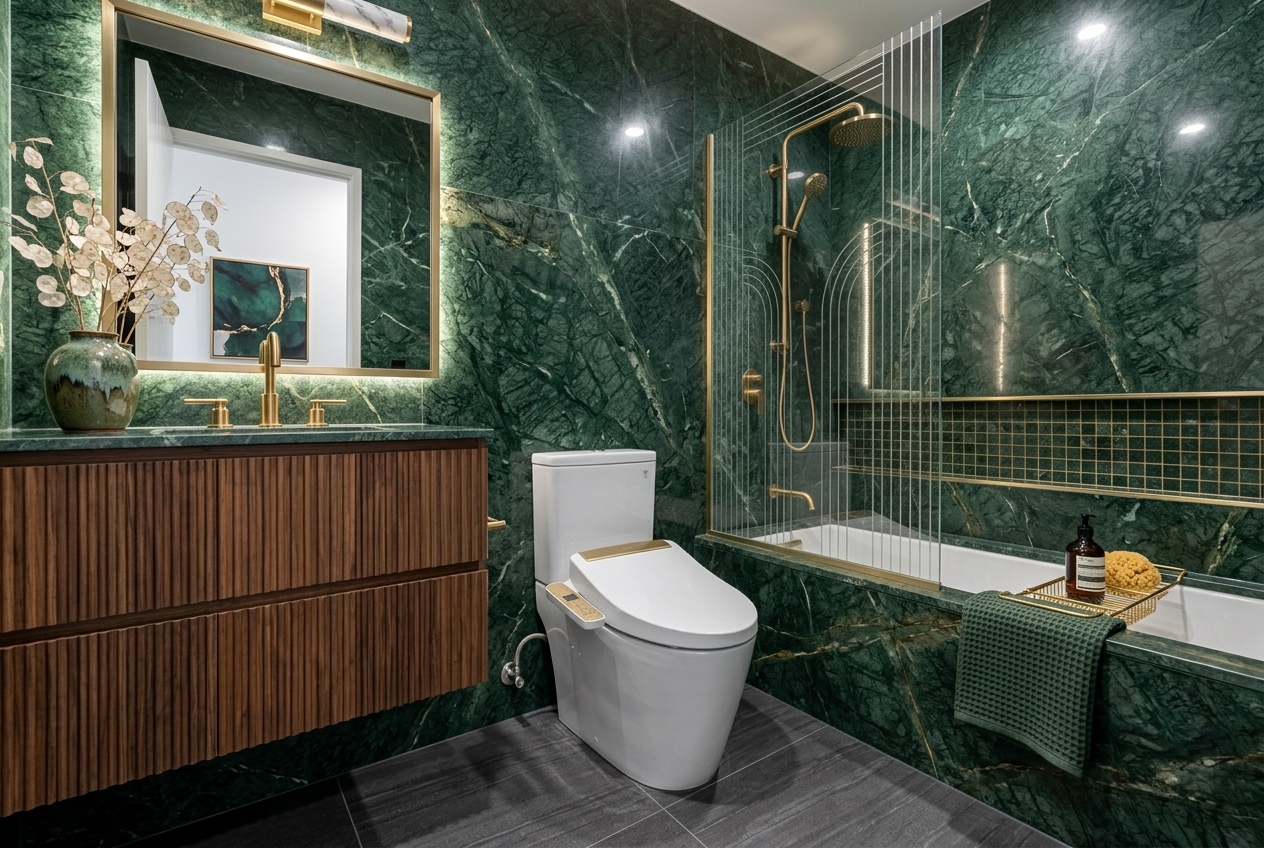
For maximum drama, full green marble walls create a bathroom that looks like a five-star hotel. The veined marble pattern covers walls and vanity top, paired with a fluted walnut vanity front and gold fixtures. A rectangular gold-framed mirror replaces the round one for a more traditional luxury feel.
Full natural marble is expensive (€80–€200/m²), but the same look is achievable with marble-effect porcelain tiles at a fraction of the cost. The AI render helps you decide if the bold commitment is worth it, before ordering a single slab.
6. Japandi: Japanese Minimalism Meets Scandinavian Function
A fusion of Japanese and Scandinavian aesthetics. Warm beige tiles, a light oak vanity with clean lines, matte black fixtures, and natural decor, dried branches in a ceramic vase, a small watercolor print. The round backlit mirror adds softness to the angular room.
Japandi is about deliberate empty space. The vanity surface is almost bare, the walls are unadorned, and the color palette stays within three tones. It is calming, timeless, and works particularly well in small bathrooms where clutter kills the atmosphere.
7. Coastal Fresh with Color
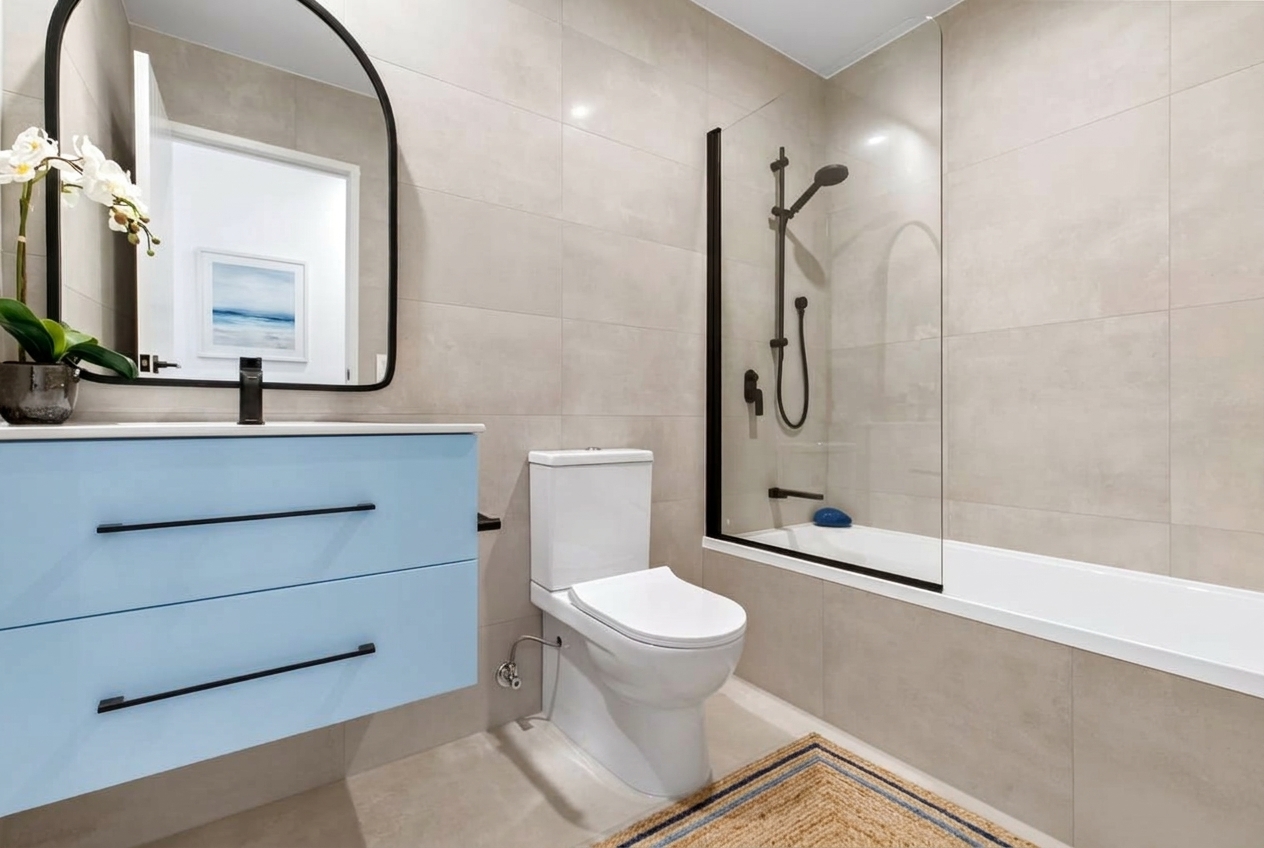
The most playful transformation: a sky-blue vanity with matte black hardware, paired with the same beige tile walls. A woven jute rug, orchid plant, and ocean-themed artwork complete the coastal vibe. This proves you do not need to retile an entire bathroom to change its personality, sometimes a colored vanity and the right accessories are enough.
This is the cheapest renovation of all seven styles. Replace the vanity front panels (or paint them), add a rug and plant, swap the artwork, under €500 total for a completely different mood.
Bathroom Layouts That Maximize Every Square Meter
8. The Wet Room (Best for Small Bathrooms)
A wet room removes the shower enclosure entirely, the entire floor is waterproofed with a gentle slope toward a linear drain. This eliminates the visual barrier of a shower screen and makes even a 3-square-meter bathroom feel open.
Cost is comparable to a standard shower installation, but waterproofing must be done correctly. Plan the drain position and floor slope digitally before tiling, mistakes here are extremely expensive to fix.
9. L-Shaped Layout
Place the vanity and toilet along one wall, and the shower or bathtub along the perpendicular wall. This creates a natural separation between wet and dry zones without needing a partition. Works well in rectangular bathrooms (2m x 3m and larger), exactly like the room in our examples.
10. Galley Bathroom
For narrow, elongated spaces (common in apartments), line up all fixtures along one wall: sink, toilet, shower, in that order from the door. Keep the opposite wall clear with just a mirror and towel hooks. A large mirror on the clear wall doubles the visual width.
11. Corner Shower + Floating Vanity
The space-saving champion. A neo-angle or quadrant shower enclosure in the corner, a wall-hung vanity (no legs touching the floor), and a wall-mounted toilet. This layout can fit a fully functional bathroom into as little as 2.5 square meters.
Not sure if it fits? Upload your floor plan to MeltFlex and test the exact dimensions in 3D before calling a plumber.
Materials and Surfaces
12. Large-Format Tiles (Fewer Grout Lines)
The trend toward bigger tiles (60x120cm and 120x120cm) continues because fewer grout lines create cleaner, more modern surfaces and are easier to clean. You can see this in our beige-tiled original, the large format tiles make the compact room feel more spacious than it is.
13. Natural Stone vs. Porcelain
Full natural stone is expensive (€80–€200/m²), but using it selectively, a marble vanity top, a travertine shower niche, or a stone basin, creates a luxury feel without the full cost. Compare our green marble render (full stone) with the spa-gold render (marble accents only in the niche), both look premium, but the cost difference is significant.
14. Wood-Look Porcelain for Warmth
Real wood in a bathroom is a maintenance nightmare. Wood-look porcelain tiles give you the warmth and texture of oak or walnut with zero water damage risk. Our Japandi and Scandinavian renders use wood-fronted vanities, the warm wood against cool tiles is what makes those styles feel inviting rather than clinical.
Fixtures That Transform a Bathroom
15. Floating Vanity (Every Style Needs One)
Every single one of our seven redesigns uses a floating vanity, because it works. A wall-mounted vanity exposes the floor underneath, making the room feel larger and cleaning easier. The style difference comes from the material: white gloss (minimalist), oak (Japandi), walnut (bold), or colored (coastal).
16. Mirror Shape Sets the Tone
Notice how the mirror changes the entire mood. Round backlit mirrors (minimalist, spa, Japandi) feel modern and soft. The arched mirror (original, coastal, Scandinavian) feels more traditional. The rectangular gold-framed mirror (green marble) feels luxurious. Changing just the mirror is one of the cheapest ways to update a bathroom's style.
17. Fixture Finish: The €300 Upgrade That Changes Everything
Compare our silver fixtures (minimalist) with gold fixtures (spa, bold green, green marble). The room layout is identical, but the perceived value jumps dramatically. Matte black (Scandinavian, Japandi, coastal) feels modern and crisp. Brushed gold feels luxurious. Chrome feels clean. Pick one finish and use it everywhere, taps, shower, towel rail, toilet flush.
18. Backlit Mirrors and Recessed Niches
LED backlighting behind the mirror appears in almost every modern bathroom design, it provides even, flattering light for grooming and creates ambient glow in the evening. A recessed niche in the shower wall (visible in our spa-gold and green marble renders) replaces clunky shower caddies and looks built-in.
Color Palettes That Work
19. The Safe Choice: Warm Beige + Oak + Black
Our Scandinavian and Japandi renders prove this combination works perfectly. Warm beige tiles, oak vanity, matte black fixtures. It appeals to everyone, including future buyers, and never dates. If you are renovating to sell, this is the palette.
20. The Bold Choice: Deep Green + Walnut + Brass
Our bold green and green marble renders show what happens when you commit to color. It is dramatic, memorable, and photogenic. The walnut vanity grounds the green, and brass fixtures add warmth. This is a statement bathroom, not for everyone, but unforgettable for those who choose it.
Not sure which palette works in your space? Upload a photo of your bathroom to MeltFlex and generate renders in different color schemes, see the actual result before buying a single tile.
How to Visualize Your Bathroom Renovation with AI
Every render in this article was generated from one photo in under 30 seconds. Here is how you can do the same for your bathroom:
- Upload a photo of your current bathroom, even if it is old and dated
- Type a style prompt, e.g., "modern spa bathroom with gold fixtures and marble niche"
- Get a photorealistic render, the AI redesigns your actual room, not a generic template
- Test variations, different tiles, colors, vanity styles, fixture finishes
- Share with contractors, show exactly what you want instead of describing it
This is free with MeltFlex. Upload your bathroom photo, try every style in this article, and decide before you spend a single euro on materials.
Bathroom Renovation Checklist
- Measure everything, room dimensions, window positions, pipe locations, door swing
- Set a realistic budget, add 15–20% buffer for unexpected issues (hidden water damage, old pipes)
- Plan the layout first, moving plumbing is the most expensive change, so finalize fixture positions early
- Choose tiles before fixtures, tiles set the overall look; fixtures complement them
- Visualize with AI, test your design in MeltFlex before ordering materials
- Waterproofing is non-negotiable, budget for proper tanking, especially in wet rooms
- Think about ventilation, a good extractor fan prevents mold and extends the life of every surface
- Lighting matters more than you think, plan task lighting (mirror), ambient lighting (ceiling/LED strips), and accent lighting (niche)
Start Designing Your Bathroom
Upload a photo of your bathroom to MeltFlex and see your renovation before it happens, for free. Test every style from this article, compare color palettes side by side, and generate photorealistic renders in seconds. No contractors, no commitments, no regrets. One thing to settle before the styling though: the plan. Our guide to small bathroom layout dimensions has the IRC and NKBA clearances that decide whether a layout is buildable at all, and the small bathroom remodel guide has the twelve moves and the cost tiers once it is.
Picking the software first? We ran one dated bathroom through eleven of them in the best AI bathroom design tools, tested, with verified prices and every free tier.
Related guides: kitchen design ideas, AI living room design prompts, bedroom design ideas, interior design styles guide, and AI room makeover before & after.