Entryway Ideas: 4 Stunning Styles for Any Home (Real AI Before and After)
Your entryway is the first thing anyone sees when they walk into your home and the last thing they see when they leave. Despite that, it is one of the most neglected spaces in most homes. People spend weeks choosing a living room sofa but barely think about what greets them at the front door.
We took a real entryway with a staircase, hardwood floors, and a lot of untapped potential, and ran it through AI in four completely different design styles. The results were dramatic enough that we had to share them. Every piece of furniture below is real and available to purchase.
The Space We Started With
Here is the original entryway. A traditional foyer with an open staircase featuring iron balusters and wood treads. A wooden bench sits tucked under the stairs with a round mirror above, some framed art, and a vintage Persian rug on the floor. It is a nice space but it looks like it was decorated once and never revisited.
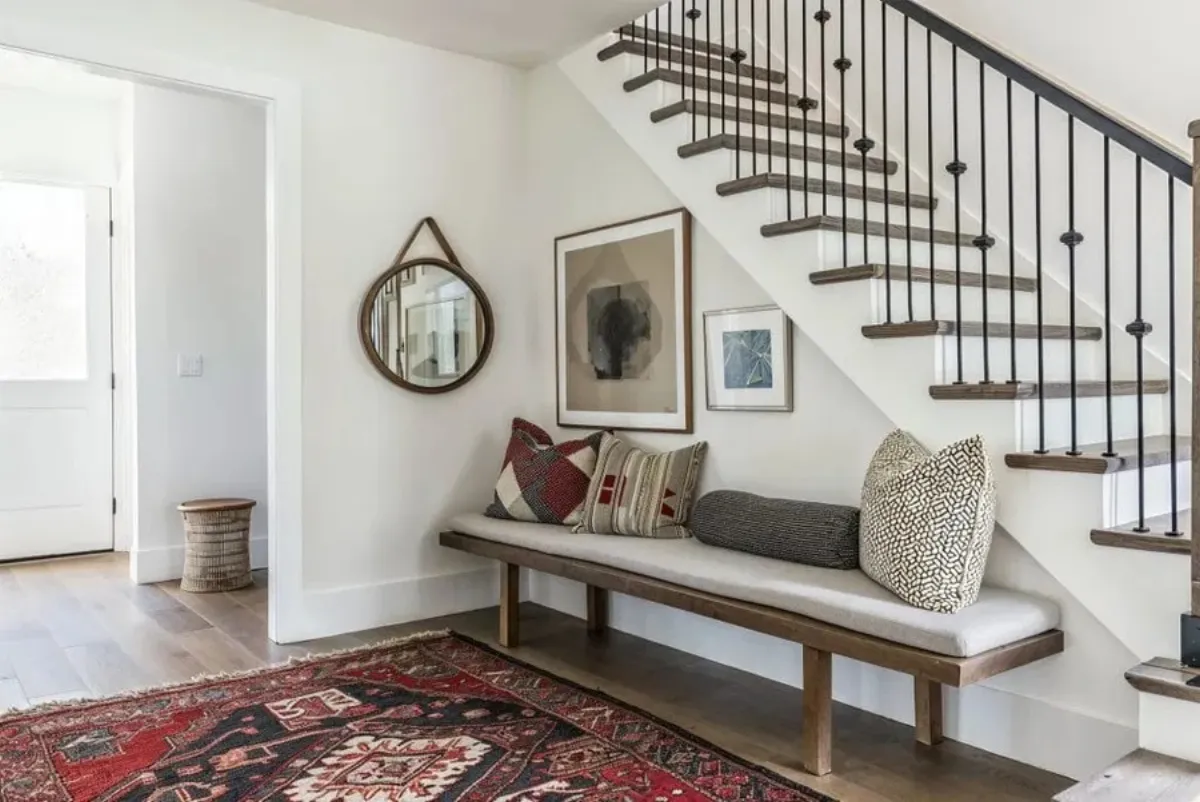
The bones are excellent. Good staircase proportions, natural light from the adjacent room, and warm hardwood floors. What it needs is a clearer design direction. Right now it tries to be traditional, slightly bohemian, and gallery like all at once.
Style 1: Japanese Zen Entryway
Japanese interior design is built on the principle of ma, the beauty of empty space. In a Japanese zen entryway, every object earns its place. There is no decoration for its own sake. Each piece serves a purpose or carries meaning.
The AI transformed this foyer into a serene zen space with a clean lined grey sofa, a low wooden tea table, a tatami style area rug, and Japanese calligraphy art replacing the gallery wall. A stone and pebble arrangement near the door brings a touch of zen garden indoors.
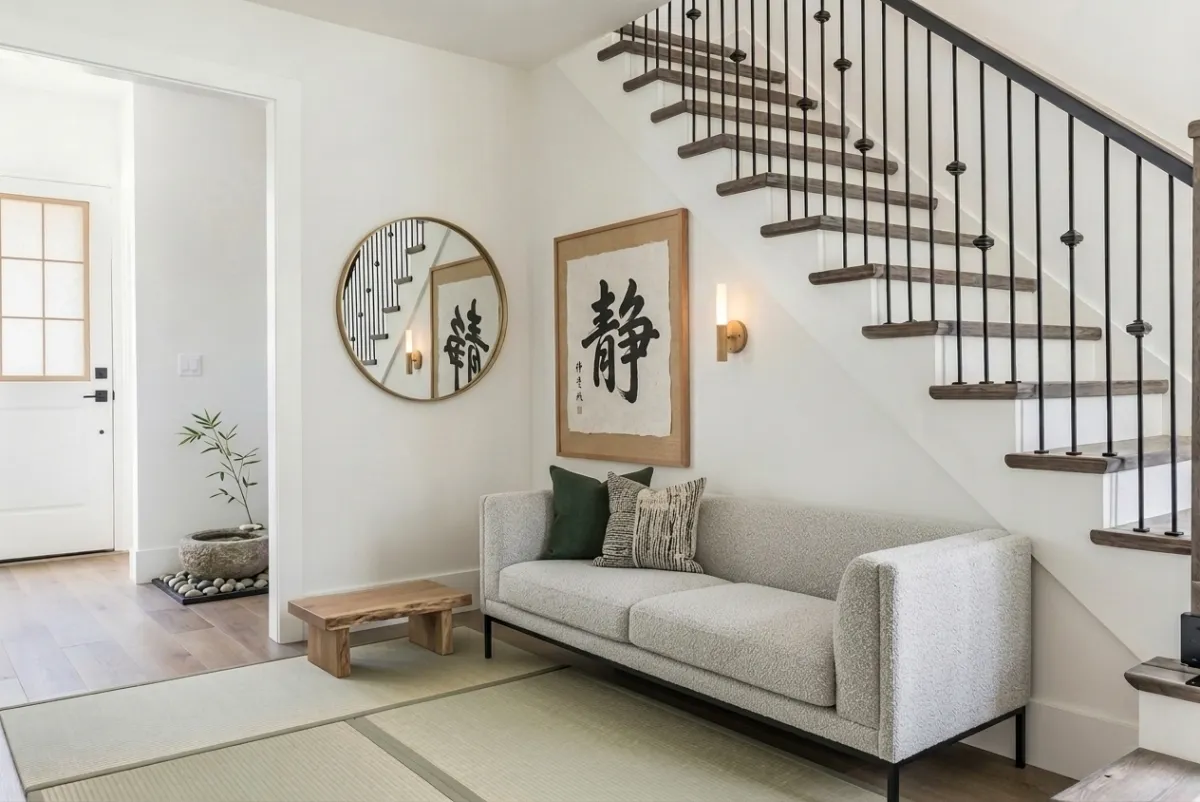
What makes this work is the restraint. The color palette is limited to warm whites, soft greys, natural wood, and green from a single plant. The calligraphy creates a focal point the moment you walk in. This style works particularly well in entryways because it immediately communicates calm. You step inside and the energy of the outside world drops away.
Style 2: Japanese Zen With Functional Storage
If you love the zen aesthetic but need your entryway to actually store things, this version solves that problem. The AI replaced the sofa with a traditional Japanese tansu chest, a wooden storage cabinet with iron hardware. The calligraphy art and round mirror stay, but now the under staircase area serves double duty as a design statement and functional storage.
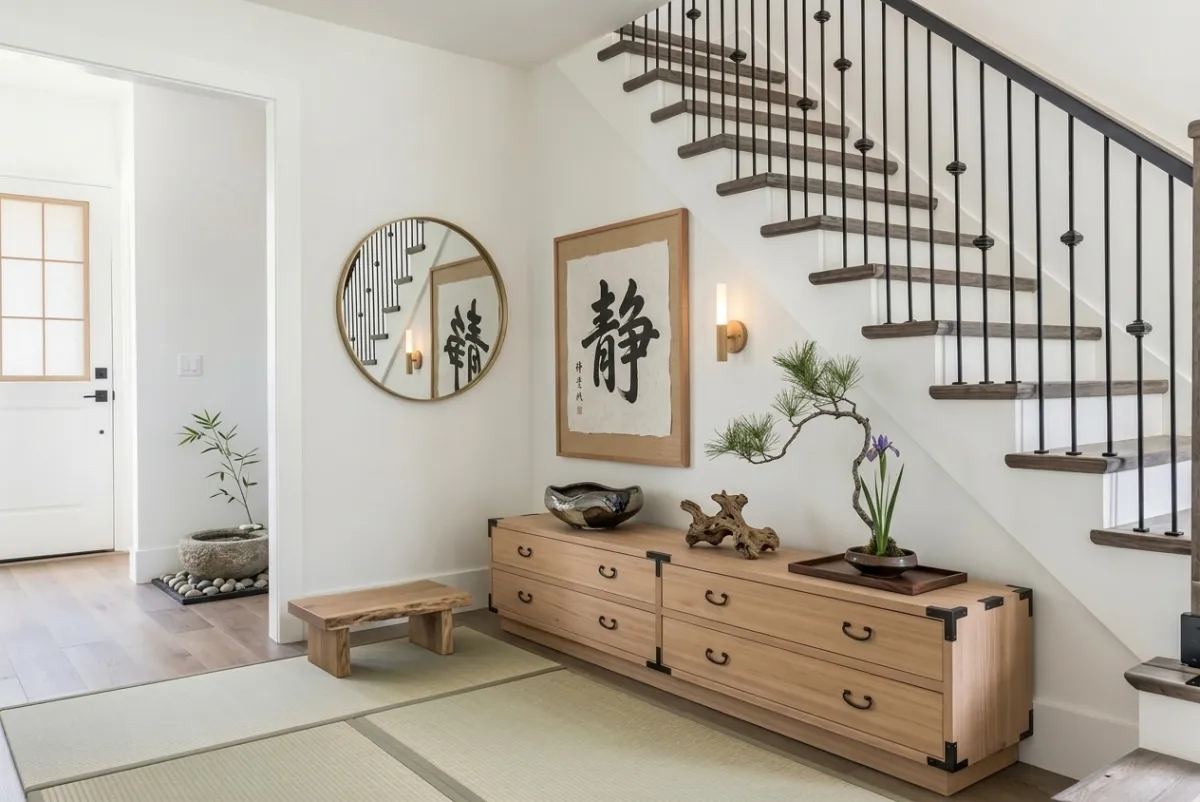
The tansu chest provides six drawers of hidden storage for shoes, scarves, keys, and all the practical items that accumulate near a front door. On top, ikebana flower arrangements and a small bonsai add life without clutter. A bronze ceramic bowl serves as a landing spot for keys and wallets. This version proves that Japanese design and practical living can coexist. You get the serenity and the storage.
Style 3: Modern Minimalist Entryway
Modern minimalism strips everything back to essentials and then makes those essentials look incredible. In an entryway, this means one perfect console table, one carefully chosen piece of art, one mirror, and almost nothing else. The quality of each individual item has to be exceptional because there is nowhere to hide.
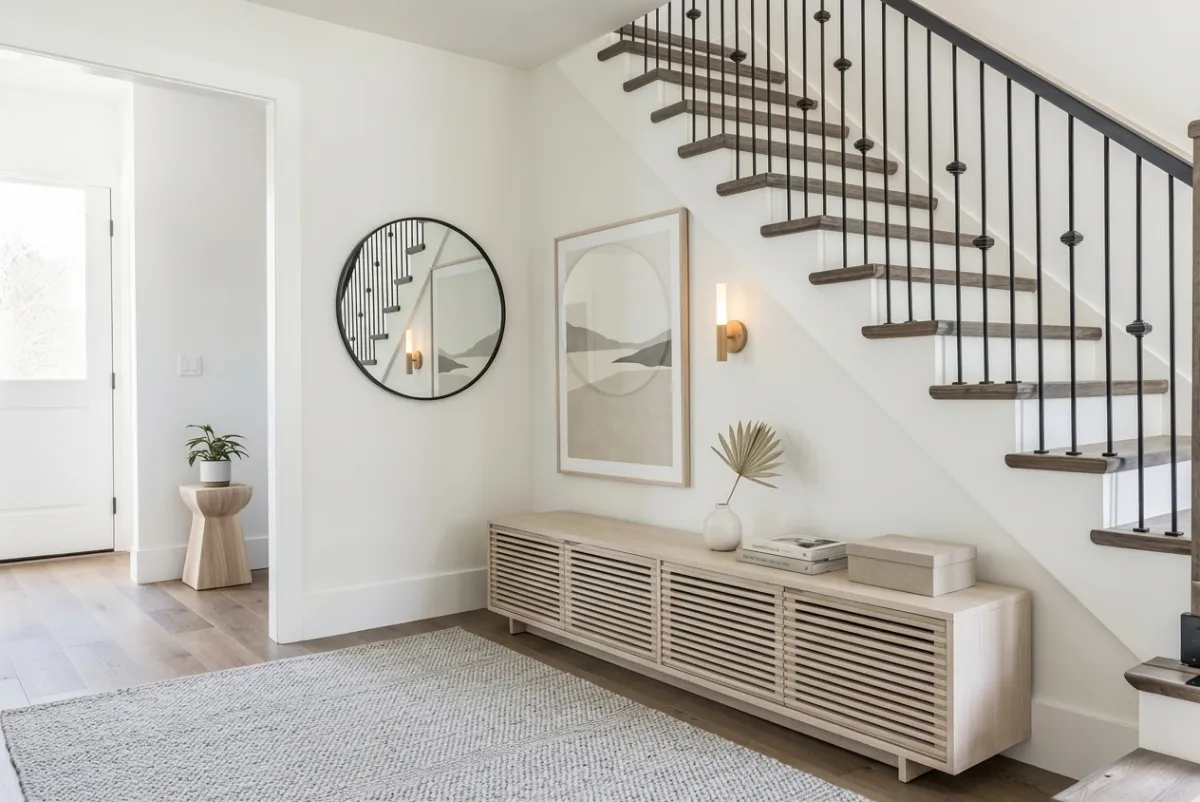
The AI placed a slatted oak console table low and wide under the staircase with a single abstract print in muted tones above it. The round mirror gets a modern black metal frame. A textured grey area rug covers the floor and a single sculptural side table and small plant are the only accessories.

This version photographs best and works in homes with strong architectural features. The staircase becomes a design element rather than something to decorate around. The iron balusters and wood treads are displayed as structural art, and the minimal furniture lets them shine. The practical advantage is that it is extremely easy to keep clean and tidy.
The Blank Slate
Sometimes the best way to figure out what you want is to imagine starting from scratch. Here is the same entryway stripped of everything. Just the staircase, hardwood floors, a wall sconce, and the door to the next room.
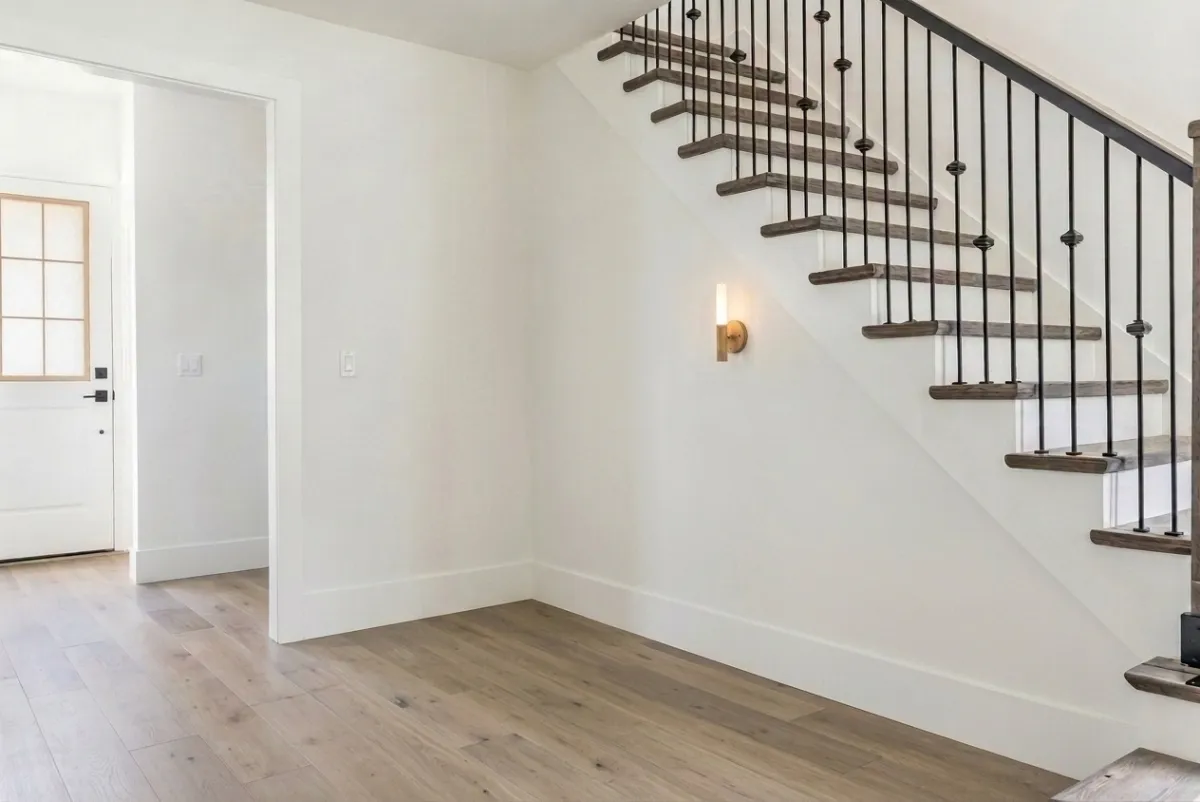
Looking at this empty version, you can see why the under staircase area is such valuable real estate. It is a natural niche that begs for furniture. The sloped ceiling created by the stairs gives it an alcove like quality that makes any piece placed there feel intentional and anchored.
Entryway Design Rules That Always Work
After seeing four styles in the same space, some universal principles emerge regardless of which direction you choose:
Always anchor with a rug. Every version includes a rug for good reason. It defines the space, protects hardwood from traffic, and gives guests a visual cue for where to stand. For entryways, choose a flatweave or low pile rug that is easy to clean.
One mirror is non negotiable. A mirror reflects light to make the space feel larger, gives people a last check before leaving, and creates visual depth in what is usually a narrow space. Round mirrors work in almost any style. Rectangular feels more modern.
Limit your palette to three materials. The zen version uses wood, stone, and linen. The minimalist uses oak, metal, and wool. When you stick to three material families, the result looks cohesive even if pieces came from different stores and different time periods.
Light the space properly. Most entryways rely on a single overhead light that casts flat shadows. Add a table lamp on a console, a wall sconce, or a floor lamp. Warm bulbs (2700K to 3000K) make an entryway feel welcoming. Cool daylight bulbs make it feel clinical.
How Much Does an Entryway Redesign Cost?
Entryways are one of the most affordable rooms to redesign because they require fewer and smaller pieces. Here is a realistic breakdown:
- Console table or bench: $200 to $800
- Mirror: $50 to $300
- Area rug (3x5 or 4x6): $80 to $300
- Lighting (table lamp or upgraded fixture): $50 to $250
- Art and accessories: $100 to $300
Total: $480 to $1,950. You can completely transform an entryway for under $1,000 if you shop smart. Focus your budget on the console table or bench since that is what people notice first.
Design Your Entryway With AI
Not sure which style fits your entryway? Upload a photo of your foyer, hallway, or stairway to MeltFlex and generate different versions in seconds. Try prompts like "Japanese zen entryway," "modern minimalist foyer," or "warm farmhouse hallway" and compare side by side. Every piece of furniture is real with prices and dimensions included.
For more room guides, check our living room ideas, bedroom design guide, or how to decorate from scratch. Browse the creations gallery for 50+ real before and after transformations.

