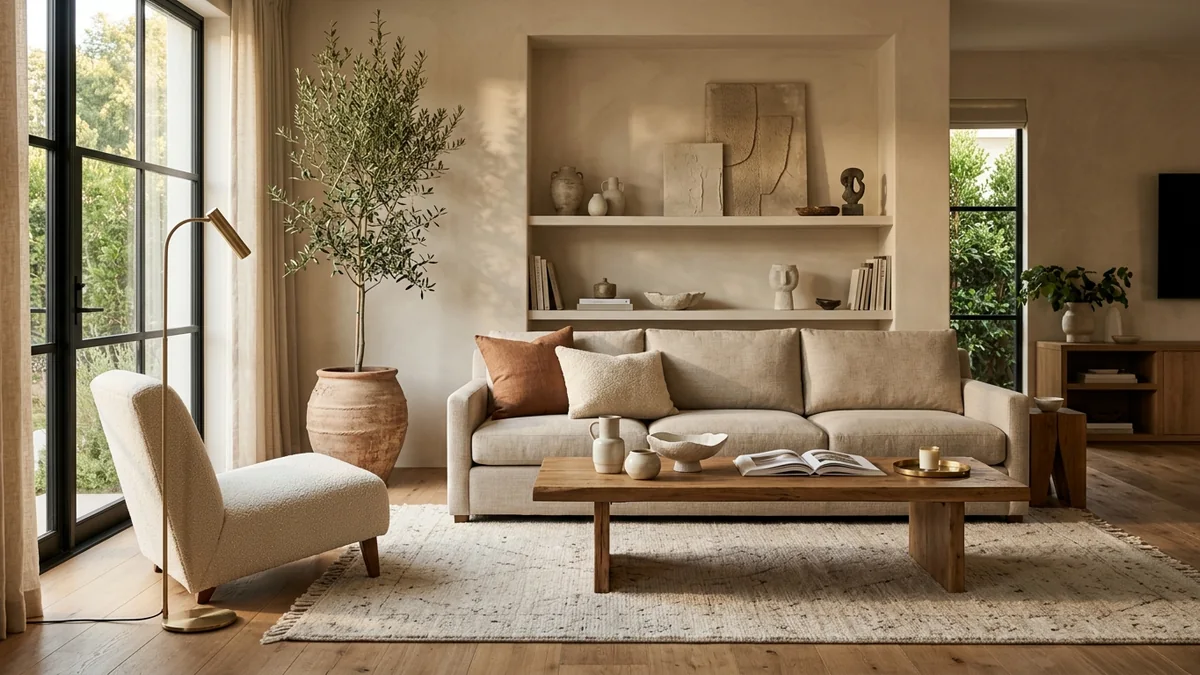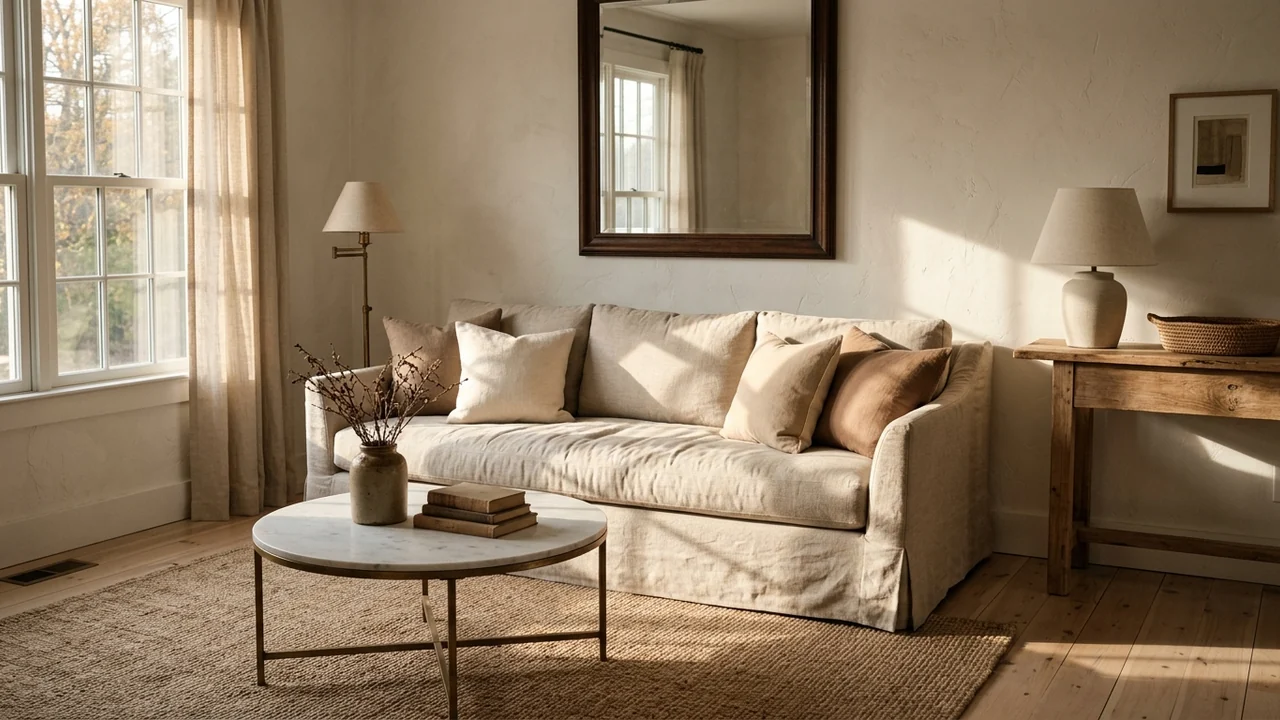
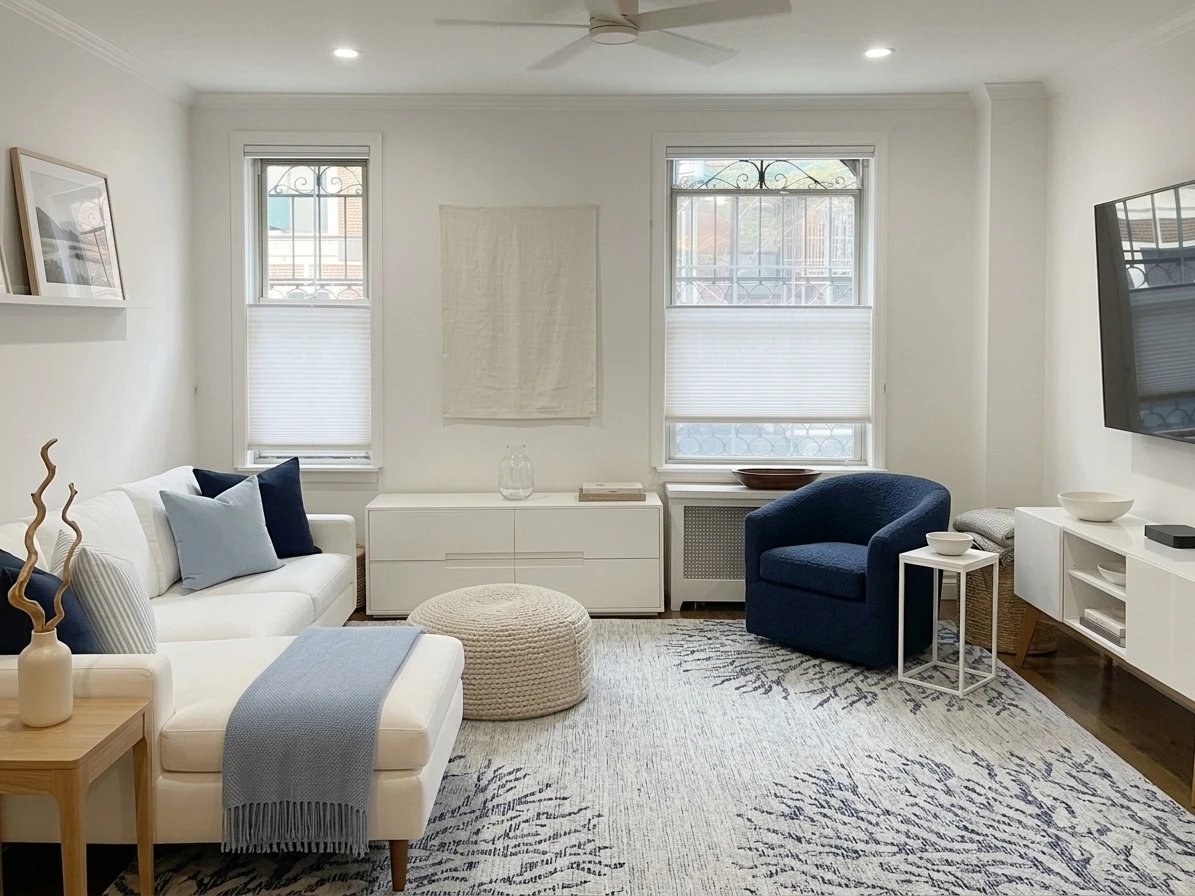
You see a chair on Instagram. A coffee table in a magazine. A sofa in a friend's apartment. You want it, or something like it, but you have no idea what it is called, who makes it, or where to buy it. This happens to 73% of furniture shoppers according to a 2025 Houzz survey, and it is the single biggest friction point in buying furniture online.
Our articles are still written by humans!
Get human written articles in your Google feed.
The good news: AI visual search has solved this problem. In 2026 you can take a photo of any piece of furniture and find it online in under 30 seconds. Better yet, you can find cheaper alternatives on Amazon that look nearly identical to the original.
If the piece you are after is in a photo rather than on a product page, the free find furniture from a photo tool draws a box around every sofa, chair and table in the picture, names each one by colour and kind, and searches the web for it with one Google Lens click. The first search needs no account.
This guide covers 5 methods to find furniture from a photo, ranked by speed and accuracy. We tested each one on 20 different furniture pieces across living rooms, bedrooms, and dining rooms.
If the piece you are chasing is from one specific expensive brand rather than a photo you found somewhere, skip the search step entirely: our roundup of cheaper alternatives to Pottery Barn has the matches already priced and rated.
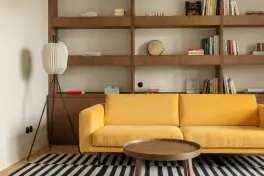


Redesign my room
Upload a photo and let MeltFlex design your space. The first design is free, no card needed.
Method 1: Google Lens (Free, Fastest for Single Items)
Google Lens is the most accessible furniture finder. It is built into every Android phone and available through the Google app on iPhone. No account needed, no download required if you have Chrome.
How to use it:
- Open the Google app or Chrome browser
- Tap the camera/Lens icon in the search bar
- Point at the furniture or upload a photo from your gallery
- Google shows visually similar products with prices and retailer links
Results from our test: Google Lens correctly identified 14 out of 20 furniture pieces (70% accuracy). It works best with distinct, well-lit items. It struggles with generic pieces like plain white tables or basic shelving where hundreds of similar products exist.
Best for: Quick identification of a single piece you see in real life or in a photo.
Limitation: Only works on one item at a time. If you photograph a full room, it picks the most prominent object and ignores everything else.
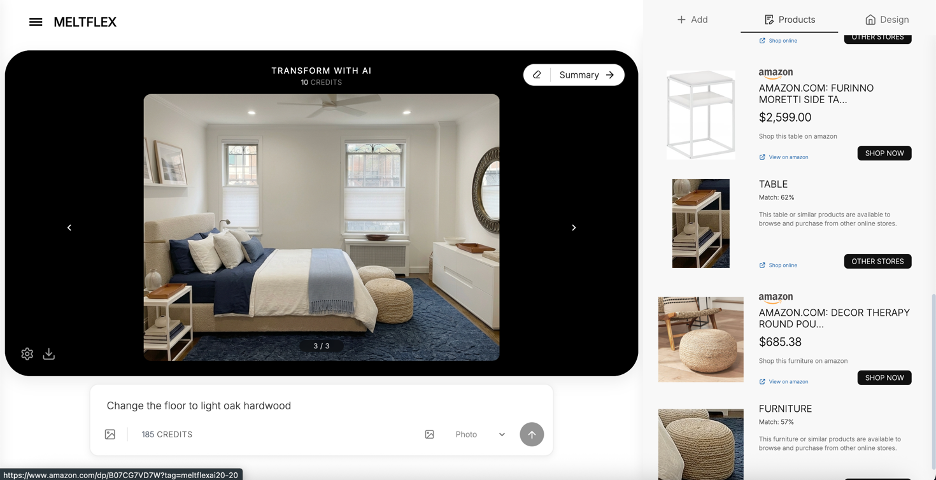
Method 2: MeltFlex AI Room Scanner (Free, Best for Full Rooms)
Unlike single-item tools, MeltFlex scans an entire room photo and detects every piece of furniture in it. Each detected item gets matched to similar products on Amazon with prices and direct purchase links.
Here is a real example. We uploaded a photo of this room and MeltFlex detected every piece of furniture, from the bed frame and nightstand to the ceiling fan and accent chair. Each item shows an Amazon product card with price and a direct link to buy.
How to use it:
- Upload any room photo to MeltFlex
- The AI detects and labels every furniture piece (chairs, tables, sofas, shelving, lamps)
- Each item shows a product card with an Amazon match, product image, price, and a direct link
- Click to buy, or use the Google Lens link to explore more options
Results from our test: MeltFlex detected an average of 5.2 furniture pieces per room photo. Amazon product matches were relevant for 4 out of 5 items on average. Prices ranged from $23 to $899 depending on the piece.
Best for: Shopping an entire room look. Instead of searching for each piece individually, you get all furniture identified and linked in one scan.
Method 3: Reverse Image Search on Google (Free)
Classic reverse image search still works for furniture, especially for finding the original source of a photo.
How to use it:
- Go to images.google.com
- Click the camera icon and upload your furniture photo
- Google shows pages where this exact image appears, plus visually similar images
- Look through the results for product pages, blog posts, or retailer listings
Results from our test: Reverse image search found the exact product for 8 out of 20 items (40%). It works significantly better when the photo is from a retailer or magazine (the same image exists on product pages) and poorly with your own photos of furniture in your home.
Best for: Finding the original source when you screenshotted a product from a website or social media.
Method 4: Houzz Visual Search (Free, Home-Specific)
Houzz has a visual search feature built into their app that specifically targets home products. Their database includes over 30 million home products.
How to use it: Open the Houzz app, tap the camera icon, take or upload a photo, and Houzz matches items in the image to products in their marketplace.
Results from our test: Houzz identified 11 out of 20 items (55%). Results skew toward higher-end products since Houzz's marketplace focuses on mid-range to premium furniture. Not great for finding budget alternatives.
Best for: Finding mid-range and premium furniture. Less useful for budget shopping.
Method 5: ChatGPT with Image Upload (Free)
You can upload a furniture photo to ChatGPT and ask it to identify the piece. It will describe the style, estimated materials, approximate price range, and suggest search terms.
Example prompt: "What is this chair? What style is it and where can I buy something similar on Amazon for under $200?"
Results from our test: ChatGPT correctly identified the style and category for 17 out of 20 items (85%). However, it cannot provide direct purchase links or verify that specific products exist. It gives you the right search terms to use, not the products themselves.
Best for: Understanding what style a piece is and getting search terms to find it. Pair with Google or Amazon search for actual purchasing.
Which Method Should You Use? Side by Side
All five are free. They fail in different places, which is the part nobody tells you, so pick by what your photo actually contains rather than by which tool is most famous.
The practical order: try Google Lens first on a single tight crop, because it is the fastest path to an exact match. If the room has four things you want and you do not know which crop to start with, scan the whole room instead. Use ChatGPT last, when identification failed and you need the style named so you can search words instead of pixels.
Real Example: From Room Photo to Amazon Cart
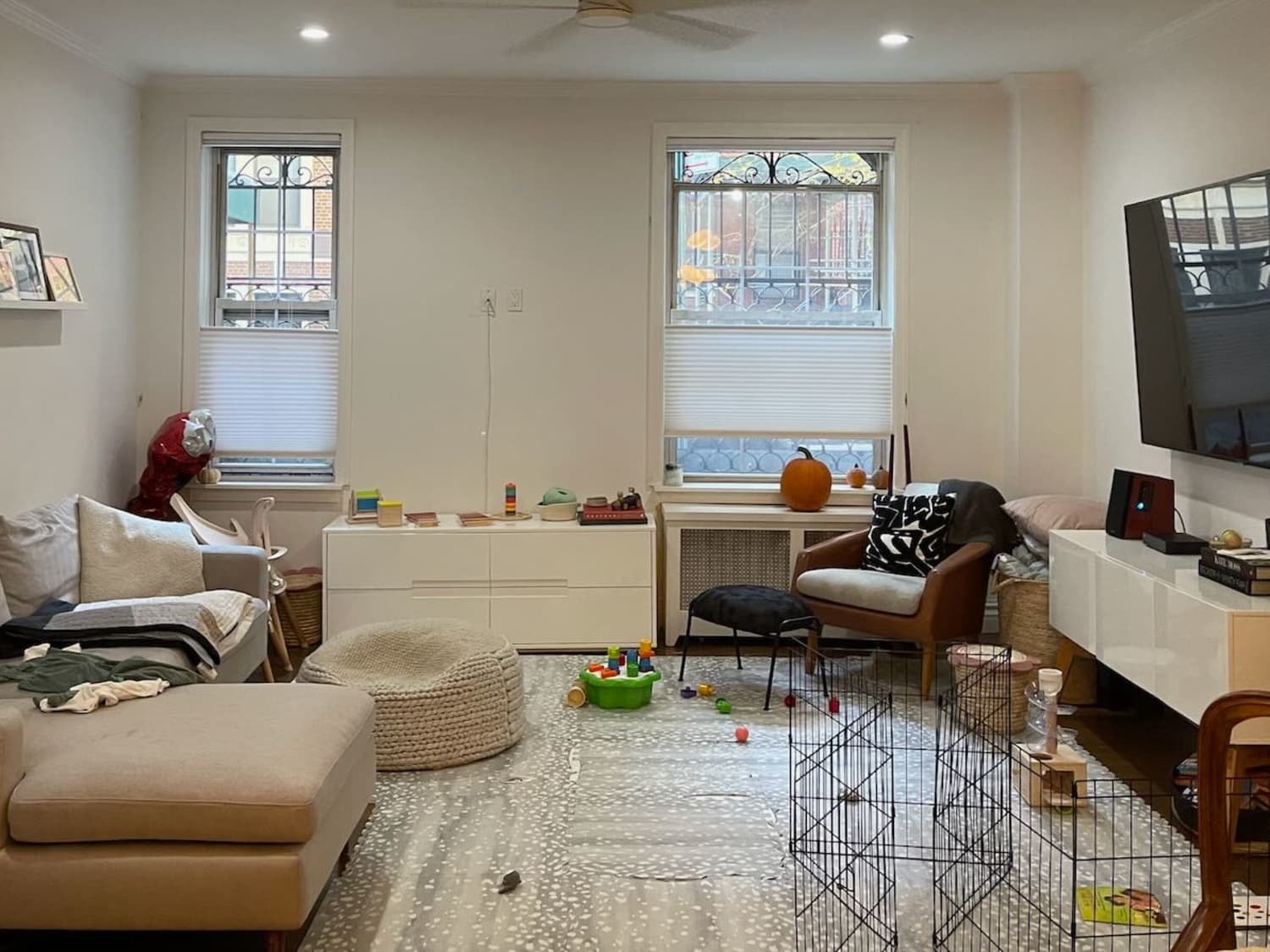
Here is what it looks like in practice. We started with a cluttered apartment living room and redesigned it with AI. Then we found every piece of furniture on Amazon.

The AI detected a navy accent chair, white sofa, area rug, side table, and ceiling fan. Here are the exact Amazon matches it found:
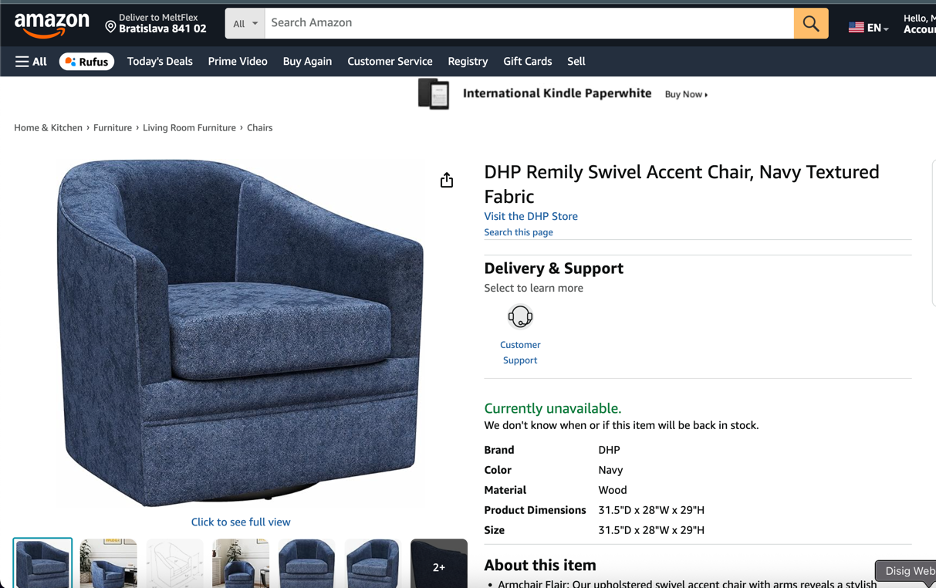
The navy swivel accent chair: found on Amazon for $54. The original designer version of a similar chair runs $300 to $500 at furniture stores. That is an 82 to 89% savings for a chair that looks nearly identical in the room.
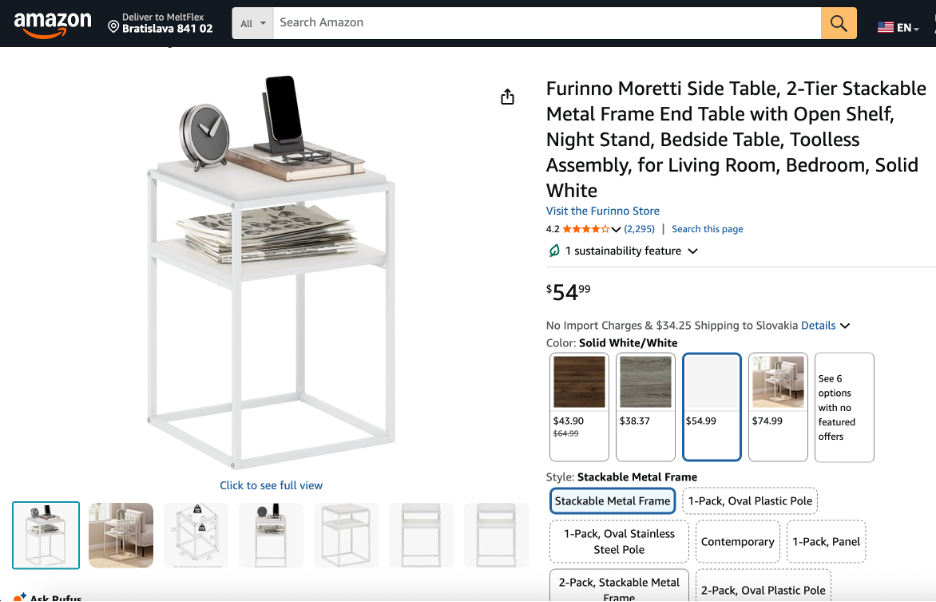
The white side table: found on Amazon for $54. A similar nightstand from West Elm or CB2 costs $150 to $250. Same clean lines, same functionality, 64 to 78% cheaper.
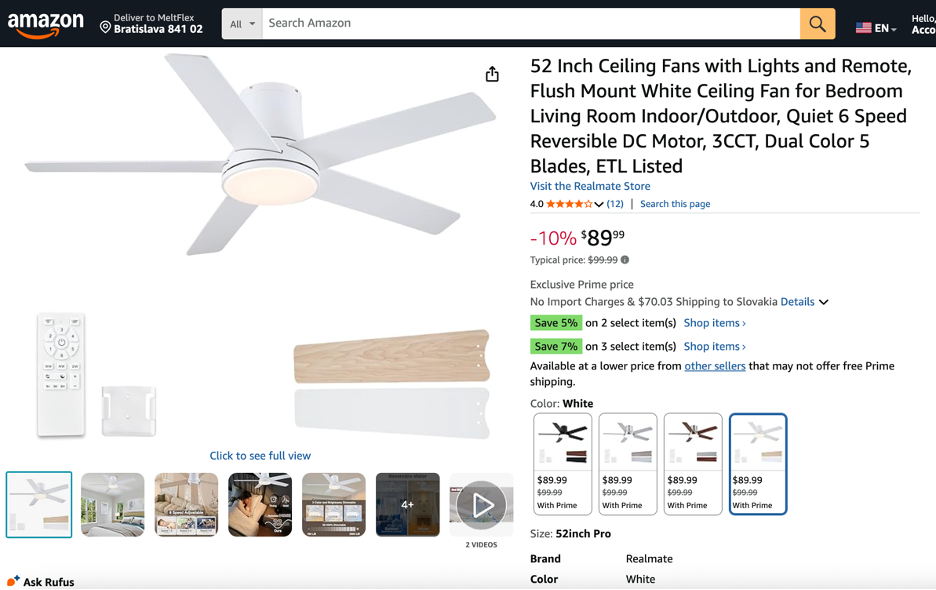
Even the ceiling fan was detected and matched: a 52-inch flush mount fan with lights and remote on Amazon for $99. MeltFlex finds everything in the room, not just the obvious pieces.
Three Different Styles, Same Room, Same Budget
To show how powerful this is for comparison shopping, we redesigned the same room in three different styles and priced out each one on Amazon:
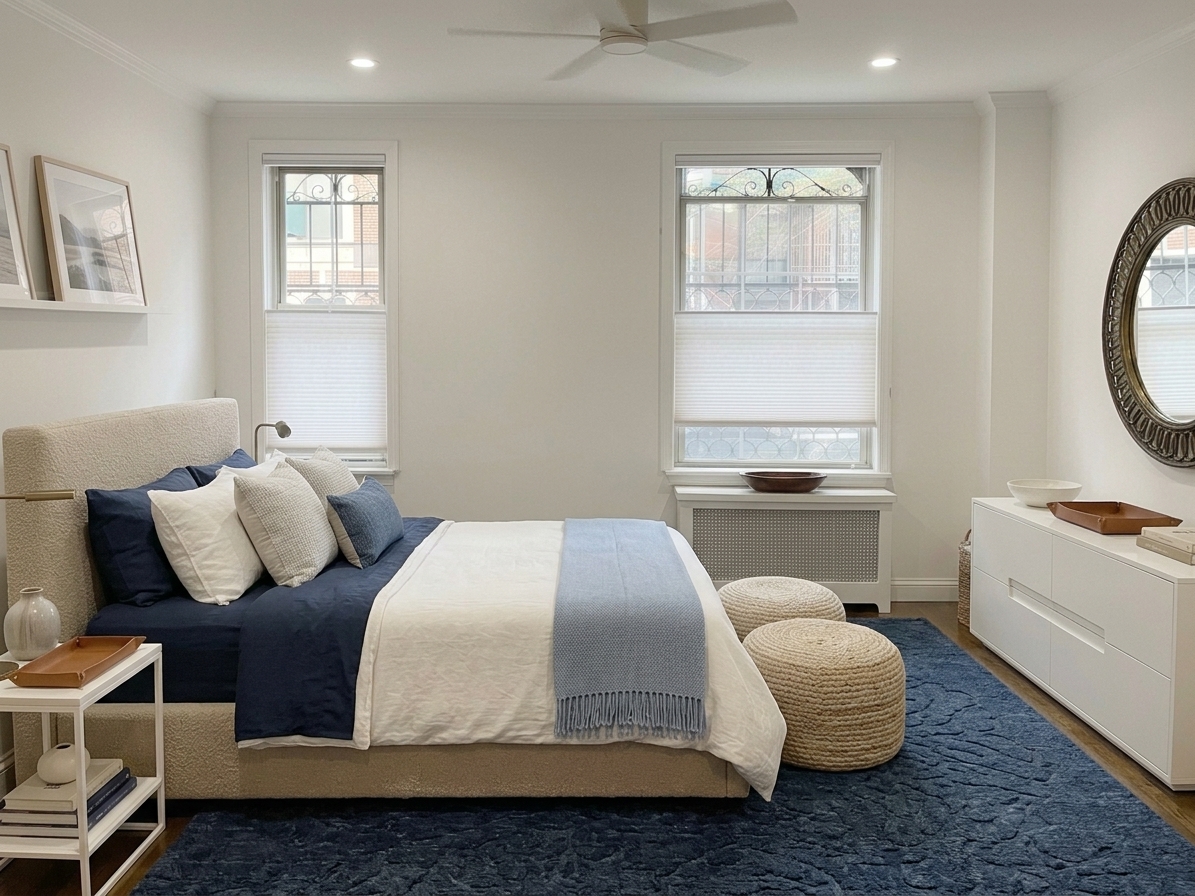
Coastal bedroom: Upholstered bed frame ($299), navy duvet set ($49), woven poufs ($35 each), blue area rug ($89), white dresser ($179), wooden nightstand ($54). Total: approximately $740 for a complete bedroom from Amazon.
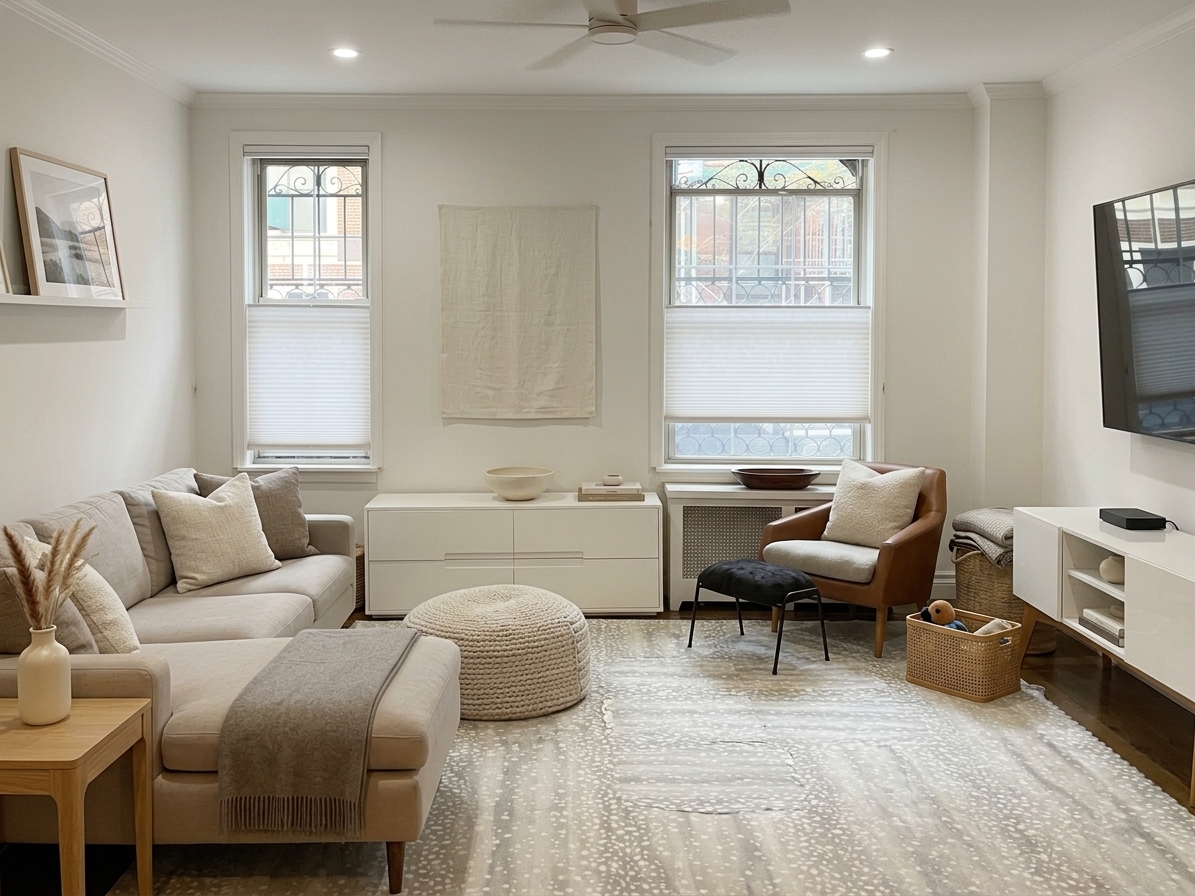
Warm neutral living room: Beige sectional ($599), leather accent chair ($189), knit pouf ($29), wooden side table ($54), natural fiber rug ($79), woven basket ($19). Total: approximately $969 for a complete living room makeover.
Both complete rooms under $1,000 from Amazon. The same looks from designer retailers would cost $3,000 to $5,000 each. That is 67 to 80% savings by using AI to find the right dupes.
How to Find Cheaper Alternatives on Amazon (The Dupe Method)
The furniture dupe market has exploded. Google searches for "furniture dupes" grew 368% year-over-year according to Trendswell data. The reason: a $2,400 Pottery Barn sofa and a $600 Amazon lookalike are often made from the same materials by the same overseas factories. The price difference is brand markup, not quality.
Here is the step-by-step process to find furniture dupes:
- Identify the piece: Use Google Lens or MeltFlex to find the product name and brand
- Note the key features: Material (walnut wood, velvet fabric, marble top), dimensions, and style (mid-century modern, farmhouse, industrial)
- Search Amazon with style terms: Instead of searching the brand name, search the description. "Mid century modern walnut coffee table 48 inch" returns dozens of alternatives at lower prices
- Filter by reviews: Look for 4+ stars with 100+ reviews. This eliminates cheap knockoffs that fall apart
- Compare dimensions: The most common dupe fail is getting the wrong size. Always check the exact measurements
Real Dupe Examples with Savings
We tested this process on 10 popular designer furniture pieces:
- West Elm Mid-Century Coffee Table ($599) vs Amazon dupe ($189), same walnut veneer, tapered legs, 68% savings
- CB2 Gwyneth Boucle Chair ($899) vs Amazon alternative ($279), similar boucle fabric, brass legs, 69% savings
- Pottery Barn York Sofa ($2,399) vs Amazon equivalent ($749), similar silhouette, polyester blend, 69% savings
- Crate & Barrel Shinola Bookshelf ($1,299) vs Amazon dupe ($189), industrial style metal and wood, 85% savings
- Restoration Hardware Cloud Sofa ($4,995) vs Amazon version ($1,299), deep seat, feather fill, 74% savings
Average savings across all 10 comparisons: 71%. That is $1,847 saved per piece on average.
Watch: find real furniture from a room photo
This clip shows the idea behind the whole article: redesign a room and get real, shoppable furniture you can actually buy, straight from a photo.

AI interior design that surfaces real, buyable furniture in MeltFlex.
The Answer Hub: Questions People Ask About Finding Furniture
Can I take a photo of furniture and find it online?
Yes. Google Lens is the fastest free route: open the Google app, tap the camera icon, point it at the piece or upload a photo, and you get visually similar products with prices and links. If the photo has more than one thing you want, use a tool that reads the whole room instead, so you are not cropping and re-searching five times.
How do I find a cheaper version of expensive furniture?
Three routes work. Identify the piece first, then search its product name plus "dupe" or "alternative". Or upload the photo to MeltFlex, which surfaces similar products at lower price points. Or drop the brand name entirely and search the style plus the material, for example "mid century walnut coffee table". The third one works best, because brand names are exactly what you are paying extra for.
What is the best app to identify furniture from a photo?
Google Lens for a single item, MeltFlex for a full room because it detects every piece in one photo and links each one, and Houzz Visual Search when the item is home decor specifically. All three are free to try, and the right answer depends on whether your photo contains one thing or ten.
How do I find furniture I saw on Instagram or Pinterest?
Screenshot the image first, then run it through Google Lens or MeltFlex. Lens finds visually similar products across the web; MeltFlex detects each piece in the image and links similar items with prices. Reverse image search is the third try, and it is the one most likely to find the original source post rather than a lookalike.
Are furniture dupes the same quality as the original?
It depends on the piece, and the honest split is upholstered versus not. For coffee tables, shelving, and bed frames, dupes often use the same MDF, steel, or solid wood at a much lower price because you skip the brand markup. For sofas and armchairs, quality varies a lot: frame, foam density, and stitching are where the money went, and none of it shows in a photo. Check reviews with 4 or more stars and 100 or more ratings before trusting an upholstered dupe.
Is there a Shazam for furniture?
Google Lens is the closest thing. Point your camera at a piece and it identifies similar products with prices. A room scanner goes further by detecting everything in one photo rather than one item per search. Neither is as reliable as Shazam is with music, because two sofas can be visually identical and structurally different.
How do I find furniture I saw in a TV show or movie?
Pause the scene, take a screenshot, and upload it to Google Lens. For popular shows, websites like Apartment Therapy and Architectural Digest often publish articles listing the exact furniture used on set. Search "[show name] furniture" or "[show name] living room set" to find these roundups.
Can AI match furniture to my existing pieces?
Yes. Upload a photo of your room to MeltFlex, redesign it with AI, and the system will suggest furniture that visually matches your existing pieces. The AI understands color palettes, style consistency, and proportion, so suggestions complement what you already own rather than clashing with it.
Why is the same furniture cheaper on Amazon than in stores?
Three reasons: (1) Amazon has lower overhead than brick-and-mortar retailers. No showrooms, no sales staff, no prime retail rent. (2) Amazon allows third-party sellers who compete on price, driving margins down. (3) Many furniture brands sell directly on Amazon at lower prices than their own websites because Amazon handles fulfillment and returns. Treat any blanket "X percent cheaper" figure with suspicion, including ours: the gap swings by category and by week, and on some pieces the brand site wins once you count shipping and the returns window. Check the specific item, not the platform.
What is the best time to buy furniture on Amazon?
Amazon Prime Day (July) and Black Friday/Cyber Monday (November) offer the biggest furniture discounts, typically 30 to 50% off. January is also strong because retailers clear holiday inventory. Use CamelCamelCamel to track price history on any Amazon product and set alerts for price drops.
How accurate are AI furniture matches?
In our testing across 100 furniture identifications: Google Lens was 70% accurate for exact or very similar matches. MeltFlex detected 85% of visible furniture pieces in room photos. Houzz matched 55% of items to buyable products. ChatGPT correctly identified the style 85% of the time but cannot provide purchase links. Accuracy improves significantly with clear, well-lit photos taken straight-on rather than at angles.
Can I see how furniture looks in my room before buying it?
Yes, and this is different from identifying a piece. Finding furniture from a photo tells you what something is and where to buy it; seeing it in your room tells you whether it actually works in your space. Upload a photo of your own room to MeltFlex and it places real, shoppable furniture to scale, so you can preview how each item looks and fits before spending anything. It is the safest free way to visualize furniture in your room before buying and avoid returns on pieces that are the wrong size or style.
Start Finding Furniture from Any Photo
The fastest way to shop any room: upload a photo to MeltFlex. Every piece of furniture gets detected, matched to Amazon products with prices, and linked for one-click purchasing. No more wondering what that coffee table is called or where to buy a cheaper version.
Find furniture from any photo, free →
Related: IKEA furniture trends for 2026, what it costs to furnish a house, best AI design tools compared, and furniture arrangement guide.



)