What Color Furniture Goes With Grey Walls? The Complete Pairing Guide (2026)

Grey is the most searched wall color on Pinterest and the second most popular paint color in North America behind only white, according to the 2026 Sherwin Williams Color Trends Report. Benjamin Moore Revere Pewter, Sherwin Williams Agreeable Gray, and Farrow and Ball Pavilion Gray have been top sellers for three consecutive years. Over 34 million American homes have at least one grey painted room.
Our articles are still written by humans!
Get human written articles in your Google feed.
And yet grey is one of the hardest colors to furnish correctly. Get it right and you have a sophisticated, calming space that makes every piece of furniture stand out. Get it wrong and your living room feels like a dentist waiting room: cold, sterile, and vaguely uncomfortable. The difference comes down to understanding undertones, contrast, and temperature, three things that most furniture color guides completely ignore.
Step one is knowing which grey you have. Photograph the wall in daylight and run it through the paint color finder: it names the closest paint and gives you the LRV, which settles the warm-or-cool question below.
This guide covers the 12 furniture colors that interior designers pair most often with grey walls, based on data from Houzz project photos, Wayfair bestseller lists, and real designer recommendations. Every combination includes the reasoning behind why it works, so you can apply the same logic to your own room.
Quick answer
- The safest pairings with any grey are cognac leather, warm wood, cream, and navy. Cognac is the single most forgiving choice.
- Cool grey walls (blue or purple undertone) need warm furniture: mustard, cognac, terracotta, warm oak, blush.
- Warm grey / greige walls such as Agreeable Gray work with almost anything, including sage green, oatmeal, and charcoal.
- Dark grey walls want light furniture (cream, oak, blush) so the room doesn’t feel like a cave.
- Avoid matching furniture to the exact wall grey, cool-on-cool combinations, and anything neon.
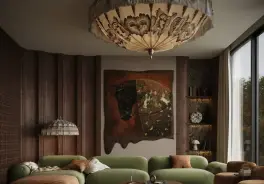
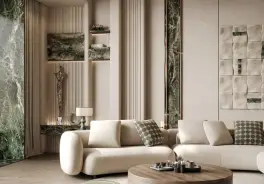
Does Grey Go With Everything?
The short answer is no. Grey is a neutral, which means it does not compete with other colors, but that does not mean every color looks good next to it. The idea that grey is a universal backdrop is the number one reason people end up with rooms that feel off without understanding why.
Grey has undertones. Every grey paint on the market leans either warm or cool, and those undertones interact with the colors you put next to them. A cool blue grey wall next to a warm orange cushion can create visual tension that feels jarring rather than intentional. A warm greige wall next to cool toned chrome furniture can make the grey look dirty rather than sophisticated.
The good news: once you identify whether your grey is warm or cool, the furniture color choices become obvious. And identifying undertones takes about 30 seconds with a simple test.
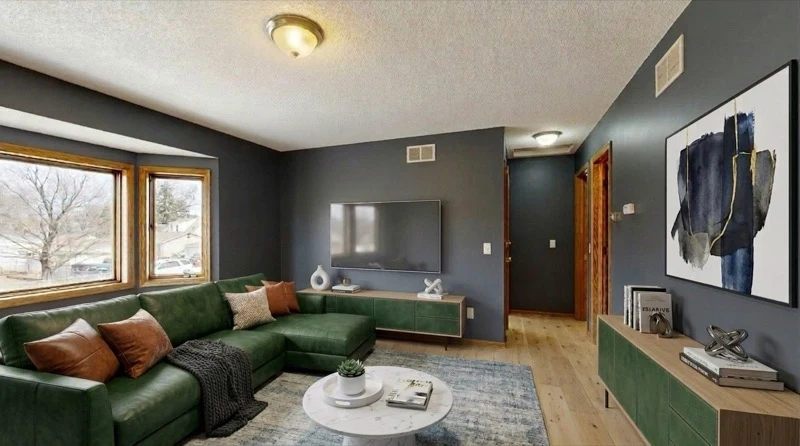
Warm Grey vs Cool Grey: Why It Changes Everything
Every grey paint has a base undertone that shifts how furniture colors appear next to it. Here is how to tell which grey you have and why it matters for every furniture decision you make.
Cool greys have blue, green, or purple undertones. Popular examples include Benjamin Moore Stonington Gray (HC-170), Sherwin Williams Online (SW 7072), and Farrow and Ball Plummett. These greys feel crisp and modern. They pair best with warm furniture colors that counterbalance the coolness: mustard yellow, cognac leather, warm woods, and blush pink.
Warm greys have beige, yellow, or pink undertones. Designers often call these greige. Popular examples include Benjamin Moore Revere Pewter (HC-172), Sherwin Williams Agreeable Gray (SW 7029), and Farrow and Ball Elephant Breath. These greys feel cozy and inviting on their own. They pair well with both warm and cool furniture colors because the base warmth prevents the room from feeling cold.
The white paper test: hold a piece of pure white printer paper against your grey wall. The white paper reveals the undertone instantly. If the grey looks bluish or purplish compared to the paper, it is cool. If it looks yellowish, pinkish, or brownish, it is warm. Do this test in natural daylight, not under artificial light which shifts color temperature.
This single test saves you from the most expensive mistake in grey room design: pairing cool grey walls with cool toned furniture, which creates a room that feels like a walk in refrigerator. For a deeper look at choosing paint colors and testing undertones, see the full guide on how to choose paint colors with AI.
Read the room before you read the paint chip
There is a step most guides skip. Before you decide whether your grey is warm or cool, look at what you cannot change: the flooring, the kitchen or built in cabinetry, the wood trim, the metal on your handles and taps, and any stone or brick. Sherwin Williams puts it plainly in its guide to choosing greys: the undertone of your interior elements should match the undertone of the grey you use. Cooler fixed elements like grey stone and brushed nickel sit comfortably with cool greys, while brick, warm timber, and brass belong with warmer greys and greige.
This is why two people can buy the same tin of Agreeable Gray and only one of them ends up with a room that works. The paint did not change. The oak floor and the brass handles did the deciding. If your furniture keeps looking slightly off against a grey you like, check the fixed elements before you blame the sofa.
12 Best Furniture Colors for Grey Walls
These are ranked by versatility, meaning how many different grey shades they work with. The first few work with virtually any grey. The later ones require a bit more care with undertone matching.
1. White and Cream Furniture
The safest combination and the one that works with every grey on the planet. A white sofa against grey walls creates a clean, gallery like contrast that feels bright and intentional. Cream adds warmth without introducing a competing color, which makes it especially good for cool greys that need softening.
White furniture on grey walls is the foundation of Scandinavian design, which has been the most searched interior style on Pinterest for four consecutive years. The look is simple: grey walls, white or cream sofa, light wood floors, and a few textile layers. If you are drawn to that calm, minimalist Nordic feel, explore the full Scandinavian interior design guide for room by room breakdowns.
Best for: any grey shade. Especially effective in small rooms where you want maximum brightness. The IKEA EKTORP in white ($499) and the Article Abisko in cream ($1,099) are popular choices in this category.
2. Navy Blue Furniture
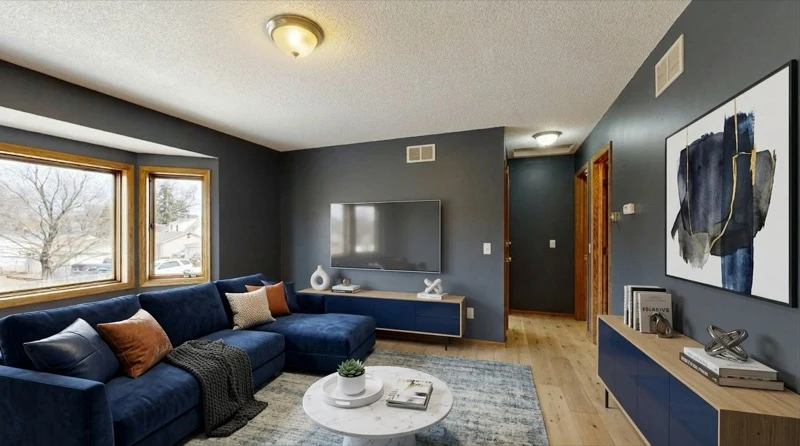
Navy and grey is one of the most requested color pairings in interior design for 2026, according to Houzz designer survey data. The combination works because navy provides dramatic contrast without the starkness of black. It reads as rich, classic, and slightly masculine.
Navy works best with light to medium greys. Against dark charcoal walls, navy can disappear and the room loses depth. Against a light Agreeable Gray or Revere Pewter wall, a navy velvet sofa becomes the undeniable focal point of the room.
Best for: light and medium greys, both warm and cool. The Pottery Barn York sofa in navy velvet ($1,899) and the Wayfair Derry sectional in navy ($1,249) are strong choices. Pair with brass accents and warm wood to prevent the combination from feeling too cold.
3. Mustard Yellow Furniture
This is the designer secret weapon for grey rooms that feel too cold. A single mustard accent chair or yellow throw pillow set transforms the entire energy of a grey room from institutional to inviting. The reason is color theory: yellow and grey sit opposite each other on the warm cool spectrum, creating maximum visual interest without clashing.
Mustard works best with cool greys where the warmth is needed most. On warm greys, mustard can occasionally feel too golden, so test with a pillow before committing to a sofa.
Best for: cool greys especially. Start with one accent chair or a set of cushions before going all in with a mustard sofa. The IKEA STRANDMON wingback chair in yellow ($279) is the classic entry point for this look.
4. Blush Pink Furniture
Blush pink and grey became a defining combination of the late 2020s, and it shows no signs of fading. The pairing works because blush pink is essentially a very warm, very light red, and it adds softness and warmth to grey without introducing a bold or competing color. The result is feminine, calming, and surprisingly sophisticated.
Blush works best with warm greys that already have pinkish or beige undertones. On a strongly blue cool grey, blush can look disconnected, so test the combination first.
Best for: warm greys and greige shades. Popular in bedrooms and sitting rooms. A blush velvet accent chair ($300 to $800) is the easiest way to introduce this pairing.
5. Cognac and Tan Leather Furniture
If there is one furniture material that single handedly rescues a grey room from feeling cold, it is warm leather. Cognac leather on grey walls is the foundation of modern mid century design: think Mad Men meets Scandinavian apartment. The leather introduces a living, breathing material that ages beautifully and radiates warmth from across the room.
This combination is essentially foolproof. Cognac leather works with warm greys, cool greys, light greys, and dark greys. It is the most versatile furniture choice on this entire list.
Best for: every grey shade. The Article Sven sofa in cognac ($1,899), the Poly and Bark Napa sofa ($1,399), and the IKEA LANDSKRONA in golden brown ($799) are the three most popular choices at different price points.
6. Forest Green Furniture
Forest green is having a major moment in 2026. Sherwin Williams named Oakmoss as a trending color for the year, and green velvet sofas are the third most searched sofa color on Wayfair behind grey and blue. Against grey walls, forest green reads as natural, rich, and grounded, like bringing the outdoors in without going rustic.
Green pairs best with warm greys and greige shades, where the warm undertones complement the earthy green. On strongly blue cool greys, green can shift toward teal, which is a different look entirely (covered below).
Best for: warm and neutral greys. Looks especially good paired with brass lighting and natural wood. The Castlery Adams sofa in forest green velvet ($1,690) and the Article Ceni in evergreen ($999) are popular picks.
7. Black Furniture
Black on grey creates the most dramatic contrast short of black on white. It reads as modern, editorial, and intentionally bold. The key to making this work without the room feeling heavy is balance: pair black furniture pieces with plenty of white and natural textures to keep the room from absorbing all the light.
Black works best with light greys where the contrast is sharpest. On dark grey walls, black furniture can make the room feel like a cave, so compensate with white accessories, light rugs, and abundant lighting.
Best for: light and medium greys. Use sparingly. A black coffee table or black dining chairs against grey walls are classic moves. An all black sofa on grey walls requires more careful planning.
8. Warm Wood Tones
Oak, walnut, and teak furniture bring organic warmth that no upholstered piece can replicate. A warm walnut dining table against grey walls immediately grounds the room and prevents the grey from feeling sterile. This is why virtually every professionally designed grey room includes at least one significant wood piece.
Light oak pairs better with cool greys (the contrast in temperature is appealing). Dark walnut pairs better with warm greys (matching warmth creates cohesion). Avoid grey washed wood on grey walls, which creates a monotone, lifeless effect.
Best for: all greys, with the wood tone matched to the grey temperature. IKEA LISABO in ash veneer ($249 for a dining table) and the West Elm Mid Century collection in walnut ($599 to $1,299) are strong starting points.
9. Charcoal and Dark Grey Furniture
Grey on grey is the monochromatic approach, and when done correctly it is one of the most sophisticated looks in interior design. The key word is contrast. A charcoal sofa on light grey walls creates depth and dimension. A charcoal sofa on charcoal walls creates a sensory deprivation chamber.
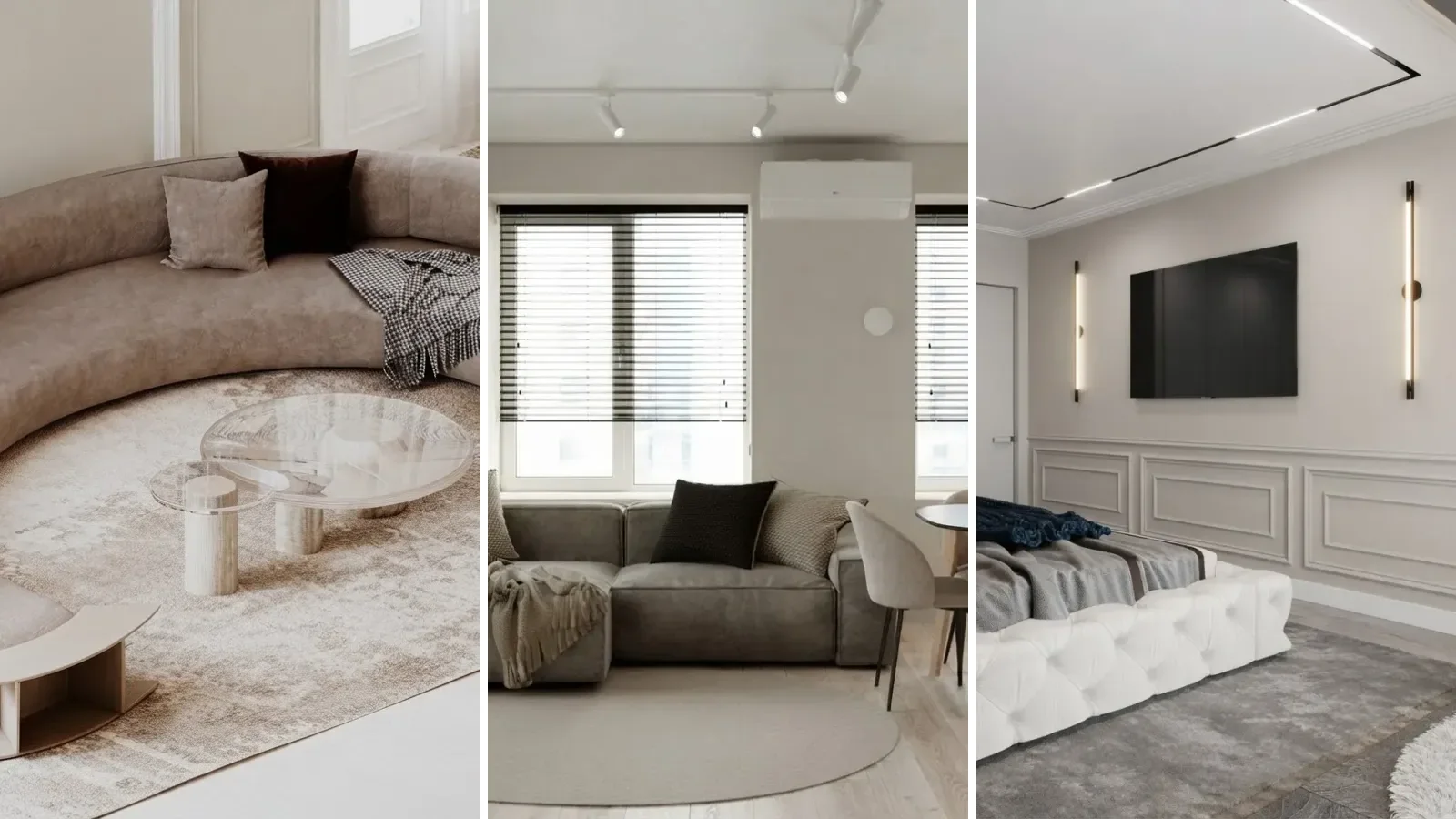
The rule: ensure at least three to four shades of difference between your wall grey and your furniture grey. Then add texture variation, a boucle sofa against smooth painted walls, or a velvet chair against a matte wall. Texture is what prevents monochromatic schemes from feeling flat.
Best for: light grey walls specifically. The most popular charcoal sofas are the IKEA FRIHETEN in dark grey ($599) and the Crate and Barrel Lounge II in charcoal ($2,499).
10. Terracotta and Rust Furniture
Terracotta brings earthy warmth that connects a grey room to the natural world. It is bolder than cognac but softer than orange, sitting in a sweet spot that feels intentional without screaming for attention. Terracotta accent chairs and rust colored throw pillows have been trending upward since 2024 and show no sign of slowing.
This combination leans Mediterranean and works best with warm greys. On cool blue greys, terracotta can feel out of place unless you bridge the gap with warm wood and brass.
Best for: warm and neutral greys. Start with terracotta cushions or a throw before committing to a full sofa in this color.
11. Beige and Oatmeal Furniture
If cream is the bright version of warm neutral furniture, oatmeal is the lived in version. Beige and oatmeal linen sofas create a soft, layered look on grey walls that defines the modern Scandinavian apartment. It is quiet, understated, and impossible to get wrong.
Oatmeal pairs best with warm greys and greige walls, where the tonal closeness creates a cocoon effect. On strongly cool greys, oatmeal can look slightly muddy, so opt for cream instead.
Best for: warm greys and greige. The IKEA KIVIK in beige ($599) and the Article Burrard in oatmeal ($1,299) are popular choices for this understated Scandinavian look.
12. Teal Furniture
Teal is the wild card that works with both warm and cool grey because teal itself is a blend of warm and cool (blue plus green plus a touch of yellow). A teal accent chair against grey walls is a designer move that looks considered and bold without being overwhelming.
Teal is strong enough to hold its own against dark greys and vibrant enough to pop against light greys. It is one of the few colors that genuinely works across the entire grey spectrum.
Best for: any grey shade. Particularly effective as an accent chair rather than a full sofa. The IKEA STRANDMON in teal ($279) and the Wayfair Handy Living armchair in teal velvet ($389) are accessible entry points.
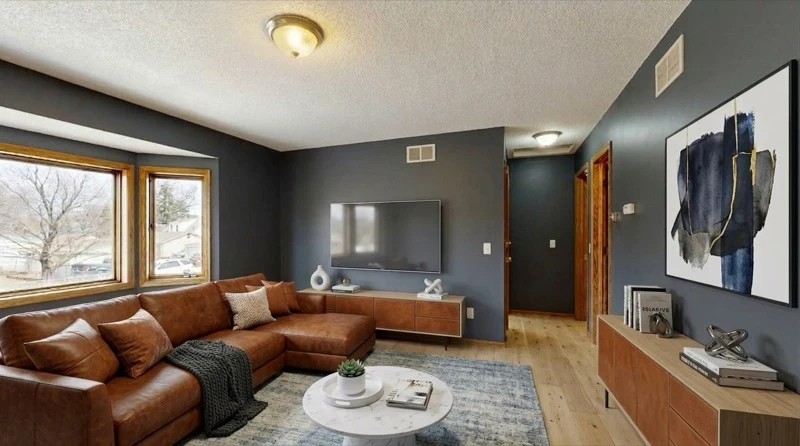
What Color Sofa Goes Best With Grey Walls?
The sofa is the largest and most expensive piece of furniture in most living rooms, so this decision carries the most weight. Based on Wayfair and Pottery Barn bestseller data for grey walled rooms, here are the five most purchased sofa colors in order:
- Charcoal grey (different shade from walls) at 28% of purchases. People default to grey on grey because it feels safe, and it works well as long as there is strong contrast between wall and sofa shade.
- Navy blue at 22%. The most popular non neutral sofa color for grey rooms. Rich, classic, always in style.
- Cream and white at 19%. Bright, clean, Scandinavian. Requires more maintenance but creates the most open feeling.
- Cognac leather at 16%. The designer favorite. Warms up any grey room instantly and ages beautifully.
- Beige and oatmeal at 9%. Quiet, modern, works best with warm greys.
If you cannot decide, cognac leather is the recommendation. It works with every grey shade, hides wear better than fabric, and looks more expensive as it ages. It is the only sofa color on this list that actually improves with time. For more living room inspiration, see AI living room design prompts with full style breakdowns.
Percentages will not tell you how navy looks against your particular grey. This walkthrough compares several sofas in one real room, shape, size and tone, so you can see which one anchors the room and which one fights the walls.

Warm grey and cool grey change the answer, as the section above explains. A render in your own light is the fastest way to find out which one you have.
What Color Rug Works With Grey Walls?
The rug anchors the room and connects the wall color to the furniture. Here are five rug options ranked by how well they work in grey walled rooms:
- Ivory and cream: the most versatile rug for grey rooms. Brightens the floor, creates clear contrast with both light and dark grey walls, and ties into white and cream furniture effortlessly.
- Warm jute or sisal: adds natural texture and warmth. The golden brown tone of natural jute is the antidote to cold grey. Works in every room style from Scandinavian to coastal.
- Patterned with grey and one accent color: a geometric rug in grey and mustard, or grey and navy, ties the wall color into the rug while introducing your accent color. This is the most designer approach and creates a cohesive palette.
- Charcoal or dark grey: only works on light grey walls. Creates a grounding effect and adds depth. Avoid on dark grey walls where it disappears entirely.
- Moroccan style in black and white: high contrast, bold, and trendy. The black and white pattern provides visual interest without introducing a new color, which keeps the palette tight.
Avoid matching your rug to your exact wall color. The same grey on floors and walls eliminates depth and makes the room feel like it is wrapped in a single color. Contrast, whether in shade, texture, or both, is what makes a grey room work. And if your floors are grey as well, it is worth knowing that grey flooring itself is on designers’ “out” lists for 2026; the flooring trends guide covers the warm tones replacing it.
Colors to Avoid With Grey Walls
Not every color works with grey, and some combinations are actively bad. Here are the pairings designers consistently warn against:
- Neon or fluorescent colors: grey is a muted, sophisticated neutral. Neon green, hot pink, or electric blue fight the calm energy of grey and make the room feel chaotic rather than vibrant. If you want a pop of color, choose muted or saturated versions instead, sage green rather than neon green, dusty rose rather than hot pink.
- Matching grey without texture variation: a grey sofa on grey walls in the same shade and same matte finish creates a flat, depressing room. If you want monochromatic grey, you need either significant shade contrast (light walls, dark sofa) or significant texture contrast (smooth walls, boucle sofa). Preferably both.
- Cool colors on cool grey: a cool blue sofa on cool blue grey walls doubles down on coldness. The room will feel like an ice cave. Cool greys need warm furniture to balance the temperature. If your walls are Benjamin Moore Stonington Gray (a classic cool grey), do not pair them with a cool toned blue or lavender sofa.
- Bright orange: while terracotta and rust work beautifully with grey, bright tangerine orange creates a jarring contrast that reads as clashing rather than complementary. The difference is saturation: muted, earthy oranges harmonize with grey. Bright, saturated oranges fight it.
- Pastel on dark grey: light pastels against dark charcoal walls can look washed out and institutional, like a hospital corridor. If your walls are dark grey, go bold with your furniture colors (navy, forest green, mustard) rather than soft (baby blue, lavender, pale pink).
Matching Furniture to Grey Walls, Room by Room
The pairing rules hold everywhere, but the piece that carries them changes with the room, and so does the amount of grey you are actually fighting.
Living room
The sofa is the decision. It is the largest block of colour in the room, so it sets whether the space reads warm or cold, and everything else follows it. If you want one safe answer: a cream or oatmeal sofa against light grey, or a cognac leather sofa against mid to dark grey. Then let the rug carry the second colour rather than the walls. A common failure here is matching a grey sofa to grey walls, which flattens the whole room into one tone. If both are already grey, break them apart with a warm wood coffee table and cream textiles rather than buying a new sofa.
Bedroom
Grey bedrooms fail in the opposite direction: they go cold rather than flat, because there is less furniture to carry warmth and more textile surface. Put the warmth in the bed. A natural oak or walnut frame, cream or oatmeal linen, and one brass lamp will do more than any accent wall. Keep the darkest element below eye level, so a charcoal throw or rug rather than charcoal curtains, which shrink the room at the window.
Dining room
Here the table is the anchor and wood almost always wins over painted finishes, because a grey room needs one honest warm material and the table is the biggest available surface. Warm oak or walnut with either cream upholstered chairs or black metal frames both work. Avoid a grey table top: it is the one place where matching the walls reads as unfinished.
The 60-30-10 Rule for Grey Rooms
This is the proportion rule that interior designers have used for decades, and it is the single most useful framework for furnishing a grey room. Divide your room into three color zones:
- 60% dominant color: this is your grey. Walls, large area rug (if grey toned), and possibly your largest furniture piece. Grey occupies the majority of the visual space.
- 30% secondary color: this is your main furniture color. Your sofa, dining chairs, and curtains (our dedicated guide covers gray, white, beige, blue and green walls). This is the color that defines the room character. Navy, cream, cognac, whatever you chose from the 12 options above.
- 10% accent color: this is the pop. Throw pillows, a vase, artwork, a small accent chair. This is where mustard yellow, terracotta, or teal typically live. The accent is what makes the room feel personal rather than catalog generic.
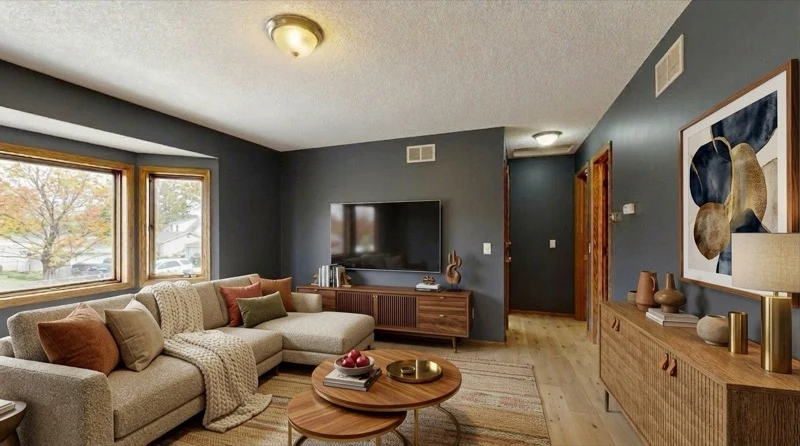
A practical example: Sherwin Williams Agreeable Gray walls (60%). A cognac leather sofa and warm oak coffee table (30%). Mustard yellow throw pillows, a brass table lamp, and a gallery wall with warm toned frames (10%). This room will feel warm, balanced, and intentionally designed because the proportions follow the rule. For more frameworks like this across different styles, see the interior design styles guide which breaks down color rules by aesthetic.
Preview Any Combination With AI
The hardest part of furnishing a grey room is not knowing the rules. It is seeing the result before you commit. A navy sofa sounds great in theory, but does it actually look right against your specific shade of grey, in your specific room, with your specific lighting?
This is where AI visualization changes the game. Upload a photo of your grey walled room to MeltFlex and see real furniture placed in your actual space. Try a cognac leather sofa, swap it for navy, switch to cream, and compare side by side. Every piece is a real product with real pricing and dimensions, so when you find a combination that works, you can buy it directly.
The average furniture return costs $125 to $350 in restocking and shipping fees. Retailers that let you preview a piece in your own room report meaningfully fewer returns, with Wayfair and several others putting the drop around 35 percent for shoppers who use the feature. Treat that as vendor reported rather than independently audited, but the direction is not in doubt: the returns that hurt are the ones where the size or the colour was wrong, and both are visible before you buy.
Frequently Asked Questions
What is the best accent color for grey walls?
Mustard yellow and navy blue are the two most universally flattering accents for grey walls. Mustard adds instant warmth to a cool grey; navy gives a tonal contrast that holds up against both warm and cool greys. If you want something quieter, blush pink and cognac leather do the same job with less volume.
Does brown furniture go with grey walls?
Yes, and it is one of the best pairings there is. Cognac leather, warm walnut, and natural oak all bring back the warmth a grey room loses. The one rule that matters: pick warm toned browns, not ashy or grey toned browns. A grey brown against a grey wall is what makes a room look muddy rather than layered.
What color curtains go with grey walls?
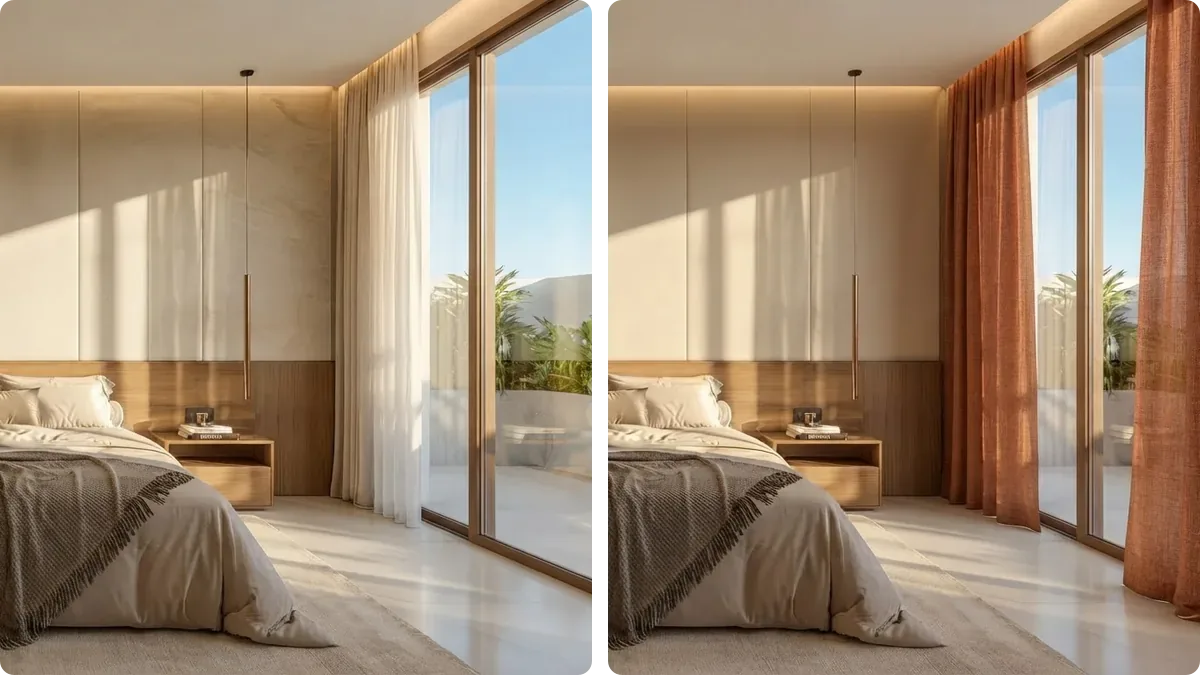
White or cream is the safe answer and keeps the room bright. Navy, charcoal, or mustard give you more drama. What to avoid is matching curtains to the exact grey of the wall, which flattens the window into the wall and makes the room read boxy. A shade lighter or darker beats an exact match every time.
Should furniture be lighter or darker than the walls?
Either, as long as there is contrast. Against light grey walls, both white furniture and dark charcoal furniture look deliberate, because you can see where one ends and the other begins. The mistake is furniture at the same lightness as the wall. That is what makes a room feel flat, and no amount of cushions fixes it.
What color furniture goes with dark grey walls?
Light furniture, or the room turns into a cave. White, cream, light oak, blush pink, and mustard all pop against dark grey. You can run one dark accent piece such as a black coffee table, but keep the largest pieces light so the room keeps its air.
How do I add warmth to a grey room?
Layer warm materials rather than repainting: cognac leather, natural wood, brass or gold metal, and wool or linen textiles in cream and oatmeal. Then fix the light. Warm toned bulbs at 2700K change a grey room more than any cushion, while cool LEDs and chrome finishes amplify exactly the coldness you are trying to remove. One oak coffee table can shift the mood of an entire grey living room.
Your Next Step
Start with the white paper test. Hold a sheet of printer paper against your grey wall and determine if your grey is warm or cool. Then pick two to three furniture colors from the 12 options above that match your grey temperature. Apply the 60-30-10 rule. And if you want to see the result before spending anything, upload your room photo and test different furniture colors in your actual space.
See furniture colors in your grey room, free →
Sharing the room with a dog or cat? The same mid-tone logic applies to hiding fur, so our guide to furniture colors that hide pet hair pairs well with this one.
Related: how to choose paint colors, what colour furniture goes with grey walls, AI living room design prompts, AI furniture placement and room layout, interior design styles guide, and Scandinavian design guide.



)