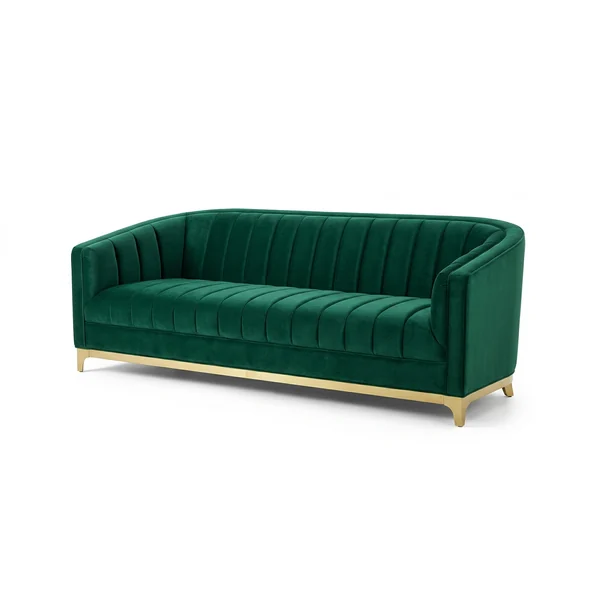
Velvet channel sofa
Emerald velvet with channel tufting and a polished-brass base. The glamorous, low-slung anchor of the room.
Bold geometry, lush materials, and metallic glamour where every surface makes a statement. Here is what defines Art Deco design in 2026, what it costs, the trends shaping it now, and how to get the look.
Try Art Deco on your room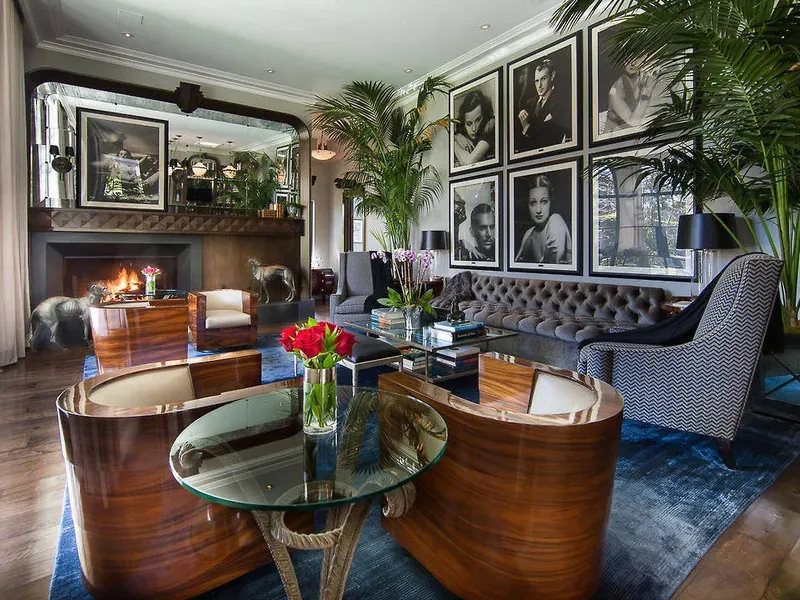
A few glamorous, sculptural pieces carry the whole look. These are the bold, lush staples that read as Art Deco instantly:
Emerald velvet with channel tufting and a polished-brass base. The glamorous, low-slung anchor of the room.
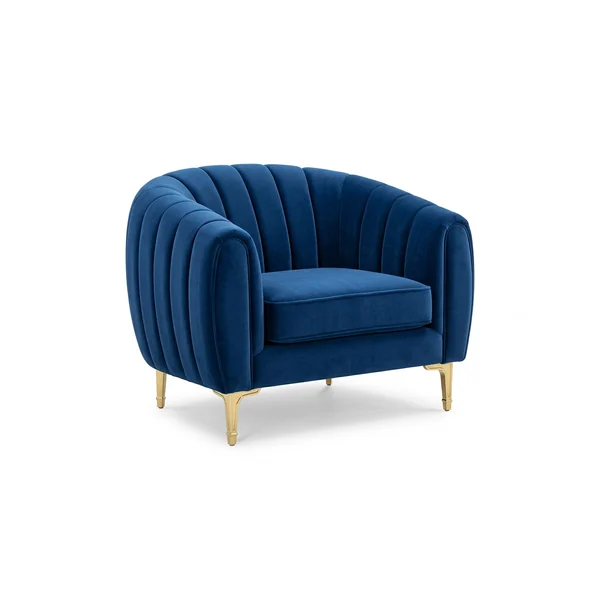
A rounded sapphire-velvet barrel shape with fluted detailing and brass legs. Sculptural and plush.
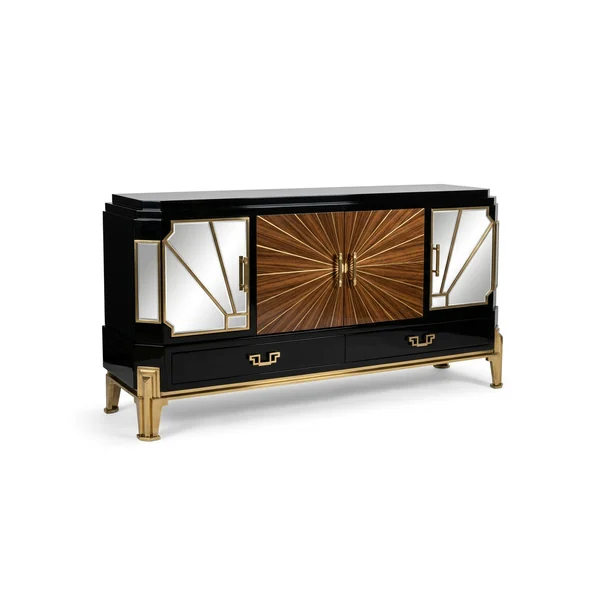
Black lacquer with a sunburst veneer, mirrored panels, and brass. Storage as a centrepiece.
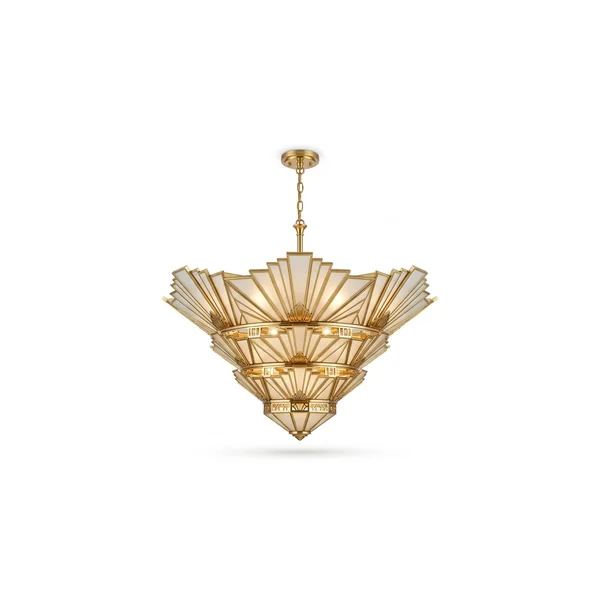
A tiered brass-and-glass fixture with a fan or sunburst form. The room's glittering focal point.
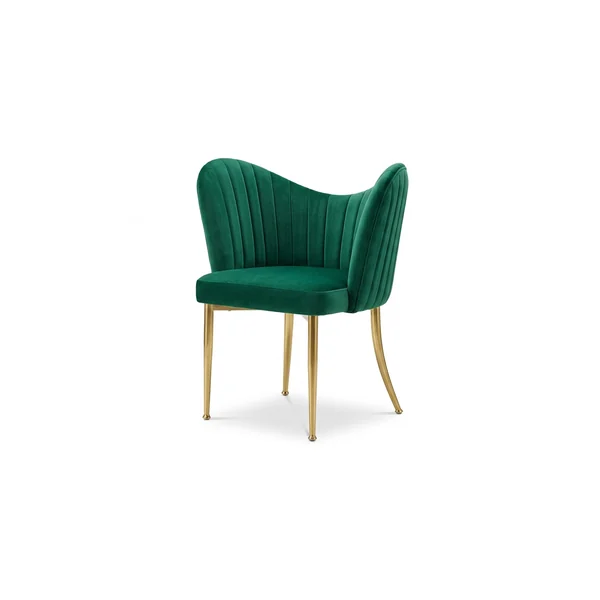
A curved back in emerald velvet with vertical channel tufting and slim brass legs. Glamour in a set.
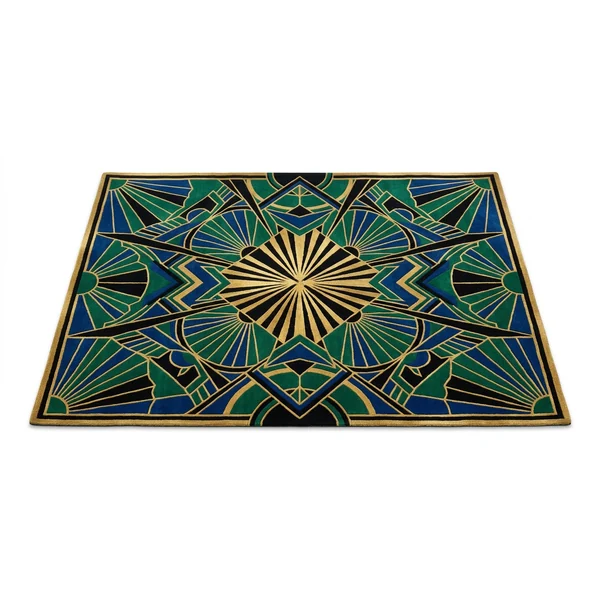
A bold sunburst or fan pattern in emerald, black, and gold to anchor the room's geometry.
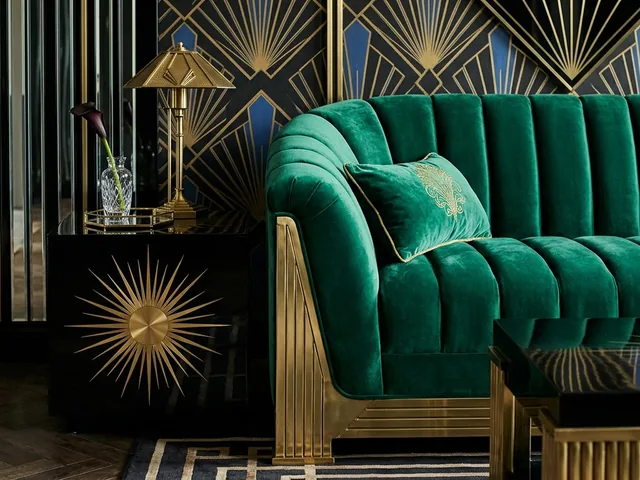
Sunburst, fan, chevron, and stepped motifs repeat across rugs, mirrors, and joinery. Strong symmetrical pattern is the signature of the style.
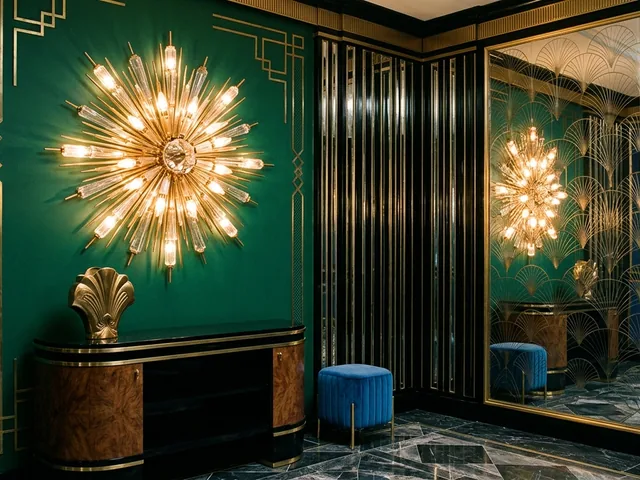
Geometric brass-and-glass chandeliers and sunburst fixtures act as jewellery for the room, casting a warm, dramatic glow.
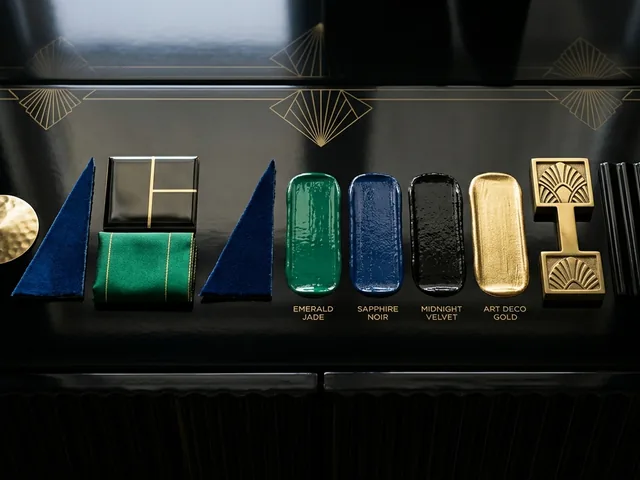
Emerald, sapphire, and ruby grounded by black, then lifted with gold. Deep, saturated colour is non-negotiable here.
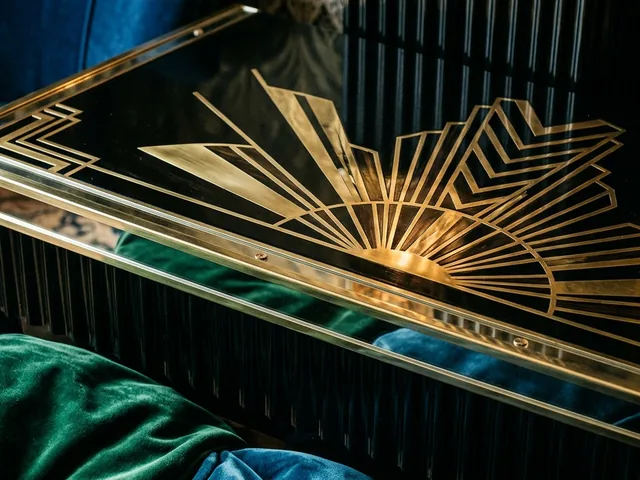
Velvet, lacquer, marble, and mirror create the reflective, tactile luxury that defines an Art Deco room.
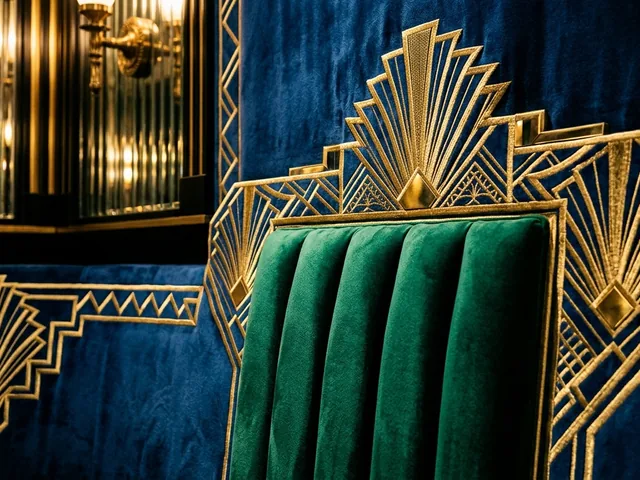
Channel-tufted velvet, silk, and high-shine fabrics add depth and opulence to seating, cushions, and curtains.
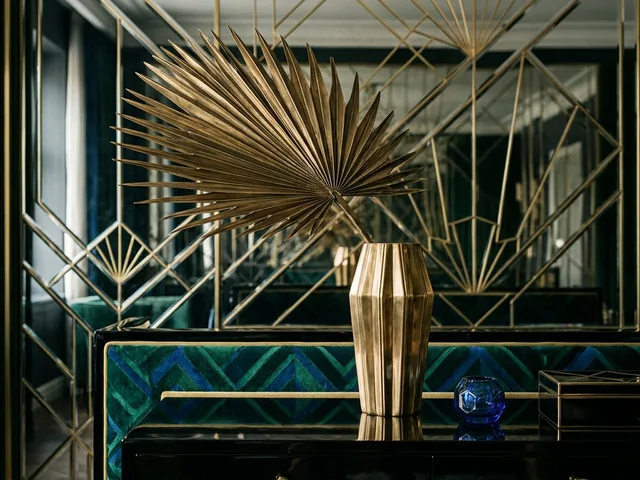
Polished metallics against deep black lacquer give the high contrast and glamour the whole look is built on.
Art Deco runs on drama, so the palette is bold and high-contrast rather than restrained. Use the 60-30-10 rule with a deep jewel tone or black as the dominant colour, a rich secondary, and gold as the accent that ties it together. Unlike calmer styles, the contrast is the point, pair a saturated base with polished metal and one or two black accents so every surface has impact.
Art Deco is enjoying a strong revival, driven by a wider move toward maximalism, colour, and craftsmanship after years of beige minimalism. The glamorous bones stay, but in 2026 the look is being used with a lighter, more modern hand. These are the shifts shaping Art Deco rooms this year:
Rather than a full period recreation, 2026 leans on a few hero Deco pieces, a velvet sofa, a sunburst mirror, a fluted bar, set against calmer walls so the glamour reads as intentional.
Fluted cabinet fronts, reeded glass, and ribbed detailing are one of the biggest 2026 looks, a direct, modern descendant of Deco geometry.
Saturated emerald, sapphire, and oxblood are back, often colour-drenched across walls and trim for the rich, enveloping drama Deco does best.
Rounded barrel chairs and arched motifs are paired with sharp chevrons and sunbursts, balancing soft and hard exactly as classic Deco did.
Warm brass and gold are the signature metals, now mixed confidently with black and chrome for a layered, glamorous, machine-age shine.
Art Deco tends to sit in the higher range, because velvet upholstery, lacquered and mirrored furniture, marble, and statement brass lighting all cost more than plain pieces, though a few hero items can deliver the look without doing the whole room. A light refresh runs $600 to $1,400; a fuller living room makeover lands around $6,000 to $13,000 mid-range. Here is where the money goes (rough 2026 US estimates):
| Item | Budget | Mid-range | High-end |
|---|---|---|---|
| Flooring (parquet, marble, or bold tile) | $500–1,000 (laminate / LVT) | $1,800–3,800 (engineered / parquet) | $5,000–12,000 (marble / inlay) |
| Sofa (velvet, channel-tufted, 3-seat) | $700–1,300 | $2,000–4,000 | $5,500+ (designer / bespoke) |
| Statement chair (barrel / club) | $300–600 | $900–1,800 | $3,500+ (designer) |
| Lacquer / mirrored furniture | $350–800 | $1,200–2,800 | $5,000+ (bespoke) |
| Lighting (sunburst chandelier + lamps) | $250–550 | $800–1,800 | $3,500+ (designer brass) |
| Rug, velvet textiles & mirrors | $300–700 | $900–2,000 | $4,000+ (hand-knotted / antique) |
Where to spend: the velvet sofa and one statement light, the two pieces that deliver most of the glamour. Where to save: mirrors, brass-finish hardware, and a bold rug bring serious Deco drama for relatively little, so you can splurge on the heroes.
Start with one deep, saturated colour, emerald, sapphire, or oxblood, on the walls or a hero sofa. The drama begins with colour, not with accessories.
Select a single motif like a sunburst, fan, or chevron and repeat it across the rug, a mirror, and joinery. Repetition is what makes the geometry feel designed.
Layer in velvet seating, a lacquered or mirrored surface, and some marble. The mix of soft and glossy is the heart of Art Deco luxury.
Use polished brass or gold on lighting, hardware, mirror frames, and trim. Set it against black for the high contrast that makes everything shine.
Hang one sculptural geometric fixture as the focal point, add warm lamps, and leave some calmer surfaces so the glamour has room to land.
Art Deco was born in 1920s and 1930s Paris and quickly became the look of the Jazz Age, all glamour, optimism, and machine-age confidence. Where other styles whisper, Art Deco performs: strong symmetrical geometry, rich jewel tones, lush velvets, and a generous dose of gold and brass. Think of the great cinemas, ocean liners, and skyscrapers of the era, then bring that drama indoors.
The look is built on contrast and repetition: a clean geometric motif like a sunburst, fan, or chevron repeated across rugs, mirrors, and joinery, set against deep colour and glossy, reflective surfaces. Velvet meets mirror, brass meets black lacquer, and curves meet sharp angles. It takes confidence to pull off, but the payoff is a room that feels luxurious, theatrical, and unmistakably yours.
A light refresh with paint, a bold rug, mirrors, and brass-finish lighting runs around $600 to $1,400. A fuller makeover with a velvet sofa, a statement chair, lacquered or mirrored furniture, and a sculptural chandelier typically lands at $6,000 to $13,000 mid-range. Leaning on a few hero pieces against calmer walls is the most cost-effective way to get the look.
Art Deco is a glamorous style that emerged in 1920s and 1930s Paris and defined the Jazz Age. It is built on bold symmetrical geometry, rich jewel tones, lush materials like velvet, lacquer, marble, and mirror, and generous gold and brass accents. The look is theatrical, luxurious, and high-contrast, with one clean motif such as a sunburst or chevron repeated throughout.
The palette is bold and saturated: deep jewel tones like emerald, sapphire, and ruby, grounded by black, and lifted with gold or brass. A softer champagne or cream is often used as relief so the deep colours and metallics read clearly. Unlike calmer styles, high contrast is the whole point.
Both embrace colour and drama, but Art Deco is disciplined: symmetrical, built on repeated geometry, and tied together by gold and a tight jewel-tone palette. Maximalism is looser and more eclectic, layering many different patterns, eras, and personal objects without a single unifying motif. Deco feels designed; maximalism feels collected.
Use it as an accent rather than a full period recreation. Choose two or three hero pieces, a velvet sofa, a sunburst mirror, a fluted cabinet, and set them against calmer painted walls. Repeat one motif, keep the metals consistent, and leave some quiet surfaces so the glamour feels intentional and current.
Velvet, lacquer, marble, mirror, and polished brass or gold are the core materials. The look depends on contrast between soft and glossy, matte and reflective, with high-shine surfaces, channel-tufted upholstery, and metallic detailing. Fluted and reeded surfaces and bold geometric inlays are classic Deco finishes that are especially popular again now.
Bold, patterned flooring suits the style: parquet or herringbone wood, marble (often in a contrasting black-and-white or geometric layout), or a striking patterned tile. Layer a geometric rug in jewel tones and gold on top to reinforce the motif and add warmth underfoot.
Yes, and mirrors are your friend. A small room can carry Deco glamour through one velvet piece, a sunburst mirror, brass lighting, and a bold rug, while mirrored surfaces bounce light and make the space feel larger. The trick is restraint: a few high-impact pieces rather than filling every surface.
Yes, with smart focus. Paint delivers the jewel-tone drama cheaply, mirrors and brass-finish lighting and hardware add shine for little, and a bold geometric rug anchors the look. Save the budget for one velvet hero piece. You can also upload a photo of your room to MeltFlex to preview the look before spending anything.
Yes, and it is firmly back. As tastes swing away from beige minimalism toward colour, craftsmanship, and glamour, Art Deco has returned, especially its fluted surfaces, jewel tones, and brass accents. In 2026 it is used with a lighter, more modern hand, often as bold accents within a calmer room rather than a full period look.
Not sure this is your style? Take the free style quiz