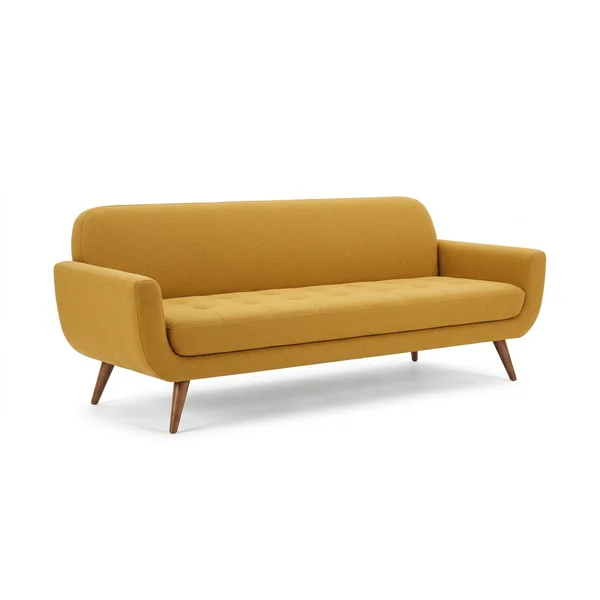
Tapered-leg sofa
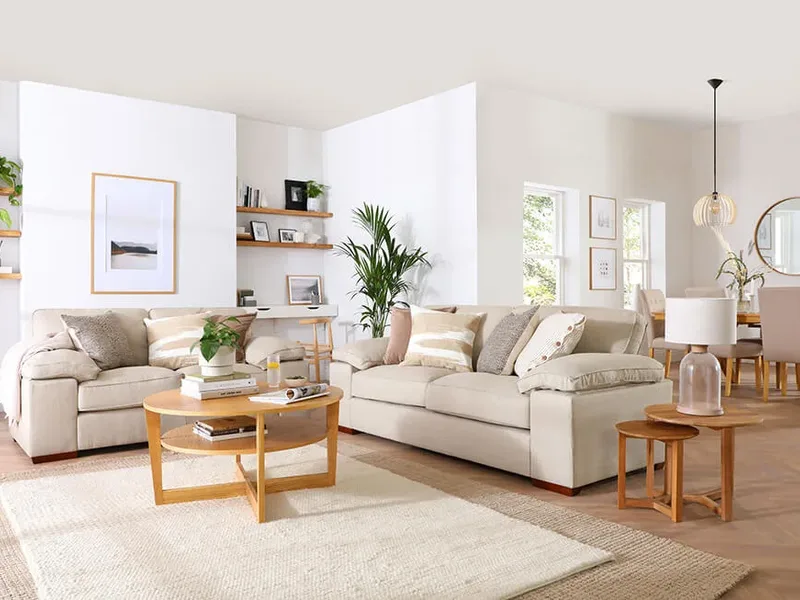
A low, clean-lined sofa raised on slim splayed wooden legs. The lifted, lightweight anchor of the room.
Organic curves, tapered legs, rich walnut, and warm retro accents that have stayed in style for seventy years. Here is what defines mid-century modern design in 2026, what it costs, the trends shaping it now, and how to get the look.
Try Mid-Century Modern on your room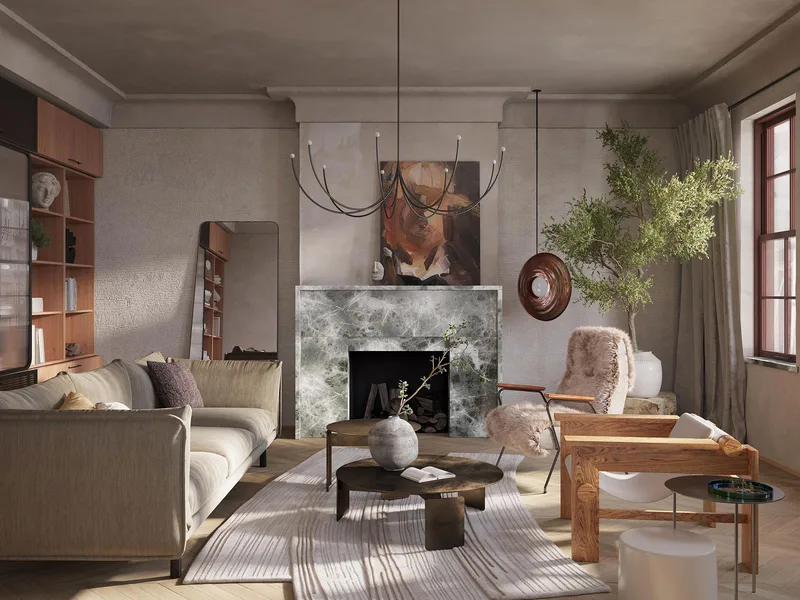
A few designer-classic shapes carry the whole look. These are the warm-wood, tapered-leg staples that read as mid-century modern instantly:
A low, clean-lined sofa raised on slim splayed wooden legs. The lifted, lightweight anchor of the room.
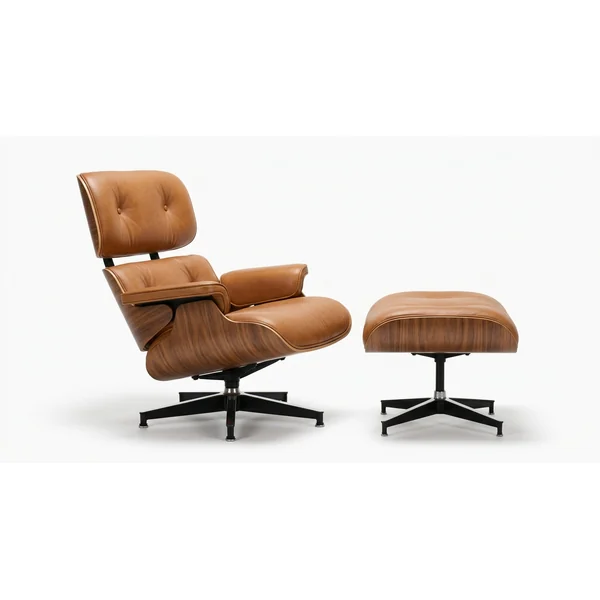
A curved plywood-and-leather chair, the iconic MCM silhouette that doubles as sculpture.
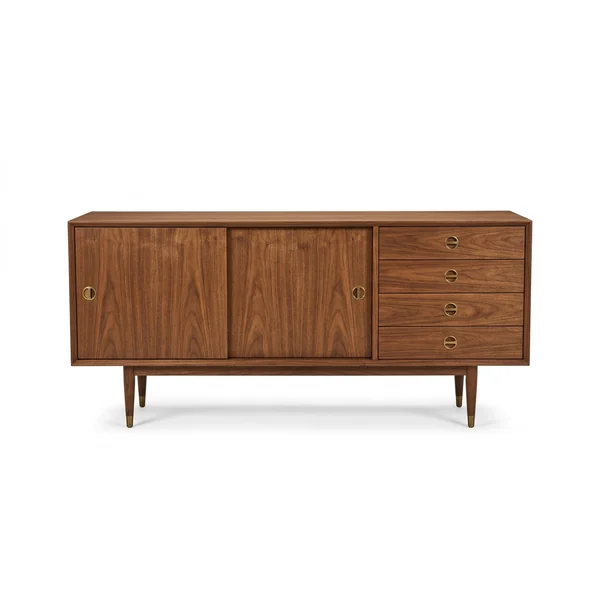
A low sideboard in richly grained walnut with recessed pulls and tapered legs. The hero storage piece.
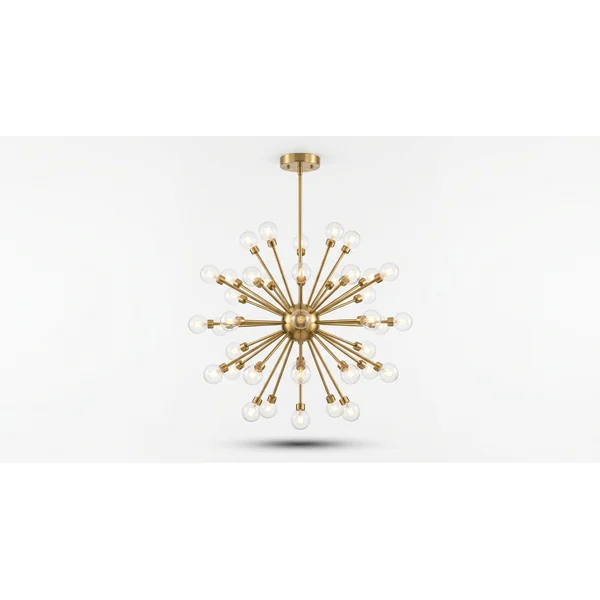
A brass starburst or globe fixture, the atomic-age light that becomes the room's focal point.
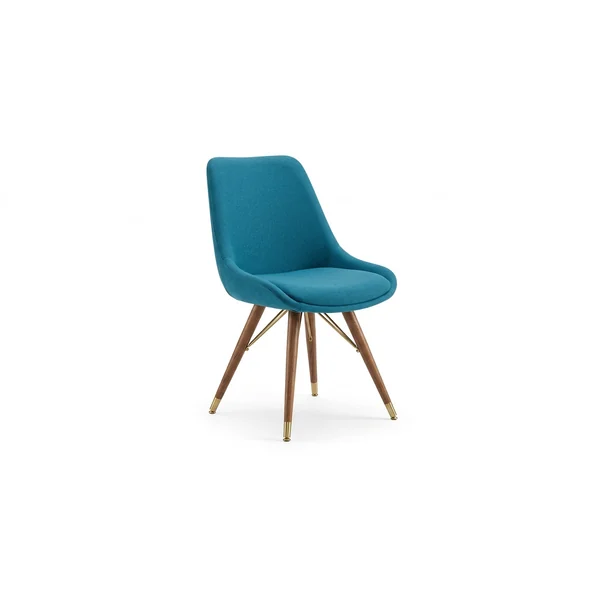
A molded or upholstered seat on slim splayed dowel legs with brass ferrules. Light, retro, and comfortable.
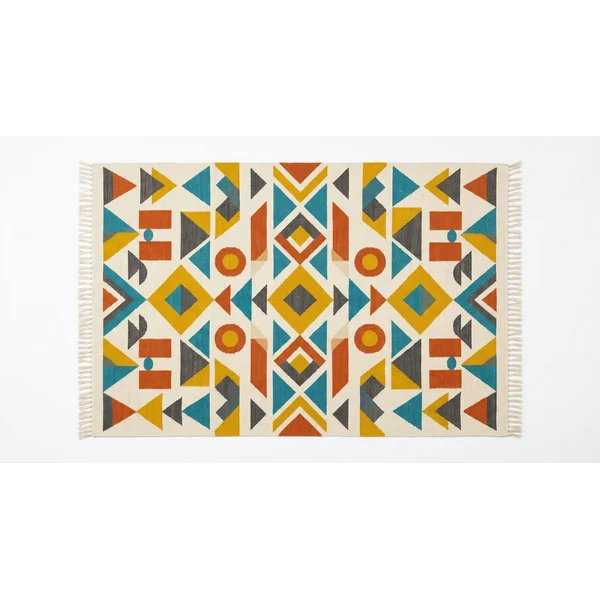
A bold mustard, teal, and burnt-orange pattern to anchor the seating and carry the colour.
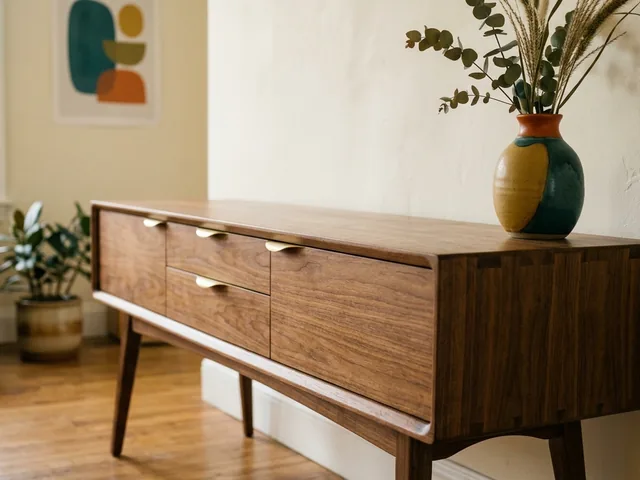
A handful of designer-classic shapes, the lounge chair, the egg-shaped seat, the low credenza, act as quiet sculpture and set the tone for the whole room.
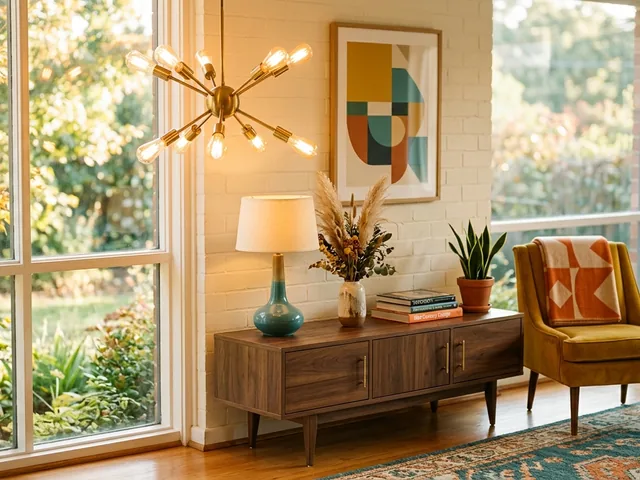
Sputnik chandeliers, globe pendants, and arched floor lamps in brass are treated as focal points rather than afterthoughts.
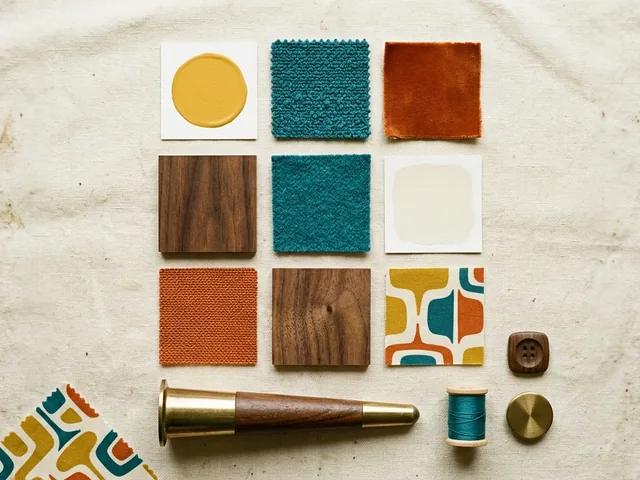
Warm neutrals and wood tones form the base, then mustard, teal, olive, or burnt orange come in as confident retro accents.
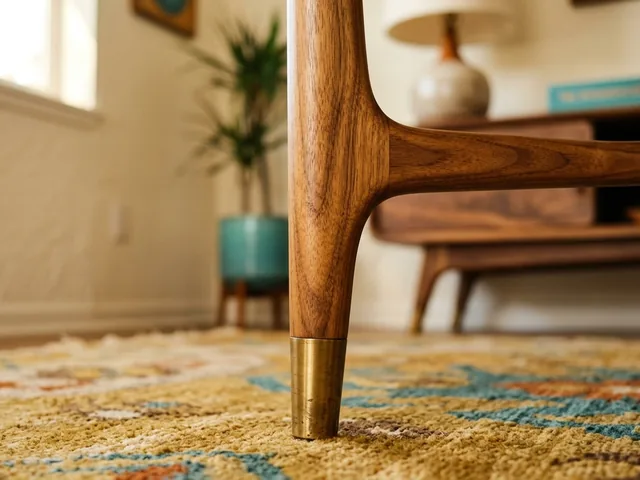
Rich, grainy hardwoods on slim legs that taper to a point, so even solid furniture looks light and lifted off the floor.
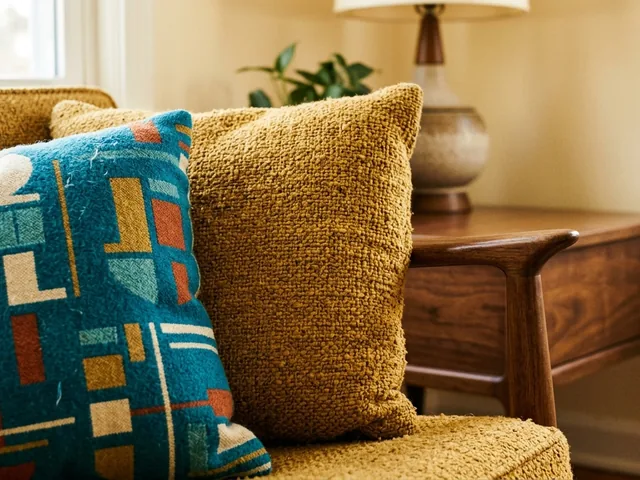
Boxy seating is softened with rounded edges and nubby woven fabrics, balancing crisp geometry with organic, comfortable form.
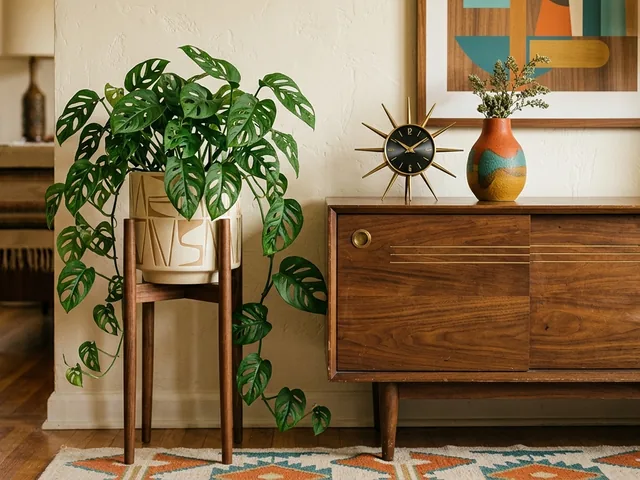
A leafy plant, a ceramic vase, a starburst clock, and a few period objects finish the room without clutter.
Mid-century modern leans on the 60-30-10 rule, but it is bolder with the final 10 than most calm styles. Around 60 percent is a warm neutral base, about 30 percent is wood tone (walnut or teak treated as a colour in its own right), and the last 10 percent is where the personality lives: a confident hit of mustard, teal, or burnt orange. Keep the base and wood warm, then let one or two retro accents do the talking rather than scattering colour everywhere.
Mid-century modern is one of the few styles that never really left, but in 2026 it is being used with a lighter, warmer hand. The clean lines and walnut stay, but the all-grey, museum-cool version is giving way to something cosier and more colourful. These are the shifts shaping mid-century rooms this year:
After years of grey-washed and pale woods, rich walnut and teak are firmly back. The deeper, warmer grain is what gives 2026 rooms their retro soul.
Mustard, olive, teal, and burnt orange are being used with real confidence again, often on a whole sofa or feature wall rather than just a cushion.
Kidney-shaped sofas, rounded chairs, and soft sculptural forms are leading, a return to the organic side of mid-century rather than the boxy one.
Pure period rooms are out. In 2026 mid-century pieces are mixed into modern, Scandinavian, and even boho spaces, used as warm hero pieces rather than a full theme.
Sputnik chandeliers, mushroom lamps, and sculptural globe pendants are treated as the centrepiece, often the most expressive object in an otherwise calm room.
Mid-century modern spans a huge price range, because you can buy convincing reproductions for very little or original and licensed designer pieces for a great deal more. A light refresh runs $500 to $1,100; a fuller living room makeover lands around $4,500 to $9,500 mid-range, with genuine design icons pushing it far higher. Here is where the money goes (rough 2026 US estimates):
| Item | Budget | Mid-range | High-end |
|---|---|---|---|
| Flooring (warm wood or wood-look) | $500–900 (laminate / LVT) | $1,500–3,000 (engineered walnut / oak) | $4,000–8,000 (solid hardwood) |
| Sofa (tapered-leg, 3-seat) | $600–1,100 (flat-pack) | $1,500–3,200 | $4,500+ (licensed design) |
| Lounge chair (the hero piece) | $200–450 (repro) | $700–1,500 (quality repro) | $4,000+ (licensed icon) |
| Walnut credenza / sideboard | $300–600 | $900–2,000 | $3,500+ (vintage / solid walnut) |
| Lighting (sputnik / globe pendant) | $120–300 | $450–1,000 | $2,000+ (design icons) |
| Rug, textiles & retro decor | $120–300 | $400–800 | $1,200+ |
Where to spend: the lounge chair and a real walnut credenza, the two hero pieces that define the look and hold their value, since vintage MCM is a genuine investment. Where to save: rugs, lighting, and reproduction seating, which get you most of the look for far less.
Choose one signature item to build the room around, a walnut credenza or an iconic lounge chair. Everything else supports it, so this is the decision that sets the tone.
Paint walls a soft warm white or warm grey and use a warm wood floor. This calm backdrop lets the wood tones and bold accents do the work.
Pick low furniture raised on slim, splayed, tapered legs. The lifted look keeps even solid pieces feeling light and is the quickest MCM signal there is.
Bring in mustard, teal, olive, or burnt orange through a chair, cushions, art, or a rug. Use colour with confidence but keep it to one or two notes, not a rainbow.
Hang a sputnik or globe light as the focal point, add a leafy plant and a ceramic or two, then stop. The clean look depends on not overfilling the room.
Mid-century modern, often shortened to MCM, is the furniture and interior style that grew out of roughly 1945 to 1969, shaped by designers like Charles and Ray Eames, Hans Wegner, and Florence Knoll. It married new post-war materials such as molded plywood and fiberglass with the warmth of natural wood, and its rule was simple: clean, functional forms softened by organic, human curves. Nothing ornate, but nothing cold either.
The look reads instantly: low furniture raised on slim tapered legs, rich walnut and teak, a warm retro palette, and one or two sculptural pieces that double as art. It has never really gone away, which is the point. You build it around a hero piece, a walnut sideboard or an iconic lounge chair, keep the lines clean, and let a few bold accents in mustard, teal, or burnt orange carry the personality.
A light refresh with paint, a rug, retro lighting, and a couple of accents runs around $500 to $1,100. A fuller makeover with flooring, a sofa, a lounge chair, and a walnut credenza typically lands at $4,500 to $9,500 mid-range. Reproductions keep it affordable, while genuine licensed or vintage design pieces can push the lounge chair alone past $4,000.
Mid-century modern is the interior and furniture style from roughly 1945 to 1969, built on clean functional lines softened by organic curves, warm woods like walnut and teak, slim tapered legs, and a warm retro palette with bold accent colours. It values simple, well-made forms that double as sculpture, and it has stayed popular for decades.
The base is warm and neutral, cream, warm white, and rich wood tones, then the accents are bold and retro: mustard yellow, teal, olive green, and burnt orange. A near-black charcoal is often used in small doses on legs and frames to sharpen the clean lines.
Modern is the broader, cooler, more pared-back style rooted in early-to-mid 20th century modernism. Mid-century modern is a specific slice of it from the post-war decades, and it is warmer and more playful, with richer walnut tones, more organic curves, and far bolder accent colours.
Walnut and teak are the signatures, prized for their rich grain and warm tone, with oak and rosewood also common. The wood is usually shown with a natural oiled finish so the grain stays visible, and it is treated as a colour in the palette rather than a neutral.
Mid-century pieces mix beautifully because their clean lines sit comfortably alongside almost anything. Use one or two hero pieces, a walnut credenza or an iconic chair, as warm anchors in a modern, Scandinavian, or even bohemian room, rather than committing to a full period theme. This is exactly how the style is most used in 2026.
Warm wood is the classic choice, ideally with visible grain, in oak or a walnut tone, either as real wood or a good engineered or laminate version. A bold geometric rug over the wood is the most authentic finishing touch.
Yes, very well. Furniture raised on slim tapered legs keeps the floor visible, which makes a small room feel larger and airier, and the clean lines avoid visual clutter. The key is restraint: one hero piece, a couple of accents, and breathing room rather than a full set.
Absolutely. Reproductions of the classic chairs and tapered-leg furniture are widely available and affordable, thrift and vintage stores are full of genuine MCM finds, and a warm neutral wall plus one bold accent does a lot of the work. You can also upload a photo of your room to MeltFlex to preview the look before spending anything.
Yes, more than ever, and it has barely dated in seventy years. In 2026 it is being used with a warmer, lighter hand: rich walnut over cool grey, bolder retro colour, organic curves, and mid-century hero pieces mixed into other styles. The clean, functional, warm core is as popular as it has ever been.
Not sure this is your style? Take the free style quiz