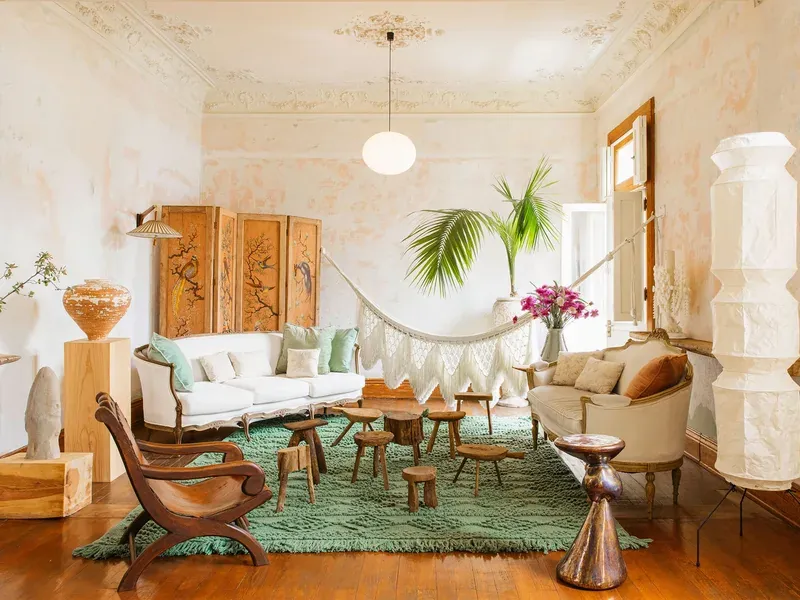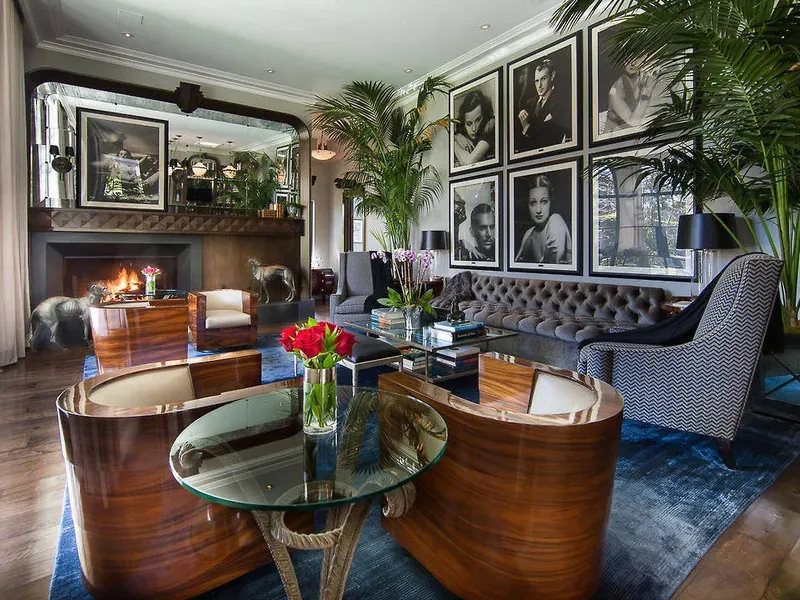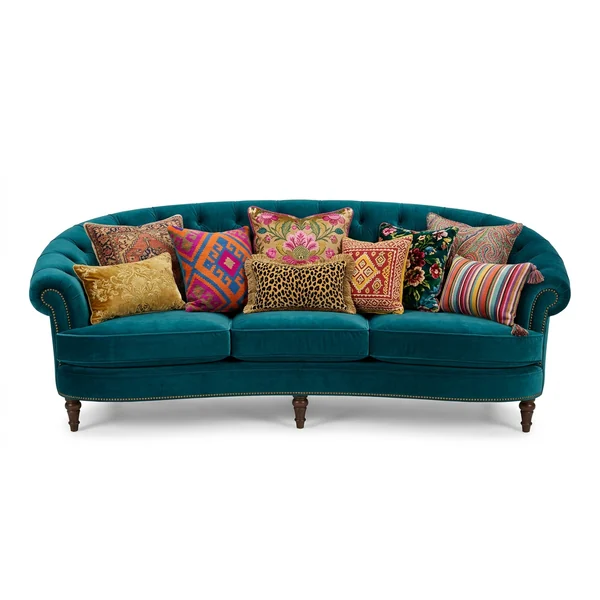
Jewel-tone velvet sofa
A plush teal or fuchsia velvet sofa, piled with clashing patterned cushions. The bold, layered anchor.
More is more: saturated colour, layered pattern, and fearless personality with nothing held back. Here is what defines maximalist design in 2026, what it costs, the trends shaping it now, and how to get the look.
Try Maximalist on your room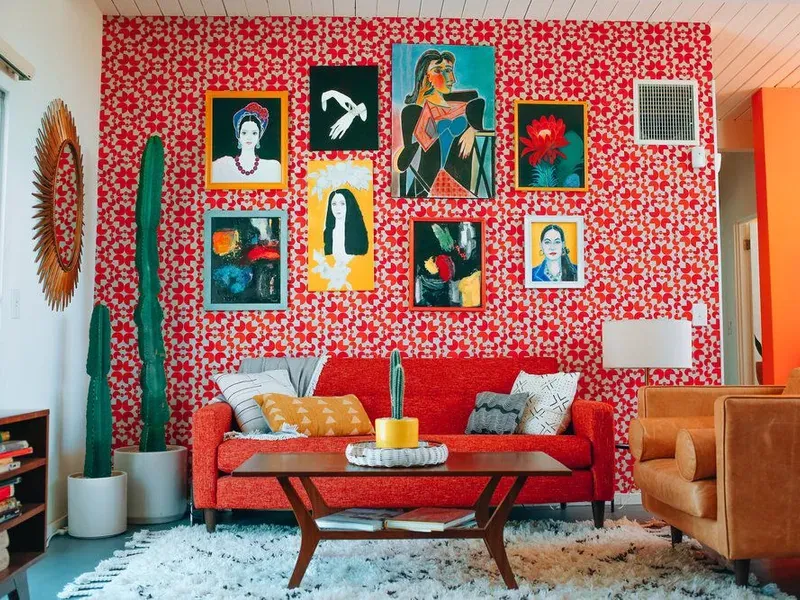
Maximalism is built from bold, characterful pieces layered together. These are the rich, expressive staples that read as maximalist instantly:
A plush teal or fuchsia velvet sofa, piled with clashing patterned cushions. The bold, layered anchor.
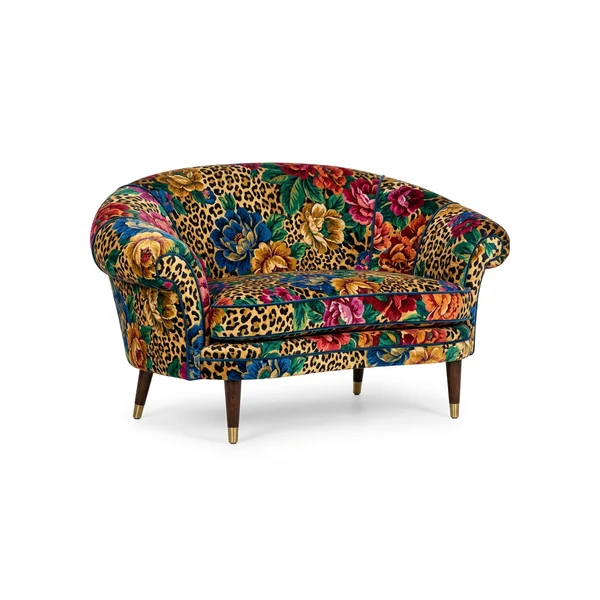
A curved chair in a vivid floral or animal print. A characterful statement all on its own.
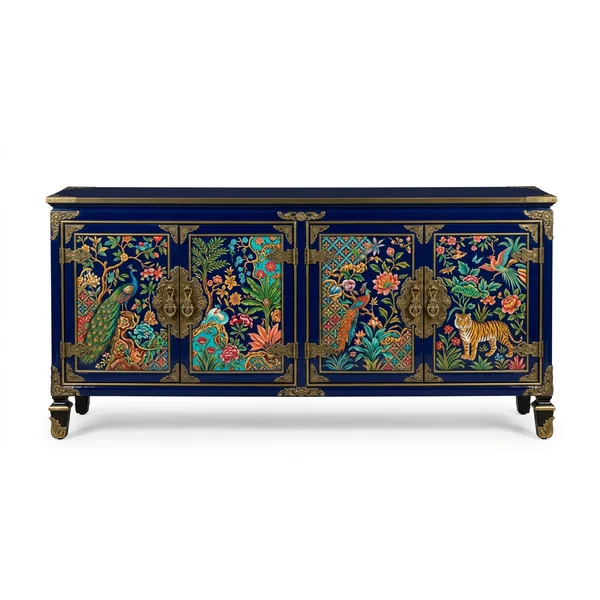
A cabinet in saturated emerald or cobalt with a bold or hand-painted front. Storage with personality.
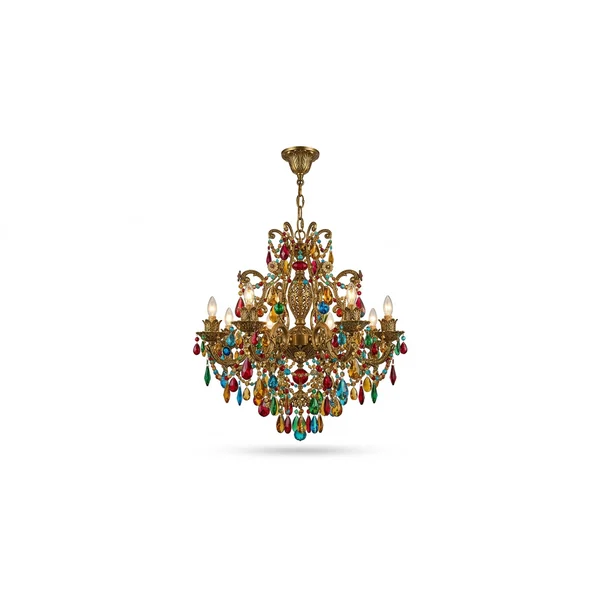
A decorative brass-and-coloured-glass fixture that doubles as a sculptural focal point.
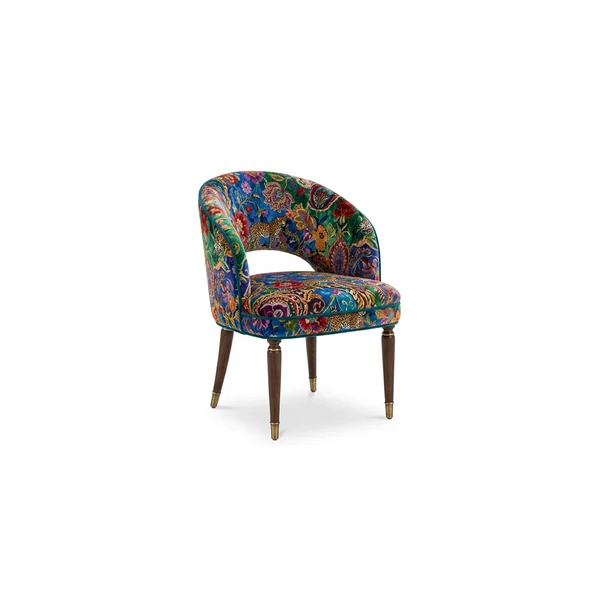
A vibrant patterned dining chair with contrasting piping. Mix several for an eclectic set.
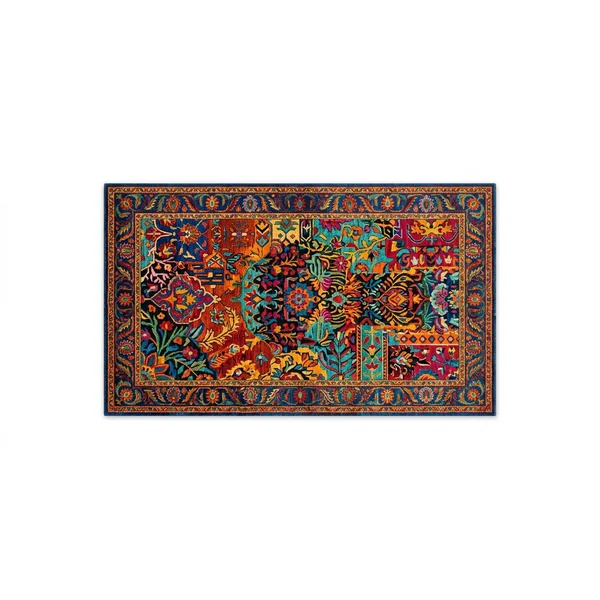
A rich, busy rug in mixed patterns and saturated colour to tie the layered room together.
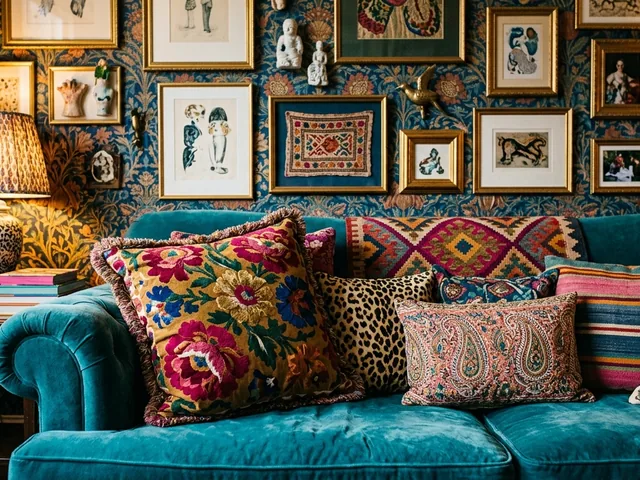
Plush seating piled with cushions, layered rugs, and rooms that feel full and lived-in rather than spare. Abundance is the point.
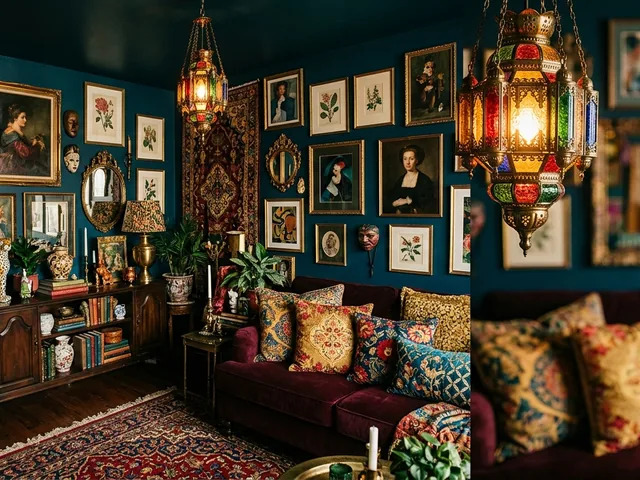
Ornate chandeliers, colourful glass, and sculptural fixtures that double as statement pieces, never plain or hidden.
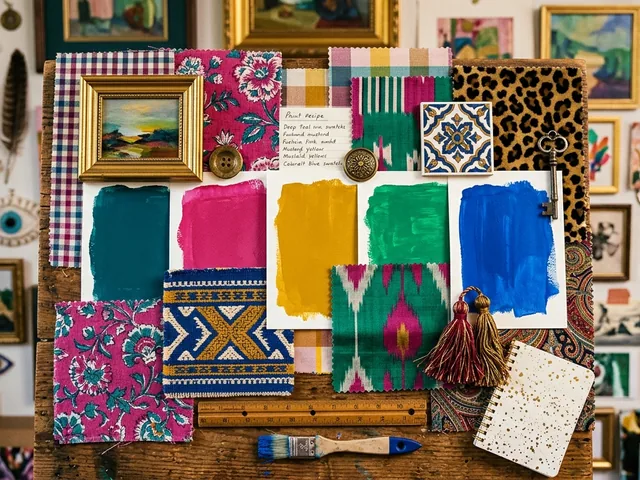
Two or three dominant rich shades, jewel tones, hot brights, or deep moody colours, layered with confidence across the room.
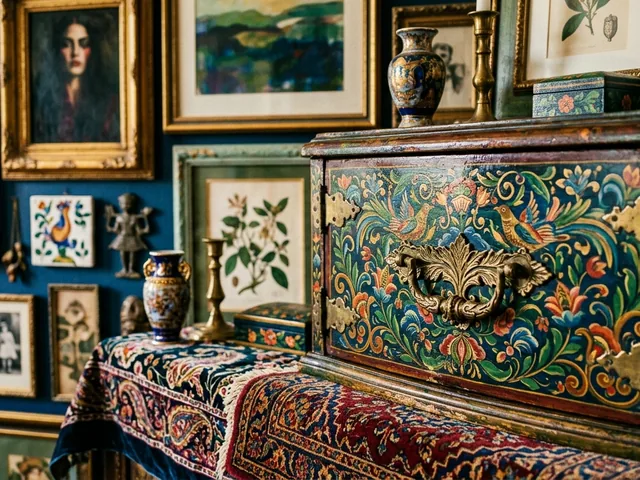
Florals, stripes, animal prints, and geometrics combined deliberately, with varied scales so they complement rather than clash.
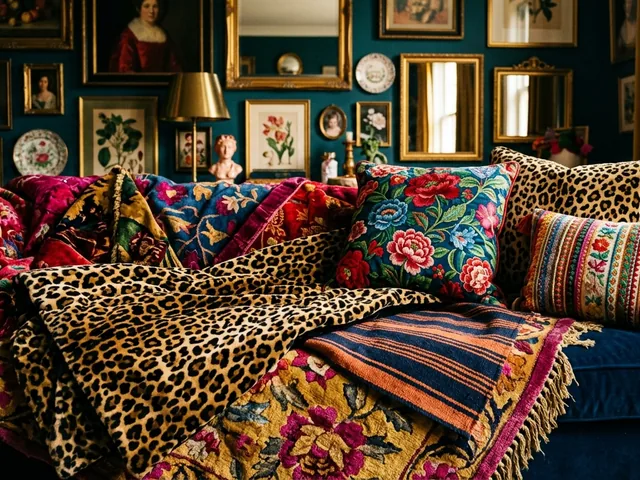
Velvet, silk, embroidery, and tassels add the tactile, layered luxury that makes a maximalist room feel indulgent.
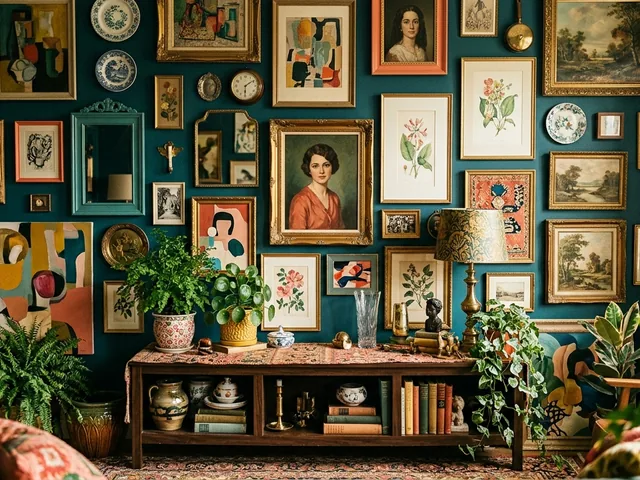
Walls full of framed art and shelves of collected, personal objects. The story of the room is told through what is on display.
Maximalism throws out the rule that you should limit colour, but it still needs an anchor. Rather than a strict 60-30-10 split, choose two or three dominant shades and let them recur around the room so the eye has a thread to follow. Pick colours that share a mood, all rich and saturated or all deep and moody, then layer freely. The discipline is in the palette, not the quantity.
Maximalism has surged back as the antidote to a decade of grey minimalism, and in 2026 it is bolder and more personal than ever. The more-is-more spirit stays, but it is being layered with a little more intention. These are the shifts shaping maximalist rooms this year:
Rooms designed to lift your mood are everywhere, with saturated, happy colour combinations chosen purely because they spark joy rather than to follow any rule.
Painting walls, trim, and ceiling in one rich shade is a defining 2026 move, creating an enveloping backdrop that makes layered pattern and art pop.
Florals with stripes with checks, mixed at different scales, are being combined deliberately. The trick of varying the scale is what makes the clash feel curated.
Flea-market finds, inherited pieces, and meaningful objects are central, both for sustainability and because personal collections are what give maximalism its soul.
Salon-style art walls and decorated ceilings, painted, papered, or moulded, are turning every surface, including the fifth wall, into an opportunity for expression.
Maximalism can flex to almost any budget, because thrifting, layering what you own, and bold paint go a long way, though designer fabrics and statement pieces can push it high. A light refresh runs $400 to $1,200; a fuller living room makeover lands around $5,000 to $11,000 mid-range. Here is where the money goes (rough 2026 US estimates):
| Item | Budget | Mid-range | High-end |
|---|---|---|---|
| Flooring (wood, bold tile, or layered rugs) | $400–900 (laminate / LVT) | $1,500–3,000 (engineered) | $4,000–8,000 (patterned / parquet) |
| Sofa (jewel-tone velvet, 3-seat) | $700–1,200 | $1,800–3,500 | $5,000+ (designer) |
| Accent chairs (patterned) | $250–550 | $800–1,800 | $3,000+ (designer) |
| Wallpaper / colour drenching (paint + paper) | $150–500 | $700–1,800 | $3,500+ (designer / hand-blocked) |
| Lighting (ornate chandelier + lamps) | $200–500 | $700–1,600 | $3,000+ (statement / vintage) |
| Rugs, textiles, art & objects | $300–800 (thrifted) | $1,000–2,500 | $5,000+ (collected / art) |
Where to spend: one bold sofa and the wallpaper or paint that sets the whole mood. Where to save: thrift the art, objects, and accent pieces, layering and gallery walls are where maximalism shines, and secondhand finds give more character than new for less.
Pick a small set of bold shades that share a mood and commit to them. Letting those colours recur around the room is what keeps the abundance feeling cohesive.
Paint or paper the walls, and often the trim and ceiling, in one rich shade. A bold, enveloping backdrop makes everything you layer on top sing.
Mix florals, stripes, and geometrics, but vary the scale, one large, one medium, one small, so the patterns complement rather than fight each other.
Fill a wall with framed art salon-style and put your meaningful objects on show. This is where the room becomes personal rather than generic.
Add velvet, plush rugs, plants, and metallics for richness, then step back and edit. Repeating a colour and grounding with black keeps abundance from tipping into clutter.
Maximalism is the joyful opposite of minimalism. Where minimalism subtracts, maximalism layers: bold colour, mixed pattern, collected objects, and walls full of art, all combined with confidence. Its philosophy is more is more, but the best maximalist rooms are not random. They are abundant and personal, telling the story of the people who live there through the things they have gathered and loved.
The skill is in the layering. A maximalist room uses two or three dominant colours, mixes patterns at different scales so they sit together rather than fight, and fills the walls with art and objects that actually mean something. There is order underneath the abundance: a repeated colour, a shared mood, a sense of balance. Done well it feels rich, alive, and brave. Done carelessly it tips into clutter, so the trick is bold curation, not just buying more.
A light refresh with bold paint or wallpaper, cushions, art, and thrifted objects runs around $400 to $1,200. A fuller makeover with a jewel-tone sofa, patterned chairs, statement lighting, and layered rugs and textiles typically lands at $5,000 to $11,000 mid-range. Because thrifting and layering what you own go so far, maximalism flexes to almost any budget.
Maximalism is a bold, more-is-more style that layers saturated colour, mixed pattern, rich texture, and collected objects with confidence. Unlike minimalism, it celebrates abundance and personality, filling walls with art and surfaces with meaningful things. The best maximalist rooms are not random, though: they are anchored by two or three recurring colours and a shared mood so the layering feels curated.
There are no off-limits colours, but successful maximalist rooms anchor on two or three dominant saturated shades, often jewel tones like teal, emerald, and cobalt, hot brights like fuchsia and mustard, or deep moody tones, with black for grounding contrast. The key is choosing colours that share a mood and letting them recur throughout.
They are opposites. Minimalism subtracts, keeping only the essentials, a neutral palette, clear surfaces, and lots of negative space. Maximalism layers, embracing bold colour, mixed pattern, rich texture, and collected objects to create an abundant, personal room. Minimalism is about restraint; maximalism is about confident, curated excess.
Vary the scale and share a colour. Combine one large-scale pattern, one medium, and one small so they sit together rather than compete, and make sure they share at least one colour from your dominant palette. Grounding the scheme with a solid or black accent and leaving a few calmer spots keeps the mix feeling deliberate.
Clutter is accidental and meaningless; maximalism is intentional and curated. A maximalist room has a clear colour anchor, patterns chosen to work together, and objects displayed because they matter, with an underlying sense of balance. The abundance is designed, not just accumulated, which is what makes it feel rich rather than messy.
Wood floors give a warm, flexible base, but the real maximalist move is layering bold rugs on top, even mixing two patterned rugs. A striking patterned tile or a colourful floor can also become a feature in its own right. The floor is just one more surface to layer and express on.
Yes, and small rooms can actually carry it beautifully. Colour-drenching a small space in one rich shade makes it feel like a jewel box, and layering pattern and art adds depth rather than shrinking the room. The key is curation: anchor the palette, vary pattern scale, and make sure everything earns its place.
Yes, it is one of the most budget-friendly styles for the impact it delivers. Bold paint or a single feature wallpaper is cheap drama, thrifted art, frames, and objects build a gallery wall for little, and layering what you already own adds instant character. You can also upload a photo of your room to MeltFlex to preview the look before spending anything.
Yes, and it is one of the strongest trends right now. As a reaction against years of grey minimalism, maximalism has surged back, with 2026 leaning into joyful dopamine decor, colour drenching, deliberate pattern clashing, and personal, collected, vintage pieces. Bold gallery walls and decorated ceilings are everywhere, and the more-is-more mood shows no sign of fading.
Not sure this is your style? Take the free style quiz