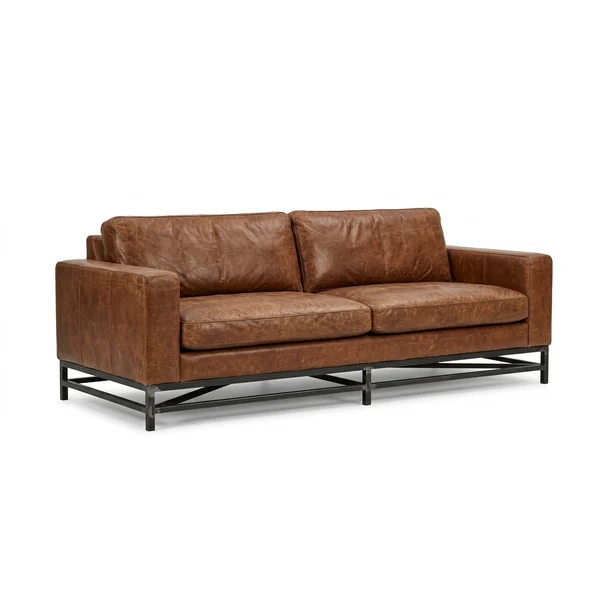
Distressed leather sofa
Worn cognac leather on a low, boxy frame. The warm, lived-in anchor of the room.
Exposed brick, raw metal, reclaimed wood, and the warm glow of Edison bulbs. Here is what defines industrial design in 2026, what it costs, the trends shaping it now, and how to get the look.
Try Industrial on your room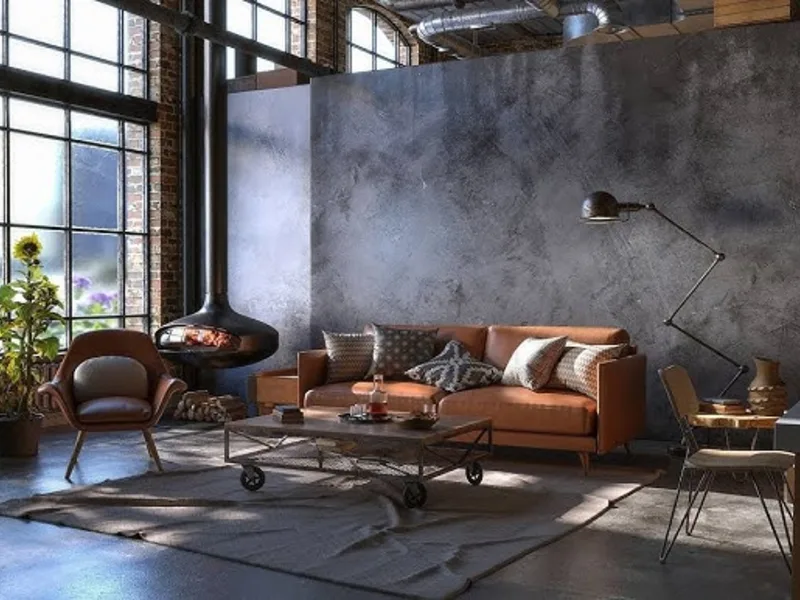
A handful of rugged, characterful pieces define the whole look. These are the raw-material staples that read as industrial instantly:
Worn cognac leather on a low, boxy frame. The warm, lived-in anchor of the room.
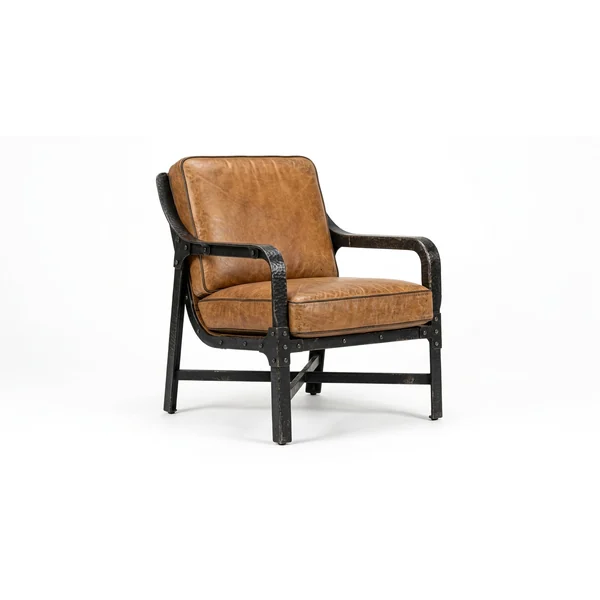
Aged tan leather on a bolted black frame, with the exposed hardware as the detail.
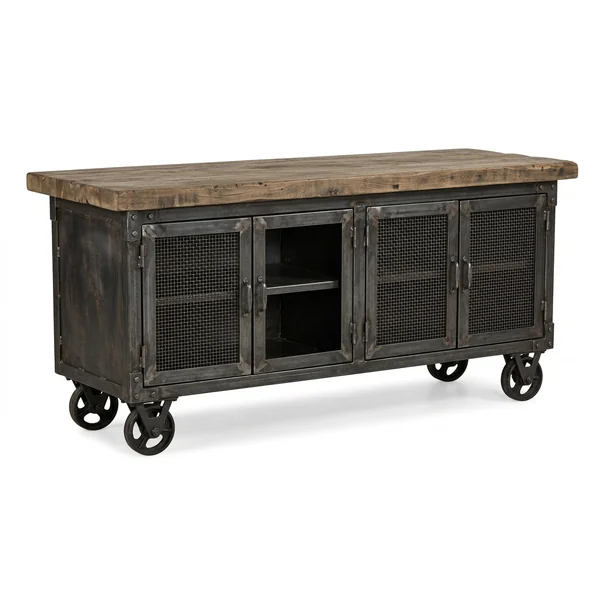
Weathered timber and raw steel with visible welds. Storage that looks like a factory cart.
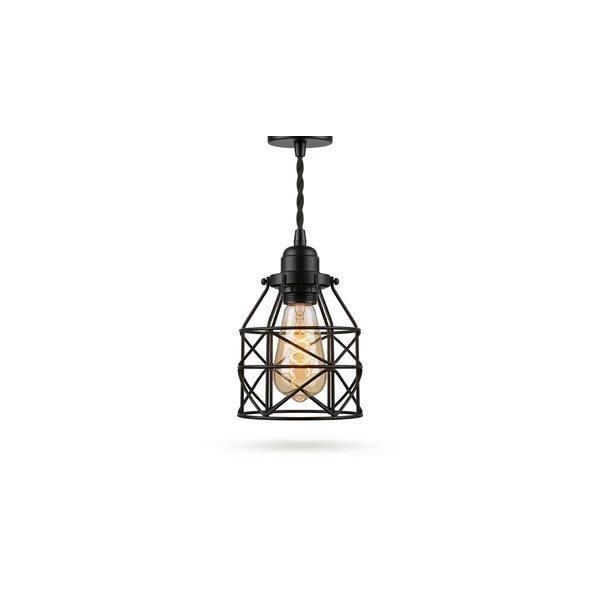
A matte-black metal cage around a visible filament bulb, for that signature amber glow.
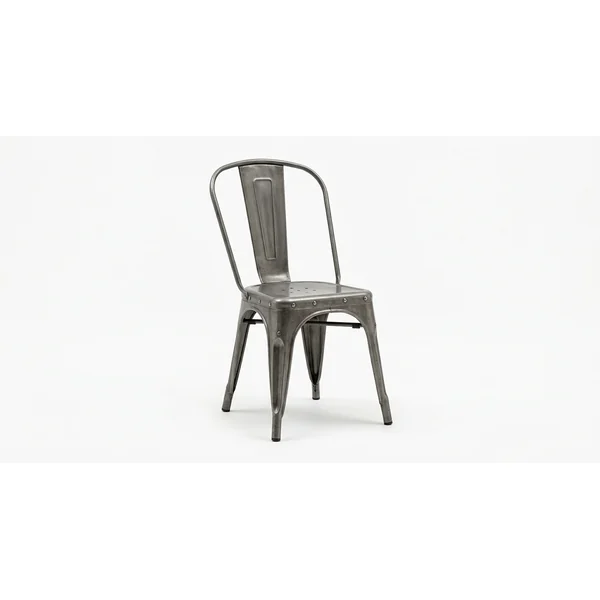
A stamped-steel factory chair in raw gunmetal, sturdy, stackable, and utilitarian.
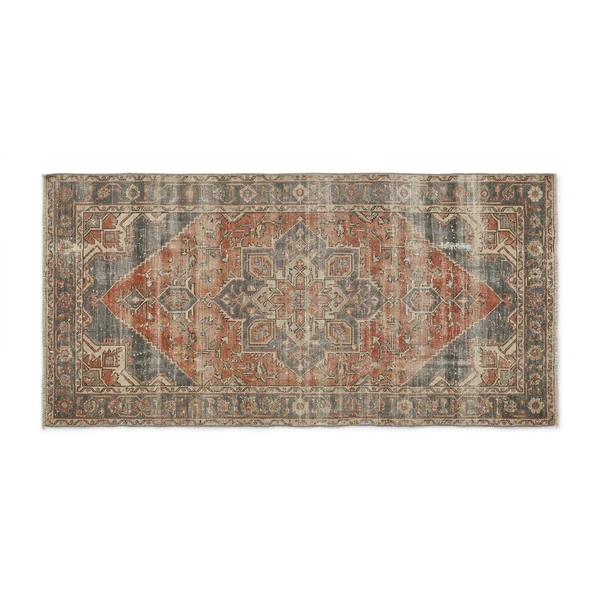
A faded grey-and-rust flat weave to warm a concrete floor without hiding it.
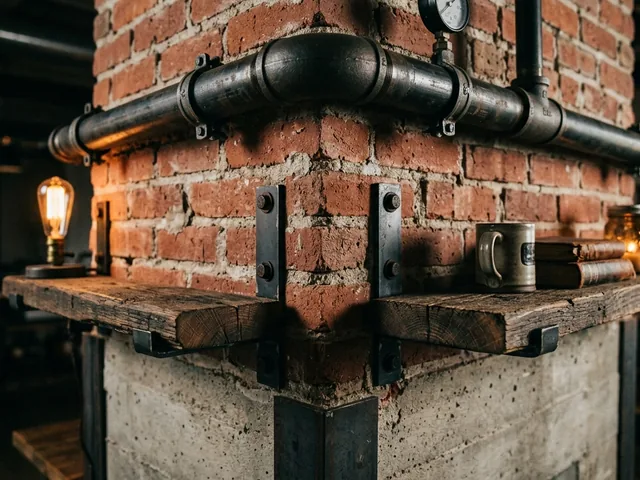
Brick walls, concrete, ceiling ductwork, and steel beams are left on show rather than hidden, so the building's bones become the decoration.
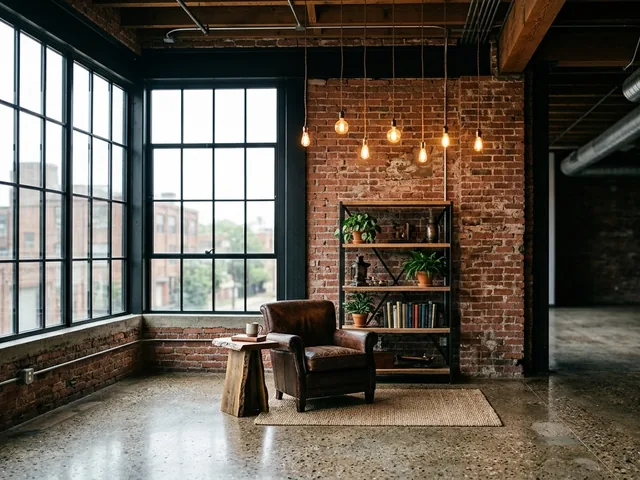
Tall black-framed factory windows, high ceilings, and open-plan layouts give the airy, warehouse feeling at the heart of the style.
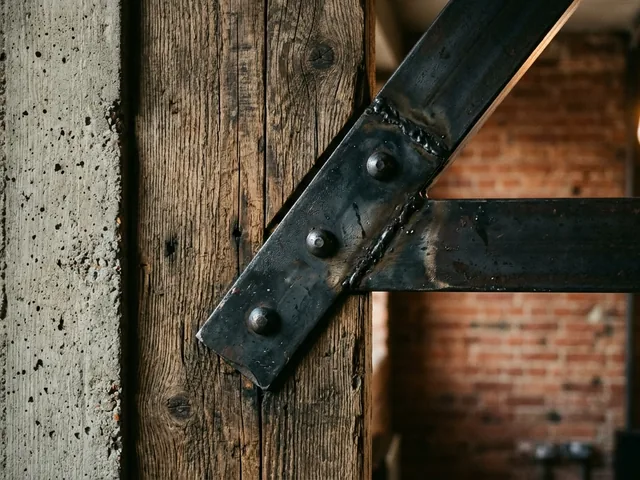
Concrete, blackened steel, and weathered reclaimed wood are used as-is, with their texture, welds, and patina celebrated, not concealed.
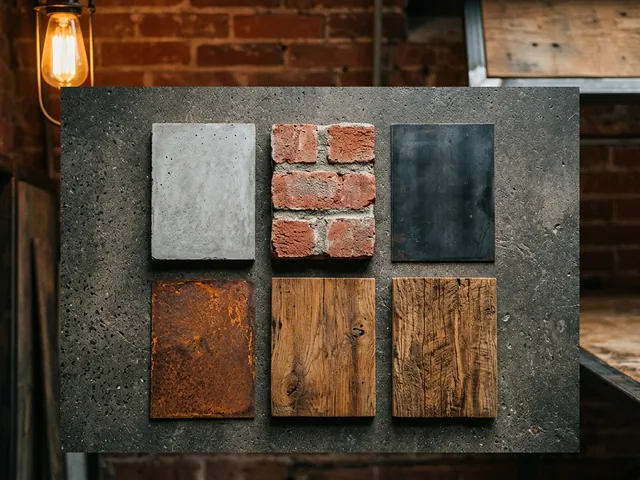
A base of concrete grey, brick red, and warm rust keeps the room earthy and masculine without tipping into gloom.
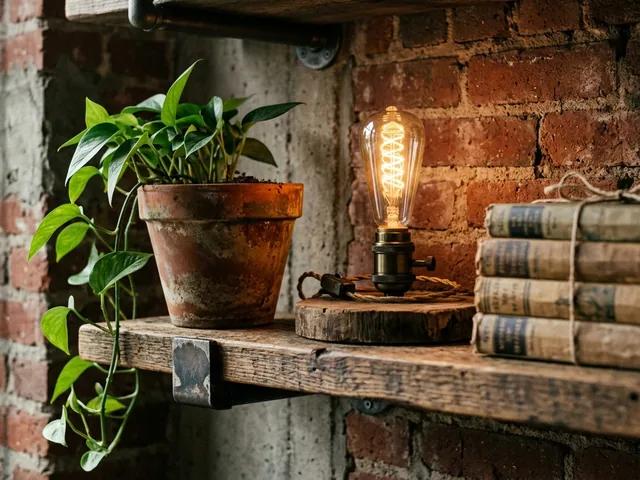
Visible filament bulbs, metal cage shades, and pendants on long cords cast an amber glow that warms up all the raw surfaces.
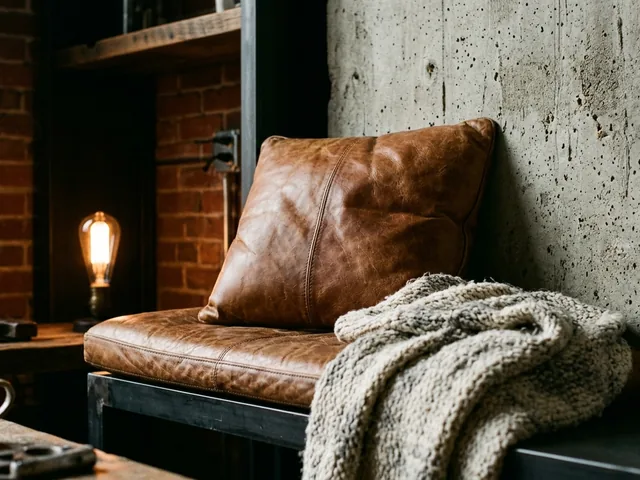
Aged leather, wool throws, and a plant or two are layered in to take the hard edge off the concrete and steel.
Industrial rooms are grounded in earthy, muted tones, and the 60-30-10 rule keeps them from feeling either bare or busy. Around 60 percent is a raw base of concrete grey or exposed brick, about 30 percent is the warmth of reclaimed wood and leather, and the final 10 percent is a punchy accent of blackened steel or rust. The aim is balance: enough warm material to stop the greys and blacks from feeling cold or industrial in the bad sense.
Industrial design in 2026 is softening at the edges. The raw materials and exposed structure stay, but the cold, all-concrete warehouse look is giving way to something warmer and more refined. These are the shifts shaping industrial rooms this year:
The trend is industrial luxe: the raw shell stays, but it is paired with warmer woods, plush leather, and softer lighting so the room feels like a home, not a workshop.
Rather than all-chrome, 2026 mixes blackened steel with aged brass and copper, and matte black is the go-to finish for frames, taps, and hardware.
Salvaged timber, recycled metal, and honest reuse are central now, both for the look and because the style's whole ethos is reusing what already exists.
Large leafy plants and hanging greenery are everywhere, the easiest way to soften concrete and steel and bring life into a hard-edged room.
One characterful vintage find or a bold Edison-bulb fixture now does the talking, replacing clutter with a few pieces that carry real history.
Industrial design ranges from cheap to costly, because the raw look can be faked with paint and accessories or built for real with structural work. A light refresh runs $500 to $1,100; a fuller makeover lands around $5,000 to $10,000 mid-range, with exposed brick or polished concrete pushing it higher. Here is where the money goes (rough 2026 US estimates):
| Item | Budget | Mid-range | High-end |
|---|---|---|---|
| Walls (exposed brick / concrete effect) | $150–400 (brick-effect paint / panels) | $1,000–2,500 (real exposure / cladding) | $3,500–7,000 (structural brick / polished plaster) |
| Flooring (concrete, wood, or LVT) | $500–900 (concrete-look LVT) | $1,500–3,000 (engineered wood) | $4,000–8,000 (polished concrete) |
| Sofa (leather, 3-seat) | $700–1,200 (faux / flat-pack) | $1,800–3,500 (real leather) | $4,500+ (full-grain designer) |
| Metal & wood storage / shelving | $200–500 | $700–1,600 | $2,500+ (custom steel) |
| Lighting (Edison / cage fixtures) | $120–300 | $450–1,000 | $1,800+ (statement pieces) |
| Decor (leather, plants, vintage finds) | $100–280 | $350–800 | $1,200+ |
Where to spend: a real leather sofa and good lighting, the two things that warm up all the raw surfaces. Where to save: brick and concrete effects, plus thrifted vintage pieces, get you most of the look for far less.
Expose brick or concrete if you can, or fake it convincingly with brick-effect cladding, micro-cement, or a dark grey wall. This rugged shell is the foundation of the whole look.
Build on concrete grey and brick tones, then warm it with reclaimed wood and cognac leather. Keep blackened steel and rust as the sharpening accents.
Choose furniture that combines weathered timber with black or gunmetal steel, exposed bolts and welds included. The honest construction is the point.
Hang pendants with visible filament bulbs and metal cages on long cords. The warm amber glow is what stops the raw surfaces from feeling cold.
Finish with a worn leather chair, a wool throw, and one or two large plants. These take the hard edge off the concrete and steel and make the room livable.
Industrial interior design was born when old factories, warehouses, and mills were converted into homes, and the raw bones of the building became the look. Rather than hiding the structure, it celebrates it: exposed brick, concrete, ductwork, and steel are left on show, and reclaimed materials are reused rather than replaced. The whole style is honest about how a space is built.
The result is a room that feels open, characterful, and a little undone, with the rugged volume of a loft. The risk is that all that raw concrete and metal can read as cold, so the craft of industrial design is balance: ground the hard surfaces with warm wood and leather, light it with the amber glow of Edison bulbs, and let the patina of older materials do the decorating.
A light refresh with paint, lighting, and a few metal-and-wood accents runs around $500 to $1,100. A fuller makeover with a leather sofa, real or faux exposed brick, and proper lighting typically lands at $5,000 to $10,000 mid-range. Genuine structural work, like exposing brick or pouring polished concrete, pushes costs higher, which is why many people fake those finishes instead.
You do not need a real warehouse. Fake the raw shell with brick-effect cladding or wallpaper, micro-cement, or a dark grey feature wall, then add metal-and-wood furniture, Edison-bulb lighting, and a leather chair. The combination of raw-look surfaces, black metal, and warm lighting reads as industrial even in a standard flat.
The palette is earthy and muted: concrete grey, brick red, and warm rust, grounded with reclaimed-wood brown and cognac leather, then sharpened with blackened steel. Bright or pastel colours are rare. Any pop usually comes from a rust or burnt-orange accent that nods to oxidised metal.
Warmth is the whole challenge of the style. Layer in reclaimed wood, aged leather, and wool textiles, use Edison or cage lighting for an amber glow instead of cool white light, and add a couple of large plants. These soft, warm elements balance all the concrete and steel and make the room genuinely inviting.
Both use reclaimed wood and natural materials, but the mood is different. Rustic is cosy, soft, and countryside-inspired, with lots of warm timber and comfort. Industrial is cooler and more urban, built around metal, concrete, exposed brick, and the open volume of a converted loft.
Visible filament Edison bulbs are the signature, usually in metal cage shades, on pendants with long cords, or in track and wall fixtures. The warm amber light is essential, because it counterbalances the cool grey of concrete and steel. Mixing metals like black, brass, and copper in the fixtures keeps it from feeling flat.
Yes, with a lighter touch. In a small room, keep one feature wall raw rather than every surface, choose furniture on slim legs so the floor stays visible, and use plenty of warm light. Tall black-framed shelving and mirrors can also play up the loft feeling without crowding the space.
Absolutely. Brick-effect paint or panels, thrifted metal and wood furniture, and affordable Edison-bulb fixtures get you most of the look for very little. Vintage and salvage finds suit the style perfectly, since wear and patina are a feature. You can also upload a photo of your room to MeltFlex to preview the look before spending anything.
It is a simple way to balance the palette. About 60 percent is a raw base of concrete grey or exposed brick, roughly 30 percent is the warmth of reclaimed wood and leather, and the final 10 percent is a sharp accent of blackened steel or rust. Getting enough warm material into that middle layer is what stops the room from feeling cold.
Yes, and it is evolving into a warmer, more refined version. In 2026 industrial design is leaning toward industrial luxe: the raw brick, concrete, and steel stay, but they are paired with richer woods, plush leather, mixed metals, statement Edison lighting, and plenty of greenery. The core idea, celebrating honest, raw materials and open volume, is as popular as ever.
Not sure this is your style? Take the free style quiz