Designing the interior of an entire house is one of the most exciting — and overwhelming — projects you will ever take on. There are dozens of decisions to make in every room: furniture, colors, flooring, lighting, storage, and layout. Multiply that across a living room, bedrooms, kitchen, home office, and hallways, and you are looking at hundreds of choices that all need to work together.
This is where most people get stuck. They browse Pinterest for months, save thousands of images, visit showrooms on weekends — and still cannot visualize how it all comes together in their actual space. In 2026, AI interior design tools change that completely. Upload your floor plan, and you can design every room in 3D — with real furniture, real colors, and photorealistic renders — before spending a single euro.
In this guide, we cover everything you need for your house interior design — room by room, style by style, budget by budget — and show you how to use AI to see your finished home before you start.
Where to Start: The Floor Plan First Approach
Every successful home interior design project starts the same way: with the floor plan. Not with furniture shopping, not with color swatches, not with Pinterest boards — with the actual layout of your home.
Your floor plan tells you everything you need to know: room dimensions, wall lengths, where doors and windows are, how rooms connect, and how traffic flows through the house. Without understanding these constraints, you are designing blind.
With MeltFlex, you upload your floor plan — whether it is an architect drawing, a builder plan, a hand sketch, or even a photo from a real estate listing — and the AI converts it into an interactive 3D model of your entire home in seconds. Every room is there, with accurate dimensions. From this 3D model, you design each room individually while always seeing how it fits into the whole.
This floor plan first approach prevents the biggest house interior design mistake: buying furniture that does not fit. That sectional sofa that looked perfect in the showroom? It might block the doorway. That king-size bed? It might leave zero space for nightstands. The floor plan tells you the truth before your wallet does.
Room-by-Room House Interior Design Guide
The key to a cohesive home interior design is designing room by room while keeping a consistent overall vision. Choose your style direction first (modern, Scandinavian, warm contemporary, etc.), pick a core color palette, and then adapt it to each room's specific function.
Living Room
The living room is the centerpiece of your house interior design. It is where your style makes the strongest statement. Start with the sofa — it is the largest piece and sets the tone. Add a coffee table proportional to the sofa (roughly two-thirds its length), a bookshelf or media unit for storage, and accent seating for flexibility.
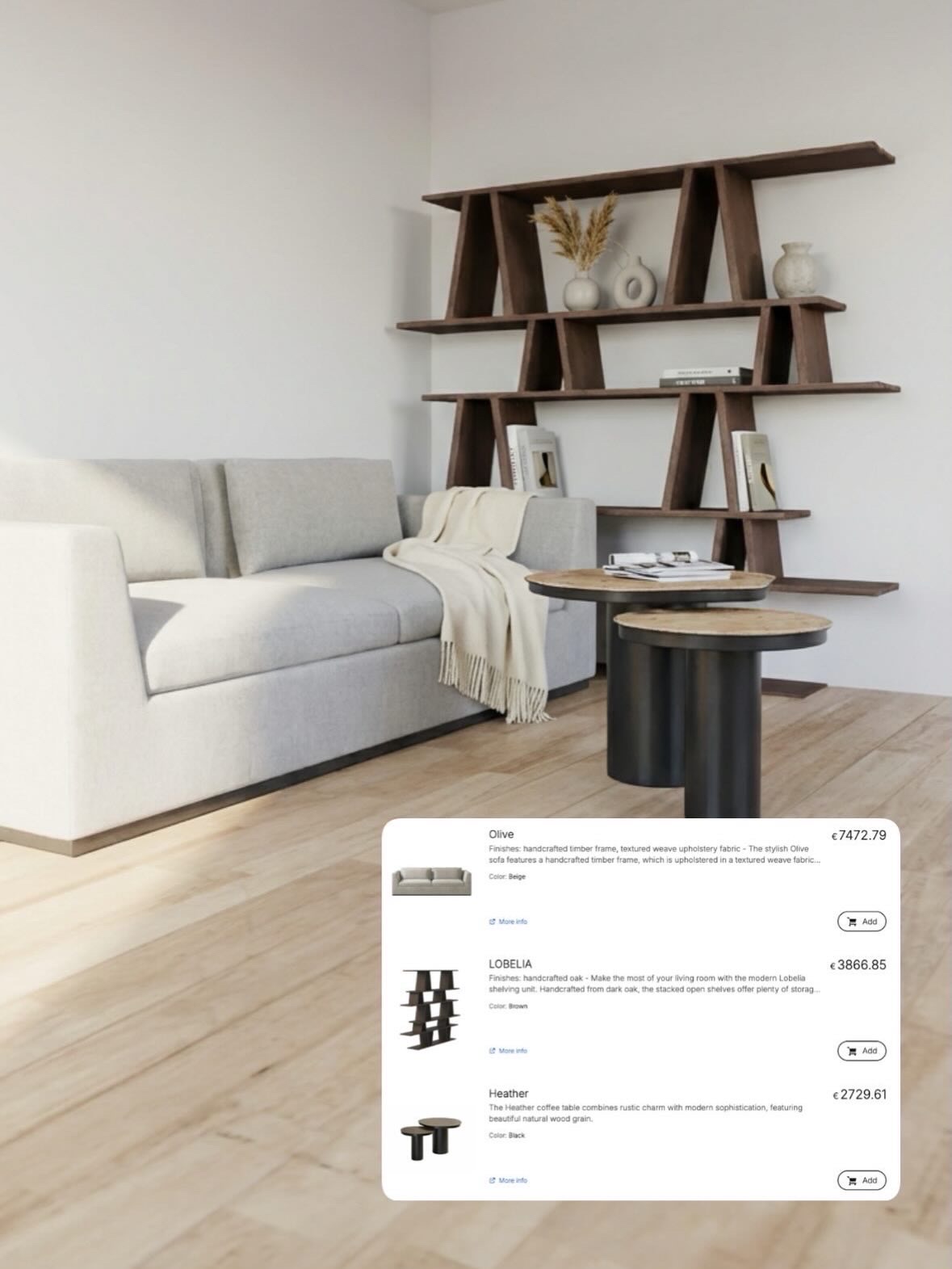
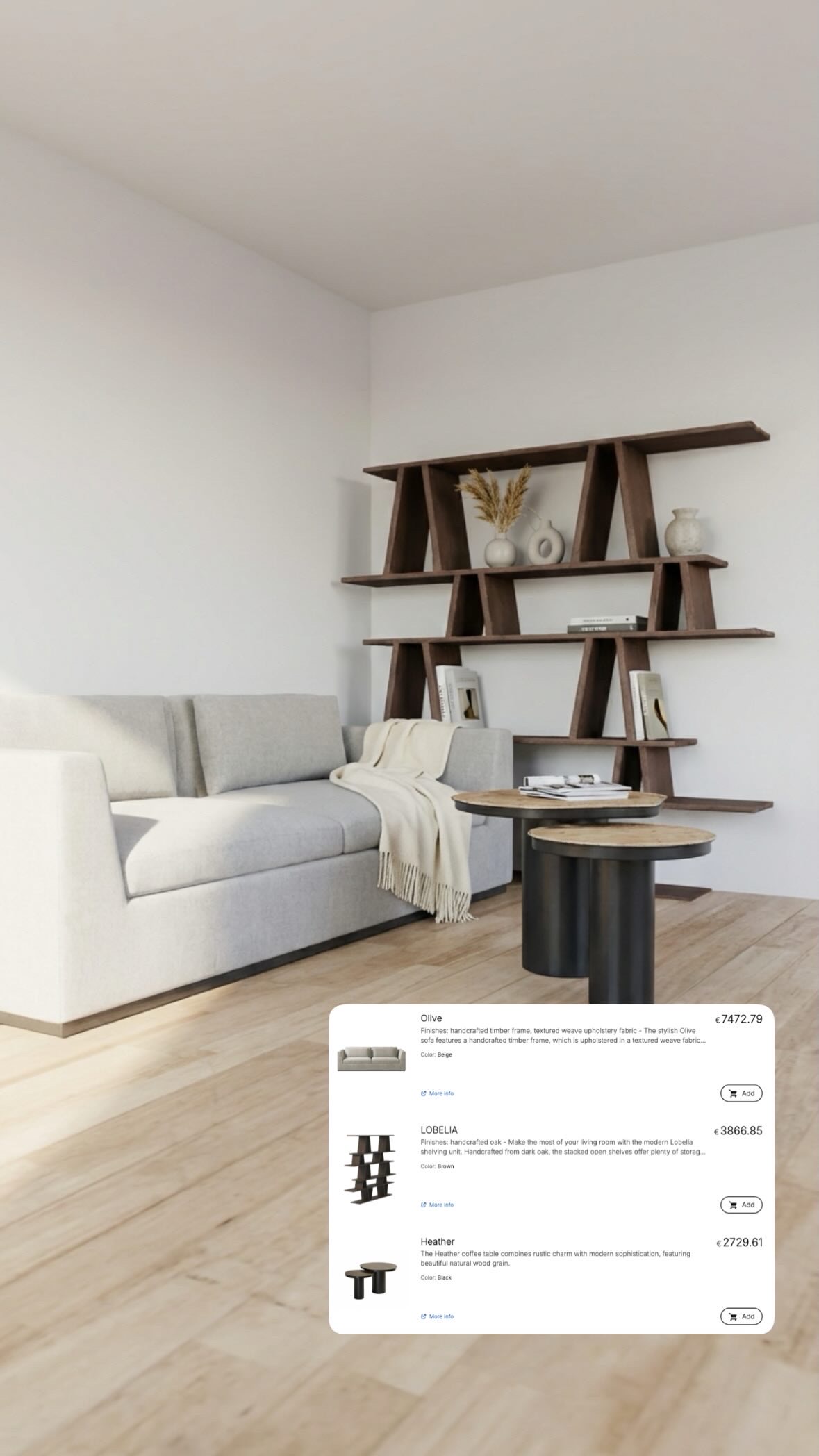
In MeltFlex, you can place each piece in your 3D living room and see exactly how it fits. The image below shows a living room designed with real, purchasable furniture — an Olive sofa, LOBELIA bookshelf, and Heather coffee table — with prices and product details available directly in the design view. Every item you see is shoppable.
Bedroom
The bedroom needs to prioritize comfort and calm above everything. Place the bed first — centered against the longest wall — then add nightstands, a wardrobe, and lighting. In a home interior design context, bedrooms should feel like a retreat from the rest of the house: slightly different in mood but connected in style. If your living room is warm contemporary, your bedroom might use the same wood tones and neutral palette but with softer textures and lower lighting.
For detailed bedroom planning, see our complete bedroom interior design guide.
Home Office
A well-designed home office directly impacts your productivity. The desk should face natural light — ideally perpendicular to the window to avoid glare on your screen. A quality desk chair is non-negotiable. Add a bookshelf or wall-mounted shelving for storage, and keep the desk surface as clear as possible.
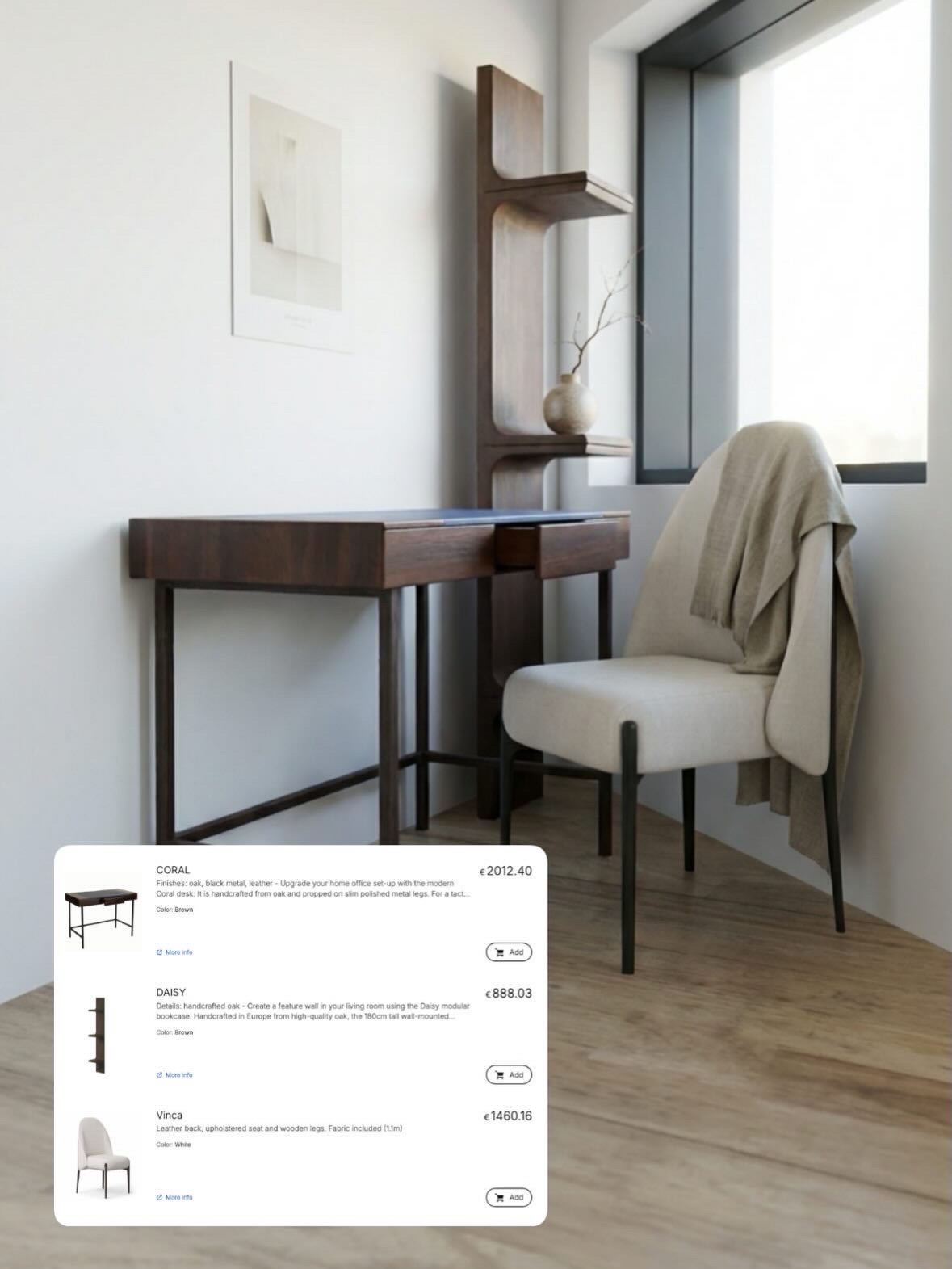
The image below shows a home office designed in MeltFlex — a CORAL desk, DAISY bookshelf, and Vinca chair, all real products you can purchase directly. Notice how the AI render shows exact proportions: the desk fits perfectly against the wall, the chair has clearance, and the bookshelf adds vertical storage without crowding the workspace.
Kitchen
Kitchen interior design revolves around the work triangle — the relationship between the sink, stove, and refrigerator. Whether you have an L-shaped, U-shaped, galley, or island kitchen, these three elements should be easily accessible from each other without obstacles. Beyond the work triangle, focus on counter space (you always need more than you think), storage (deep drawers beat cabinets for everyday items), and lighting (task lighting above the counter, ambient lighting for the room).
Kitchen layouts are the most impactful place to use a 3D room design tool. Small changes in cabinet placement or appliance position can make the difference between a kitchen that flows and one that frustrates you daily. Upload your floor plan and test different configurations in 3D before any renovation work begins.
Dining Area
Whether it is a separate dining room or part of an open-plan living space, the dining area needs a table proportional to the room and enough clearance for chairs to be pushed back (at least 90 cm between the table edge and the wall). A pendant light or chandelier centered over the table defines the zone visually. For open-plan house interior design, the dining area often serves as the visual bridge between the kitchen and living room — matching the wood tone of the dining table to your kitchen cabinets or living room shelving creates cohesion.
Hallway and Entryway
The hallway is the first thing you see when you walk in. A console table with a mirror above it, a coat rack or wall hooks, and good lighting set the tone for the entire home. Keep it minimal — hallways are narrow, and clutter makes them feel even smaller. The style here should preview what visitors will find in the rest of the house.
House Interior Design on Any Budget
One of the biggest misconceptions about home interior design is that it requires a massive budget. In reality, a well-designed home is about smart choices, not expensive ones. Here is how to approach it at different price points:
Budget-Friendly Design (Under €5,000 for a Full Apartment)
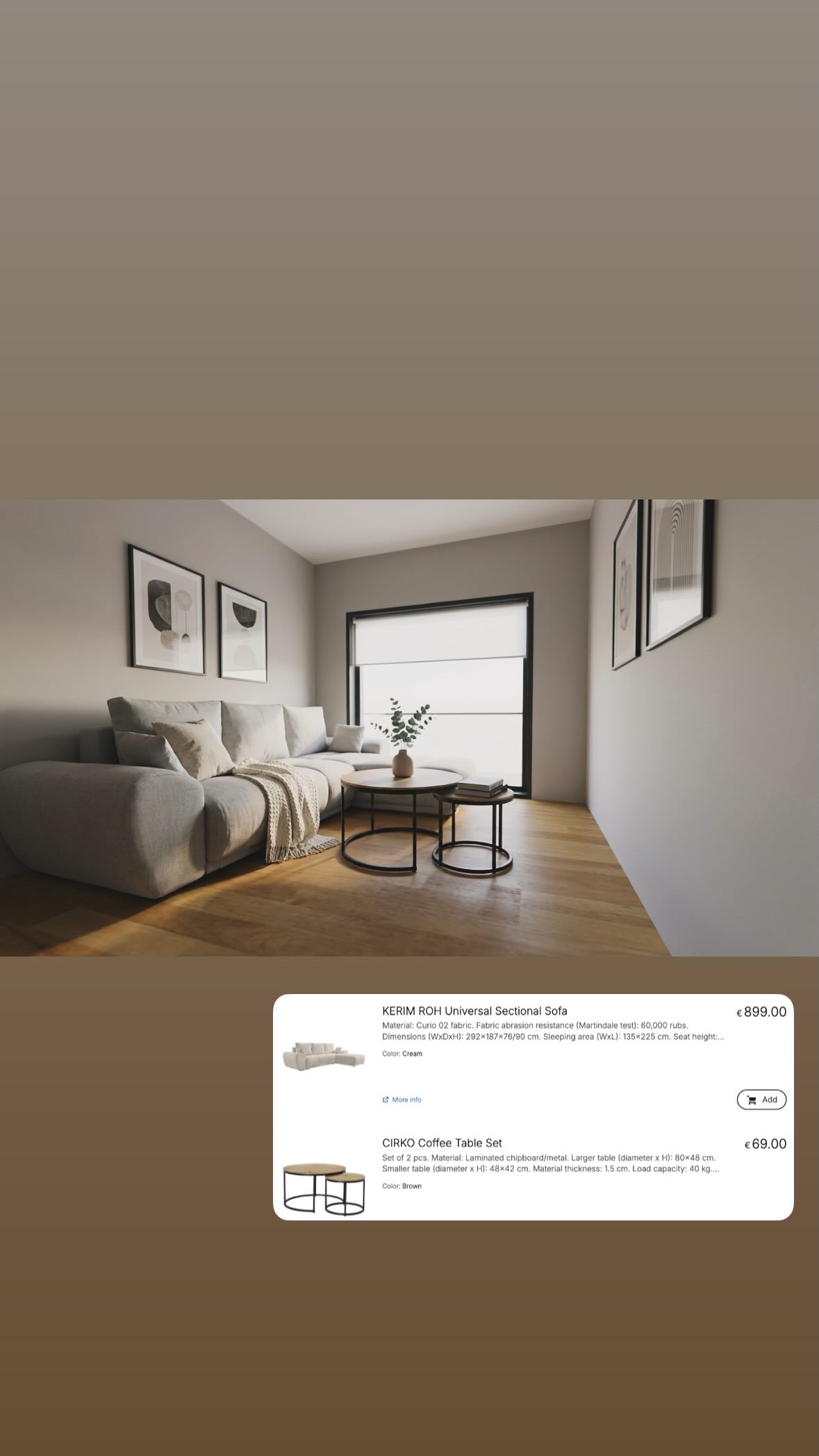
Focus your spending on pieces you use every day: the sofa, the bed, and the dining table. These are worth investing in. Everything else — coffee tables, shelving, lighting, decor — can be budget-friendly without sacrificing style. The image below shows a room designed in MeltFlex with a KERIM ROH sectional sofa at €899 and a CIRKO coffee table set at just €69. The AI render looks just as polished as a room with furniture costing ten times more.
Budget tips: Mix one statement piece with affordable basics. Shop during sales for the big items. Use MeltFlex to test different combinations before buying — seeing furniture in your actual room prevents expensive mistakes.
Mid-Range Design (€5,000-€15,000)
At this range, you can furnish every room with quality pieces. Prioritize the rooms you spend the most time in. Allocate roughly 30% to the living room, 25% to the master bedroom, 20% to the kitchen/dining area, and the remaining 25% across other rooms. Use an interior design software like MeltFlex to see how each purchase fits into the overall house interior design — this prevents impulse buys that do not match your vision.
Premium Design (€15,000+)
With a premium budget, you can invest in designer furniture, custom pieces, and high-quality materials throughout. At this level, the AI design tool becomes even more valuable — you want to see exactly how a €7,000 sofa and a €4,000 bookshelf look together in your actual room before committing. Preview every combination, compare options, and make sure every premium piece earns its place.
Choosing a Consistent Style for Your Whole House
A cohesive house interior design does not mean every room looks identical. It means there is a visible thread — a shared color palette, consistent material choices, or a unifying design direction — that ties the home together. Here are the most popular approaches:
Modern Minimalist. Neutral palette throughout (white, grey, beige, black accents), clean-lined furniture, natural materials like oak and marble, minimal decor. This is the most forgiving style for a whole house because its simplicity creates natural cohesion between rooms.
Warm Contemporary. The dominant modern interior design trend of 2026. Boucle and linen upholstery, walnut and oak wood, jute and wool rugs, earthy tones with cream and terracotta accents. This style works room to room because the warm material palette ties everything together naturally.
Scandinavian. Light wood, white walls, functional furniture, cozy textiles. Scandinavian home interior design is ideal for apartments and smaller homes because the light palette makes every room feel spacious and connected.
Mixed with Intent. You do not have to commit to one style. Many successful interior design ideas mix elements — a Scandinavian living room with a japandi bedroom and a more industrial home office. The key is maintaining one or two common elements across all rooms: the same wood tone, the same wall color family, or the same flooring throughout.
How AI Interior Design Software Works for a Whole House
Designing one room is manageable. Designing an entire house — where every room needs to work on its own and as part of the whole — is where interior design software becomes essential. Here is how MeltFlex works for complete house interior design:
Upload one floor plan, get every room in 3D. The AI reads your entire floor plan and creates a 3D model of every room simultaneously. Living room, bedrooms, kitchen, bathrooms, hallways — all there, all dimensionally accurate, all connected. You can switch between rooms or view the entire home from a top-down perspective.
Design room by room with real furniture. Browse real furniture from curated brands — sofas, beds, tables, desks, chairs, shelving — every piece with real prices and real dimensions. Place items in each room, swap between options, and see exactly how everything fits at real-world scale.
Customize every surface. Change wall colors room by room, swap flooring materials (hardwood, tile, carpet, stone), and adjust door and window styles. Test how the same oak flooring looks flowing from the hallway into the living room, or how a different wall color separates the bedroom from the study.
Generate photorealistic renders of every room. For each room, generate a photorealistic AI render — with natural lighting, realistic shadows, and true-to-life textures. These 3D rendering interior design images look like professional photography. You can see your entire house, room by room, exactly as it will look — before buying a single item.
Shop directly from your design. Every piece of furniture in your 3D home is a real, purchasable product. View prices, read descriptions, check dimensions, and add items to your cart — all without leaving the design view. This is what separates an AI interior design tool from a simple mood board: you are not just imagining your home, you are planning exactly what to buy.
Common House Interior Design Mistakes
When designing a whole house, the mistakes compound. Here are the most costly ones and how to avoid them:
No cohesive plan. Designing each room in isolation — different style in the living room, clashing tones in the bedroom, random furniture in the kitchen — creates a home that feels disjointed. Start with a style direction and color palette before furnishing any room. A 3D room design tool lets you see the whole house from above and check that rooms connect visually.
Buying furniture without measuring. The number one home interior design mistake. That sofa might not fit through the doorway. That dining table might leave no space to push chairs back. Upload your floor plan to MeltFlex and place every piece of furniture in 3D first — see exact clearances, walkway widths, and proportions before spending money.
Ignoring lighting. Most people think about furniture and forget about lighting until the end. But lighting changes how every color, texture, and material looks. Plan at least two lighting layers per room (ambient + task) and use warm-toned bulbs (2700-3000K) throughout for a cohesive feel.
Overfurnishing. More furniture does not mean a better-designed room. Every room needs breathing space. If you have to squeeze between pieces to walk through a room, you have too much. Edit ruthlessly — a few quality pieces with space around them always looks better than a room packed with bargains.
Forgetting about storage. Clutter destroys even the most beautiful interior design. Plan storage in every room before choosing decorative furniture: built-in closets in bedrooms, a sideboard in the dining area, shelving in the home office, a console in the hallway. Storage first, decor second.
Start Designing Your House Today
Whether you are moving into a new home, renovating your current space, or furnishing an empty apartment from scratch — your house interior design starts with one simple step: upload your floor plan.
For more design inspiration, see how we redesigned one room 4 different ways with real costs, or explore how to arrange furniture in a living room for the right layout before buying anything. If you are working within a budget, our living room furnishing cost guide breaks down real prices for every style.
Before buying anything, see how AI redesigned a real bedroom in 4 completely different styles — including cost estimates for each. For help choosing the right furniture size, use our visual guide to furniture sizing. And if you want to explore all major design styles side by side, the complete interior design styles guide covers all 12.
MeltFlex converts it into a 3D model of your entire home in seconds. From there, design every room with real furniture from real brands, customize every surface, and generate photorealistic renders to see your finished home before buying anything. It is the complete interior design software for people who want to see their space before they commit.
No design experience needed. No cost to start. Just your floor plan and a vision. Try MeltFlex free and design your entire home, room by room.
Frequently Asked Questions
How do I start designing the interior of my house?
Start with your floor plan. Upload it to an AI interior design tool like MeltFlex, which converts it into an interactive 3D model of your entire home. Then design room by room — place real furniture, customize wall colors and flooring, and generate photorealistic renders to preview the result before buying.
What is the best free interior design software for a whole house?
MeltFlex is a free interior design software that converts any floor plan into a 3D model of your entire home. Furnish every room with real products from curated brands, customize materials, and generate photorealistic 3D rendering interior design images — all at no cost.
Can I design my house interior with AI?
Yes. AI interior design tools like MeltFlex let you upload your house floor plan and automatically generate an interactive 3D room design of every room. Place real furniture, change wall colors and flooring, and generate photorealistic renders to visualize your complete home interior design before committing to any purchases.
How much does it cost to design a house interior?
Hiring a professional interior designer typically costs €2,000-€15,000+ depending on the size of the house. AI interior design tools like MeltFlex offer a free alternative — upload your floor plan, design every room in 3D with real furniture, and generate photorealistic renders at no cost.
Should I design my house room by room or all at once?
Design room by room, but with a cohesive plan. Start with the most-used rooms (living room, kitchen, bedroom), choose a consistent style and color palette, then work through secondary rooms. An interior design app like MeltFlex lets you see the whole house layout from above while focusing on one room at a time.

