Every year, IKEA releases a Style Guide that shapes how millions of people think about their homes. The 2026 IKEA Style Guide is their most opinionated yet, packed with bold color, retro references, and a clear message: your home should make you feel something.
Our articles are still written by humans!
Get human written articles in your Google feed.
We went through the full 2026 catalog, the new STOCKHOLM 2025 collection, the OMMJÄNGE line, and dozens of new product launches to find the 10 trends that actually matter. Not just what looks good in a showroom, but what works in real apartments, at real budgets, for real people.
Here’s what’s worth paying attention to, and what you can skip.
Updated July 2026: we now track 62 IKEA products in the MeltFlex furniture library (the same pieces you can drop into a photo of your room), so this update adds a ranking of the best IKEA pieces by real customer ratings, current prices checked against IKEA product pages, and an honest list of popular pieces we would skip.
The Best IKEA Pieces of 2026, Ranked by Real Customer Ratings
Trend lists are opinions. Ratings are data. MeltFlex keeps a live library of 62 IKEA products that users stage in photos of their own rooms, and for each one we track the current price and the customer rating on IKEA’s own product page. Below is every piece in that library with at least 50 customer reviews, ranked. Prices are IKEA UK list prices checked in July 2026; other markets differ slightly.
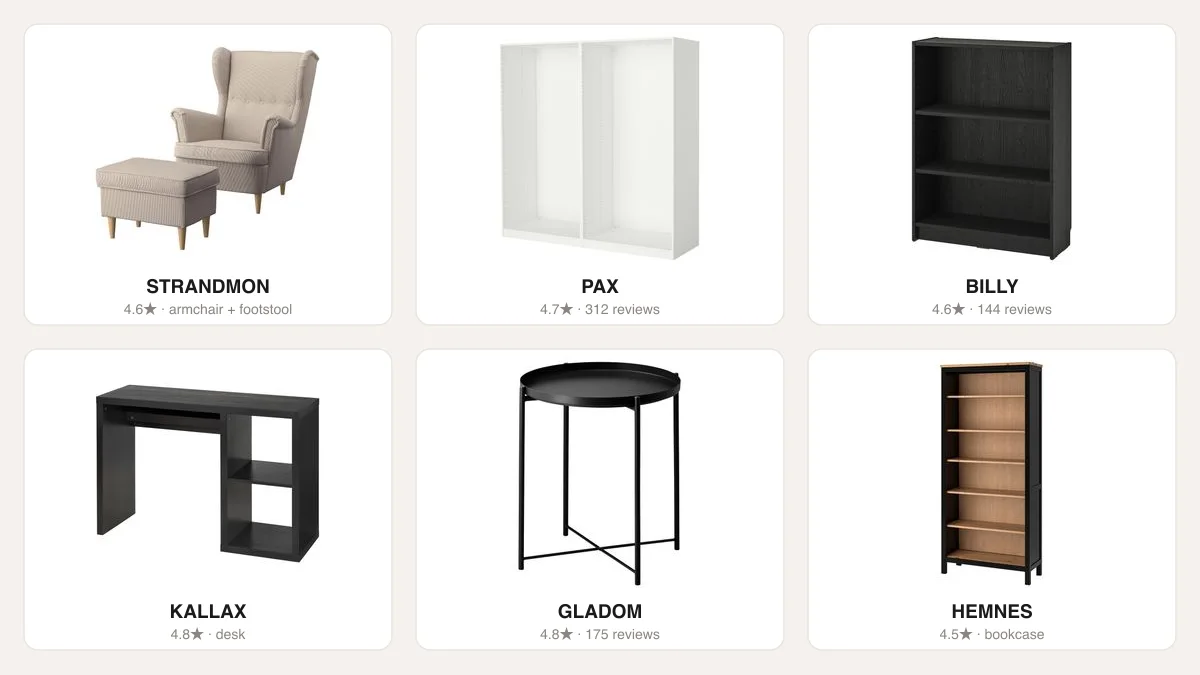
Six of the highest-rated IKEA pieces in the MeltFlex furniture library, July 2026.
What the data says: IKEA’s most-loved pieces are not the trendy ones. They are the boring, functional workhorses under £60 (lamps, tray tables, the LACK), plus the three big systems people plan whole rooms around: PAX, BILLY, and KALLAX. If you are furnishing on a budget, that is the shopping list. Those same three systems are also the best bases for IKEA hacks, if you would rather they looked like fitted joinery than flatpack.
Popular IKEA pieces we would skip in 2026
The same rating data cuts both ways. Three pieces that sell in huge numbers but underperform with the people who actually own them:
- FRIHETEN sofa bed (£650, 3.5 stars). IKEA’s best-known sofa bed, and the most common complaint is the same one every year: firm seat, thin mattress feel. If you need a daily sofa that occasionally sleeps guests, the VRETSTORP (£650, 4.4 stars) is the better buy at the same price.
- STRANDTORP extendable table (£429, 3.5 stars). Owners flag the extension mechanism. The NORDVIKEN extendable (£399, 4.8 stars) is cheaper and dramatically better reviewed.
- NÖDMAST portable lamp (£12, 3.0 stars). Cute, but battery-operated with weak output. The ÅRSTID at £15 is the best-rated lamp IKEA sells.
See these exact pieces in your own room first
Every product in the table above is in the MeltFlex furniture library. Upload a photo of your room in the MeltFlex workspace, open the + Furniturepanel, and drop the actual STRANDMON, BILLY, or PAX into your space. You get a photorealistic render of your room with the real product in it, plus a link straight to the piece on IKEA’s site. The IKEA library is available on the free plan, so you can test a whole shopping list before spending anything.
IKEA is not the only way to furnish cheaply without the room looking cheap. If your reference point is a more expensive American brand, our guide to Pottery Barn dupes prices the same look from Ashley and Rooms To Go instead.
Best IKEA Pieces to Buy in 2026 (by Room)
Trends are fun, but most people just want to know which pieces are actually worth it. These are the IKEA buys that hold up in 2026: a mix of timeless bestsellers and the strongest new launches. If you only read one section, read this one.
- Living room sofa: KIVIK or SÖDERHAMN. Both are modular, so you can size them to your room and re-cover them later. KIVIK is the deep, lounge-y option; SÖDERHAMN sits lower and lighter for open-plan spaces.
- Accent chair: STRANDMON. The wing chair that has been an IKEA icon for years, and still the best value armchair they make (£329 with the matching footstool, 4.6 stars). New 2026 covers keep it current. For a budget seat, the new OMMJÄNGE solid-wood stool (around $40) is the sleeper hit of the year.
- Storage: KALLAX and BILLY. KALLAX cube units are perennial bestsellers because they work in every room; BILLY (from £50, 4.6 stars) is still the default bookcase for a reason. Both take inserts and doors so they grow with you.
- Bedroom: PAX and HEMNES. For “best IKEA bedroom furniture 2026,” PAX (frames from £160, 4.7 stars across 312 reviews) is the customisable wardrobe nothing else touches at the price, and the HEMNES range (bed, dresser, daybed) is solid pine that lasts. The HEMNES daybed is the smartest small-space buy.
- Dining chairs: ODGER or NORRARYD. ODGER is a recycled-material molded chair that looks far above its price; NORRARYD is the black bentwood option if you want a bistro feel.
- Nightstand and accents: NORDLI drawer or a Rebel Pink piece. NORDLI is the clean, flush-front nightstand; if you want one hit of 2026, add a single Rebel Pink accent (cushion, lamp, or stool) rather than committing a whole room to it.
Not sure how any of these would look in your space? Upload a photo of your room to the free AI room design tool and test pieces and palettes before you drive to the store.
1. Rebel Pink: IKEA’s 2026 Color of the Year
IKEA named Rebel Pink as its Color of the Year for 2026. Not blush. Not millennial pink. Rebel Pink: playful, expressive, and deliberately bold.
You’ll see it across the 2026 collection in cushions (KRANSBORRE, $14.99), textiles, accent chairs, and even kitchen accessories. IKEA’s design team describes it as a color that “sparks joy in even the most unexpected places.”
How to use it: Start with one Rebel Pink accent piece (a cushion, throw, or lamp shade) against a neutral backdrop. Pink works surprisingly well with olive green, warm wood tones, and matte black. Don’t go all-in unless you’re committed to repainting in two years.
Want to see how pink accents would look in your actual room? Upload a photo toMeltFlex AI and try different color palettes before you buy.
2. Joycore Decor: Dopamine Dressing for Your Home
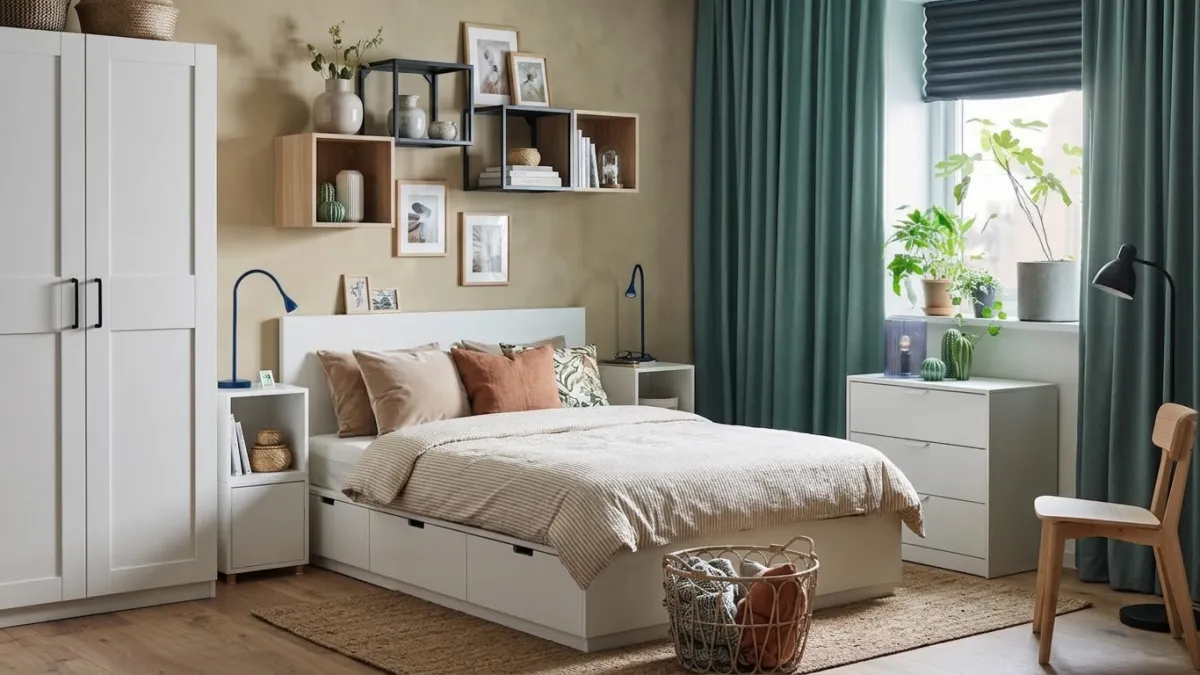
Joycore Decor is IKEA’s biggest style push for 2026. The concept: your home should trigger the same dopamine hit as wearing your favorite outfit. Bold color. Playful pattern. Layers of texture.
Key products driving this trend:
- OMMJÄNGE Pendant Lamp Shade ($22.99): multicolor, handcrafted, instantly transforms a room
- DOFTRIPS Vase Set: pink, yellow, and green glass that looks three times its price
- BONDIS Wall Clock: bright orange, a statement piece for $14.99
- DYVLINGE Swivel Chair ($199): in Kelinge orange, the hero piece of the collection
How to use it: IKEA recommends starting with white walls and neutral furniture, then layering in two bold accent colors plus a third to balance. The trick is controlled chaos: it should look intentional, not like a paint store exploded.
New for 2026: IKEA leaned all the way into this with GREJSIMOJS, a 33-piece collection from 12 designers built entirely around joy and play. It is loaded with Rebel Pink and full of personality: speakers shaped like mice, storage that mimics cats, and soft, furry chairs. It is the clearest expression of Joycore IKEA has shipped, and a fun (and cheap) way to test the trend before committing to anything bigger.
3. Japandi: Still Going Strong
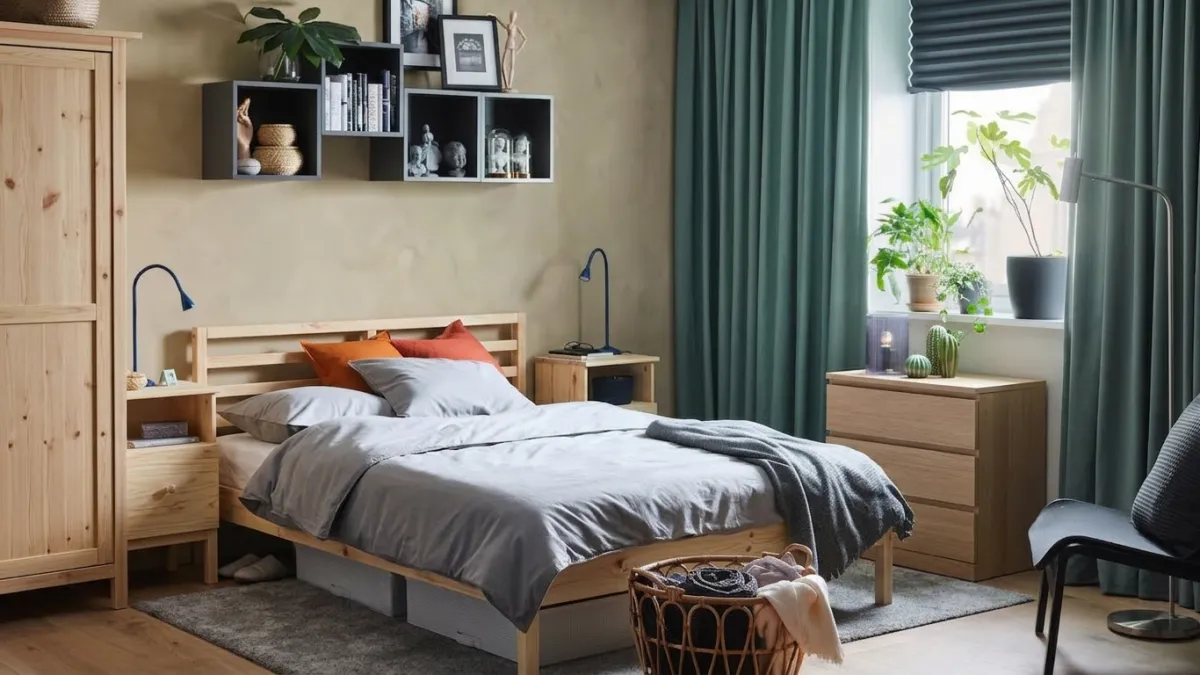
Japandi (Japanese minimalism meets Scandinavian warmth) has been trending for three years now, and IKEA is doubling down in 2026. The difference this year? More emphasis on craftsmanship andnatural materials over the sterile minimalism that defined earlier interpretations.
Standout products:
- FRÖSET Easy Chair: white-stained oak veneer, the kind of chair that makes a room feel calm
- GULLSUDARE Pendant Lamp: handmade white paper shade, diffuses light beautifully
- TONSTAD Table: oak veneer, clean lines, works as desk or dining table
- LÅDMAKARE Storage: oak-effect with sliding doors, hides clutter without hiding everything
How to use it: Stick to a palette of natural wood, white, and one warm accent (terracotta or sage green). Let each piece breathe: Japandi is about less furniture, better furniture. If you’re considering this style, our AI living room design prompts has specific Japandi layout suggestions.
4. The STOCKHOLM 2025 Collection: IKEA’s Premium Play
The STOCKHOLM 2025 collection is the largest STOCKHOLM edition ever:96 pieces of mid-century modern furniture that feels closer to West Elm than budget IKEA. Solid oak, handwoven rugs, mouth-blown glass, brass accents.
The hero pieces:
- STOCKHOLM 2025 3-Seat Sofa: velvet upholstery in Alhamn beige, the kind of sofa you build a room around
- STOCKHOLM 2025 Side Table: dark brown oak, $99, looks like it costs five times more
- STOCKHOLM 2025 Floor Lamp: brass-plated base, gives any room a mid-century glow
- STOCKHOLM 2025 Rug: handwoven in black/white/light green, a genuine showpiece
Worth it? The STOCKHOLM line is IKEA’s best attempt at “affordable luxury.” The materials are real (solid wood, not particle board), the craftsmanship is visible, and the designs age well. If you’re furnishing a living room or bedroom with pieces you want to keep for 10+ years, this is where to spend.
5. Lagom Living: The Swedish Art of “Just Right”
Lagom is a Swedish philosophy meaning “just the right amount.” In interior design, it translates to the sweet spot between cluttered maximalism and cold minimalism: a home that feels balanced, calm, and effortlessly put together.
IKEA’s Lagom Living trend for 2026 focuses on:
- Neutral color palettes with warm undertones (beige, oat, soft gray)
- Functional furniture that doesn’t scream for attention
- Natural textiles (linen, cotton, wool) in muted tones
- Thoughtful storage that keeps surfaces clean without hiding personality
Key products: TOLKNING Room Divider ($179.99, natural rattan), SANELA Cushion Covers ($9.99, velvet in muted tones), KORGMOTT Blackout Curtains ($69.99).
How to use it: Start by removing one thing from every surface. Then replace anything shiny or plastic with a natural-material equivalent. Lagom isn’t about buying more: it’s about editing what you have.
6. Floral Daydream: Botanicals Beyond the Vase
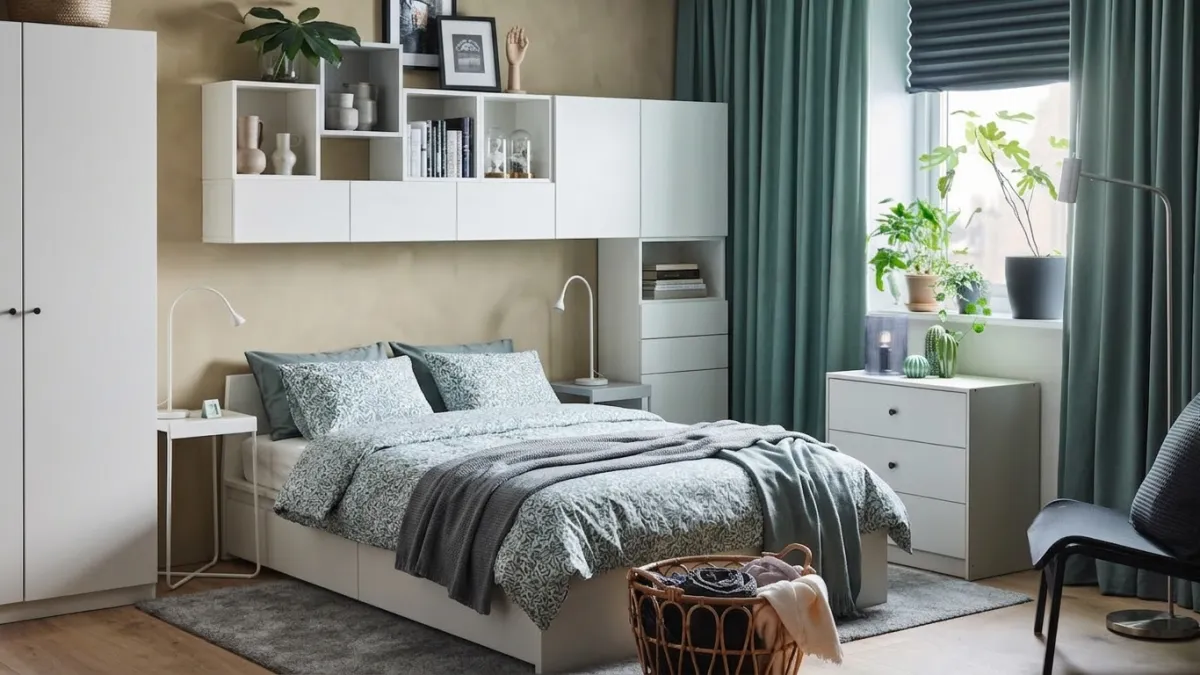
IKEA predicts that 2026 is the year florals go beyond the flower vase and into every surface of your home. Think botanical prints on duvet covers, cushions, curtains, and wall art: not your grandmother’s chintz, but modern, oversized floral patterns with contemporary color palettes.
Standout pieces:
- DAGGSALVIA Duvet Cover ($19.99): botanical print that looks designer
- FJUNKLOCKA Cushion Cover ($5.99): floral pattern at an impulse-buy price
- KRUTBRÄNNARE Throw ($14.99): textured floral in muted tones
How to use it: Mix floral textiles with solid-color furniture. One floral pattern per room is usually enough: pair it with natural textures (wood, rattan, linen) to keep it grounded. For bedroom styling, floral bedding against a neutral headboard is the easiest win.
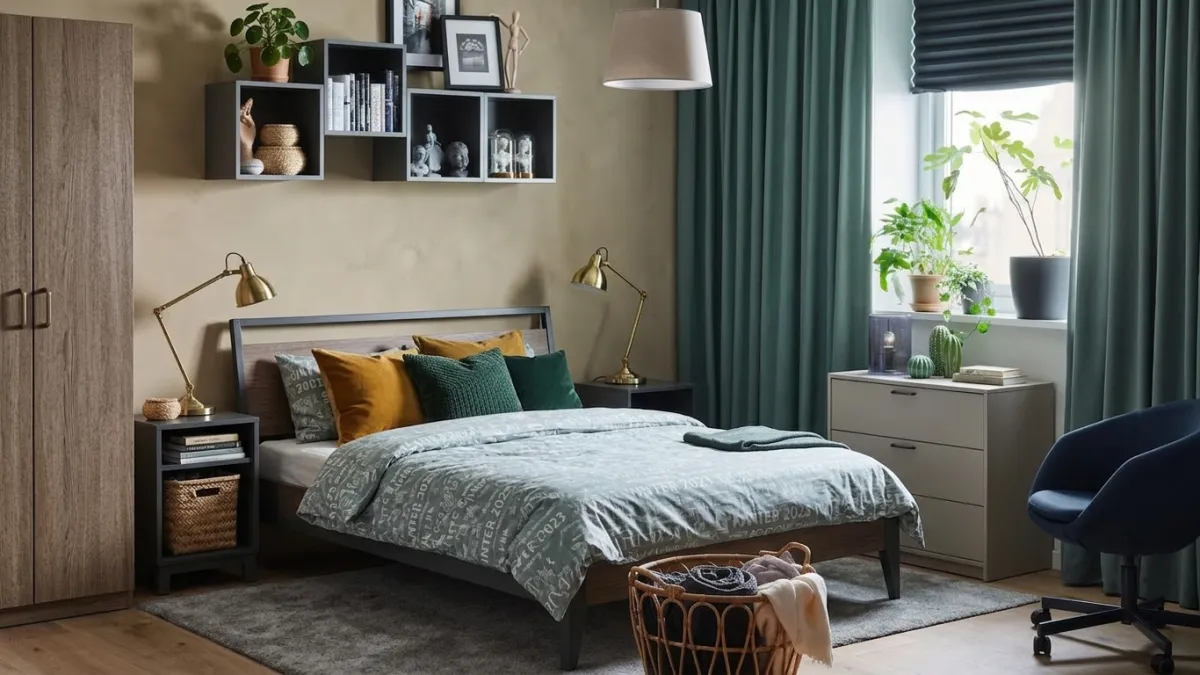
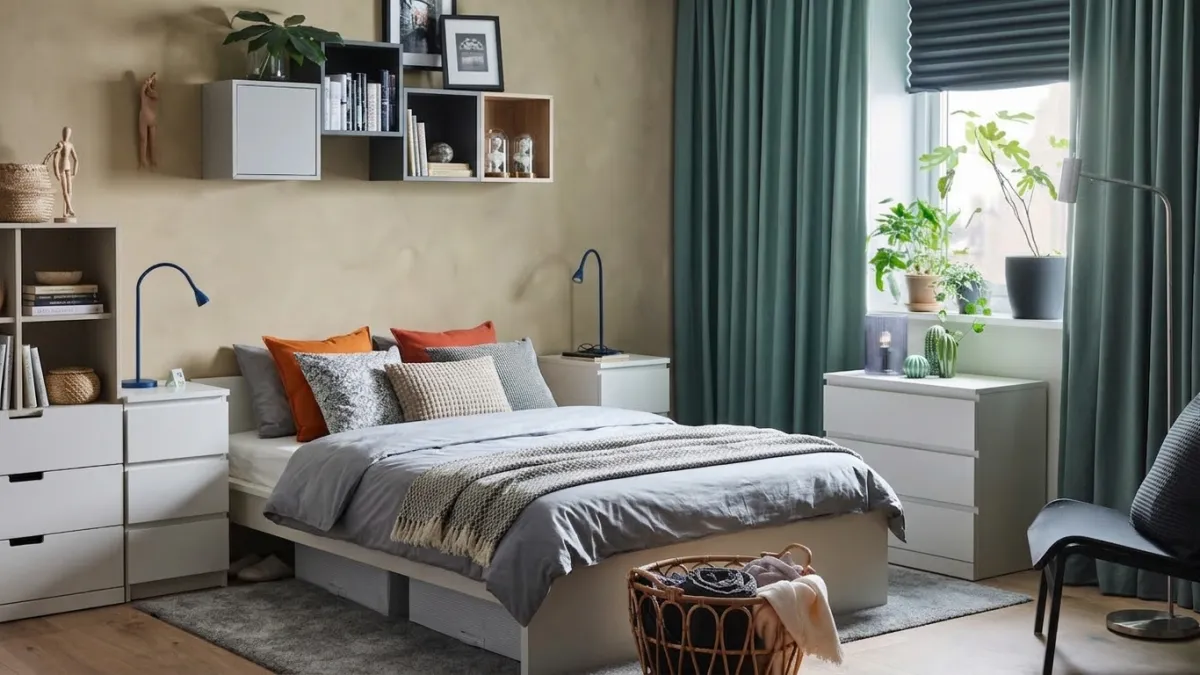
7. The Art of Storage: Display What You Love
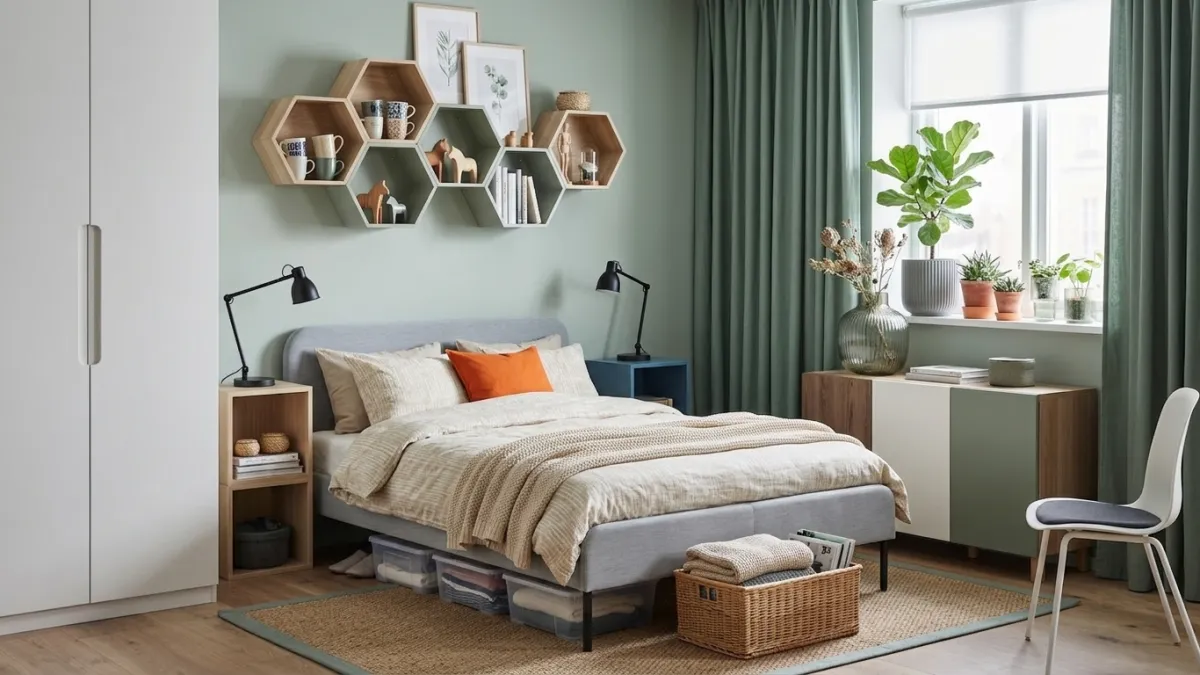
IKEA’s boldest conceptual trend for 2026: stop hiding your stuff. Instead of cramming everything into closed cabinets, use your favorite possessions as decor. Books, records, ceramics, plant collections :all become part of the room’s design.
Products that make this work:
- EKET Wall-Mounted Shelves: modular cubes you arrange in any configuration
- NIPÅSEN Coat Rack/Bench ($99.99): entryway piece that looks like furniture, not storage
- TOLKNING Ottoman with Storage ($99.99): dual-purpose seating and hidden storage
- RÅSKOG Utility Cart ($39.99): the perennial bestseller, now in new colors
- FÄRGSÄTTARE Wall Shelf ($30): curved profile, colorful, works in any room
How to use it: The rule is simple: display things you actually use or love. If it’s neither beautiful nor useful, it goes in a closed cabinet. The mix of open and closed storage is what makes this trend work in practice.
8. Retro Futurism: Chrome, Curves, and Space-Age Vibes
This is IKEA’s most playful trend: a mashup of 1960s space-age aesthetics with modern finishes. Chrome legs, transparent acrylic, glossy colors, and curved silhouettes that look like they belong in a retro sci-fi film.
Statement pieces:
- DYVLINGE Swivel Chair ($199): in orange, the most Instagrammable IKEA piece of 2026
- TOBIAS Chair: transparent with chrome plating, a modern classic
- PILSKOTT LED Floor Lamp: sculptural black design, doubles as room art
- IKEA PS 2014 Pendant Lamp: white/copper, adjustable to change the light pattern
- OMAR Shelving Unit: galvanized metal, industrial-meets-space-age
How to use it: One or two retro-futurist pieces max per room. The DYVLINGE chair in a corner next to a floor lamp creates an instant reading nook with character. Pair chrome and glossy pieces with warm textures (wool rug, wooden side table) to avoid a cold, clinical feel.
9. Small-Space Solutions: IKEA Finally Gets Serious
With average apartment sizes shrinking globally, IKEA’s 2026 lineup puts serious effort into furniture that earns its square footage. Every piece needs to serve multiple purposes or fold away when not in use.
Best new small-space products:
- ROSENTORP Extendable Table ($399): expands from 43” to 61” with a hidden butterfly leaf, seats 4–6
- GRYTSHOLM Nesting Tables ($90): two tables that nest into one footprint
- GRÅFJÄLLET Wall-Mounted Nightstand ($29.99): takes zero floor space
- STRANDÖN Folding Table ($40): folds flat, carries with an arm strap
- GRUNNARP Sleeper Sofa ($999): actually comfortable to sleep on (rare for a sofa bed)
How to use it: In small apartments, prioritize wall-mounted furniture (nightstands, shelves, desks) to free up floor space. Nesting and folding pieces work as everyday furniture that disappears when you need the space. Before buying, try visualizing different layouts withMeltFlex AI: upload a photo of your room and test which arrangement maximizes your space.
10. The OMMJÄNGE Collection: Swedish Folklore Meets Modern Design
OMMJÄNGE is IKEA’s new collection inspired by Swedish folk art traditions. It’s handcrafted, colorful, and deliberately imperfect: each piece feels like it was made by a person, not a machine.
Highlights:
- OMMJÄNGE Bench ($129.99): solid pine with reversible textile panels (red/pink/white and yellow/black/white)
- OMMJÄNGE Stool ($39.99): solid pine, orange-red stain, works as seating or display
- OMMJÄNGE Pendant Lamp Shade ($22.99): multicolor, the conversation starter of the collection
- OMMJÄNGE Wall Hooks: multicolor, 3-pack, the easiest way to try the trend
- OMMJÄNGE Basket ($45): large woven storage with folk-art character
Worth it? OMMJÄNGE is the opposite of “minimalist IKEA.” If you love color and craft, these pieces add warmth and personality that mass-produced furniture rarely delivers. The stool and wall hooks are the best entry points: low commitment, high impact.
How to Try These Trends Before You Buy
The biggest risk with trend shopping is buying something that looks great in IKEA’s showroom but wrong in your home. Different room sizes, lighting, and existing furniture change everything.
That’s why we built MeltFlex AI. Upload a photo of your actual room, choose a style (Japandi, mid-century modern, Scandinavian, maximalist), and see a photorealistic visualization of how it would look: in seconds, for free.
No more guessing whether that Rebel Pink cushion will clash with your sofa. No more wondering if Japandi will work in your small apartment. See the result first, then shop with confidence.
You can also explore our guides for specific rooms:
- AI living room design prompts
- Bedroom interior design ideas with AI
- Home office design ideas with AI layout planning
- Best Amazon furniture 2026: brands, finds and trends worth buying
- Wayfair furniture trends 2026
- Best Pottery Barn pieces and 2026 trends worth buying
- Best Ashley furniture and 2026 trends worth buying
- Complete guide: How to design your home with AI
Which IKEA 2026 Trends Are Actually Worth It?
Not all trends deserve your money. Here’s our honest take:
Common Questions About IKEA Furniture and Interior Design
Is IKEA furniture good enough for a long-term home?
It depends on the line. Budget pieces (MALM, LACK) are designed for short-term use:3–5 years. Mid-range lines (HEMNES, BESTÅ) last 5–10 years with proper care. Premium lines like STOCKHOLM are built with solid wood and handmade elements designed to last 10+ years. The key is matching your expectations to the price point: a $50 table and a $500 table are built for different lifespans.
What IKEA products have the best resale value?
STOCKHOLM collections, STRANDMON wing chairs, BILLY bookcases (surprisingly), and any limited-edition collaborations. Well-maintained STOCKHOLM pieces regularly sell for 60–80% of retail on second-hand marketplaces. Avoid reselling flat-pack furniture that’s been assembled more than once: the hardware weakens.
How do I make IKEA furniture look expensive?
Three tricks: 1) Replace hardware: swap IKEA handles for brass or leather pulls ($5–$15 per handle). 2) Add legs: attach tapered wooden legs to KALLAX or BESTÅ units to lift them off the floor. 3) Group items: a single BILLY bookcase looks budget, but three in a row look like built-in shelving. For more ideas, see our complete AI home design guide.
How do I choose between IKEA styles for my apartment?
Consider your room size, natural light, and existing furniture. Japandi works best in bright rooms with natural light. Joycore is ideal for rooms that need energy (home offices, kitchens). Lagom Living suits bedrooms and living rooms where you want calm. Upload a photo of your room toMeltFlex and test multiple styles side by side before committing to one.
What’s the best IKEA furniture for a small apartment?
Focus on: ROSENTORP extendable table (expands only when you need it), GRÅFJÄLLET wall-mounted nightstand (zero floor space), KALLAX as a room divider with storage, and GRUNNARP sleeper sofa for studio apartments. The principle: every piece should either fold, extend, store something, or serve double duty.
Can AI help me design a room with IKEA furniture?
Yes. Tools like MeltFlex AI let you upload a photo of any room and generate photorealistic design proposals in different styles: Scandinavian, mid-century modern, japandi, maximalist, and more. You can see exactly how a style would look in your specific space before visiting IKEA, saving time and preventing expensive mistakes.