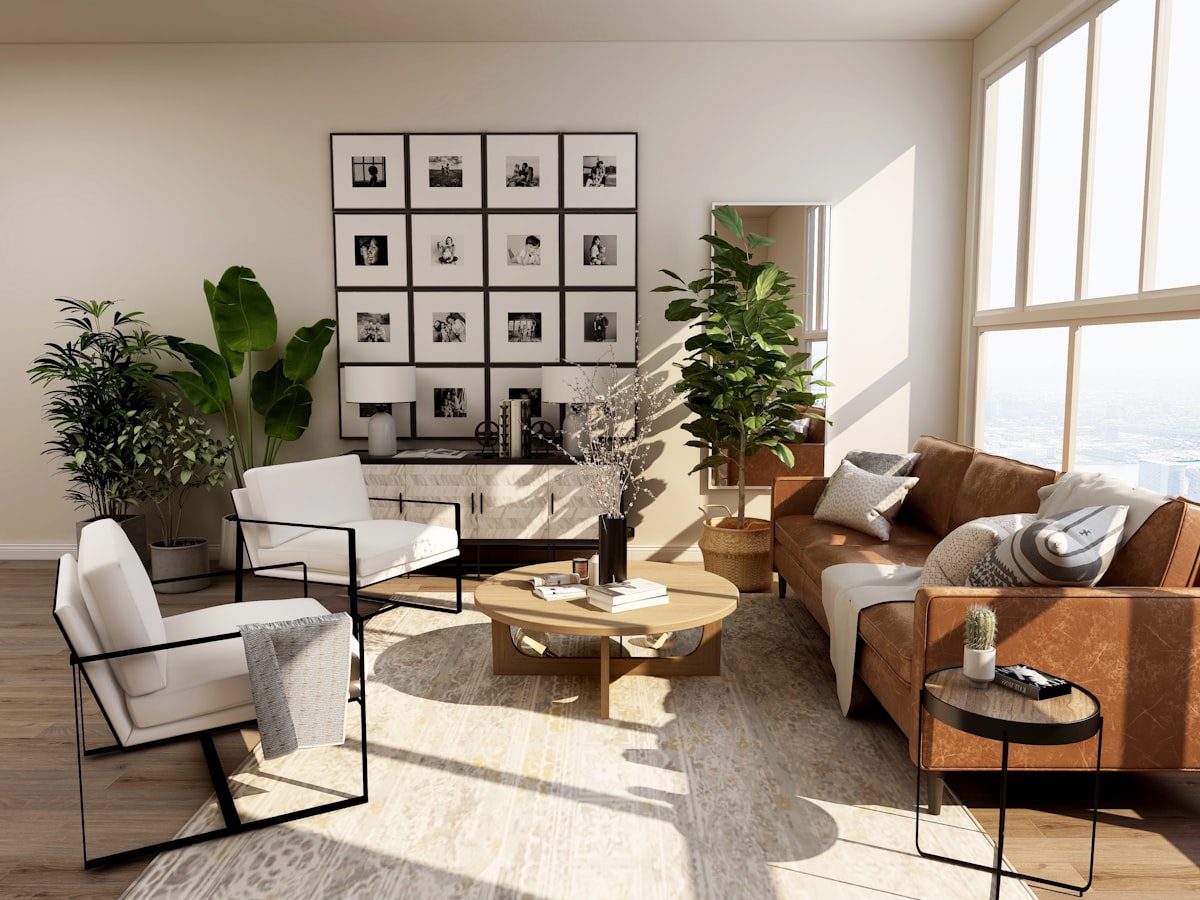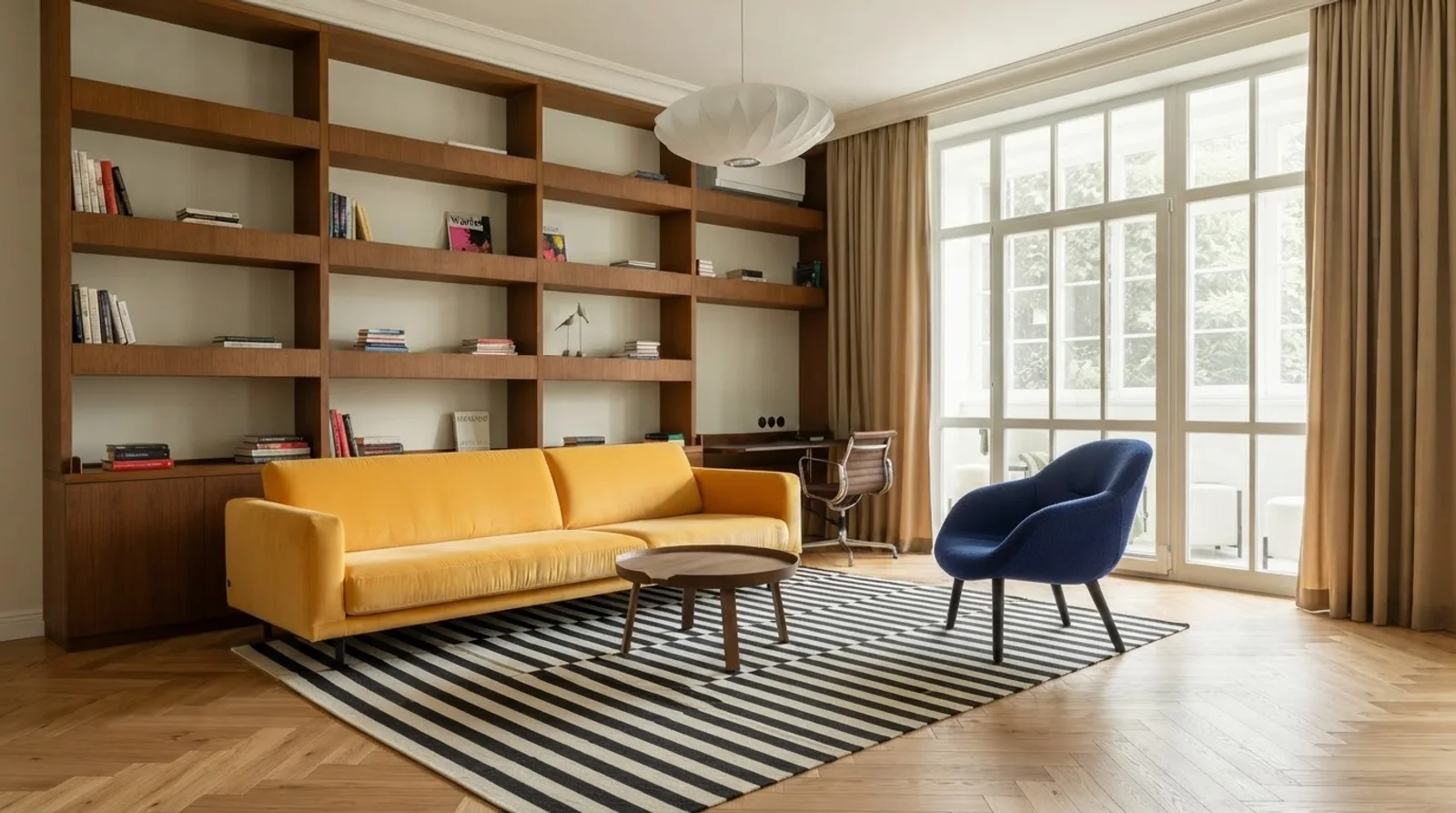
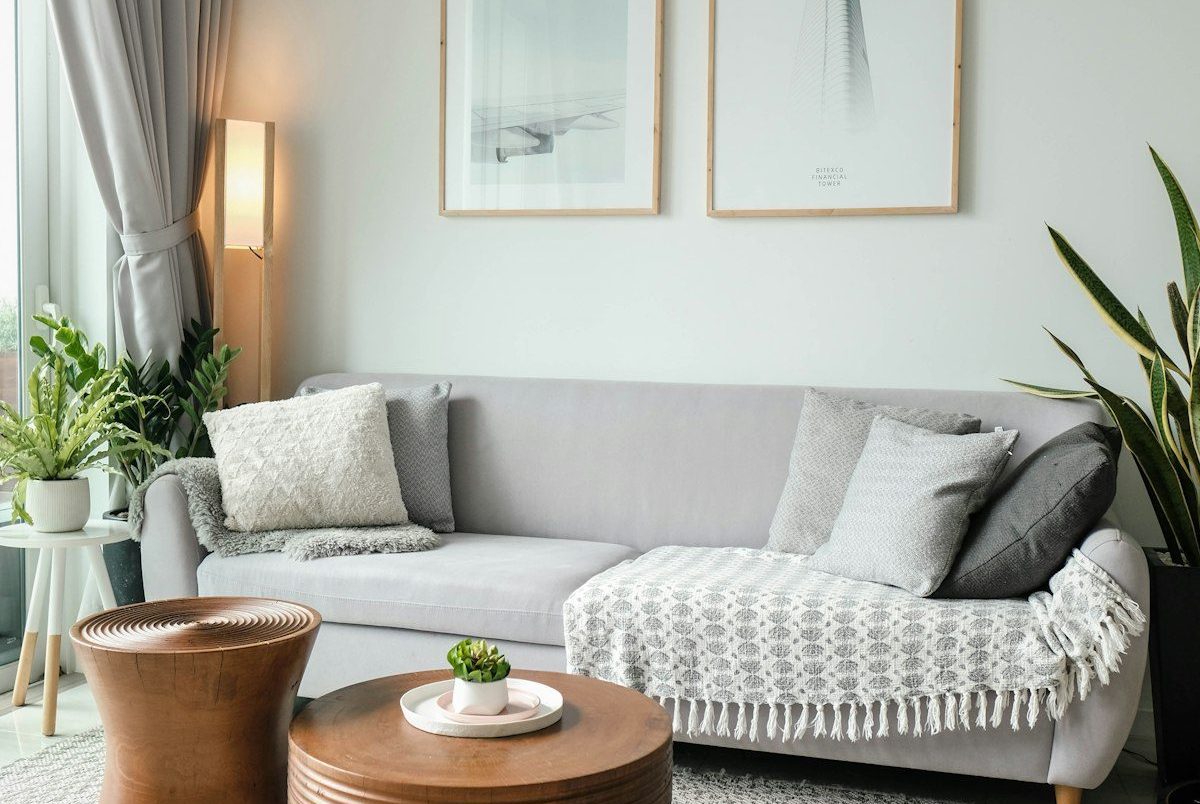
You bought the perfect sofa. You measured twice. You even drew a floor plan on graph paper. And then you got it home and it blocked the doorway, faced the wrong direction, and made the living room feel like a furniture showroom instead of a home.
Our articles are still written by humans!
Get human written articles in your Google feed.
If you are not shopping and just want to move what you already own, start with how to rearrange your room without moving any furniture first, which walks one real living room through five layouts and the six clearances that decide them.
You are not bad at math. You are human, and humans are genuinely poor at judging spatial relationships from numbers on a screen. Nobody can feel how a 220 cm sofa sits in a 4 by 5 meter room by reading its dimensions. That gap is why wrong size and fit are the leading reason shoppers return what they buy online, and why online furniture return rates run roughly 8% to 15%. Seeing a piece at true scale before it ships cuts size-related returns by as much as 71%.
AI furniture placement closes that gap, and it works from either direction. Have a floor plan? Upload it, drag furniture into position at real-world scale, and see instantly whether it fits before you buy. Just want to fix the room you already have? Photograph it and the AI room layout tool rearranges the furniture you already own in about 20 seconds, for free. This guide covers both: how AI furniture placement works, how to rearrange an existing room from one photo, how to lay a room out straight from a floor plan, and the placement rules and clearances that decide whether any layout actually works.
FreeUpload photo · freeRearrange my room for freeUpload a photo and MeltFlex plans a new furniture layout around your walls, windows and doors. Your first AI design is free, no card needed.
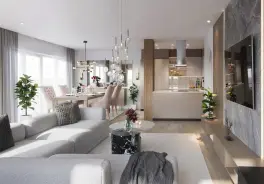
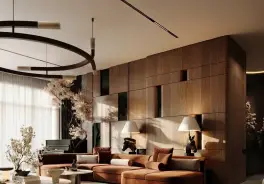
What Is AI Furniture Placement?

AI furniture placement uses artificial intelligence to read a room's dimensions, shape, and features (doors, windows, outlets) and then suggest or optimize how furniture is arranged. Instead of measuring, sketching, and guessing by hand, you let the tool do the spatial reasoning. The workflow is simple:
- Upload a floor plan (architect drawing, hand sketch, or real estate photo)
- Get an interactive 3D model of your room in seconds
- Drag real furniture from a catalog into the room at exact scale
- See immediately if it fits, if walking paths are clear, and how the arrangement looks from every angle
The difference between AI placement and traditional planning is speed and accuracy. Testing 10 sofa positions with a tape measure takes an afternoon. With AI, it takes 3 minutes.
Which input should you use: photo, floor plan, or measurements?
The three routes answer different questions, and picking the wrong one is the most common reason people decide the tool did not work. Match the route to what you already have in your hand:
If you have both a photo and a plan, start with the photo. It carries the window light, the floor, and the pieces you already own, which is most of what makes a result look like your room instead of a showroom.
How to Use AI to Rearrange a Room With the Furniture You Already Own
To rearrange existing furniture with AI, photograph the room from the doorway, upload it to the layout tool, choose what to optimize for, and keep the existing-furniture option on. This is what most people searching for AI furniture placement actually want: not new furniture, not a floor plan exercise. The same sofa and the same shelves, in an arrangement that stops feeling wrong. If what you typed into Google was some version of rearrange my room, this is the section you came for: nothing gets bought, nothing gets thrown out, and the room still changes.
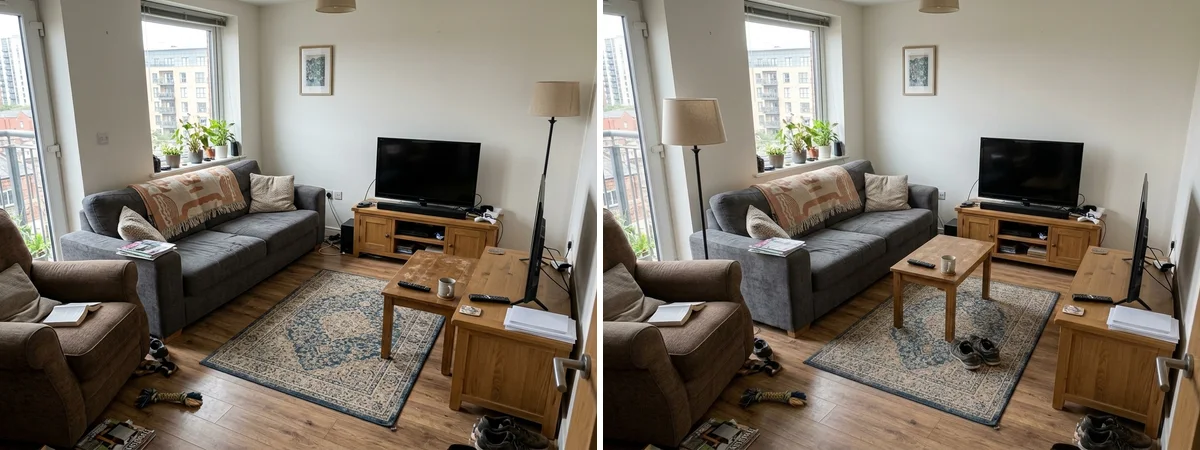
Same room, same furniture, one AI pass apart. Left: everything against the walls, rug adrift. Right: seating pulled together on the rug, paths clear. Both images AI-generated for this demo.
Here is the workflow, with the parts that actually decide the result:
- Photograph the room from the doorway. One wide, level shot showing the floor and at least two walls. The AI infers the room's shape from what it can see, so a photo cropped to a single wall gives it nothing to work with. Shooting from the doorway also matches how you experience the room, which is the perspective the result needs to look right from.
- Choose what to optimize for. Spaciousness pushes furniture toward the perimeter and clears the centre, best in small rooms and anywhere a path is blocked. Functionality prioritizes how the room is used: seating that faces something, surfaces within reach, a route that makes sense. Coziness pulls seating into a tighter group, best in large rooms that feel cavernous.
- Keep your existing furniture on. This toggle matters more than it looks. Left on, the instruction becomes "keep and rearrange the existing pieces." Turned off, the AI is free to propose different furniture entirely, which is a useful question but a completely different one. If you are trying to fix a room without spending money, keep it on.
- Compare against your original photo, carefully. The model regenerates the room rather than physically sliding objects around, so a rearranged sofa is a redrawn sofa. If yours came back noticeably longer, the layout it proposes may not work with the real one.
- Measure before you lift anything. The AI has not measured your room. Check the suggested arrangement against the clearances further down this page with a tape measure. It takes four minutes, and it is the step that separates a good idea from a sofa wedged against a radiator.
For transparency, this is the shape of the instruction the tool assembles, and you can paste the same structure into any image model:
Optimize this room's layout for spaciousness, airy and open feel. Keep and rearrange the existing furniture. Keep walls, windows, and doors the same.
The last sentence does the unglamorous work. Without it, image models cheerfully move a window or delete a doorway to make the composition nicer, and you get a beautiful layout for a room you do not own. The demo video below shows the whole loop on a real room.
AI Furniture Layout From a Floor Plan
To lay out furniture from a floor plan, upload the plan to an AI tool like MeltFlex, let it rebuild your room in 3D, then drag exactly-scaled furniture into the space. Because the layout is built on your real walls, doors, and windows instead of a generic template, every placement you test is true to the room you actually have.
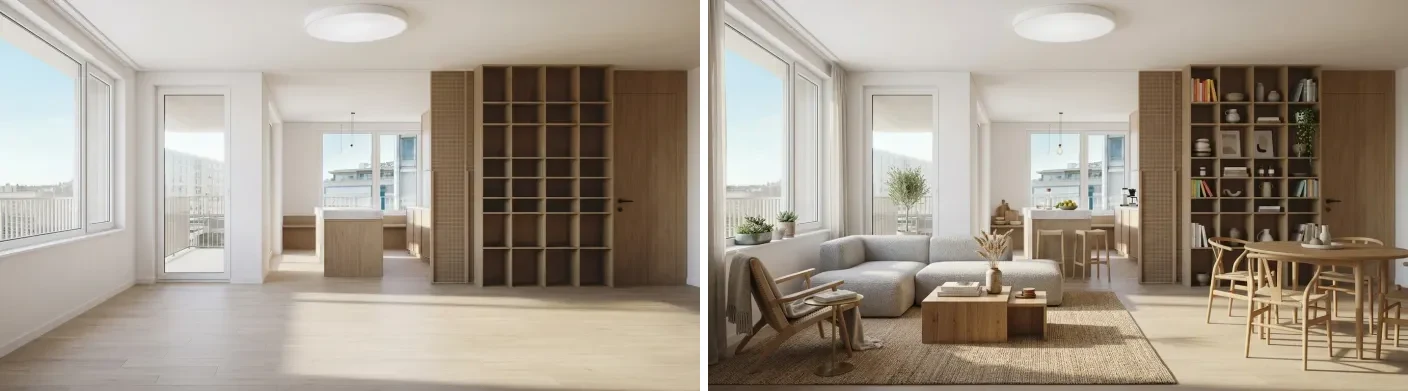
Left: your room rebuilt in 3D from a floor plan. Right: the same walls furnished at exact scale in MeltFlex.
A floor plan is the most accurate starting point because it locks in the one thing a room photo cannot: dimensions. Here is how the AI uses it:
- It reads the geometry. Walls, corners, door openings, and window positions are detected from the plan, so the 3D room matches your real proportions, not a guessed shape.
- It scales the furniture to match. A 220 cm sofa is drawn at 220 cm against your actual wall length, so "it looks about right" becomes "it fits with 80 cm of walking path to spare."
- It keeps the fixed constraints visible. Radiators, the door swing, the window you do not want to block: all of it stays on the plan as you move pieces around.
Any floor plan works as input: an architect drawing, a hand sketch with rough measurements, or the listing image from a real estate site. If you only have a photo of the room, that works too, but a plan gives you the exact-scale accuracy that makes the difference between a layout that looks fine and one that physically fits. For a deeper walkthrough of the plan-to-3D pipeline, see our floor plan to 3D model guide.
The 7 Fundamental Rules of Furniture Placement
AI tools optimize layout automatically, but understanding why certain arrangements work helps you make better decisions. These 7 rules apply to every room:
Rule 1: Every Room Needs a Focal Point
A focal point is the first thing your eye sees when entering a room. In a living room, it is the fireplace, TV, or a large window with a view. In a bedroom, it is the bed. In a dining room, it is the table.
The rule: Orient your main seating toward the focal point. The sofa faces the TV. The dining chairs face the table. The bed faces the doorway. Everything else supports this primary relationship.
Rule 2: The 90 cm Walking Path
Every room needs clear paths for walking: between the sofa and coffee table, around the dining table, between the bed and the wall. The minimum is 90 cmfor comfortable passage, 120 cm for high-traffic areas (kitchen, hallways, paths to doors).
That 90 cm is not a decorator's preference, it is close to a codified minimum. The ADA Standards for Accessible Design set the clear width of a walking surface at36 inches (915 mm) in section 403.5.1, and allow a pinch down to 32 inches (815 mm) only for a stretch of 24 inches or less. Your living room is not a public building, but the number is a useful floor: if a path in your layout drops under about 90 cm for more than a step or two, it will feel wrong every single day.
This is where most DIY layouts fail. The sofa looks perfectly placed until someone tries to squeeze between it and the coffee table with a plate of food. AI planners show walking paths visually so you catch these problems before they become daily frustrations.
Rule 3: Float Furniture Away From Walls
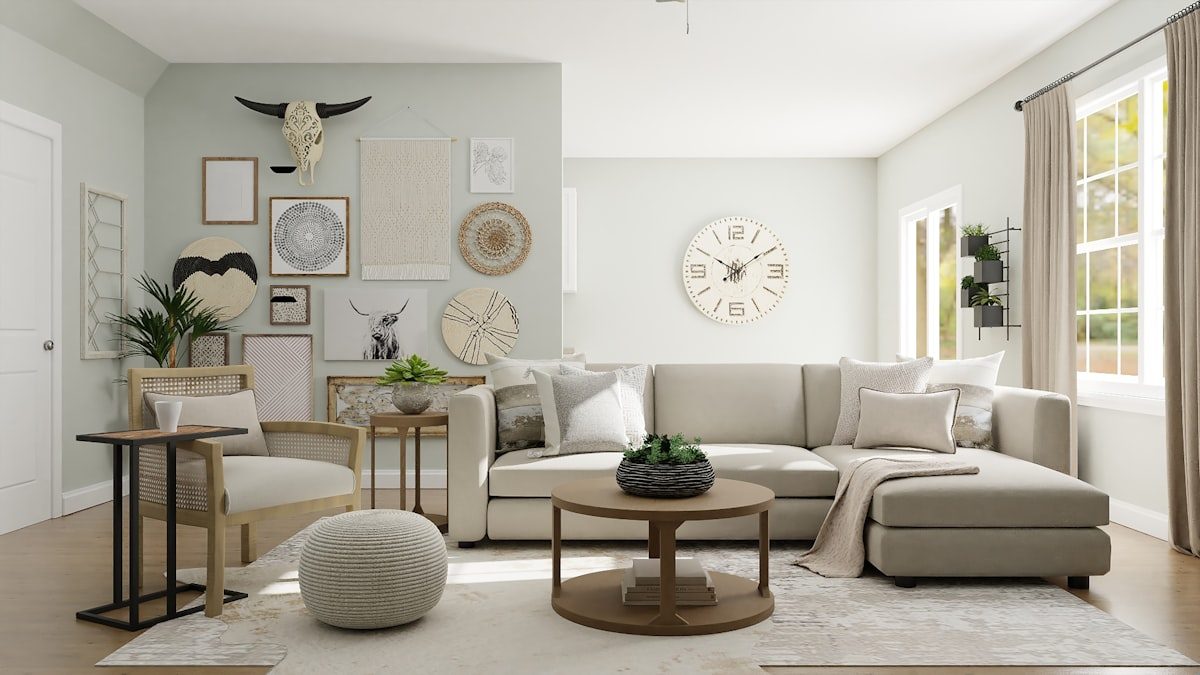
Pushing all furniture against the walls is the most common placement mistake. It creates a dead void in the center of the room and makes the space feel like a doctor's waiting room, not a home.
The fix: Pull the sofa 15-60 cm from the wall (more in larger rooms). Place a narrow console table behind it. Position armchairs at angles rather than flat against walls. The room immediately feels more intimate and designed.
Rule 4: The Rug Rule
A rug anchors a furniture grouping and defines a zone. But a too-small rug is worse than no rug at all, because it makes the space feel fragmented and cheap.
The rule:
- Living room: All front legs of the sofa and chairs on the rug. Minimum 200x290 cm.
- Dining room: Rug extends 60+ cm beyond the table on all sides (chairs stay on rug when pulled out).
- Bedroom: Rug extends 60-90 cm beyond the sides and foot of the bed.
Rule 5: Balance Visual Weight
Visual weight is how "heavy" a piece of furniture looks: dark colors, solid forms, and large sizes have more visual weight. A room with all heavy pieces on one side feels unbalanced, like it might tip over.
The fix: Distribute weight evenly. If you have a large dark sofa on one side, balance it with a bookshelf, large plant, or two armchairs on the other. AI tools show this balance visually in 3D so you can spot imbalances instantly.
Rule 6: Create Conversation Distances
Comfortable conversation happens at 2.4-3 meters. If your sofa is further than 3 meters from the opposite chair, people will feel disconnected. If it is closer than 1.5 meters, it feels cramped.
In practice: A sofa and armchair should be 2-3 meters apart (measured from seated position, not furniture edge). A coffee table should be 40-50 cm from the sofa edge (within arm's reach but not knee-bumping distance).
Rule 7: Respect the Door Swing
Every door in your room needs a 90-degree swing arc that is completely free of furniture. This includes entry doors, closet doors, balcony doors, and cabinet doors. It sounds obvious, but this is the #1 cause of furniture returns: a sofa that technically "fits" but blocks the balcony door from opening fully.
AI 3D planners show door swings explicitly, catching these conflicts before you buy.
Room-by-Room Furniture Placement Guide
Living Room Placement
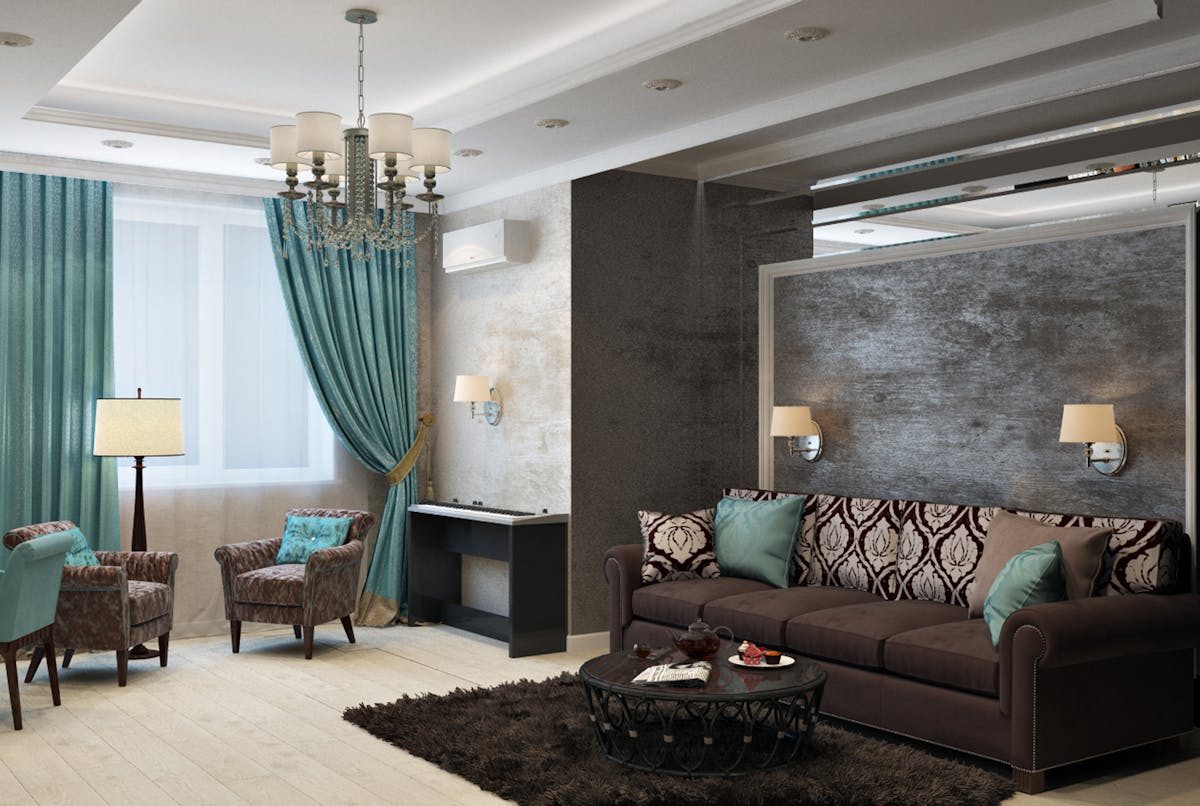
The living room has the most complex placement because it serves multiple functions and has the most furniture pieces competing for space.
The arrangement hierarchy:
- 1. Sofa first. Position the sofa facing the focal point (TV/fireplace). This is the anchor that everything else orbits.
- 2. Coffee table second. 40-50 cm from the sofa, centered. Round tables work better in small rooms (no sharp corners, easier traffic flow).
- 3. Secondary seating third. Armchair(s) at 90-degree angles to the sofa, creating a U or L conversation area.
- 4. Side tables fourth. One within arm's reach of every seat. A seat without a surface for a drink is an incomplete seat.
- 5. Lighting last. Floor lamp behind or beside the reading chair. Table lamp on the side table. Overhead light centered on the seating group, not the room.
For detailed living room ideas, see our AI living room design prompts and open floor plan layouts.
Bedroom Placement
The bed dominates everything. Place it first, then build around it.
- Bed position: Headboard centered on the longest wall (or the wall opposite the door for a dramatic entrance view). Never place the bed under a window, since drafts, noise, and light disturb sleep.
- Nightstands: One on each side, even if the room is small. Symmetry creates calm. Each needs a lamp, a surface for a phone, and a charging cable.
- Wardrobe/dresser: On the wall opposite the bed or next to the door. The wardrobe should not be the first thing you see from the bed, since it is functional, not beautiful.
- Clearance: 60 cm minimum around all sides of the bed (90 cm if both sides are used daily). 90 cm in front of the wardrobe doors.
Dining Room Placement
The table is the center of gravity. Everything else supports it.
- Table position: Centered under the pendant light (not centered in the room, since these are often different positions). Allow 90 cm between the table edge and the nearest wall or furniture.
- Chairs: 60 cm of width per person along the table edge. A 180 cm table comfortably seats 6 (3 per side).
- Buffet/sideboard: Against the nearest wall, parallel to the table. It provides serving surface, storage, and visual balance to the table mass.
Home Office Placement
The desk position determines your productivity and your video call background.
- Desk: Perpendicular to the window (light comes from the side, not behind you causing glare or in front creating shadows). For video calls, ensure a clean wall or bookshelf is behind you.
- Chair: Must be able to roll back 60 cm from the desk without hitting a wall or shelf.
- Storage: Within arm's reach while seated, so a bookshelf beside or behind the desk, not across the room.
See our room by room design guides for 15 complete workspace layouts.
Will It Fit? Check Furniture Against Your Room Dimensions
To know if a piece will fit, place it at exact scale inside your real room dimensions and check three things: clearance around it, the walking paths it leaves, and whether nearby doors and drawers still open. A 3D planner like MeltFlex does this automatically, which is why "will it fit" questions are the single most useful thing AI placement answers before you spend money.
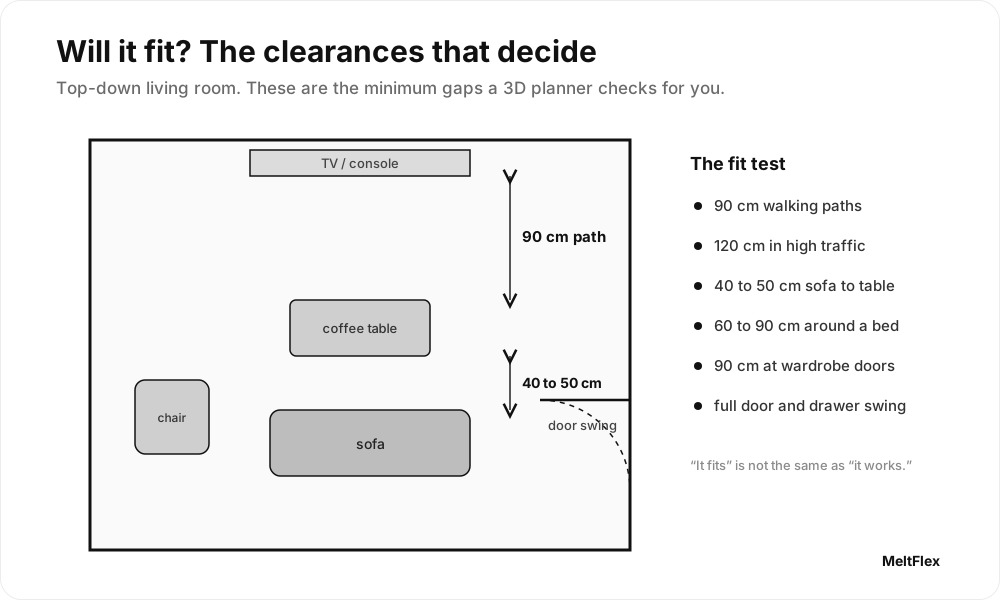
"It fits" is not the same as "it works." A sofa can technically slot into a wall and still block a balcony door or strangle the only path to the kitchen. Use these minimum clearances as your fit test:
Storage is the exception worth planning around, because it wants to be against the wall rather than in the path. If you are placing a full wall of it, building the units in rather than standing them free reclaims the few inches a freestanding run wastes at each side; we cost that out in turning flatpack storage into fitted joinery.
- Walking paths: 90 cm for normal passage, 120 cm for high-traffic routes (to a door, through a kitchen).
- Sofa to coffee table: 40 to 50 cm, close enough to reach a cup, far enough to pass.
- Around a bed: 60 cm minimum per side, 90 cm on any side used daily.
- In front of wardrobes and cabinets: 90 cm so doors and drawers open fully.
- Door swing: a full 90-degree arc, completely clear of furniture, for every door in the room.
The reason a measuring tape misses these is that a tape gives you a number, not a feeling. You can confirm a 220 cm sofa fits a 240 cm wall and still be shocked when it swallows the room. Seeing it at true scale in 3D, with the walking paths drawn in, turns a guess into a yes or no. If you are weighing a specific large piece, our guides on getting a mattress through a doorway and trying furniture before buying go deeper.
Watch: improving a room layout with AI
See the layout tool at work. This clip rearranges furniture and improves the flow of a room in seconds from a single photo.

A room layout improved automatically in MeltFlex.
Is There a Genuinely Free AI Furniture Placement Tool?
Partly, and the honest version is more useful than the marketing version. The MeltFlex free plan includes 15 credits, an AI generation costs 10, so you get one full run free. One floor plan converted to a 3D room, or one photo-based rearrangement. After that it is a paid plan.
One run is enough to answer the only question that matters at that stage: does the AI understand your room at all. Photograph the worst room in your home, run it once on spaciousness with existing furniture kept, and look at what comes back. If it hallucinated a window, no subscription will fix that. If it produced something plausible, you know exactly what you are buying. Inside the 3D floor-plan room, dragging and swapping furniture does not burn credits; generating new photorealistic renders does.
If what you want is unlimited free iteration and you do not need photorealism or exact real-product dimensions, a conventional planner is the better answer and costs nothing: the IKEA planner and Roomstyler both let you place scaled blocks for as long as you like. You trade twenty seconds for an hour and photorealism for box shapes, which for some rooms is a fine trade. We would rather tell you that here than after you have signed up.
AI vs. Manual Furniture Placement
Manual planning is not wrong, it is just slow and easy to get wrong. Here is how the two approaches compare on the things that actually decide a layout:
How to Use AI Furniture Placement (Free, Step-by-Step)
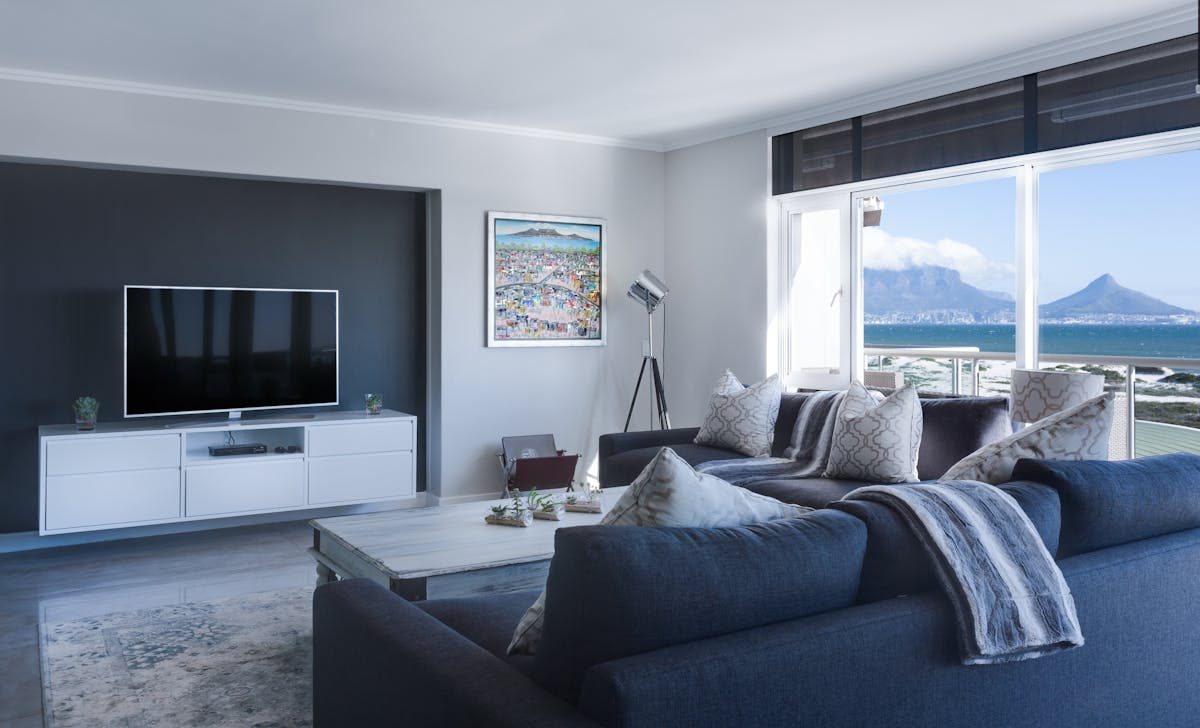
MeltFlex offers free AI furniture placement for any room. Here is how to use it:
- Step 1: Upload your floor plan. Architect drawing, hand sketch, or real estate listing photo. The AI detects walls, doors, and windows automatically.
- Step 2: Get your 3D model. In seconds, your flat floor plan becomes an interactive 3D room you can rotate, zoom, and walk through.
- Step 3: Browse real furniture. Open the furniture catalog of real products with exact dimensions and pricing. Filter by room type, style, or size.
- Step 4: Drag and place. Drop furniture into your room. It snaps to scale automatically. Move it, rotate it, swap it. Test every placement rule from this guide visually.
- Step 5: Generate a render. Once your layout is finalized, generate a photorealistic image of the furnished room. See exactly how your furniture choices will look in your space, before spending anything.
Upload your floor plan and place furniture in 3D, free →
Common Furniture Placement Mistakes
- Sofa against the wall in a large room. This kills intimacy. Float it. Add a console table behind it. The room will feel more designed, not emptier.
- TV too high on the wall. The center of the TV screen should be at seated eye level: 100-110 cm from the floor. Above the fireplace is almost always too high and causes neck strain.
- Rug too small. A rug that only fits under the coffee table makes the seating area feel disconnected. Always go larger than you think you need.
- Blocking natural light. Never place tall furniture (bookcases, wardrobes) between a window and the main seating area. Light should reach where people spend time.
- Ignoring the view from the entrance. The first thing you see when entering a room sets the tone. If you walk in and see the back of the TV or a cluttered desk, the room feels chaotic. Arrange the hero furniture (sofa, bed, dining table) to face the entrance.
- Overestimating room size when buying. Showroom furniture looks small because showrooms are large. Your room is not a showroom. Always verify dimensions in a 3D planner before purchasing, especially for sofas, dining tables, and beds.
Furniture Placement Checklist
- Is there a clear focal point, and does the main seating face it?
- Are all walking paths at least 90 cm wide?
- Is the sofa pulled away from the wall (at least 15 cm in medium rooms)?
- Does the rug extend under all front legs of the seating furniture?
- Is there a surface within arm's reach of every seat?
- Is visual weight distributed evenly across the room?
- Do all doors (entry, closet, balcony) open fully without hitting furniture?
- Is the TV at seated eye level (100-110 cm center height)?
- Have you tested the layout in a 3D planner at real scale?
Frequently Asked Questions
What is AI furniture placement?
AI furniture placement uses artificial intelligence to analyze your room dimensions and suggest optimal furniture arrangements. You upload a floor plan or room photo, and the AI generates layouts that maximize space, traffic flow, and visual balance. Unlike manual planning with tape measures and graph paper, AI does this in seconds and lets you test dozens of arrangements instantly.
Is there a free AI furniture placement tool?
Partly. The MeltFlex free plan includes 15 credits and an AI generation costs 10, so you get one full run free: one floor plan converted to a 3D room, or one photo-based layout. That one run answers the question that matters before paying, which is whether the AI reads your room correctly. Inside the 3D room you can drag and swap furniture as long as you like; generating new photorealistic renders costs credits.
Can AI rearrange my existing furniture?
Yes. Upload one photo of the room, keep the existing-furniture option on, and the AI proposes a new arrangement of the same sofa, chairs, and tables you already own: pulled off the walls, anchored on the rug, with clear walking paths. The step-by-step workflow above covers the details. It regenerates the image rather than physically sliding objects, so compare proportions against your original photo, then confirm clearances with a tape measure before moving anything.
What are the basic rules of furniture placement?
The 5 fundamental rules: (1) Create a focal point in every room and orient main seating toward it. (2) Leave 90 to 120 cm walking paths between furniture. (3) Pull furniture away from walls, since even 15 cm creates depth. (4) Use rugs to anchor furniture groupings, with all front legs sitting on the rug. (5) Balance visual weight so you do not put all heavy pieces on one side of the room.
How far should furniture be from the wall?
In small rooms (under 15 m²), furniture can touch walls. In medium rooms (15-25 m²), pull main pieces 10-15 cm from walls. In large rooms (25+ m²), float furniture 30-60 cm from walls to create depth and allow cleaning access. The sofa should never be pushed flat against a wall in a room larger than 20 m², or it makes the space feel like a waiting room.
How do I arrange furniture in a small room?
For small rooms: (1) Choose apartment-size furniture (sofa 150 to 170 cm, not 220 cm). (2) Use the walls, placing the sofa along the longest wall. (3) Choose furniture with exposed legs so the floor stays visible and the room feels bigger. (4) Skip the coffee table and use nesting tables or a small side table instead. (5) Use a 3D planner to test layouts at exact scale before committing.
Can AI place furniture from a floor plan?
Yes. With MeltFlex you upload a floor plan (an architect drawing, a hand sketch, or a real estate listing image) and the AI turns it into an interactive 3D room in seconds. You then drag real, exactly-scaled furniture into position, so the layout reflects your actual walls, doors, and windows rather than a generic template room.
Can AI tell me if furniture will fit in my room?
Yes. Because MeltFlex places furniture at exact real-world scale inside your own room dimensions, it shows immediately whether a 220 cm sofa clears the walking paths, whether the wardrobe doors open fully, and whether the bed leaves the 60 to 90 cm clearance you need. Size and fit are the leading reason furniture gets returned, so checking before you buy saves the most painful mistakes.
Is this better than a 3D room planner?
For most people, yes. A traditional 3D room planner makes you rebuild your room piece by piece and only shows a boxy 3D mock-up. AI furniture placement instead reads your floor plan or room photo and returns a photorealistic layout at exact scale in seconds, so you see how the real furniture actually looks and fits, without learning CAD or dragging blocks around a grid.
How do I use AI to rearrange my room?
Photograph the room from the doorway in one wide, level shot that shows the floor and at least two walls, upload it to the layout tool, keep the existing-furniture option on, and choose whether to optimise for spaciousness, conversation, or traffic flow. The AI returns the same sofa, rug, and shelves in a new arrangement, rendered in your actual room. Nothing is bought and nothing is removed, so the only thing that changes is where things stand.
Can AI arrange furniture if I only have the room dimensions and no photo?
Yes, but with a trade-off. Sketch the room as a simple rectangle with its width, length, and door and window positions, then run it as a floor plan. You get accurate scale, clearances, and fit answers, which is enough to settle whether a 220 cm sofa works. What you do not get is your real light, floor, and existing pieces, so the render looks like a generic room rather than yours. If you can take a photo instead, take the photo.
Start Placing Furniture with AI
Every room has a layout that works, a configuration where the sofa fits perfectly, the walking paths flow naturally, and the proportions feel right. The hard part is finding it. AI furniture placement eliminates the guessing by letting you test every option in minutes instead of hours.
Upload your floor plan to MeltFlex. Place real furniture at exact scale. Test every layout from this guide. Find the arrangement that makes your room feel like home, before you move a single piece.
Place furniture in your room with AI, free →
Related guides: open floor plan layouts, AI living room design prompts, furniture buying mistakes to avoid, how to arrange living room furniture, what size furniture fits your room, and how AI estimates room square footage from a photo. Planning a kitchen rather than a living room? The clearances are stricter, and how to design a kitchen layout covers them.