Outdoor Furniture Ideas for Patios, Balconies and Gardens: What Works in 2026

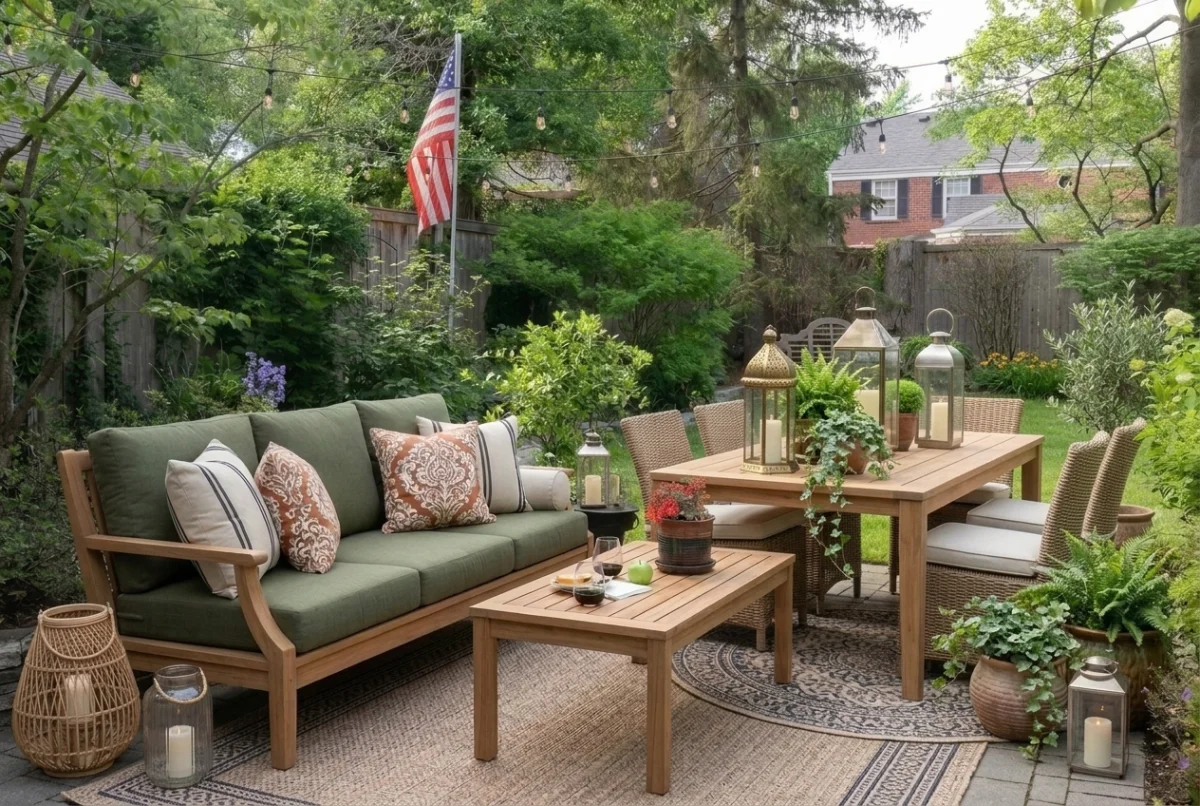
The right outdoor furniture depends on your space size before your style taste: a 2 to 5 m² balcony takes a bistro set or a compact loveseat, a 5 to 15 m² patio supports separate dining and lounge zones, and a garden over 15 m² can carry a full outdoor sofa as long as it hugs an edge instead of floating in the middle. Get the size logic right first, then pick materials that survive your climate, and only then choose a look. This guide works through all three decisions, with real budgets and AI previews of the same patio in four styles.
Our articles are still written by humans!
Get human written articles in your Google feed.
Your outdoor space is the most underused room in your home. A patio, balcony, or garden has the potential to be a dining room, a lounge, a workspace, or all three, but most people furnish it as an afterthought with whatever is on sale at the end of summer.
The result: mismatched chairs that are uncomfortable after 20 minutes, a table that is too big or too small, cushions that mold after the first rain, and a layout that wastes half the space. Outdoor furniture is expensive, a decent patio set costs €500-€3,000, and unlike indoor furniture, you cannot easily return it once it has been assembled outside.
This guide covers everything you need to know about choosing outdoor furniture in 2026: trending styles, material choices that actually last, layout strategies for every space size, and how AI lets you see your patio furnished before you spend a single euro.
Outdoor Furniture Trends for 2026
The Outdoor Living Room
The biggest trend is treating your patio or terrace like an actual living room, not just a place with a plastic table and chairs. Full outdoor sofas with deep cushions, coffee tables, outdoor rugs, floor lanterns, and even shelving. The goal is a space where you would genuinely spend an entire evening, not just eat dinner and go inside.
Curved and Organic Shapes
Angular, boxy outdoor furniture is giving way to rounded edges, oval dining tables, curved sofas, round lounge chairs. This mirrors the indoor trend and creates a softer, more inviting outdoor atmosphere. Curved pieces also flow better on irregular patios and decks.
Natural Materials Over Grey
The era of grey rattan and grey cushions is ending. In 2026, teak, acacia wood, natural wicker, terracotta pots, and stone accents dominate. Cushion colors are shifting to warm earth tones, sand, olive, terracotta, cream, instead of the cool greys that dominated the past five years.
Modular and Flexible
Modular outdoor sofas that can be rearranged for different occasions, a long sofa for movie nights, separate chairs for a dinner party, an L-shape for lounging. This flexibility is worth the premium, especially for smaller spaces where one layout does not fit every use.
One Patio, Four Styles: See the Difference
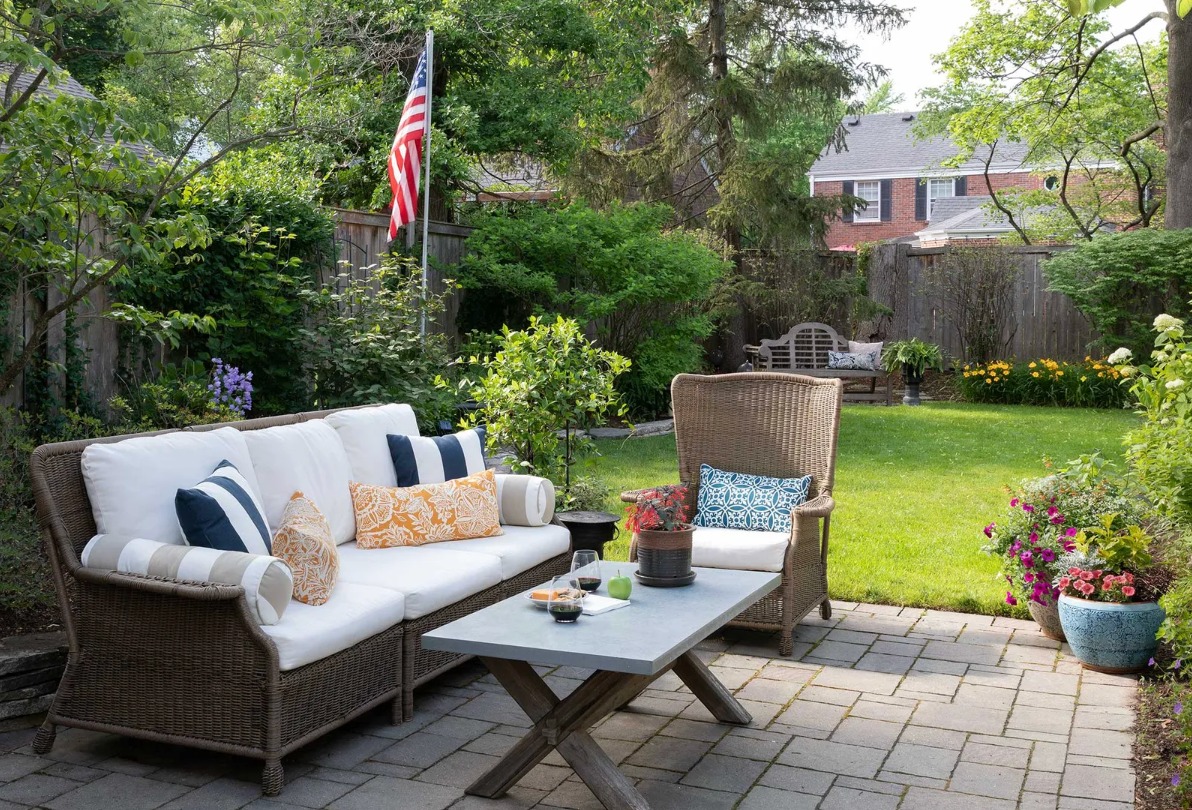
To show how much outdoor furniture changes a space, we took one backyard patio and redesigned it in four completely different styles using AI. Same stone pavers, same garden, same trees, only the furniture changed.
Here is the original patio, classic wicker furniture with white cushions:
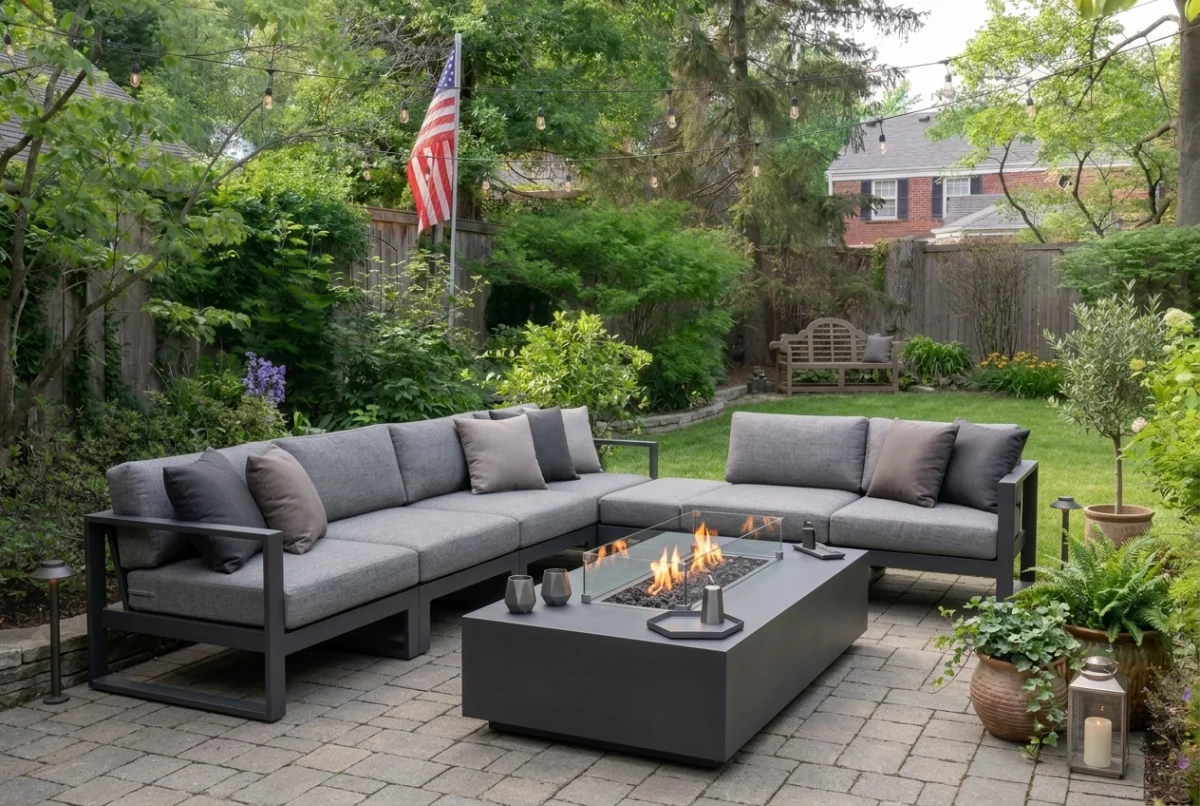
Modern Lounge with Fire Pit
Dark aluminium modular sectional with charcoal cushions, a gas fire pit as the centerpiece, floor lanterns, and string lights overhead. This setup transforms a traditional patio into an evening entertainment space. The fire pit replaces the coffee table and becomes the focal point.
Natural Teak with Outdoor Dining
Teak sofa with olive green cushions, a matching teak coffee table, and a full dining area behind with a teak table and wicker chairs. Brass lanterns and a jute area rug anchor the space. This is the "outdoor living room + dining room" combination, two zones on one patio.

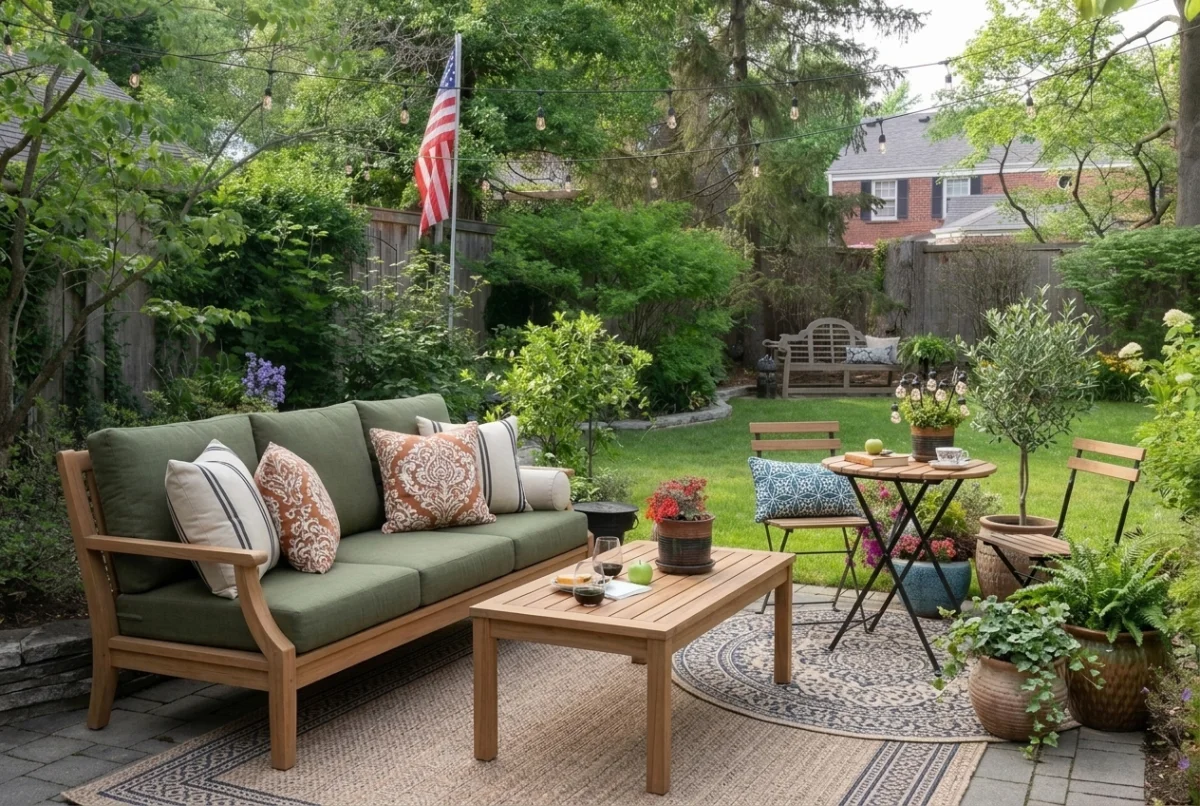
Teak Lounge + Bistro Corner
The same teak sofa but paired with a small bistro set in the corner, a folding table and two chairs for morning coffee. Two rugs (jute + patterned) define the zones. Potted plants and a woven basket lantern add texture. This layout maximizes a medium patio by combining lounging and casual dining.
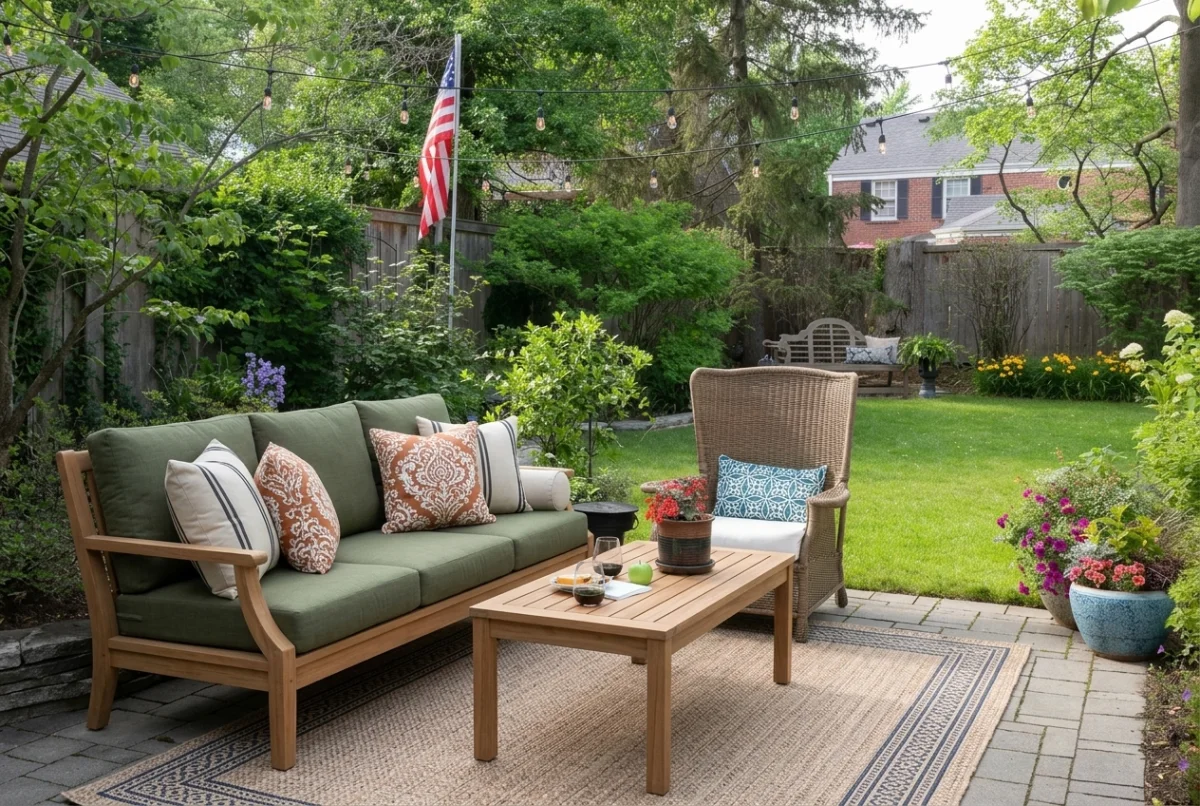
Refined Classic
A subtle upgrade of the original, the same layout philosophy but with better materials. Teak replaces wicker, olive cushions replace white, and a jute rug grounds the seating area. The wicker armchair stays for texture contrast. Sometimes the best redesign is not dramatic, just intentional.
Every render was generated from one photo in under 30 seconds. One honest note if you try this on your own patio: thin woven textures and slender chair legs are the hardest geometry for the model, so expect the occasional warped wicker weave and regenerate, it usually cleans up on the second attempt. Upload your patio or garden to MeltFlex and test any outdoor furniture style, free.
How to Choose Outdoor Furniture by Space
Small Balcony (2-5 m²)
Space is the constraint. Every piece must earn its place:
- Bistro set, a round 60cm table + 2 folding chairs. Classic, compact, functional.
- Wall-mounted folding table, opens for meals, folds flat when you need floor space.
- Compact loveseat, a two-seater bench with storage underneath for cushions.
- Vertical garden, use wall-mounted planters to add greenery without losing floor space.
Rule: if you cannot walk comfortably around the furniture with 60cm clearance on all sides, it is too big.
For an urban apartment balcony, two extra constraints matter. First, wind: anything above the fifth floor needs furniture with real weight (steel-frame bistro sets, not featherweight aluminum) or foldable pieces you can bring in, because lightweight chairs become projectiles in gusts. Second, neighbors and building rules: many buildings prohibit drilling into balcony walls or railings, which rules out wall-mounted tables and railing planters, so check before buying. The best seating for a small apartment balcony in practice is a two-seater bench with built-in cushion storage along the long wall, plus one folding chair that appears when a guest does. It seats three, hides the cushions from rain, and leaves the floor walkable. For a fuller list of what works in that footprint, see what furniture fits a small balcony.
If you rent, this video is worth ten minutes: fifteen small-balcony upgrades demonstrated on a real apartment balcony, all of them installable without drilling and removable when you move out:
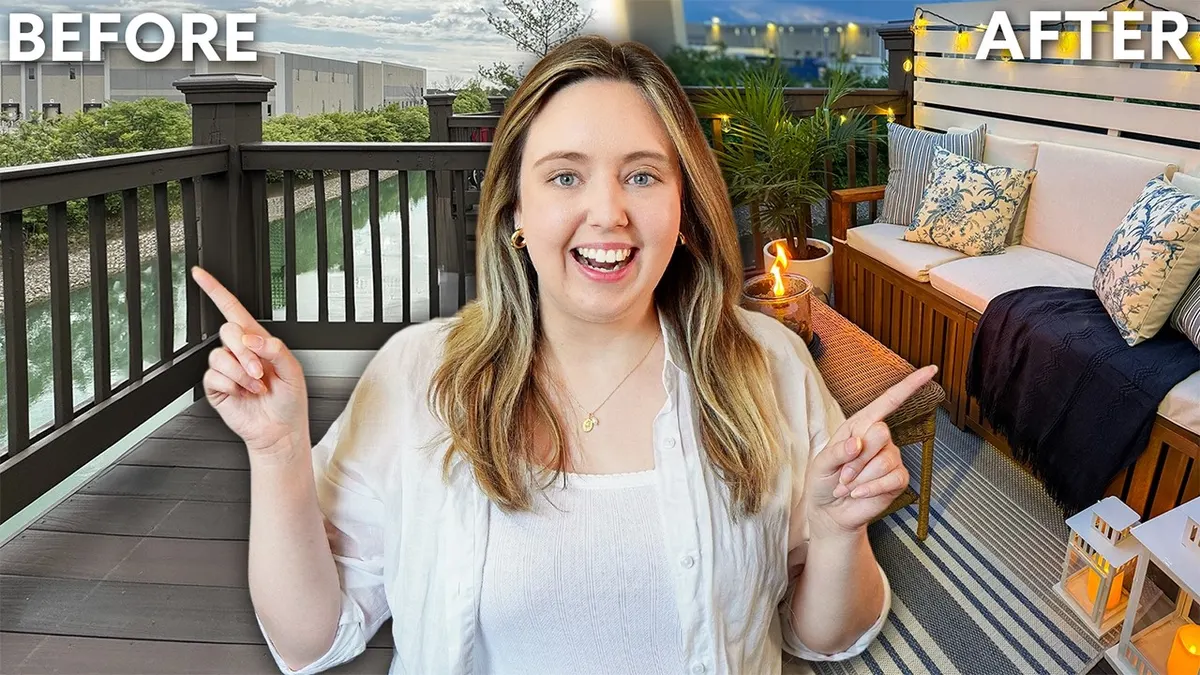
Video: “15 SMALL Balcony Decorating Ideas for Renters” by Actually Alli.
Medium Patio or Terrace (5-15 m²)
You have room for zones. The key is creating two distinct areas:
- Dining zone, table for 4-6 people, positioned near the door to the kitchen for easy serving.
- Lounge zone, a 2-3 seater outdoor sofa, one or two armchairs, a low coffee table. Position this facing the best view or the garden.
Use an outdoor rug under each zone to visually separate them. Leave at least 90cm between zones for comfortable walking.
Large Garden or Deck (15+ m²)
With more space, add a third zone:
- Dining zone, a full table for 6-8, potentially with a pergola or umbrella for shade.
- Lounge zone, modular sofa, coffee table, outdoor rug, floor lanterns.
- Quiet zone, a single lounge chair or hammock, tucked into a corner with plants for privacy. This is for reading, coffee, or simply being alone.
The most common mistake with large gardens is spreading furniture too far apart. People end up shouting across 5 meters during conversation. Keep social furniture within 2.5 meters of each other.
Fitting an Outdoor Sofa Into a Small Garden Without Overwhelming It
An outdoor sofa in a small garden works when it reads as part of the garden’s edge, not as an object dropped into the middle of it. Four rules keep the proportions right:
- Anchor it to a boundary. Push the sofa against a fence, hedge, or house wall. A sofa floating in open lawn visually shrinks the garden; a sofa along an edge extends it.
- Go low. Choose a low-back, low-profile frame (back height under 70 cm). Anything taller than the surrounding planting becomes a wall that cuts the garden in two.
- Two seats, not three. In gardens under 20 m², a 2-seater plus one lightweight chair beats a 3-seater. You keep the seating capacity for most evenings and lose a third of the visual bulk.
- Match the sofa color to the boundary behind it. A charcoal sofa against a dark fence, or a natural teak frame against greenery, recedes. A white or bright sofa against a dark background dominates every sightline.
If you are unsure whether a specific sofa will overwhelm your space, this is exactly the case where an AI preview earns its keep: photograph the garden, generate it with the sofa in place, and judge the proportions before ordering. For planting, paths and the rest of the garden around the furniture, our AI garden design guide covers the full outdoor workflow.
Outdoor Furniture Materials: What Actually Lasts
Wood: Teak vs. Acacia vs. Pine
Teak is the gold standard, naturally oily, insect-resistant, weathers to a silver-grey patina over 2-3 years. Garden experts at Homes & Gardens put well-made teak at 25 to 30 years outdoors, which matches its Class 1 wood durability rating. Expensive (€800-€3,000 for a dining set). Acacia is the budget alternative, similar look, needs annual oiling, lasts 10-15 years if maintained. Pine is the cheapest but requires staining/sealing every year and rots quickly if neglected.
Metal: Aluminum vs. Steel vs. Iron
Powder-coated aluminum is the best all-rounder, lightweight, rust-proof, low-maintenance, available in any color. Stainless steel is premium but heavy. Wrought iron is beautiful but extremely heavy and will rust without regular maintenance. Avoid cheap uncoated steel, it rusts within one season.
Wicker: Natural vs. Synthetic
Synthetic wicker (PE rattan) is the practical choice, UV-resistant, waterproof, easy to clean, looks natural. Natural rattan and wicker should only be used in covered spaces, rain and sun destroy them within a year or two outdoors.
Cushion Fabrics
Sunbrella and other solution-dyed acrylic fabrics are the standard, they resist fading, water, and mold. Avoid standard cotton or polyester, they fade in weeks and grow mold after rain. Quick-dry foam inserts drain water instead of absorbing it. Always store cushions under cover or in a storage box when not in use.
How to Arrange Outdoor Furniture: Layout Rules
Face the Best View
Your lounge seating should face whatever is most pleasant, the garden, sunset direction, a water feature, or a focal wall. Dining seating is more flexible since people face each other, not the view.
Create a Focal Point
Every outdoor space needs something to anchor it visually: a fire pit, a large planter, a water feature, a statement tree, or even a sculptural piece of furniture. Without a focal point, outdoor spaces feel like parking lots with chairs.
Use Rugs to Define Zones
Outdoor rugs (polypropylene or jute-look synthetic) are the fastest way to make a patio feel intentional. Place one under the dining table (extend 60cm beyond chairs) and one under the lounge area. The rug signals "this is a room", without it, furniture looks scattered.
Layer Lighting
String lights overhead (the single biggest upgrade for any patio), solar path lights at ground level, and lanterns or candles on tables. Three layers of light transform a flat, dark patio into an atmospheric evening space. LED solar string lights cost €15-€30 and last years.
Budget Guide: What Outdoor Furniture Actually Costs
Market ranges as of 2026, in euros; US dollar prices for comparable sets run at roughly the same numbers.
- €200-€500, Basic setup: bistro set or simple 4-chair dining set + cushions. Functional but not inspiring.
- €500-€1,500, Mid-range: aluminum dining set for 6 + a small lounge set OR a quality modular sofa. Good materials, reasonable comfort.
- €1,500-€3,000, Premium: teak dining table + quality lounge set + outdoor rug + lighting. A full outdoor living room.
- €3,000+, Designer: teak + Sunbrella cushions + fire pit + pergola. The dream setup.
The biggest waste is buying cheap furniture that degrades in one season. A €300 plastic set replaced every 2 years costs more over 10 years than a €1,200 aluminum set that lasts the entire time.
How to Visualize Your Outdoor Space Before Buying
Outdoor furniture is harder to return than indoor furniture, it is assembled outside, often heavy, and stores have strict return policies. Online furniture returns already run at roughly 19% to 23% of orders across the category, and outdoor pieces are the worst case. Testing before buying is critical:
- Upload a photo of your patio, balcony, or garden to the AI interior design tool (it handles outdoor spaces the same way)
- Describe what you want, "outdoor lounge with teak sofa and olive cushions" or "small balcony bistro set with plants"
- See the result, photorealistic render of your actual space, furnished, in 30 seconds
- Test layouts, dining on the left vs. right, sofa facing garden vs. house
- Compare options, modern aluminium vs. rustic wood vs. wicker, same space, different styles
This is especially valuable for outdoor spaces because proportions are hard to judge outdoors. A dining table that seems small in the store can overwhelm a 3-meter-wide terrace. AI renders show the true scale instantly, and for the delivery-day question, whether the assembled table even fits through the balcony door, our furniture fit calculator gives a yes or no in seconds.
Try AI patio design on your outdoor space →
Planning the whole garden rather than just furnishing it? Our guide to how to design a garden layout covers zones, border depth and planting in layers.
Outdoor Design Checklist
- Measure your space, length, width, fixed features (doors, railings, steps, drains)
- Define zones, dining, lounge, quiet. Not every space needs all three.
- Choose weather-appropriate materials, teak/aluminium for exposed areas, wicker for covered spaces
- Budget for cushions separately, they often cost 30-40% of the furniture price
- Add lighting, string lights are the single best ROI upgrade for any patio
- Design the yard before the furniture, our AI landscape design tools comparison covers what each one costs and which of them check plants against your climate zone
- If the lawn is the problem, no grass backyard ideas compares nine lawn alternatives and the maintenance each one really needs
- Sort the overlooking first, no seating area is comfortable under a neighbour's upstairs window, and backyard privacy ideas covers what actually blocks it
- Test with AI first, upload a photo to MeltFlex and visualize before purchasing
- Store cushions, a waterproof storage box extends cushion life by years
- See it before you buy it, our free AI landscape design tool restyles a photo of your own backyard or patio so you can test the layout before the furniture arrives
Outdoor Furniture FAQ
How do I choose outdoor furniture for a small balcony?
Measure first; most small balconies are 2 to 4 m². Choose a bistro set (round 60 cm table plus two folding chairs) or a compact loveseat with cushion storage. Avoid bulky armrests, check your building’s rules before mounting anything to walls or railings, and above the fifth floor pick furniture heavy enough to stay put in wind.
What is the best material for outdoor furniture?
It depends on your climate. Teak and eucalyptus are naturally weather-resistant and age beautifully. Powder-coated aluminum is lightweight, rust-proof and low-maintenance. All-weather PE wicker gives the natural look without rotting. Avoid untreated steel and cheap plastic, and for cushions insist on solution-dyed acrylic like Sunbrella.
How do I arrange outdoor furniture on a patio?
Define zones: a dining zone (table + chairs near the kitchen/grill), a lounge zone (sofa + armchairs for conversation), and a quiet zone (single chair or hammock for reading). Leave 90cm walkways between zones. Face the lounge toward the best view, garden, sunset, or focal point. Use a rug to anchor each zone and create visual separation.
Can AI help me design my outdoor space?
Yes. Upload a photo of your patio, balcony, or garden to MeltFlex and describe the furniture style you want. The AI generates a photorealistic render showing your outdoor space furnished, in under 30 seconds. You can test different layouts, furniture styles, and arrangements before purchasing anything.
How do I fit an outdoor sofa in a small garden without overwhelming it?
Anchor it against a fence, hedge or wall, keep the back under 70 cm, choose a 2-seater plus a light chair over a 3-seater, and match the sofa color to the boundary behind it. Along the edge, a sofa extends the garden; in the middle, it shrinks it.
What outdoor furniture styles work best for small patios?
Styles built from slim, leggy pieces: steel bistro sets, mid-century teak with tapered legs, low-profile Japandi lounge chairs. Deep modular sectionals and bulky wicker eat the walkway. Warm earth-tone cushions on compact frames deliver the current look at a small-patio scale.
What are the outdoor furniture trends for 2026?
The outdoor living room: full sofas, coffee tables, rugs and shelving rated for outdoor use. Curved shapes are replacing angular ones, natural materials (teak, stone, terracotta) are replacing grey rattan, and cushion palettes are moving to sand, olive and terracotta. Modular pieces that rearrange between dinner parties and lounging are the practical winner.
Start Designing Your Outdoor Space
Upload a photo of your patio, balcony, or garden to MeltFlex and see it furnished in seconds, for free. Test furniture layouts, compare styles, and make confident decisions before spending anything. Your outdoor space deserves the same attention as your living room.
Related guides: AI living room design prompts, kitchen design ideas, how to choose paint colors, what it costs to furnish a house, and AI living room design prompts.