A living room design prompt has a harder job than any other room prompt, because the living room has the most competing jobs: sitting, watching, hosting, and being walked through on the way to somewhere else. Most prompts fail by naming a style and stopping. The ones below name the style, the anchor seating, the focal point it faces, the light, and what must not change. We build MeltFlex, an AI interior design tool, so we see which phrasings survive contact with real rooms and which produce a beautiful furniture showroom nobody could live in. Here are 41 copy and paste prompts organised by the brief you actually have.
Our articles are still written by humans!
Get human written articles in your Google feed.
“Every weak living room render has the same tell: the sofa is facing nothing. Say what the seating looks at, a fireplace, a window, a television, the other seat, and half the bad layouts disappear before the model draws a pixel.”
Branislav Hrivnák, Co-Founder, MeltFlex
The short version
- Five parts: style with named materials + anchor seating + the focal point it faces + light + the lock.
- Name the focal point. It is the single highest-value word in a living room prompt.
- Lock the windows and the door, not the furniture. In this room the furniture is supposed to move.
- Small rooms: name the tricks, legs on the sofa, one big artwork, ceiling-height curtains, one large rug.
- Every prompt here is model agnostic: ChatGPT, Gemini or a dedicated room tool, unchanged.
Jump to: The formula · Whole room · Small rooms · Living and dining · Cozy and evening · Family and pets · Rental safe · TV wall · ChatGPT vs Gemini · Why they fail · FAQ
FreeUpload photo · freeRedesign my living room for freeUpload a photo of your living room and let MeltFlex design it. Your first AI design is free, no card needed.
The living room prompt formula
One difference from every other room worth internalising. In a bedroom you lock the bed wall, because a bed has one viable position. In a living room you lock the openings and let the furniture move, because rearranging the seating is the entire point of the exercise. The same five-part structure runs the kitchen prompt guide and the bedroom prompt library, with the lock clause pointed at whatever that room cannot afford to lose.
Whole room style prompts
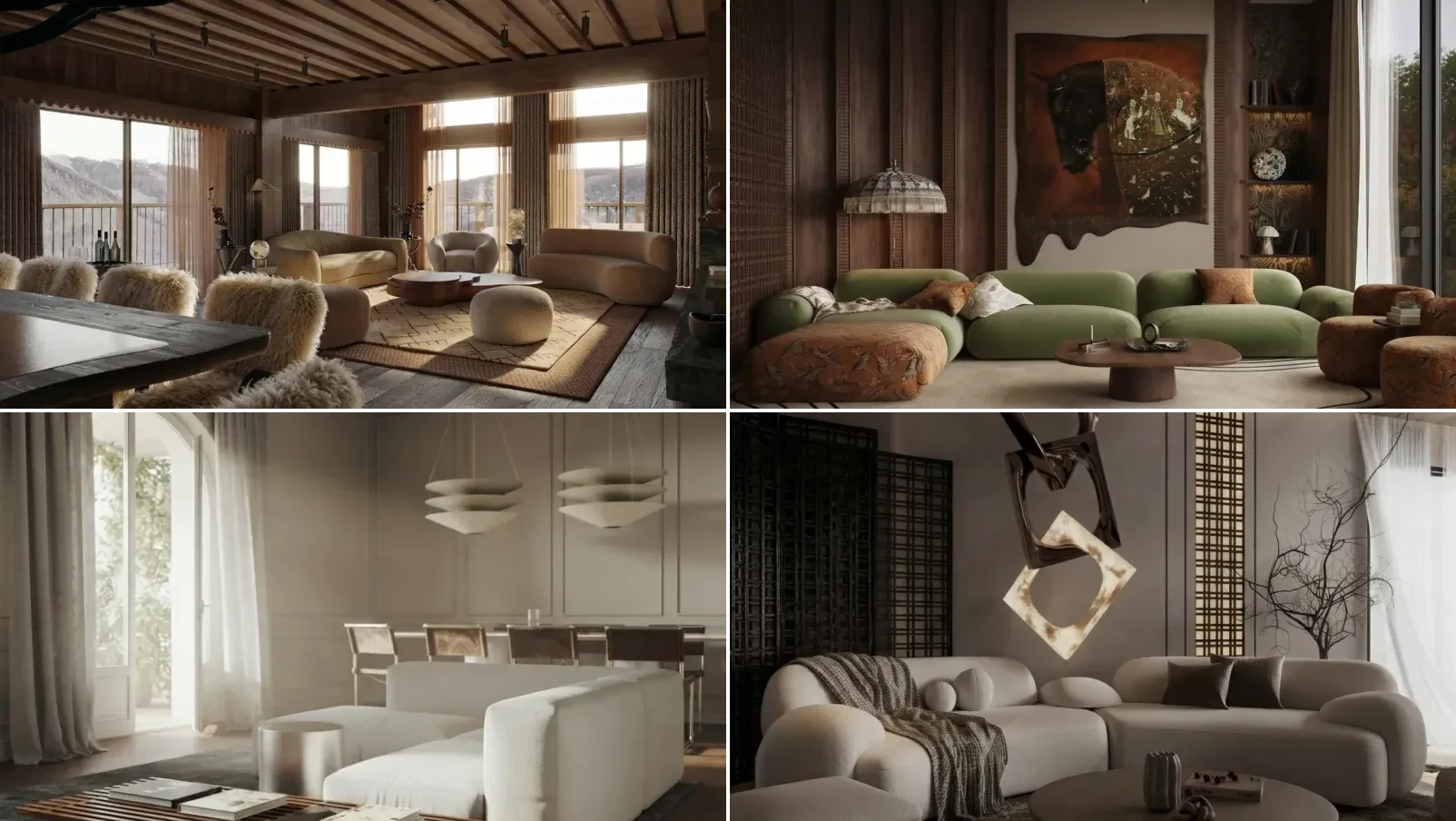
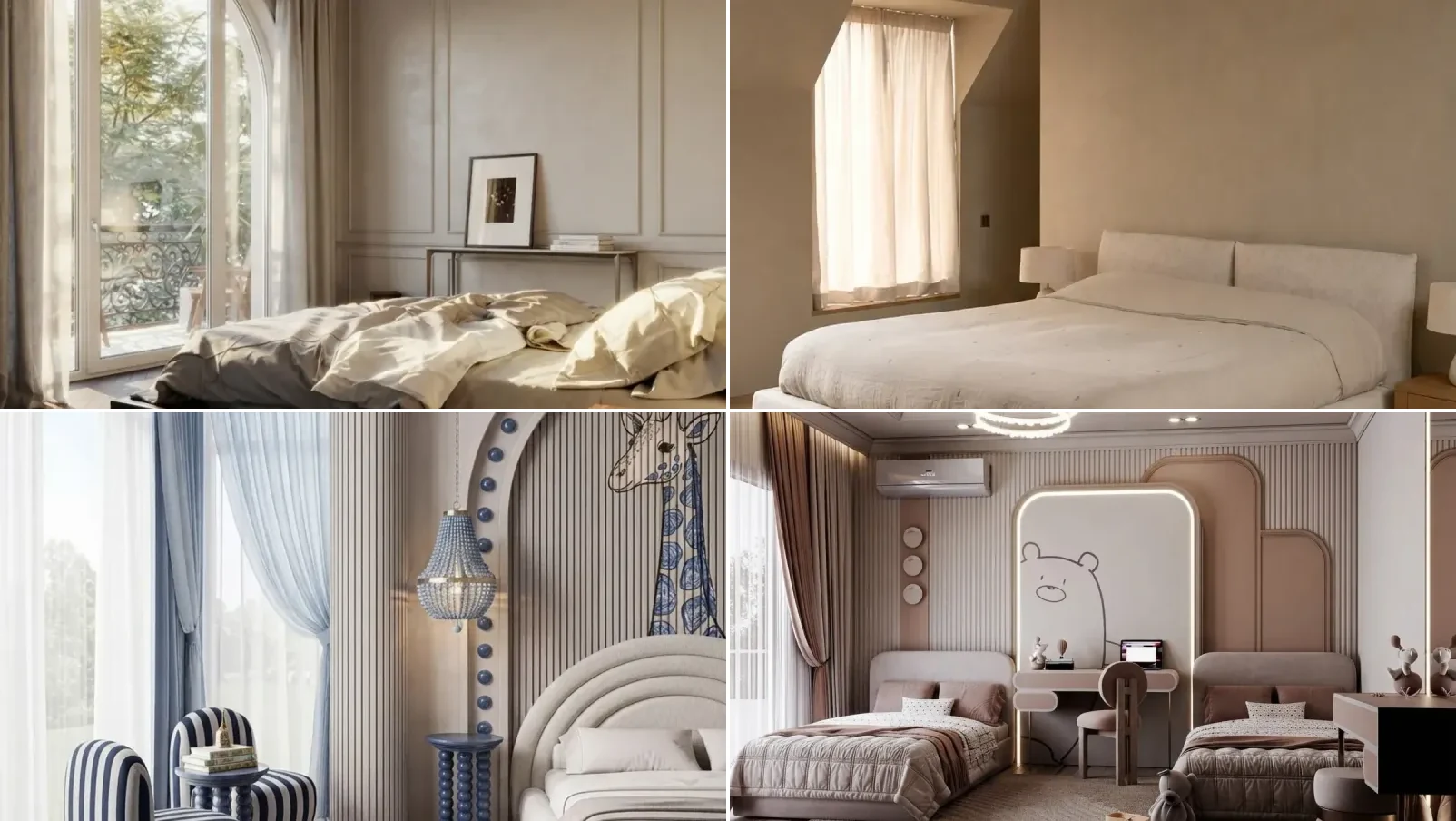
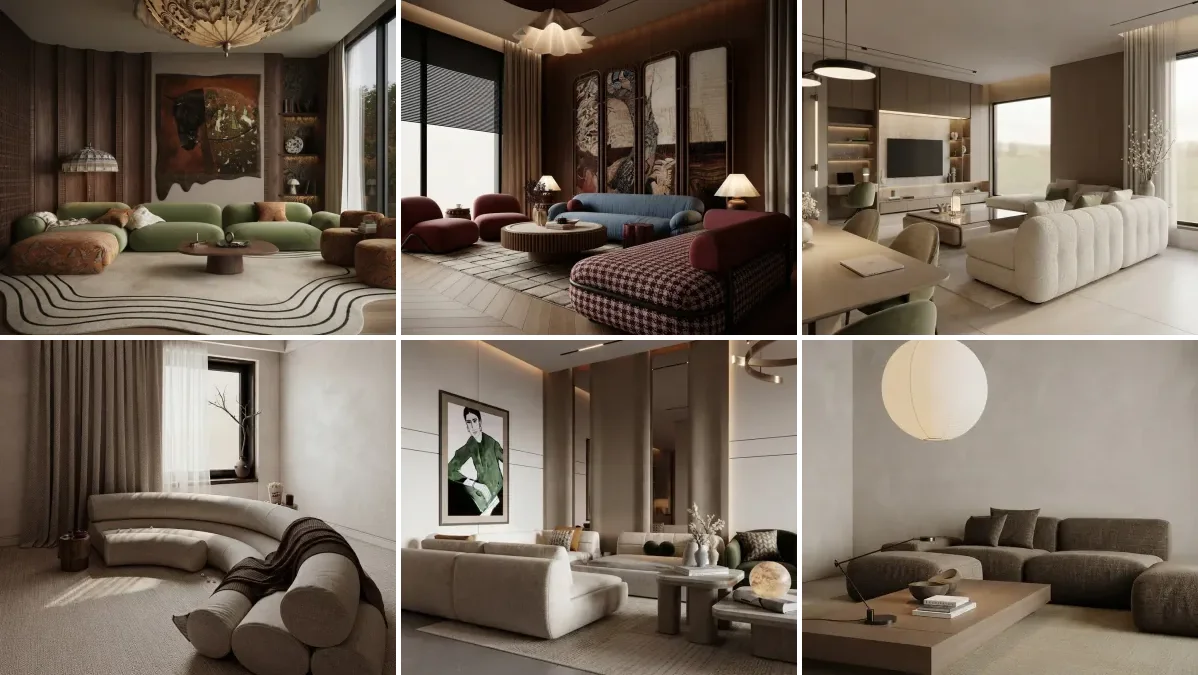
The full-room brief. Attach a wide photo taken from the doorway and run one of these unchanged, or swap the nouns for your own. The renders in this article come from our creations gallery and show the finish level this kind of specific prompt points at.
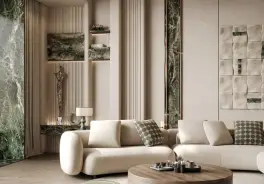
“Redesign this living room in a warm modern organic style. Keep the windows, the door and the room shape. Low oatmeal boucle three-seat sofa facing the window, round travertine coffee table, pale oak floor, one olive tree, linen curtains hung at ceiling height, bright natural daylight, photorealistic.”
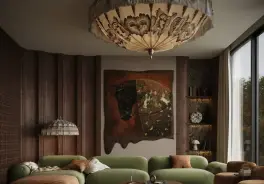
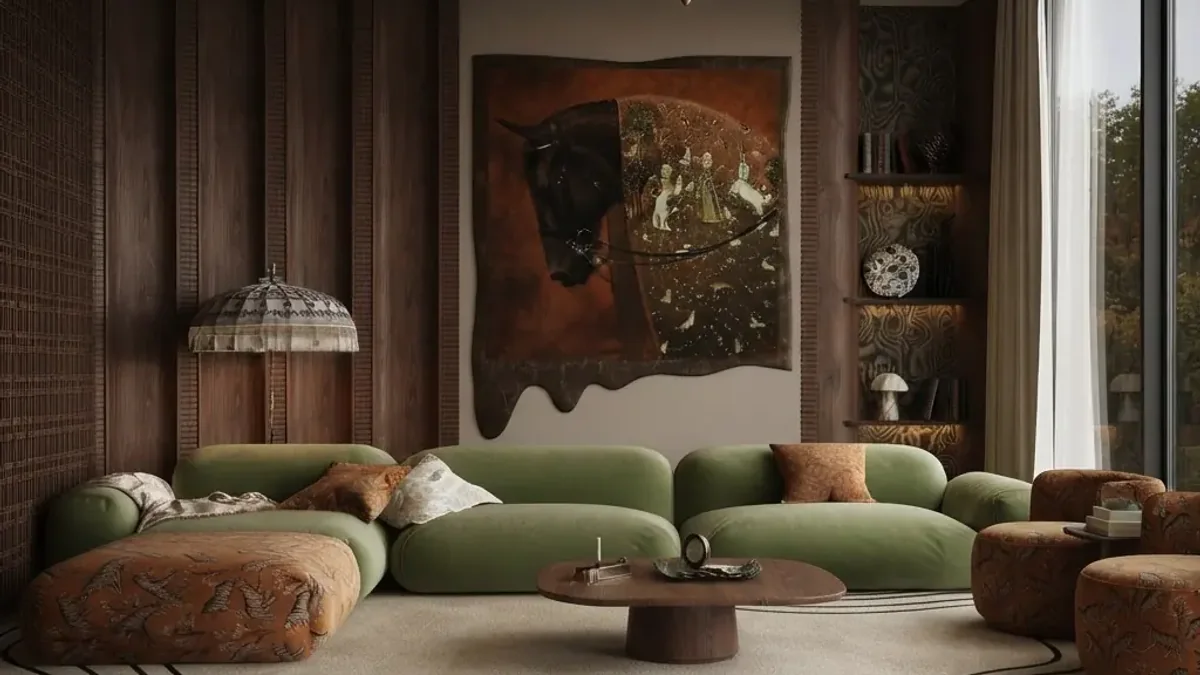
“Redesign this living room in a warm earthy seventies style. Keep the windows, the door and the room shape. Moss green modular sofa with rounded segments, terracotta patterned floor cushions, dark timber wall panelling, one large artwork, a woven pendant, warm enveloping lamplight, photorealistic.”
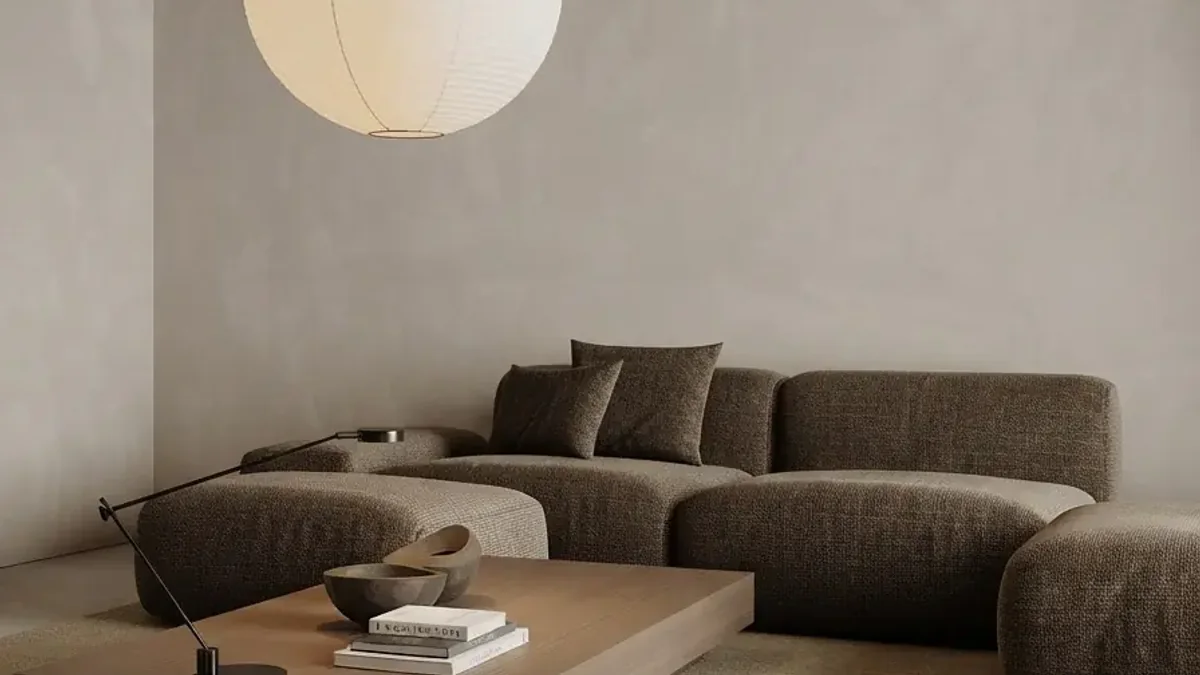
“Redesign this living room in a calm Japandi style. Keep the windows, the door and the room shape. Low grey-brown boucle modular sofa, a pale wood platform table, one paper globe pendant, plaster walls in warm off-white, almost nothing on the surfaces, soft diffused daylight, photorealistic.”
“Redesign this living room in a classic contemporary style that will still look right in ten years. Keep the windows, the door and the room shape. Neutral upholstered sofa with a tailored skirt, a pair of armchairs facing it, dark timber coffee table, one large abstract artwork, warm layered lighting, photorealistic.”
“Redesign this living room in a bright coastal style without any nautical cliches. Keep the windows, the door and the room shape. White slipcovered sofa, whitewashed oak table, pale blue and sand accents, a large woven rug, sheer white curtains, bright morning light, photorealistic.”
“Redesign this living room in a mid-century modern style. Keep the windows, the door and the room shape. Walnut framed sofa with tapered legs, a low slatted sideboard, one globe floor lamp, mustard and teal accents used sparingly, a geometric rug, warm afternoon light, photorealistic.”
“Redesign this living room in a soft minimalist style with warmth. Keep the windows, the door and the room shape. One large curved sofa in cream, a single sculptural side table, no gallery wall, no clutter, a deep textured rug, light raking across the floor, photorealistic.”
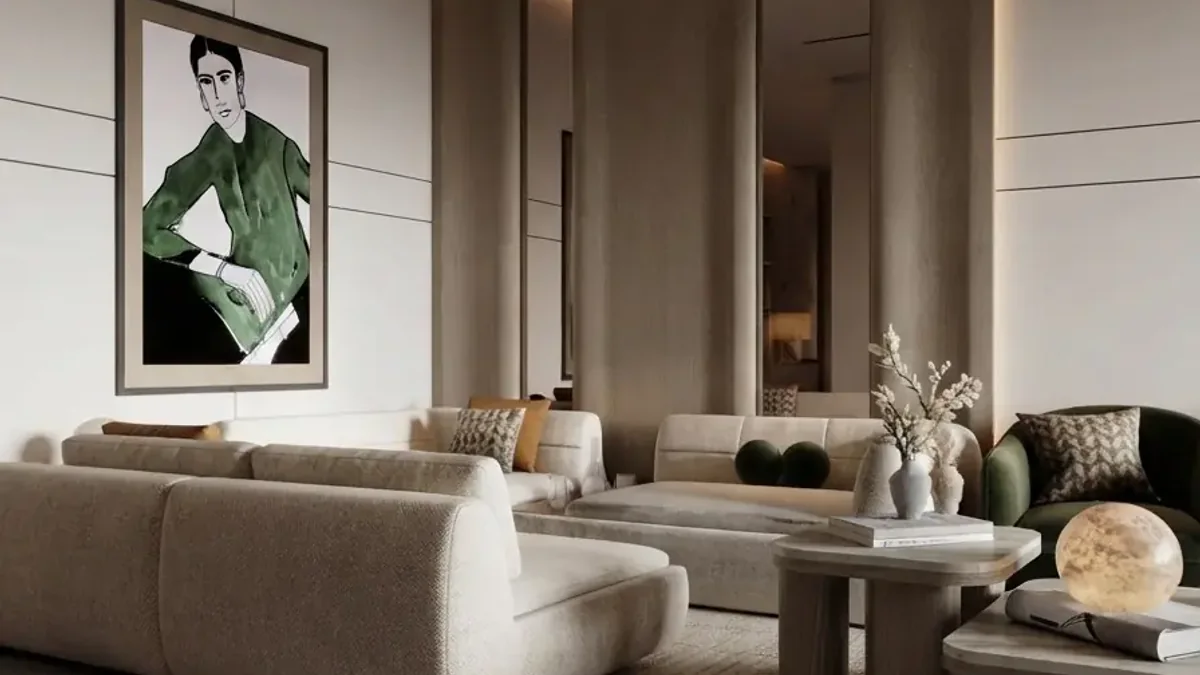
“Redesign this living room in a dark academia style. Keep the windows, the door and the room shape. Forest green walls, floor to ceiling bookshelves on the long wall, a cognac leather sofa, a brass reading lamp, a worn Persian rug, warm low evening light, photorealistic.”
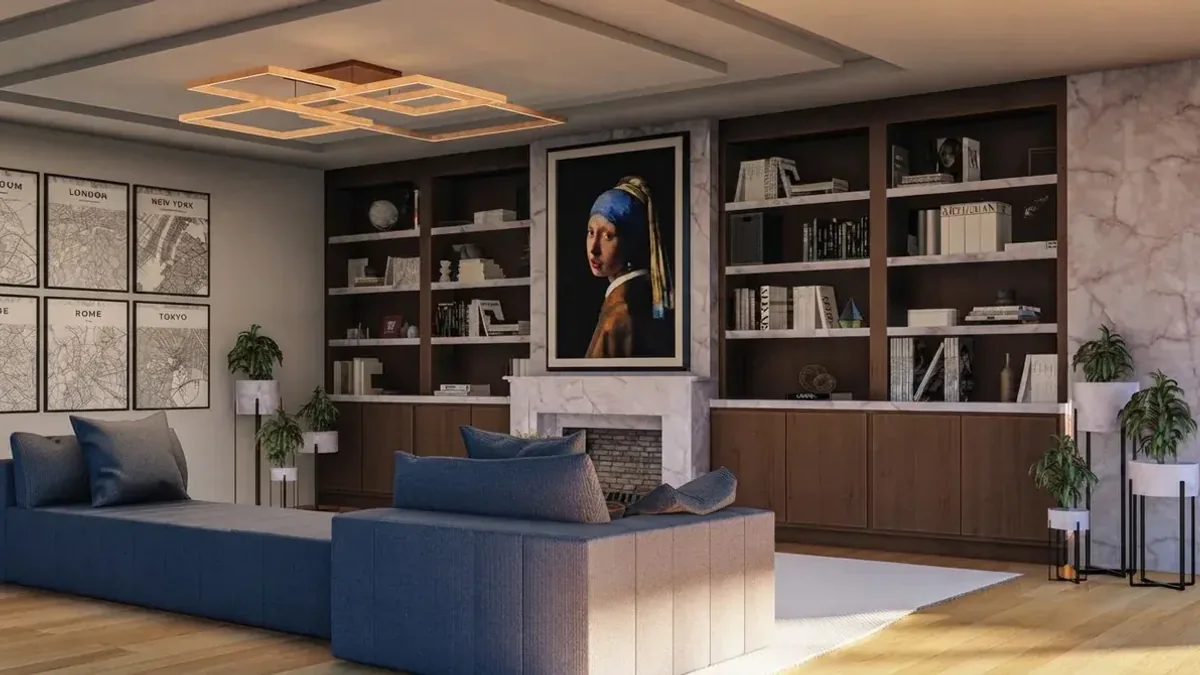
Bookshelves are the cheapest way to make a living room look like somebody lives in it, and they are the one thing an image model reliably renders well, because it has seen a great many of them.
“Redesign this living room to look considerably more expensive without changing the layout. Keep the windows, the door and the room shape. Full-height curtains hung close to the ceiling, one large artwork instead of several small ones, all metal finishes matched, cables hidden, three layers of warm lighting, photorealistic.”
“Redesign this living room in a quiet luxury style. Keep the windows, the door and the room shape. Deep seated sofa in a heavy oatmeal weave, a stone coffee table with visible movement, one antique timber piece, aged brass details, no visible branding, soft late light, photorealistic.”
Small living room prompts
The most searched living room brief and the one where vague wording costs you the most. The fix is to stop asking the model to make the room look bigger and start naming the specific moves that do it. Every prompt here contains at least three of them.
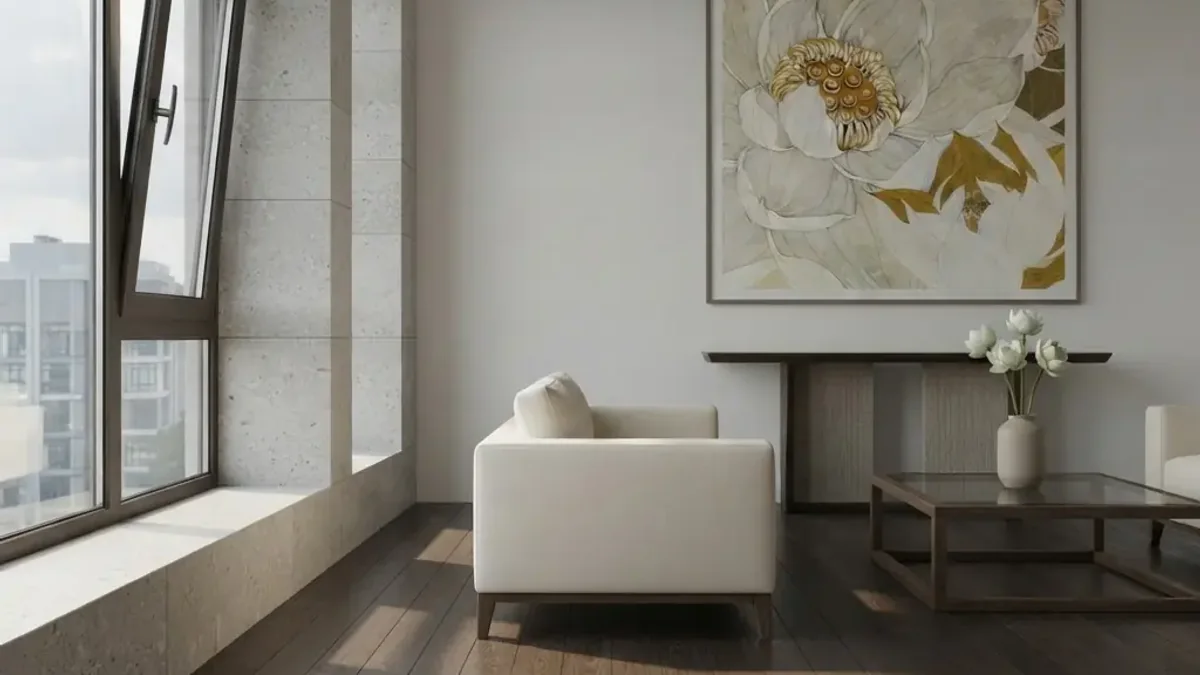
Three of the moves in one image: one large artwork instead of several small ones, furniture on visible legs, and nothing tall placed between the seating and the window.
“Redesign this small living room to feel bigger without removing seating. Keep the windows, the door and the room shape. Sofa raised on slim legs so floor shows underneath, one large artwork instead of several small ones, full-height curtains hung at ceiling height and wide enough to clear the glass, one large rug under the front legs of everything, a three colour palette, photorealistic.”
“Redesign this small living room so it can still seat four people. Keep the windows, the door and the room shape. A two-seat sofa plus two light armchairs that can move, nesting tables instead of one big coffee table, wall-mounted lighting instead of floor lamps, photorealistic.”
“Redesign this narrow living room. Keep the windows, the door and the room shape. Place the seating along the long wall rather than floating it, use one full-length low sideboard opposite, hang a horizontal artwork to widen the wall visually, keep a clear walking path end to end, photorealistic.”
“Redesign this small living room with storage that does not look like storage. Keep the windows, the door and the room shape. Built-in joinery painted the same colour as the walls, closed fronts at the bottom and two open shelves at the top, a bench seat under the window with a lid, photorealistic.”
“Redesign this small dark living room to feel lighter without painting everything white. Keep the windows, the door and the room shape. A warm off-white on the walls, a pale rug, one mirror positioned to catch the window, lamps at three heights, no dark heavy furniture in the middle of the room, photorealistic.”
“Redesign this small living room for one person who works from home. Keep the windows, the door and the room shape. A compact sofa, a slim desk against the window wall that reads as furniture rather than office equipment, one comfortable chair, warm task lighting separate from the ambient light, photorealistic.”
Two of those prompts are really layout questions in disguise, and a render will not tell you whether a 220 centimetre sofa clears the walkway. For that, the living room layout guide works from real clearances, and the sofa fit calculator answers the question that ruins more purchases than any other.
Living and dining in one room
The brief almost nobody prompts correctly. Left alone, the model either draws two separate rooms or one confused one with a dining table floating in the middle. Say where the boundary is and what marks it.
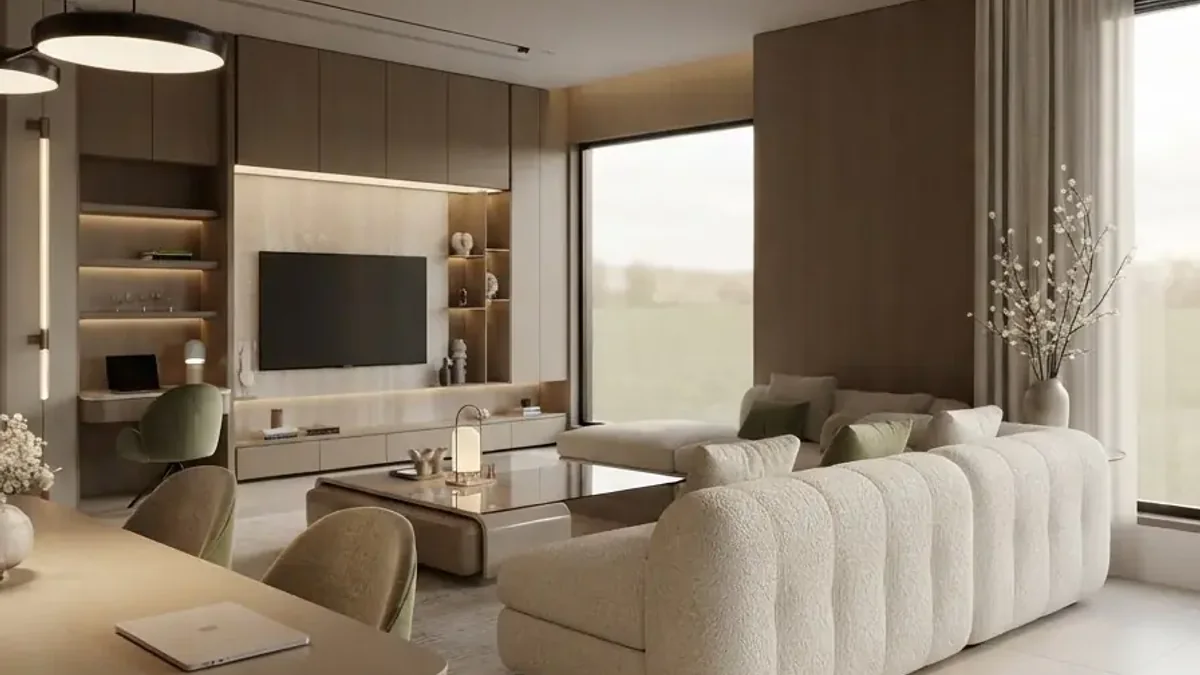
“Redesign this open plan living and dining room. Keep the windows, the door and the room shape. The dining end is nearest the window and the seating end is nearest the door. Mark the boundary with a large rug that stops at the dining edge and a change from pendant light over the table to lamps in the seating area, photorealistic.”
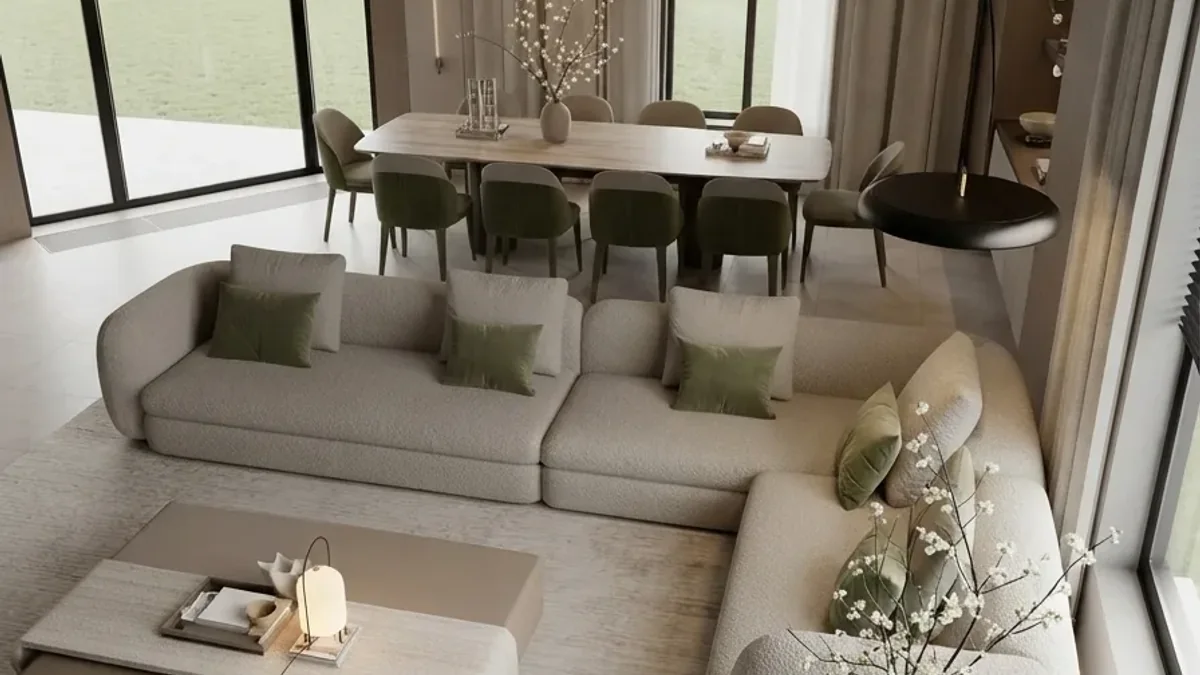
The boundary here is not a wall, it is the rug edge and a change of light source. Naming both in the prompt is what stops the model filling the middle of the room with furniture.
“Redesign this living and dining room so the two zones read as one home rather than two schemes. Keep the windows, the door and the room shape. One shared timber tone and one shared textile colour across both ends, different shapes in each, a clear walking path from the door to both zones, photorealistic.”
“Redesign this living and dining room using a low sideboard as the divider between the two zones. Keep the windows, the door and the room shape. The sofa back faces the dining table across the sideboard, nothing above waist height blocks the sightline to the window, photorealistic.”
“Redesign this living dining kitchen so the kitchen visually recedes. Keep the windows, the doors and the room shape. Handleless cabinetry in the same tone as the walls, no wall units, the dining table as the visual centre, the seating area in warmer materials, even daylight, photorealistic.”
“Redesign this long living dining room that has only one window at the far end. Keep the windows, the door and the room shape. Put the dining table in the light, the seating in the darker half with layered lamplight of its own, and use a pale floor running the length of the room, photorealistic.”
“Show this living dining room set up for six people for dinner and then the same room on an ordinary evening, as two images. Keep the windows, the door, the room shape and all furniture positions identical in both, change only what is on the table, the lighting and the textiles.”
Cozy and evening prompts
Image models default to bright midday daylight, which is the light nobody actually uses their living room in. Naming the evening is the single change that turns a catalogue render into a room. These prompts lead with the light.
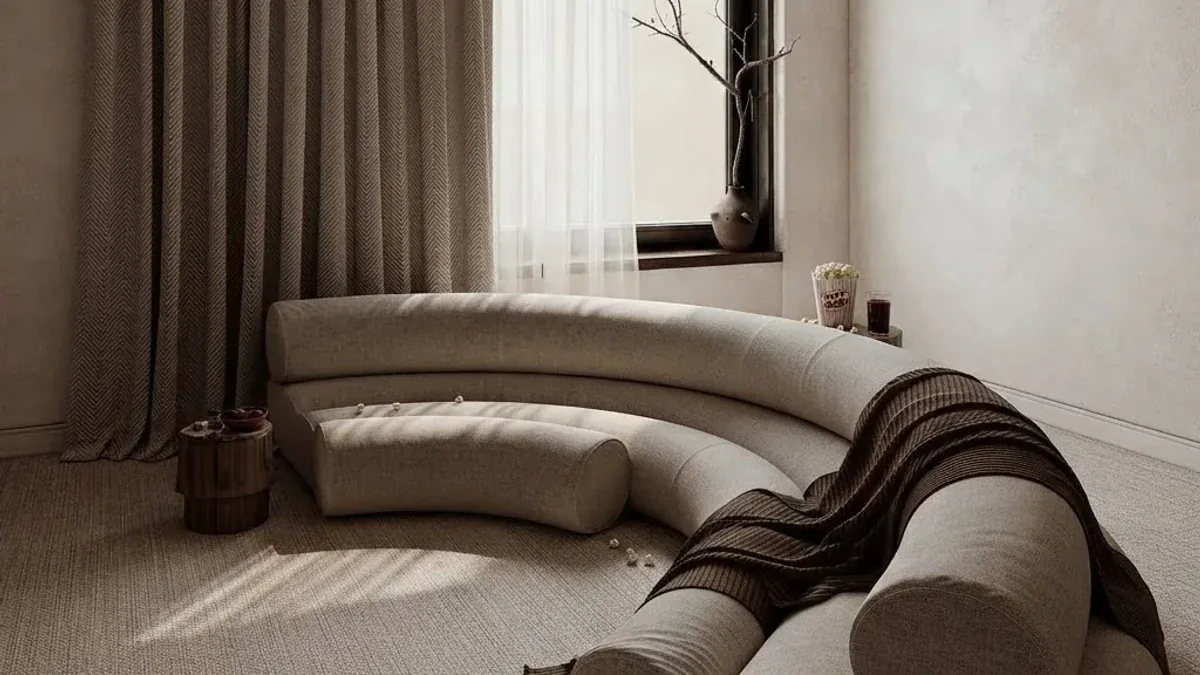
“Redesign this living room for a winter evening. Keep the windows, the door and the room shape. No overhead light at all, three warm 2700K lamps at different heights, a chunky knit throw over the sofa arm, heavy curtains closed, a deep textured rug, photorealistic.”
“Make this living room feel cozier without making it feel smaller. Keep the windows, the door, the room shape and the main furniture. Add layered cushions in two sizes and warm rust tones, a larger rug that reaches under the front legs, warm lamplight, sheer curtains behind heavier ones, photorealistic.”
“Redesign this living room around a fireplace as the focal point, with the seating facing it rather than the television. Keep the windows, the door and the room shape. A pair of armchairs opposite the sofa, a low hearth, warm firelight plus two lamps, evening atmosphere, photorealistic.”
“Redesign this living room with late afternoon sun raking across the floor from a side window. Keep the windows, the door and the room shape. A curved cream sofa with one long bolster, plaster walls, a textured natural rug, one bare branch in a tall vase, hard shadow edges, photorealistic.”
“Redesign this living room as a quiet reading room. Keep the windows, the door and the room shape. One deep armchair with an ottoman by the window, a directional reading lamp over the shoulder, a low bookshelf within arm’s reach, no television, soft grey afternoon light, photorealistic.”
“Redesign this living room to feel calm rather than busy. Keep the windows, the door, the room shape and the furniture. Reduce the palette to three colours, remove all small objects, group what remains into fewer larger arrangements, soft diffused daylight, photorealistic.”
Family, kids and pets
The brief that gets the least honest coverage, because it is the least photogenic. The trick is to name the constraint as a material rather than as a wish, since “kid friendly” means nothing to an image model but “performance weave in a mid tone with no light upholstery below knee height” renders exactly.
“Redesign this living room for a family with two small children, without it looking like a playroom. Keep the windows, the door and the room shape. Performance weave upholstery in a mid tone, rounded corners on the coffee table, closed low storage along one wall, a washable rug, nothing breakable below adult chest height, photorealistic.”
“Redesign this living room for a household with a large dog. Keep the windows, the door and the room shape. Tight-weave upholstery in a colour that hides hair, a durable low-pile rug, a bed for the dog that matches the scheme rather than fighting it, no delicate legs on the furniture, photorealistic.”
“Redesign this living room so toys can disappear in two minutes. Keep the windows, the door and the room shape. A run of closed low cabinets under the window with lift-up lids, two large baskets that read as decor, an open shelf at adult height for the things that stay out, photorealistic.”
“Redesign this living room for a family of five who all use it at once. Keep the windows, the door and the room shape. A large corner sofa plus two moveable stools, one big shared coffee table, a clear walking route behind the seating, durable materials, bright daylight, photorealistic.”
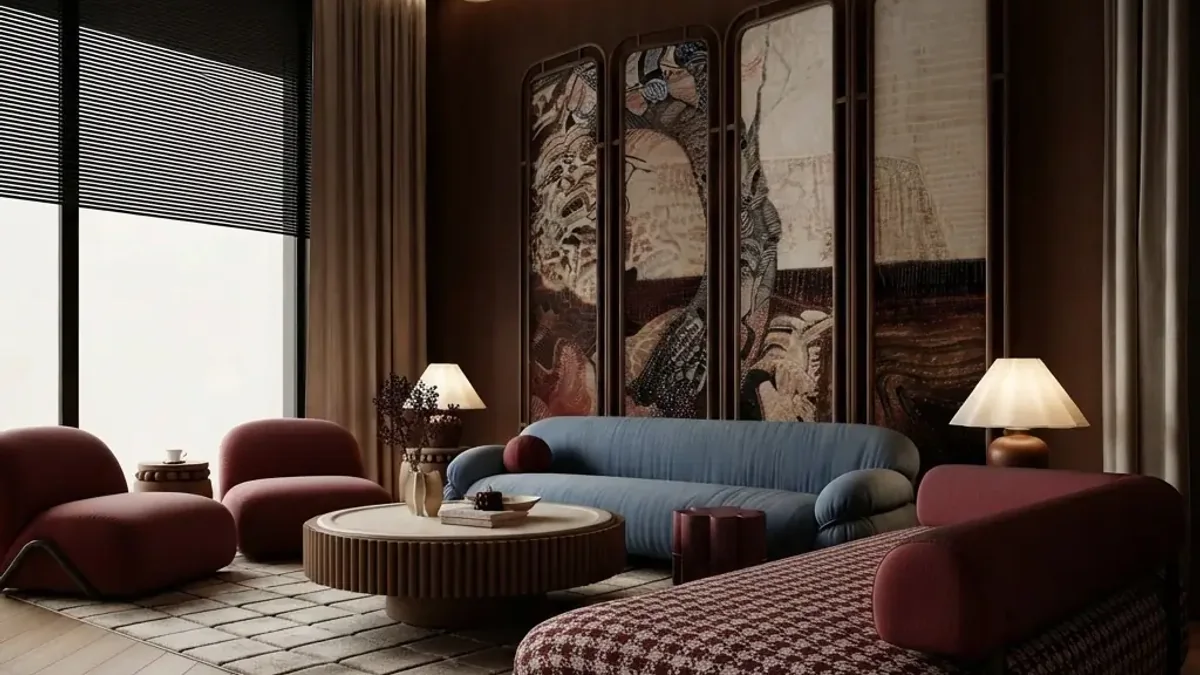
“Redesign this living room to be colourful without being childish. Keep the windows, the door and the room shape. A blue rounded sofa, two burgundy lounge chairs, one patterned daybed, a fluted timber coffee table, warm lamplight, a herringbone floor, photorealistic.”
Rental safe and decoration only prompts
The most reliable prompts on this page, because the more of the real room the model has to keep, the less it can invent. If a decoration pass fixes the room, you never needed the redesign.
“Redecorate this living room without changing any furniture. Keep the windows, the door, the room shape, the walls and all furniture. Change only cushions, throw, curtains, rug, lamps and wall decor, in a warm neutral palette with rust accents, photorealistic.”
“Redesign this rental living room with nothing drilled or painted. Keep the windows, the door, the room shape, the wall colour and the flooring. A large rug over the existing floor, a sofa cover, freestanding shelving, plug-in wall lamps with cable covers, a leaning mirror rather than a hung one, photorealistic.”
“Update only the lighting in this living room. Keep the windows, the door, the room shape and all furniture. Replace the single ceiling fitting with three layers: a floor lamp beside the seating, a table lamp on the sideboard and a picture light over the artwork, warm evening scene, photorealistic.”
“Change only the window treatments in this living room. Keep everything else exactly as it is. Full-height linen curtains in oatmeal, hung close to the ceiling on a slim rod and stacking clear of the glass so the whole window is visible, photorealistic.”
TV wall and focal point prompts
Every living room has a quiet argument between the television and the window, and a prompt that does not settle it gets you a render with the sofa facing neither. These four settle it in different directions. If the open question is the screen itself, the TV size chart has the real width of every size and how high to mount it.
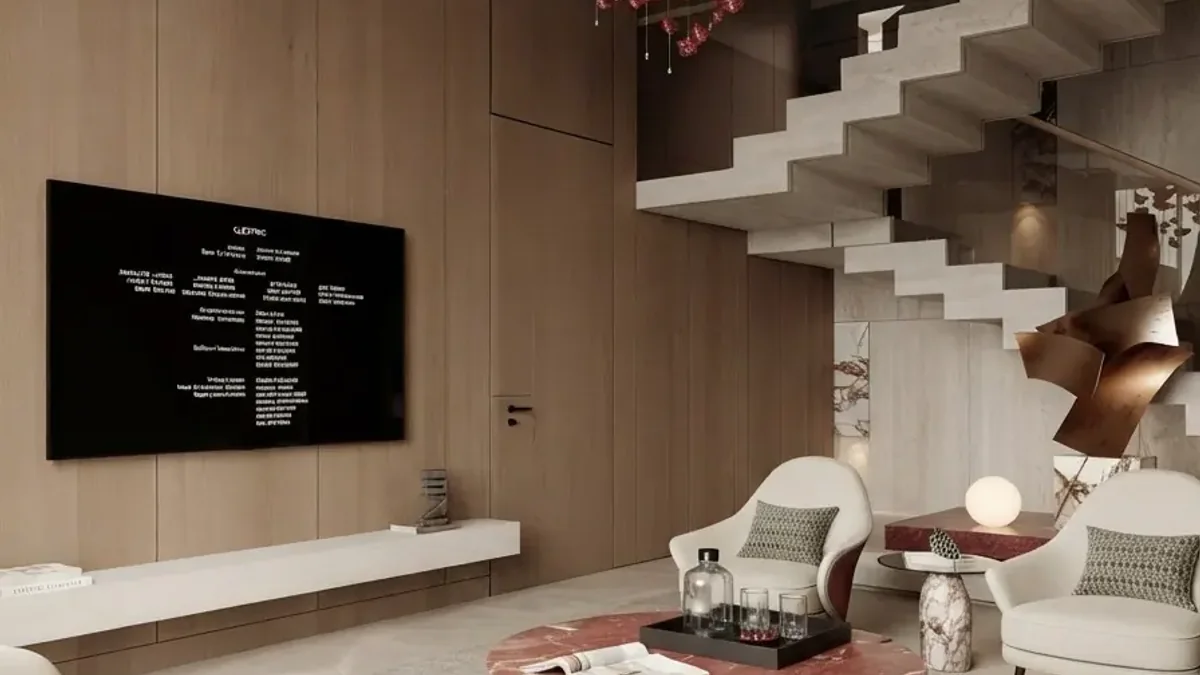
“Redesign this living room with the television integrated rather than dominant. Keep the windows, the door and the room shape. Pale joinery across the whole wall with the screen recessed and flanked by lit niches, a low bench below it, cables invisible, warm ambient light, photorealistic.”
“Redesign this living room so the window is the focal point and the television is secondary. Keep the windows, the door and the room shape. Seating angled towards the view, the screen on a side wall rather than opposite the sofa, curtains that clear the glass entirely when open, photorealistic.”
“Redesign this living room with a media wall in a warm timber finish. Keep the windows, the door and the room shape. Vertical timber battens across the full wall, the screen mounted flush, one stone shelf, indirect lighting behind the joinery, evening scene, photorealistic.”
“Redesign this living room around a ceiling projector instead of a television. Keep the windows, the door and the room shape. A deep modular sofa facing a plain wall left clear as the screen, blackout capability at the window, low warm lamplight, no visible cables, evening scene, photorealistic.”
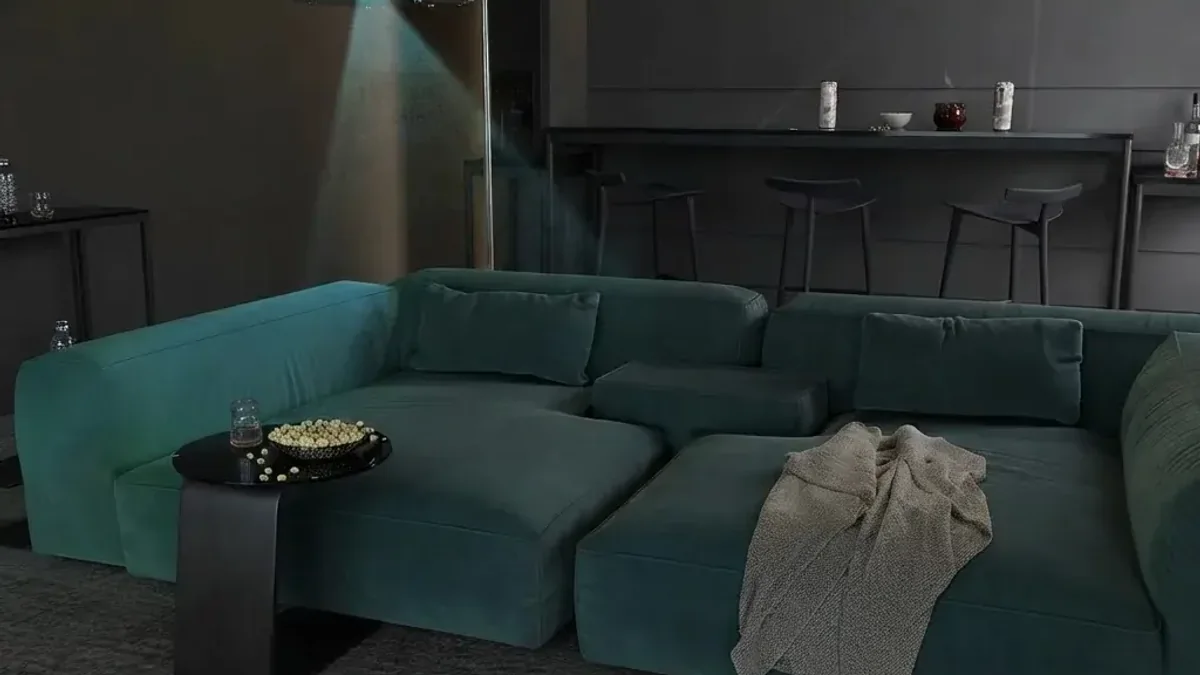
The projector version settles the argument by removing one side of it: with no screen on the wall, the seating can face the window in daylight and the blank wall at night.
ChatGPT vs Gemini for living rooms
Every prompt above runs unchanged in both, and in a dedicated room tool. What differs is behaviour, not wording.
For the model-specific photo workflow rather than the room slice, the ChatGPT room design tutorial covers the audit-first chain and the Gemini room design guide covers Google’s side. For bigger libraries, the ChatGPT interior design prompts and Gemini prompts collections go 70 and 52 deep, and the general prompt playbook covers every room type. Free image caps move over time; OpenAI publishes the current ones in its image generation rate limits article.
Why living room prompts fail
1. The seating faces nothing. The most common failure and the easiest to fix. Name the focal point in the prompt and the model arranges around it instead of pushing everything against the walls.
2. Adjectives instead of nouns. “Modern, cozy, stylish” hands every decision to the model’s averages, which is how you get a grey sofa, a glass table and hotel lobby art. Steal nouns from the prompts above if they do not come naturally.
3. No lock clause. Without “keep the windows, the door and the room shape” you get a lovely room that is not yours, and nothing in it maps onto your actual space.
4. Midday light by default. The model renders noon unless told otherwise, and noon flatters everything. Prompt the light you actually sit in.
5. Scale is invented. This is the one that costs money. A render will place a three metre sofa against a two metre wall without hesitation, and it looks right, because the model redrew the wall. Before ordering anything, check the piece against the real room with a furniture size guide or a tool that places products at true scale.
If the point of the exercise is to buy something rather than to daydream, that last problem is the whole game, and it is the one thing a general chatbot structurally cannot solve. Our comparison of AI interior design tools is honest about which ones do and do not.
Living room prompt FAQ
What is a living room design prompt?
A living room design prompt is one specific instruction you give an AI, usually with a photo of your room, that names the style with real materials, the seating as the anchor, the light, and what must not change. The living room part matters because it is the room with the most competing jobs: sitting, watching, hosting and walking through. A prompt that does not say which of those the room is for gets you a furniture showroom rather than a living room.
How do I write a prompt for living room interior design?
Name four things and lock a fifth. The style with two or three concrete materials, the seating piece that anchors the room, the focal point the seating faces, and the lighting. Then add the lock: keep the window positions, the door and the room shape. For example: “Redesign this living room in a warm modern organic style. Keep the windows and door where they are. Low oatmeal boucle sofa facing the fireplace, round travertine coffee table, pale oak floor, linen curtains to the ceiling, late afternoon daylight, photorealistic.”
What is the best ChatGPT prompt for a living room design?
The strongest one runs in two turns. First: “Here is my living room. Describe the layout, the light, the focal point and what is working against the room. No images yet.” Then: “Based on that, redesign it in [style], keep the windows and door, [materials], [seating], [lighting], photorealistic.” The audit turn forces ChatGPT to read your actual room instead of an average one, and the render that follows lands noticeably closer to it.
What prompt makes a small living room look bigger?
Name the moves instead of asking for the outcome. A sofa raised on legs so floor shows underneath, one large piece of art rather than a gallery of small ones, full-height curtains hung at ceiling height and wide enough to clear the glass, a single large rug that sits under the front legs of everything, no furniture taller than the window sill in the middle of the room, and a palette of three colours. “Make it look bigger” hands the decision to the model. The list above renders reliably.
How do I prompt a living room and dining room in one space?
Tell the AI where the boundary is and what marks it, because otherwise it will draw two rooms or one confused one. Say which end is which, then name the divider: a rug that stops at the dining edge, a low sideboard, a change in lighting, or the sofa back facing the table. Add the circulation rule, that there is a clear path from the door to both zones, and the model stops filling the middle of the room with furniture.
Will the AI keep my actual living room layout?
Partly. General image models generate a new picture guided by your photo rather than editing it, so even with a lock clause the room can widen or a window can drift between runs. A lock clause cuts the drift a lot. Running the prompt in a purpose-built room tool removes it, because the geometry is held by design rather than by the model choosing to cooperate. That difference matters most in living rooms, where you are usually making a decision about a piece of furniture that costs real money.
What is the difference between a living room design prompt and a makeover prompt?
A design prompt defines the destination: the style, materials and mood of the finished room, and it works whether the room is empty or full. A makeover prompt is anchored to what you already own, with a stricter keep clause deciding which existing pieces survive. If your brief starts with “keep my sofa and change everything around it”, you want the makeover library rather than this one.



)