Quiet Luxury Interior Design: What It Actually Looks Like (and How to Get It Without Spending a Fortune)

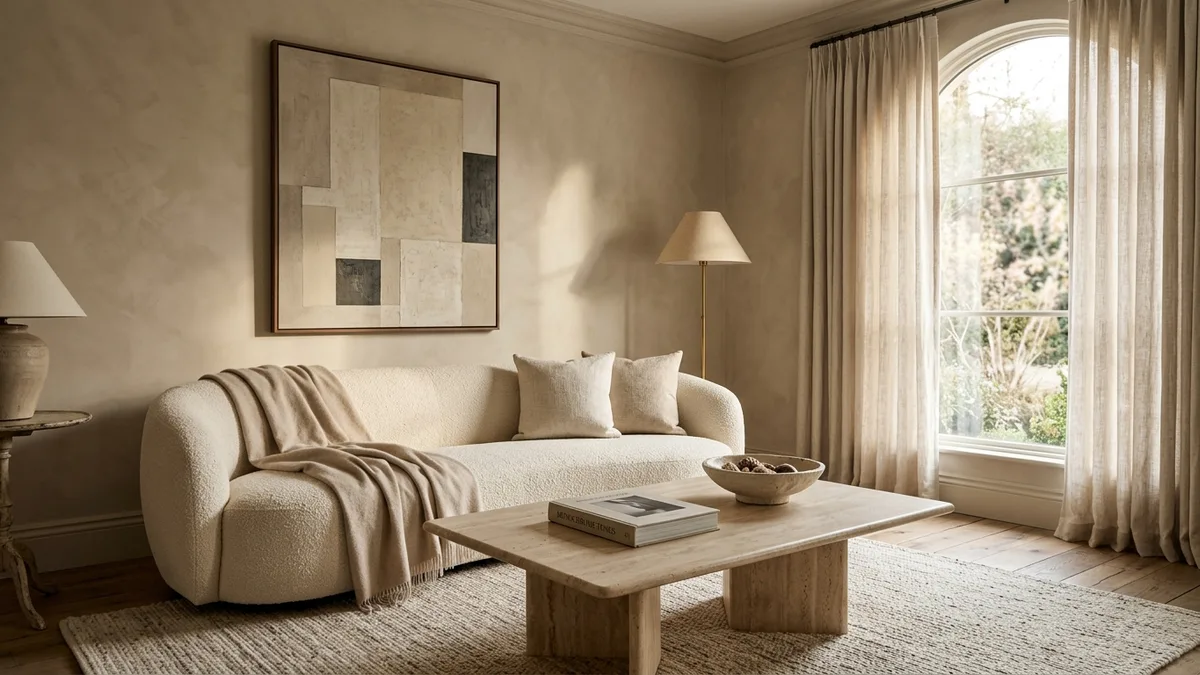
You have been in a room that had it. Maybe a boutique hotel in Copenhagen. Maybe a friend’s apartment that somehow felt expensive even though you know they do not make that much money. Maybe a restaurant where everything looked simple but felt undeniably right. The furniture was not flashy. The colors were not bold. There was no statement piece competing for your attention. And yet the whole space just felt like quality.
Our articles are still written by humans!
Get human written articles in your Google feed.
That is quiet luxury. Quiet luxury interior design makes a room feel expensive through material quality and restraint rather than logos or statement pieces: natural stone, solid wood, heavy linen and unlacquered brass, layered in warm neutrals so that everything looks intentional and nothing competes for attention. And it is the dominant interior design philosophy of 2026.
The term comes from fashion, where it describes brands like Loro Piana, The Row and Brunello Cucinelli. No logos. No obvious branding. Just the kind of quality you can feel the moment you touch it. When HBO’s Succession put that aesthetic on screen, Google searches for “quiet luxury” jumped 373 percent in a single month, with “stealth wealth” up 334 percent, per Robb Report. And now the same philosophy has moved from closets into living rooms.
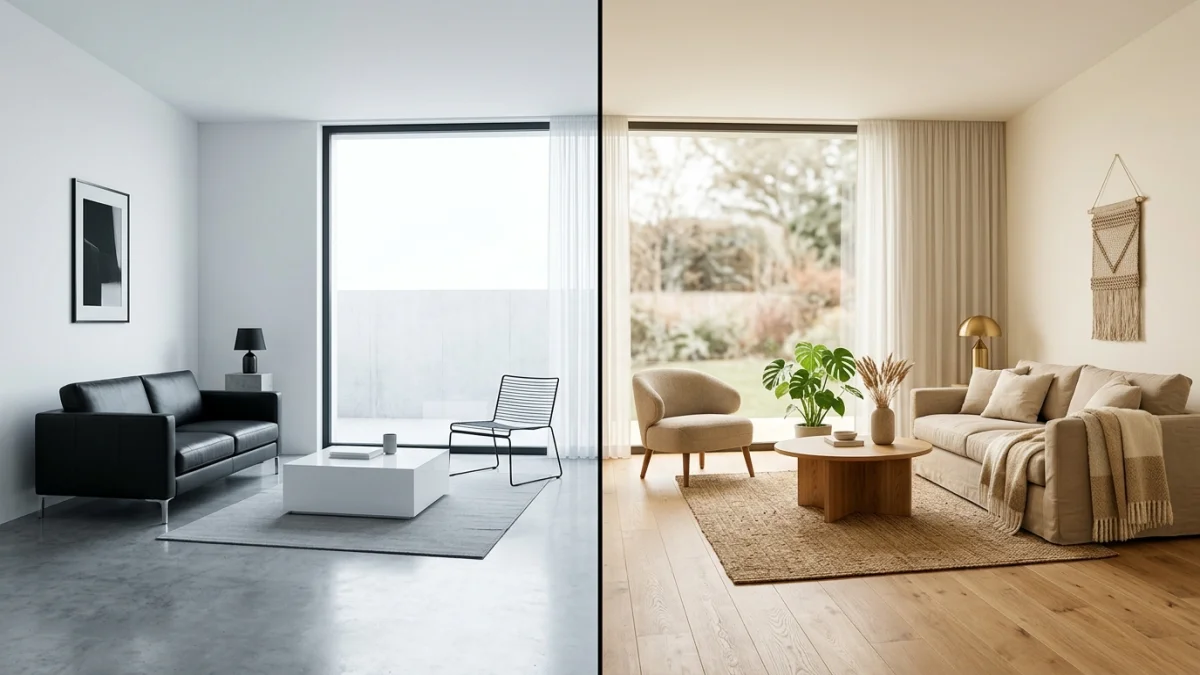
But here is the part most articles get wrong. Quiet luxury is not minimalism. It is not about having less. It is not about empty rooms and blank walls and that sterile Scandinavian look where you are afraid to sit on the sofa because it might wrinkle. Quiet luxury rooms can be full, layered and warm. The difference is that every single thing in the room earns its place. Nothing is filler.
FreeUpload photo · freeRedesign my room in quiet luxuryUpload a photo of your room and MeltFlex restyles it in quiet luxury, with furniture that fits the space. Your first AI design is free, no card needed.
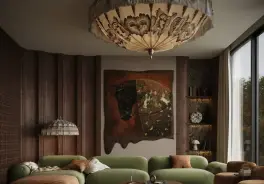
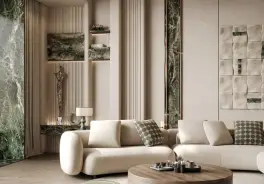
Quiet Luxury Is Not Minimalism (This Is the Part Everyone Gets Wrong)
Minimalism is a formal position. It is committed to reduction. Negative space is an active design element. A minimalist room can be beautiful but it can also feel cold, austere and unwelcoming. You sit on a minimalist sofa and you are aware that the sofa is a design object. You do not relax. You perch.
Quiet luxury is different. The room is edited, not emptied. You can have a full bookshelf, a stack of magazines on the coffee table, a throw blanket draped over the arm of the sofa and a collection of ceramics on a shelf. The key is that none of those things are random. The bookshelf has actual books you read. The ceramics were collected from travels. The throw blanket is cashmere or heavy wool, not polyester from a fast decor shop.
Julia Devlin of Victorious Interiors puts it clearly. One of the most persistent misconceptions about quiet luxury is that it is simply minimalism rebranded. It is not and the distinction matters practically. Where minimalism strips back, quiet luxury layers with sophistication. A quiet luxury room has depth. It has warmth. It has personality. It just does not shout.
Think of it this way. Minimalism is a room with one perfect chair. Quiet luxury is a room where every chair is perfect but there are enough of them that you can actually sit down and have a conversation.
The Materials That Define Quiet Luxury
This is where quiet luxury lives or dies. Materials are everything. You can have the right color palette and the right layout but if the materials are wrong, the room just looks beige and boring. The difference between quiet luxury and a builder grade apartment in neutral tones comes down entirely to what things are made of.
Stone
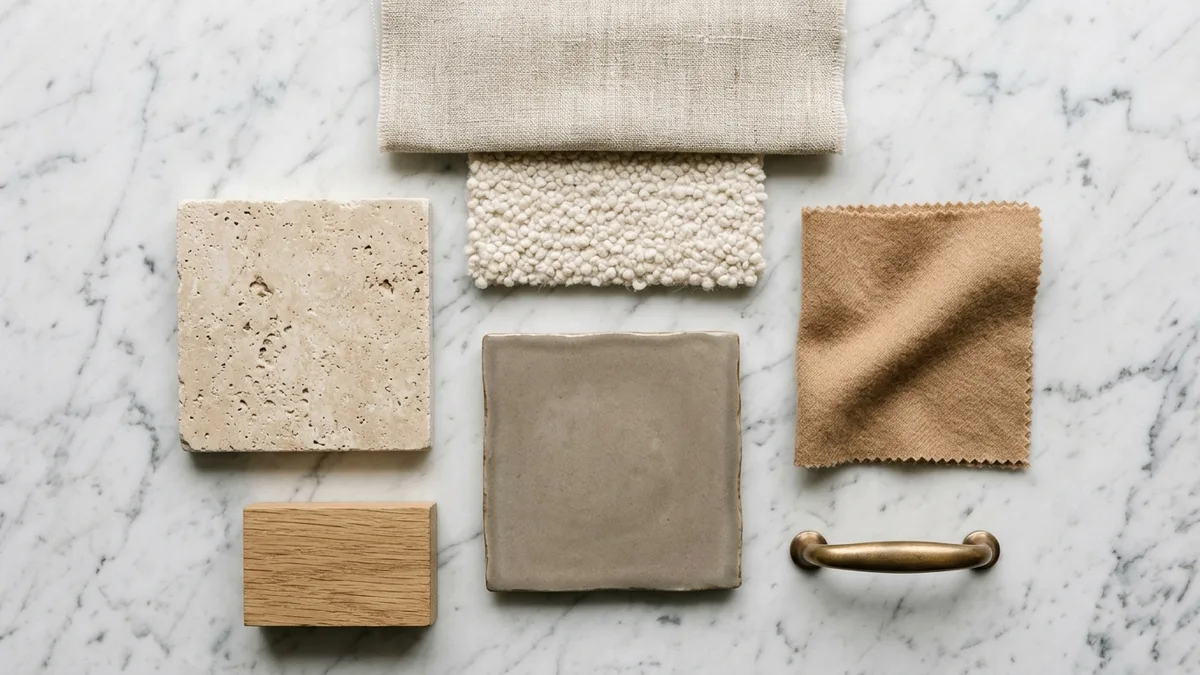
Natural stone is the anchor of quiet luxury. Travertine, limestone, marble with subtle veining. The key word is honed, not polished. Honed stone has a matte finish that absorbs light softly instead of reflecting it like a mirror. It reads as sophisticated and understated. A polished marble countertop can look flashy. A honed travertine coffee table just looks right.
Wood
Solid hardwood, not veneer. Oak, walnut, ash. Natural oil finishes or wire brushed textures that let the grain speak for itself rather than burying it under polyurethane. The wood should look like it grew in a forest, not like it came off a factory line. Liad Schwartz of Interiors with Liad says it simply in Sunset: “Stained oak, patinated brass, and soft linens bring texture and warmth.”
Textiles
This is where quiet luxury becomes tactile. Heavy linen that drapes with weight. Wool that feels substantial when you sit on it. Bouclé that has texture you want to touch. Cashmere throws that make you want to stay on the sofa. Cotton velvet that catches light in a way that polyester velvet never will.
Anita Yokota, a therapist turned designer and author of Home Therapy, connects materials to wellbeing. “Quiet luxury is not about status. It is about serenity and the emotional experience. Choose sustainable, biophilic materials like stone, linen, clay, and reclaimed wood.” The materials should feel good to touch. That is not a bonus. That is the whole point.
Walls
Flat painted walls are the enemy of quiet luxury. The signature wall treatment is Venetian plaster or limewash. These finishes have natural depth and movement that shifts throughout the day as the light changes. In the morning, a limewash wall in warm putty might look almost white. By evening, under lamp light, it takes on a warm honey tone. That living quality is what makes the room feel expensive. Portola Paints makes some of the most popular limewash colors for this look.
Metal
Unlacquered brass. This is the quiet luxury metal because it develops a patina over time that you cannot fake or buy new. Handles, faucets, light fixtures, picture frames. The patina tells a story of use and time. Oxidized bronze works similarly. Chrome and polished nickel are too shiny and too perfect for this aesthetic.
The Quiet Luxury Color Palette
The palette is warm neutrals but calling it “beige” misses the point entirely. A quiet luxury room is not one shade of beige. It is six or seven shades of warm neutral that create depth through subtle variation.
The foundation colors are cream, oatmeal, taupe, mushroom, putty and stone. Layer them. A cream sofa on an oatmeal rug against putty limewash walls with taupe linen curtains. Every surface is in the same warm family but none of them are exactly the same color. That variation is what creates richness. Without it, you just have a beige room.
Add depth with muted earth tones. Camel, clay, umber, soft olive, chalky blue, charcoal. These work as accents in a cushion, a throw, a ceramic, a piece of art. The overall feeling should be warm, not cool. Complex, not flat.
In 2026, the palette is also evolving. Designer Kati Curtis coined the term “colorful quiet luxury”, which uses “color with depth and discretion.” It is not about being afraid of color. It is about using it with purpose rather than excess. A deep olive velvet armchair in an otherwise neutral room is very much quiet luxury. A room with five competing bold colors is not. For more on choosing the right colors, our paint color guide covers undertones and testing methods.
Quiet Luxury Furniture: What to Actually Buy
Quiet luxury furniture is defined by silhouette and material, never by logo. The pieces share four traits: generous proportions, rounded or softly squared edges, upholstery you want to touch, and legs or frames in solid wood or aged metal rather than chrome and glass. Here is what that means piece by piece, with the honest budget route for each:
The test for any piece: cover the price tag and the brand. If it still communicates quality through weight, texture, and proportion, it belongs. If it needs the label to justify itself, it is loud luxury wearing a neutral color.
Room by Room: How Quiet Luxury Actually Looks
Living Room
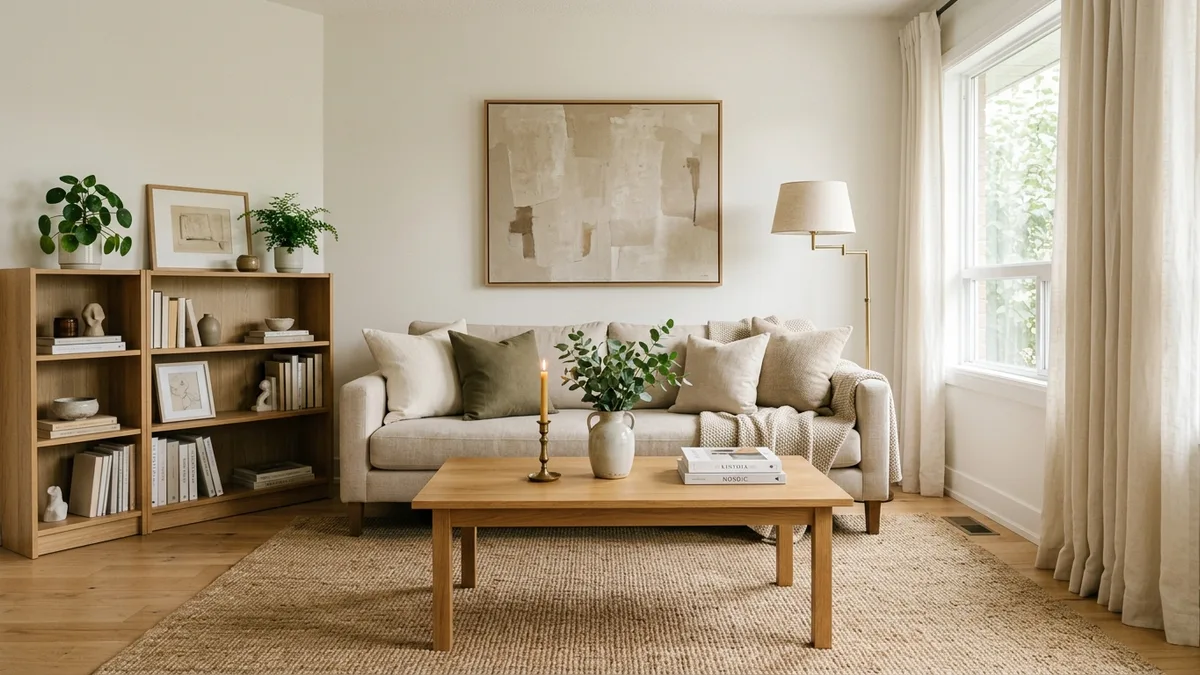
The quiet luxury living room is anchored by one seriously good sofa. Not a statement sofa in a trending color that will look dated in two years. A generously proportioned, beautifully upholstered sofa in a neutral performance fabric or cotton velvet that you want to sink into. Curved silhouettes are especially popular in 2026.
Build around it with a travertine or solid wood coffee table. A brass floor lamp. An area rug in wool or natural fiber. Layered throw pillows in different textures, not different colors. A few books, a ceramic bowl, a candle. The room should look like someone interesting lives here, not like a furniture showroom.
One important rule. Leave at least one wall free from furniture or art. Negative space is what prevents a layered room from feeling cluttered. The empty wall is not a mistake. It is breathing room that makes everything else more impactful.
Bedroom
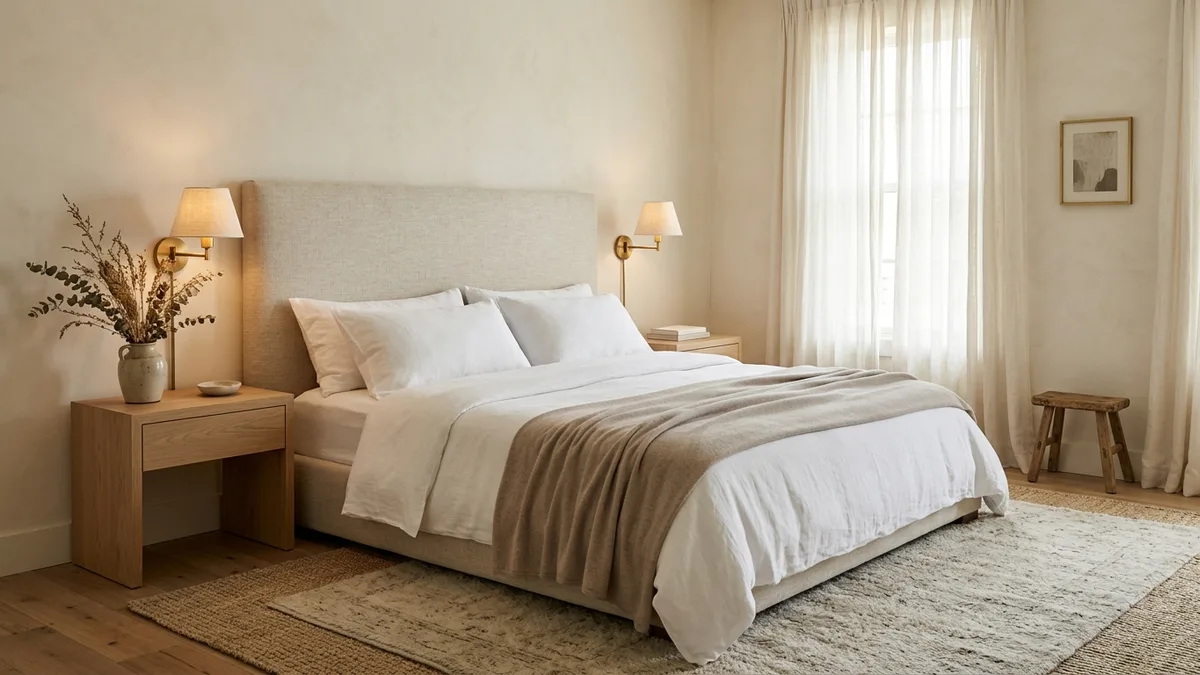
Quiet luxury bedrooms prioritize comfort above everything else. The bed is the investment piece. An upholstered headboard in oatmeal linen or soft velvet. The best linen sheets you can afford. A cashmere throw at the foot of the bed. Layered rugs, a wool rug over a sisal base.
The walls should be limewash or Venetian plaster if the budget allows. If not, a high quality matte paint in a warm neutral works well. Sheer linen curtains that filter light without blocking it. Bedside lamps with warm bulbs. A single vintage vase with dried branches instead of fake flowers.
The bedroom should feel like a cocoon. When you walk in, your shoulders should drop and your brain should start winding down. If it does not feel like that, something is wrong. For more bedroom ideas, check our bedroom design guide.
Kitchen
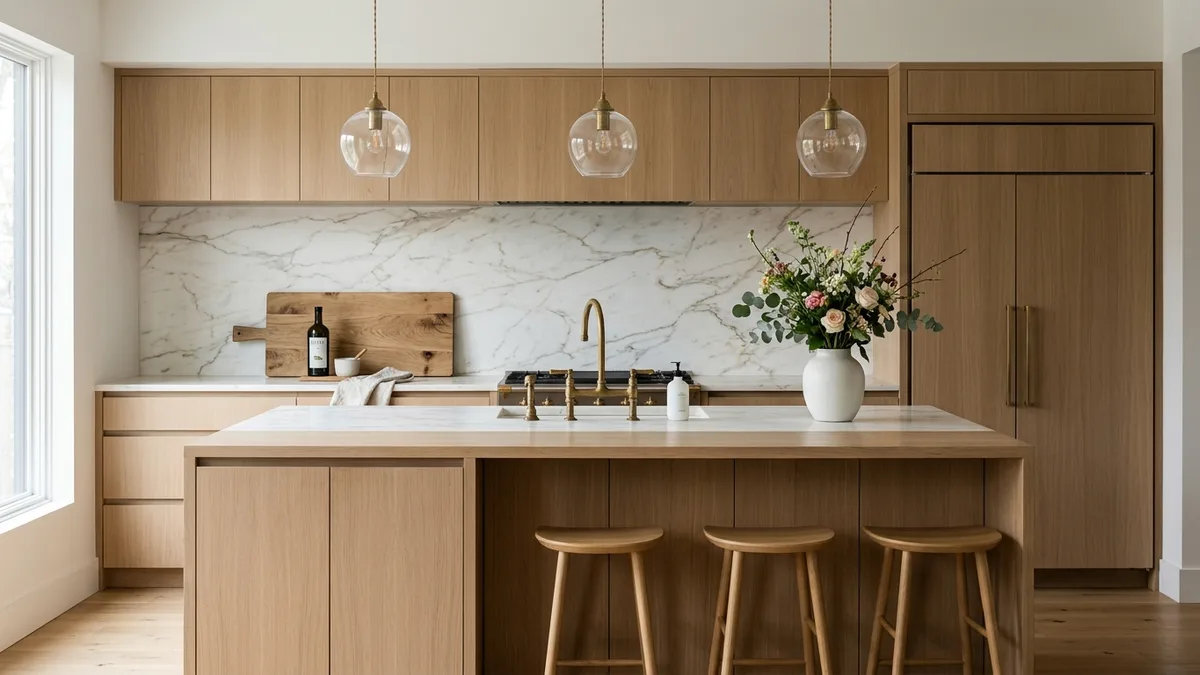
The quiet luxury kitchen is defined by what you do not see. No visible hardware on the cabinets, or simple brass pulls if there are any. Panel ready appliances that blend with the cabinetry so the refrigerator does not announce itself. Full height stone slab backsplashes that read as continuous and seamless rather than busy tile patterns.
White oak or warm toned flat panel cabinets. A marble or quartzite countertop. Brass faucet, ideally unlacquered. The styling is minimal but intentional. A wooden cutting board, a bottle of olive oil, fresh flowers in a simple ceramic vase. Everything that is out should be beautiful enough to deserve being visible.
Bathroom
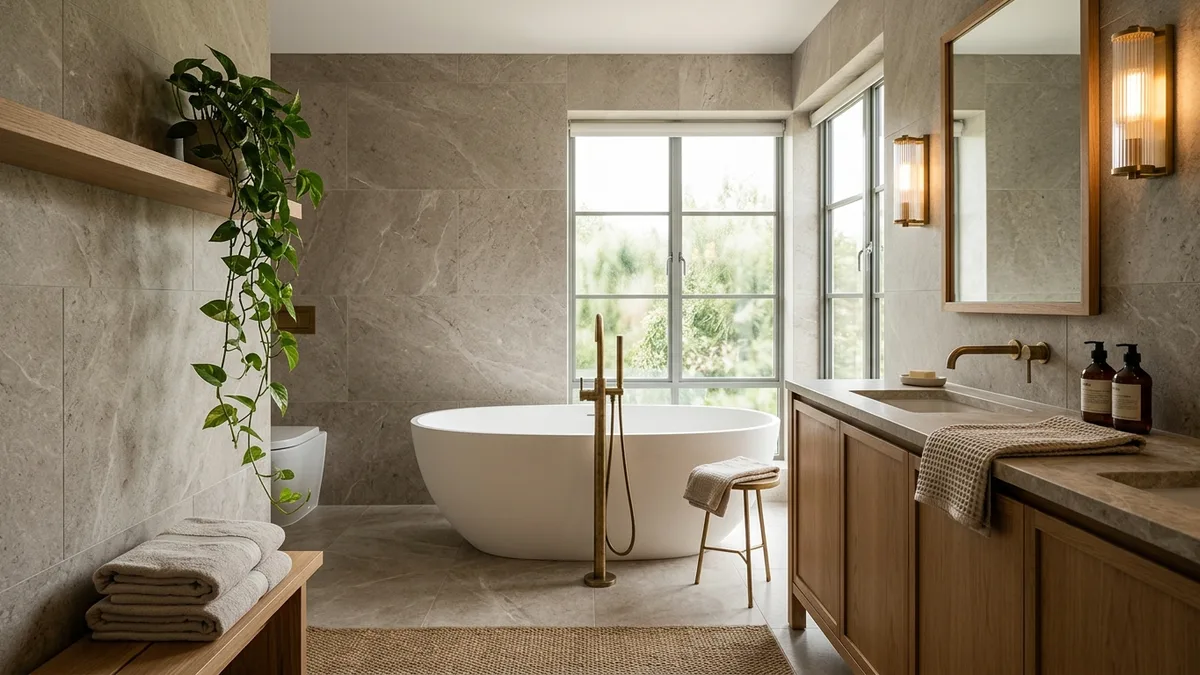
The quiet luxury bathroom feels like a private spa. Large format natural stone on the walls and floor. No small mosaic tiles. No busy patterns. Just continuous surfaces in warm grey or cream stone. Unlacquered brass fixtures with patina. An oak vanity with a stone countertop.
Linen towels instead of fluffy cotton ones. A trailing pothos or philodendron on a shelf. Warm wall sconces instead of harsh overhead lighting. If the space allows, a freestanding bathtub in white becomes the quiet focal point. The room should make you want to slow down.
How to Get the Look Without Spending a Fortune
Here is the most important thing about quiet luxury. It does not require a huge budget. It requires intention.
Drew Michael Scott of Lone Fox says it directly. “It is not always about spending a lot of money on every piece.” The trick is knowing where to invest and where to save. And it turns out you can save in more places than you might think.
For a feel of how these principles look applied in real rooms rather than showrooms, this walkthrough of ten timeless quiet luxury decorating moves is one of the most-watched on the topic:
Video: “QUIET LUXURY Interior Design | Our Top 10 Timeless Decorating Tips” by Suzie Anderson Home.
Invest in Two or Three Anchor Pieces
A quality sofa. A solid wood dining table. Good linen sheets. Pick two or three things that you will use every single day and buy the best you can afford. Everything else can be budget. People will notice the sofa they sit on. They will not inspect the brand label on your throw pillow.
IKEA STOCKHOLM Collection
IKEA specifically designed their STOCKHOLM collection for this aesthetic. Karin Gustavsson, their Creative Leader, says “The purpose of the STOCKHOLM collections has always been to prove that high quality does not need to come at an intimidating cost.” The 2025 collection includes bouclé upholstery, solid wood furniture, handwoven wool rugs, mouth blown glass and handcrafted rattan. A STOCKHOLM lounge chair with a rattan frame and bouclé cushion costs a fraction of what similar pieces from high end brands charge and it genuinely looks beautiful.
Thrift and Vintage
Quiet luxury rooms are supposed to look collected, not catalog ordered. Vintage brass candlesticks, ceramic bowls, a handwoven textile, a piece of art from a flea market. These items add the personality and patina that new furniture cannot replicate. A $15 vintage brass candlestick from a thrift store reads as more expensive than a $60 new one from a home decor chain because it has genuine age and character.
Affordable Textile Swaps
H&M Home and Zara Home both sell linen pillow covers, throws and curtains at accessible prices. Replace your polyester cushion covers with linen ones for $15 to $30 each. The visual and tactile difference is dramatic. Linen naturally rumples in a way that looks intentional and relaxed. Polyester sits there looking shiny and stiff.
DIY Wall Treatments
Venetian plaster walls are the signature quiet luxury wall treatment and you can do it yourself. Limewash paint from brands like Portola Paints or more affordable alternatives gives you 80 percent of the effect for a fraction of the cost of hiring a professional plasterer. The slightly imperfect, handmade quality that comes from a DIY application actually works in your favor because quiet luxury celebrates imperfection over clinical perfection.
Edit Before You Add
The cheapest and most effective quiet luxury upgrade is subtraction. Walk through your room and remove everything that does not contribute. The random decorative objects that came in a set. The throw pillow that does not match anything. The fake plant in the corner. The wire basket full of magazines you will never read again. A room with fewer, better things always looks more expensive than a room stuffed with filler.
The Mistakes That Make Quiet Luxury Look Cheap
All one shade of beige. Without textural variation, neutral rooms look flat, not refined. You need different sheens, different material densities and different tones within the same warm family. A cream boucle sofa on a jute rug against limewash walls with linen curtains. Four neutral items, zero of them the same material or finish.
Too empty. Stripping a room bare is minimalism, not quiet luxury. A beautiful sofa in an empty room with nothing on the walls and nothing on the coffee table does not look luxurious. It looks like you just moved in and have not finished unpacking.
Fake materials. Faux marble contact paper, plastic that pretends to be wood, synthetic fabrics that shine unnaturally. Quiet luxury depends on material authenticity. If you cannot afford marble, use a different material that is genuinely nice at your price point. A solid wood surface is better than a marble imitation. A cotton throw is better than a polyester cashmere knockoff.
Looking like a showroom. Lauren Saab, an interior designer, says it bluntly: quiet luxury “often ends up looking like a showroom. Perfect but forgettable.” The antidote is personality. Books you have actually read. Art you actually chose. Objects from places you have been. A room needs the evidence of a life being lived in it.
Ignoring comfort. A sofa that looks beautiful but is uncomfortable to sit on is not quiet luxury. It is just bad furniture. Every piece should pass the sit test, the touch test and the would I actually use this every day test. Comfort is not a compromise. It is the foundation.
Quiet Luxury FAQ
What is quiet luxury interior design?
Spaces that feel expensive and refined without being loud about it: natural stone, solid wood and linen instead of trendy patterns or visible branding, warmth and layered texture instead of emptiness. Everything looks intentional, nothing screams for attention. It is the interior equivalent of a perfectly cut cashmere sweater with no visible label.
Is quiet luxury the same as minimalism?
No, and this is the most common misconception. Minimalism removes things until only the essential remains and can feel cold. Quiet luxury layers with intention: plenty of furniture, textiles, books and collected objects are welcome, as long as nothing is there by accident and nothing competes for attention. It always feels warm and lived in.
What furniture counts as quiet luxury?
Pieces defined by silhouette and material rather than logo: a deep-seated sofa in heavy linen or bouclé, a travertine or solid oak coffee table, one sculptural armchair, an upholstered bed without tufting, closed-front storage with brass hardware. Cover the price tag; if the piece still communicates quality through weight and texture, it qualifies.
How do I get the quiet luxury look on a budget?
Focus on materials, not brands. A jute rug, linen curtains and a ceramic vase read as quiet luxury at any price. The IKEA STOCKHOLM collection covers bouclé, linen, solid wood and handwoven wool affordably. Shop vintage for brass, ceramics and art. And edit ruthlessly, because the cheapest upgrade is subtraction.
What colors work for quiet luxury interiors?
Warm neutrals layered tone on tone: cream, oatmeal, taupe, mushroom, camel, putty and soft stone, with muted accents like olive, dusty blue or charcoal. The room should feel warm rather than cool, and complex rather than flat; six subtly different neutrals beat one uniform beige.
What materials define quiet luxury in a home?
Natural materials that reward close inspection. Limestone and travertine for surfaces. Solid oak and walnut for furniture. Heavy linen, wool, cashmere and bouclé for textiles. Venetian plaster or limewash for walls. Unlacquered brass for hardware and fixtures that develops a patina over time. Handmade ceramics. The common thread is that these materials feel good to touch and age beautifully rather than degrading.
Can I see what quiet luxury looks like in my room?
Yes. Upload a photo of your room to MeltFlex and describe the quiet luxury look you want, something like “warm neutral living room with natural linen sofa, travertine coffee table, limewash walls, brass accents.” The AI generates a photorealistic render of your actual room in that style in under 30 seconds, so you can see whether the aesthetic works in your space before buying anything.
See Quiet Luxury in Your Room
The beautiful thing about quiet luxury is that you do not need to start over. You probably already own some pieces that fit the aesthetic. The question is what to add, what to replace and what to remove.
Upload a photo of your room to the AI interior design tool and describe the quiet luxury look you want. Try something like “warm neutral living room with natural linen sofa, travertine coffee table, brass floor lamp, limewash walls and wool rug.” The AI will generate a photorealistic version of your actual room in that aesthetic in under 30 seconds; every room render in this guide came out of the same generation engine, so what you see here is what it produces. And when you want to go from render to shopping list, the built-in furniture catalog pairs designs with real, buyable products with real prices, IKEA on the free tier and additional brands on paid plans.
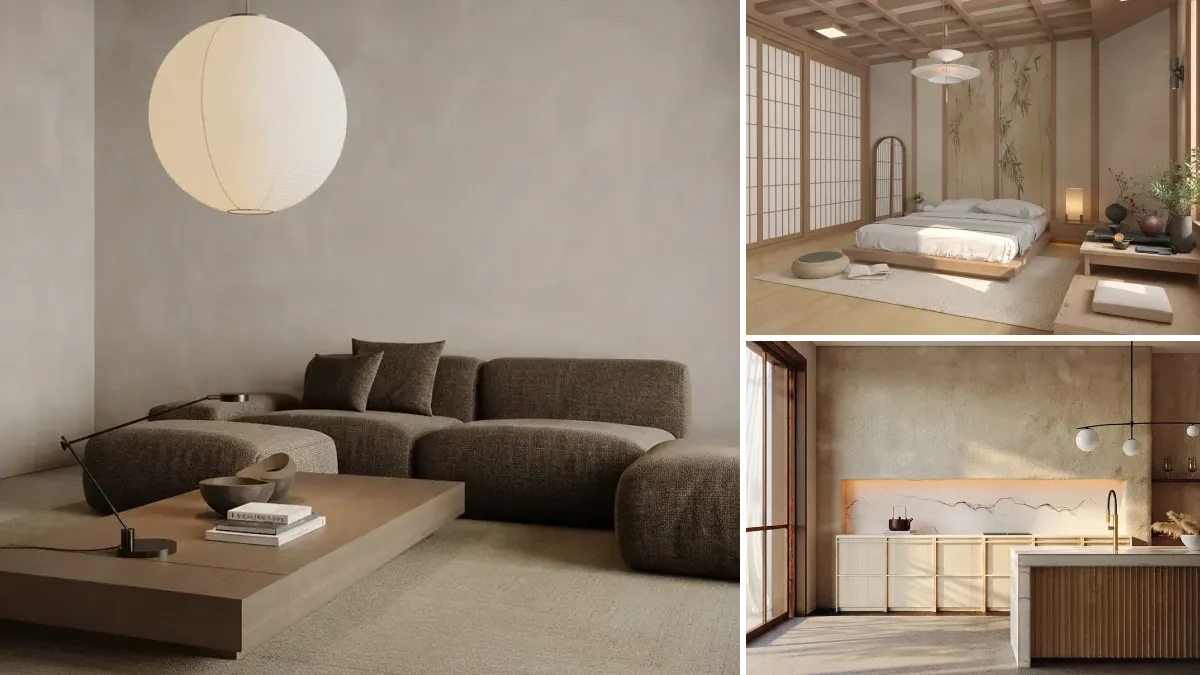
For more interior design inspiration, explore our guides on Scandinavian design, Japandi style, warm minimalism and every interior design style compared.



)