Warm Minimalism: The Interior Design Trend That Finally Makes Minimalism Livable

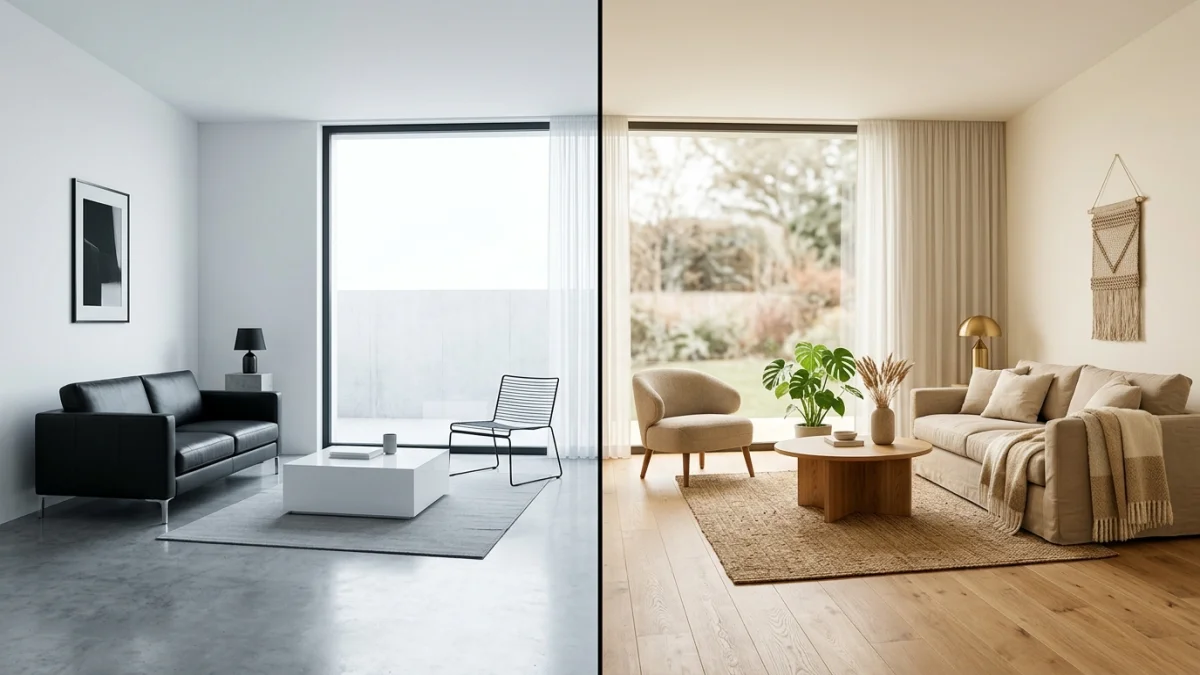
If you’ve ever scrolled through a beautifully minimal interior on Pinterest and thought “that looks amazing but I could never actually live there,” you’re not alone. Traditional minimalism has a problem. It looks incredible in photos but feels cold, empty, and slightly uncomfortable in real life. You sit on the perfectly positioned white sofa and you’re afraid to put your coffee down.
Our articles are still written by humans!
Get human written articles in your Google feed.
That tension between “I love how clean this looks” and “I would never feel at home here” is exactly what warm minimalism solves. And it’s the reason every major design publication, from Homes & Gardens to Vogue, is calling it the single biggest interior design trend of 2026.
Bethany Adams, founder of Bethany Adams Interiors, puts it perfectly: “Minimalism gets a bad rap for being too stark and cold. All those white walls and sharp corners. The new look embraces the simplicity of the original, while welcoming softer colors and richer materials.”
 FreeUpload photo · freeRedesign my room in warm minimalismUpload a photo of your room and MeltFlex restyles it in warm minimalism, with furniture that fits the space. Your first AI design is free, no card needed.
Watch: a warm-minimalist room in seconds
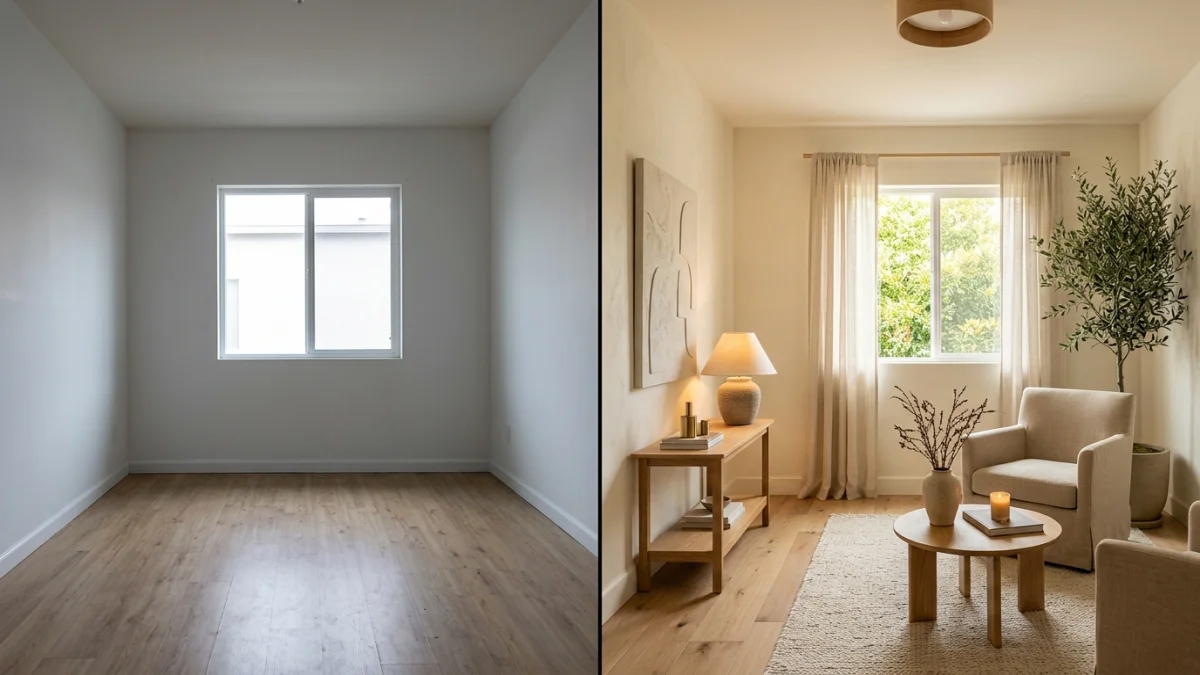
Warm minimalism is easier to feel than to describe. Here is MeltFlex restyling a real living room from one photo, the fastest way to see calm, warm-neutral, textured minimalism on your own space before you change a thing.

MeltFlex restyling a living room, see warm minimalism on your own space in seconds.
What Actually Makes Warm Minimalism Different
On the surface it sounds simple. Take minimalism, make it warmer. But the shift is deeper than swapping white for beige.
Chelsea Miller of Good Ave Design Studio explains the philosophy: “Warm minimalism is all about creating spaces that feel pared back yet intentionally layered. The key lies in texture and embracing warmer neutral tones while steering clear of cooler color palettes.”
Traditional minimalism asks: “What can I remove?” Warm minimalism asks a different question: “Does everything here earn its place?” The answer isn’t fewer things. The answer is more intentional things. A handmade ceramic vase instead of a mass produced one. A wool throw blanket that you actually wrap yourself in, not one that exists purely as decoration.
Sara Alexander, founder of The Scale Collective, says it clearly: “In the context of our busy lives, people have and will continue to flock to minimalism because they want to live in a space that feels like a sanctuary.”
The Warm Minimalist Color Palette (and Why It Works Psychologically)
The color palette is where warm minimalism makes its biggest break from the old rules. Gone are the stark whites, cool grays, and high contrast black accents. Everything shifts toward earth.
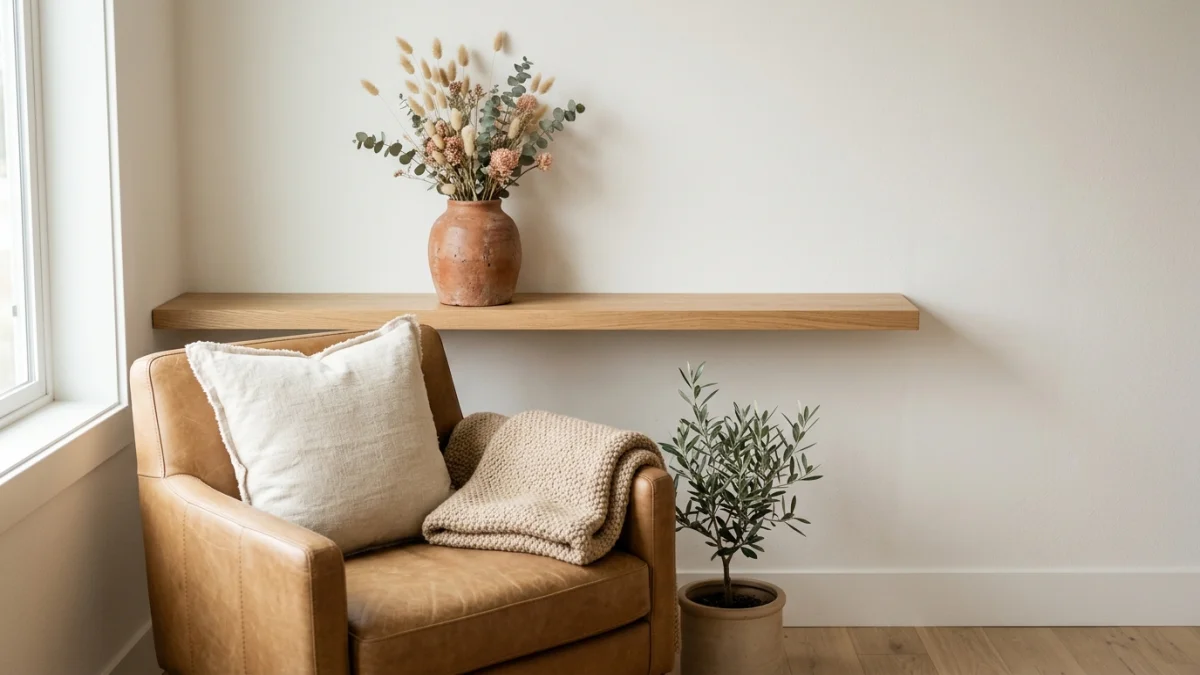
The foundation colors are warm white, cream, sand, oatmeal, and taupe. These form the backdrop. On top of that you layer accents in camel, terracotta, olive green, soft clay, and warm blush. Metals are brass or antiqued gold, never chrome or polished nickel.
This is not just aesthetics. Research published in Frontiers in Psychology found that room color directly influences psychological functioning. Warm neutral tones reduce visual fatigue and maintain long term comfort, while cool sterile environments increase cortisol levels. Your brain literally relaxes more in a room painted warm cream than in one painted bright white.
Lauren Gilberthorpe of Lauren Gilberthorpe Interiors adds a practical note that most articles miss: “Soft colors and textures play an important role, but equally, understanding the light within a home can make a huge impact. Warmth comes through both materials and setting.”
A south facing room with lots of natural light can handle a cooler warm neutral like sand. A north facing room that gets minimal direct sun needs a richer tone like oatmeal or camel to avoid feeling flat. If you are not sure what works in your specific room, our guide to choosing paint colors with AI walks through how to test this before buying paint.
The Exact Paint Colors That Nail Warm Minimalism
“Warm white” is easy to say and hard to buy: paint a room the wrong one and it reads yellow, pink, or dingy gray. These are the specific shades designers reach for again and again in 2026 because they stay warm without going golden or muddy.
One rule saves you from an expensive mistake: never trust the chip on the wall of the paint store. Buy a sample pot, paint a two-foot square on the wall that gets the least light, and look at it at 8am, noon, and 8pm before you commit. Warm neutrals swing hardest in low light, which is exactly where most people get them wrong. Our guide to testing paint colors with AI shows how to preview these shades on your real walls first, and if you want to see the fully finished look, MeltFlex renders your room in each palette in seconds.
Materials and Textures: This Is Where Warm Minimalism Lives or Dies
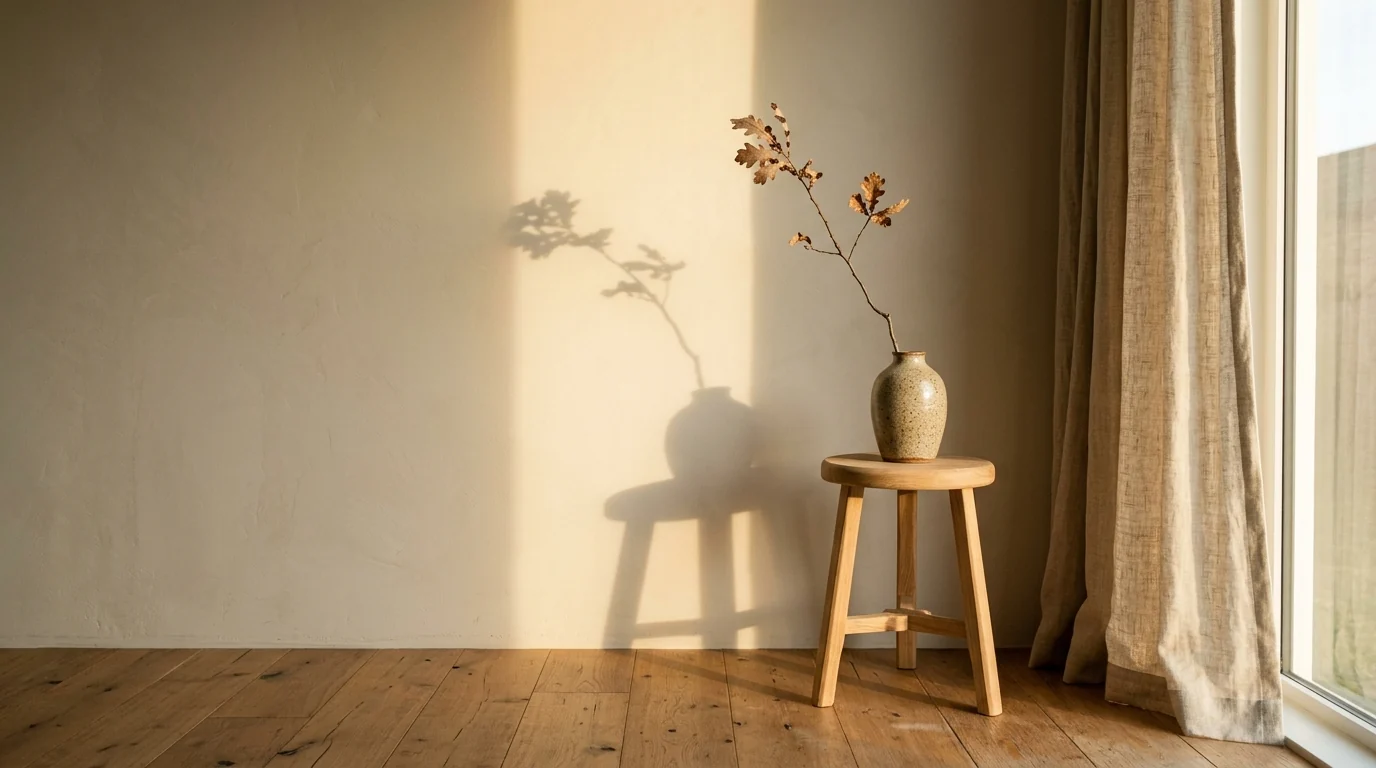
If color is the foundation, texture is the soul. In a warm minimalist space, every surface should make you want to reach out and touch it. This is the single biggest difference from cold minimalism, where surfaces tend to be smooth, polished, and hands off.
Bess Lovern of Bess Lovern Designs explains the approach: “We like to make sure we are always incorporating different finishes, materials, and sheens, so even when the color palette is monochromatic and minimalist, the space still has character.”
Here are the materials that define the style:
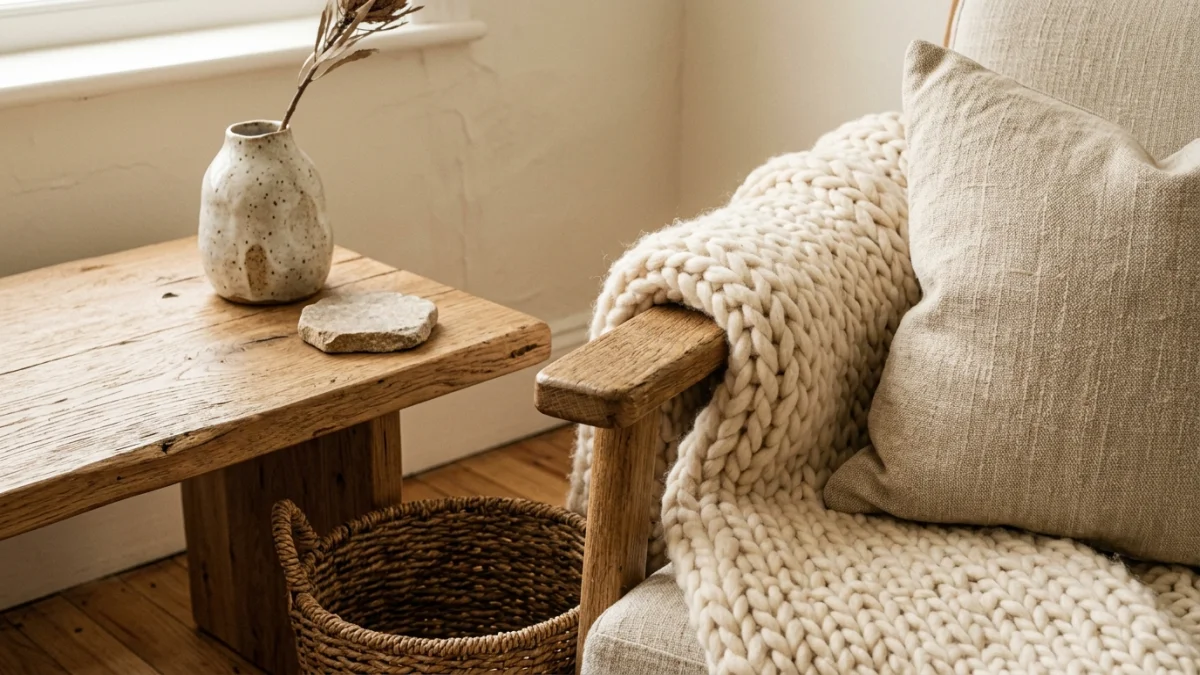
- Wood with visible grain. Light oak, white ash, or warm walnut. Not painted, not laminated. You should see the grain and feel the texture. This applies to furniture, shelving, and flooring.
- Linen. For curtains, cushion covers, bedding, and upholstery. Linen wrinkles naturally and that is the point. It signals “this is a real home” not “this is a showroom.”
- Wool. Chunky knit throws, textured rugs, bouclé upholstery. Wool adds visual weight and physical warmth without visual clutter.
- Rattan and cane. For accent chairs, baskets, light fixtures, or headboards. They bring organic pattern without busy prints.
- Handmade ceramics. Vases, bowls, and table lamps with imperfect, organic shapes. Mass produced accessories with sharp geometry work against the warm minimalist feel.
- Natural stone. For coasters, trays, countertops, or bathroom surfaces. Travertine and limestone in warm tones are the current favorites.
The rule of thumb: if a material could exist in nature, it probably belongs. If it requires a factory and a mold, think twice.
If you learn better by watching someone style it in real time, this walkthrough is worth the ten minutes. Suzie Anderson Home layers warm neutrals, natural materials, and texture into a calm, elegant room, the exact moves the section above describes:

Video: “Warm Minimalism Interior Design: 10 Styling Tips” by Suzie Anderson Home.
Warm Minimalism Room by Room
Living Room
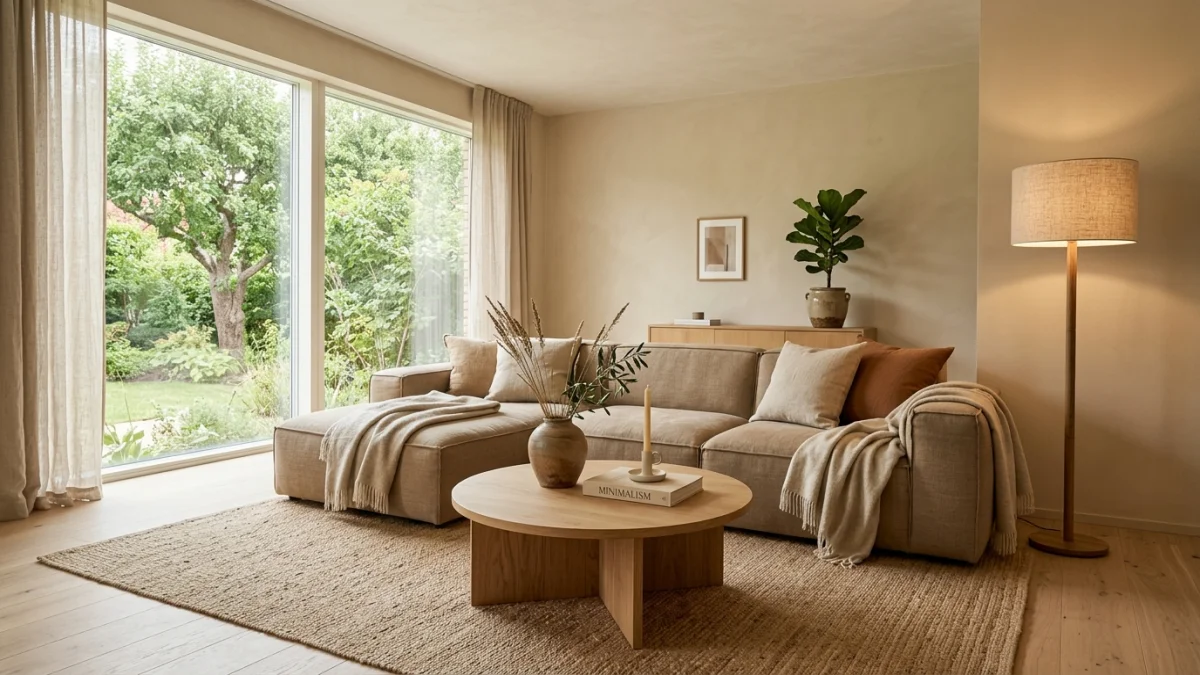
The living room is where warm minimalism shines brightest because it is the room where you need to balance “looks beautiful” with “I actually want to sit here for hours.”
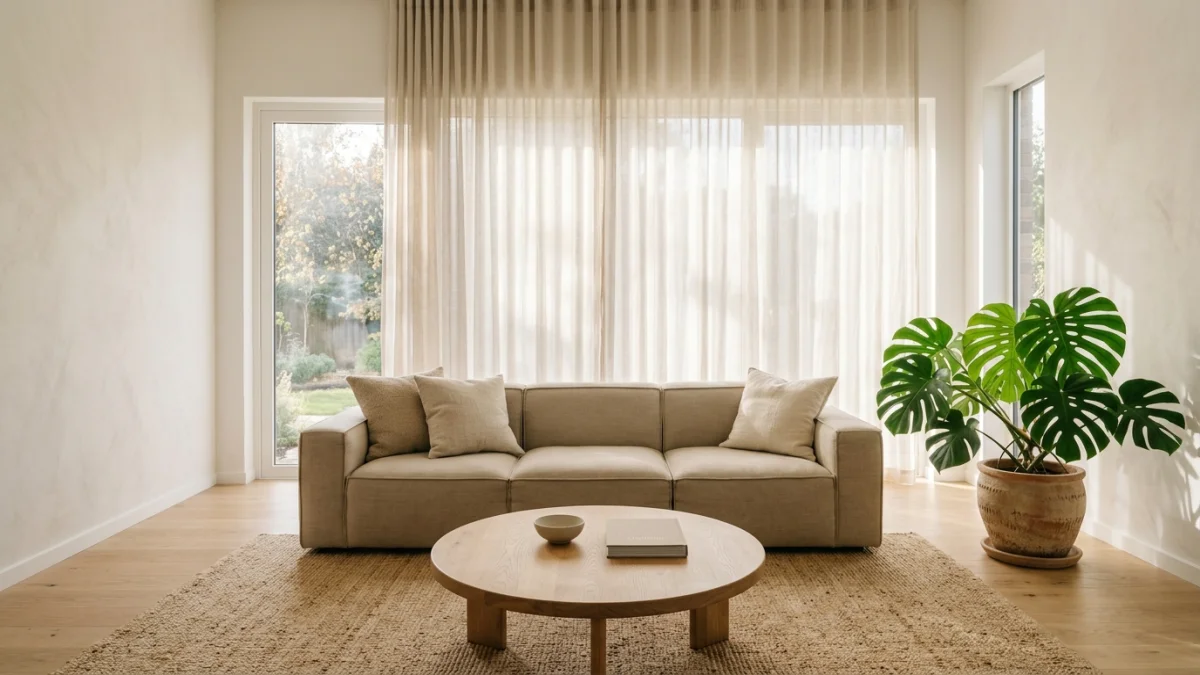
Start with a low profile sofa in a warm neutral fabric. Sand, oatmeal, or soft camel. Pair it with a round coffee table in natural wood because round shapes soften the space and feel less formal than sharp rectangles. Add a natural fiber rug (jute or sisal) to ground the seating area.
For decor, follow the rule of three: one ceramic vase, one candle, one book or small plant. That is it. The temptation is always to add more, but warm minimalism works specifically because of restraint. The warmth comes from materials and light, not from filling every surface.
Lighting matters enormously here. Replace any single overhead light with layered sources: a floor lamp with a linen shade for ambient warmth, a table lamp for task light when reading, and candles for evening atmosphere. For a deeper look at living room layouts, see our AI living room design prompts.
Bedroom
The bedroom is where warm minimalism has the most measurable impact on your life. Research from the Cleveland Clinic shows that your sleep environment directly affects sleep quality, and the principles of warm minimalism (low visual stimulation, warm tones, natural materials) align perfectly with what sleep science recommends.
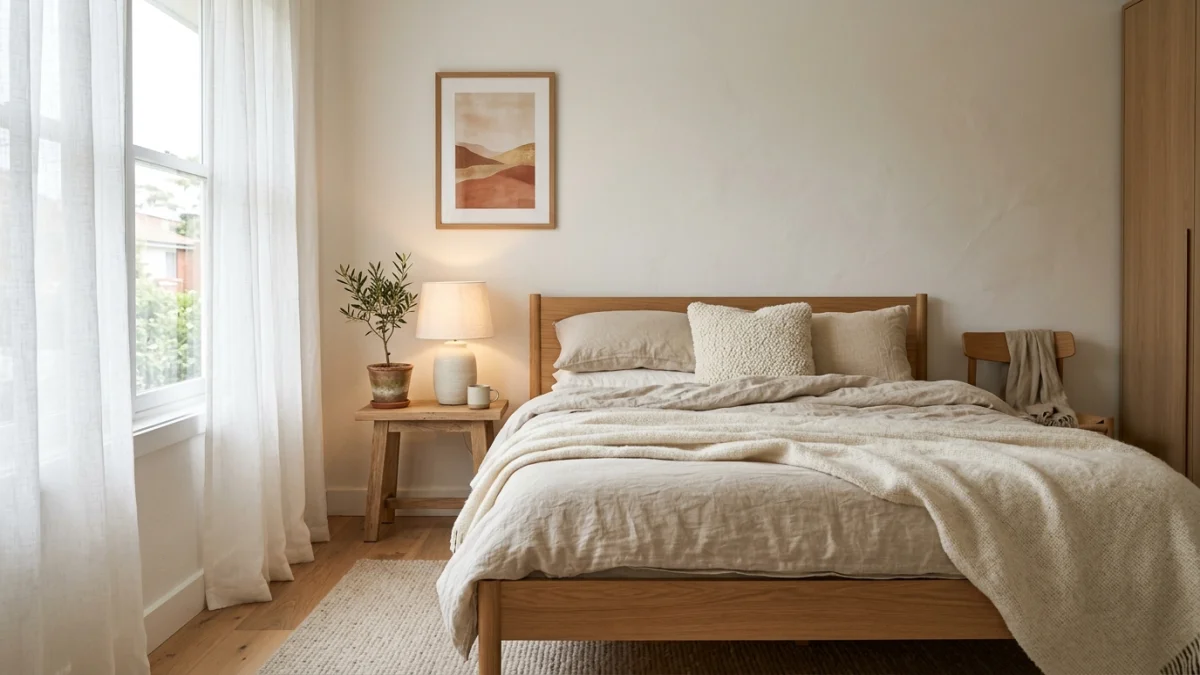
The bed is the centerpiece. Choose a frame in light oak or warm walnut with a simple, clean headboard. Dress it in linen bedding in oatmeal or cream. Layer two to three pillows in different textures (one linen, one wool, one bouclé) and add a lightweight throw at the foot.
The nightstand should hold exactly three things: a lamp, a book, and perhaps a small plant. The lamp should emit warm light (2700K or lower). If you want more detail on how bedroom setup affects sleep, our room by room design guides covers the research.
Kitchen
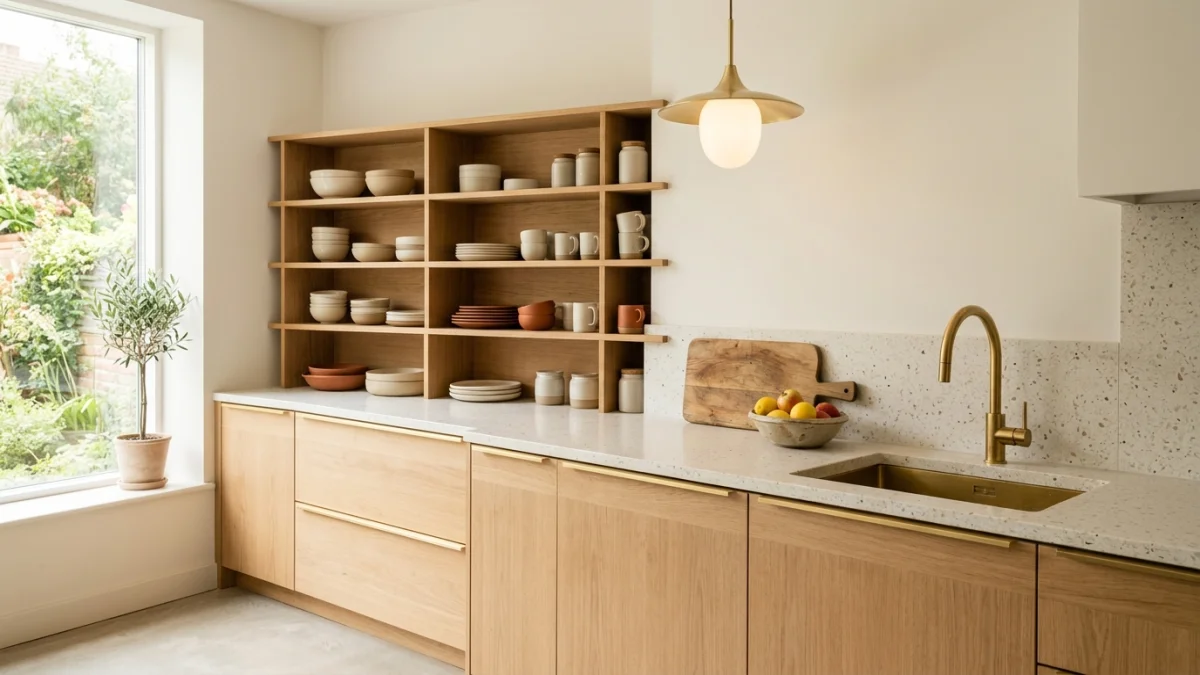
Warm minimalist kitchens are moving away from the all white, handle less look that dominated the last decade. The new approach brings back visible wood grain, open shelving, and tactile surfaces.
Natural oak cabinets with simple slab fronts are the foundation. Pair them with a stone or terrazzo countertop in a warm tone. Open shelves (one or two, not covering the entire wall) display a curated set of ceramic dishware. The countertop stays almost empty: a wooden cutting board, a ceramic bowl, and a plant. That’s it.
Brass hardware makes a big difference here. Swapping chrome cabinet pulls and faucet for warm brass takes five minutes and completely changes the kitchen’s temperature. For more kitchen design ideas, see our kitchen design trends guide.
Five Rules That Make Warm Minimalism Work
After studying dozens of warm minimalist spaces and talking to the designers behind them, there are five principles that separate the rooms that feel right from the ones that fall flat.
1. Every item must pass the touch test. Pick up every object in your room. If touching it adds nothing (smooth plastic, cold metal, generic glass), it does not belong. Warm minimalism is a tactile style. If you would not want to run your hand across it, replace it with something you would.
2. Warm whites, never bright whites. Paint is the cheapest, highest impact change. Most paint brands now have dedicated “warm white” collections. Look for names that reference nature: linen, canvas, parchment, bone. If the swatch looks blue or gray next to a piece of paper, it is too cool.
3. Layer three to five textures per room. This is the secret weapon. A monochrome room feels rich when you have wood plus linen plus wool plus rattan plus ceramic all working in the same tonal family. Without texture variety, warm neutrals just look beige.
4. Leave at least 30% of surfaces empty. This is the minimalism part. Your surfaces should not be covered with objects. A shelf with ten items is clutter. A shelf with three items (spaced thoughtfully) is styling. Restraint is what gives each object room to breathe.
5. Light warm, not just light up. The color temperature of your bulbs matters as much as your paint. Use 2700K to 3000K bulbs throughout. Layer multiple sources at different heights. Never rely on a single overhead fixture. For the full breakdown on how lighting affects mood and sleep, see our room design psychology article.
Warm Minimalism vs Japandi vs Scandinavian: Which One Is Yours?
These three styles get lumped together constantly, and it is easy to see why: they all value simplicity, natural light, and uncluttered rooms. But they are not interchangeable, and picking the wrong one for your home is the most common reason a “minimalist” room ends up feeling off. Here is the honest difference.
The short version: if your room gets little natural light and you want it to feel warm and enveloping, choose warm minimalism. If you love the discipline of minimalism but want a touch of dark contrast and a handcrafted feel, look at Japandi. If your space is small or north-facing and you need to bounce every bit of light, classic Scandinavian design still wins. Warm minimalism is essentially the answer to the most common complaint about both: “beautiful, but a little cold.” For the full landscape of options, our interior design styles guide lays them all out side by side.
How to Visualize Warm Minimalism in Your Own Space
The hardest part of any interior change is the uncertainty. Will those warm cream walls actually look good with my floor? Will oak furniture feel right in my living room? Warm neutrals are especially tricky because they shift dramatically depending on your room’s natural light, floor color, and existing fixtures.
Robin Bird of Robin Bird Interiors captures the momentum: “People are getting bolder with their choices and really embracing the cozy.”
If you want to see what warm minimalism looks like in your actual room before committing, upload a photo to MeltFlex and test different warm minimalist configurations. You can try different wall colors, furniture arrangements, and material combinations in under 30 seconds and compare them side by side. It is the fastest way to go from inspiration to confidence.
Where Warm Minimalism Goes From Here
Sean Symington says it best: “Achieving this is about simplicity with soul. Creating calm spaces that still feel lived in.”
Warm minimalism is not a fad. It is a correction. The design world swung too far toward cold perfection and people are swinging back toward spaces that actually feel like home. The principles here (natural materials, warm light, intentional restraint) are timeless even if the label is new.
Start small. Paint one room a warm white. Add a linen throw to your sofa. Replace a chrome lamp with a brass one. Each change builds on the last, and the cumulative effect is a home that looks as good as it feels.
For more style inspiration, explore our guides on Scandinavian design, Japandi style, and biophilic design. Warm minimalism reads its warmest in autumn, so see how it plays out seasonally in our fall 2026 interior trends guide.