Short answer: furnish a new-build apartment in a deliberate order: measure everything at handover, lock a whole-home style and palette, then buy the big anchor pieces (bed, sofa, dining table) before filling in the rest. Add the warmth a builder-grade box lacks with lighting, texture, and a feature wall, and preview each room in 3D so nothing arrives the wrong size. This guide walks the full handover-to-furnished plan.
Our articles are still written by humans!
Get human written articles in your Google feed.
The email arrives: "Your apartment is ready for handover." You pick up the keys, open the front door, and stand in a completely empty space. White walls. Oak floors. Bare light bulbs hanging from the ceiling. Every room echoes.
It's exciting and overwhelming at the same time. You own a brand-new apartment, but you have zero furniture, zero decoration, and zero idea where to start.
This is the reality for thousands of new-build apartment owners every year. The developer delivers a perfect shell, finished walls, quality flooring, modern bathrooms, but the rest is entirely up to you. And the decisions you make in the next few weeks will determine whether you love or regret your new home for years to come.
In this guide, we'll walk through a real new-build apartment, from empty developer handover to fully furnished home, room by room. You'll see the actual before-and-after transformations and learn exactly how to furnish each space without expensive mistakes.
FreeUpload photo · freeRedesign my room for freeUpload a photo and let MeltFlex design your space. Your first AI design is free, no card needed.
Watch: How to Decorate a Featureless New Build
A blank new build is the hardest starting point, no mouldings, no character, just white walls. In this popular video, Reynard Lowell shows how to add warmth and features to a builder-grade apartment, which pairs well with the plan below.

Video: “How To Decorate A New Build or Builder-Grade Apartment With No Features” by Reynard Lowell.
What You Get at Developer Handover (And What You Don't)
A developer handover apartment, sometimes called a turnkey or shell finish, typically includes:
- Finished walls, painted white or light grey, ready for furniture
- Flooring, usually oak parquet, laminate, or tiles in bathrooms
- Doors and windows, installed with handles and seals
- Bathroom fixtures, toilet, sink, sometimes bathtub or shower
- Kitchen connections, plumbing and electrical hookups (sometimes a basic kitchen)
- Electrical outlets and switches, placed but without decorative covers in some markets
What you don't get: furniture, lighting fixtures, mirrors, curtains, shelving, rugs, or any form of decoration. You start with a blank canvas, which is both the biggest challenge and the biggest opportunity.
The Living Room: From Empty Shell to Social Hub
The living room is usually the largest room in a new-build apartment, and it's where most first-time owners freeze. An empty 20–30 m² space with white walls and oak floors can feel paralyzing.
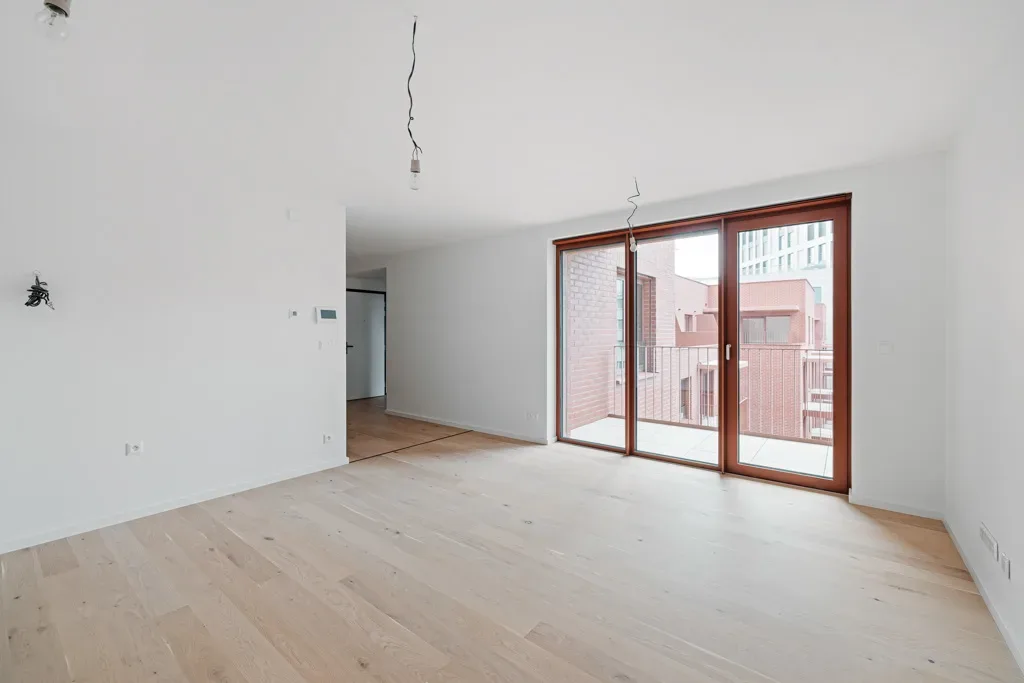
This is what a typical new-build living room looks like at handover. Notice the high-quality oak flooring, the large sliding doors to the balcony, and the clean white walls. The bones are excellent, it just needs a vision.
The Transformation
Using AI room staging, we transformed this exact living room into a warm, modern living space. The same walls. The same floor. The same windows. But now it feels like a home:
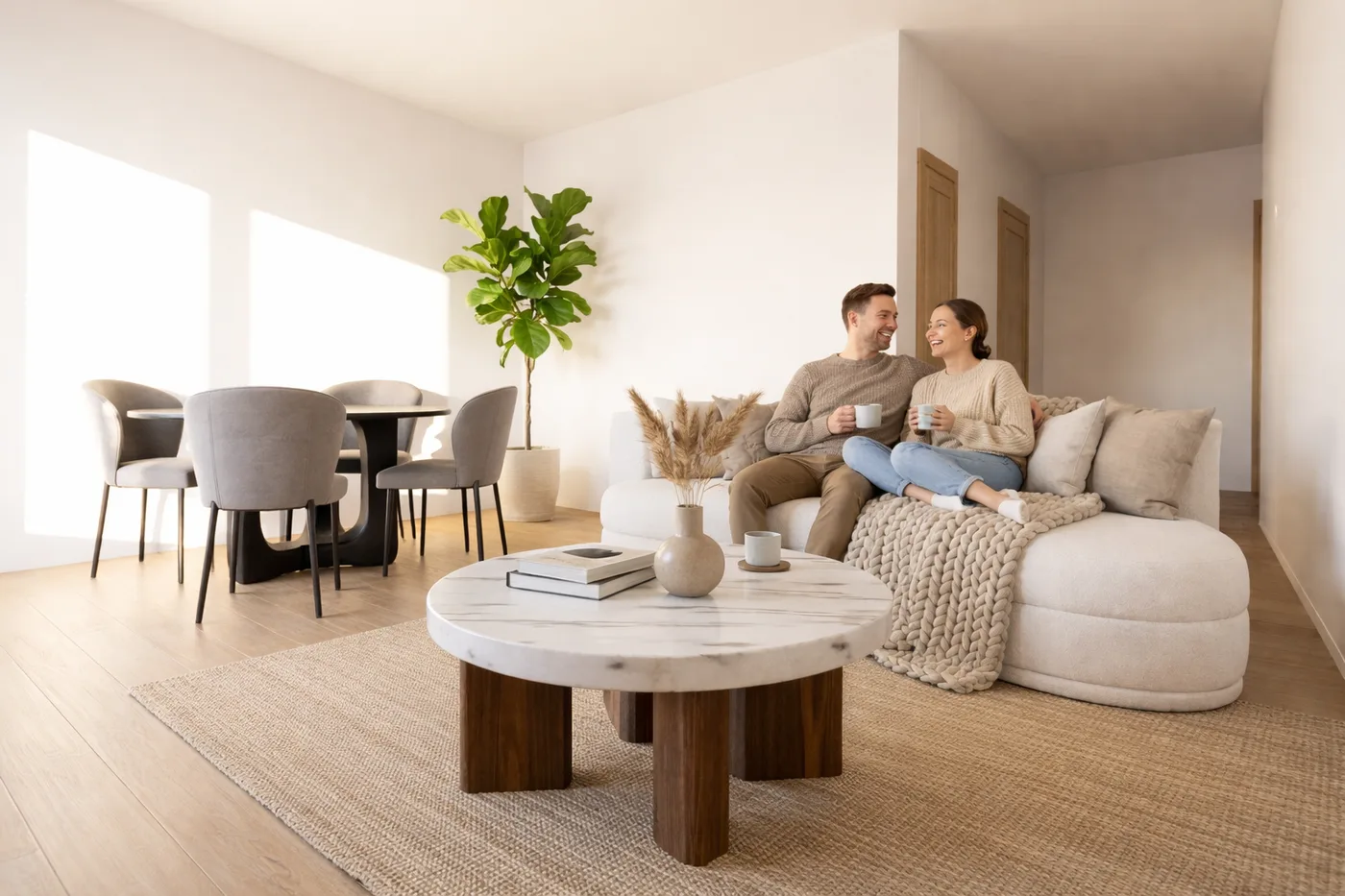
What we placed: A cream sectional sofa with a chunky knit throw, a round wooden coffee table, a small dining set with grey upholstered chairs, a fiddle leaf fig plant, and pampas grass accents. The warm, neutral palette complements the oak flooring perfectly.
Living Room Design Tips for New Builds
- Anchor with the sofa. Place it facing the main window or view, not against the longest wall by default. Natural light on the seating area makes it inviting.
- Define zones. In an open-plan space, use a rug to separate the living area from the dining area. This creates visual structure without walls.
- Warm up white walls. Neutral-toned furniture (cream, beige, warm grey) prevents the clinical feel that all-white new builds can have. Add texture through throws and cushions.
- Add one large plant. A single statement plant, like a fiddle leaf fig or olive tree, brings life to a sterile new-build room instantly.
For more layout ideas and furniture combinations, see our complete living room design guide.
The Bedroom: From Empty Box to Restful Retreat
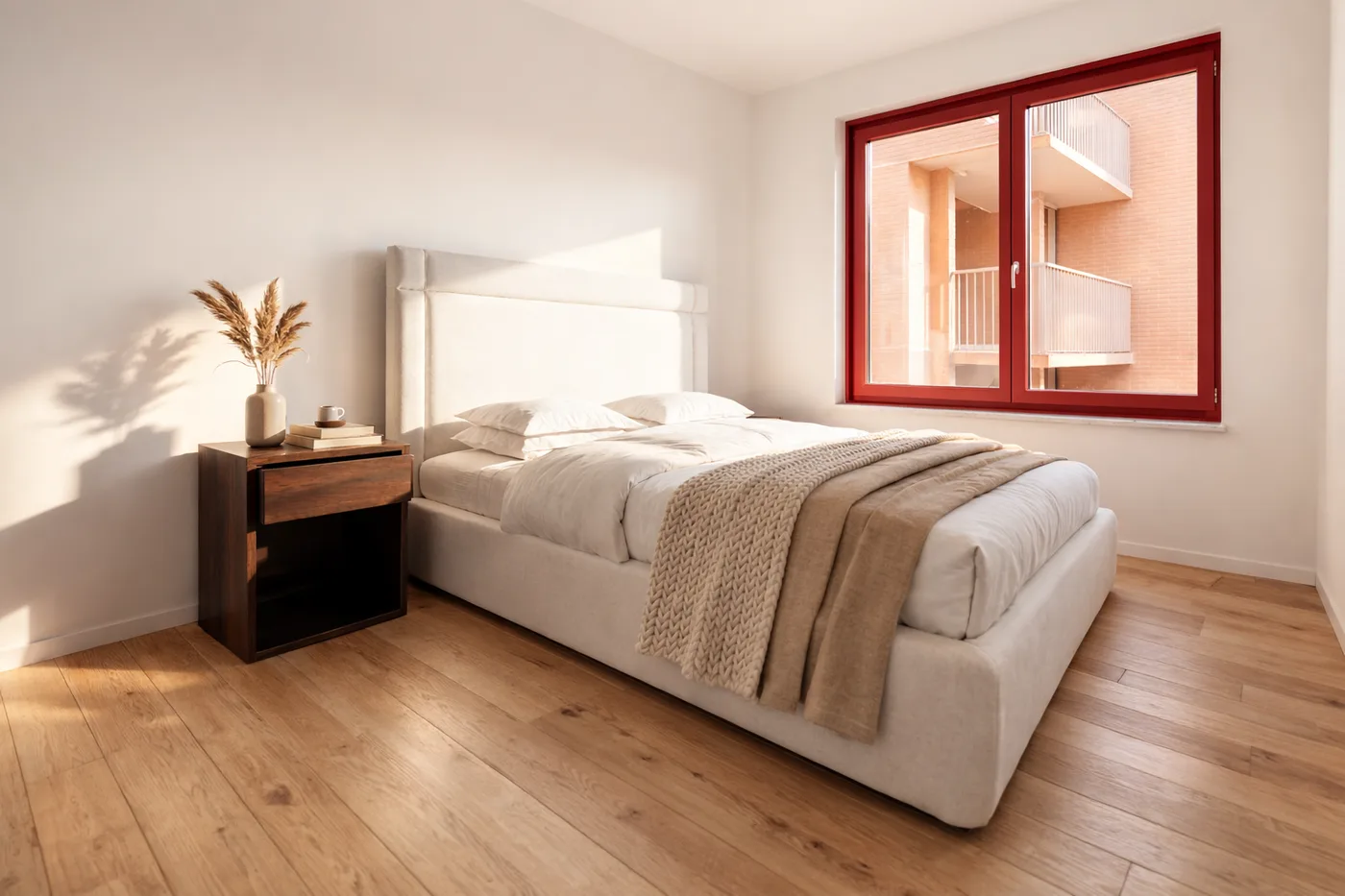
New-build bedrooms are typically 10–15 m², enough for a bed, nightstands, and a wardrobe, but tight enough that wrong proportions create problems. Here's the room before any furniture:
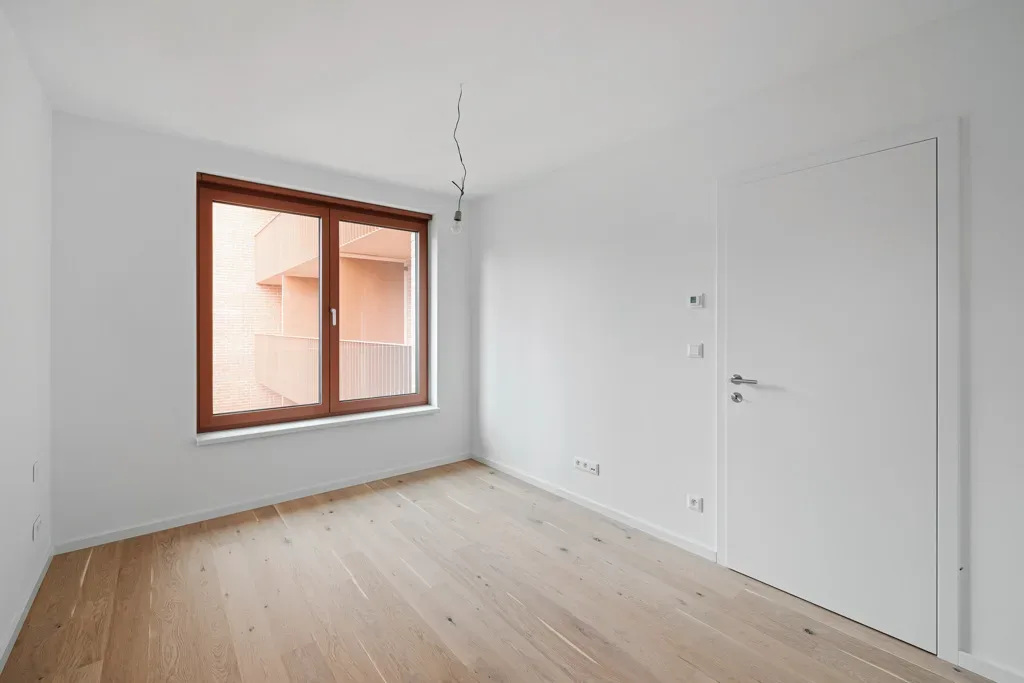
Clean lines, good natural light through the generous window, and the same quality oak floor as the living room. The red-brown window frames add a warm accent that you'll want to complement, not fight, with your furniture choices.
The Transformation

What we placed: An upholstered bed with a white headboard, layered with beige and brown linens and a chunky knit throw. A walnut nightstand with a vase of dried pampas grass ties the warm wood tones to the window frame. The color palette is intentionally muted, letting the natural light and warm flooring do the work.
Adding Storage: The Wardrobe Decision
New-build apartments rarely include built-in wardrobes. This means you need a freestanding wardrobe, and getting the right one matters more than most people think. Too small, and you're constantly out of space. Too large, and the bedroom feels cramped.
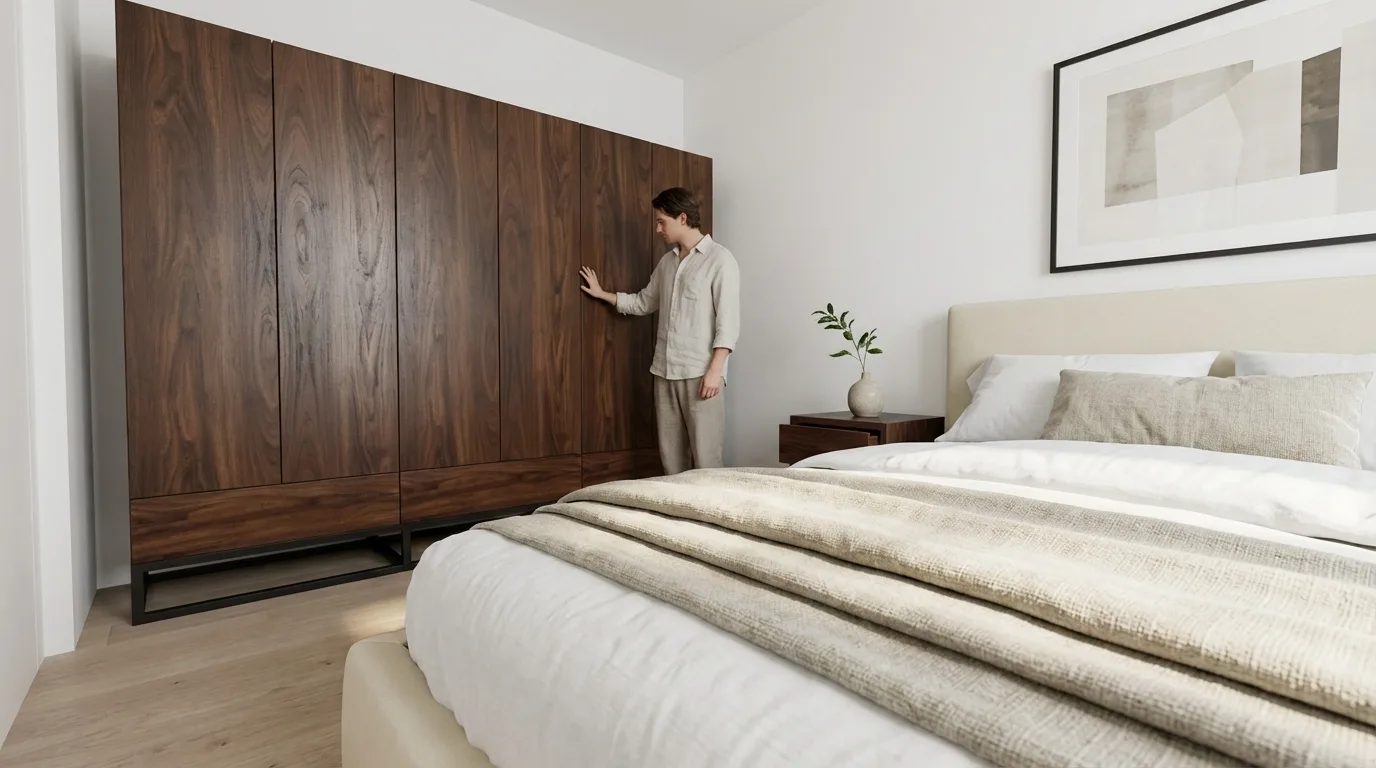
This walnut four-door wardrobe works because it creates a visual anchor on the opposite wall from the bed. The dark wood adds warmth and contrast without overwhelming the room. Key rule: always check that wardrobe doors can open fully without hitting the bed frame, a 3D room planner shows this instantly.
Explore more bedroom layouts and furniture options in our bedroom interior design guide.
The Home Office: Making Small Spaces Work
Many new-build apartments include a small room (6–8 m²) that's technically a "spare room" or "utility room" on the floor plan. In 2026, most people turn it into a home office, and the challenge is making a tiny space functional without feeling claustrophobic.
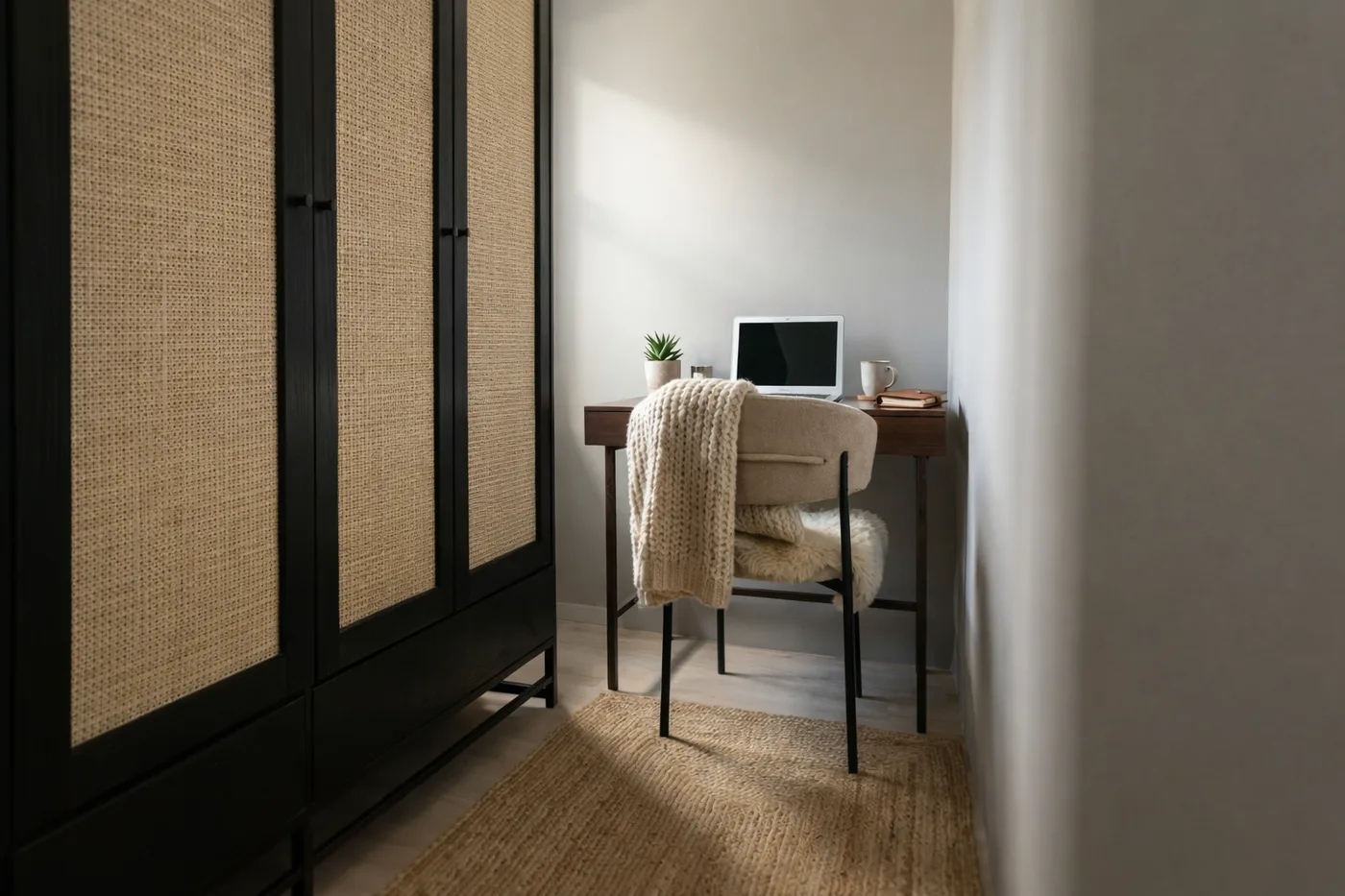
This transformation shows how a small room can become a productive workspace. The rattan wardrobe doubles as storage and visual interest. The compact wooden desk fits against the wall without blocking movement. The jute rug and throw blanket add warmth that prevents the small room from feeling cold.
Small Home Office Tips
- Use a desk with minimal depth. A 50–60cm deep desk provides enough space for a laptop and leaves room to push the chair back fully.
- Vertical storage over horizontal. A tall narrow wardrobe or bookshelf uses floor-to-ceiling space instead of eating into walking area.
- Natural materials warm up small rooms. Rattan, wood, jute, and linen prevent the sterile white-box feeling common in tiny new-build rooms.
- One rug, one throw. Two textile layers are usually enough to make a small space feel intentional. More than that looks cluttered.
The Bathroom: Small Upgrades, Big Impact
New-build bathrooms come finished, toilet, sink, tiles, and sometimes a shower or tub. But they look clinical at handover. The good news? Bathrooms need the least investment to transform.
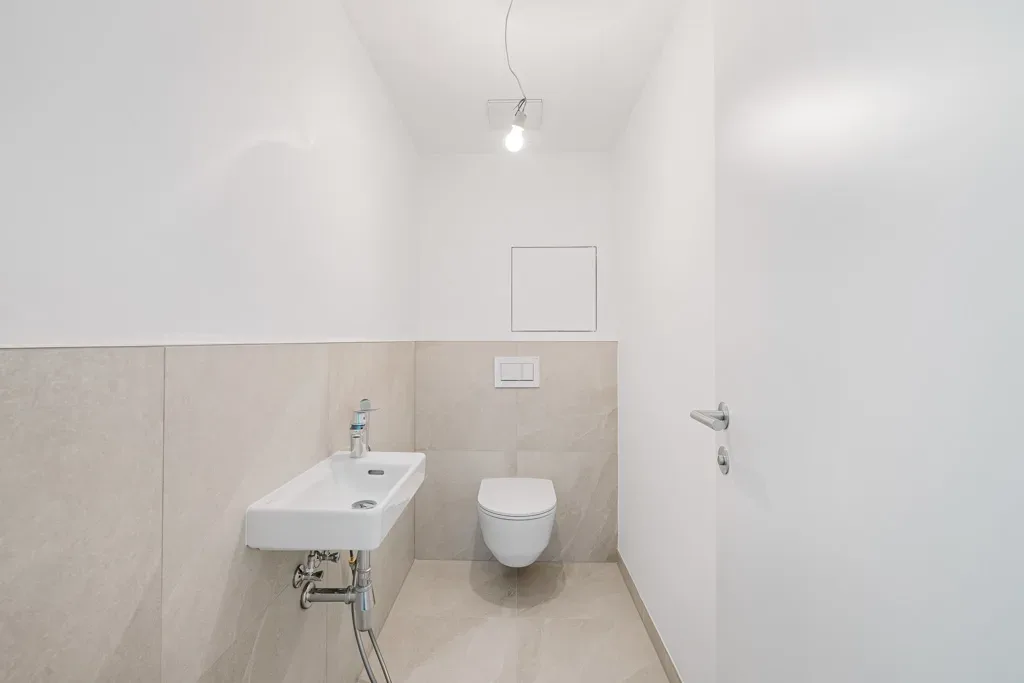
The typical developer handover bathroom: functional but uninviting. Bare bulb, no mirror, no accessories. But the beige tiles and wall-hung toilet are a solid foundation.
The Transformation
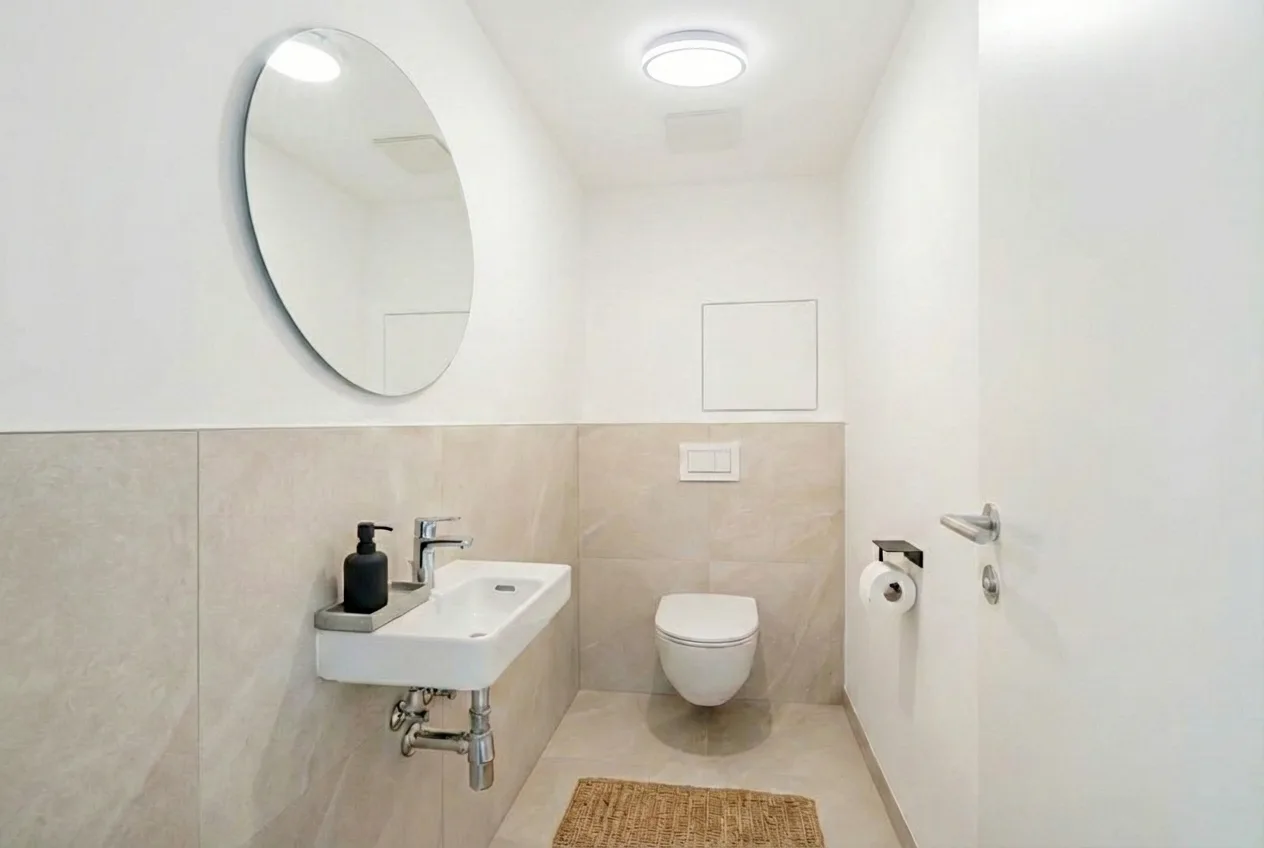
What we added: A large round mirror (visually doubles the space), a ceiling LED flush light, a black soap dispenser, a jute bath mat, and a toilet paper holder. Total cost? Under €150. Total impact? The room went from construction site to finished home.
Bathroom Upgrade Priority List
- Mirror, the single biggest visual upgrade. Round mirrors soften the angular look of tiled bathrooms.
- Lighting, replace bare bulbs with flush LED ceiling lights (€20–40 each).
- Bath mat, adds warmth and texture to cold tile floors.
- Soap dispenser and towel hooks, matte black or brushed nickel accessories elevate the entire room.
- Storage basket or shelf, keep toiletries organized, not lined up on the sink edge.
The Balcony: Your Outdoor Extension
New-build apartments often come with a balcony, typically 4–8 m², that owners completely ignore during initial furnishing. This is a mistake, especially in urban apartments where outdoor space is precious.
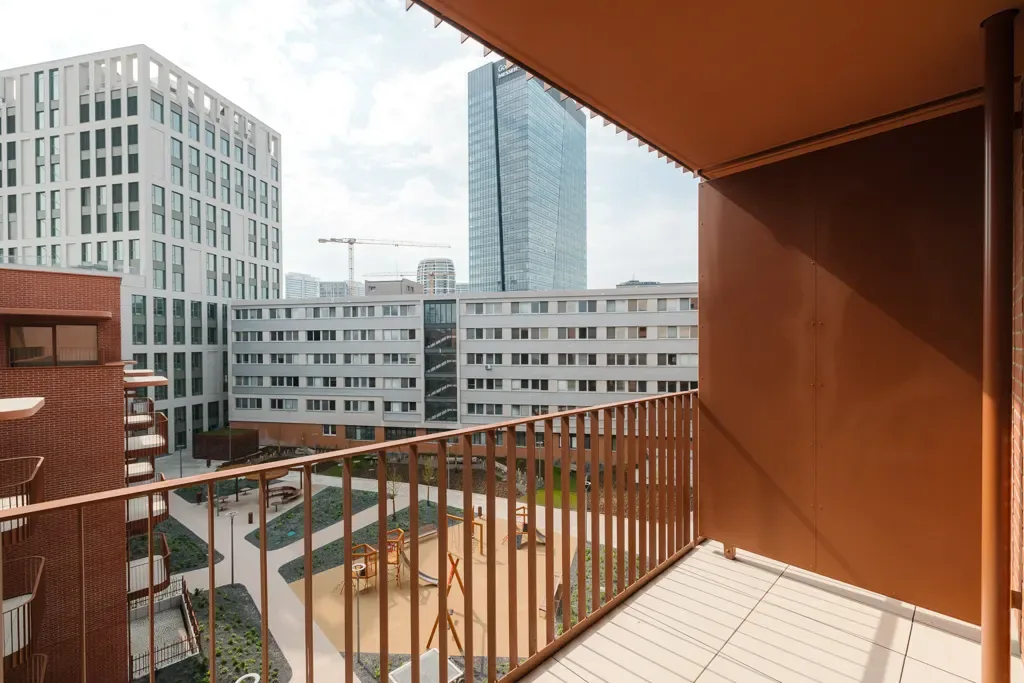
Even an unfurnished balcony with a city view adds significant value. Adding a small bistro set (table + 2 chairs), an outdoor rug, and a few potted plants transforms it from unused concrete into a daily-use living space. Budget: €100–300 for a basic outdoor setup.
Room-by-Room Furnishing Priority Order
Don't try to furnish everything at once. This order minimizes stress and maximizes livability from day one:
Total for a furnished 2-bedroom new-build: €2,600 – €9,300 depending on quality and brand preferences. Use a 3D room planner with real pricing to track costs as you design.
3 Interior Design Styles That Work Best for New Builds
New-build apartments have a specific aesthetic: neutral walls, light wood floors, clean lines, modern windows. Not every style works. These three do:
1. Warm Scandinavian
Why it works: The clean, light canvas of a new-build is exactly what Scandinavian design calls for, neutral tones, natural materials, functional simplicity. Light oak furniture, cream textiles, and minimal decoration create a calm, inviting atmosphere without fighting the architecture.
2. Modern Contemporary
Why it works: New-build apartments already have the modern shell, clean angles, flush doors, no ornate mouldings. Contemporary furniture with mixed materials (walnut + metal, marble + black steel) complements the architectural style. Add one or two statement pieces for visual interest.
3. Japandi (Japanese-Scandinavian Fusion)
Why it works: Japandi combines the warmth of Scandinavian design with Japanese minimalism. Natural materials, muted earth tones, and intentional simplicity. It's ideal for smaller new-build apartments where every piece of furniture must earn its place.
The Biggest Mistakes New-Build Owners Make
Buying Furniture Before Measuring
New-build floor plans often show dimensions that include wall thickness. Your actual usable room might be 20–30cm narrower than expected. Always measure the finished room, or better, upload your floor plan to a 3D room planner to see exact proportions.
Choosing All White or All Grey
Your walls are already white. If every piece of furniture is also white or grey, the apartment feels like a hospital. Add warmth through natural wood tones, beige/cream textiles, and one or two accent colors, even a single ochre cushion or terracotta vase makes a difference.
Forgetting About Lighting
Developer handover apartments often have bare bulbs or just electrical points without fixtures. Lighting completely changes how a room feels. Budget €200–500 for decent lighting across a 2-bedroom apartment: pendant lights for living/dining areas, flush mounts for hallways and bathrooms, and bedside lamps.
Ignoring the Hallway
It's the first thing you see when you walk in. A coat hook, a shoe rack or bench, and a mirror instantly make the entrance feel finished. Total cost: under €200. Impact: first impression changes completely.
How AI Helps You Furnish a New-Build Apartment
The traditional approach, visiting showrooms, ordering samples, guessing if things fit, takes weeks and almost always involves at least one expensive mistake (wrong size, wrong color, wrong style). In 2026, AI interior design tools make this process dramatically faster and cheaper:
- Upload a photo of your empty room and see it instantly furnished in multiple styles
- Place real furniture at accurate scale in a 3D model of your apartment, converted from your 2D floor plan
- Generate photorealistic renders to see exactly how the finished room will look before buying anything
- Browse and buy real furniture from the product catalog, with real prices, real dimensions, and direct checkout
- Try multiple styles, test Scandinavian, minimalist, or custom aesthetics on the same room in minutes
The entire process takes 15–20 minutes per room. Compare that to weeks of showroom visits and the inevitable return when a sofa doesn't fit. For a complete walkthrough, read our guide to designing your home with AI.
Start Designing Your New-Build Apartment Today
You have the keys. You have the blank canvas. Now all you need is a plan. Upload your floor plan or room photo to MeltFlex, the AI will convert it into a 3D model where you can place real furniture, generate photorealistic renders, and buy everything directly.
Your new-build apartment doesn't have to feel empty for weeks. With the right tools, you can go from developer handover to dream home in a single afternoon. For more room-specific inspiration, explore our guides on whole-house interior design, trying furniture before buying, and buying furniture online without mistakes.



)