Every day, millions of people type interior design questions into ChatGPT. “What color should I paint my living room?” “How do I arrange furniture in a small space?” “What style suits me?”
The answers they get are… fine. General. Safe. The kind of advice that sounds right but doesn’t quite land when you’re standing in your actual room with actual furniture and actual budget constraints.
So we did something different. We sat down with Lucia Baráneková, an interior designer with 9 years of experience designing apartments across Bratislava, Prague, and Vienna, and asked her the exact same questions people ask ChatGPT. No scripts, no PR answers:just a real designer giving real opinions on the questions everyone wants answered.
Here’s what she said.
Watch: how a designer actually uses AI
ChatGPT can answer these questions in words; a designer answers them by showing you the room. Here is that in action, MeltFlex taking a space from brief to a finished render, the visual step that turns generic advice into a decision you can actually see.

Brief to render with AI, the visual answer behind the questions below.
How to Choose Paint Colors for Your Living Room
What ChatGPT usually says: “Neutral tones like beige, light gray, and white are safe choices that make rooms feel larger and brighter.”
What Lucia says:
“That advice is technically correct and completely useless. Every room is different. A north-facing living room in Bratislava gets cold, blue-toned light for eight months of the year:if you paint it gray, it will feel like a dental office. The same gray in a south-facing apartment in Vienna looks completely different.”
“My actual process: I look at the light first. Not the style, not the furniture, not Pinterest.The light. I visit the room at three different times of day. Then I test at least three paint samples directly on the wall:large patches, not those tiny chips from the store. You live with them for 48 hours before deciding.”
“If you want a shortcut: warm white (not bright white) works in 80% of rooms. It’s boring advice, but warm white with the right furniture is better than a trendy color with the wrong undertone.”
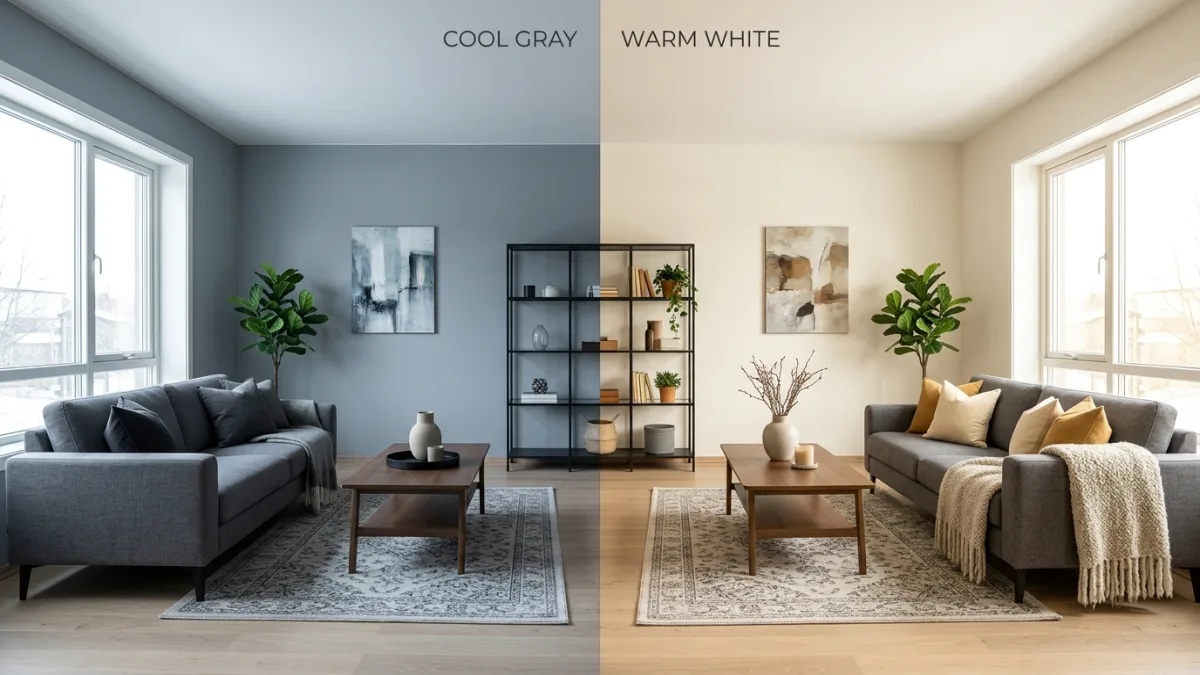
Quick test: Upload a photo of your room to MeltFlex and try different color palettes. It won’t replace testing real paint on the wall, but it will help you narrow down whether you’re a warm-tones or cool-tones person before you buy six sample pots. For more on choosing the right paint, see our complete guide to choosing paint colors with AI.
How to Arrange Furniture in a Small Room
What ChatGPT usually says: “Use multi-functional furniture, keep pathways clear, and avoid pushing everything against the walls.”
What Lucia says:
“The ‘don’t push furniture against the walls’ advice drives me crazy. In a 15-square-meter studio apartment:which is what half my clients in Bratislava have:where exactly should the sofa go? Floating in the middle of the room?”
“In small rooms, the real rule is: decide what the room is for first. If it’s a living room that also needs to be a home office, the desk placement dictates everything else. If it’s a bedroom, the bed position comes first. Start with the biggest piece and work outward.”
“The trick that actually works in small spaces: one piece of furniture should be oversized. Not everything tiny. A big, comfortable sofa in a small room looks intentional. Five small pieces of furniture in a small room looks like a storage unit.”
“Also:people underestimate the floor. If you can see floor, the room feels bigger. Choose furniture with visible legs. Skip the heavy base cabinets. A floating shelf instead of a bookcase. Every centimeter of visible floor is breathing room.”
If you’re dealing with a small living room, our small living room ideas guide has specific layout templates. For furniture placement help, try our AI furniture placement tool.
How to Find Your Interior Design Style
What ChatGPT usually says: “Take a quiz or browse Pinterest for inspiration. Popular styles include Scandinavian, mid-century modern, industrial, and bohemian.”
What Lucia says:
“Forget the quizzes. They tell you what you already know. Instead, do this: open your wardrobe. Seriously. The way you dress is the closest predictor of your interior style.”
“If your wardrobe is mostly black, white, and gray with clean lines:you’re Scandinavian or minimalist. If it’s earth tones and natural fabrics:Japandi or organic modern. If it’s colorful and layered:you’re maximalist or eclectic. If it’s structured and tailored:mid-century modern or Art Deco.”
“The deeper point is: your home should feel like an extension of you, not a copy of something you saw online. I’ve had clients show me a Pinterest board full of Japandi and then I visit their apartment and it’s full of colorful artwork and vintage finds. That’s not Japandi:that’s eclectic, and that’s perfectly fine. Stop trying to fit into a label.”
Want to see what different styles look like in your actual room? Try MeltFlex:upload a photo and switch between Scandinavian, Japandi, mid-century, and more to see which one clicks. Not sure where to start? Our interior design styles guide breaks down every major style with photos.
How to Make a Small Room Look Bigger
What ChatGPT usually says: “Use light colors, mirrors, and minimalist furniture to create the illusion of space.”
What Lucia says:
“Mirrors work. I’ll give ChatGPT that one. But the mirror has to reflect something worth reflecting:natural light, a window, a nice view. A mirror reflecting your coat rack makes the room look like it has two coat racks.”
“The biggest space-making trick that nobody talks about: continuity. Same flooring throughout the apartment. Same wall color in connected rooms. When your eye doesn’t hit a transition, the space reads as one continuous room instead of three tiny boxes.”
“Also, curtains should go ceiling to floor, even if the window is small. It makes the ceiling feel taller. This costs maybe €30 more in fabric and changes how the entire room feels. I do this in every single project, and every single client is surprised by the difference.”
“And please:stop buying furniture that’s too small for the room. A tiny coffee table in front of a tiny sofa doesn’t make the room look bigger. It makes the room look like it was furnished by someone who was afraid of the room.”
We wrote an entire guide on this topic: how to make a small room look bigger with visual before/after examples.
The Biggest Interior Design Mistakes to Avoid
What ChatGPT usually says: “Common mistakes include not planning ahead, ignoring scale and proportion, and following trends blindly.”
What Lucia says:
“The number one mistake, without question: buying furniture before planning the layout. I get calls every month from people who bought a beautiful sofa that doesn’t fit through the door, or a dining table that blocks the balcony, or a bed that leaves 30 centimeters to squeeze past.”
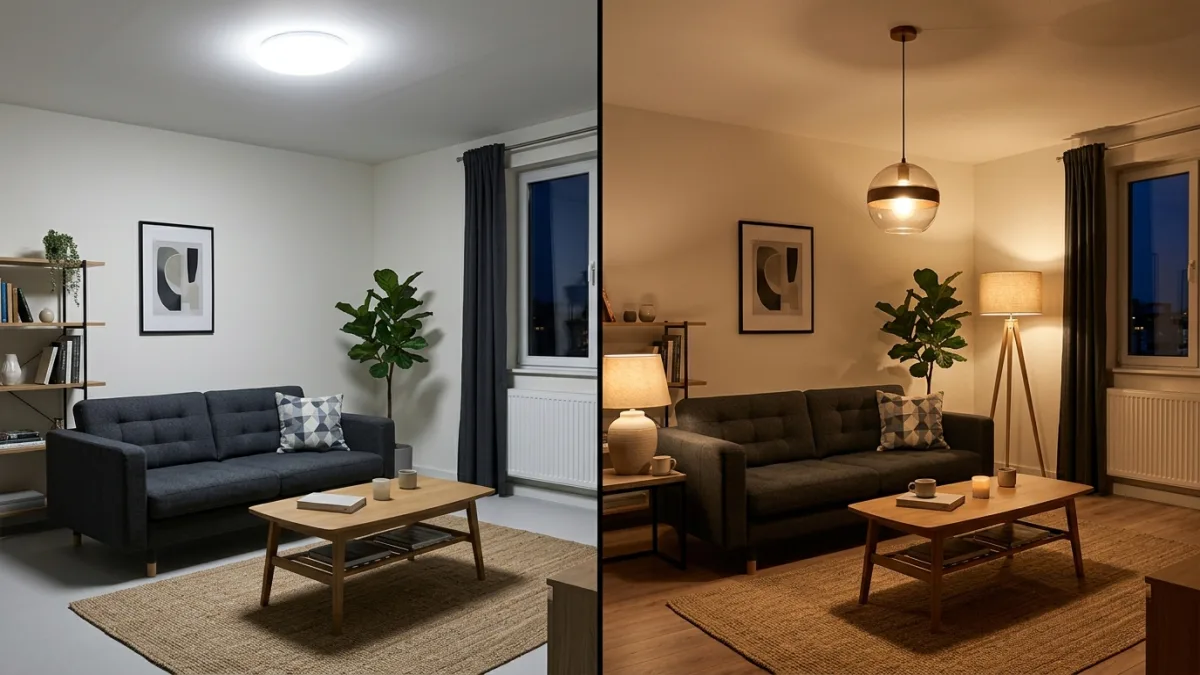
“The second biggest mistake: lighting. People spend thousands on furniture and then use a single overhead light that makes everything look flat and institutional. You need three types of light in every room: ambient (overhead), task (desk lamp, reading light), and accent (table lamp, floor lamp). The combination is what makes a room feel like a home instead of a hotel lobby.”
“Third: ignoring the ceiling. People treat ceilings like they don’t exist. A pendant light, ceiling paint that’s slightly different from the walls, a beam, anything:the ceiling is the largest uninterrupted surface in the room and everyone just leaves it white.”
For a complete list of common pitfalls, see our interior design mistakes to avoid in 2026.
How Much to Spend on Furniture (Real Budget Breakdown)
What ChatGPT usually says: “A general rule is to spend 10–50% of your home’s value on furnishing, depending on the room.”
What Lucia says:
“That percentage rule is meaningless. If your apartment costs €250,000, that formula says spend up to €125,000 on furniture. Nobody does that. And in cities like Bratislava where property prices have doubled but salaries haven’t, the math is absurd.”
“Here’s my actual framework: spend the most on things you touch the most. The sofa you sit on every day? Invest. The bed you sleep in 8 hours a night? Invest. The dining table you eat at twice a day? Invest. The decorative vase on the shelf? IKEA is fine.”
“My split for a typical 2-bedroom apartment:”
| Category | Budget % | 1-Bedroom (EUR) | 2-Bedroom (EUR) |
|---|---|---|---|
| Seating & sleeping (sofa, bed, mattress, dining chairs) | 40% | €1,200–€3,200 | €2,400–€6,000 |
| Storage & surfaces (wardrobe, shelving, tables) | 25% | €750–€2,000 | €1,500–€3,750 |
| Lighting (pendant, floor, table lamps) | 20% | €600–€1,600 | €1,200–€3,000 |
| Decor, textiles & accessories | 15% | €450–€1,200 | €900–€2,250 |
| Total | 100% | €3,000–€8,000 | €6,000–€15,000 |
“You can go lower with IKEA and second-hand, or higher with designer pieces:but that range covers what most of my clients actually spend.”
For detailed cost breakdowns by room, see our guides on how much it costs to furnish a house in 2026 and furnishing a living room on a budget.
Interior Design Trends vs. Timeless Design: What to Invest In
What ChatGPT usually says: “A mix of both is ideal. Use timeless pieces as a foundation and add trendy accents that can be easily swapped.”
What Lucia says:
“That answer is correct, and it’s what I tell every client. But let me be more specific about what should be timeless and what can be trendy:”
“Timeless (invest here): sofa shape, dining table, flooring, kitchen cabinets, bathroom tiles. These are expensive to replace. Stick to clean lines and neutral bases.”
“Trendy (have fun here): cushions, throws, wall art, paint accent walls, small accessories, pendant lights. These cost €20–€200 to swap and instantly update a room.”
“The mistake I see: people buy a trendy sofa in a bold color. Two years later, they hate it, and they’re stuck with a €1,500 statement piece that no longer sparks joy. Buy the neutral sofa, buy the trendy cushions.”
Curious what’s trending right now? Check our modern interior design ideas for 2026 and the latest IKEA furniture trends.
Is Hiring an Interior Designer Worth It? (Honest Answer)
What ChatGPT usually says: “It depends on your budget and the complexity of the project. Designers save time and prevent costly mistakes.”
What Lucia says:
“I’m obviously biased, but let me be honest: not always. If you have one room to furnish and a clear vision, you probably don’t need me. Use AI tools to visualize your ideas, measure twice, and go shopping.”
“You do need a designer when:”
- You’re renovating and making structural decisions (knocking down walls, moving plumbing)
- You have a large space with multiple connected rooms that need to flow together
- You’re investing serious money and can’t afford to get it wrong
- You have no idea what you want and need someone to translate your vague feelings into a plan
“For everything else:a bedroom refresh, a new color scheme, rearranging your living room :the combination of AI visualization tools and good taste gets you 80% of what a designer would deliver, at 5% of the cost.”
“I actually recommend tools like MeltFlex to my own clients. Before our first meeting, I ask them to upload photos of their rooms and play with different styles. It saves us an entire consultation session because they come in already knowing what direction they want.”
We compared the full costs in our interior designer cost vs. AI alternative breakdown.
Interior Design Trends That Should Disappear in 2026
What ChatGPT usually says: “This is subjective, but some designers feel that all-gray interiors and live-laugh-love decor have run their course.”
What Lucia says:
“The ‘magazine room.’ You know the look:perfectly styled shelves with three books at an angle, a single dried flower, and nothing that suggests anyone actually lives there. I blame Instagram. People are so afraid of their home looking messy that they remove everything personal, and what’s left is beautiful but completely soulless.”
“A home should look lived in. Your grandmother’s weird lamp that doesn’t match anything? Keep it. The shelf of books you actually read? Leave it messy. The kids’ drawings on the fridge? That’s design. The best rooms I’ve designed are the ones where the client’s personality is louder than my design.”
How to Design a 30 sqm Studio Apartment (Designer’s Playbook)
What ChatGPT usually says: “Use multi-functional furniture, vertical storage, light colors, and define zones with rugs or shelving.”
What Lucia says:
“I design 30 sqm apartments at least twice a month. This is my exact playbook:”
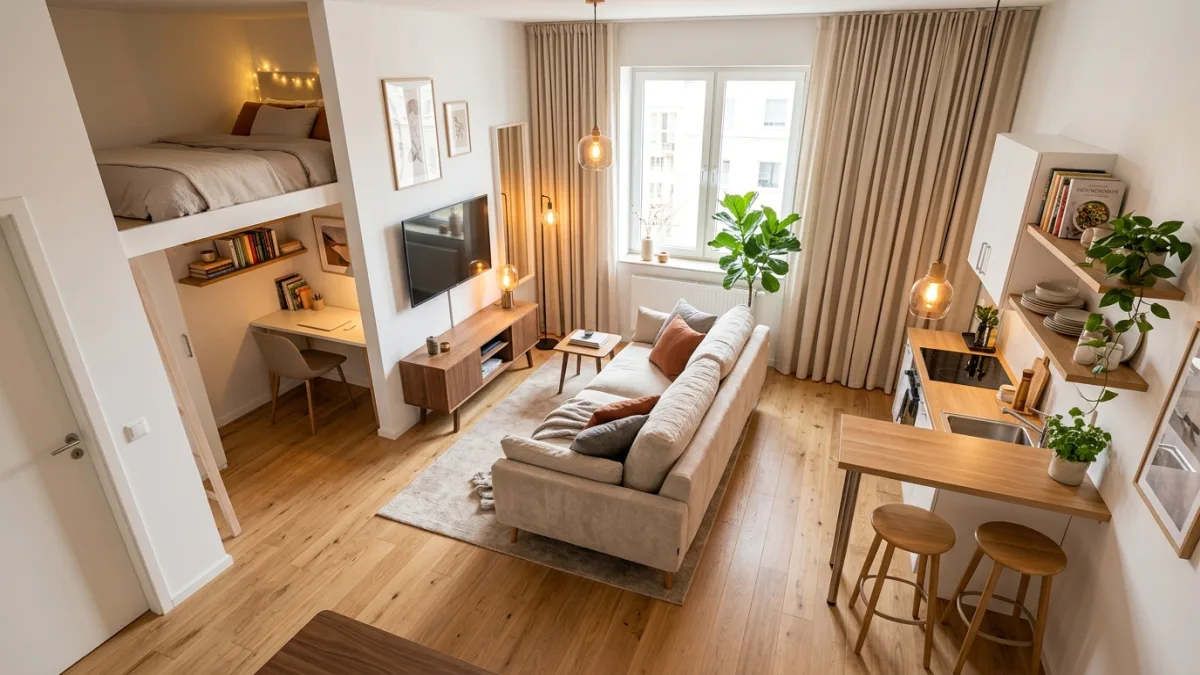
“Step 1: Kill the idea of separate rooms. In 30 sqm, you don’t have a living room and a bedroom. You have one space that serves multiple functions. Accept this and the design becomes much easier.”
“Step 2: Invest in a quality sofa bed or a Murphy bed. This is the most important decision in a studio apartment. A bad sofa bed ruins everything:your sleep, your back, and your willingness to have people over. Budget at least €800–€1,200 for this single piece.”
“Step 3: Build upward. Floor-to-ceiling shelving. Wall-mounted desk. Floating nightstand. Hooks for everything. The walls are your storage:use all of them.”
“Step 4: One good light source per zone. A pendant over the dining/work area. A floor lamp by the sofa/bed. A small lamp on the nightstand. Three light sources, three zones — your brain reads this as three rooms even though it’s one.”
“Step 5: Use the same flooring, same wall color, and same material palette throughout.Continuity makes 30 sqm feel like 40.”
For more studio layouts with AI renders, see our studio apartment design guide and 5 AI-generated studio layouts.
How to Mix Vintage and Modern Furniture Successfully
What ChatGPT usually says: “Balance is key. Pair a modern sofa with a vintage coffee table, or mix contemporary art with antique frames.”
What Lucia says:
“The secret to mixing old and new is a connecting thread. Not everything has to match, but everything needs at least one thing in common with something else in the room.”
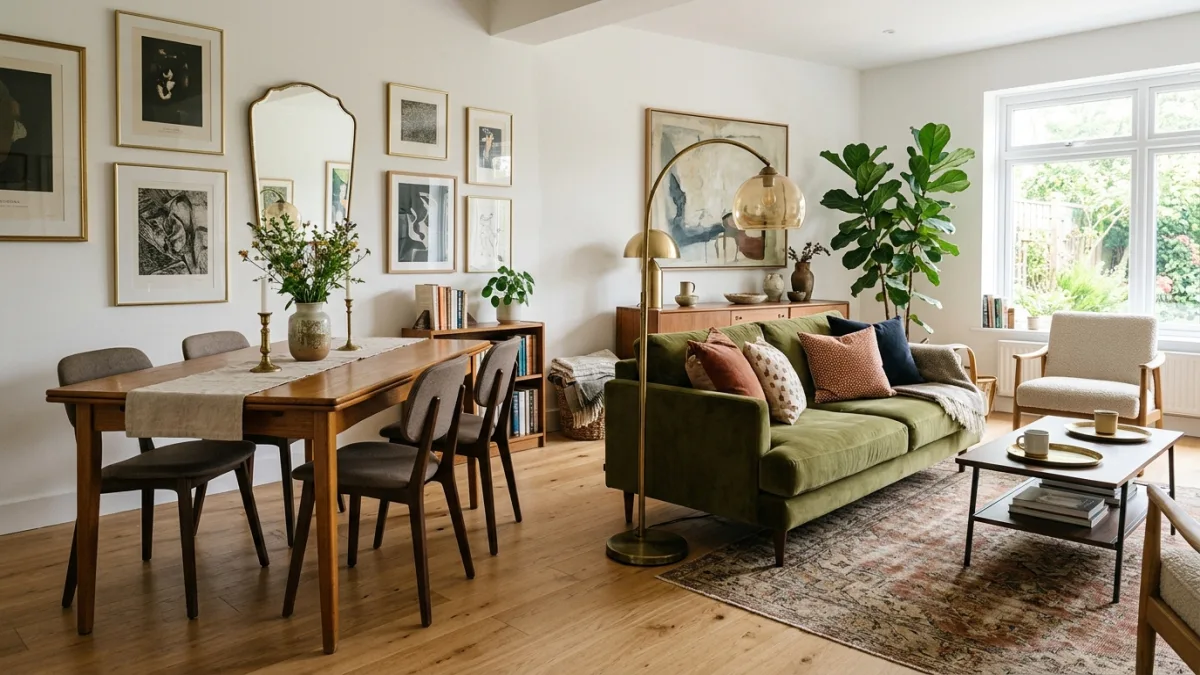
“My go-to method: pick a material as your connector. If you have a vintage oak dining table, your new bookshelf should also be oak (or at least a similar wood tone). If you have a brass vintage lamp, your new cabinet hardware should be brass. The material creates a visual thread that ties old and new together.”
“What doesn’t work: putting one random antique piece in an otherwise modern room and calling it ‘eclectic.’ That’s not eclectic:that’s a piece of furniture that looks lost. You need at least 2–3 vintage or old pieces to create a dialogue with the modern ones.”
Can AI Interior Design Tools Replace a Professional Designer?
What ChatGPT usually says: “AI tools are a great starting point for visualization and inspiration, but they cannot fully replace the expertise of a trained designer.”
What Lucia says:
“Honestly? They’ve changed my workflow completely. Three years ago, I would spend two days creating mood boards and 3D renders for a client presentation. Now I upload a photo of the room, generate four style options in five minutes, and use those as a conversation starter with the client.”
“For homeowners doing it themselves, AI tools are incredibly powerful for one thing:preventing expensive mistakes. Before AI, you had to imagine how a piece of furniture would look in your room. Now you can see it. That sofa you love in the showroom? Upload your room photo, place it, and realize it’s too dark for your space:before spending €2,000.”
“Where AI falls short: it doesn’t know your life. It doesn’t know that you have a dog that chews furniture legs, or that your toddler throws food at the wall, or that your partner hates the color blue. Design is ultimately about how you live, and no algorithm knows that yet.”
“My recommendation: use AI for visualization and direction-setting. If the result excites you, you probably don’t need a designer. If you’re still confused after seeing the renders — that’s when you call someone like me.”
For a deeper comparison, read our AI interior design vs. hiring a designer cost analysis, or see how AI interior design actually works.
Try what Lucia recommends:upload your room to MeltFlex and see your space redesigned in 30 seconds →
The Bottom Line: ChatGPT vs. a Real Interior Designer
ChatGPT gives you the textbook answer. A real designer gives you the answer that accounts for your specific room, your budget, your lifestyle, and the 200 apartments they’ve designed before yours.
The truth is somewhere in between. AI tools:whether text-based like ChatGPT or visual likeMeltFlex:have made good design more accessible than ever. You don’t need a €5,000 consultation to figure out that your living room needs warmer lighting and a bigger rug. But you might need a professional for the decisions that actually keep you up at night.
Start with the easy wins. Upload your room. Try different styles. See what excites you. And if you still need help after that:at least you’ll know exactly what questions to ask.
Frequently Asked Questions
What questions should I ask an interior designer?
Start with practical questions: What is your process? How do you charge? Can you work within my budget? Then move to design-specific questions: How would you handle this room layout? What style do you recommend for my space? What are the biggest mistakes you see homeowners make? A good designer will ask you just as many questions back.
Can ChatGPT replace an interior designer?
ChatGPT can give general design advice, suggest color palettes, and explain design principles. But it cannot see your actual room, understand your lighting conditions, or account for your specific furniture dimensions. For visualization, AI tools like MeltFlex bridge the gap:you upload a photo and see design changes in your actual space. For complex renovations, a professional designer still adds irreplaceable value.
How much does it cost to hire an interior designer in 2026?
Professional interior designers typically charge €80–€250 per hour in Central Europe or $100–$300 per hour in the US. Full room design projects range from €2,000 to €12,000+ depending on scope. AI alternatives like MeltFlex offer instant room visualization for free or a fraction of the cost:making it possible to explore design options before investing in professional help.
What is the biggest interior design mistake homeowners make?
According to designer Lucia Baráneková, the biggest mistake is buying furniture before measuring the room and planning the layout. The second most common is choosing paint colors from small chips instead of testing large samples on the wall. Both mistakes are preventable with planning or by using AI visualization tools to test ideas before committing money.
Is it better to use AI or hire a designer for a room makeover?
For simple projects (refreshing a room, choosing colors, rearranging furniture), AI tools likeMeltFlex deliver 80% of designer results at 5% of the cost. For complex projects (full renovations, structural changes, multi-room flow), a professional designer is worth the investment. Many designers now use AI tools themselves as part of their workflow.

