The small studios winning more clients in 2026 are not the ones with the biggest team. They are the fastest. A solo interior designer or a three-person architecture studio can now pitch faster, show photorealistic concepts, and answer a client the same day, all for the price of a monthly subscription. The advantage big firms spent years buying with staff and budget is suddenly cheap, and small studios are the ones positioned to use it best.
Our articles are still written by humans!
Get human written articles in your Google feed.
This is a practical, US-focused playbook for winning work with AI: the firms already doing it, where it actually moves the needle, what a sensible tool stack costs, an honest take on its limits, and a 30-day plan to start. It applies whether you do residential interiors, small commercial, or single-family architecture.
Key takeaways
- AI is an equalizer, not a threat. It commoditizes the production speed big firms used to win on, and leaves the win to taste and relationship.
- The giants already do this. Zaha Hadid Architects and Foster + Partners use AI to win competitions. The same tools now cost a small studio a subscription.
- Win at the pitch. Show photoreal concepts and three options on a fixed fee. Firms have cut feasibility from 20 to 30 hours to about an hour (TestFit).
- Show their actual room. A render of the client’s real space beats a stock scene every time.
- Buy back time. Architects lose about 35% of their hours to admin (AIA). A solo studio can win back 10 to 15 hours a week with AI.



The firms already winning work with AI
This is not a prediction. From the most famous practice on earth to a three-person boutique, studios are already using AI to win competitions and clients. The tools the giants pioneered are now a subscription away for anyone.
Why AI levels the field for small studios
For a decade the disadvantages of being small were structural. A bigger firm could absorb 30 hours of unpaid feasibility to chase a lead, keep a visualizer on staff to make every pitch look expensive, and answer an RFP in two days because three people split the work. AI removes the structural part of that gap.
Adoption is already mainstream. The AIA 2024 Firm Survey found 61% of large US architecture firms use AI in day-to-day work, and Houzz reports roughly 31% of design firms now use it daily with 66% expecting it to transform the industry within five years. The big firms adopted first because they had budgets to experiment. The twist in 2026 is that the same capability now costs a small studio almost nothing.
The key idea: AI commoditizes the things big firms used to win on, such as rendering speed, volume of options, and presentation polish. Once those are cheap for everyone, the client decides on what a small studio is actually better at: a clear point of view, a real relationship, and someone who answers the phone. AI does not make small studios more like big firms. It lets them out-compete on being small.
Win the pitch: speed and more options
Most projects are won or lost before a contract exists, in the pitch. This is where AI has the most direct effect on revenue, because it changes what a client sees in the first conversation.
- Speed reads as momentum. Send thoughtful visuals back in two days instead of two weeks and the project feels like it is already moving. A studio that turns ideas around fast feels more capable than a firm that takes three weeks to schedule a kickoff.
- More options for the same fee. AI lets you compare several directions in the time one used to take. TestFit documents Cascadia Partners producing 37 building models on a 10,000 dollar budget where they could previously afford 15. Present three styled directions instead of one and you out-value everyone else at the table.
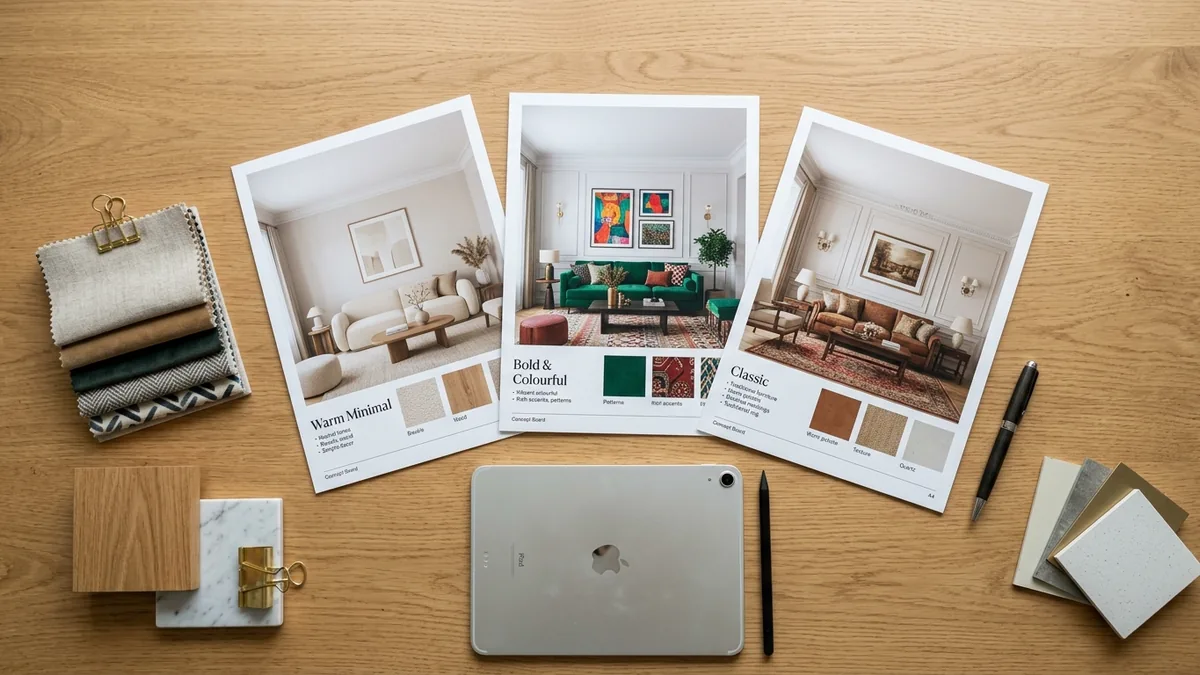
- A render, not a mood board. A mood board asks the client to imagine. A photoreal render shows them. That is a much shorter path to yes.

A render beats a mood board. Walk into the pitch with the finished space already on screen and the client stops imagining and starts reacting, which is a much shorter path to yes.
Show clients their actual room
Here is the single biggest upgrade available to a small studio, and the one most AI tools get wrong. A beautiful render of a generic room impresses for five seconds, then the client thinks: that is lovely, but it is not my room. The persuasive version shows the client their actual space transformed.
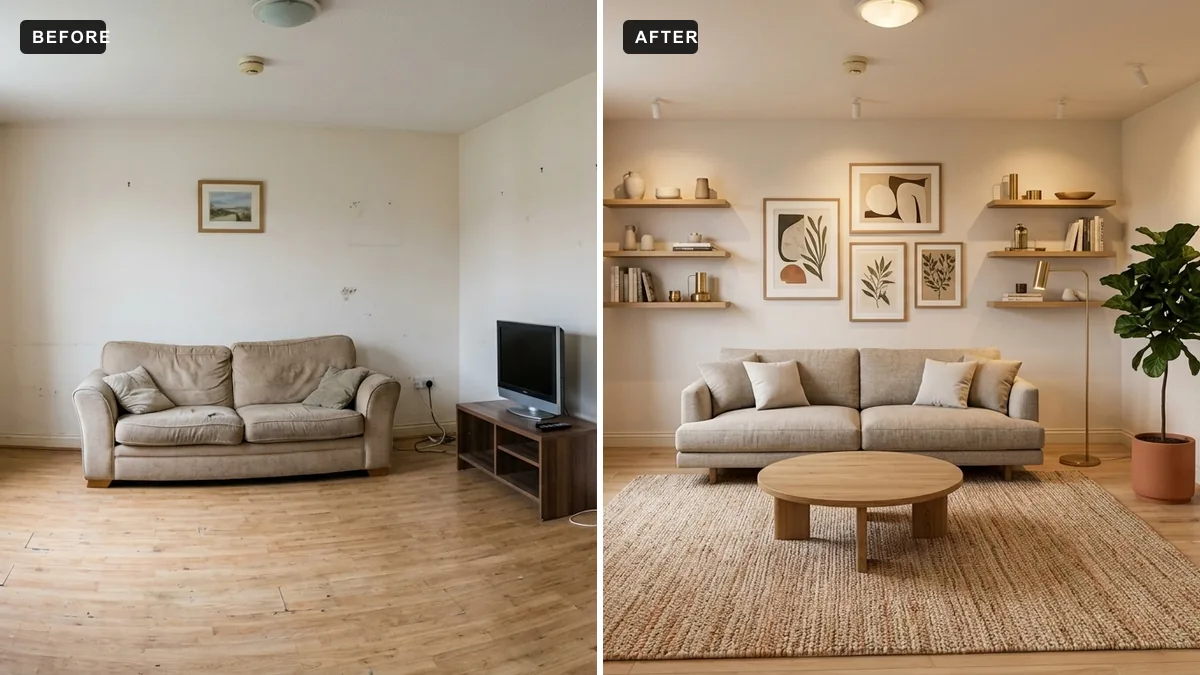
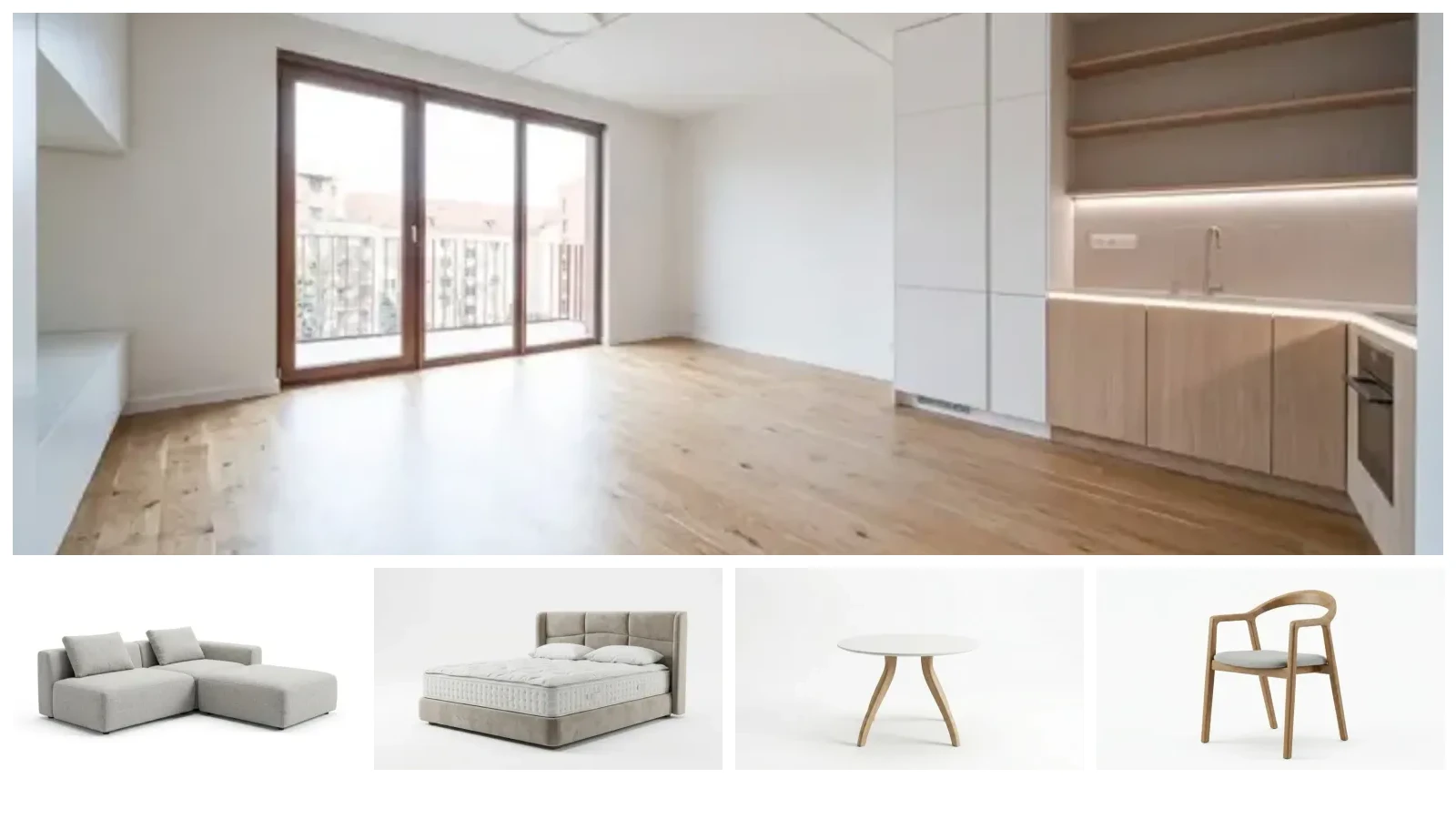
Same room, same walls, same window. MeltFlex keeps the client’s real space and restyles it from a single photo, so the pitch answers the only question they have.
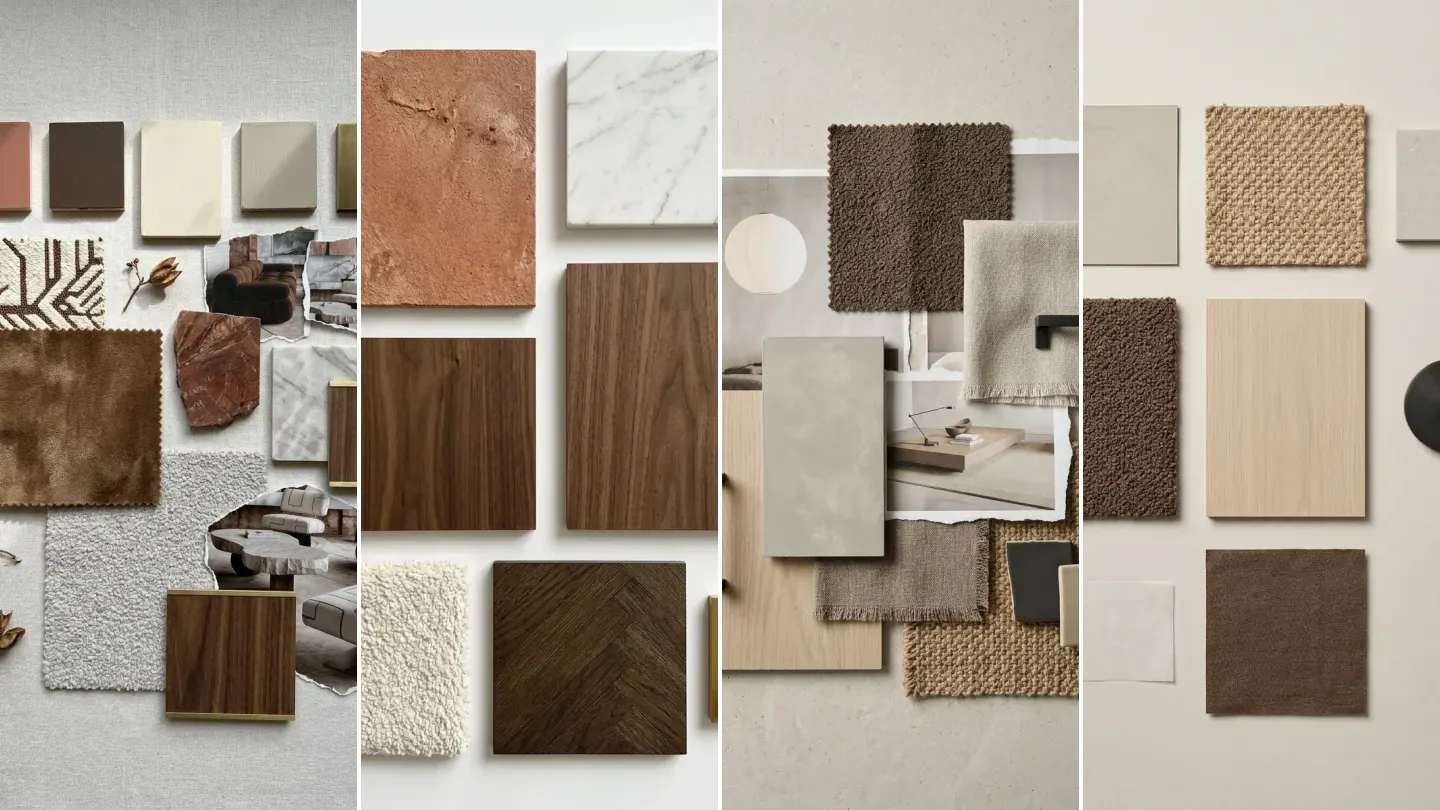
This is the gap MeltFlex AI is built to close. Upload one photo of the client’s real room and the AI generates a photorealistic render that keeps the real proportions, windows, light, and layout, then restyles the space the way you are proposing. It even keeps the furniture shoppable, so the render doubles as a sourcing list. For architecture, the same principle holds for the actual site and massing. Showing the real thing is what separates a pitch that feels speculative from one that feels like the project has already begun. The same logic applies to the deliverables behind the pitch: a material board with named suppliers and codes reads as a studio that has done this before, where a prettier mood board alone does not.
Automate the admin that drowns small studios
In a big firm, admin is someone’s job. In a small studio, admin is your evening. Architects lose about 35% of their working hours to non-design administrative tasks (AIA Firm Survey), and AI buys those hours back. Autodesk reports AI cutting render generation from 2 to 4 hours down to under 10 minutes for comparable quality.

The admin that eats a small studio’s evenings (proposals, scheduling, recaps, content) is exactly the work AI is best at clearing.
- Proposals and scopes. Draft a tailored proposal from a few bullet points, then edit for voice. A two-hour task becomes twenty minutes.
- Inbox and scheduling. Triage and draft replies, book consultations, and chase the documents you need to start.
- Client communication. Turn messy notes into a clean recap, draft a plain-English FAQ for a nervous client, and summarize what changed between two versions. A client who always knows what is happening trusts you, and trust converts one kitchen into a whole-house remodel.
- Content and specs. Generate post ideas and reel scripts in your voice to keep your feed alive between projects, and speed up FF&E lists and material schedules.
What a small studio’s AI stack costs
You do not need a research budget. A lean stack of four to six tools runs roughly 150 to 400 dollars a month and replaces tens of thousands of dollars a year in traditional software and outsourced visualization. Here is a sensible starting stack.
For a studio that pitches several jobs a month, the whole stack usually pays for itself on the first won project.
Where AI will not win you clients
A guide that only sells the upside is not worth trusting, so here is the honest take. AI is leverage, not a strategy, and it fails in predictable ways.
- It will not give you taste. AI multiplies the point of view you already have. Generic direction just produces generic faster.
- Sameness is a real risk. If everyone uses the same models and prompts, the work converges. Your style and your real-room inputs are what keep it distinctive.
- It will not build the relationship. Trust and reading a client in the room are still entirely human, and they are what close and keep clients.
- Unvetted output will burn you. A render with the wrong scale or a proposal with a hallucinated detail damages credibility. AI drafts, you approve.
Your 30-day plan
Do not overhaul your studio. Put AI on one bottleneck, prove it, then expand.
By the end of the month you will know which use cases earn their place. Keep the ones that win or keep clients, drop the rest, and add one new use case a month after that. The fastest way to feel the difference is to do it once: take a real room photo and turn it into a render with MeltFlex before your next pitch.
Frequently asked questions
How can a small studio compete with a big design firm?
Compete on speed and personal attention, the two things big firms are slow at. AI lets a small studio turn a brief into photorealistic concepts in hours, present three options for the price of one, and reply the same day. The client then chooses on design thinking and relationship, which is exactly where a small studio wins, while the output looks national-firm caliber.
Which design and architecture firms actually use AI?
Zaha Hadid Architects trained an AI model on its own visual archive and uses Midjourney and NVIDIA Omniverse to win competitions. Foster + Partners runs a dedicated Applied R+D group using machine learning. Ware Malcomb cut feasibility studies from three days to hours. Boutiques like Madbrick Studio in Dubai use AI as a daily assistant. The tools the giants pioneered now cost a small studio a monthly subscription.
How does AI help architects and designers win more clients?
AI compresses the unpaid work before a contract is signed. You can produce feasibility studies and concept renders fast enough to show real value during the pitch, not after. TestFit reports firms cutting feasibility from 20 to 30 hours to about an hour, which makes free concepts a viable business-development tool. Clients sign when they can already see the result, and AI gets them there sooner.
What is the best AI tool to show a client a design before it is built?
Use a tool that keeps the client’s actual room, not a stock scene. MeltFlex AI turns a single photo of the real space into a photorealistic render while keeping the real proportions, windows, and light, and it makes the furniture shoppable. That answers the only question a client has, which is what will my space look like, and it is far more persuasive in a pitch than a generic render.
How much does an AI stack cost for a small studio?
A lean stack of four to six tools runs roughly 150 to 400 dollars a month for a small studio, which replaces tens of thousands of dollars a year in traditional software and outsourced visualization. A single outsourced photorealistic render alone can cost 200 to 1,000 dollars, so most studios see the stack pay for itself on the first won project.
Will AI replace small design studios?
No. AI replaces slow, repetitive production work, not judgment, taste, or the client relationship. Studios that compete only on drafting and rendering speed are exposed, because that is what AI commoditizes. Studios that use AI to clear busywork and spend more time on creative direction and trust pull ahead. AI is leverage for a small team, not a replacement for it.