For about ten years, the smartest thing you could supposedly do to a ceiling was nothing. Paint it flat white, hang a light, move on. The ceiling was plumbing for your eyeballs: necessary, invisible, ignored.
Our articles are still written by humans!
Get human written articles in your Google feed.
That is over. In 2026 the ceiling became the single most talked-about surface in interior design, and the numbers are genuinely startling. According to a Yelp report cited by Forbes, searches for ceiling painters jumped 16,884% and ceiling staining 3,449% heading into summer 2026. Designers stopped calling it the ceiling and started calling it “the fifth wall.”
Here is the catch with any ceiling project: it is the one surface you cannot easily test. You can tape a paint swatch to a wall and live with it for a week. Taping it above your head, craning your neck, imagining the whole thing in deep green, is how people end up with a ceiling they regret and a very awkward conversation with a painter. So every room in this guide is real, and the transformation photos were generated in MeltFlex AI. Read it, find the look you like, then upload a photo of your own room and see your fifth wall finished before anyone opens a paint can.
 FreeUpload photo · freeRedesign my room for freeUpload a photo and let MeltFlex design your space. Your first AI design is free, no card needed.

What Is a Statement Ceiling (and Why “the Fifth Wall”)?
A statement ceiling is simply a ceiling treated as a deliberate design feature rather than a default white lid. That treatment can be paint, wallpaper, wood, plaster, a coffered or tray detail, a high-gloss lacquer, or a hand-painted mural. The common thread is intent. The ceiling is doing something on purpose.
The nickname “the fifth wall” captures why this matters. A room has four walls and a ceiling, which means the ceiling is roughly a fifth of the room’s total surface area. Leaving it blank white is leaving a fifth of the room undesigned. As one trade summary put it, your eyes naturally drift upward throughout the day, so a plain ceiling is a large, constantly visible missed opportunity.
This is the same instinct driving the rest of 2026’s biggest looks. It is the logic behind color drenching, behind dark and moody interiors, and behind the Neo Deco revival. People are done with rooms that look like rental listings. The ceiling was simply the last surface left to claim.
Why the Fifth Wall Is 2026’s Biggest Trend
Trends usually arrive as vibes. This one arrived as data. The Yelp figures Forbes reported, ceiling painters up 16,884% and ceiling staining up 3,449%, are not a gentle uptick. They are a behavior change. People are not just admiring statement ceilings on Pinterest, they are hiring someone to do it.
Three forces are stacking up at once:
- Color-maxxing. The Forbes summer 2026 report frames painted ceilings as part of a wider “color-maxxing” movement, where saturated shades are carried across every surface of a room instead of staying on a single accent wall.
- Midiminimalism. The new middle path between minimalism and maximalism shows up, in the same report, as “whimsical wallpapers, warm wood paneling, painted ceilings and statement-making doors.” The ceiling is one of its signature moves.
- The fifth wall as the last frontier. Walls have been color drenched, floors have been zoned with rugs, and trim has been painted. The ceiling is the one big surface most homes never touched, so it is where the newness is.
There is also a practical reason it is exploding now rather than five years ago. A ceiling used to be the riskiest paint decision in the house because it was the hardest to picture and the most annoying to redo. AI previews removed that risk, which is a big part of why people are finally pulling the trigger. More on that at the end.
12 Statement Ceiling Ideas for 2026
These run from a one-afternoon paint job to a contractor project. They are roughly ordered from easiest and cheapest to most involved.
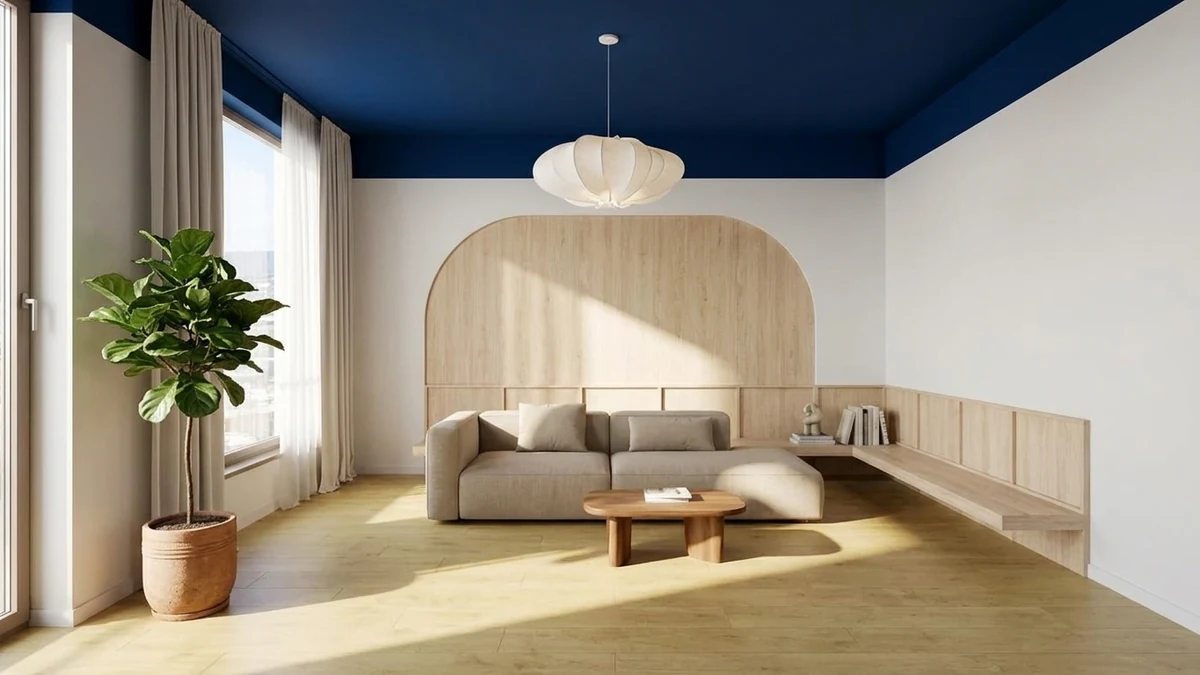
The simplest fifth wall move: a single bold ceiling color over otherwise neutral walls
- A single bold paint color. The lowest-effort, highest-impact move. A deep blue, forest green, or clay ceiling over neutral walls instantly makes a room look considered. One weekend, one can of paint.
- Color drenching the ceiling. Paint the ceiling the exact same color as the walls (and ideally the trim). The boundary disappears, the room feels enveloping, and counterintuitively, larger. The strongest single technique in this whole list.
- A subtle tonal lift. Not ready for drama? Paint the ceiling two or three shades deeper than the walls in the same family. It reads as expensive and intentional without announcing itself.
- Ceiling wallpaper. One of 2026’s defining looks. A botanical, geometric, or hand-painted-effect paper turns a plain bedroom or dining room into an immersive space. Peel-and-stick makes it doable yourself.
- A painted or papered mural. Clouds, a night sky, or a soft fresco overhead. It is theatrical, and in the right room (a nursery, a powder room, a dining room) it is unforgettable.
- High-gloss lacquer. A lacquered ceiling in a saturated color bounces light around the room like a mirror and adds instant glamour. It shows every flaw, so it rewards a smooth ceiling and a careful hand.
- Wood planks or cladding. Warm timber overhead brings texture and a cabin-or-coastal calm. Works in everything from a kitchen to a bedroom and pairs naturally with biophilic design.
- Exposed or faux beams. Beams add architecture and rhythm. Real ones are structural, but lightweight faux beams are a believable weekend upgrade that makes a flat ceiling feel built, not poured.
- Coffered or tray detailing. Recessed panels or a stepped tray add depth and a tailored, architectural feel. The classic way to make a builder-grade room read custom.
- Limewash or plaster texture. A soft, cloudy mineral finish overhead adds the kind of organic depth flat paint cannot. It is the ceiling version of the warm, tactile walls trending all year.
- Stained wood. The 3,449% search spike in its own right. A rich stain on a wood ceiling deepens the grain and gives a room instant warmth and age.
- Tin or pressed metal tiles. Vintage-leaning and full of pattern, pressed tin (or modern lookalikes) suits kitchens, bars, and any room flirting with the Art Deco revival.
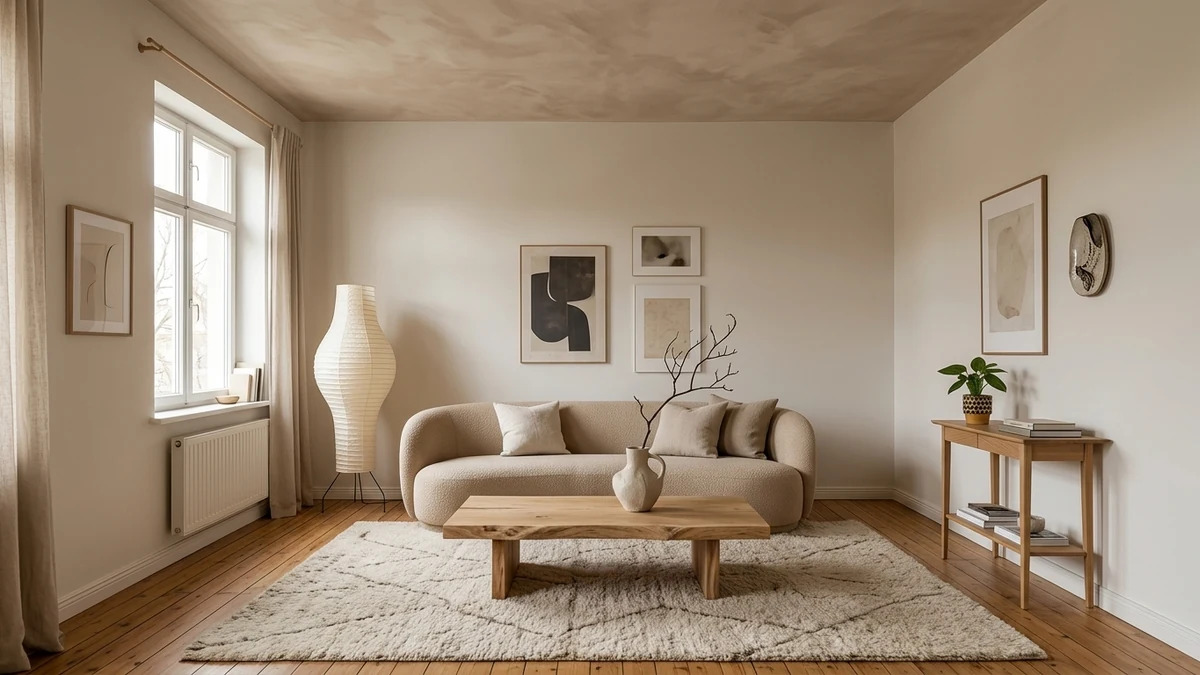
Texture, not just color: a soft limewash plaster ceiling adds organic depth flat paint cannot
See How One Ceiling Changes the Whole Room
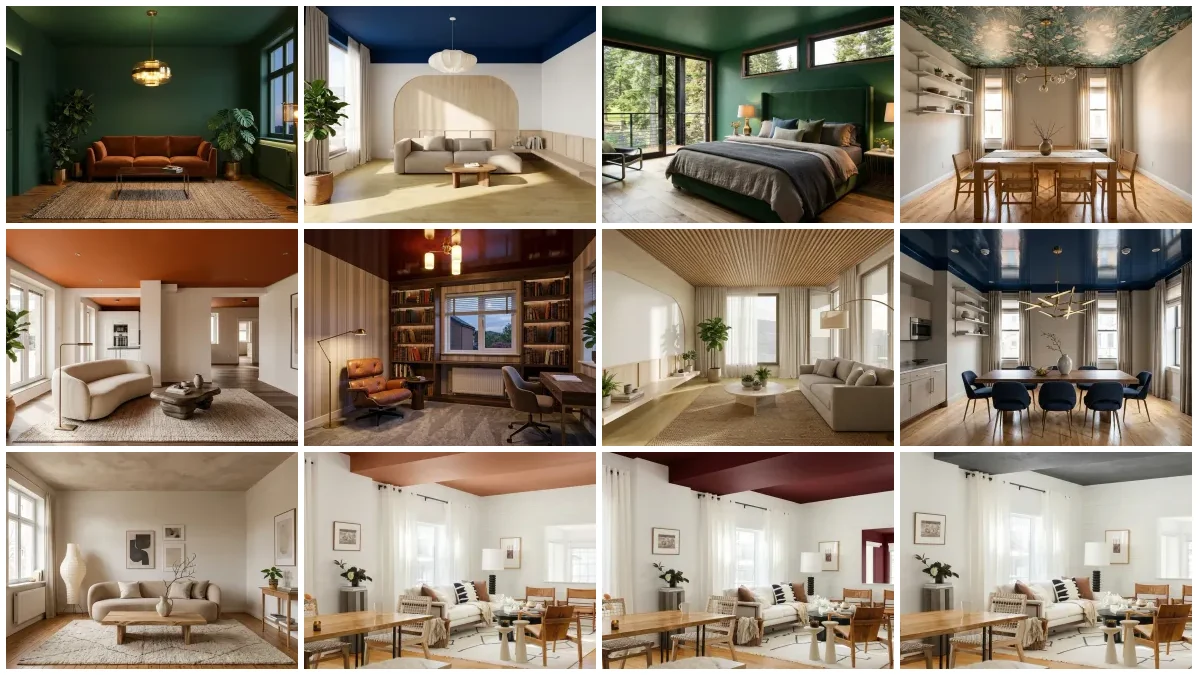
The fastest way to understand the fifth wall is to keep a room completely fixed and change only the ceiling. Same sofa, same chairs, same rug, same light. Below is one bright, modern living-dining room treated four different ways. Notice how much the mood shifts when the only thing moving is the surface overhead.
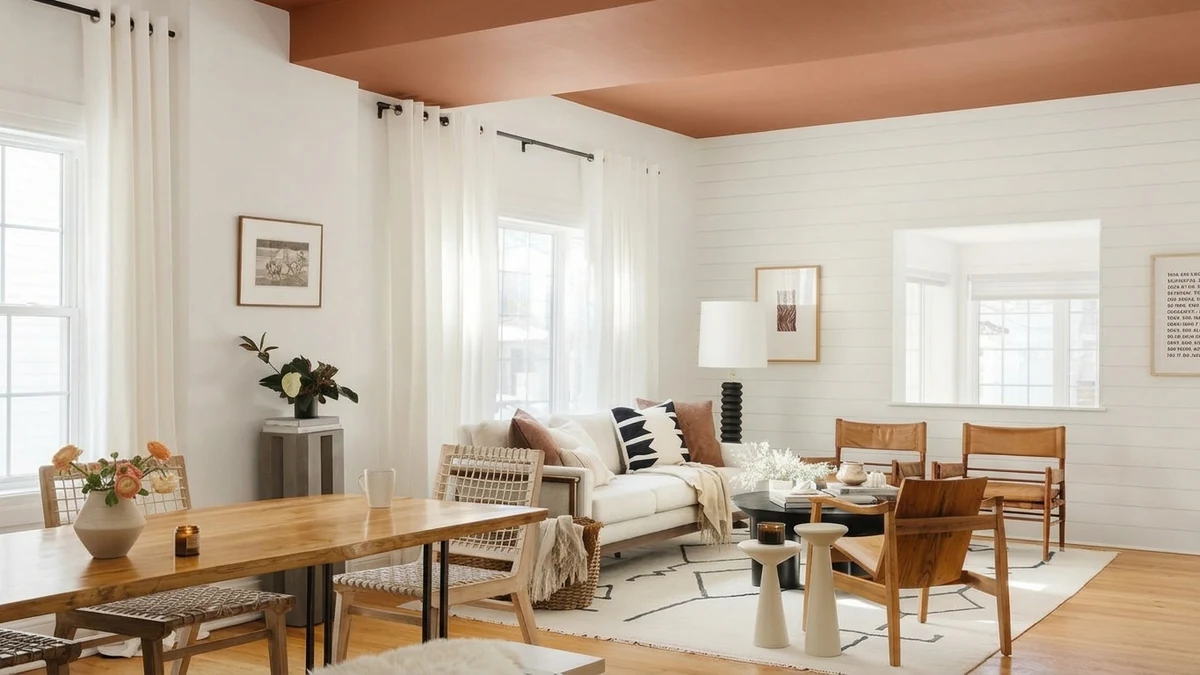
1. Warm terracotta. Soft and sunny. The room stays airy but suddenly feels considered and grounded.
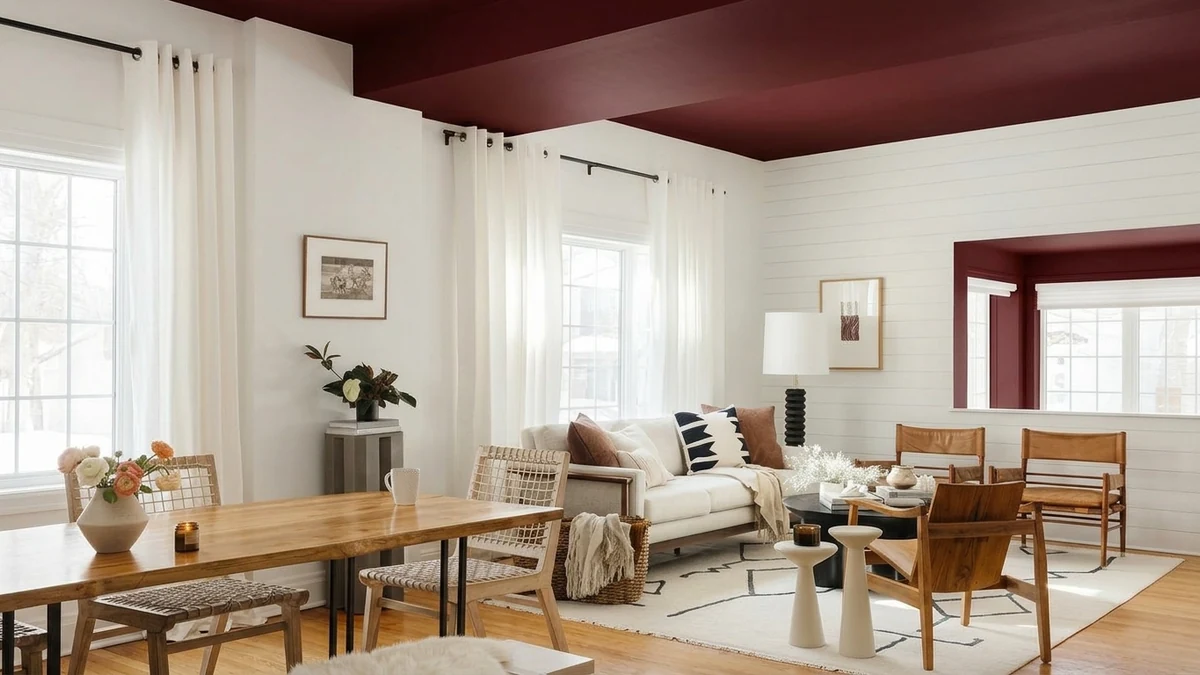
2. Oxblood red. The same room, now dramatic and enveloping. Proof that bold reads as elegant when the rest stays calm.
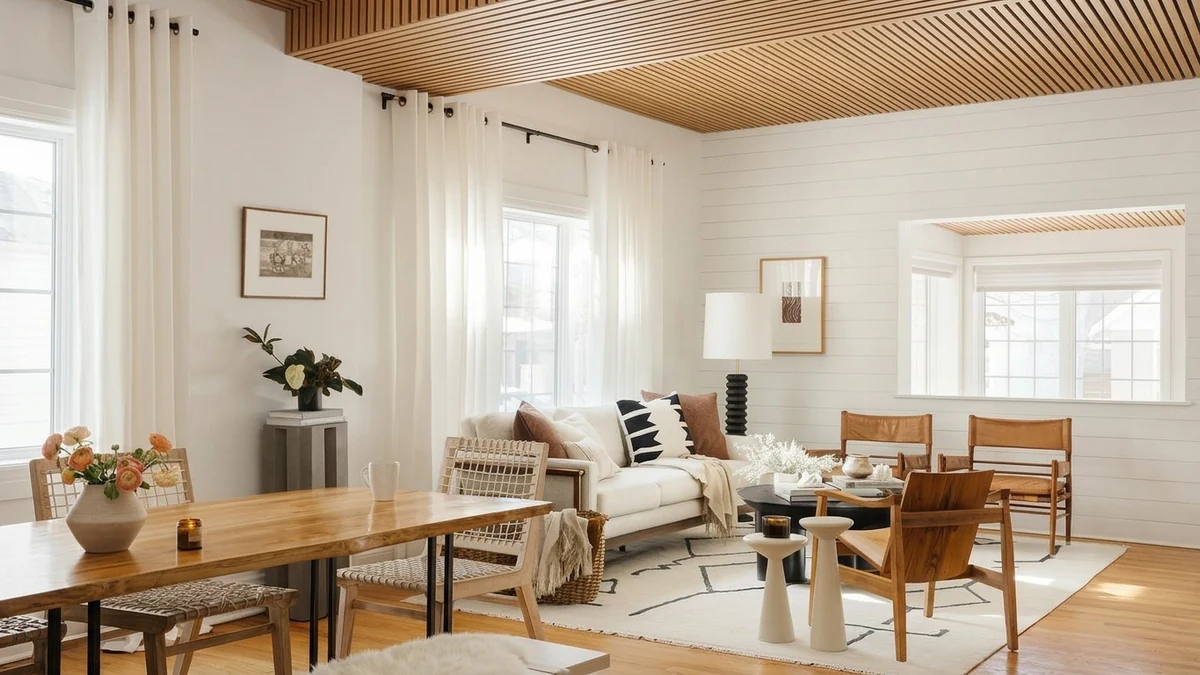
3. Oak slats. Texture instead of color. The room turns warm, architectural, and quietly high-end.
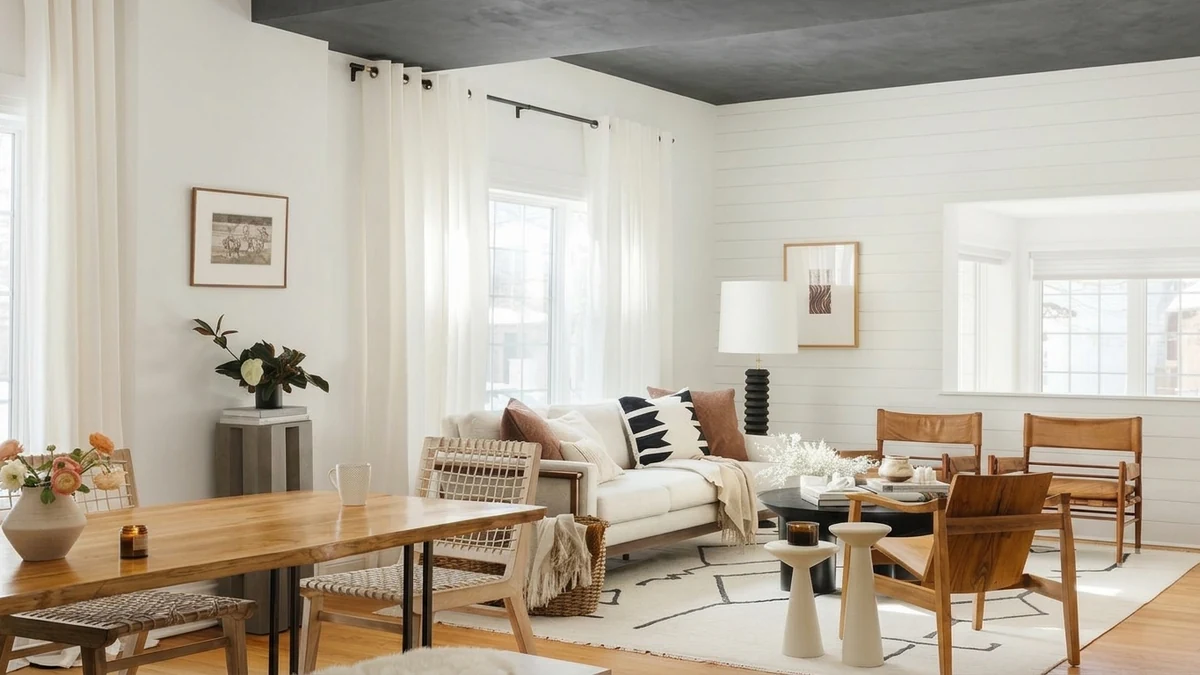
4. Charcoal plaster. Barely-there drama. A moody lid that grounds the bright room without darkening it.
This is exactly what MeltFlex does in a couple of minutes on your own room. Upload a photo, keep everything you already own, and swap the ceiling through every option above before you pick up a brush.
The Best Ceiling Colors for 2026
The colors winning on ceilings this year are the same warm, grounded shades winning on walls. The throughline is warmth. Cool, flat white is exactly what this trend is reacting against.
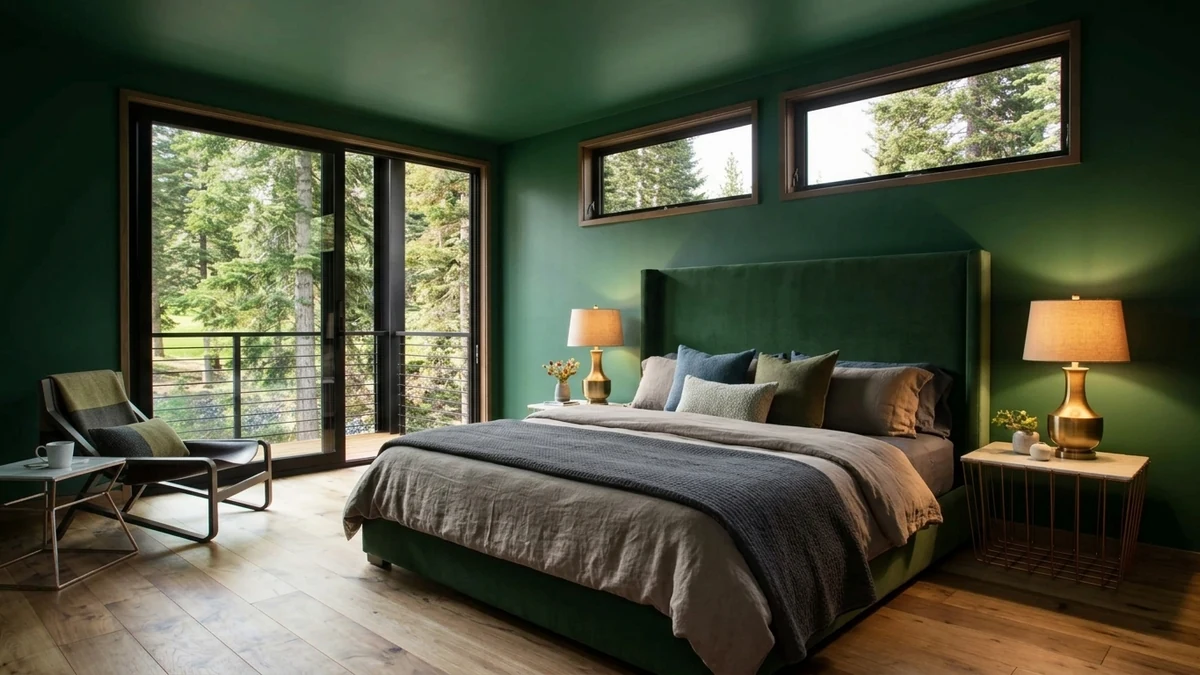
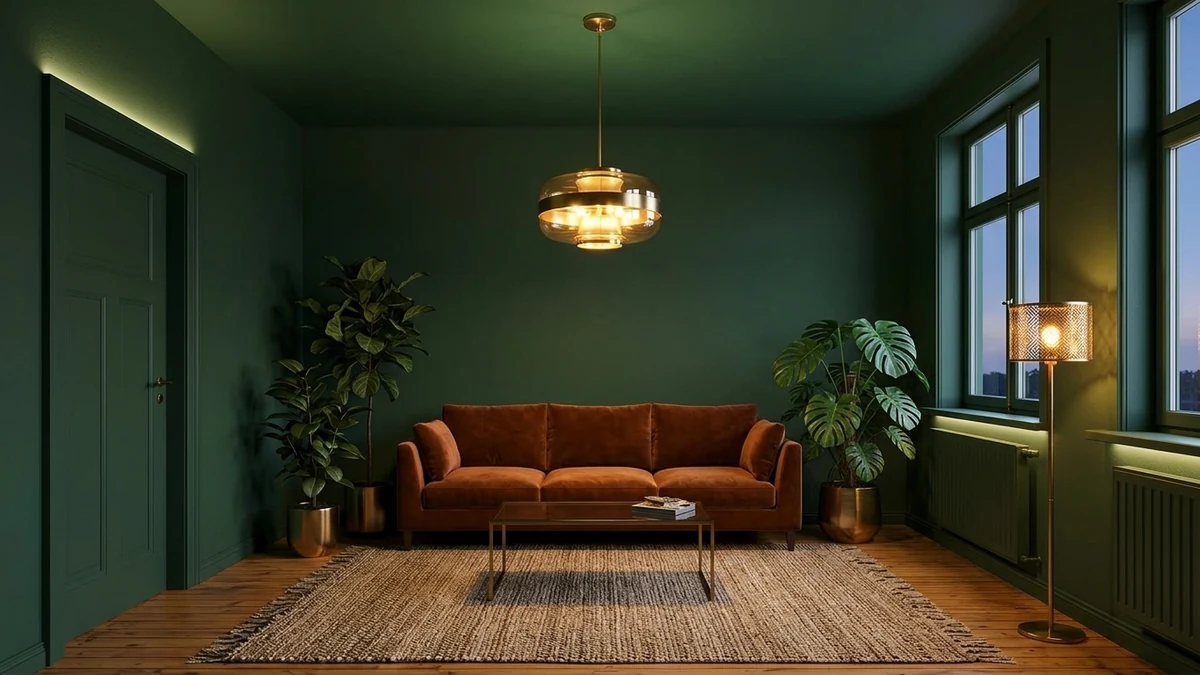
Color drenching in forest green: walls and ceiling in one shade dissolve the room’s edges
- Deep forest green. The most-reached-for dark color in 2026. Natural, rich, and forgiving, it pairs with brass and wood and works overhead in almost any room.
- Inky navy and slate blue. Elegant and cocooning. Navy on a bedroom ceiling is the single most beginner-friendly drama you can add.
- Chocolate brown. The breakout neutral of 2026, named the top color in the 1stDibs designer survey. On a ceiling it reads warm and library-like rather than dark.
- Warm mushroom and clay. Soft, earthy, and barely-there. The choice when you want the ceiling to feel intentional but quiet.
- Terracotta and ochre. Sun-warmed tones that glow under warm light and flatter skin and wood alike.
- Plaster pink and blush. Overhead, a soft pink throws a flattering warm cast across the whole room. Subtle, not childish.
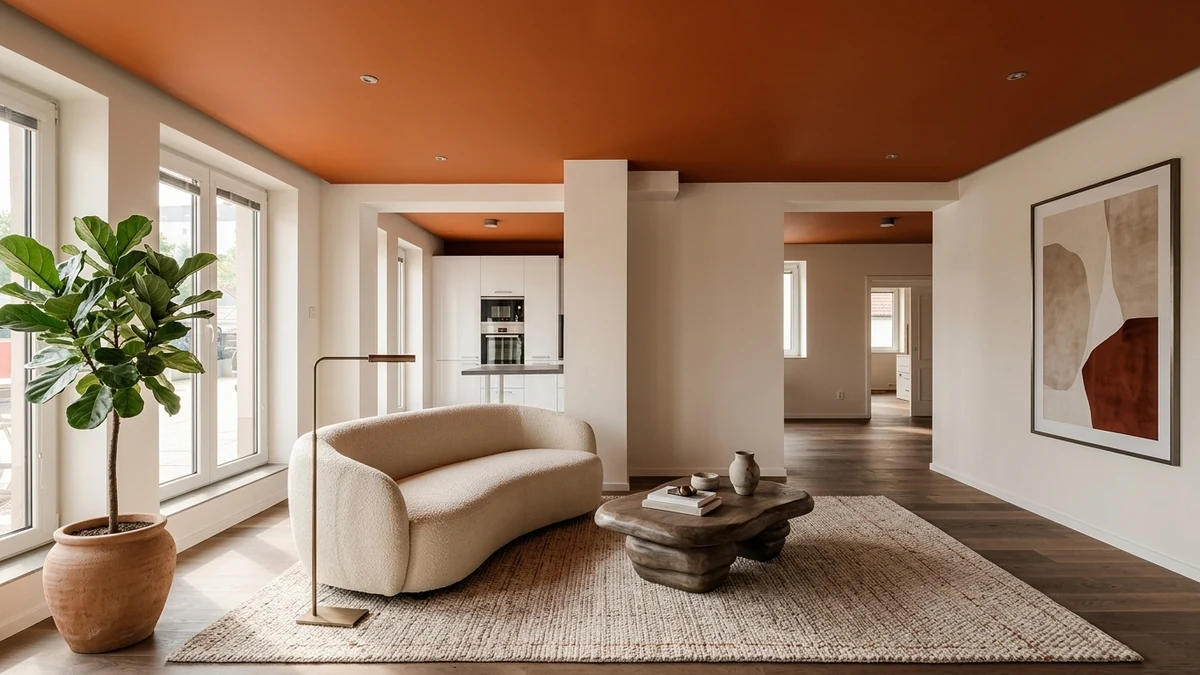
Burnt orange overhead: a warm, saturated ceiling that still reads modern against off-white walls
If choosing a shade against your own light feels like guesswork, that is normal, because ceiling color shifts even more than wall color depending on the light bouncing up into it. Our AI wall color tools guide and the 2026 color of the year breakdown both help you narrow it down, and the wall paint visualizer lets you preview the shortlisted shades on a photo of your actual room, walls and ceiling included.
Statement Ceilings, Room by Room
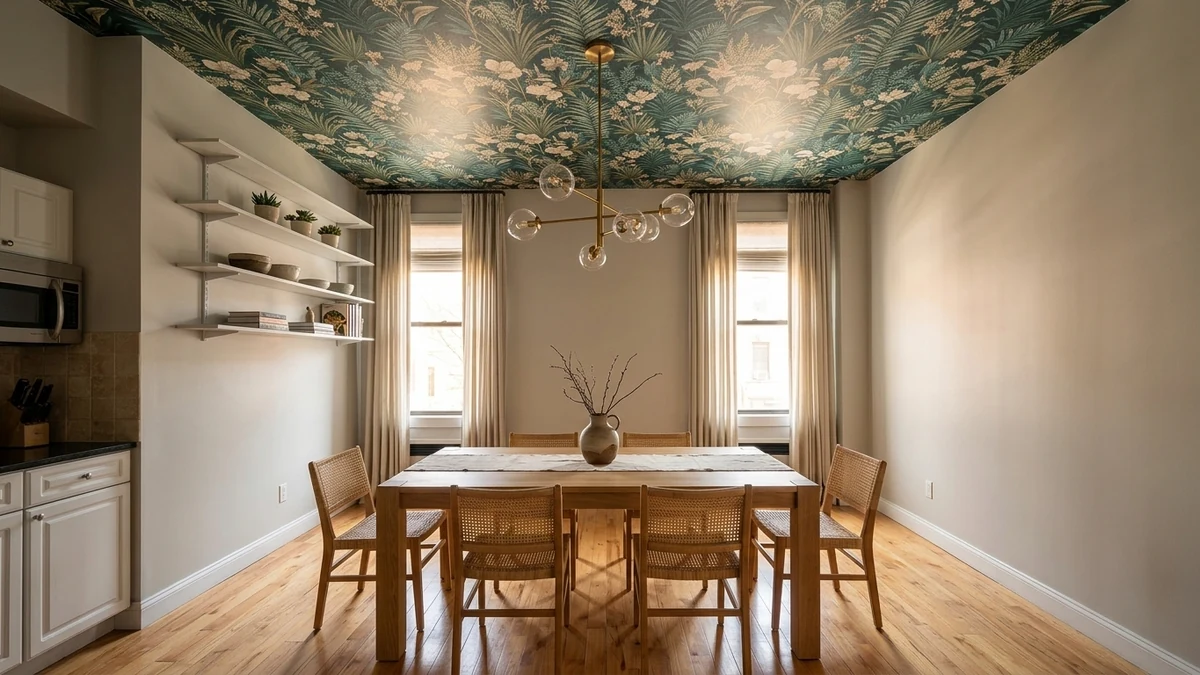
A wallpapered ceiling turns a plain dining room into an immersive, finished space
Living Room
The living room is where color drenching shines, because you use the room in the evening when deep ceiling colors come alive under warm light. A forest green or navy ceiling carried down onto the walls makes the whole space feel like a deliberate retreat. If you want texture instead, wood planks or faux beams add architecture to an otherwise boxy room.
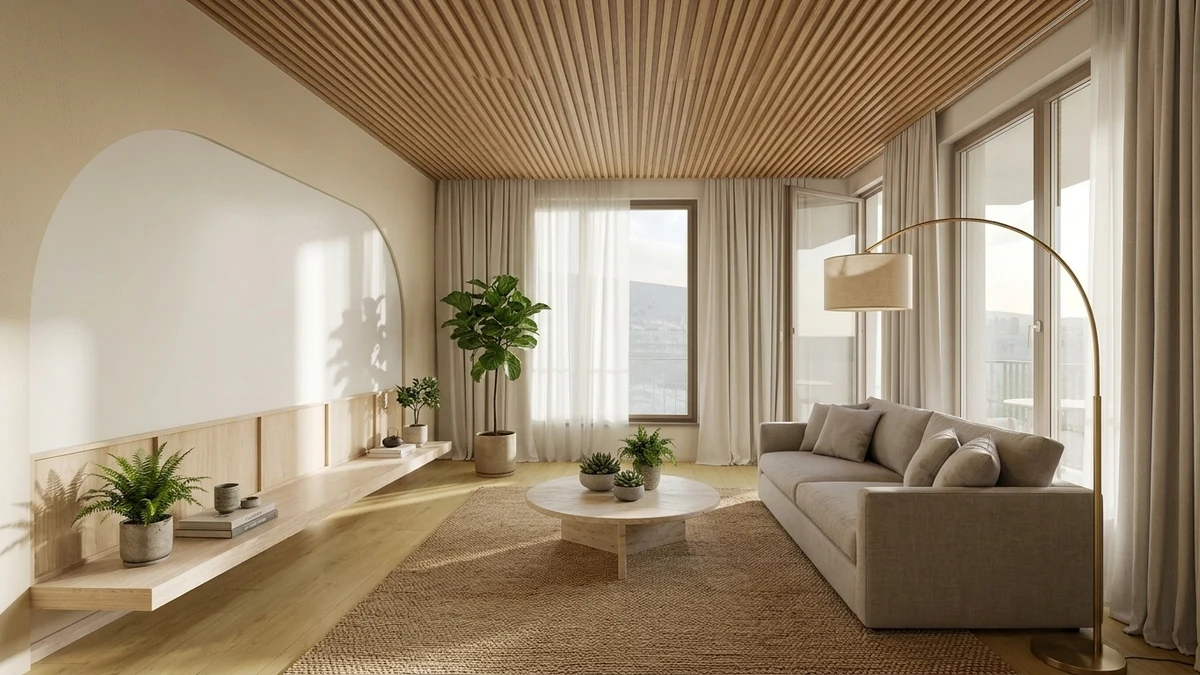
An oak slat ceiling adds warmth and architecture to a calm, modern living room
Bedroom
Bedrooms are the easiest win. You spend real time lying down looking straight up, so the ceiling is genuinely in view. A wallpapered ceiling above the bed, or a color-drenched navy or green, creates the cocoon feeling that helps a bedroom read as restful. For more on how color overhead affects sleep and mood, see our room by room design guides.
Dining Room
Dining rooms are made for drama because you do not live in them all day, so you can go bolder. A high-gloss lacquered ceiling, a moody mural, or a richly patterned wallpaper turns dinner into an occasion. A statement pendant against a dark ceiling is one of the most photographed looks of the year.
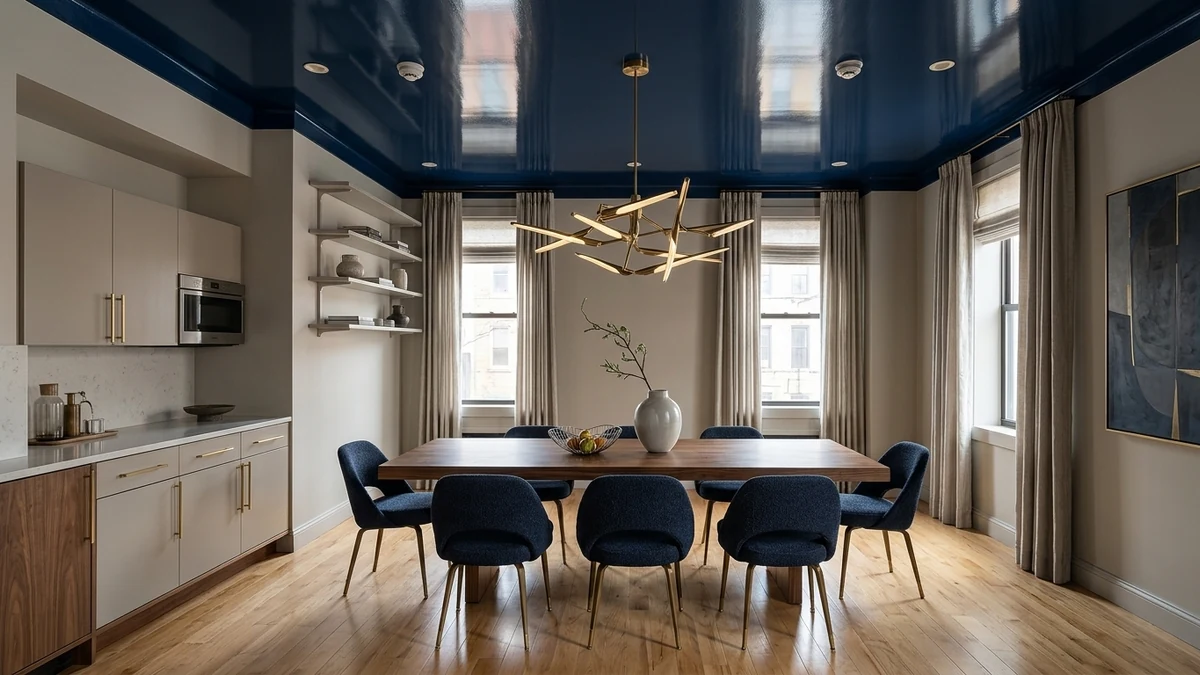
A high-gloss navy ceiling mirrors the light and turns a dining room into the most photographed space in the house
Kitchen
Kitchens carry wood cladding, painted color, and pressed-tin tiles beautifully, and the ceiling is often the only large surface not already taken up by cabinets, tile, or appliances. That makes it the best place to add personality without cluttering the room.
Home Office and Study
A study is the perfect room to go bold overhead, because it is a space you want to feel focused and a little cocooning. A deep, glossy lacquered ceiling above dark wood shelving reads instantly like a private library, and the gloss bounces lamp light around so the room never feels heavy. This is the kind of room where a dramatic ceiling pays off every working day.
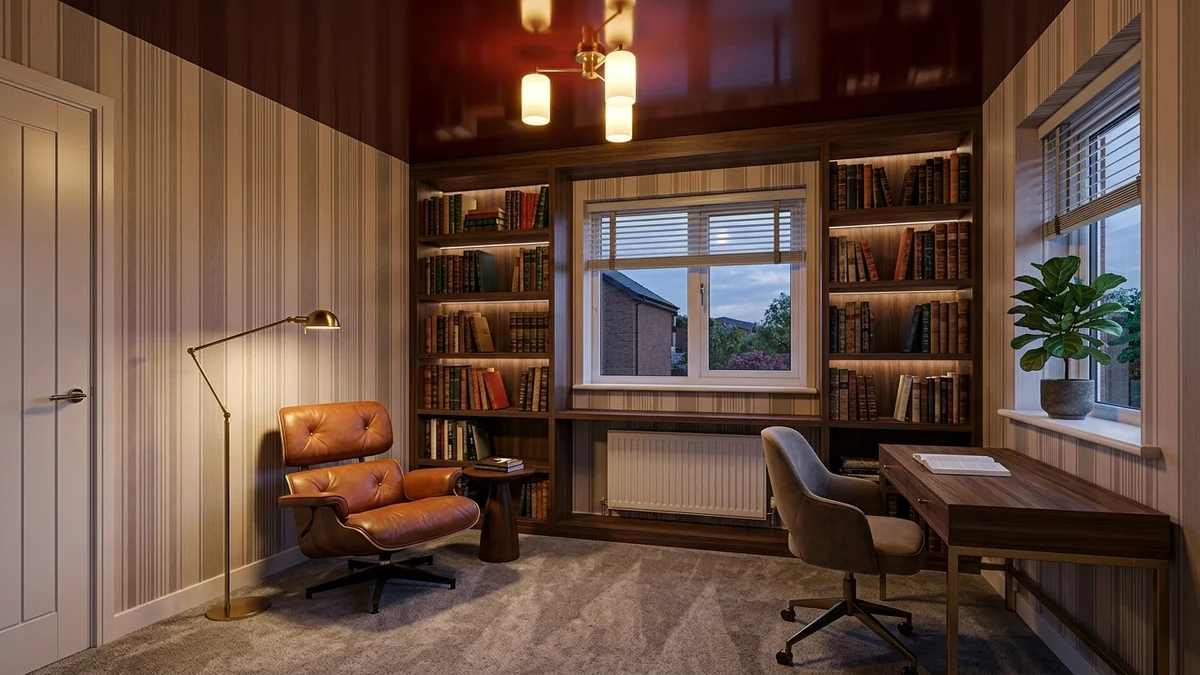
A high-gloss red lacquer ceiling turns a plain home office into a private library
Bathroom and Powder Room
The powder room is the perfect low-stakes place to experiment. It is small, guests notice it, and a single roll of bold ceiling wallpaper or a lacquered color transforms it for very little money. This is the room designers always recommend for a first statement ceiling.
Nursery and Kids’ Rooms
A painted sky, soft clouds, or a gentle pattern overhead gives a child something lovely to look up at, and it is one of the few rooms where a literal mural feels completely right. For a room that evolves as the child grows, see our AI bedroom design prompts.
Do Statement Ceilings Make a Room Feel Smaller?
This is the fear that stops most people, and the honest answer is: only if you do it the wrong way. The two scenarios behave very differently.
A dark ceiling against bright white walls creates a hard line where the two meet, and your eye reads that line as the top of the room. In a low-ceilinged space, that can make the ceiling feel like it is pressing down.
Color drenching, by contrast, makes rooms feel bigger. When the walls and ceiling are the same color, there is no line for your eye to catch, so the boundaries of the room blur and the space reads as larger and more continuous. This is exactly why designers recommend the all-over approach for small rooms rather than warning against it.
Practical rules for low ceilings: color drench rather than contrast, take the wall color all the way up and over, keep trim the same color too, and use vertical elements like tall curtains to draw the eye upward. A glossy or limewash finish that reflects a little light also helps the ceiling feel like it is floating rather than closing in.
What a Statement Ceiling Costs
The range is huge, which is good news, because there is a version of this trend at almost any budget. These are rough US ballparks for a single average-sized room.
The takeaway: a transformative statement ceiling can cost less than a single piece of furniture. Paint is the cheapest design upgrade in the house, and the ceiling is the most overlooked place to spend it.
Mistakes That Ruin a Statement Ceiling
1. Cool white trim around a warm ceiling. If the ceiling is warm and rich but the crown molding stays stark builder-white, the contrast fights the whole effect. Either drench the trim in the ceiling color or keep it in the same warm family.
2. Forgetting the lighting. A dark ceiling eats light. If you go deep overhead, add layered, warm light sources (2700K to 3000K) so the room stays glowing rather than gloomy. A single cool overhead bulb will make a beautiful ceiling look grim.
3. A bold ceiling in a room with nothing else going on. A statement ceiling needs a little support below it, a rug, some texture, warm metals, so it reads as part of a designed room rather than a random painted lid.
4. High-gloss on a flawed ceiling. Lacquer and gloss reflect light, which means they reflect every bump, crack, and patch. Save the shiny finishes for smooth ceilings.
5. Guessing the color overhead. Ceiling color shifts dramatically with the light bouncing up into it, so a shade you loved on a wall can look completely different on the ceiling. This is the single most common, and most expensive, mistake, and it is the easiest to avoid.
Preview Your Statement Ceiling With AI
Everything about a ceiling makes it the hardest surface to commit to. You cannot easily swatch it, you cannot live with a test patch, and redoing it means a painter, a ladder, and a ceiling full of regret. That uncertainty is the real reason most people leave their ceiling white, not lack of taste.
This is exactly the problem MeltFlex solves. Upload a photo of your actual room and describe the ceiling you are considering, for example “color-drenched forest green walls and ceiling” or “botanical wallpaper on the ceiling with white walls.” The AI keeps your real room, your windows, your light, and your furniture, and shows you a photorealistic version. You can compare a painted ceiling, a wallpapered one, and a wood-clad one side by side in a couple of minutes, on your own room, before you spend a euro.
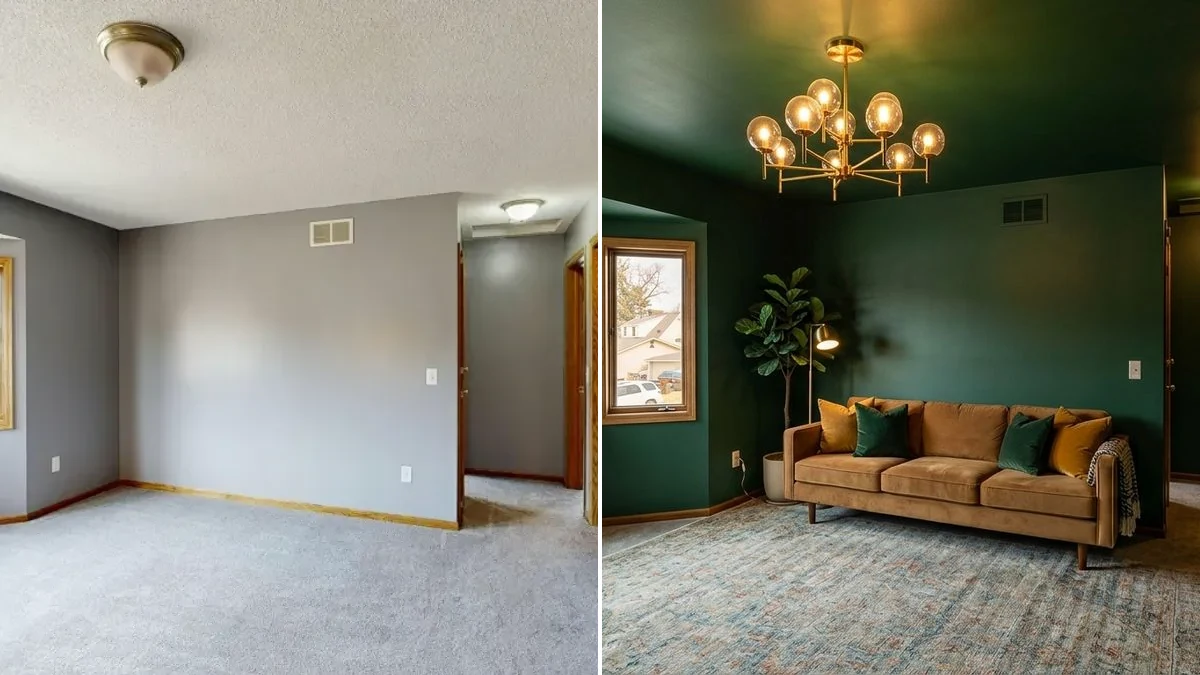
Before and after: a plain white ceiling previewed as a color-drenched statement ceiling in MeltFlex
The fifth wall is the rare trend that is both genuinely transformative and genuinely affordable. The only thing standing between most rooms and a ceiling worth looking up at is the fear of getting it wrong. Take that away, and there is no reason to leave a fifth of your room blank.
Pick the look you like from this guide, then upload a photo of your room and see your fifth wall finished. If you want to keep going, our guides to accent wall ideas, 2026 wallpaper trends, and the broader 2026 interior design trends are good next stops.
Frequently asked questions
What is a statement ceiling?
A statement ceiling is a ceiling treated as a deliberate design feature instead of being left plain white. That can mean a bold paint color, wallpaper, wood paneling or beams, a coffered or tray detail, a high-gloss lacquer, a mural, or limewash texture. Designers now call the ceiling “the fifth wall” because it is a full surface of the room that most people ignore, and treating it on purpose makes a space feel finished.
What does “the fifth wall” mean?
The fifth wall is a designer nickname for the ceiling. A room has four walls plus the ceiling, and the idea is that the ceiling is just as much a design surface as any wall, so it deserves color, texture, or pattern rather than default white. The phrase took off in 2026 as ceilings became one of the year’s defining trends.
Are statement ceilings still in style in 2026?
They are arguably the trend of 2026. A Yelp report cited by Forbes found searches for ceiling painters up 16,884% and ceiling staining up 3,449% heading into summer 2026. Publications from Forbes to Livingetc are calling the fifth wall one of the year’s biggest shifts, driven by the broader move toward color, texture, and personality after a decade of flat white minimalism.
Do statement ceilings make a room look smaller?
Usually the opposite, if you do it right. Painting the ceiling the same color as the walls (color drenching) dissolves the line where wall meets ceiling, which makes the room feel larger and more enveloping. A bold ceiling against bright white walls can lower the perceived height, so in low rooms either color drench, or keep the ceiling treatment light and let it draw the eye upward.
What color should I paint my ceiling?
The trending 2026 ceiling colors are deep forest green, inky navy and slate blue, warm mushroom and clay, chocolate brown, and soft terracotta, all of which have warm undertones that flatter a room. For a subtle lift, paint the ceiling two or three shades deeper than your walls. For drama, match it to the wall color exactly. Avoid cool, flat bright white, which is the thing this trend is reacting against.
How much does a statement ceiling cost?
It ranges widely. Painting a ceiling yourself can cost as little as 40 to 120 dollars for a typical room, and hiring a painter usually runs a few hundred. Peel-and-stick ceiling wallpaper for a small room is often under 200 dollars in materials, while professionally installed designer wallpaper, wood paneling, coffered detailing, or limewash can run from several hundred into the low thousands depending on the room and finish.
How can I see a statement ceiling in my room before committing?
Upload a photo of your actual room to MeltFlex AI and describe the ceiling you want, for example “color-drenched forest green ceiling and walls” or “botanical wallpaper on the ceiling.” The AI keeps your real room, windows, and furniture and shows a photorealistic version, so you can compare paint, wallpaper, and wood looks on your own ceiling before you commit to anything. Done with the fifth wall? The surface underfoot is next: see the 2026 flooring trends guide.
Sources and further reading
- Forbes, “New Report Reveals 6 Top Summer 2026 Interior Design Trends” (May 2026), reporting Yelp search data on ceiling painters (+16,884%) and ceiling staining (+3,449%), plus the color-maxxing and midiminimalism context.
- 1stDibs 2026 Designer Trends Report, identifying chocolate brown as a leading 2026 color, as covered across design press.
- Design press on the fifth wall and ceiling wallpaper trend, including Livingetc and Homes & Gardens ceiling coverage for 2026. Treat individual search-spike statistics as directional rather than precise.