AI Home Design for House Flippers: Visualize Every Renovation Before You Invest
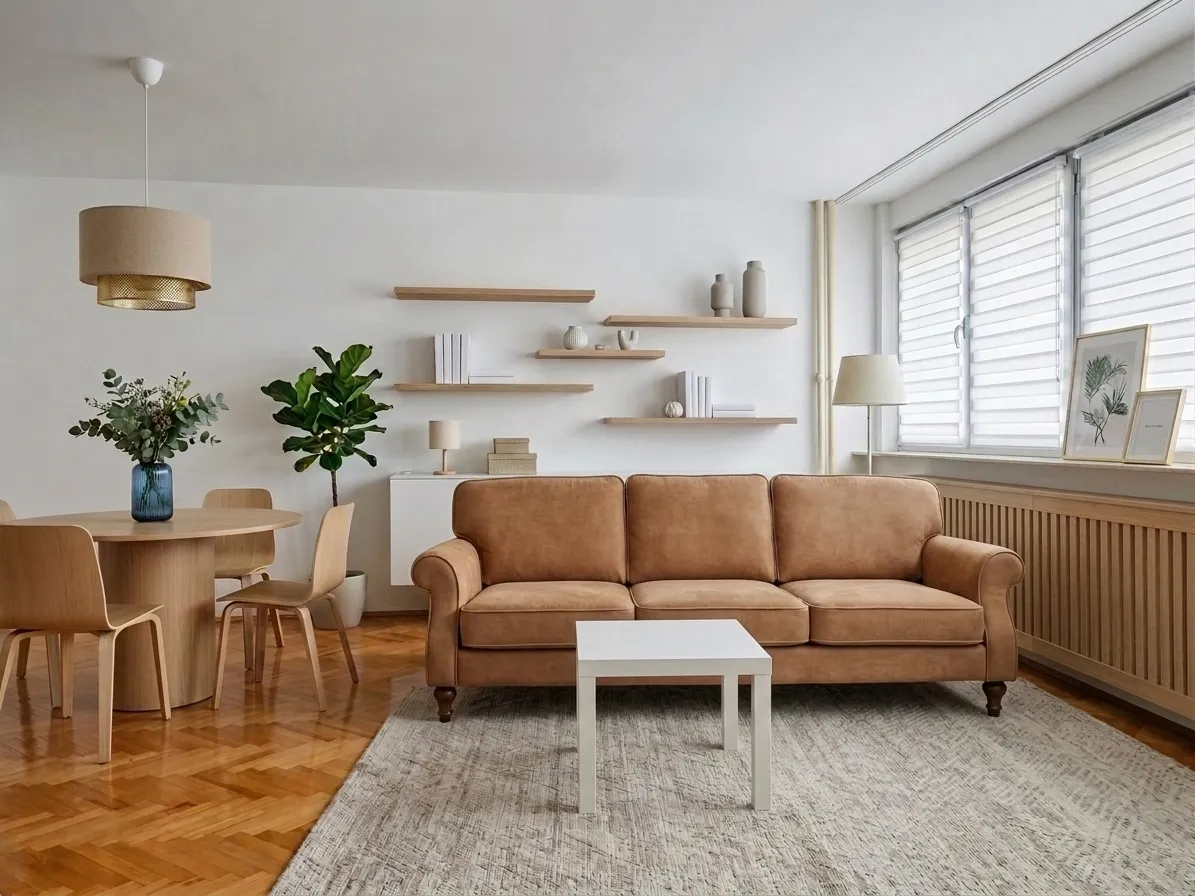
House flipping is a design business disguised as a construction business. Every flipper knows how to swing a hammer. The ones who make money know how to pick the right grey for the kitchen walls, the right flooring for the price point, and the right furniture to stage the listing photos.
The problem is that design decisions on a flip are usually made fast, under budget pressure, and without seeing the result until it is too late. You pick a paint color from a 2-inch swatch. You choose flooring from a sample tile. You hope the kitchen cabinets work with the countertop you ordered. When it does not come together, you eat the cost or sell at a lower margin.
AI interior design changes this completely. Upload a photo of any room in your flip property, and in 20 seconds you see a photorealistic render of the finished space, with real furniture, real materials, and real pricing. Test 5 different design directions before you spend a dollar on renovation.
Why Design Mistakes Are the Silent Killer of Flip Profits
Most house flip post-mortems focus on construction overruns. But experienced flippers know that design mistakes are more expensive than construction delays because they are harder to fix and directly impact sale price.
Here are the most common design mistakes that cost flippers money:
- Wrong paint color: A kitchen painted in a trendy dark color that photographs poorly and makes the room feel smaller. Repainting costs $800 to $2,000 per room plus the time delay.
- Flooring mismatch: Choosing a cool-toned grey laminate that clashes with warm-toned cabinets. Replacing flooring after installation costs 3x the original material cost.
- Over-renovating for the neighborhood: Installing a $15,000 kitchen in a $250,000 house. The ROI disappears because buyers in that price range do not pay a premium for high-end finishes.
- Under-staging: Listing an empty flip property because staging was not in the budget. Staged homes sell for 5 to 10% more, which on a $300,000 property is $15,000 to $30,000 in missed profit.
- Design inconsistency: Each room has a different style because decisions were made at different times by different people. The house feels disjointed and buyers notice.
Every one of these mistakes is preventable if you can see the finished result before you start work. That is exactly what AI interior design gives you.
How House Flippers Use AI Interior Design
AI interior design for house flipping is not the same as using it for your own home. Flippers need speed, cost awareness, and designs that appeal to the broadest possible buyer pool. Here is how to use AI at each stage of a flip.
Stage 1: Before You Buy, Visualize the Potential
Smart flippers evaluate properties before purchasing. You walk through a rundown house and need to decide: is there enough margin here after renovation costs?
Take photos of every room during your walkthrough. Upload them to MeltFlex and generate AI redesigns showing the space renovated and furnished. In 30 minutes, you have a visual renovation plan for the entire property, before you make an offer.
This serves two purposes:
- Better cost estimation: When you can see the finished design, you can estimate material costs more accurately. A vague idea of "updating the kitchen" becomes a specific plan with specific materials at specific price points.
- Investor presentations: If you work with investors or partners, AI-generated before-and-after images are more convincing than spreadsheets. Show them the current state and the projected result in the same image.
Stage 2: During Renovation, Test Every Decision
This is where AI pays for itself. Instead of committing to a design direction based on small samples and guesswork, you test options visually.
Paint colors: Upload a photo of the room and generate 3 to 4 versions with different wall colors. See how Sherwin-Williams Agreeable Grey compares to Benjamin Moore Revere Pewter in your actual space, not on a 2-inch swatch from the hardware store.
Flooring options: See the room with light oak hardwood versus dark walnut versus grey tile. The AI renders the material realistically with the existing or planned wall colors, so you can spot clashes before ordering.
Kitchen and bathroom finishes: Test white cabinets versus grey, quartz versus granite countertops, brushed nickel versus matte black hardware. These decisions are permanent once installed. Getting them right the first time saves thousands.
Design consistency: Generate AI designs for every room in the same style. This ensures the house feels cohesive from the moment a buyer walks through the front door. A consistent design language is one of the biggest differentiators between amateur and professional flips.
Stage 3: Before Listing, Stage Without Furniture
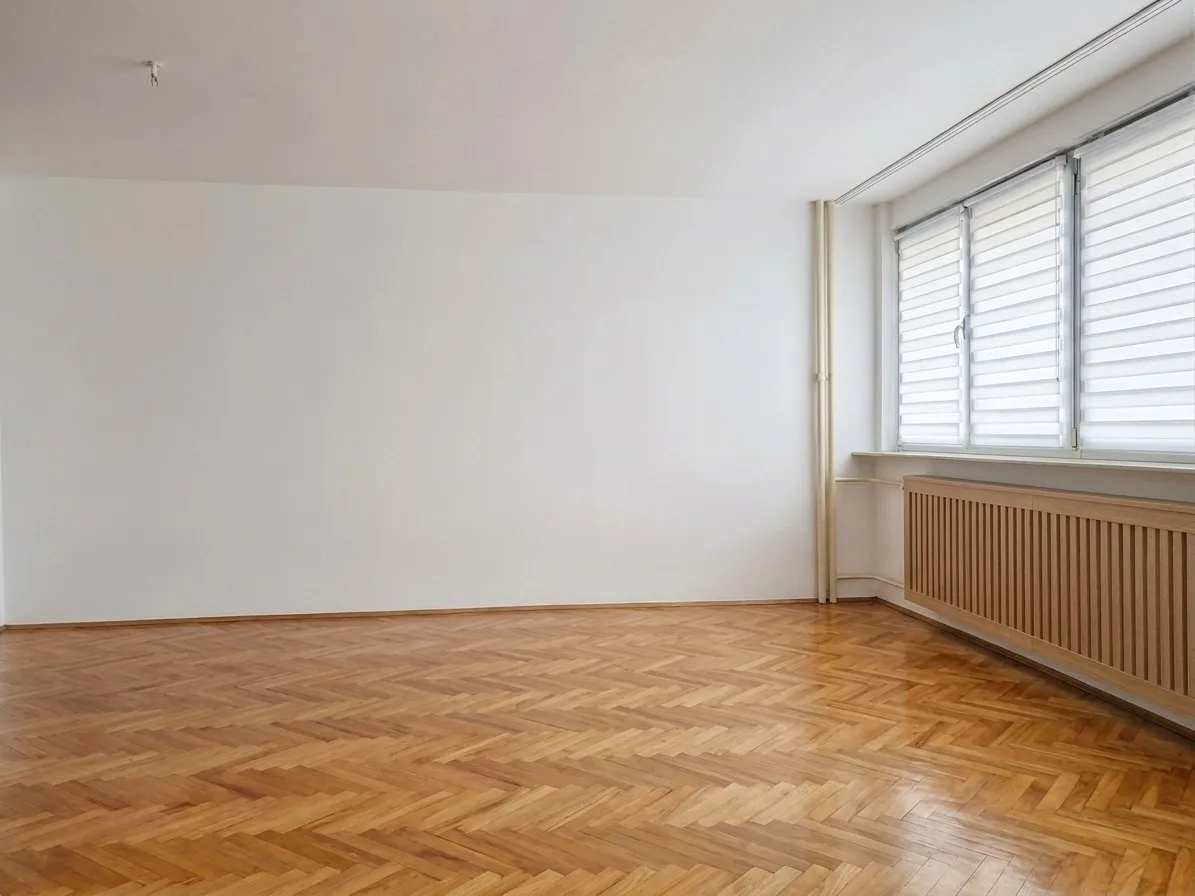
Most flippers sell empty properties because physical staging costs $2,000 to $6,000 per property and ties up furniture for weeks. The result is listing photos of bare rooms that fail to connect with buyers emotionally.
AI virtual staging eliminates this problem entirely. Upload photos of your finished (empty) rooms and generate staged versions in seconds. The cost is under $15 for an entire property versus thousands for physical staging.
For flippers who sell multiple properties per year, this is a massive competitive advantage. Your listings look professionally staged on every platform while your empty rooms still show clean and move-in ready to in-person visitors.
Remember to follow virtual staging disclosure rules, label all AI-staged photos and include original photos in the listing.
The 5 Design Styles That Sell Flips Fastest
Not every design style sells equally well. Flippers need designs that appeal to the broadest buyer pool for their property's price point and location. Based on 2025-2026 market data, these are the 5 styles that consistently sell flips faster.
1. Modern Transitional
The safest bet for most flips. Clean lines, neutral palette (warm whites, soft greys, natural wood tones), and a mix of modern and traditional elements. This style works because it appeals to almost every demographic. Buyers can project their own taste onto it.
Best for: Suburban homes, family-oriented neighborhoods, $200K to $500K price range.
2. Warm Minimalism
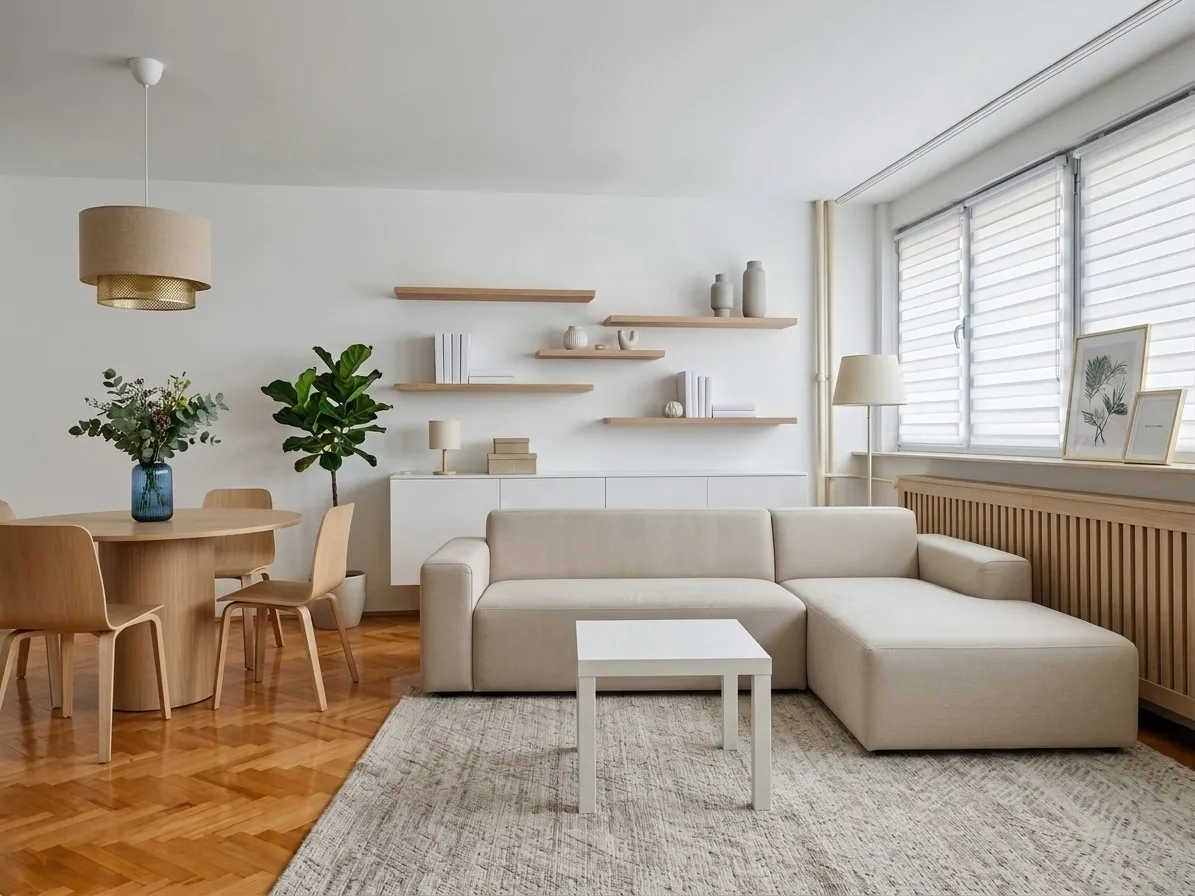
The 2026 evolution of modern design. White walls with warm wood accents, natural materials (oak, linen, stone), and minimal but intentional furniture. Photographs exceptionally well because clean spaces with warm tones perform best on real estate platforms.
Best for: Urban condos, starter homes, younger buyer demographics.
3. Modern Farmhouse (Refined)
Still sells well in 2026 but only when done with restraint. Skip the shiplap on every wall and barn doors in every doorway. Instead, use natural wood beams, a farmhouse sink, and linen textiles. The key is making it feel authentic rather than like a Pinterest board from 2019.
Best for: Rural and suburban properties, markets where farmhouse has historically performed well.
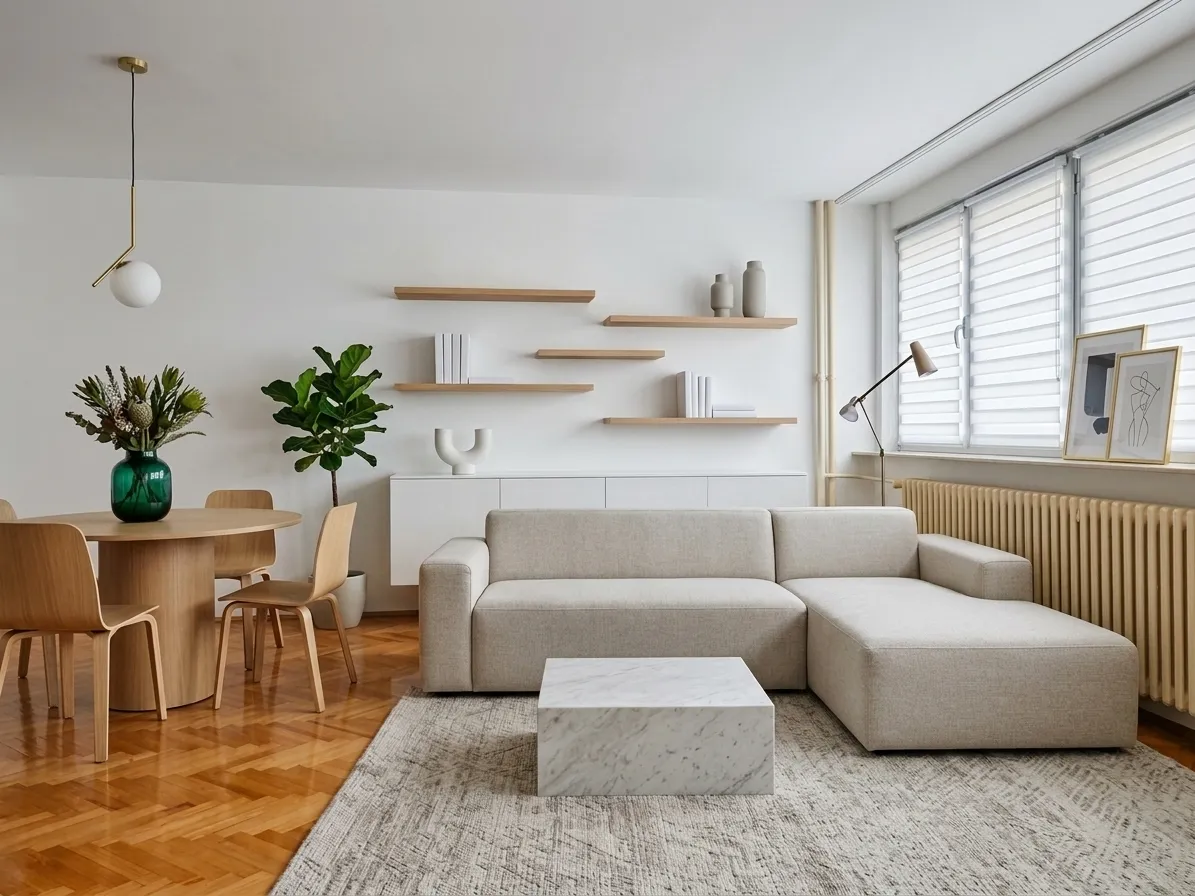
4. Coastal Contemporary
For properties near water or in warm climates. White and blue palette, light natural wood, open and airy feeling. Avoid the cliché seashell decor. Modern coastal design is about light, texture, and the feeling of space, not themed decoration.
Best for: Coastal and warm-climate markets, vacation-area properties, beach towns.
5. Luxury Modern
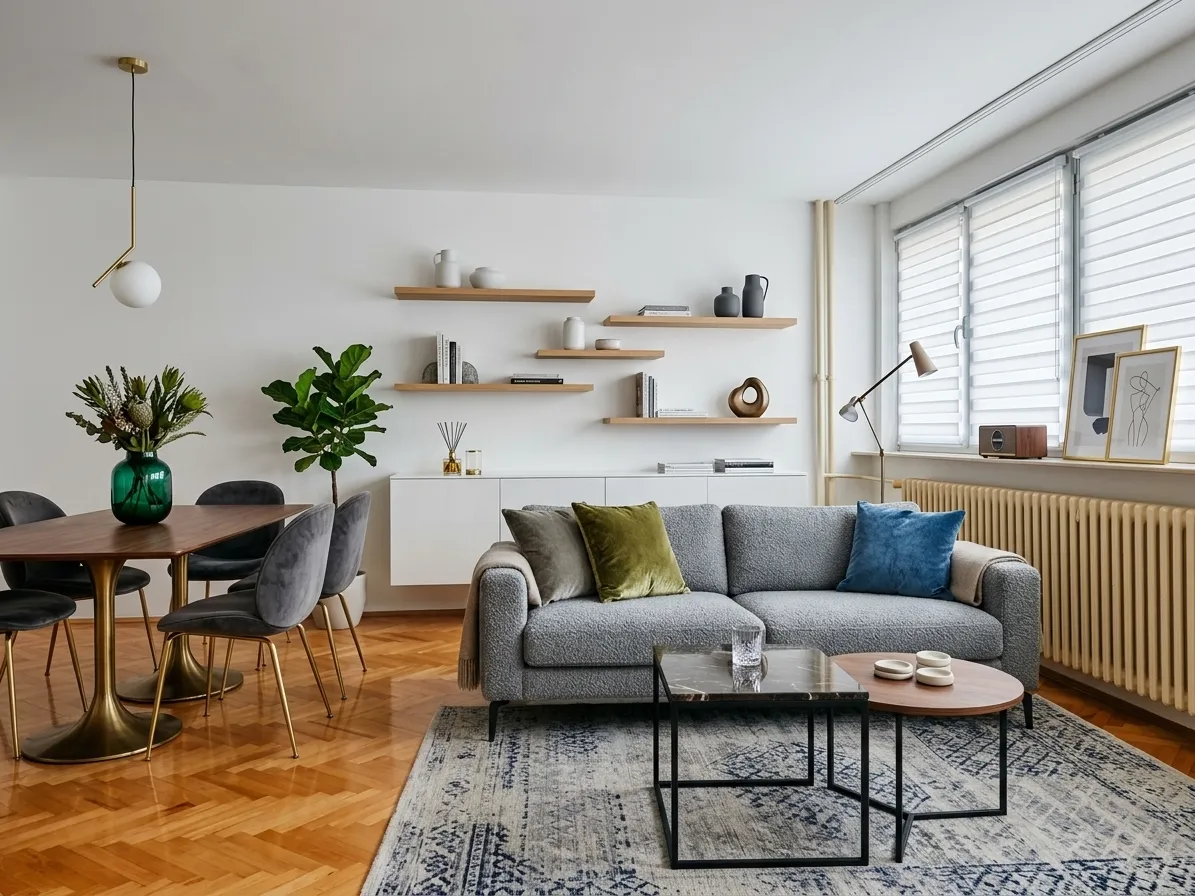
For high-end flips ($500K+). Dark accent walls, statement lighting, marble or quartz surfaces, and furniture with architectural presence. This style signals premium and justifies a higher asking price. But only use it when the property's price point supports it.
Best for: Upscale neighborhoods, $500K+ properties, urban luxury market.
Use AI to test all 5 styles on your flip property before committing. Upload one room photo and generate each style. The one that looks most natural in the space, not the one you personally prefer, is the one that will sell.
Flip Design by Room: Where to Spend and Where to Save
Not every room in a flip deserves the same budget. Here is where design investment moves the needle and where it does not.
Kitchen (Spend)
The kitchen sells the house. Buyers decide within 10 seconds of entering the kitchen whether they are interested. Focus your design budget here: updated cabinets (paint existing ones if the boxes are solid), new countertops, modern hardware, and proper lighting. Use AI to test cabinet-countertop-hardware combinations before ordering.
Primary Bathroom (Spend)
The second highest-ROI room for flips. New vanity, updated tile, modern fixtures. A bathroom renovation can return 60 to 70% of its cost at resale, but only if the design is current and cohesive. AI helps you avoid the common mistake of mixing trends from different eras.
Living Room (Moderate)
Fresh paint and new flooring are usually enough. The real value comes from staging, either physical or AI virtual staging. A well-staged living room in listing photos can increase showing requests by 40%.
Bedrooms (Save)
Paint, clean flooring, and staging. Bedrooms rarely need major renovation unless there are structural issues. Spend on the primary bedroom if budget allows, but secondary bedrooms are paint-and-stage only.
Exterior (Spend on First Impression Only)
Front door, landscaping, and exterior paint are the first things a buyer sees. The cost is relatively low and the impact on curb appeal is immediate. AI can help you visualize exterior changes too, test front door colors, landscaping options, and outdoor furniture for the listing photos.
AI Design Workflow for a Typical Flip
Here is the practical workflow that flippers who use AI design follow for each property:
- Day 1, Property walkthrough: Photograph every room. Take wide-angle shots from corners showing full walls, floors, and windows.
- Day 1, AI design session: Upload all room photos to MeltFlex. Generate 2 to 3 design styles per room. Pick the style direction that works best for the target buyer. Total time: 1 to 2 hours for a full property.
- Day 2, Cost estimation: Use the AI designs to create a specific material list. The designs show actual furniture and finishes, making it easy to price out the renovation accurately.
- During renovation: Revisit the AI designs when making finish decisions. Test specific paint colors and materials before committing. Share designs with contractors so everyone is aligned on the vision.
- Pre-listing: Photograph the finished empty rooms. Generate AI virtual staging for listing photos. Include both empty and staged versions in the listing with proper disclosure.
Total AI design cost for a full flip: under $20. The potential savings from avoiding a single wrong paint color: $800 to $2,000. The potential revenue increase from properly staged listing photos: $15,000 to $30,000.
Common Mistakes Flippers Make With Design (And How AI Prevents Them)
Designing for Yourself Instead of the Buyer
You love industrial design. Your buyer wants warm and inviting. AI lets you generate buyer-appropriate designs without your personal bias. Test what sells, not what you would live in.
Choosing Finishes in Isolation
Picking a countertop at the stone yard, cabinet color at the paint store, and flooring at the home center. They all look great individually and terrible together. AI shows you the complete room with all finishes together in a single image.
Skipping Staging Because of Cost
Physical staging is expensive. AI staging costs almost nothing. There is no longer a reason to list an empty flip. Staged listings get more views, more showings, and higher offers. For flippers moving multiple properties, AI staging should be standard on every listing.
Inconsistent Style Across Rooms
The kitchen is modern, the bathroom is farmhouse, and the living room is transitional. AI lets you design every room in the same style before any work begins. The house tells one story from the front door to the back yard.
Frequently Asked Questions
Can AI help me design a house flip?
Yes. Upload a photo of any room in your flip property to MeltFlex and the AI generates a photorealistic redesign in 20 seconds. Test paint colors, flooring, furniture styles, and full design directions before spending money on renovation.
How do house flippers use AI interior design?
Flippers use AI to visualize renovations before starting, test multiple design options, create investor presentations with before-and-after renders, plan furniture staging for listing photos, and avoid costly design mistakes that reduce profit margins.
What is the best AI tool for house flipping design?
MeltFlex is built for this use case. It generates photorealistic room redesigns from photos, uses real furniture with pricing, and lets you test unlimited styles. 1 free design, no credit card, results in 20 seconds.
How much does AI renovation visualization cost?
MeltFlex offers 1 free design. Paid plans start at 29 euros per month. Most flippers use 10 to 20 designs per property, a small fraction of a single monthly plan. Compared to a single wrong paint color ($800+ to fix), the ROI is immediate.
Can AI help me choose paint colors for a flip?
Yes. Upload a room photo and generate versions with different wall colors. See how each option looks in your actual space with the existing or planned flooring and trim. This is dramatically more accurate than choosing from paint swatches.
Does AI interior design work for properties that need major renovation?
AI works best once basic structure is visible, walls, windows, and some flooring. For gutted properties, the AI can generate concept designs, but the most useful results come when you are making finish and furnishing decisions on a space with existing structure.
Start Designing Your Next Flip
Every house flip is a bet on your design judgment. AI does not replace that judgment, it lets you test it before the money is committed. See the finished kitchen before you order the countertops. See the staged listing before you photograph the empty rooms. See the complete renovation before you swing the first hammer.
Upload a photo of any room to MeltFlex and see what your next flip could look like. 1 free design, 20 seconds per result, real furniture with real pricing.
For more design inspiration, check our AI room makeover before and after gallery, our virtual staging cost comparison, or browse the full creations gallery.

