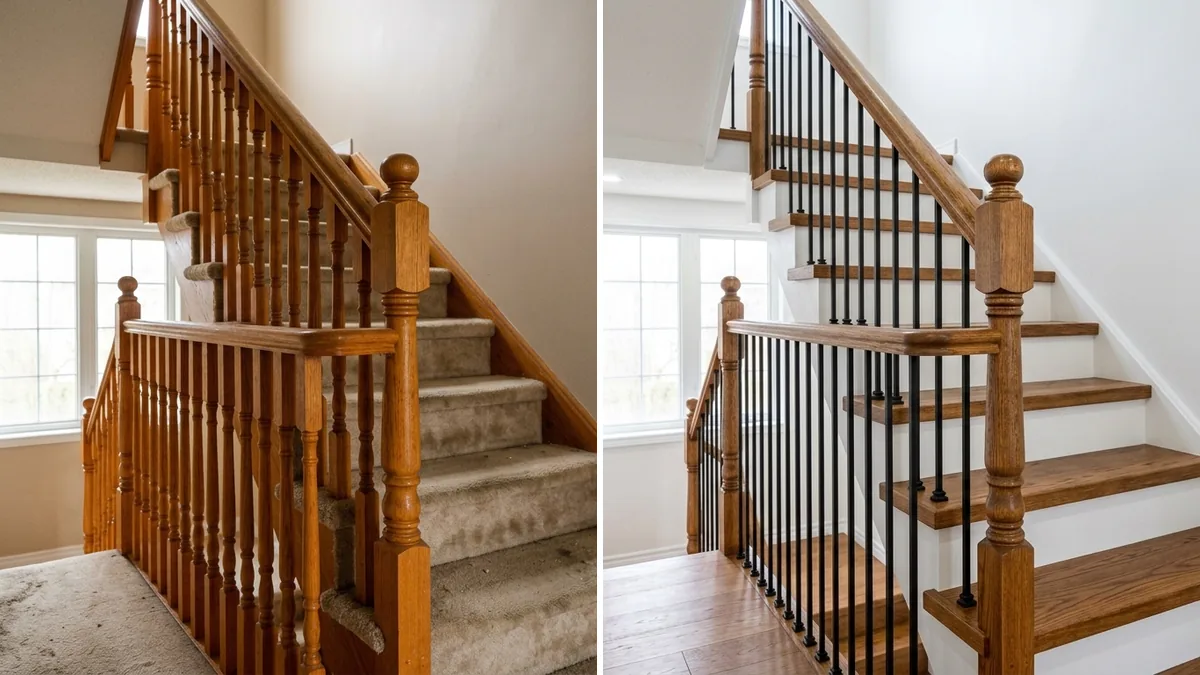
You can now renovate your staircase on screen before you touch a single tread. Upload one photo, and AI restyles your exact stairs with new treads, a modern railing, metal balusters, a runner or fresh paint, so you see the finished look before you spend anything. This guide covers the makeover ideas that actually modernize a staircase in 2026, what each one costs, how the AI tools compare, and the step by step to redesign your own stairs from a photo. The cover above is a real before and after: both panels are the same staircase, restyled with MeltFlex AI, which kept the exact geometry, window and newel post and changed only the finishes.
Our articles are still written by humans!
Get human written articles in your Google feed.
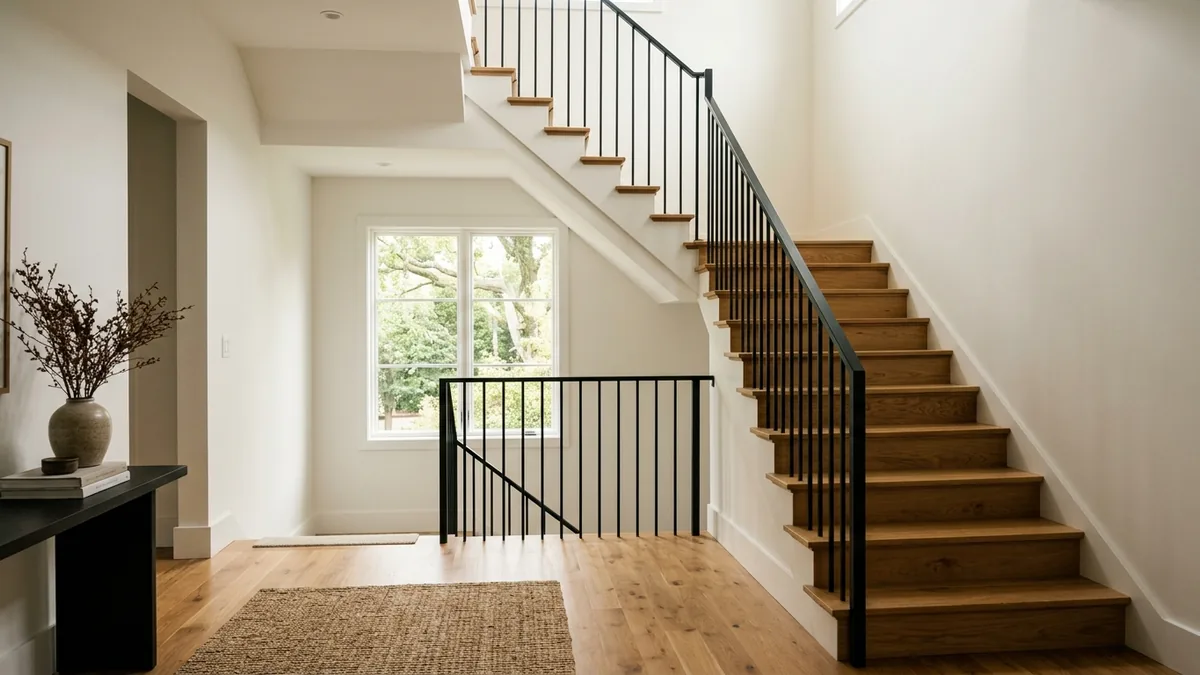
The goal: a warm, current staircase with oak treads, white risers and a slim black metal railing. Every part of this look can be previewed on your own stairs before you buy a thing.
FreeUpload photo · freeRedesign my staircase for freeUpload a photo of your stairs and MeltFlex redesigns the treads, railing and finishes on the staircase you have. Your first AI design is free, no card needed.
Why Visualize Your Staircase Before You Renovate
A staircase is the one thing everyone sees the second they walk in, and it is also one of the hardest renovations to picture in advance. Samples do not help much. A stain chip the size of a stamp tells you almost nothing about how honey oak treads will read against a white wall and a black railing at the top of your hallway. That gap is exactly where money gets wasted.
The old way was to trust a mood board, pay a contractor, and hope. The new way is to see your own staircase finished first. Because the shape of a staircase is fixed, the risk is never the geometry, it is the finishes: which wood tone, which railing, carpet or bare treads, runner or not, what colour on the risers. If you are moving the flight rather than refinishing it, the geometry stops being fixed and starts being the whole job, and our guide to stair dimensions has the riser, tread, width and handrail numbers you have to hit first. Those decisions are visual, and they are precisely what our free AI stairs design tool answers in seconds: upload one photo and see the finished staircase. It is the same logic behind visualizing any renovation before you start, applied to the busiest surface in the house.
How AI Staircase Renovation Works
The workflow is deliberately simple, because the whole point is to skip the friction of 3D software:
- Photograph your staircase. One straight shot from the hallway or landing, ideally in daylight so the treads and railing are clearly visible.
- Describe the makeover. Plain words work: "stained oak treads, white risers, black metal balusters, keep the wood handrail" or "add a patterned runner and panel the wall in white wainscoting".
- Generate. The model keeps your exact staircase, its angle, step count, window and surrounding walls, and repaints only the finishes you asked for. Good tools preserve the structure so you are judging your stairs, not a lookalike.
- Compare and refine. Run the same photo through several looks side by side. Painted versus stained treads, metal versus wood spindles, runner versus bare. Pick the winner, then take that image to your contractor as a clear brief.
That preservation of the original structure is the difference between a useful render and a pretty distraction. A one-prompt "before and after" from a generic image generator will happily invent a completely different staircase. A tool built for real interiors keeps the newel post where it is, which is why the before and after at the top of this page is provably the same flight of stairs.
Watch an AI Staircase Redesign in Seconds
Reading about it is one thing, so here is the whole workflow happening in real time. In this short MeltFlex demo, a tired, dated staircase is uploaded as a single photo and redesigned into a modern before and after in seconds, with the exact same structure kept intact. It is the fastest way to understand why previewing beats guessing.

A real MeltFlex render: the same dated staircase, redesigned into a modern before and after from one photo.
5 Staircase Makeover Ideas That Modernize Fast
These are the updates that consistently take a staircase from dated to current in 2026, ordered roughly from lowest effort to biggest commitment. Each one is easy to preview on your own stairs before you buy a thing.
1. Two-tone treads: paint the risers, stain the steps
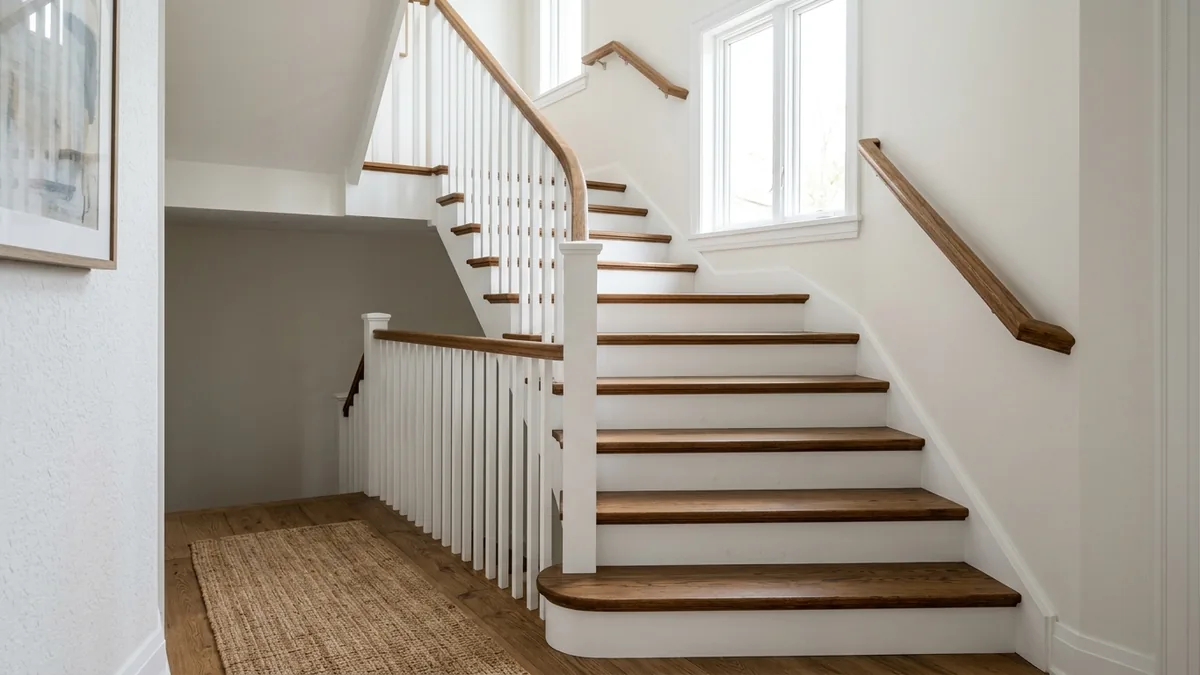
The highest impact for the lowest spend. Bright white risers under warm stained oak treads is the look that reads fresh and expensive without touching the structure. It works on almost any staircase and instantly lifts a dim, single-tone flight. Pair it with a coordinated wall colour and you have a near-complete makeover in paint alone.
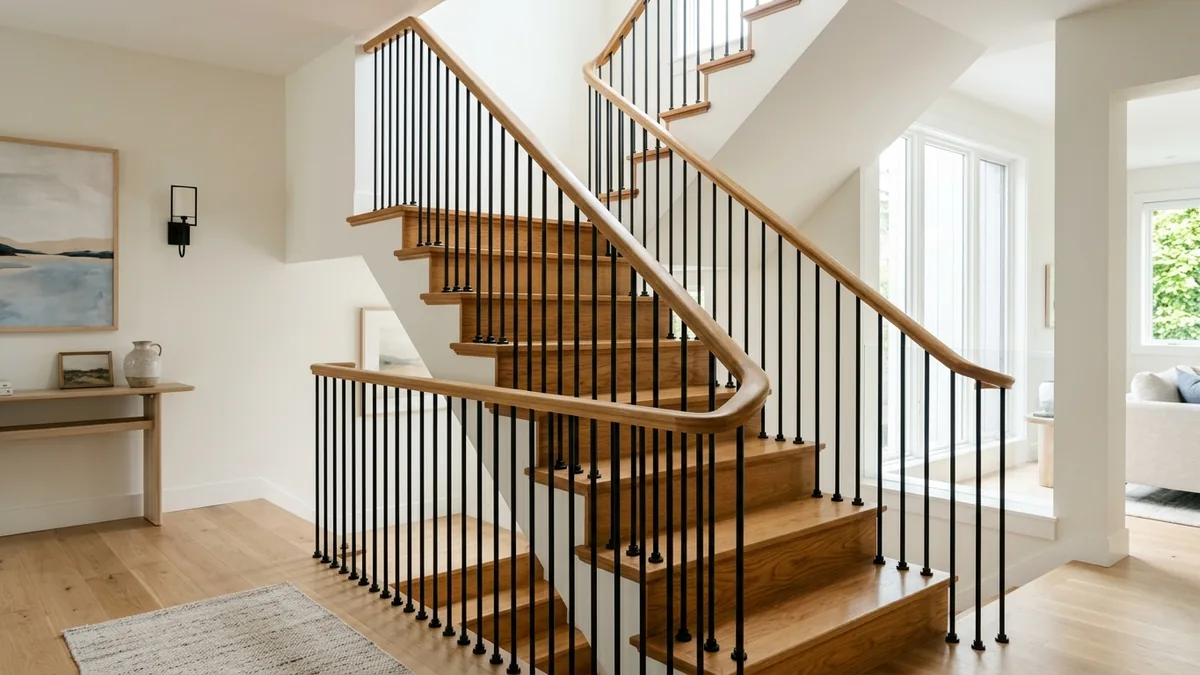
2. Swap wood spindles for black metal balusters
This is the single most common stair upgrade in 2026, and the one that dates the least over time. Slim matte-black round balusters against a warm oak handrail is the wood-and-metal combination you see in nearly every new build and renovation. It is the fastest way to erase a builder-grade or 1990s look, because chunky turned wood spindles are the detail that gives a staircase away.
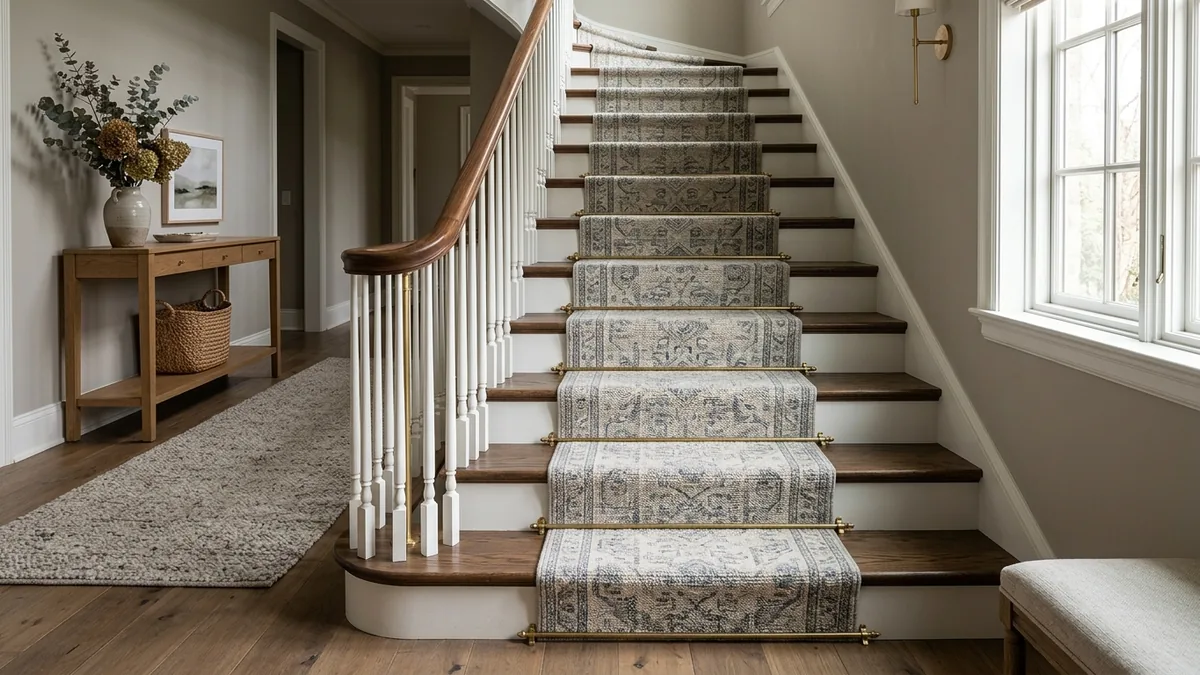
3. Add a stair runner
A tailored runner down the centre of stained treads adds warmth, softens sound, and grips underfoot, all while showing off a border of bare wood on each side. Held with slim brass rods it reads hotel-like and considered. A runner is also the friendliest way to bring pattern and colour into a hallway without committing to a painted wall.
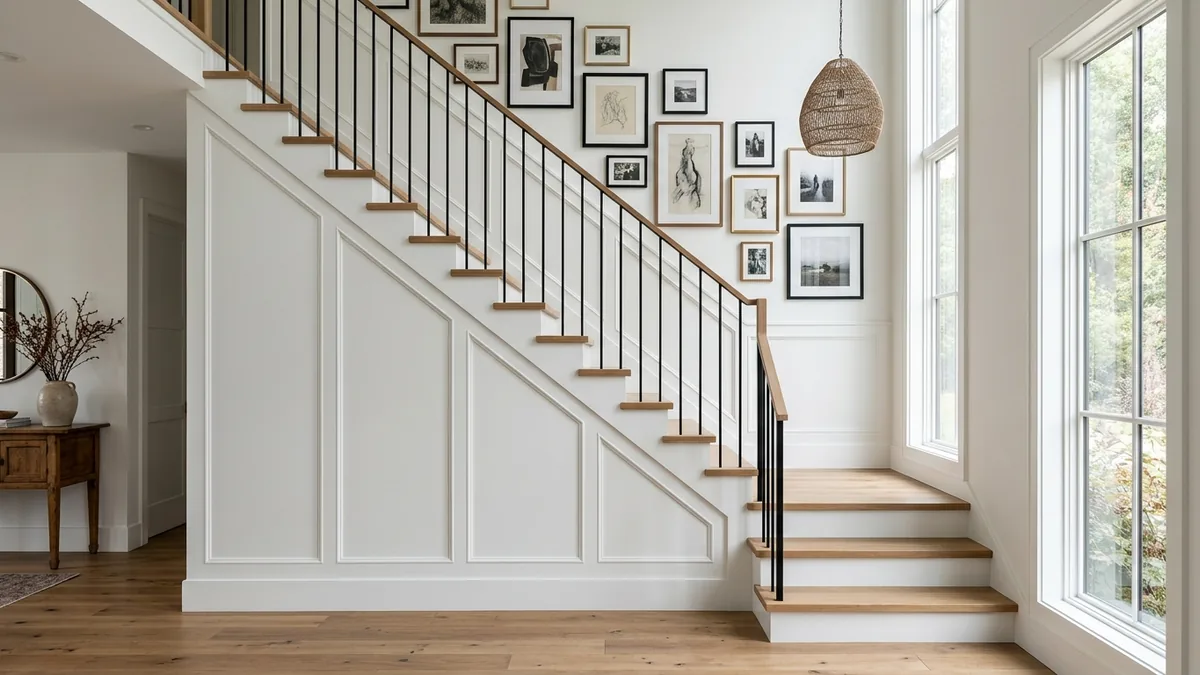
4. Panel the stairwell with wainscoting
The stairwell wall is the most underused surface in the house. Crisp white panelled wainscoting climbing the angled wall gives a plain flight architectural weight, and the space above the panelling is a natural home for a climbing gallery of framed art. It is the same instinct behind a hallway and stairway feature wall, done in millwork instead of paint.
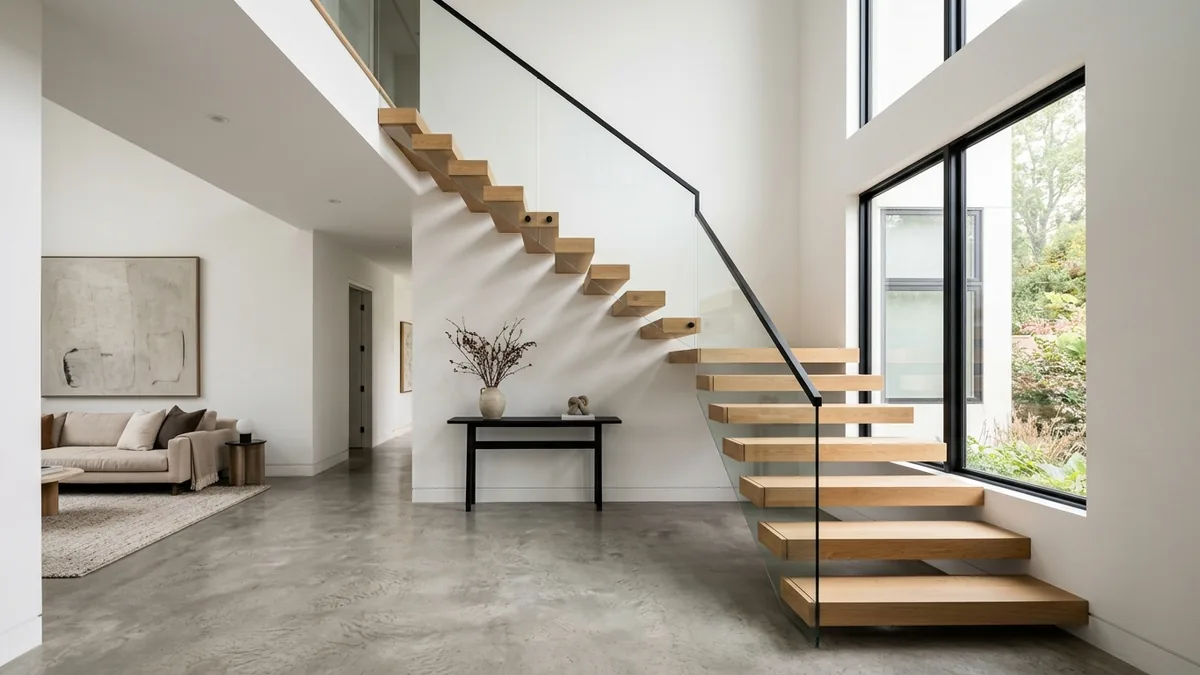
5. Go open-riser or floating
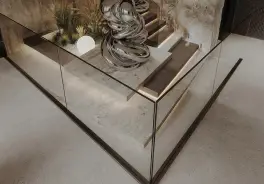
The big-commitment option. Removing the risers, or rebuilding as a cantilevered floating staircase with a frameless glass balustrade, turns the stairs into the sculptural centrepiece of the home and lets light travel through them. This is a structural project rather than a finish change, and it costs accordingly, but nothing else transforms an entryway as completely.
How Much a Staircase Remodel Costs in 2026
A staircase remodel averages around $2,000, but that number hides a huge range. A weekend of paint sits at one end, a floating staircase at the other. Here is what each of the ideas above tends to cost, materials and labour combined, so you can match the look you want to the budget you have before you commit.
The pattern is clear: the looks that modernize a staircase most, two-tone treads and metal balusters, sit at the affordable end. That is exactly why previewing them first pays off. Spending $1,500 on new balusters feels very different once you have already seen them on your own stairs and know you love the result.
AI Staircase Design Tools Compared
A handful of tools will visualize a staircase from a photo. They are not equal, and for stairs the thing that matters most is whether the result still looks like your staircase after the render, because the geometry is fixed and any drift is instantly obvious. Here is an honest comparison.
The honest take: any of these will give you ideas, but only a tool that preserves the original room gives you a render you can hand to a contractor and say "build this". For a staircase, where the shape cannot change, that fidelity is the whole game. It is the same strength that makes visualizing an exterior renovation reliable: the house you upload is the house you get back, restyled.
How to Redesign Your Staircase with MeltFlex
Here is the full flow, start to finish, in about five minutes:
- Take one clear photo of your staircase from the hallway or landing in good light.
- Open MeltFlex and upload it.
- Write your makeover in plain language. Start specific: treads, risers, railing, balusters, runner, wall colour. For paint, borrow ideas from an AI paint colour tool and name the shade you want.
- Generate several versions from the same photo: painted vs stained treads, metal vs wood spindles, runner vs bare. Compare them side by side.
- Coordinate with the floor. If the staircase meets an open hallway, match the tread tone to your flooring so the transition reads seamless. Our 2026 flooring trends guide helps you keep the wood tones consistent.
- Save the winner and use it as the brief for your contractor or your DIY weekend.
Because you are restyling one photo, iterating costs nothing but a minute. That is the real unlock: you can be far bolder in the render, rule out the misses, and only spend money on the look you have already fallen for.
DIY vs Hiring a Pro
Once you have settled on the look, the split is straightforward. Paint, refinishing treads and fitting a runner are genuinely DIY for a patient weekend worker, and they cover most of the visual transformation. Balusters, converting carpet to hardwood, and anything structural belong to a pro, both for the finish quality and because a staircase is a fall risk if the railing is not solid.
The smart move is to preview the whole makeover with AI first, then decide the split. A clear target image tells you which parts you can handle yourself and gives any tradesperson an unambiguous brief, which is how you avoid the classic renovation trap of paying to discover you do not like the result. It works the same way for a whole room: see it finished, then build it. That is the thinking behind using AI to visualize a renovation before starting at all.
Staircase Renovation FAQ
Can AI really renovate my staircase from one photo?
Yes. You upload a single photo and the AI generates a photorealistic version of the same stairs with new finishes: stained or painted treads, a modern railing, metal balusters, a runner or fresh wall paint. The structure, angle and number of steps stay the same, so you are looking at your actual staircase restyled rather than a stock image. It is the fastest way to compare options before committing money. Try it free in the AI stairs design tool.
What is the cheapest way to modernize a staircase?
Paint. A coordinated coat on the risers, stringers, handrail and trim, usually paired with stained treads, transforms a dated staircase for a few hundred dollars in materials. If you can add one more thing, swap the spindles for slim black metal balusters, the upgrade that dates a staircase the least over time.
How do I modernize a staircase without replacing it?
You rarely need to rip out the structure. Repaint the risers and stringers, refinish the treads, swap the spindles for black metal balusters, keep the wood handrail for warmth, and add a runner or wainscoting on the stairwell wall. Each is a finish change on the existing frame. Preview the combination on your own stairs first so you know the finishes work together.
Does refreshing a staircase add value to a home?
It punches above its cost. The staircase is a first-impression feature, and a fresh, current one signals a well-kept home to buyers the moment they step inside. Affordable updates like paint, metal balusters and a runner deliver most of that impression, which is why they are a favourite of house flippers looking for visible wins on a tight budget.
Ready to see it? Photograph your staircase, upload it to MeltFlex, and watch your own stairs get their makeover before you spend a cent on the real thing.