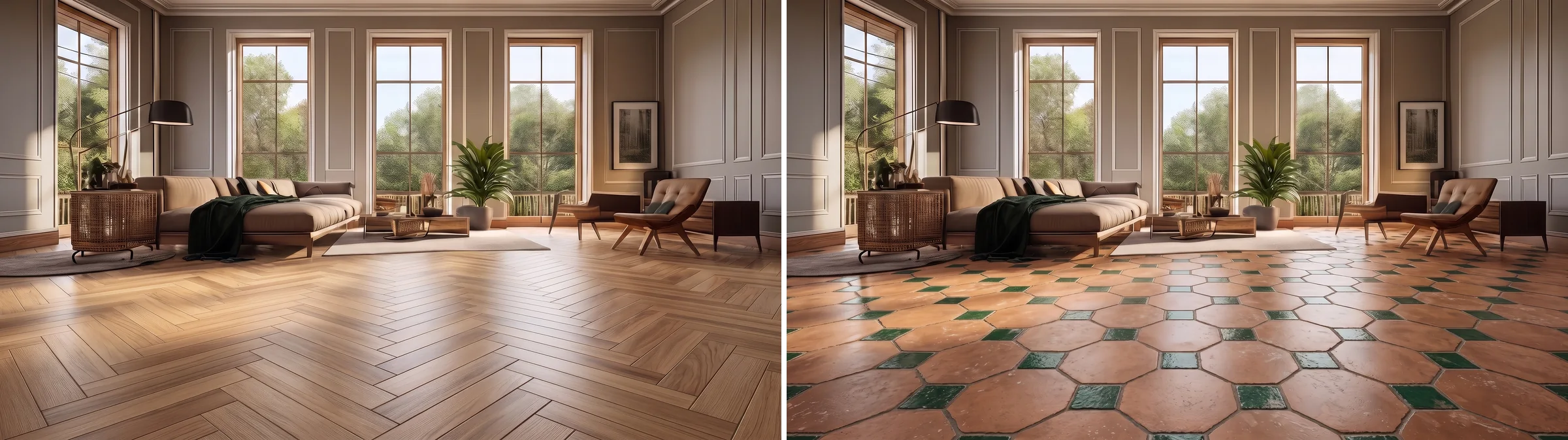
The fastest way to date a room in 2026 is the floor. Cool ash-gray planks, the default of basically every flip and new build from 2015 to 2022, now read the way honey-oak cabinets read in 2010. What replaced them: warm golden oak, rich walnut, herringbone patterns, warm stone, and matte textures you can actually feel underfoot. This guide covers every major flooring trend for 2026, what fell out of style, what each option costs per square foot installed, and which floors actually pay you back at resale.
Our articles are still written by humans!
Get human written articles in your Google feed.
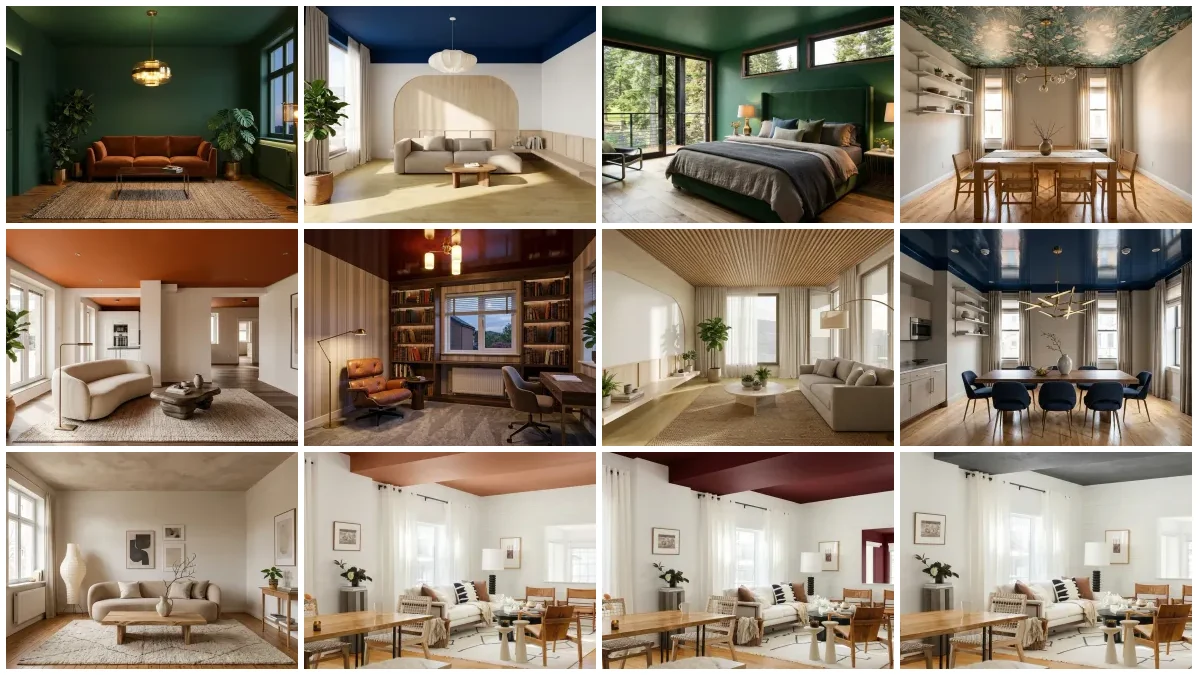
One thing before we start. Every living room photo in this post is the same room. We rendered it once with the dated gray LVP, then swapped only the floor with MeltFlex’s AI floor restyle, the same way you can test any of these floors on a photo of your own room before committing thousands of dollars. It is the flooring version of what we did for accent walls and statement ceilings: walls, ceiling, and now the surface you actually walk on. If you want to weigh that tool against the retailer visualizers from Home Depot, Shaw and Floor & Decor first, our flooring visualizer comparison does exactly that.
FreeUpload photo · freeRestyle my floors for freeUpload a photo and MeltFlex changes the flooring, with the furniture, walls and layout untouched. Your first AI design is free, no card needed.
The Short Answer: What’s In and What’s Out for 2026
That is the whole story in one table, and it matches what Forbes, House Digest, and the big flooring retailers are all reporting this year. Now the detail, trend by trend, with the same room wearing each floor so you can judge for yourself.
1. Warm Wood Tones Take Over From Gray
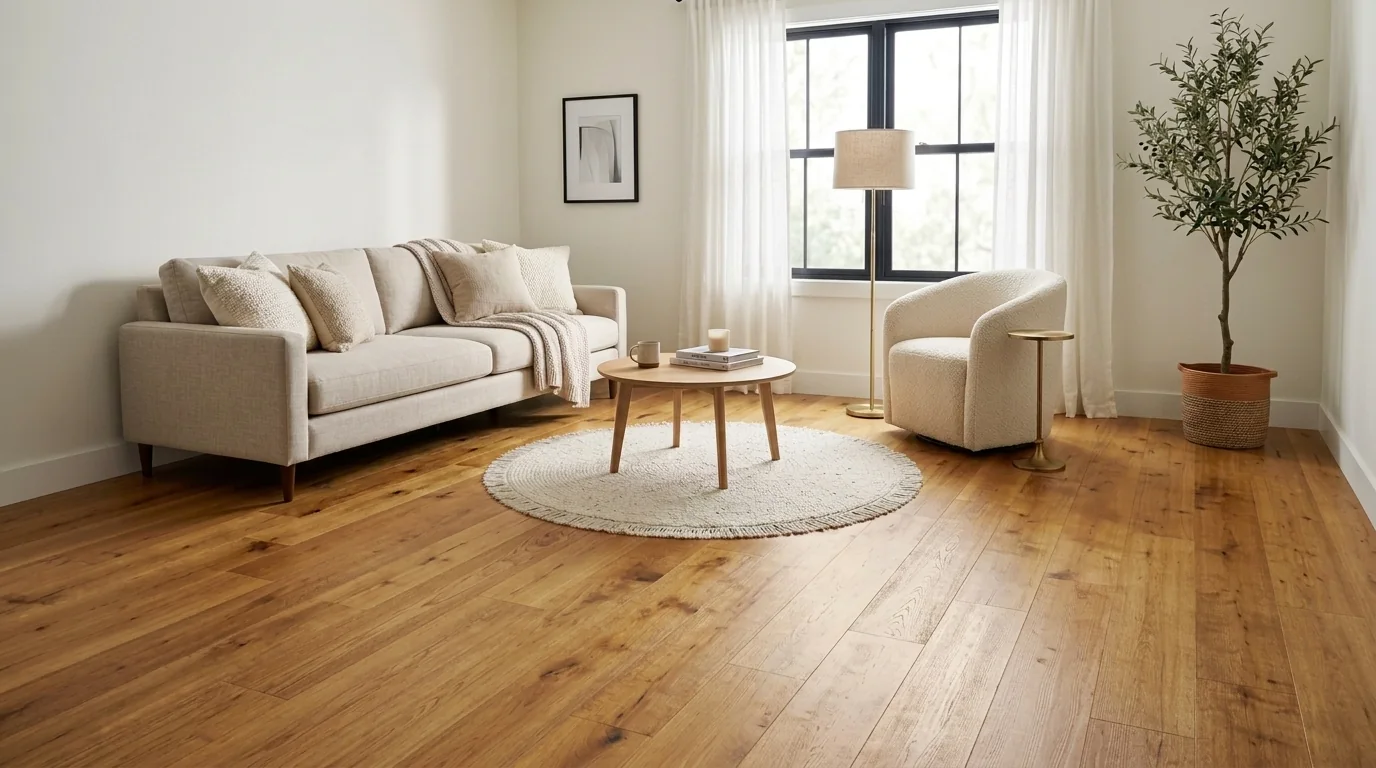
The defining 2026 floor: wide-plank golden oak with real color movement from plank to plank. Rendered with MeltFlex.
The single biggest shift in flooring this decade is temperature. Golden oak, honey, caramel, and amber tones are everywhere in 2026 collections, and Forbes summed up the year’s palette as, literally, “toasty.” The logic is simple: after years of cool gray floors under cool white walls, rooms started feeling like dental offices. Warm floors flatter skin tones, make oatmeal and cream furniture glow instead of disappearing, and photograph beautifully in natural light.
The second half of this trend is variation. The perfectly uniform, color-matched boards of the 2010s are being replaced by floors with visible character: knots, cathedral grain, and honest plank-to-plank color differences. Retailers report buyers now actively asking for “high variation” floors after a decade of asking for the opposite. If your furniture leans warm too, check our guide on what colour furniture goes with grey walls before you commit to a tone.
2. Wide Planks, Long Boards
Plank width kept creeping up and settled at 7 to 10 inches for 2026, with lengths to match. Wider boards mean fewer seams, which makes rooms read bigger and calmer, and they carry the natural grain of the wood in a way narrow strips never could. This is also the format where engineered hardwood beats solid: engineered boards stay flat at those widths, which is why most wide-plank products you will actually find in stores are engineered construction with a real oak wear layer on top.
Design side note: wide planks are doing for floors what slab fronts did for kitchens. Once you see a 9-inch plank floor next to 2-inch strip flooring, the strip floor suddenly looks busy. That is what “dated” means in practice.
3. Herringbone and Patterned Wood
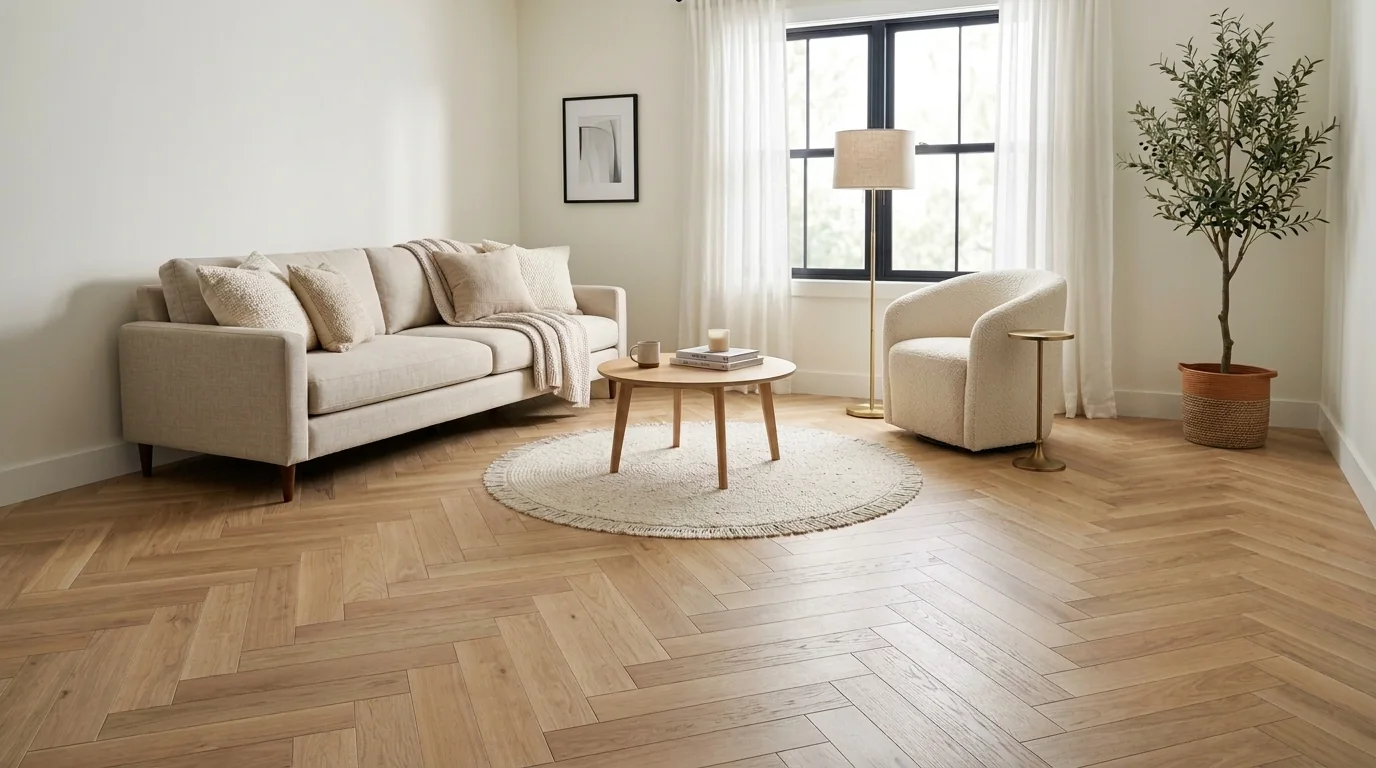
Same room, same furniture, herringbone floor. The pattern adds architecture to a plain box of a room. Rendered with MeltFlex.
Herringbone is the most requested pattern of 2026, and it earns it: the zigzag adds movement and a sense of craft to rooms that have no architectural detail of their own, which describes most builder-grade American homes. Chevron, its mitered cousin, reads slightly more modern; classic herringbone reads more Parisian apartment. Both went from luxury signifier to attainable as LVP and engineered versions arrived at a fraction of the cost of site-laid parquet.
Budget honestly here. The material costs the same per square foot, but patterned installation adds roughly 20 to 30 percent in labor and more waste from angled cuts. In a small or oddly shaped room, that premium buys you a lot of impact; herringbone in an entryway or home office costs hundreds, not thousands, more than straight planks.
With that labor premium, herringbone is worth testing before you commit. Oak herringbone is one of the preset materials in this walkthrough, next to marble, concrete and walnut, all rendered onto a photo of the same room.

A render shows the pattern in your room. It will not show you the extra waste and cuts the installer will quote for.
4. Rich, Dark Walnut Comes Back
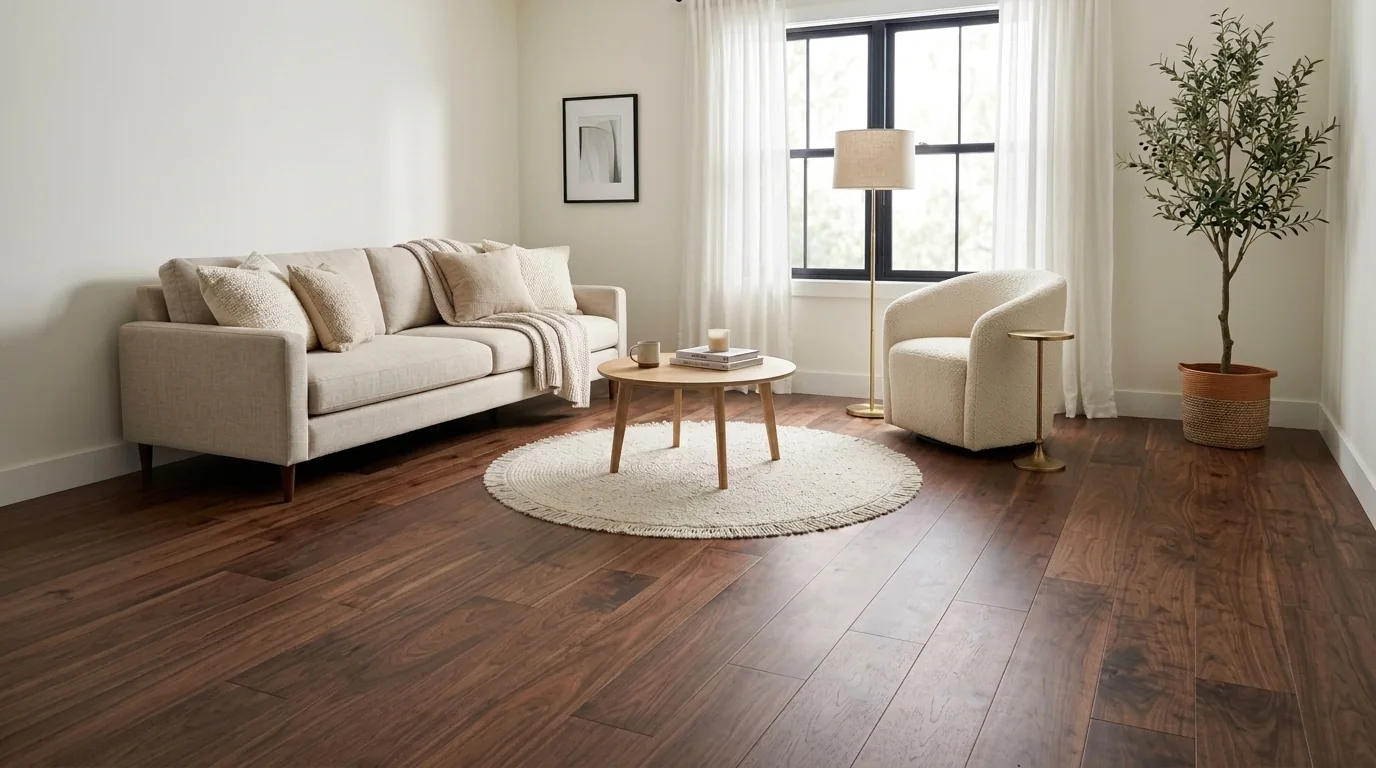
Walnut grounds the same pale furniture instantly. Note how the brass and cream tones pop against it. Rendered with MeltFlex.
Chocolate browns are having their moment across all of interior design in 2026, and floors are where the trend lands hardest. Deep walnut, espresso-adjacent but warm rather than black, turns pale minimalist furniture from washed-out to intentional. Designers pair it with cream boucle, oatmeal linen, and aged brass, which is exactly the combination in the render above.
The honest trade-off with dark floors has not changed: they show dust, crumbs, and pet hair more than any mid-tone, and they eat light in small rooms. The 2026 version manages this with matte finishes and visible grain, which camouflage far better than the glossy espresso floors of 2008. If your room is small or dim, take the golden oak instead and get your depth from furniture.
5. Checkerboard and Natural Stone
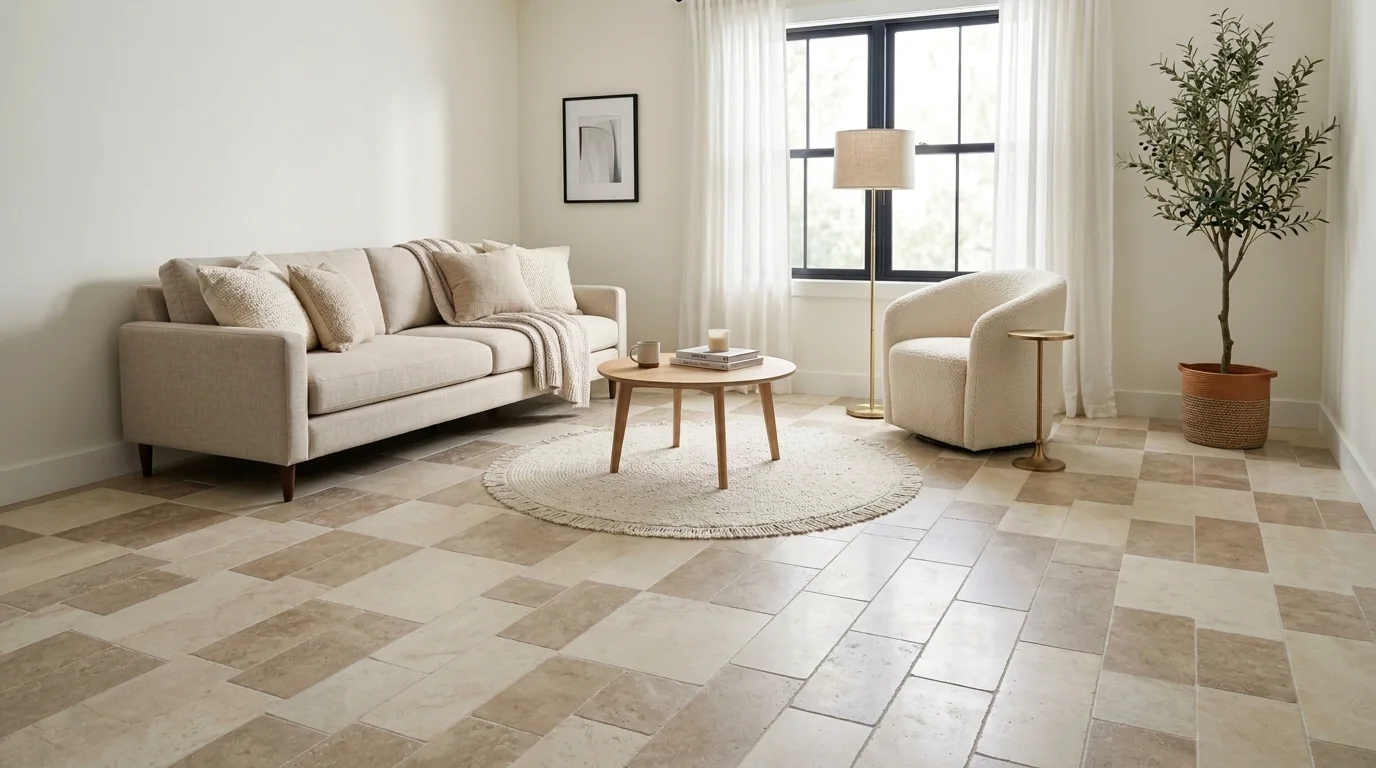
Warm stone checkerboard in limestone and travertine tones, laid diagonally. Bold, but nothing like the cold black-and-white version. Rendered with MeltFlex.
Checkerboard floors escaped the retro kitchen and went warm. The 2026 version swaps black-and-white vinyl for tumbled limestone, travertine, and honed marble in cream and taupe, often laid diagonally, and it shows up in entries, kitchens, sunrooms, and increasingly in living spaces. Stone inlays and mixed-material borders are the maximalist end of the same trend, with homeowners commissioning custom detailing that would have seemed absurd during the gray-LVP years.
Large-format porcelain also stays current, with one correction: matte and honed finishes only. The glossy white 48-inch tile that signaled luxury in 2019 now mostly signals water spots and visible scuffs.
6. LVP Stays, but Only the Convincing Kind
Luxury vinyl plank is still the best-selling floor in America in 2026, and for rational reasons: it is waterproof, scratch-proof enough for dogs, DIY-friendly, and half the price of hardwood. Nobody serious is telling you to put oak in a basement or a kid bathroom. What died is the bad LVP: thin planks with a plastic sheen, a gray colorway, and a wood pattern that visibly repeats every four boards.
Current LVP copies the rest of this list: warm oak and walnut tones, wide planks, matte low-sheen surfaces with embossed-in-register texture, and long pattern repeats so no two visible boards match. The practical advice: within LVP, the jump from the $2 tier to the $4 to $5 tier per square foot is the single biggest visual upgrade per dollar in flooring. Above that you are mostly paying for thicker wear layers, which matter for rentals and dogs, not looks.
7. Texture You Can Feel: Matte, Wire-Brushed, Hand-Scraped
Finish is the quiet trend that ties the loud ones together. High-gloss is out everywhere, on wood, on tile, on vinyl. In its place: matte and ultra-matte lacquers, oiled finishes, and surface textures like wire-brushing, which pulls the soft grain out of oak so you can feel the wood, and subtle hand-scraping, which breaks up light reflection. Beyond looks, matte textured floors are simply easier to live on: they hide micro-scratches, footprints, and dust that glossy floors advertise.
If you are keeping an existing glossy hardwood floor, this is the cheapest trend in the post: refinishing to a matte or satin sheen costs a fraction of replacement and, as the resale numbers below show, is the best-returning interior project measured.
8. Cork, Bamboo, and Reclaimed Wood
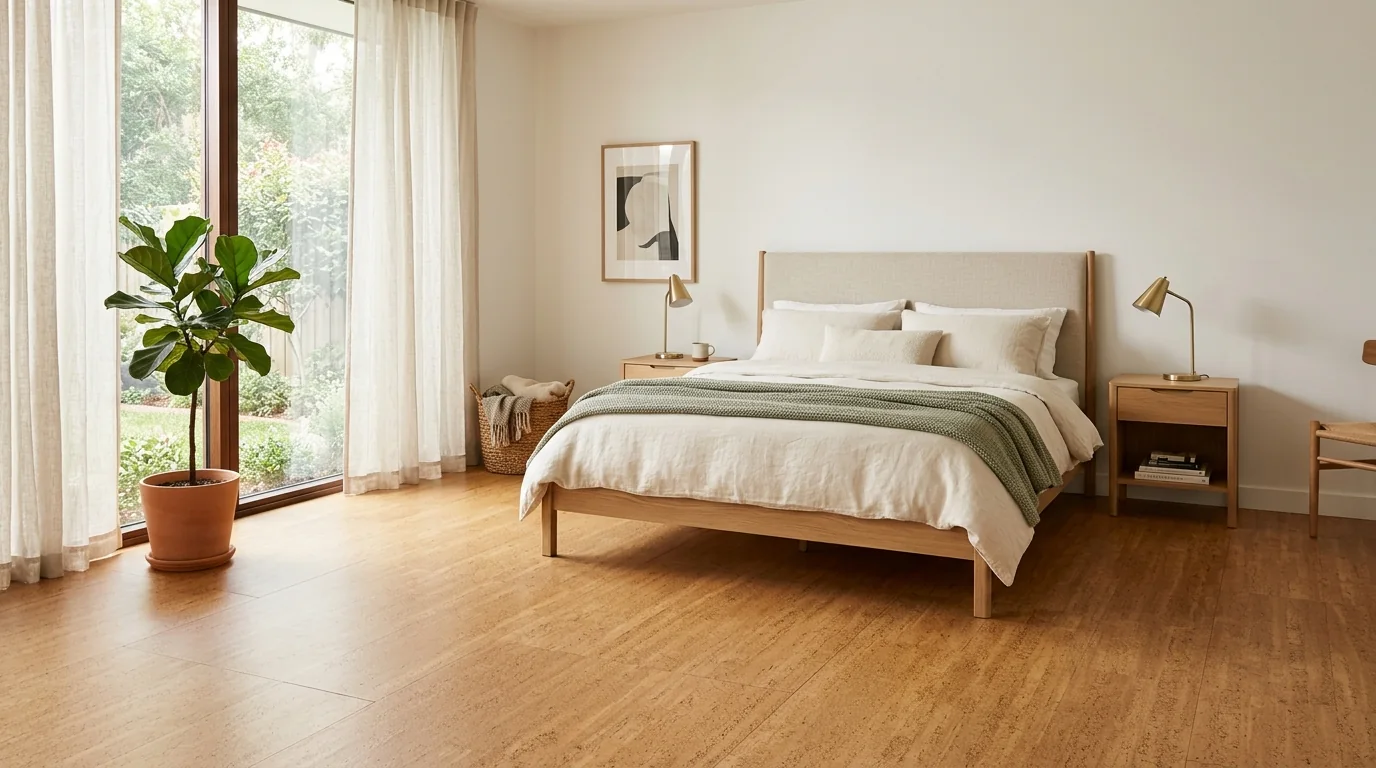
Cork in a bedroom: warm underfoot, quiet, renewable, and finally styled like a design choice instead of a compromise. Rendered with MeltFlex.
Sustainability moved from footnote to purchase driver, and three materials benefit. Cork is the sleeper hit: naturally warm and slightly soft underfoot, sound-absorbing, renewable (the tree is not cut down, just harvested), and its speckled texture finally reads as intentional in a way it did not a decade ago. Bedrooms and home offices are its natural habitat. Bamboo offers hardwood looks with faster-growing raw material, and reclaimed wood brings the variation trend to its logical end: boards with actual history. Low-VOC finishes and adhesives are becoming a standard buyer question rather than a premium checkbox.
Flooring Texture Ideas: 12 Swatches to Save
Sometimes you do not want the whole room, just the material. So here is the entire trend list again as a sample board: twelve flooring textures shot straight from above, the way you would see them on a showroom sample or a supplier’s spec sheet. The twelve textures trending for 2026:
- Golden oak wide plank, the defining 2026 floor
- White oak herringbone, the most requested pattern
- Dark walnut, deep chocolate with flowing grain
- Wire-brushed oak, grain you can feel in relief
- Hand-scraped hickory, sculpted rustic texture
- Chevron smoked oak, herringbone’s modern cousin
- Checkerboard stone, limestone and travertine squares
- Honed travertine, warm large-format stone
- Natural cork, speckled, soft, and silent
- Strand-woven bamboo, tight caramel striations
- Reclaimed barnwood, boards with actual history
- Matte wood-look LVP, the only vinyl that passes in 2026
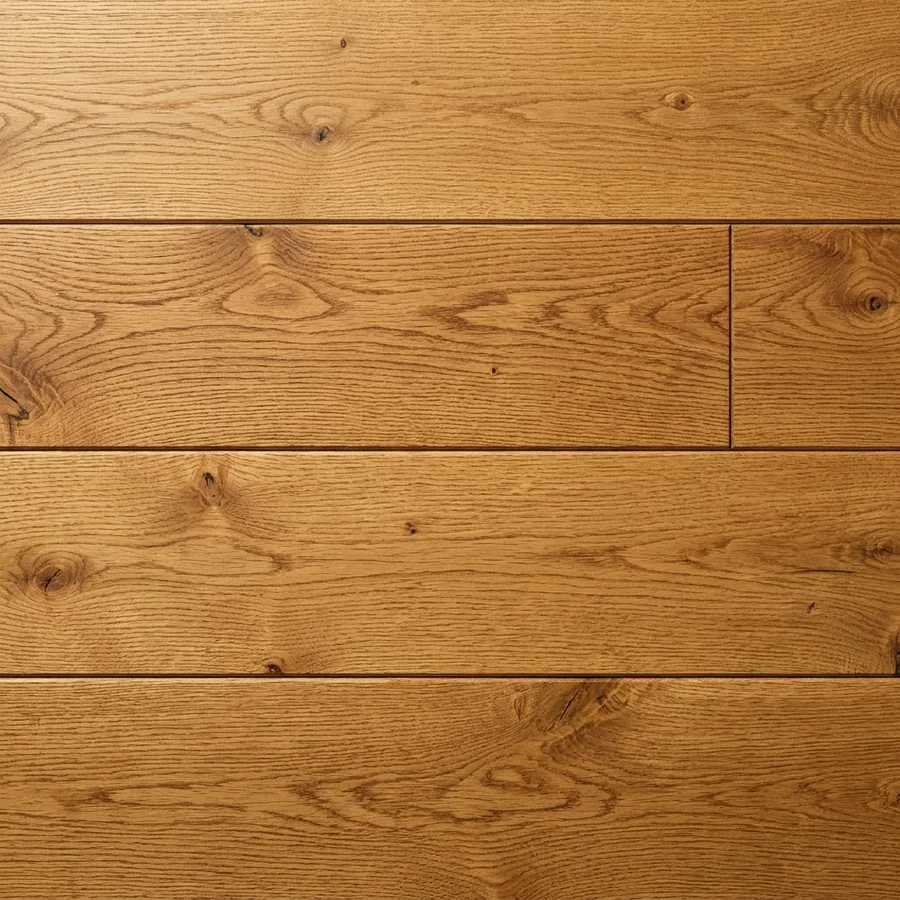
1. Golden oak wide plank. Warm honey tones, real plank-to-plank variation, matte oiled finish.
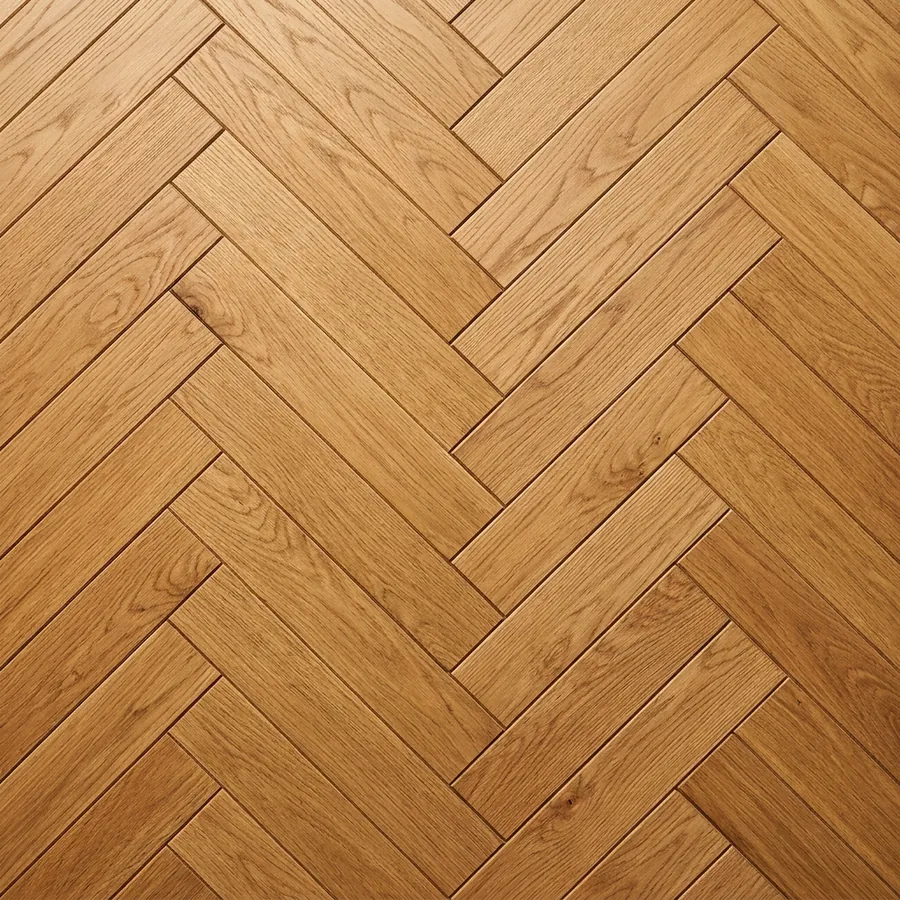
2. White oak herringbone. The zigzag that adds architecture to a plain room.
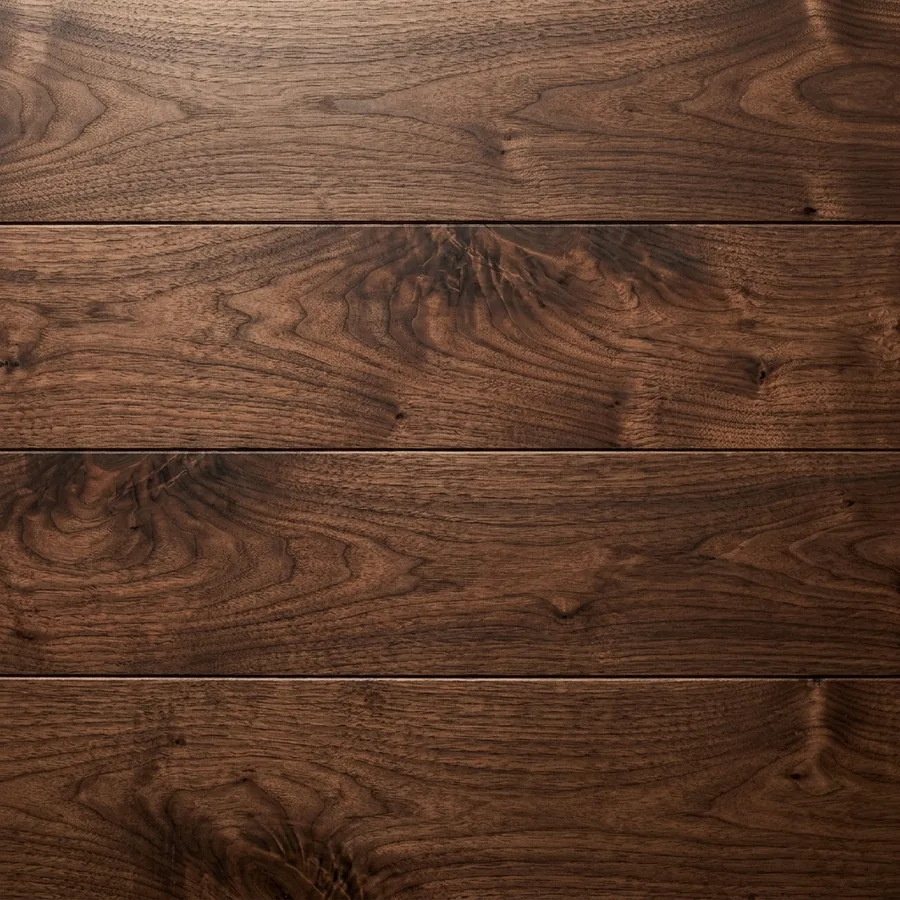
3. Dark walnut. Chocolate brown, warm not black, best in bigger bright rooms.
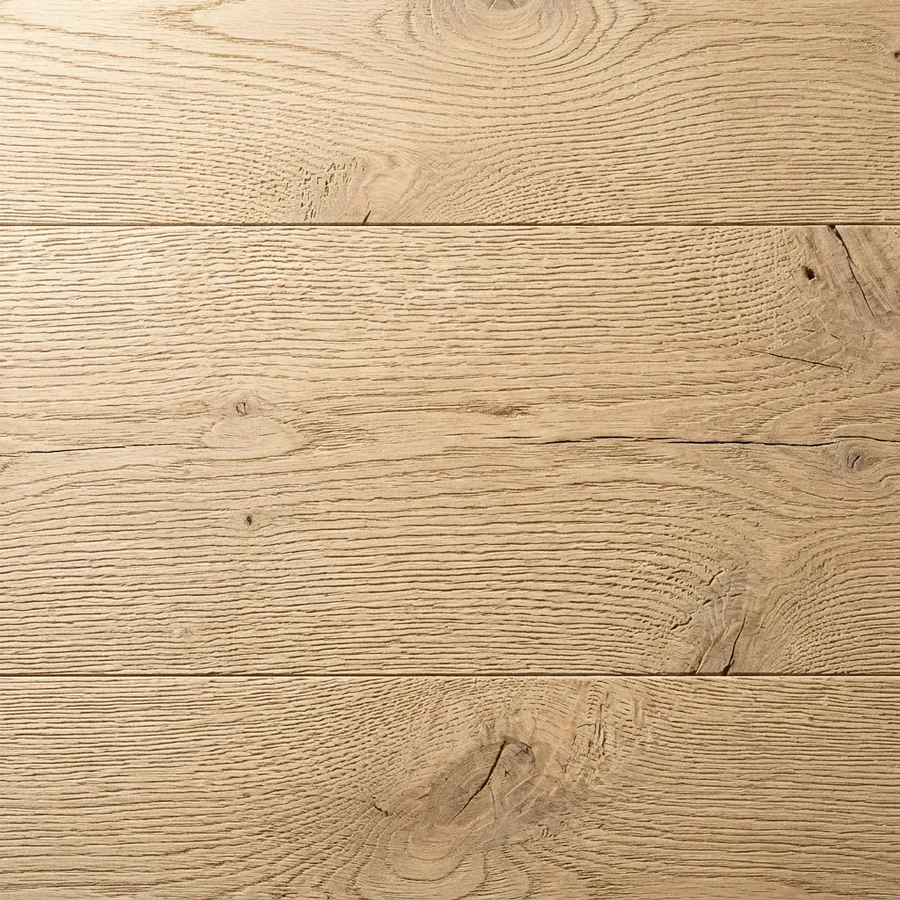
4. Wire-brushed oak. The soft grain pulled into relief, ultra-matte, hides scratches.
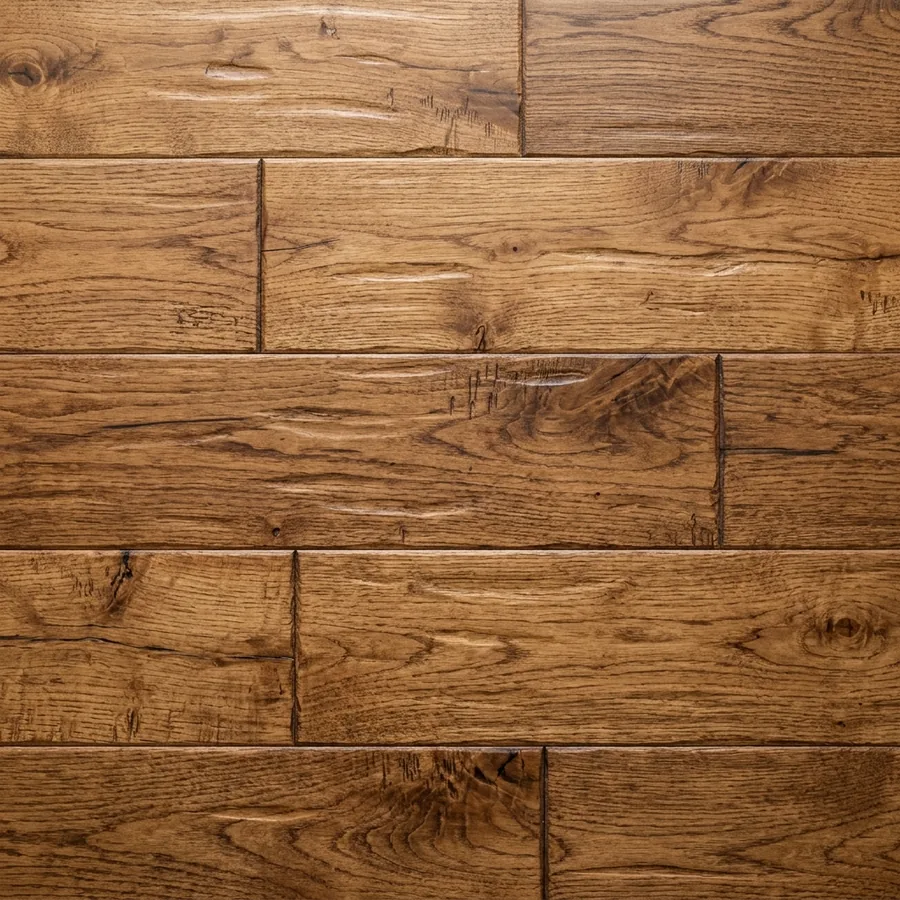
5. Hand-scraped hickory. Gentle sculpted texture that breaks up light reflection.
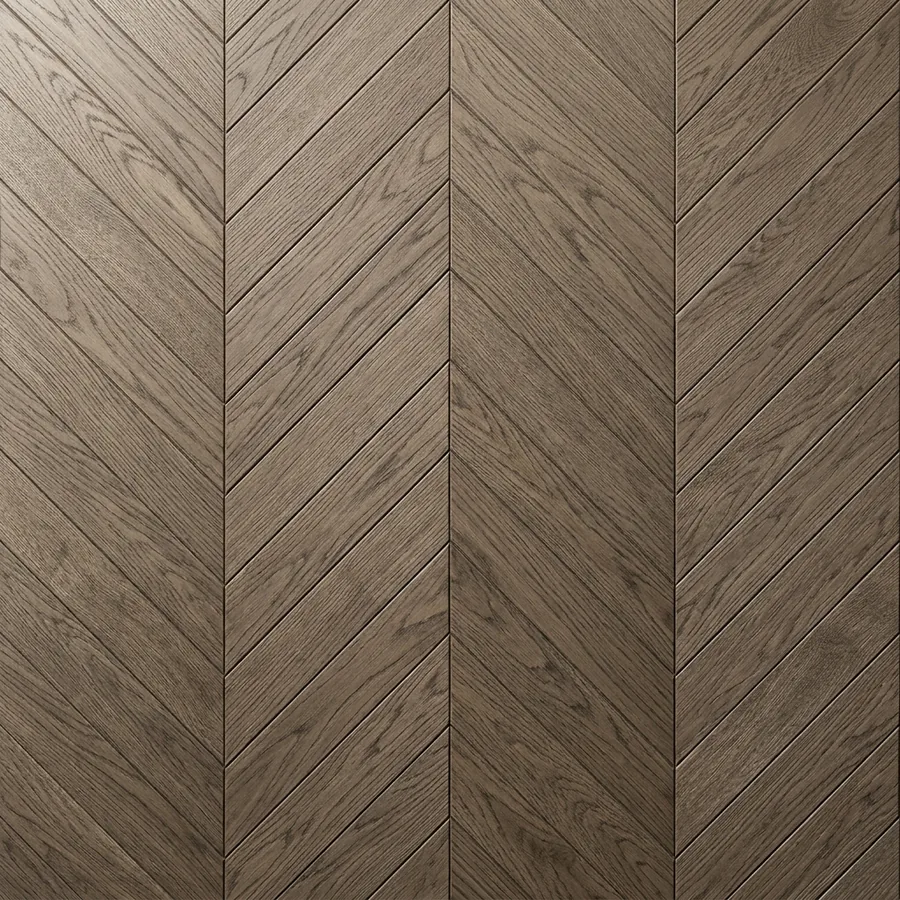
6. Chevron smoked oak. Mitered points, reads more modern than herringbone.
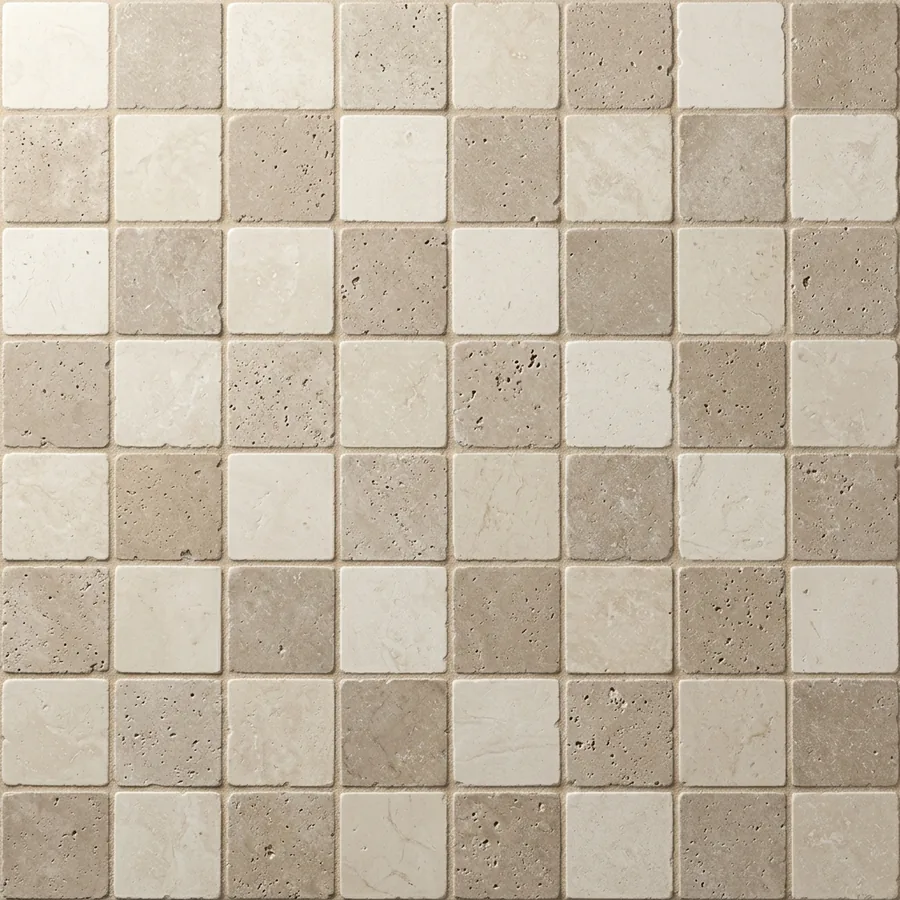
7. Checkerboard stone. Cream limestone and taupe travertine, nothing like the diner version.
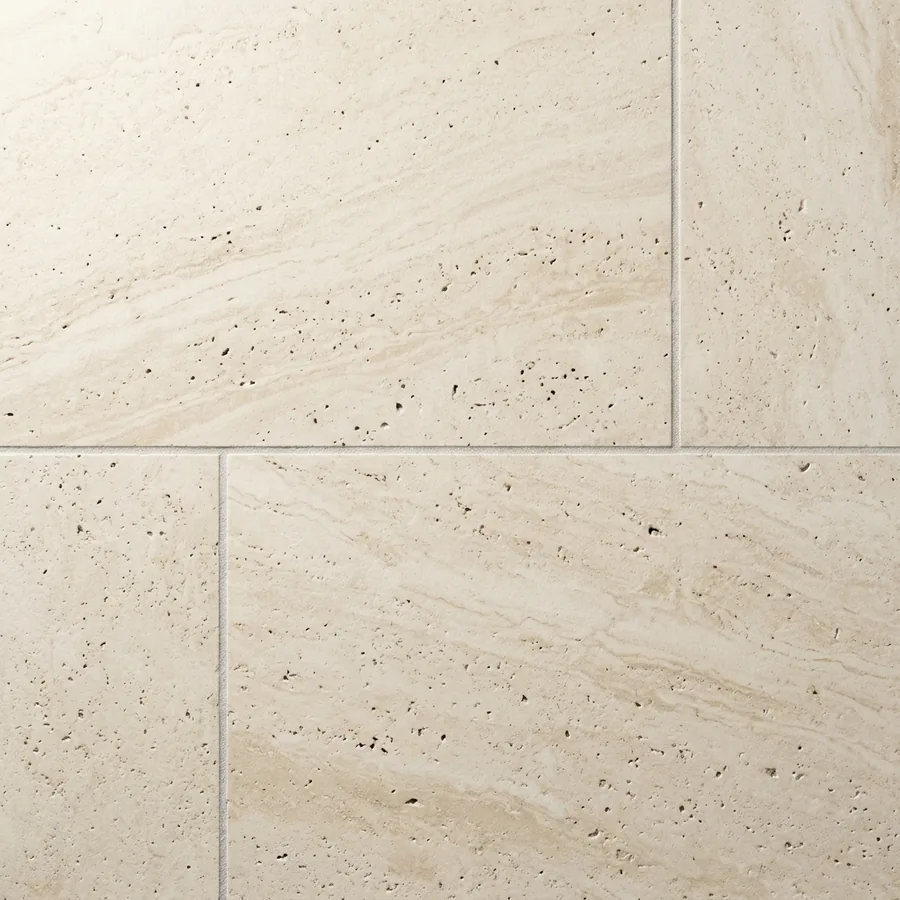
8. Honed travertine. Warm ivory stone, matte honed finish, entries and baths.
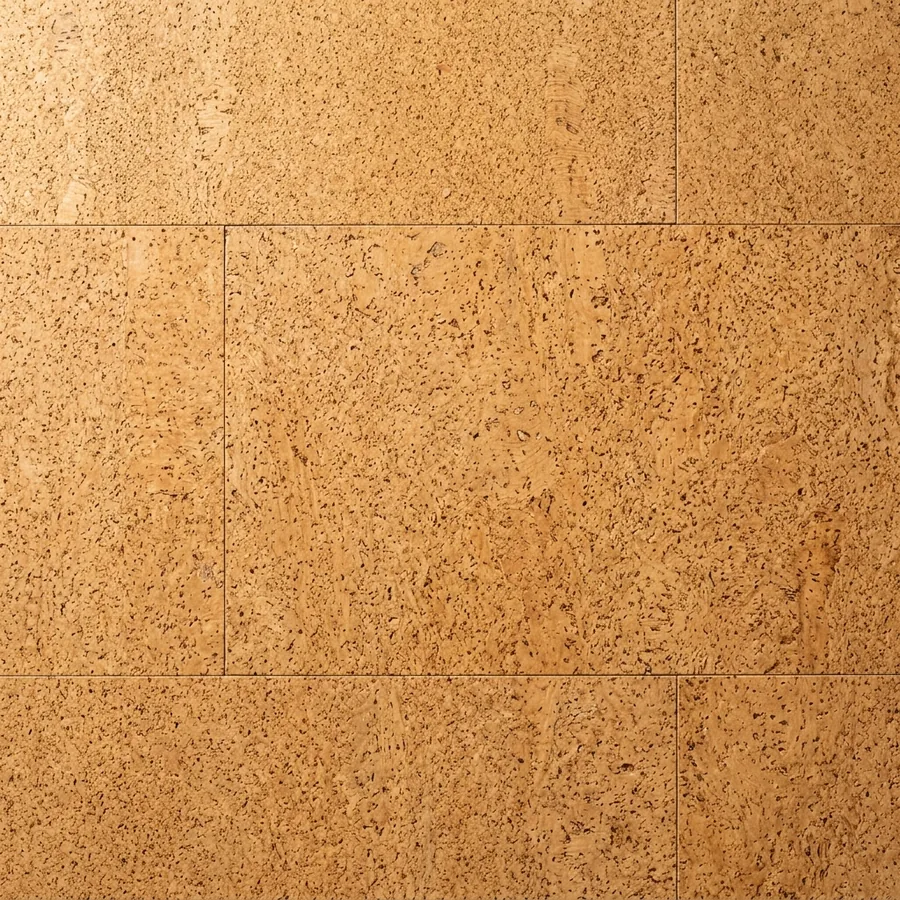
9. Natural cork. Speckled honey texture, warm and silent underfoot.
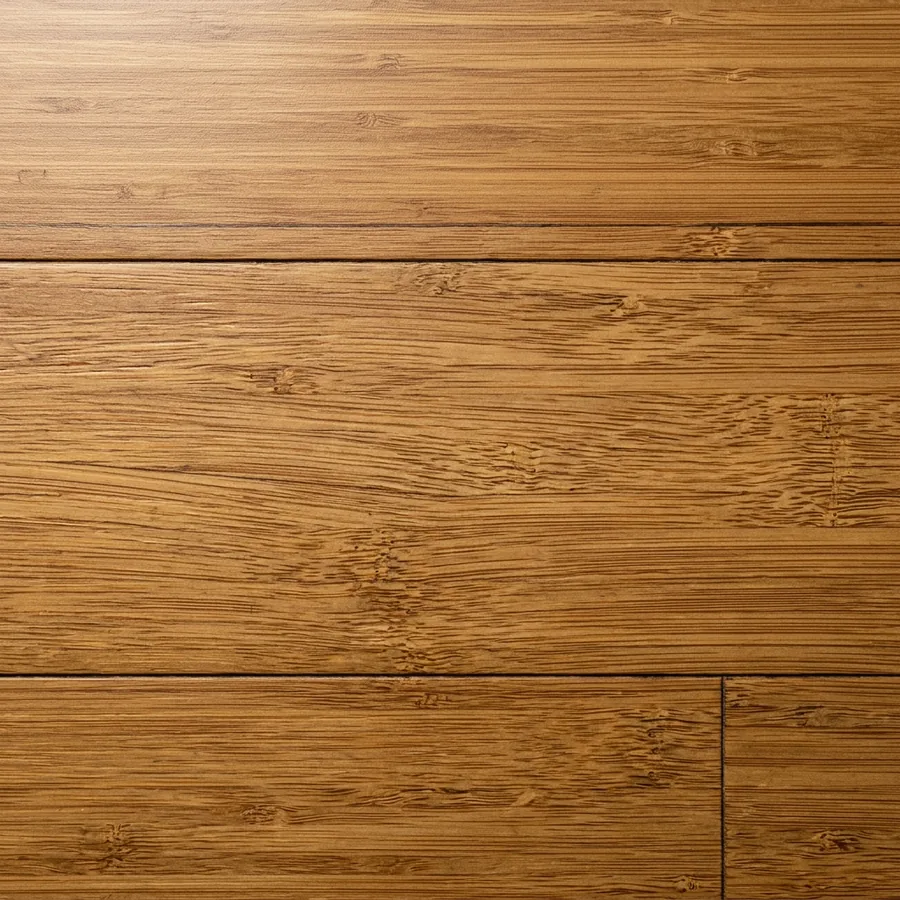
10. Strand-woven bamboo. Harder than oak, renewable, tight caramel striations.
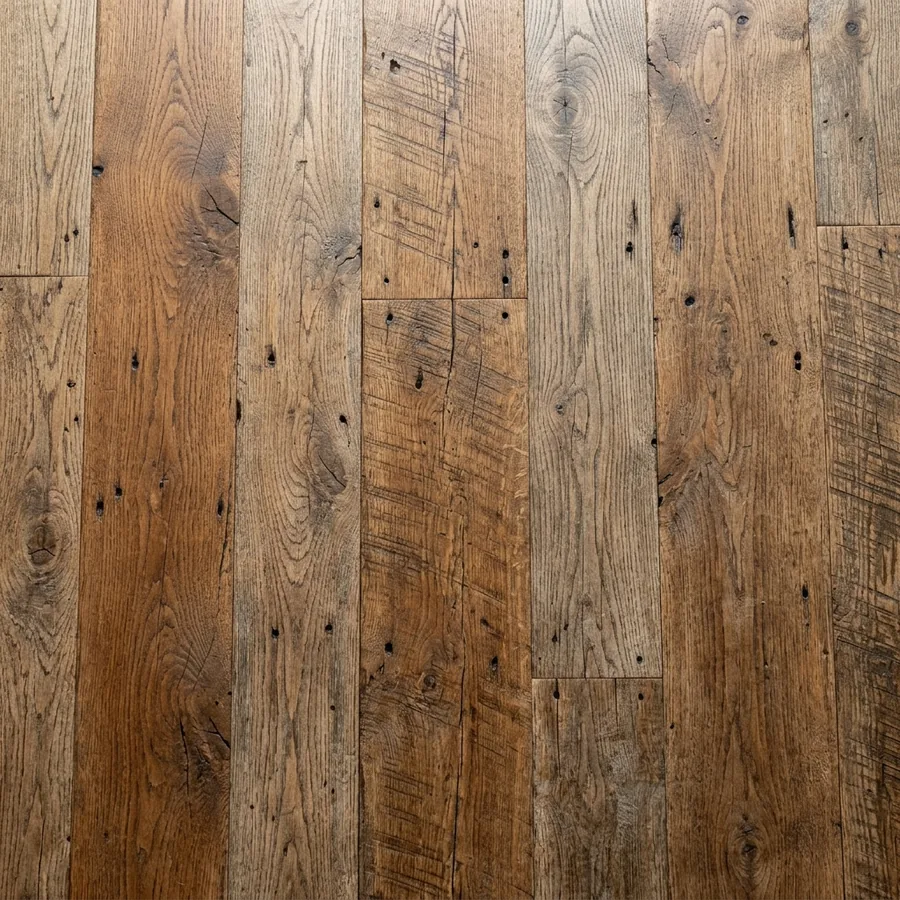
11. Reclaimed barnwood. Nail holes and saw marks included, variation at its maximum.
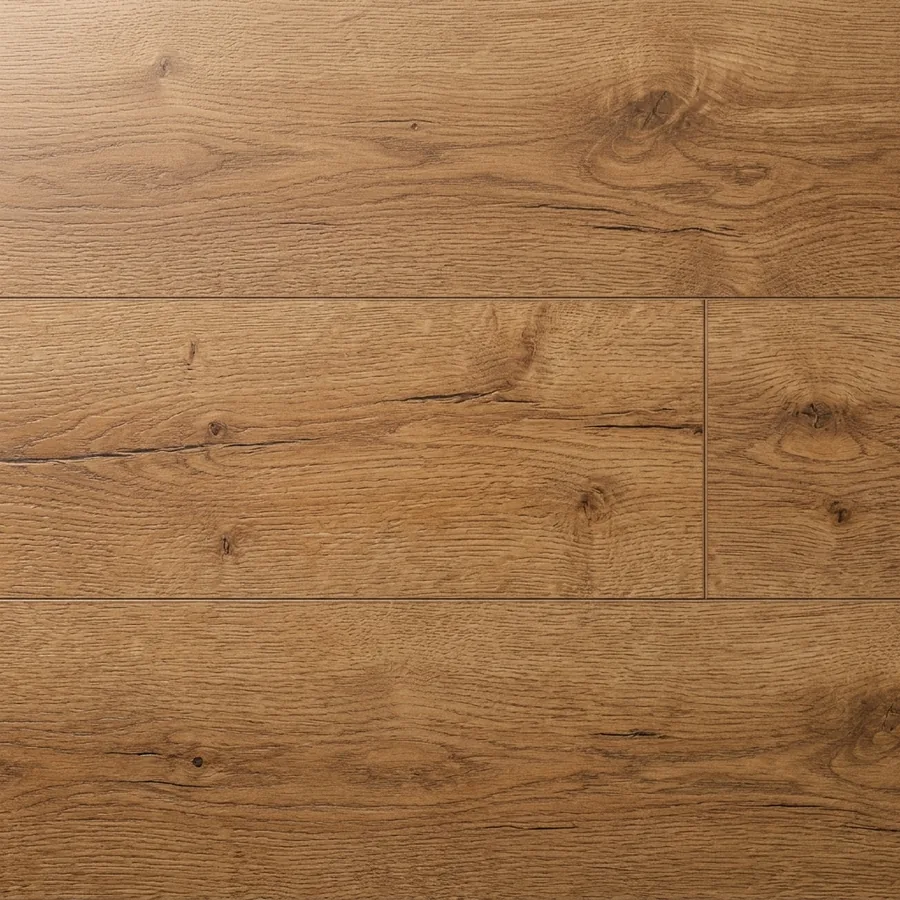
12. Matte wood-look LVP. Embossed-in-register grain, the tier of vinyl that fools people.
A practical trick with these: save the swatch you like and upload it together with a photo of your room to MeltFlex Floor Restyle as a reference image. The AI reads the material from the swatch and lays it through your actual room, which beats squinting at a 3-inch sample in store lighting. All twelve swatches were generated with MeltFlex, the same engine behind every room render in this post.
What’s Out in 2026
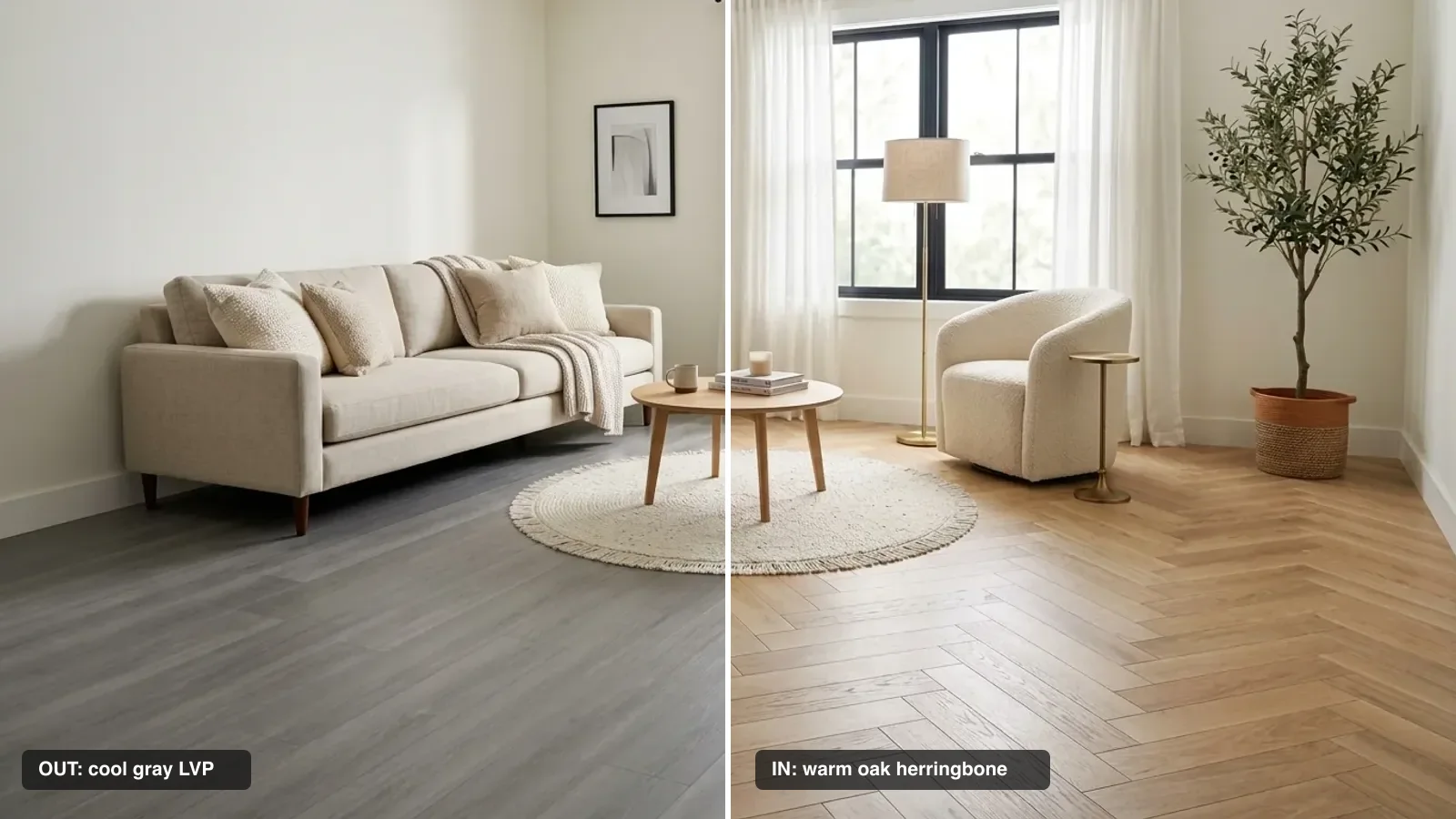
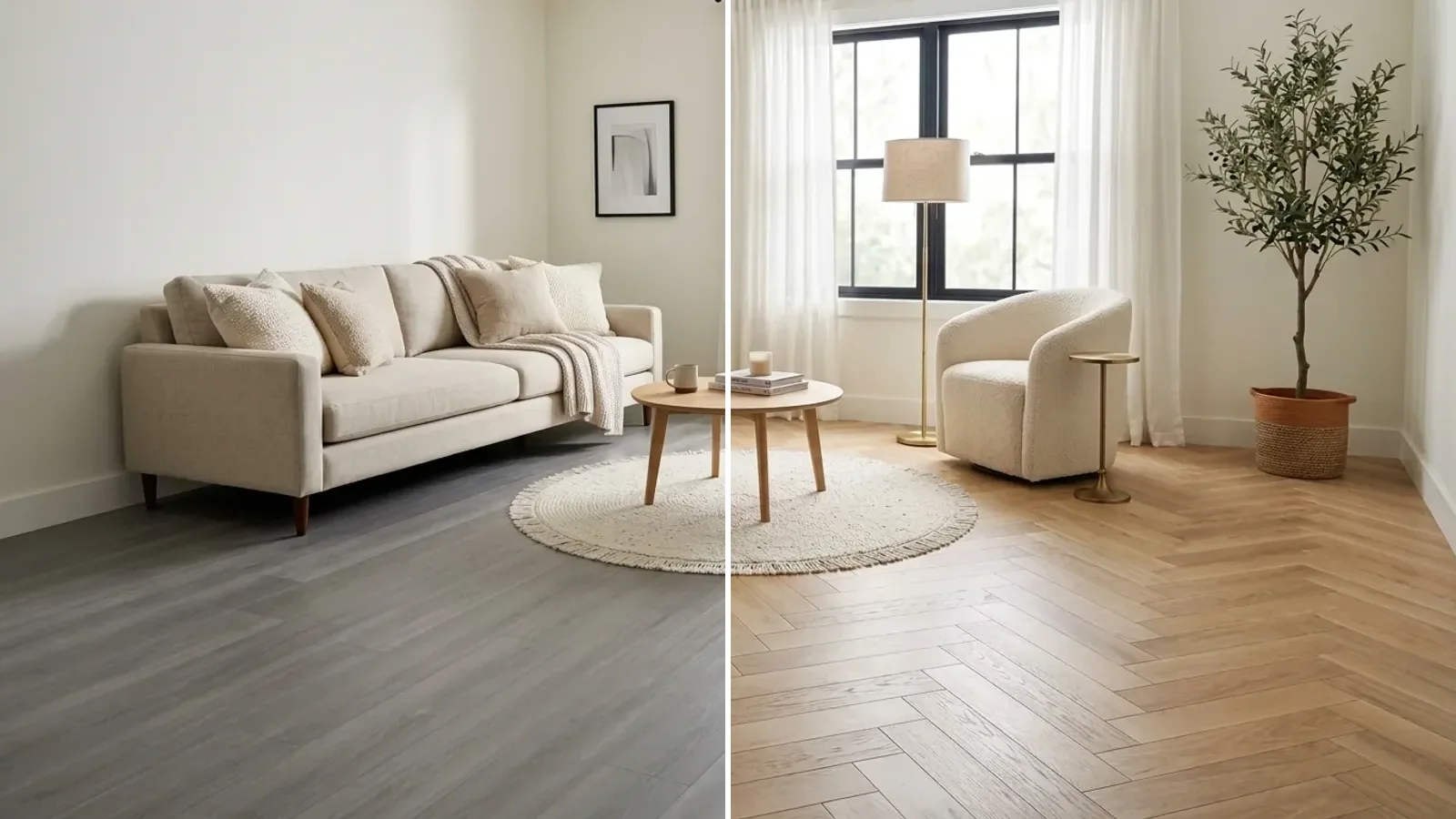
The same room, five years apart in feel: cool gray LVP versus warm oak herringbone. Rendered with MeltFlex.
- Gray and greige floors. The defining floor of 2015 to 2022 is the defining “out” of 2026, named by essentially every trend report this year. You do not need to rip out a gray floor tomorrow, but if you are choosing a new one, choosing gray now is choosing to redo this decision sooner. Already stuck with gray? Warm it up with rugs, wood furniture, and warmer wall colors; our guide to what goes with gray helps.
- High-gloss anything. Glossy hardwood, polished large-format porcelain, shiny laminate. Every scuff, water spot, and paw print shows, and the look now reads showroom rather than home.
- Perfectly uniform boards. Zero-variation floors, where every plank is an identical clone, went from “clean” to “fake-looking” as the variation trend took over.
- Builder-grade thin LVP. The plasticky, obviously-vinyl tier with short repeating patterns. LVP itself is fine; this tier of it is what people mean when they say vinyl looks cheap.
- A different floor in every room. The patchwork of tile here, laminate there, carpet upstairs reads chopped-up and small. Continuous flooring across each level, with deliberate exceptions like an entry or laundry, is the current default.
Flooring Costs Per Square Foot in 2026
Installed prices, materials plus labor, from 2026 US cost guides. Regional labor swings these 20 to 30 percent in either direction, and removing an existing floor adds $1 to $3 per square foot on top.
Two budget notes. Herringbone or chevron layouts add 20 to 30 percent to labor in any material. And if you are furnishing the room at the same time, our 2026 furniture price index and whole-house furnishing guide cover everything that goes on top of the floor.
The Resale Math: Floors Are the Rare Renovation That Pays Back
Flooring is one of the only home projects where the resale numbers are unambiguous. The National Association of Realtors and NARI Remodeling Impact Report found that refinishing existing hardwood floors recovers about 147 percent of its cost at resale, the highest return of any interior project they measured, with homeowners spending around $5,500 and recovering around $8,000. Installing new wood flooring recovers about 118 percent. Both beat kitchen remodels, bathroom remodels, and basically everything else inside the house.
On top of the project return, homes with hardwood floors sell for roughly 2.5 percent more according to Realtor.com data cited by Opendoor, and 54 percent of buyers say they would pay more for hardwood. The translation for 2026 decisions: if there is real wood hiding under your carpet or a tired finish on your existing oak, refinishing it in a warm matte tone is both the trendiest and the most profitable move on this page.
Flooring is rarely the only thing dating a room, and it is one of the more expensive places to start. If you are working out what to fix first, we put a straight verdict on twenty features people keep asking about, carpet included, in what is out of style in 2026.
Which Floor for Which Room
See Any of These Floors in Your Own Room First
Flooring is the most expensive “guess” in interior design. It costs thousands, it is glued or nailed down, and a 3-inch showroom sample tells you almost nothing about how 300 square feet of it will look under your light with your furniture. That is the exact problem the renders in this post solve: every living room image above is one photo with the floor swapped by AI.
You can do the same with your own room. Upload a photo to MeltFlex Floor Restyle, and it re-renders your actual room with golden oak, herringbone, walnut, stone, or anything else, keeping your furniture, walls, and lighting untouched. Compare five floors in five minutes, then walk into the flooring store already knowing the answer. It is free to try, and if you want to redesign more than the floor, the AI room design tool handles furniture, walls, and that fifth wall too.
Sources and further reading
- Forbes, 2026 Home Flooring Trends: Patterned Hardwoods and Toasty Palettes (February 2026).
- House Digest, 6 Flooring Trends That Are Out in 2026 and 7 to Consider Instead.
- Flooring America, 2026 Flooring Trends, and Floor Coverings International, 7 Flooring Trends for 2026.
- The Garrison Collection, Top Flooring Trends for 2026: Colors, Patterns, and Finishes.
- National Association of Realtors, Best Flooring for Home Resale Value, citing the NAR/NARI Remodeling Impact Report: 147 percent cost recovery for hardwood refinishing, 118 percent for new wood floors.
- Opendoor, Do Hardwood Floors Increase Home Value?: the 2.5 percent hardwood price premium and buyer-preference figures.
- FlooringStores, LVP Installation Costs 2026, and Homewyse, 2026 installed-cost calculators for the per-square-foot ranges.