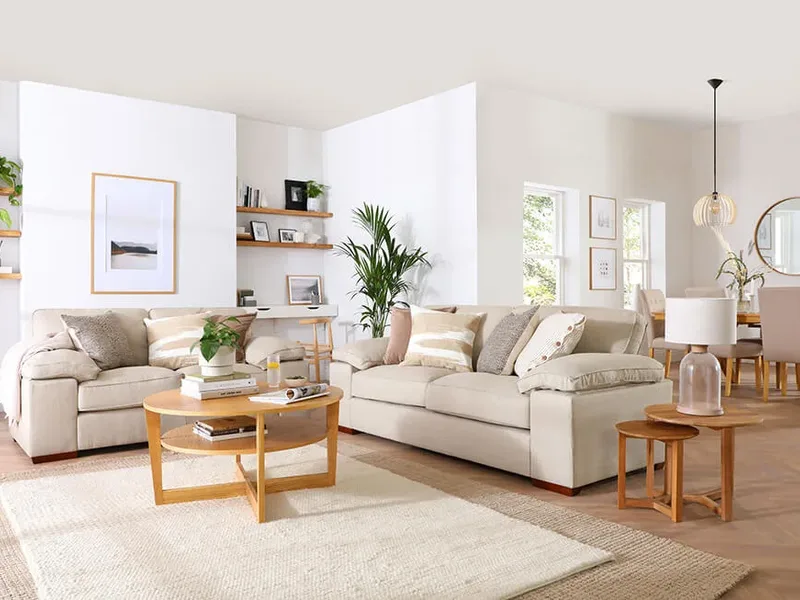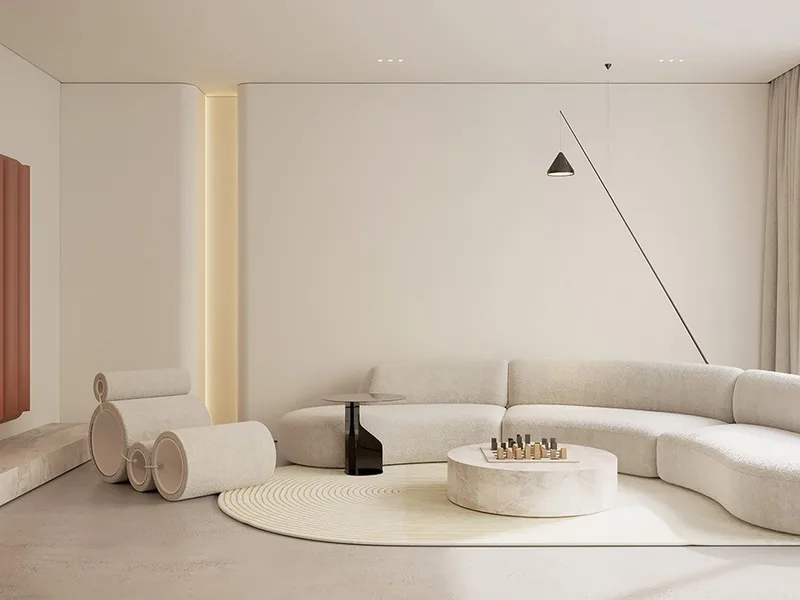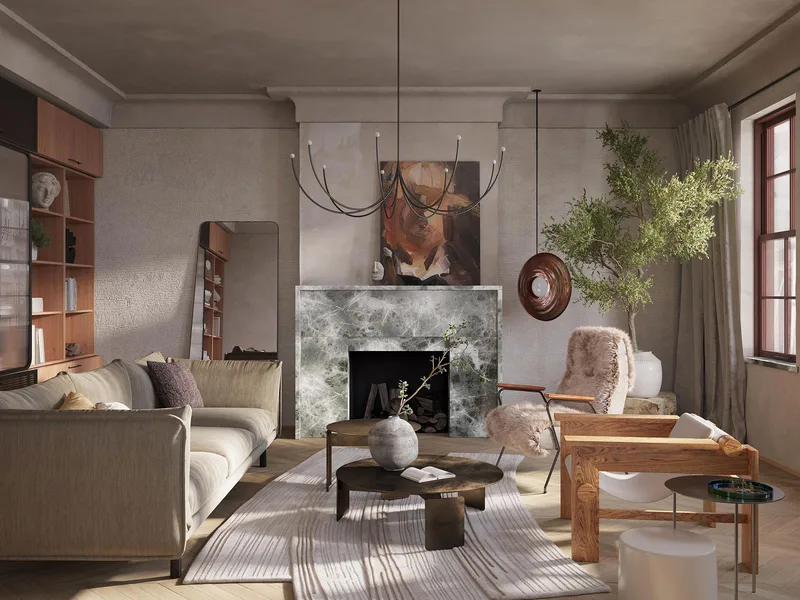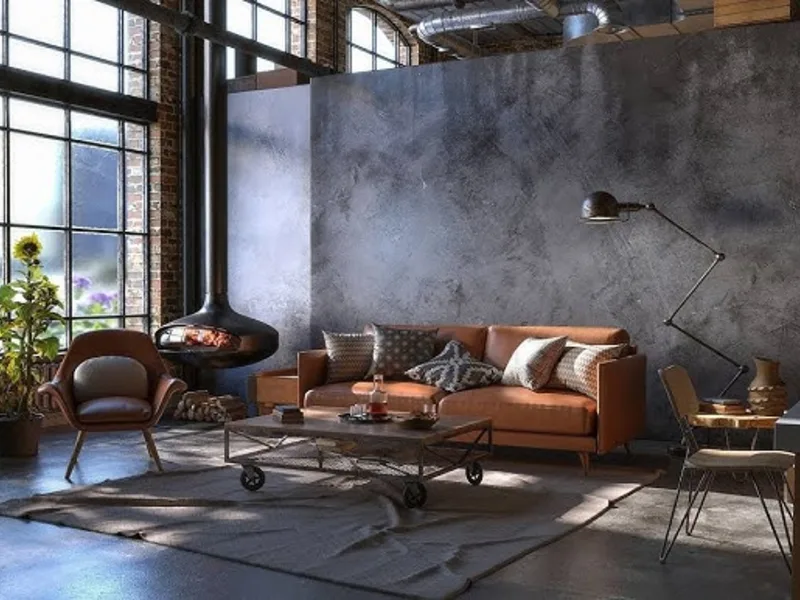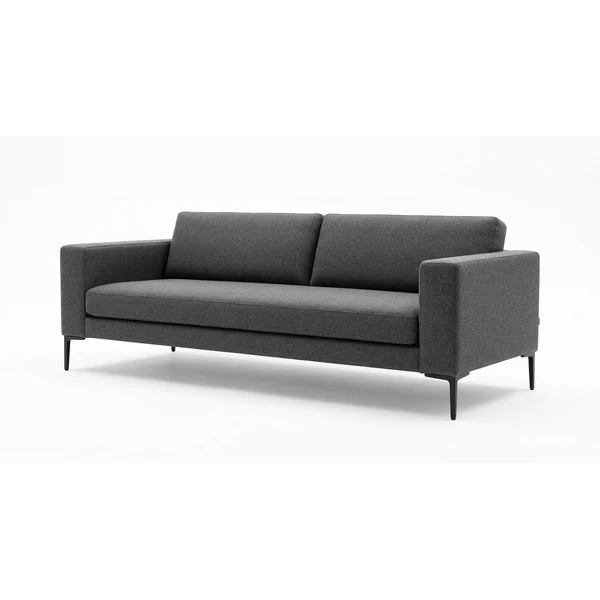
Low-profile sofa
Straight arms, a low back, and a deep seat. The clean horizontal anchor of the room.
Clean lines, open space, and a confident, restrained palette where every surface feels intentional. Here is what defines modern design in 2026, what it costs, the trends shaping it now, and how to get the look.
Try Modern on your room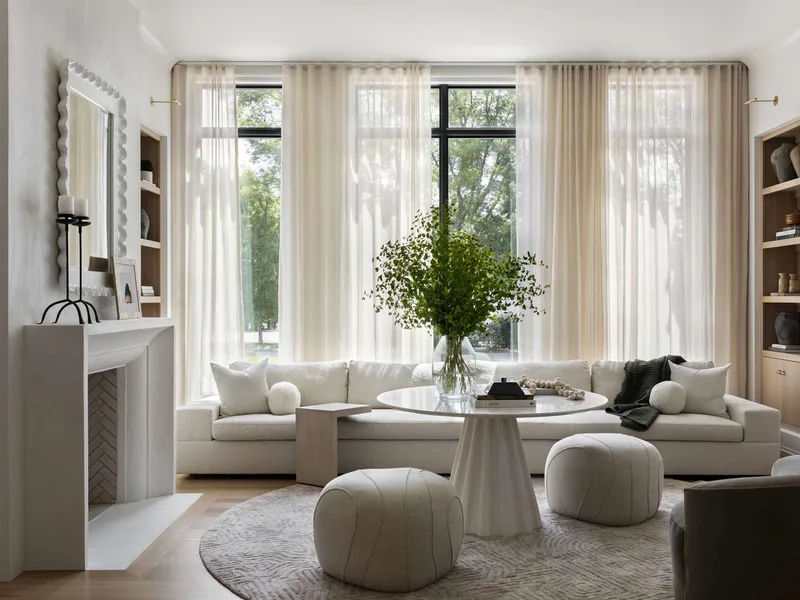
A few pieces carry the whole look. These are the clean-lined, sculptural staples that read as modern instantly:
Straight arms, a low back, and a deep seat. The clean horizontal anchor of the room.
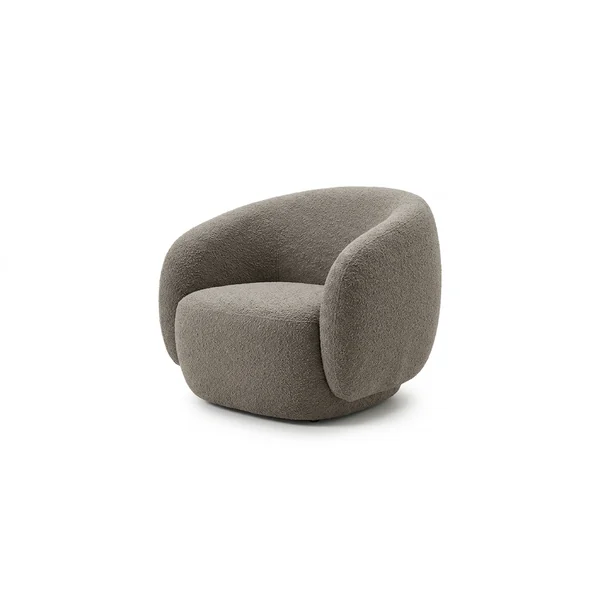
One statement silhouette that doubles as art against the neutral backdrop.
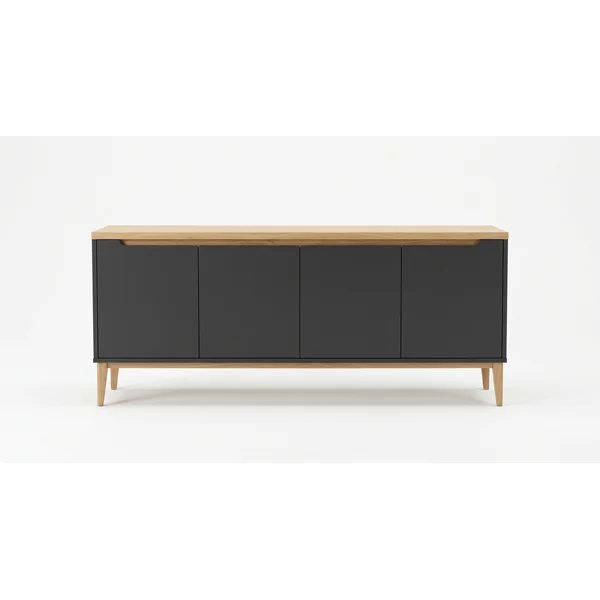
Handleless storage with an unbroken front to keep surfaces and lines clean.
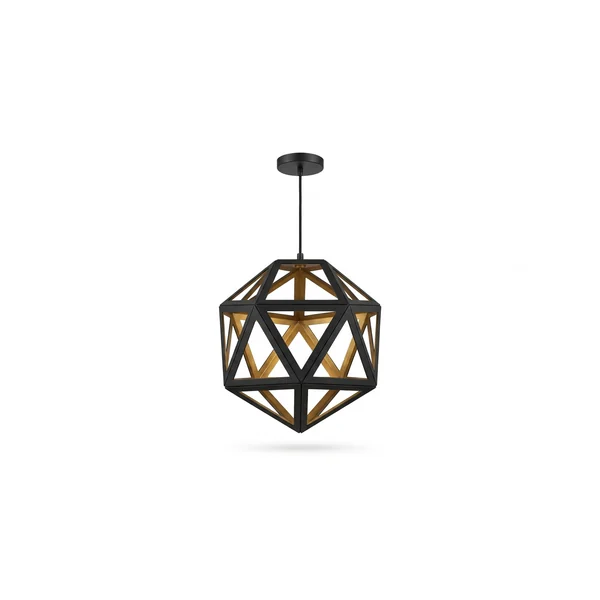
A bold geometric or globe fixture that acts as a focal point overhead.
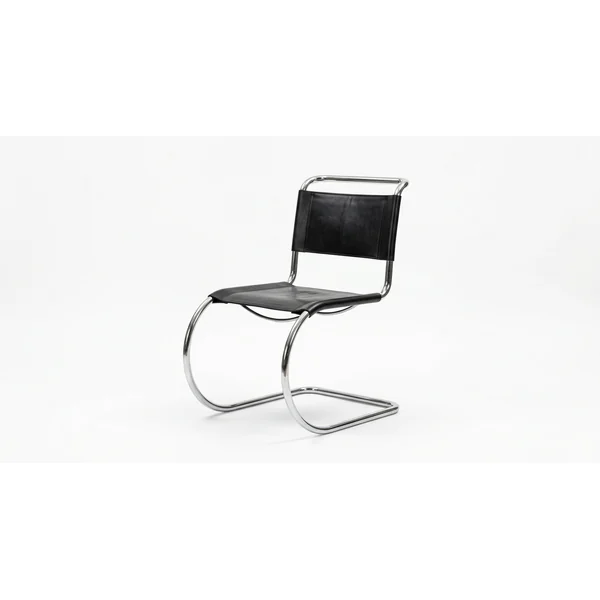
A Bauhaus-era classic in tubular steel and leather, modern design in one object.
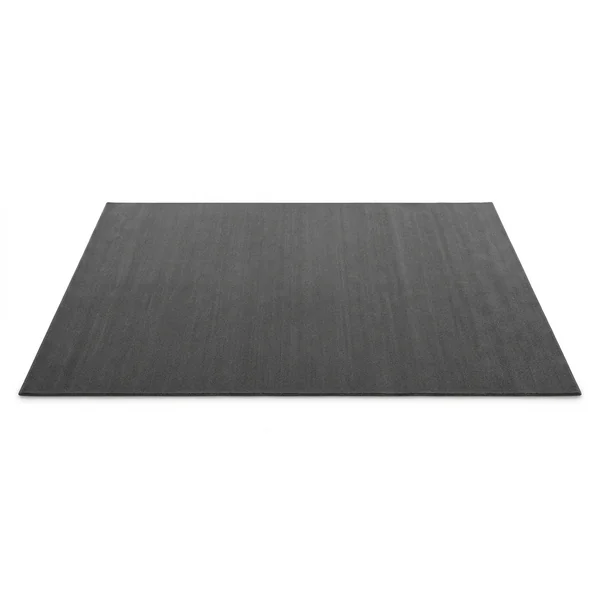
A simple grey or charcoal rug to zone an open-plan space without adding clutter.
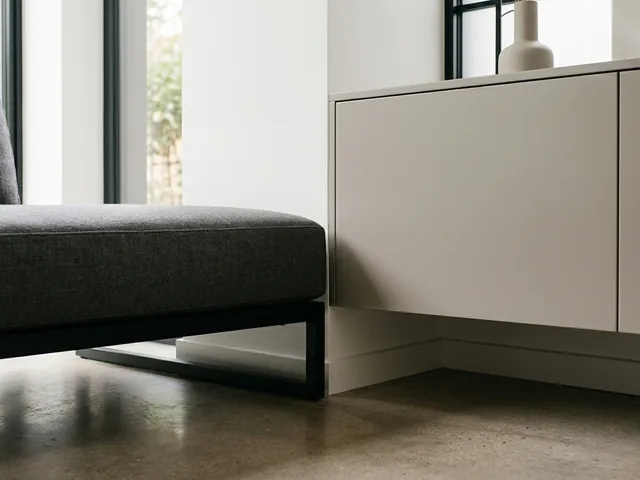
Straight edges, low horizontal furniture, and unbroken surfaces. Geometry, not ornament, defines the room.
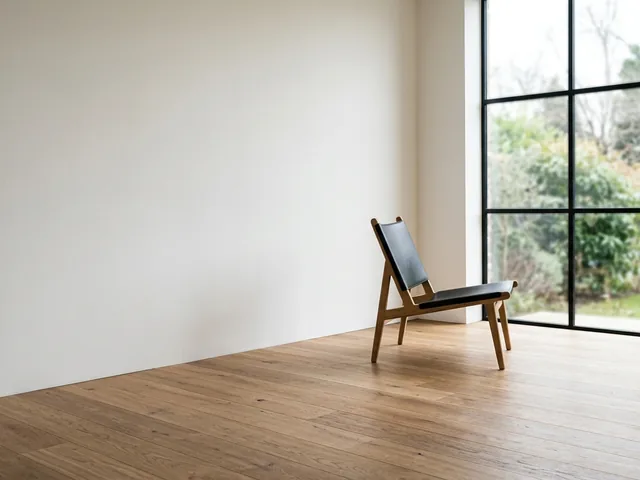
Open-plan layouts and generous negative space. Empty floor and wall area is treated as a deliberate design element.
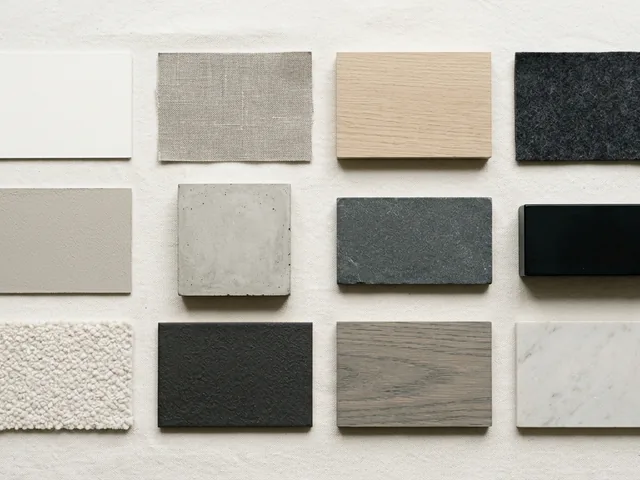
White, charcoal, and warm grey form the base, kept tight so one or two accents can carry real weight.
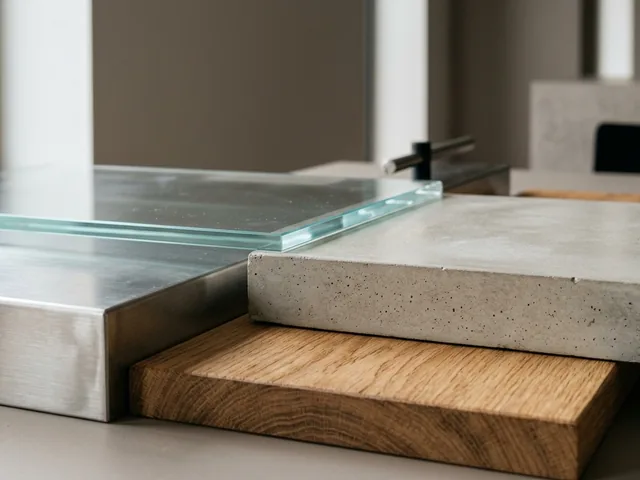
Steel, glass, polished concrete, and natural wood used as-is, celebrating each material rather than hiding it.
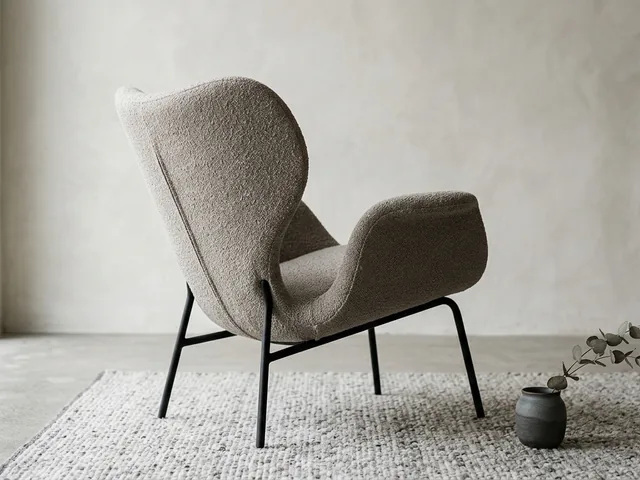
One striking sofa, chair, or light fixture acts as quiet art against the calm backdrop.
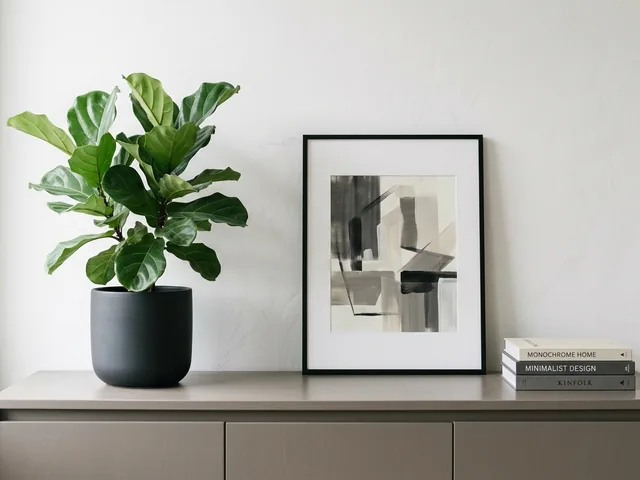
A single large plant, one piece of art, a stack of design books. Decor is edited down to what matters.
Modern rooms run on a tight neutral palette and the 60-30-10 rule. Around 60 percent is a quiet base (walls and large surfaces), about 30 percent is a secondary tone (upholstery, wood, rugs), and the final 10 percent is a single bold accent. The discipline is the point: keep the base disciplined and one strong colour or a black accent will read as deliberate rather than random.
Modern design in 2026 is warming up. The clean-lined, functional bones stay the same, but the cold, all-grey version is giving way to something softer and more material-rich. These are the shifts shaping modern rooms this year:
Stark white-and-grey is being replaced by warm neutrals, oak, and tactile materials. The lines stay clean, but the rooms now feel inviting rather than clinical.
Rounded sofas, arch motifs, and soft sculptural shapes are softening the hard geometry, a clear nod to mid-century modern furniture.
Matte-black window frames, lighting, and hardware are the defining 2026 accent, sharpening the architecture against pale walls.
Rather than many objects, modern rooms now lean on a single hero piece, a bold light, chair, or artwork, with everything else kept quiet.
Polished concrete, travertine, fluted wood, and natural stone are celebrated for their texture, adding warmth and depth without pattern or colour.
Modern design can be done affordably or pushed into designer territory, since the look depends more on restraint and clean lines than on expensive materials. A light refresh runs $500 to $1,000; a full living room makeover lands around $4,500 to $9,000 mid-range. Here is where the money goes (rough 2026 US estimates):
| Item | Budget | Mid-range | High-end |
|---|---|---|---|
| Flooring (wood, concrete, or large tile) | $500–900 (laminate / LVT) | $1,500–3,000 (engineered wood) | $4,000–8,000 (polished concrete / stone) |
| Sofa (low-profile, 3-seat) | $600–1,000 (flat-pack) | $1,500–3,000 | $4,000+ (designer) |
| Sculptural accent chair | $150–350 (repro) | $600–1,200 | $2,500+ (design icon) |
| Lighting (statement pendant + lamps) | $120–300 | $500–1,200 | $2,000+ (design icons) |
| Storage / sideboard | $200–450 | $700–1,400 | $2,500+ (handleless / custom) |
| Decor & art (one large piece, plant, books) | $80–250 | $300–700 | $1,000+ |
Where to spend: the sofa and one sculptural statement piece, the things that define the look and that you see every day. Where to save: rugs, decor, and repro accent chairs, which are easy to swap later.
Paint walls white or warm grey and keep flooring simple, wood, large-format tile, or polished concrete. This is the calm canvas everything else sits on.
Pick a low-profile sofa and flat-front, handleless storage with straight edges. Avoid bulky, ornate, or fussy pieces that break the lines.
Resist filling the room. Leave generous negative space around furniture and keep surfaces mostly clear, empty space is a feature, not a gap to fill.
Bring in a single hero piece, a bold light fixture, an iconic chair, or one large artwork, to give the calm room a focal point.
Add matte-black hardware or lighting, one strong accent colour, and a large plant. Stop early, restraint is what makes it read as modern.
Modern interior design grew out of early-to-mid 20th century modernism, the Bauhaus school, and mid-century furniture design. Its rule is form follows function: strip away ornament, expose the honest structure of a room, and let clean geometry and open space carry the look. Think flat planes, low horizontal furniture, and a tight, neutral palette.
The result is a calm, uncluttered room where every piece earns its place. You build it with a neutral base of white, charcoal, or warm grey, then add one or two sculptural statement pieces and let negative space do the work. Note that capital-M Modern is a defined historical style, not the same as contemporary, which simply means whatever is in fashion right now.
A light refresh using paint, a rug, new lighting, and a few decor pieces costs around $500 to $1,000. A fuller makeover with flooring, a sofa, storage, and a statement piece typically runs $4,500 to $9,000 at mid-range prices, or as low as $1,650 to $3,250 if you lean on flat-pack furniture and repro design pieces. The sofa and one sculptural statement piece are worth budgeting for first.
Modern refers to a specific historical style from the early-to-mid 20th century, built on clean lines, functional form, and a fixed aesthetic. Contemporary simply means whatever is in style right now, so it changes over time. In practice modern is more structured and geometric, while contemporary is softer and more fluid.
The palette is built on neutrals: white, warm grey, and charcoal, usually grounded with natural wood and sharpened with matte black. Accents are used sparingly, often a single bold colour like rust, ochre, or deep blue, so it reads as deliberate rather than busy.
They overlap but are not the same. Both value clean lines and uncluttered space, but minimalism strips a room back to the absolute essentials, while modern design allows a sculptural statement piece and a bolder accent, giving it slightly more warmth and character.
Add natural wood and tactile materials like wool, leather, or travertine, use warm indirect lighting instead of cool overheads, and bring in one large plant. The clean lines stay, but the texture and warmth stop the room from feeling clinical.
Continuous, low-pattern flooring works best, natural or engineered wood, large-format tile, or polished concrete. Keeping the floor simple and unbroken supports the clean, open feeling that defines modern design.
Yes. The light neutral palette, low-profile furniture, and focus on open space all make a small room feel larger and calmer. The key is restraint: choose a few clean-lined pieces and protect the negative space rather than filling it.
Absolutely. Focus on decluttering, a clean coat of neutral paint, matte-black hardware, and one or two clean-lined flat-pack pieces. Repro versions of design-classic chairs are affordable, and you can upload a photo of your room to MeltFlex to preview the look before spending anything.
It is a simple way to balance colour. About 60 percent of the room is a neutral base (walls and large surfaces), roughly 30 percent is a secondary tone like grey upholstery or wood, and the final 10 percent is a single bold accent or matte-black detail. The tight base is what lets one accent carry the room.
Yes, and it is evolving. In 2026 modern design is moving away from cold, all-grey minimalism toward warm neutrals, curved organic furniture, raw natural materials, and matte-black accents. The core ideas, clean lines, open space, and a restrained palette, remain as popular as ever.
Not sure this is your style? Take the free style quiz