Buying furniture online has one stubborn problem. The product photo shows a sofa on a white background, the listing gives you the dimensions in centimetres, and then you are left to imagine the rest. Will it fit the wall? Will the grey read warm or cold next to your floor? Most people just guess, order, and hope.
Our articles are still written by humans!
Get human written articles in your Google feed.
AI furniture visualization removes that guesswork. It places a real product into a photo of your actual room, at the right scale and in your own light, so you can see how a sofa, bed or table looks and fits before you buy. And it has just gone live on one of the largest furniture stores in the region.
The furniture retailer Kondela has just removed the guessing. Its online store now has an AI furniture visualizer that drops real Kondela products into a photo of your own room, at the right scale and in your own light, before you spend a cent. It is live, it is free for shoppers to use, and it is powered by MeltFlex.
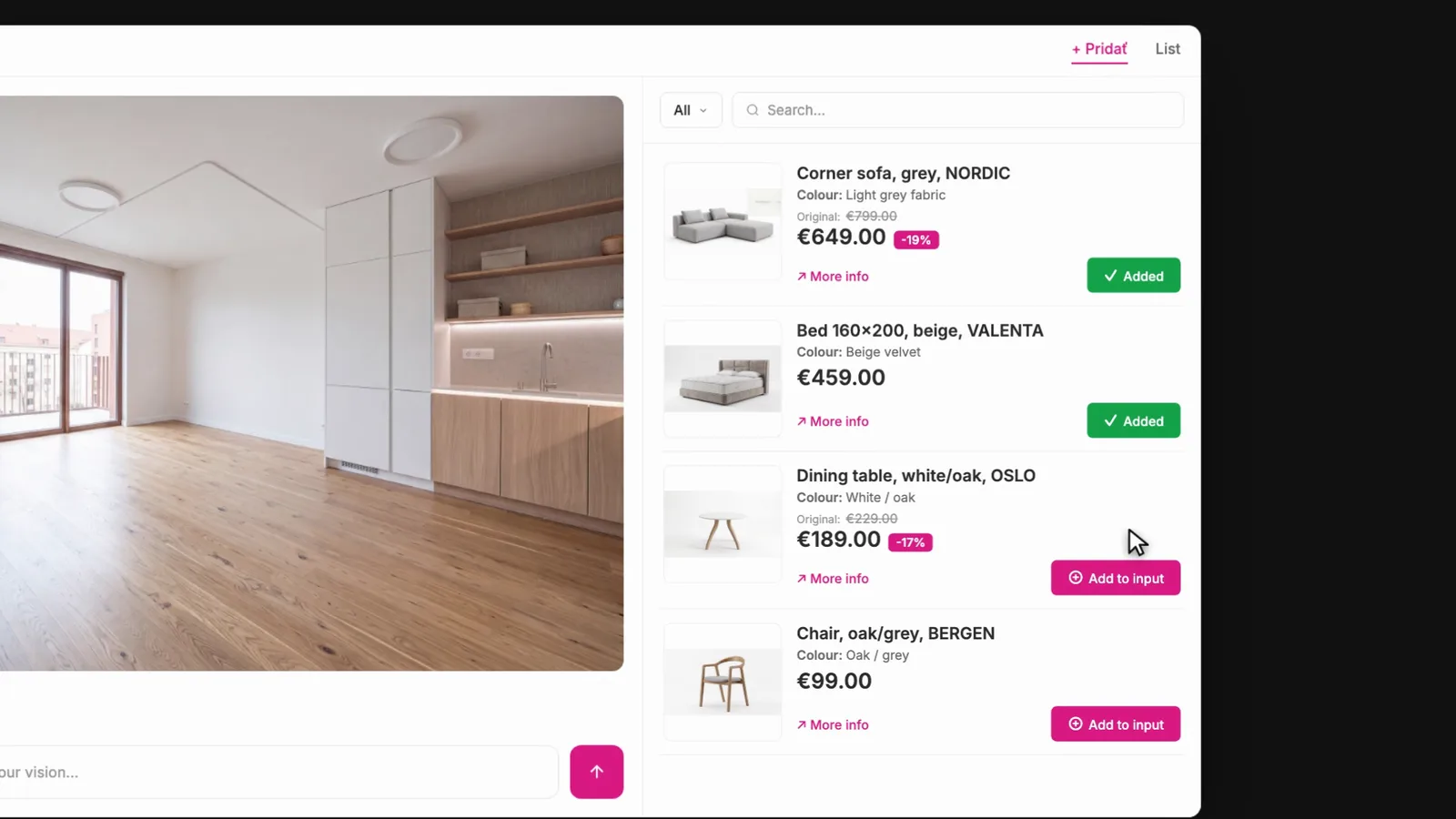
The Kondela AI visualizer in action: an empty room, four real products, one furnished result. See it live at kondela.cz/ai-vizualizacia-interieru.
Key takeaways
- Kondela added AI furniture visualization to its e-shop. Shoppers upload a photo of their room and see real Kondela furniture placed into it before they buy.
- The furniture is real and shoppable. Every piece maps to an actual Kondela product and price, drawn from a catalogue of close to ten thousand items.
- It tackles the number one cause of furniture returns: the piece looking different at home than on the website.
- It runs on MeltFlex. The same engine is available to any furniture brand, retailer or studio as a branded embed or through the API.



A 40-million-euro furniture retailer, not a pilot
This is not a side experiment on a small shop. Kondela is one of the largest furniture retailers in the region. The Slovak company has been selling furniture since 2003, employs between 200 and 249 people, and posted more than €40 million in revenue in 2025, with a net profit above one million euro, according to the public filings on Finstat. Its catalogue runs to close to 10,000 furniture pieces.
We are genuinely proud to power the AI visualization on a store of that size. When a retailer shipping tens of millions of euro a year puts your technology in front of every shopper, on every product, it has to work on real catalogues, real traffic and real buying decisions, not in a demo. That is exactly where MeltFlex was built to run.
What Kondela launched
On a Kondela product, the shopper uploads a photo of the actual room the furniture is meant for. They then browse the Kondela catalogue inside the tool and add the pieces they are considering to the scene. A click later, the AI renders those exact products into the room, keeping the existing walls, windows, floor and proportions intact.
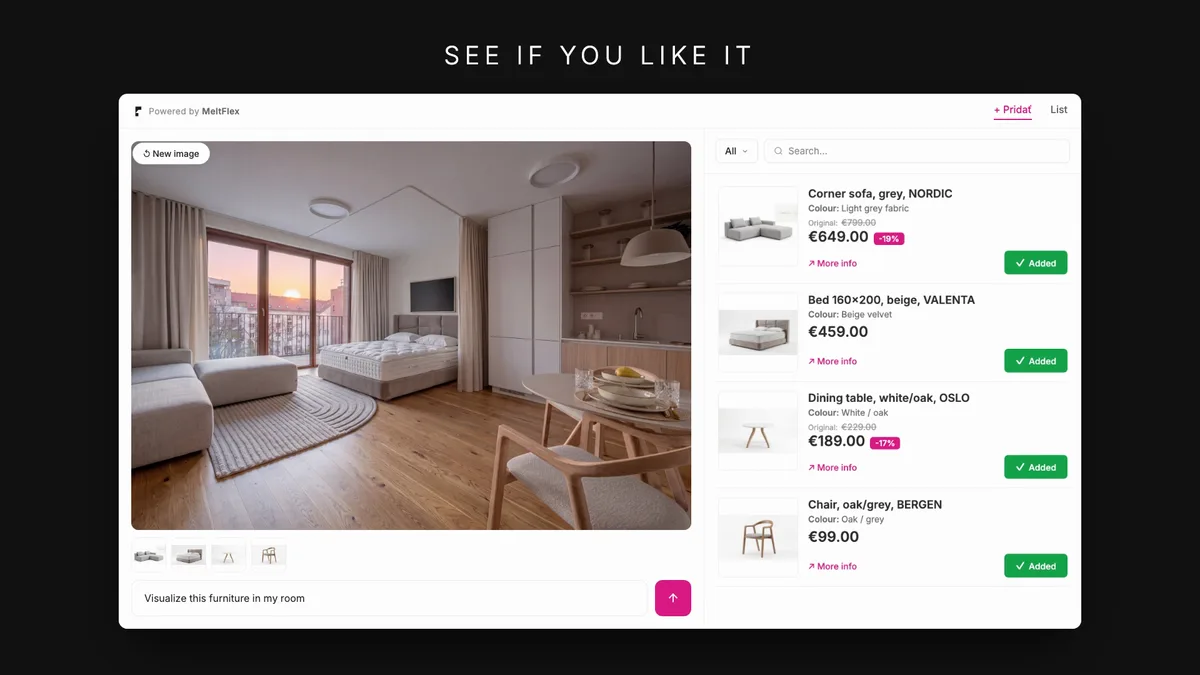
You pick from real Kondela products with live prices, here a NORDIC corner sofa, a VALENTA bed, an OSLO dining table and a BERGEN chair, and add them straight to your room.
This is the detail that matters: the visualizer is not a generic 3D sandbox. It is wired to Kondela’s real catalogue, close to 10,000 furniture pieces, so every item you place is a product you can actually order, with its current price and a link back to its page. The picture and the cart are the same thing. It is the buying side of the same idea as finding furniture from a photo: close the gap between seeing something and owning it.
Concretely, here is what changes for a Kondela shopper. Someone eyeing the grey NORDIC corner sofa no longer has to guess whether it swallows their living room or whether the light grey reads warm against their oak floor. They snap a photo of the room, drop the NORDIC sofa, the VALENTA bed or the OSLO table into it, and see the actual piece, at the right size, in their own light, in about twenty seconds. The decision moves from “I think it might work” to “I can see that it works,” before the order is placed.
Why AI furniture visualization matters for an online store
Furniture is one of the hardest things to sell online, because it is one of the hardest things to picture. A photo cannot tell a shopper whether a three seater will swallow their living room or sit lost in it, or whether an oak finish will fight the floor they already have. That uncertainty does two expensive things: it makes people hesitate before buying, and it sends a chunk of what they do buy straight back.
The numbers back this up. Industry benchmarks put the average online return rate at roughly one in five orders in 2026, two to three times the in-store rate, and home and furniture sit in the 15 to 20 percent band, with size, scale and colour mismatches named as the main causes. The sting is the cost: processing a single large furniture return runs $55 to $90 or more once you add freight and handling. Every return you prevent is margin you keep.
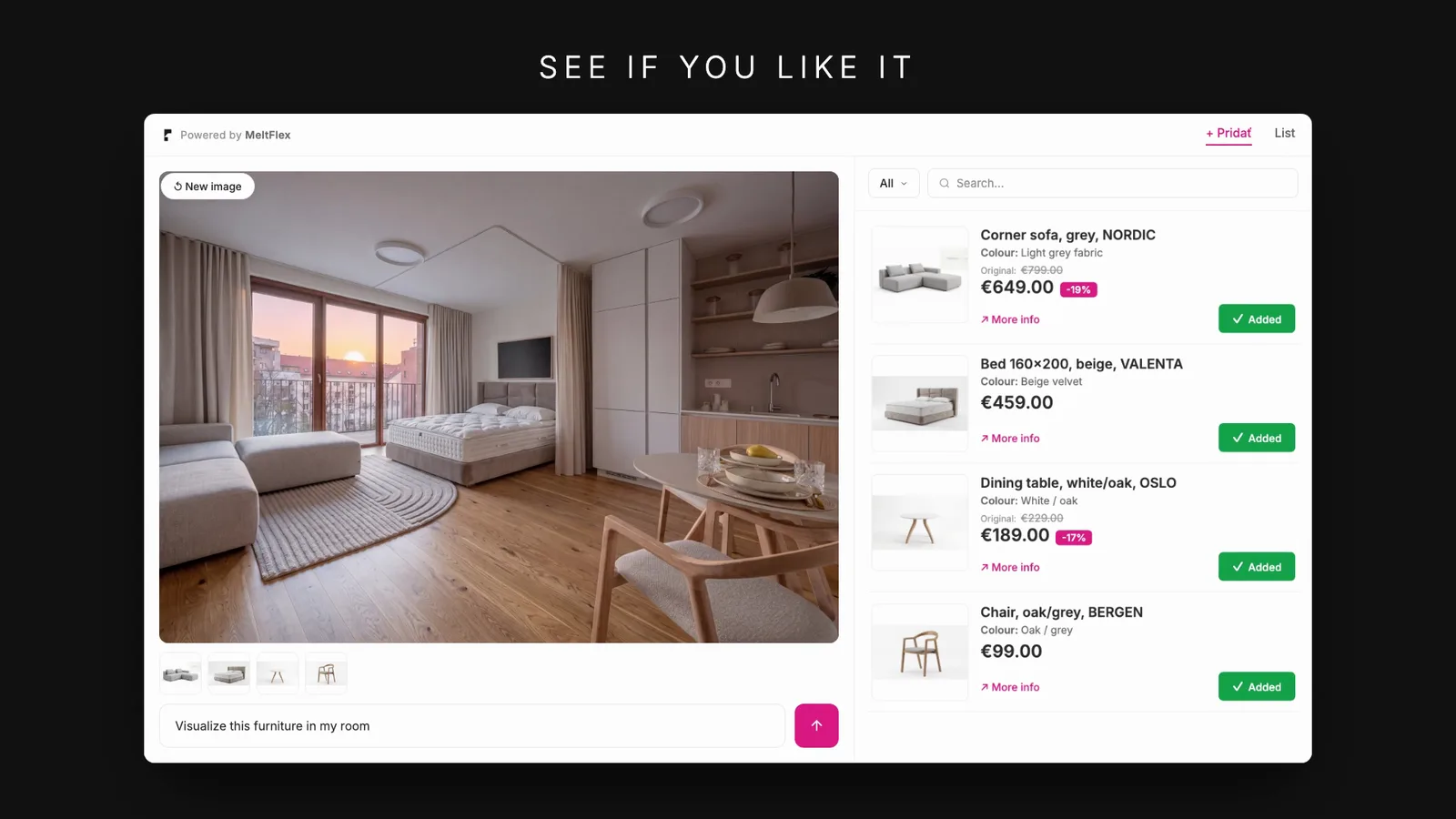
The same room, furnished. Seeing the real products in the real space turns a maybe into a decision.
Returns are especially painful in furniture, where items are bulky and the shipping back is slow and costly. The biggest single reason a piece comes back is simple: it looked different at home than it did on the screen. When a shopper can check scale, colour and fit against their own walls and floor first, they order with more confidence and keep what they ordered. A visualizer is not a gimmick on the product page, it is a quieter return rate and a higher conversion rate. It is the same logic that makes AI virtual staging pay for itself in real estate, applied to the product page.
How the AI visualizer works
Under the hood it is the same MeltFlex engine behind our AI interior design tool, pointed at Kondela’s catalogue and wrapped in their brand. For the shopper it is three steps: an empty room, the furniture, and the finished result.
Step 1: Start with your real room
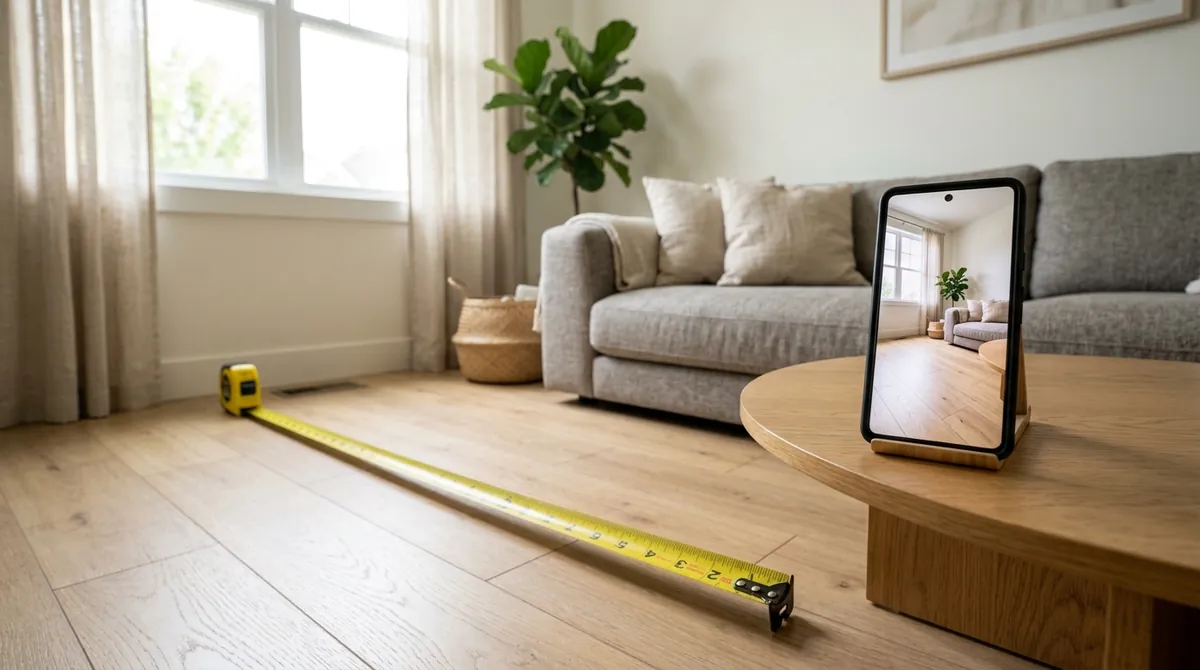
A single phone photo of the actual space is enough. No measuring, no app, no 3D skills. The tool works from the room you already have, the same idea behind measuring a room from a photo.
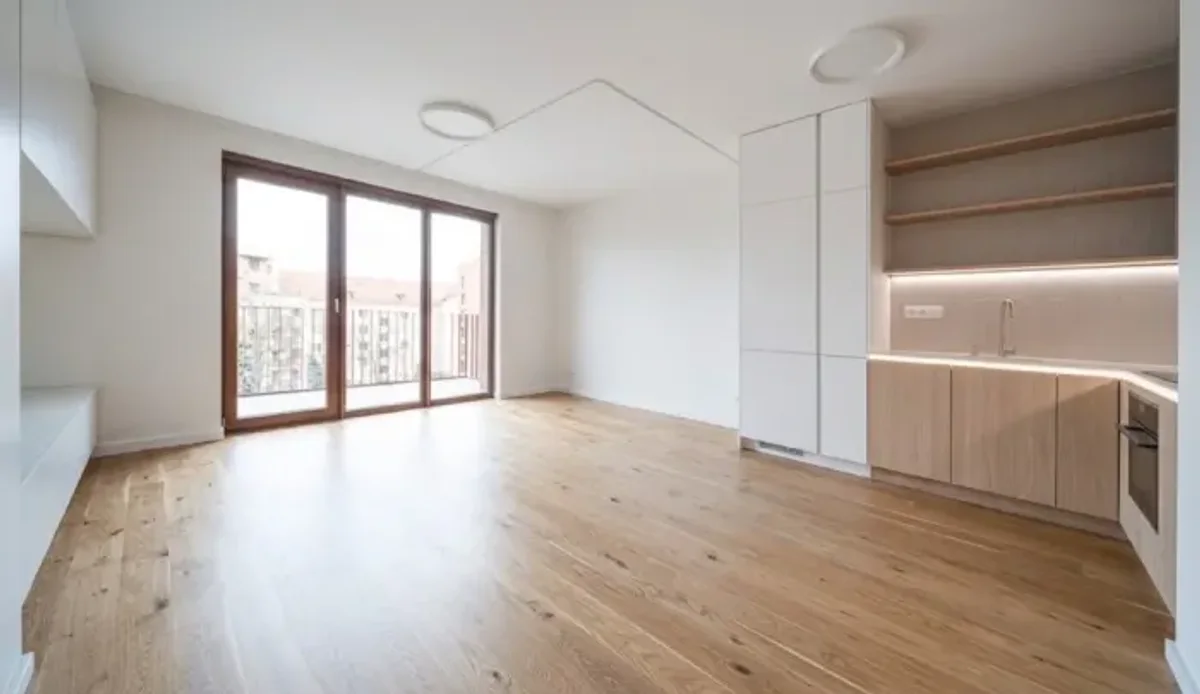
Step one: a photo of the empty room you want to furnish.
Step 2: Add the furniture
Browse the Kondela catalogue inside the tool and add the pieces you are considering. These are real products with live prices, not generic 3D models.
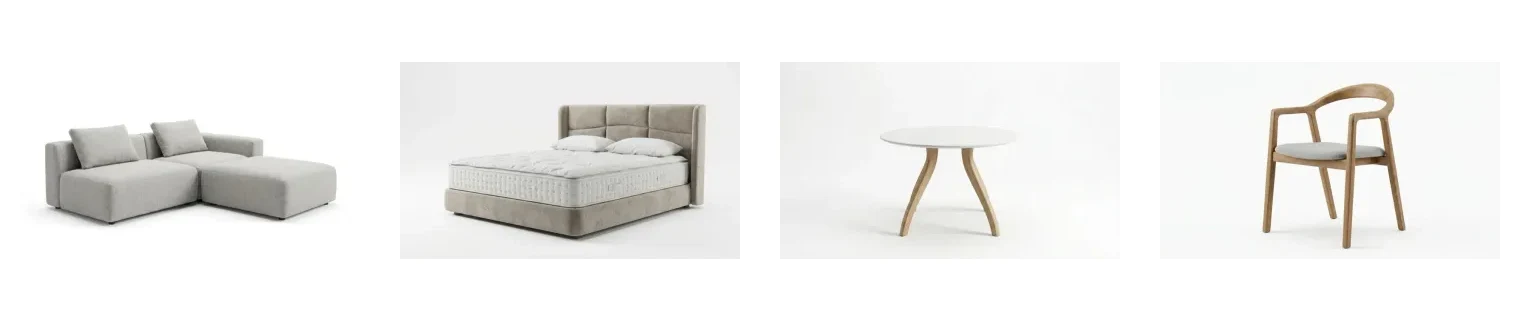
Step two: pick the real products you want to try, here a sofa, a bed, a table and a chair.
Step 3: See it placed in your room
In about twenty seconds the AI renders the pieces into the room, keeping the walls, windows and layout intact, ready to share or buy. It runs in the browser on phone and desktop, the same way our furniture fit calculator and the rest of the MeltFlex toolset do.
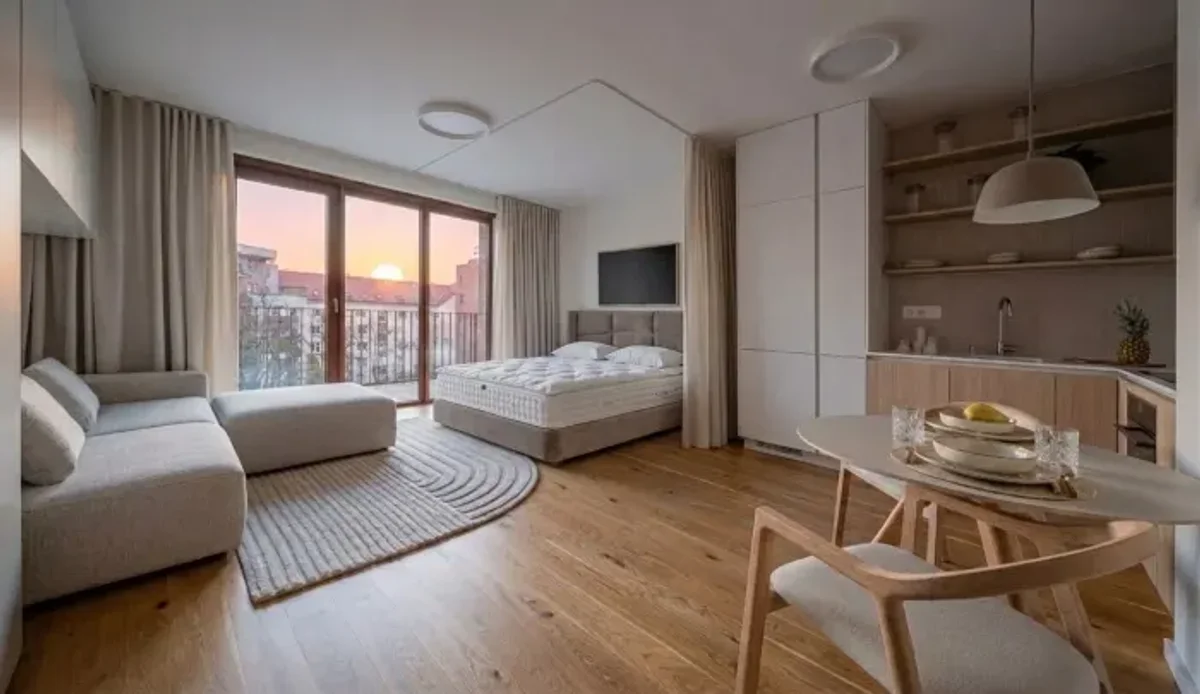
Step three: the same room, furnished, in seconds.
How other furniture brands can do the same
The Kondela tool is not a one-off build. It is the MeltFlex engine, deployed under a partner’s brand and connected to their products, and any furniture brand, retailer, architect or interior studio can run the same thing on their own site.

Kondela’s visualizer runs on MeltFlex, under Kondela’s brand, on Kondela’s domain.
There are two ways in. We can build it for you as a branded embed, connect it to your catalogue and put it live on your store, which is the path Kondela took. Or your developers can wire MeltFlex straight into your site through the MeltFlex API. Both are covered on the MeltFlex for business page.
Put AI furniture visualization on your store
- Your brand, your catalogue. Shoppers visualize the products you actually sell, linked to real prices.
- Branded embed or API. We build it for you, or your team integrates it directly.
- Fewer returns, more confidence. Customers see the piece in their room before they order.
Frequently asked questions
What is AI furniture visualization?
It is a tool that places a real product into a photo of your actual room, so you can see how a sofa, bed or table looks and fits before you buy. You upload a picture of your space, pick the furniture, and the AI renders it into that room at the right scale and lighting in seconds.
How does Kondela’s AI furniture visualizer work?
You upload a photo of your room, browse the Kondela catalogue, and add the pieces you like. The MeltFlex engine renders those exact products into your room while keeping your walls, windows, floor and layout. Each item stays linked to its real Kondela product page and price.
Does it reduce returns?
It removes the biggest reason furniture gets sent back: it looked different at home than on the website. When a shopper can check scale, colour and fit against their own room before ordering, they buy with more confidence and return less. That matters a lot in furniture, where items are bulky and return shipping is expensive.
Can other furniture retailers add this?
Yes. The same engine is available to any furniture brand, retailer, architect or interior studio, as a branded embed connected to your catalogue or through the MeltFlex for business integration. You can also try MeltFlex free first to see the engine for yourself.