If you have noticed that the most beautiful rooms of 2026 look soft, warm, and a little bit sculptural, like a luxury spa retreat you never want to leave, you have already seen organic luxe. It is the style designers keep naming as one of the year's defining looks, and it is the answer to a decade of cool grey minimalism that left a lot of homes looking expensive but unwelcoming.
Our articles are still written by humans!
Get human written articles in your Google feed.
Organic luxe goes by a few names: natural luxe, elevated organic modern. The core idea is the same in all of them. Take the warmth and ease of natural materials, then finish it with the polish of high-end design, so a room feels both relaxed and refined. This guide covers exactly what it is, the palette and materials that define it, how it differs from warm minimalism, quiet luxury, and the more textile-driven Afrohemian look, and the fastest way to see whether it suits your actual room before you spend anything.
The short version
- What it is: natural materials and warmth meet high-end polish for a restorative, retreat-like room.
- The palette: warm earthy neutrals, oat, caramel, terracotta, greige, with clay and sage accents. No cool grey.
- The forms: curved sofas, arched openings, rounded tables, sculptural lighting.
- The materials: plaster, travertine, oak, bouclé, linen, raw ceramics, brass.
- vs warm minimalism: minimalism subtracts to feel calm, organic luxe adds soft natural richness.
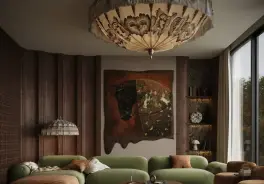
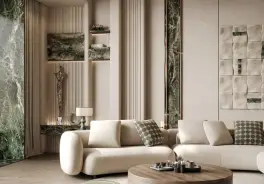
What is organic luxe interior design?
Organic luxe is an interior style that pairs the warmth and ease of natural materials with the polish of high-end design. It rests on three pillars: warm earthy color palettes, curved and sculptural forms, and tactile materials you instinctively want to touch. The goal is a space that feels restorative and retreat-like rather than cold, busy, or showy. Decorilla names it among the defining 2026 trends, sometimes calling it natural luxe or elevated organic modern.
The simplest way to understand it: it is luxury without coldness. Plenty of high-end interiors feel impressive but unwelcoming. Organic luxe keeps the quality and the considered detailing, then softens everything with natural texture and warmth so the room feels like somewhere you exhale, not a showroom you tiptoe through.
Organic luxe vs warm minimalism vs quiet luxury
These three looks share warm, earthy DNA and people often confuse them. They are distinct, and knowing the difference helps you decide which suits you.
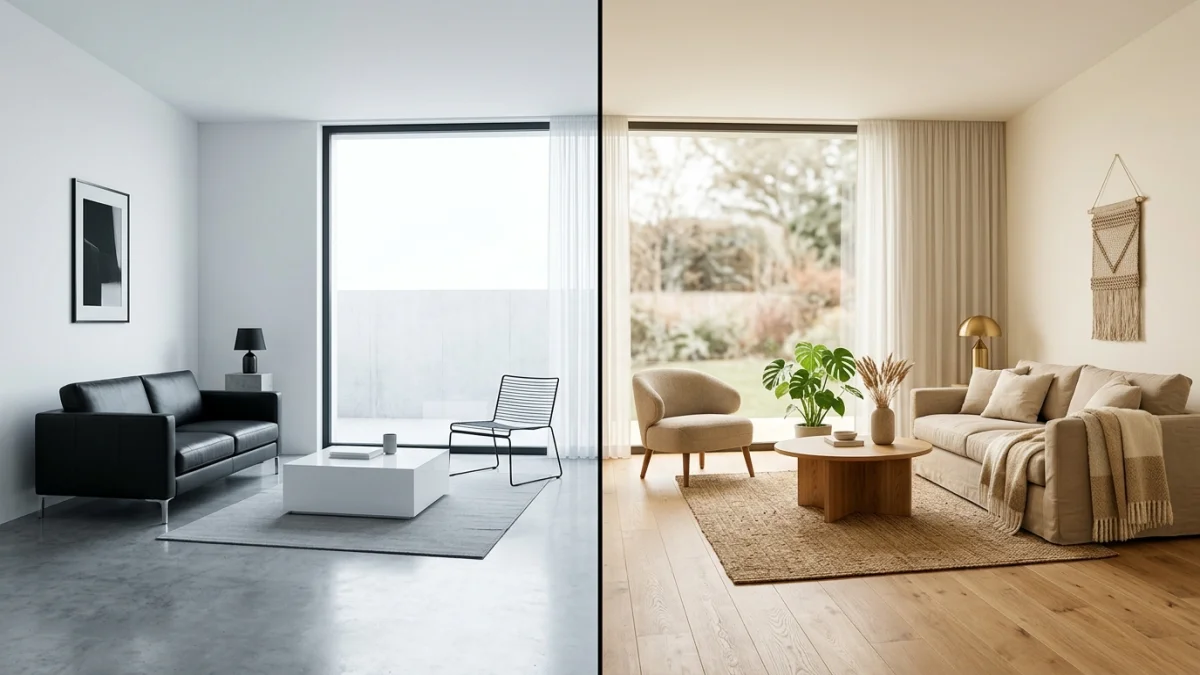
In practice the line that matters most is between organic luxe and warm minimalism. Warm minimalism subtracts: fewer pieces, clean lines, lots of negative space, just kept cozy rather than cold. Organic luxe keeps the warmth but adds back sculpture and richness, curved forms, heavier texture, layered natural materials. One whispers, the other gently hums. Many real rooms blend the two, and that is completely fine.
The organic luxe color palette
Color is where organic luxe makes its clearest break from the past decade. Out go cool greys and stark white. In come warm, nature-inspired neutrals: wheat, oat, caramel, terracotta, and warm greys with taupe and greige undertones. This mirrors the broader 2026 shift that Apartment Therapy describes as friendly warm beige replacing grey, with creamy tones and deeper caramels moving onto walls and upholstery.
Accents stay in the same outdoor family: burnt umber, clay, rust, and dusty sage, used in small doses to add depth without breaking the calm. If you want to push a little bolder, an earthy red accent sits perfectly inside this palette, which is exactly why the unexpected red theory works so well in organic luxe rooms. The whole scheme is built to sit naturally beside wood tones and woven textures, so nothing fights anything else.
The materials that define organic luxe
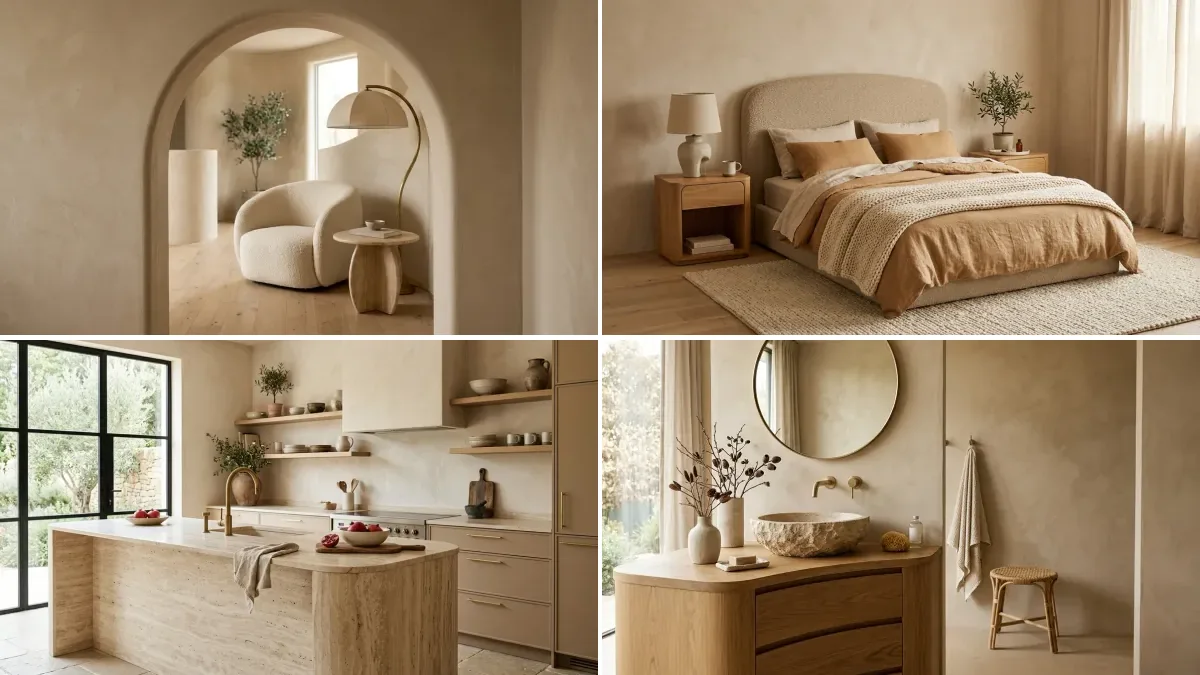
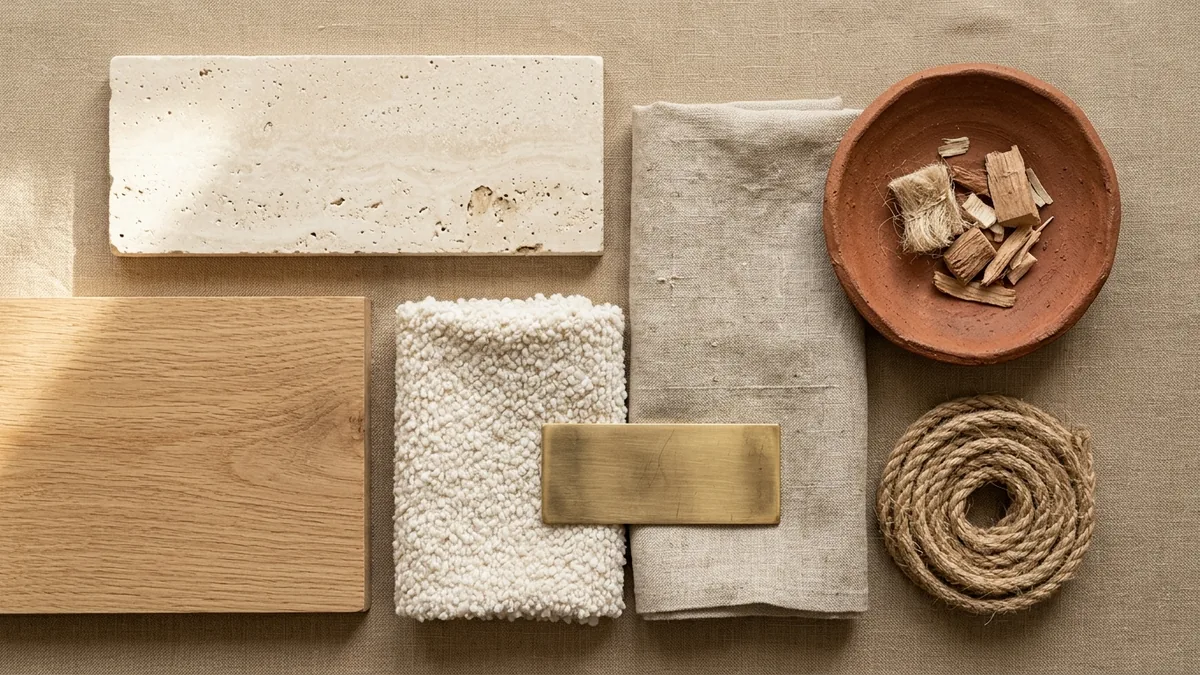
If the palette is the mood, materials are the substance, and organic luxe is unusually material-driven. The list is consistent across designers: limewash or Venetian plaster walls, travertine and unfilled natural stone, solid and reclaimed oak, bouclé and chunky knit upholstery, linen, raw ceramics, rattan, and woven wool rugs.
What makes the 2026 version distinct is texture you can actually feel. Designers are using sculpted organic textures, plaster finished to resemble bark, rugs woven to echo windblown grass, so surfaces carry depth even when the colors stay quiet. The result is a room that looks rich in photos and feels even better in person. On metal, brass has clearly won: most designers now reach for warm brass over chrome for everything from drawer pulls to lighting, which reinforces the warm, golden undertone of the whole style.
Curved and sculptural forms
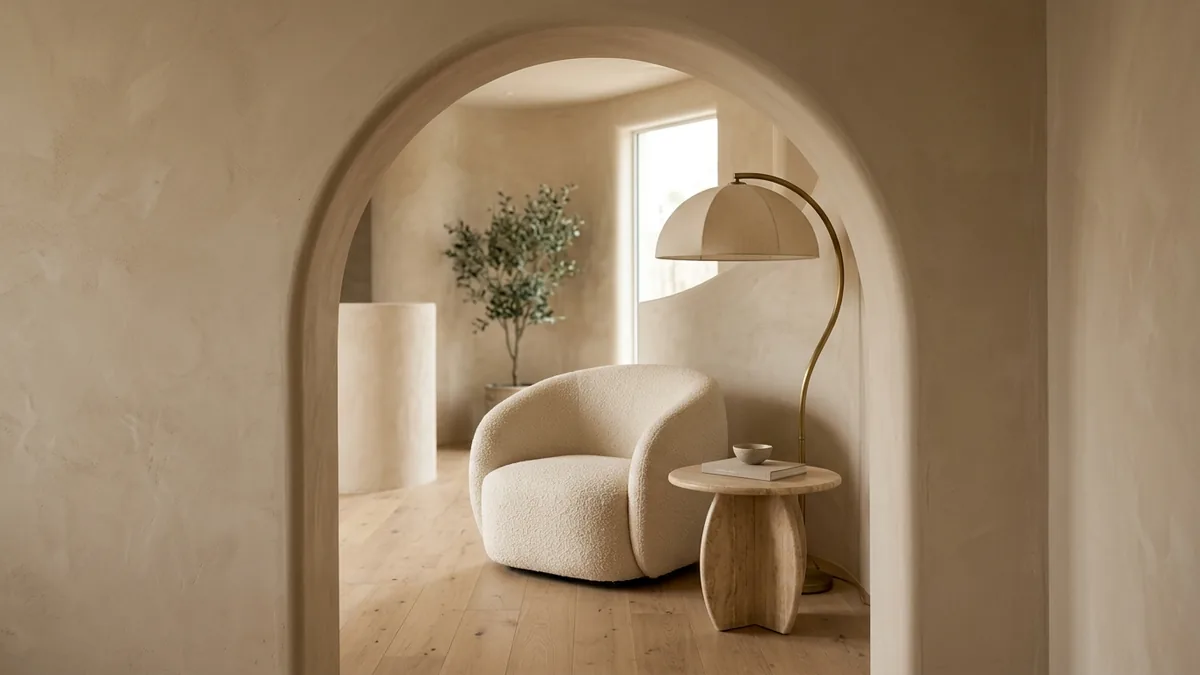
The third pillar is shape. Organic luxe rejects the boxy, hard-edged furniture of the 2010s in favor of flowing, organic lines. This is the same force behind the wider curved furniture trend of 2026: curved sofas, rounded kitchen islands, arched doorways, circular tables, kidney-shaped coffee tables, and sculptural lighting.
The reason curves matter so much here is psychological. Rounded forms read as softer and more welcoming, which is exactly the restorative feeling organic luxe is chasing. You do not need every piece to curve. One or two sculptural anchors, a curved sofa, an arched mirror, a rounded lamp, are usually enough to shift a room from rigid to relaxed. Pair them with the straight lines of architecture and oak and you get balance rather than a room that feels like a cartoon.
Organic luxe room by room
Living room. The signature space. A curved bouclé or linen sofa, a travertine or rounded oak coffee table, a chunky woven rug, plaster or warm oat walls, and a sculptural floor lamp. Keep accessories raw and few: a large ceramic vase, a stack of books, one trailing plant.
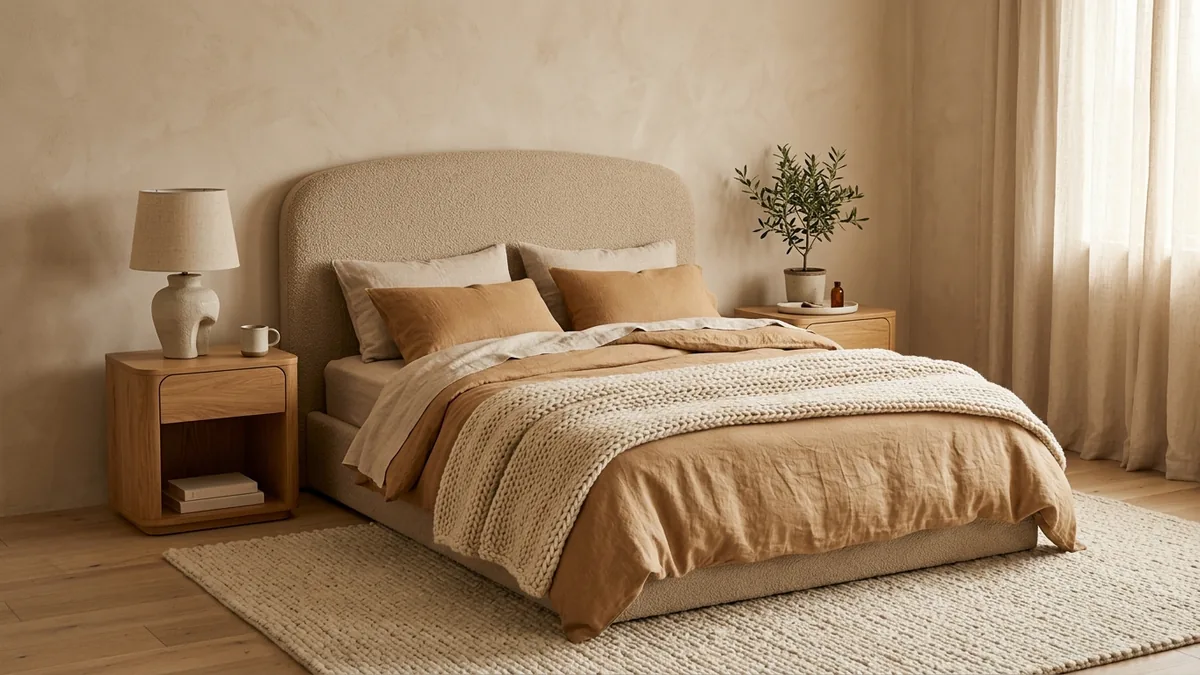
Bedroom. Made for this style. An upholstered curved headboard, layered linen bedding in oat and caramel, a woven rug underfoot, warm wood nightstands, and soft, low lighting. The retreat feeling lands hardest here.
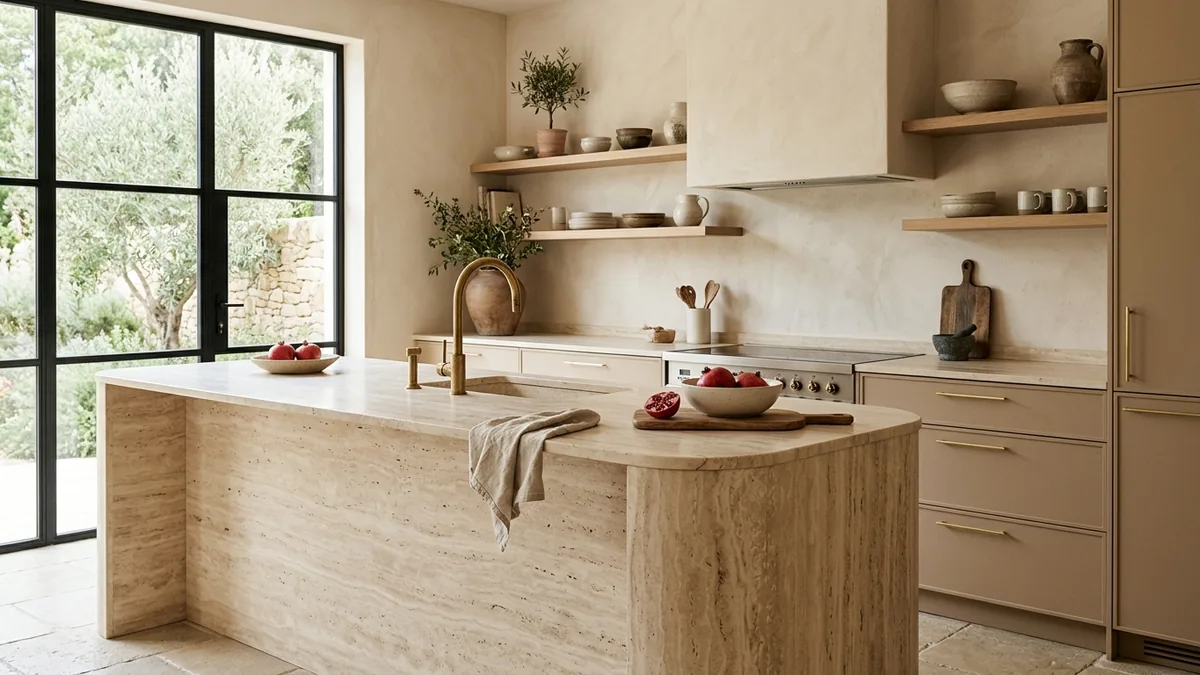
Kitchen. Warm wood or clay-toned cabinetry, a stone or travertine island, ideally with a rounded end, brass hardware, and open shelving with raw ceramics. The friendly-beige shift shows up strongly in 2026 kitchens.
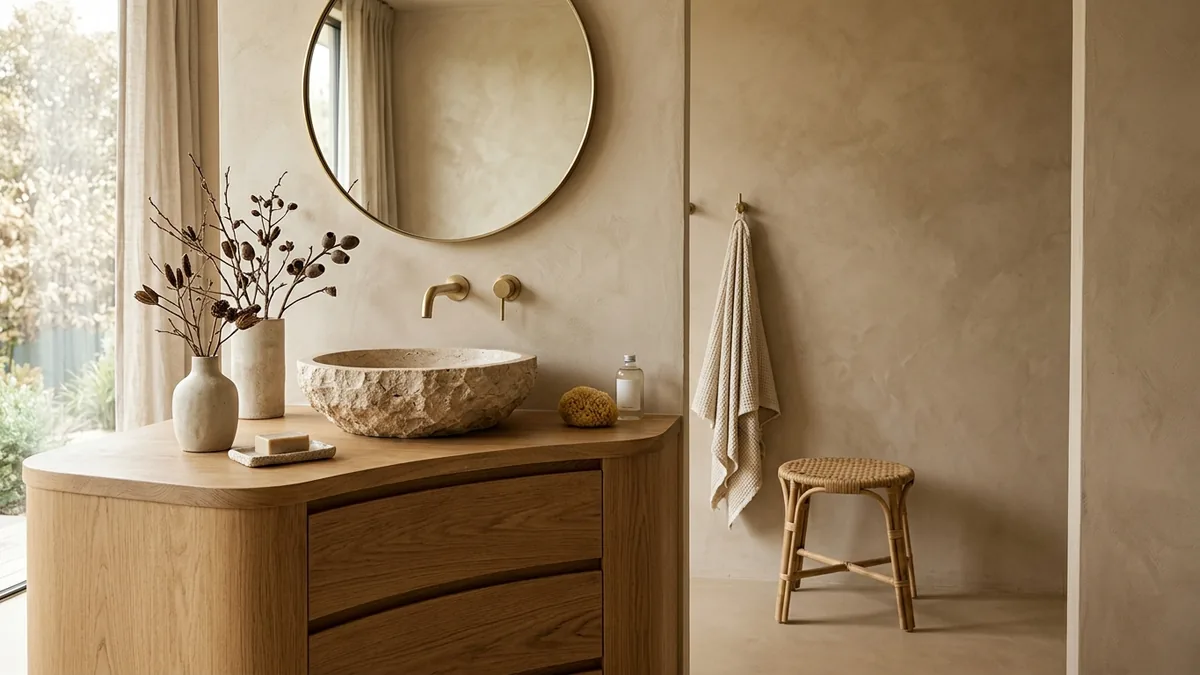
Bathroom. Microcement or plaster walls, a stone basin, oak vanity, brass fixtures, and a single sculptural mirror. Few materials, all natural, is the whole formula.
Home office and dining. A round or oval table softens a work or dining zone instantly, paired with curved-back chairs, a warm rug, and one organic-shaped pendant overhead.
How to get the look without renovating
You do not need a remodel to land organic luxe. Work in this order:
- Fix the palette first. Swap cool greys for warm oat, caramel, and terracotta in paint, cushions, and throws. This single change does most of the work.
- Add one or two curves. A rounded mirror, an arched lamp, a curved-edge coffee table, or a single curved chair.
- Layer real texture. A woven wool rug, a bouclé cushion, a raw ceramic vase, a chunky throw. Texture is what reads as luxury even on a budget.
- Warm up the metals. Replace shiny chrome accents with brass where you easily can.
- Bring in wood and one plant. Solid oak and a single sculptural branch or olive tree ground the whole scheme.
Common organic luxe mistakes
- Going beige-on-beige with no texture. Without tactile contrast, a warm-neutral room reads as flat and boring. Texture is non-negotiable here.
- Too many curves. Every piece curved looks like a theme park. Balance soft forms against straight architectural lines.
- Fake materials. Plastic that imitates stone or wood undercuts the entire point. A few real natural pieces beat many synthetic ones.
- Cool grey hangers-on. One leftover cold-grey sofa or chrome lamp can make the whole warm scheme look unresolved.
- Buying before testing. A curved sofa and travertine table are expensive ways to discover the proportions are wrong for your room.
See organic luxe in your own room first
Organic luxe relies on big, costly pieces, a curved sofa, a stone table, plaster walls, that are painful to get wrong. And like any style, it reads completely differently in your actual space than it does in a designer's photo, because your light, your floor, and your room's proportions change everything.
So before you commit, see it on your real room. With MeltFlex you upload a photo of your space and apply the organic luxe look right there: warm the palette, swap in a curved sofa, try travertine versus oak, compare options side by side in seconds. It keeps your real walls, windows, and layout, so what you see is genuinely what you would get, and the furniture it shows is real and shoppable. You make the expensive decisions with confidence instead of hoping.
Try organic luxe on your own room
- Keeps your real room. Upload one photo and restyle your actual space, not a showroom.
- Test the big pieces. Curved sofa, stone table, warm plaster palette, before you spend.
- Compare looks instantly. Organic luxe vs warm minimalism, side by side on your room.
- Real, shoppable furniture. Love a curved sofa you see? You can actually buy it.
Frequently asked questions
What is organic luxe in simple terms?
Natural materials and warmth, finished with high-end polish. Warm earthy colors, curved and sculptural shapes, and tactile materials like plaster, oak, and bouclé, all aimed at a room that feels like a calm retreat.
Is organic luxe the same as organic modern?
They are close. Organic modern is the broader style of natural materials and clean shapes. Organic luxe, also called elevated organic modern, is the higher-end, more polished and sculptural version of it.
What is the difference from warm minimalism?
Warm minimalism subtracts to feel calm and uncluttered. Organic luxe keeps the warmth but adds soft natural richness, curves, and texture to feel luxurious. Many rooms blend both.
What metal goes with organic luxe?
Brass. Warm brass has overtaken chrome as the metal of choice for 2026 and reinforces the warm, golden undertone of the style.
How do I start on a budget?
Change the palette to warm neutrals first, then add one curved piece and layer in real texture with a woven rug and raw ceramics. Test the warm palette in your room before repainting.
Organic luxe lasted into 2026 because it answers a real fatigue with cold, performative interiors. Warm earthy color, soft sculptural shapes, and materials you want to touch add up to a home that feels good to be in, not just good to photograph. The pieces are an investment though, so see the look on your own room before you buy. Try organic luxe on your space and watch your room turn into the retreat first.