Selling the Same Sofa Internationally: Why Localized Product Pages Beat Translation

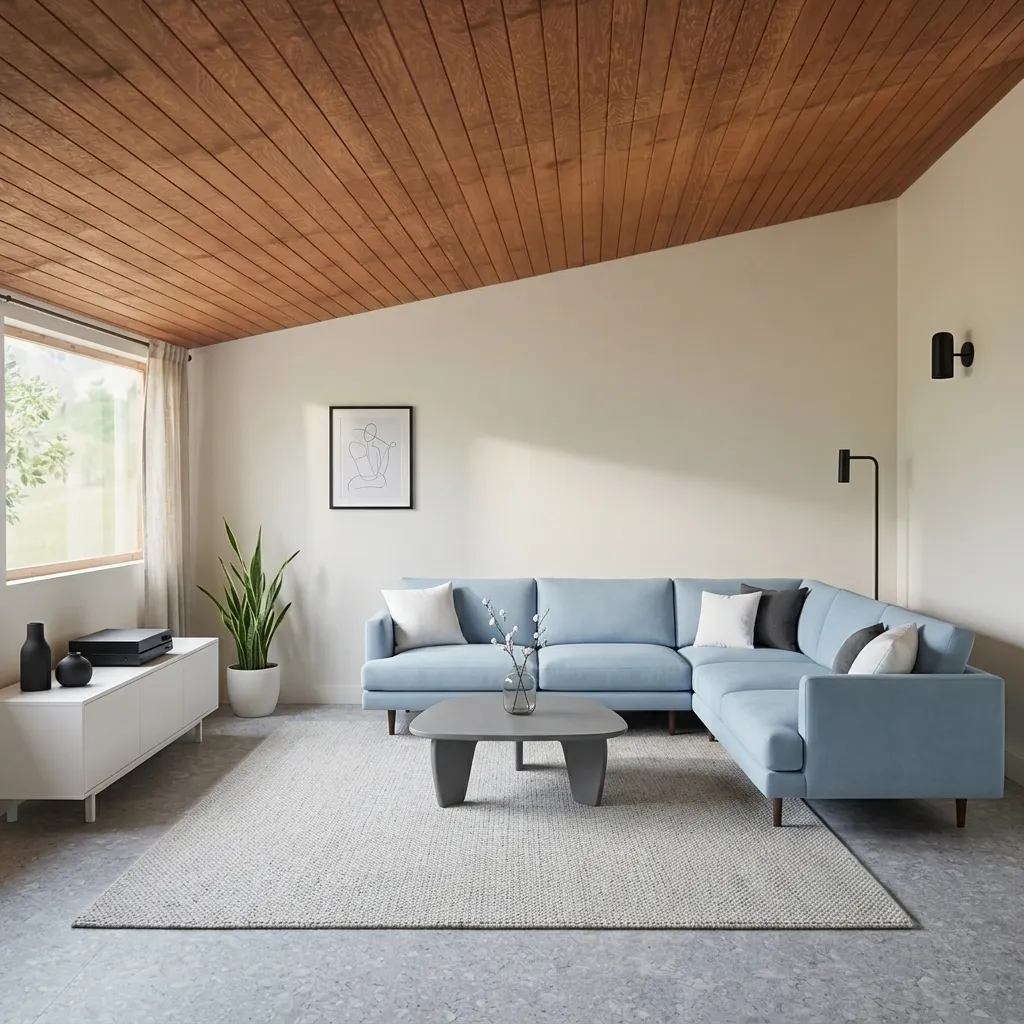
Selling the same sofa internationally means selling to different fears, habits and expectations. A product page in Sweden should not look identical to one in Romania, Germany or Spain just because the product is the same. This guide breaks down what actually changes from market to market, why translation alone quietly loses sales, and how to localize the one element most teams forget, the images. Every room photo below is the same sofa, restyled for a different market with MeltFlex AI.
Our articles are still written by humans!
Get human written articles in your Google feed.
One product. This is the sofa; below, the very same piece is staged for four different markets with MeltFlex AI.
Translation and Currency Are Not Localization
At first it sounds simple. You translate the product page, change the currency, adjust the delivery details, and the product is ready to sell in a new country. Ship it, move to the next market, repeat. On a spreadsheet it looks done.
In practice, that is where most cross-border furniture stores quietly leak revenue. Translation changes the words on the page. It does not change which words come first, which detail earns the top of the screen, or whether the photo next to the price shows a home the buyer recognises. A page can be flawlessly translated and still sell badly, because it is answering the wrong question in the wrong order for that buyer.
The language layer does matter, and the data backs it up. In CSA Research’s widely cited Can’t Read, Won’t Buy study, 76% of online shoppers said they prefer to buy products with information in their own language, and 40% said they will never buy from websites in other languages. So translation is the price of entry. It is necessary. It is just not the same thing as localization, and treating the two as identical is the core mistake.
Buyers Do Not Evaluate Furniture the Same Way Everywhere
Here is the uncomfortable truth behind international furniture retail: people do not evaluate furniture in the same way everywhere. The product is the same. The data behind the product can be the same. But the weight a buyer puts on each piece of that data shifts hard across borders.
In Sweden, details around circular economy, material sourcing, sustainability and repairability can be real buying signals. People actively look for them and use them to compare products. Put the origin of the wood and the availability of spare covers up front and you are speaking the buyer’s language, in the literal and the commercial sense.
In Romania, that same block of sustainability copy can read as generic marketing language if it is not tied to something practical and immediate, like price, durability, delivery, or how it holds up with a family and a small apartment. It is not that the buyer does not care about the planet. It is that the page has not connected the claim to a benefit they feel today.
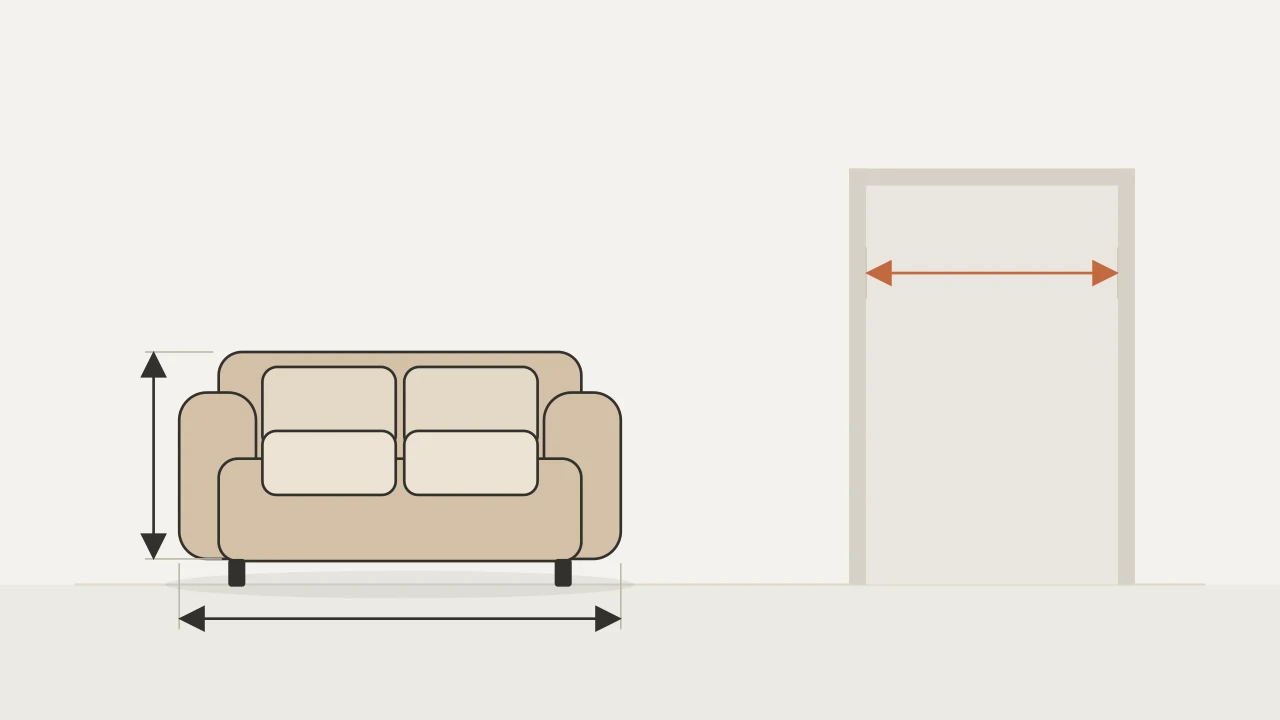
Geography of housing changes things too. In cities where most people live in apartment buildings, package size can be one of the single most important details on the entire page. The buyer needs to know if the sofa will fit in the elevator, up the staircase, and through the apartment door before anything else matters. If your page hides the packed dimensions three tabs deep, you have created doubt exactly where the sale is won or lost. (We built a whole will my sofa fit through the door guide precisely because this fear is so common.) In regions where most people live in houses, the same detail may barely register.
Same sofa. Same specifications. Completely different hierarchy of what matters. The job of a localized page is to reorder itself around that hierarchy.
What Actually Changes From Market to Market
It helps to make this concrete. Below is how one identical three-seater sofa might be judged across four European markets. Notice that nothing about the product changes. Only the buyer’s first question, the detail that should win the top of the page, and the fear you need to defuse.
These are illustrative, not stereotypes to hard-code forever. The point is the shape of the problem: the same catalog data, reprioritised per market. A good localization strategy treats the product data as fixed and the presentation of that data as the variable, rather than rebuilding the webshop for every country.
The First Screen Decides the Sale
All of this becomes most urgent above the fold, the part of the page a visitor sees before scrolling. That first screen has only a few seconds to make the product feel relevant, understandable and safe to buy. It is the fold that decides whether the buyer keeps reading or bounces to a competitor.
So above the fold is exactly where the market-specific detail has to lead. For an apartment-dense city, that might mean packed dimensions and a clear “fits through a standard door” reassurance sitting right next to the price. For a sustainability-driven market, it might be the material and repairability story. For a warmth-driven market, it is a lifestyle image that instantly reads as “a home like mine.” Get the first screen wrong and the rest of your beautifully translated page never gets read.
And the single most powerful element on that first screen is not text at all. It is the image.
The Part Translation Cannot Fix: the Images
You can translate every word and reorder every spec, and still hand the buyer a hero image of a sprawling open-plan American living room when they are shopping from a 55 square metre apartment. Nothing on the page said the wrong thing. The picture did.
Images do the heaviest lifting on any product page. Ecommerce UX research from the Baymard Institute consistently finds that shoppers rely on product images more than any other content, and that they need to be able to picture the item in a realistic, in-context setting to feel confident enough to buy. When the setting looks foreign, that confidence drops, even if the buyer cannot articulate why. The sofa looks like it belongs to someone else’s life.
This is the gap translation cannot close. Words localize easily. Photography does not, because photography is expensive and slow. Shooting the same sofa in a Swedish apartment, a German flat, a Romanian block and a Spanish townhouse means four locations, four stylists, four crews, four shoots. Most brands never do it, so they default to one set of images for the whole world and quietly accept the conversion cost in every market where that world does not match.
That is the exact problem AI staging was built to solve.
One Sofa, Four Markets
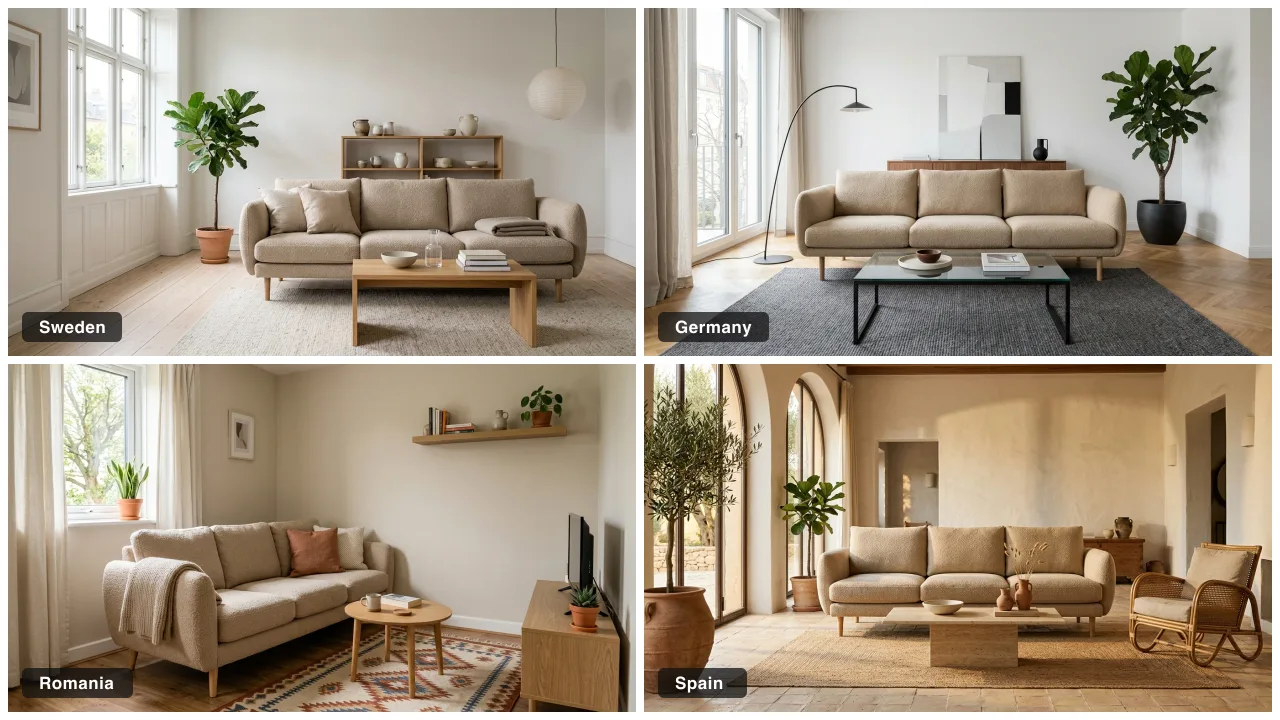
To show what localized imagery looks like in practice, we took a single sofa, one low three-seater in oatmeal boucle with rounded arms and light-oak legs, and staged it for four markets using MeltFlex. Same sofa in every image. Only the room, the styling and the light change, tuned to what each buyer wants to see first.

Sweden. Bright, natural materials, greenery and light. The setting itself signals longevity and a considered, sustainable home.
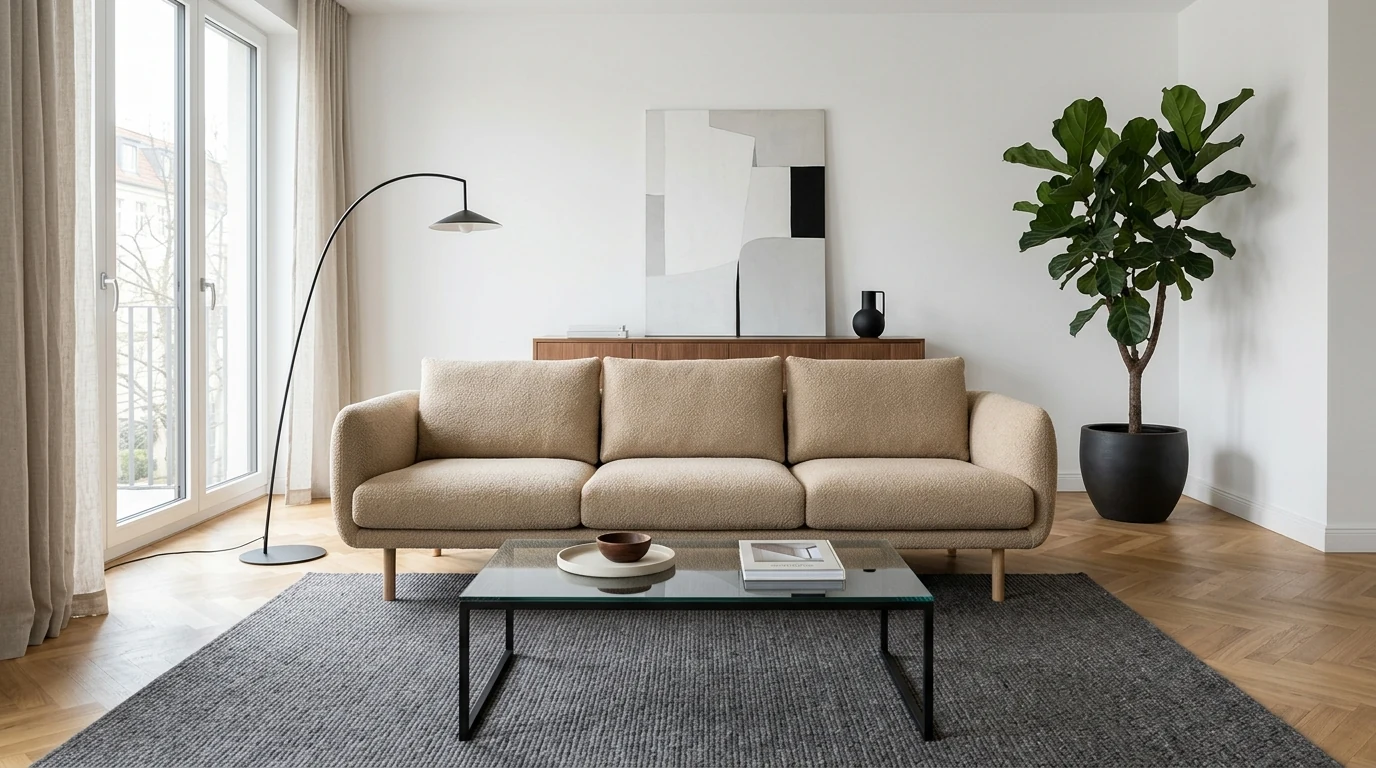
Germany. Understated, precise, quietly high quality. Clean lines and an ordered room read as build quality before a word is read.

Romania. A compact, real apartment. The sofa is shown fitting comfortably into a small footprint, answering the fit-and-value question on sight.

Spain. Warm light, terracotta, rattan and a social, relaxed feel. The room sells comfort and how the piece lives, not a spec sheet.
Look at the four together and the thesis of this whole article is right there on the screen. It is unmistakably one sofa. Yet a buyer in each country meets it in a home that looks like theirs, foregrounding the thing they care about most. No reshoot, no crew, no second sample. Each image was generated from the same short description in the same tool you can open now.
How to Localize a Furniture Product Page
Localization is not a translation task with a bigger budget. It is a presentation task. Here is the practical sequence we recommend to brands going cross-border.
- Fix the data once, present it many ways. Keep one source of truth for materials, dimensions, packaging, care and warranty. Localization should reorder and reframe that data, never fork it into copies that drift out of sync.
- Define each market’s first question. For every country you sell in, write down the one thing the buyer needs answered before anything else: fit, price, materials, quality, comfort. That answer earns the top of the page.
- Rebuild the above-the-fold order, not the whole page. Same modules, different priority. Move packed dimensions up for apartment markets. Move the material story up for sustainability markets.
- Localize units, delivery and reassurance. Centimetres or inches, realistic delivery windows, returns, and the specific reassurance that defuses the local fear (“fits a standard doorway,” “10-year frame guarantee”).
- Localize the hero image. Show the product in a room the buyer recognises as their kind of home. This is the highest-impact and most-skipped step, and it is the one AI staging finally makes affordable.
- Test, do not assume. The table earlier is a starting hypothesis. Validate with real conversion data per market and adjust the ordering and imagery accordingly.
Localized Product Visuals at Scale With MeltFlex
The reason localized imagery has always been the step teams skip is cost. MeltFlex removes that cost. You upload one clean photo, a product shot or an empty room, describe the market you are selling into, and the AI returns a photorealistic image of that same product in a locally appropriate interior. It preserves the real product and the real room structure, and restyles everything around it.
For a cross-border catalog, that changes the economics of localization completely:
- One product, many markets. Generate a Swedish, German, Romanian and Spanish hero image of the same sofa from a single sample, in minutes, not four photoshoots.
- Consistent product, localized context. The item stays identical across every market while the room, styling and light adapt, exactly what the four images above demonstrate.
- Fast iteration. A market underperforming? Re-stage the hero image for it and test again the same day.
- More than stills. The same engine drives video walkthroughs and full room restyles, so a localized page can carry localized motion too.
If you care about disclosure and doing this honestly, and you should, we wrote about where AI staging is and is not appropriate in virtual staging disclosure. Localized context imagery is a legitimate, buyer-helping use: it is the real product, shown in a setting the buyer can relate to.
Data and Visuals: the Two Halves of Localization
Getting international product pages right is really two problems, and it pays to name them separately.
The first is data. To adapt a page per market, all of your product information has to live in one place and be structured: materials, dimensions, packages, care, warranty, images, videos, 3D models, reviews and configuration rules. This is the world of product information management, and platforms built for cross-border commerce, like Ixaria, centralise exactly this data and use it to generate pages that adapt to the customer’s culture, behaviour and needs. That is the engine that decides what to say, in what order, to whom.
The second is visuals. Even a perfectly structured, perfectly reprioritised page still needs an image that makes the buyer feel the product belongs in their home. That is the half MeltFlex handles: turning one product into a library of localized, photorealistic imagery without a shoot per country. Structured data decides the message. AI staging decides what the buyer sees.
Put together, they answer the real question. Selling internationally is not about showing the same information in another language. It is about showing the right information, in the right order, in a setting the buyer recognises, to the right person. The words are the easy half. The picture is where most brands are still leaving money on the table.
Want to localize your product imagery? Try MeltFlex free and stage one product for several markets in a few minutes, or start from a single product photo. See the range in our interior design examples, and if package fit is your market’s big fear, hand buyers the will it fit through the door guide.
Frequently Asked Questions
What does it mean to localize a product page?
Localizing a product page means adapting it to a specific market’s language, habits, homes and buying fears, not just swapping the words and the currency. That includes the order of information, which details lead above the fold, the units and delivery terms, the tone, and crucially the imagery, so the same product is shown in a context the local buyer recognises as their own home. Translation changes the words; localization changes what the page emphasises and how the product is presented.
Why is translation not enough for international ecommerce?
Because buyers in different countries scan for different things and fear different things. A Swedish shopper may look for material sourcing and repairability, while a shopper in an apartment-heavy market cares first about whether the sofa fits the elevator, staircase and door. A perfectly translated page can still lead with the wrong detail, in the wrong order, next to an image of a home that looks nothing like the buyer’s. Same words, wrong priorities, lost sale.
Do product images really need to change per country?
Often yes. Shoppers rely on images more than any other element on a product page, and they buy fastest when they can picture the product in a room like their own. A sofa photographed in a large open-plan American house can feel irrelevant, or even worrying, to someone shopping from a compact European apartment. The product is identical, but a locally recognisable setting removes doubt and makes the page feel made for that buyer.
How can I create localized product images without a photoshoot in every country?
Use AI staging. With MeltFlex you upload one clean photo of the product or an empty room, describe the local setting, and generate a photorealistic image of the same product in a market-appropriate interior. The four room images in this article are all the same sofa, restyled for Sweden, Germany, Romania and Spain from a single description, with no reshoot. That lets you produce a locally relevant hero image per market in minutes instead of flying a crew to each country.
Does MeltFlex replace a PIM like Ixaria?
No, they solve different halves of the same problem. A product information platform such as Ixaria centralises the data behind a product, its materials, dimensions, packaging, care, warranty and configuration rules, and generates pages that adapt to the buyer. MeltFlex handles the visual half: generating localized, photorealistic product imagery that matches each market’s homes. Structured data decides what to say and in what order; AI staging decides what the buyer sees.
What should lead above the fold on a furniture product page?
Whatever removes the local buyer’s biggest doubt fastest. In apartment-dense cities that is often package dimensions and fit, will it clear the elevator, stairs and door. In sustainability-driven markets it may be materials and repairability. Everywhere it is a hero image the buyer recognises as their kind of home. Above the fold you have a few seconds to make the product feel relevant, understandable and safe to buy, so lead with the detail that market cares about most.
Sources
- CSA Research, Can’t Read, Won’t Buy: B2C, 2020 study across 29 countries: 76% of shoppers prefer buying products with information in their own language; 40% will not buy from sites in other languages.
- Baymard Institute, ecommerce UX research on product page imagery and in-context product visualisation.
- MeltFlex AI: all four market room images generated with the MeltFlex photo-to-render engine from a single sofa description.