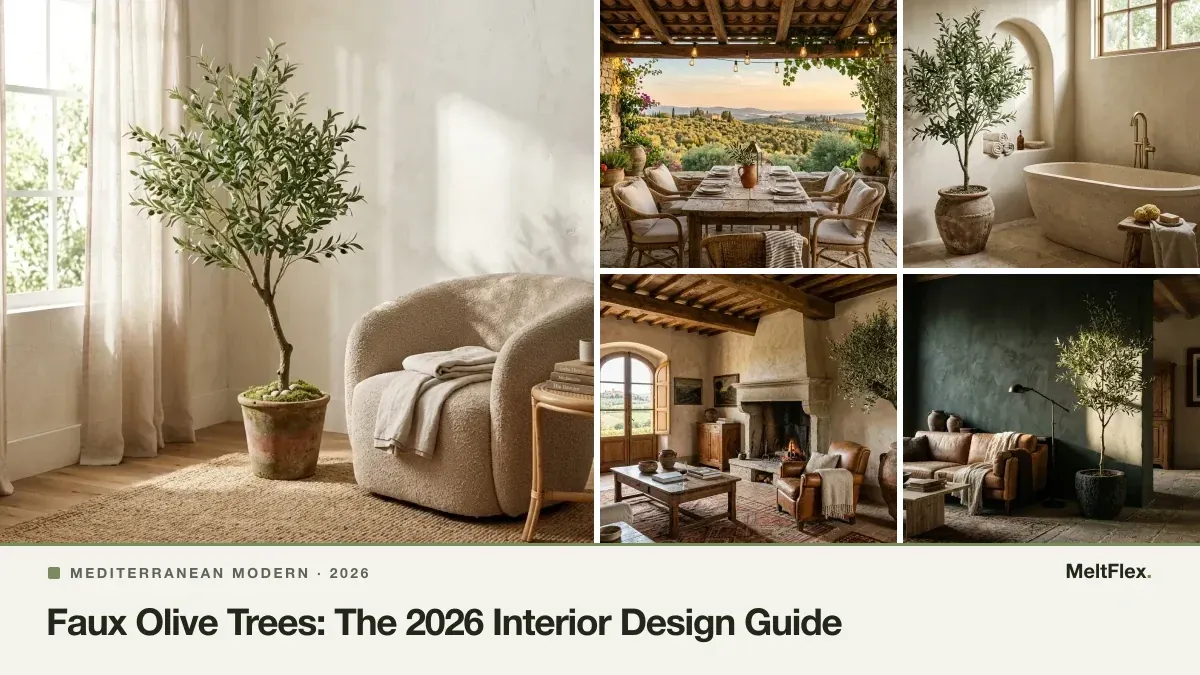
Short answer: the artificial olive tree has become the defining indoor tree of 2026, the calm, sculptural anchor of the Mediterranean Modern and quiet-luxury looks. It brings the warmth, texture and soft grey-green light of a Mediterranean home with zero watering, pruning or leaf drop. This guide covers where to place one room by room, the honest real vs faux trade-off, how to make a fake olive tree actually look real, and how to preview one in your own space before you spend a cent.
Our articles are still written by humans!
Get human written articles in your Google feed.
Why Olive Trees Own 2026 Interiors
For a decade the fiddle-leaf fig was the plant every design account had to have. It was also a diva: brown edges, dropped leaves, and a sulk every time you moved it. The olive tree is the opposite kind of statement. Its muted grey-green leaves, airy branches and slender, gnarled trunk read as quiet confidence, which is exactly the mood 2026 is chasing. Design writers now call it the tree that has taken over from the fiddle-leaf fig as the go-to indoor tree.
The numbers back up the vibe. Searches for “faux olive tree” have grown roughly 26% year over year to more than 12,000 a month, and interior designers openly name it a favorite (House of Hipsters). It slots into more styles than almost any other tree: Mediterranean and coastal, of course, but also Scandinavian, modern organic, warm minimalist and farmhouse. One well-placed olive tree does what a whole gallery wall tries to do, which is make a room feel considered.
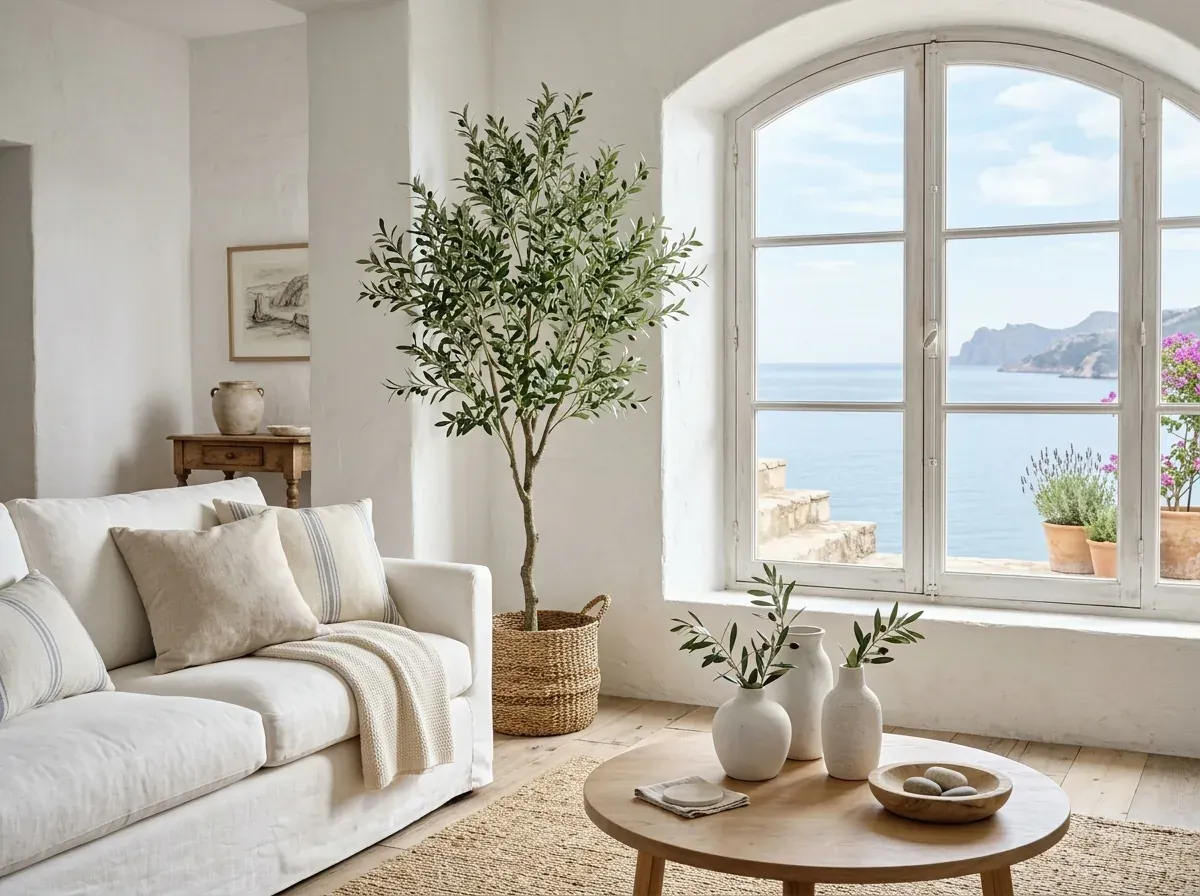
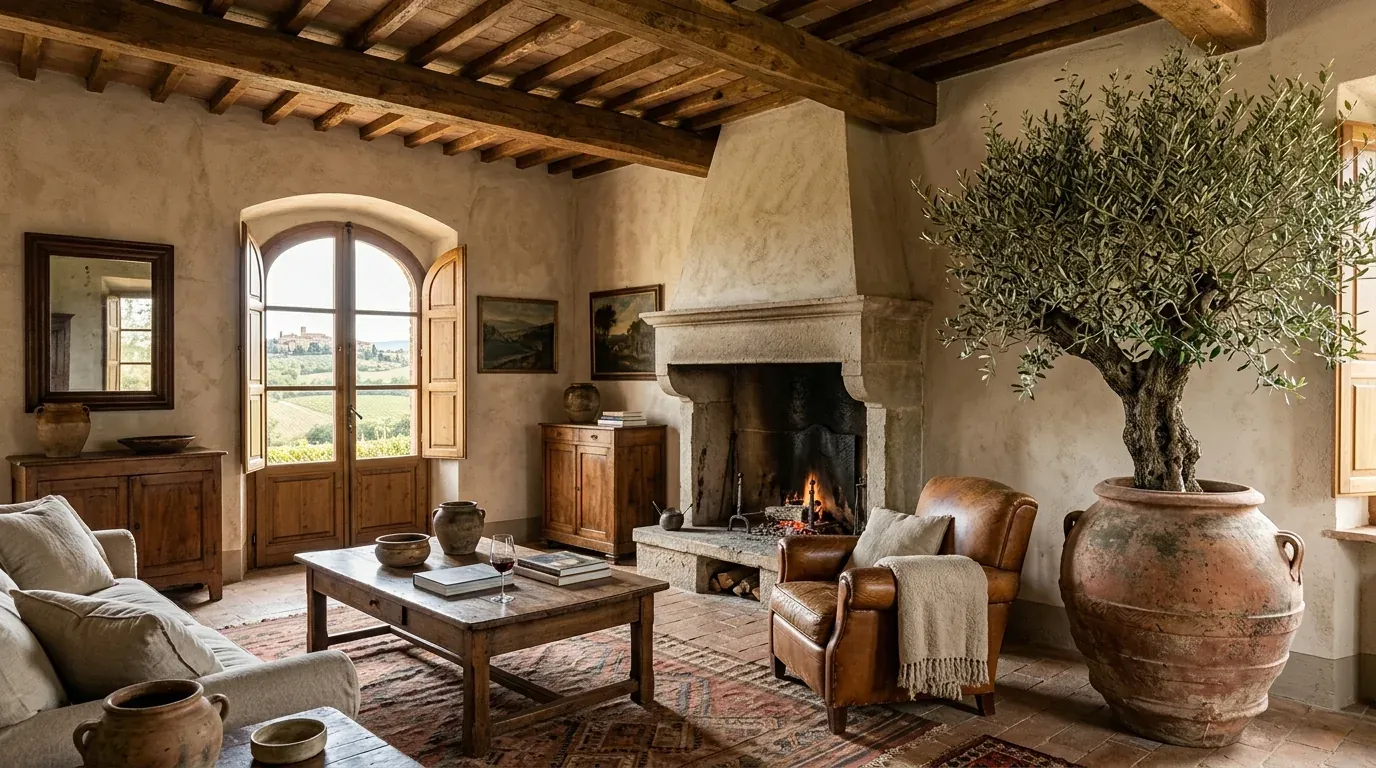
If you want the full backdrop it sits against, our quiet luxury guide and warm minimalism guide both lean on this same palette of plaster, oak, linen and soft green.
Real vs Artificial Olive Trees Indoors
This is the question the caption on every olive-tree post asks: would you go real or artificial? Here is the honest designer answer. For the vast majority of indoor spaces, a good artificial olive tree wins, and it is not close. A real olive tree is a full-sun outdoor Mediterranean plant. Bring it inside and it wants six-plus hours of direct light, resents dry central heating, and shows its stress by quietly shedding leaves onto your floor. It almost never fruits indoors, so you get the maintenance without the romance.
A quality faux tree gives you the silhouette, the color and the calm, permanently, in a north-facing corner where nothing living would survive. The trade-off is honesty about what you are buying: a cheap fake looks like a cheap fake. Spend on the leaves and trunk, not the marketing.
One nuance worth knowing: the black olive tree (which is not actually an olive) is having its own moment as a fuller, more feathery live alternative for people who genuinely want a real tree and have the light for it. For everyone else, faux is the low-drama answer.
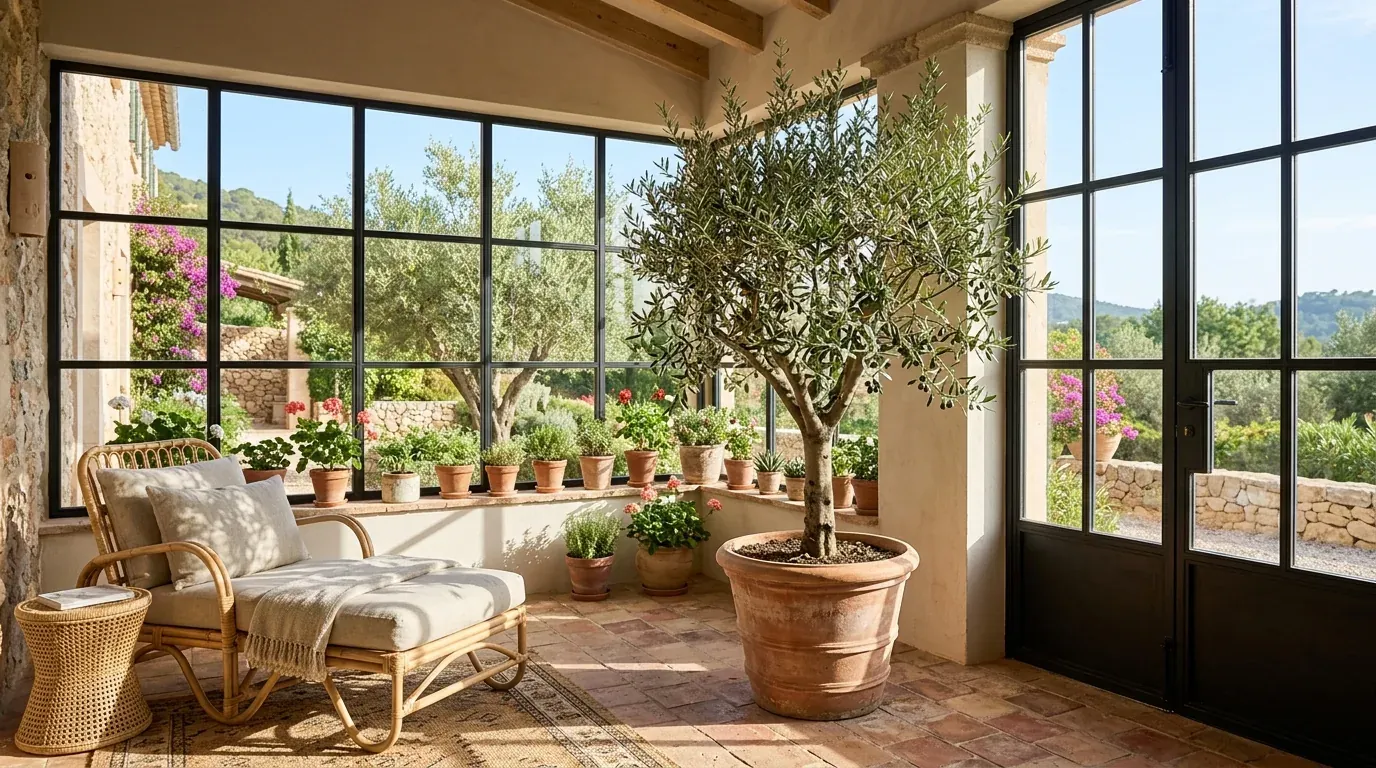
Where to Put an Olive Tree, Room by Room
An olive tree is a corner plant. Its whole charm is the open, leaning-toward-the-light silhouette, so it needs a little breathing room to read as sculpture rather than clutter. Here is where it earns its place in each room.
Living room
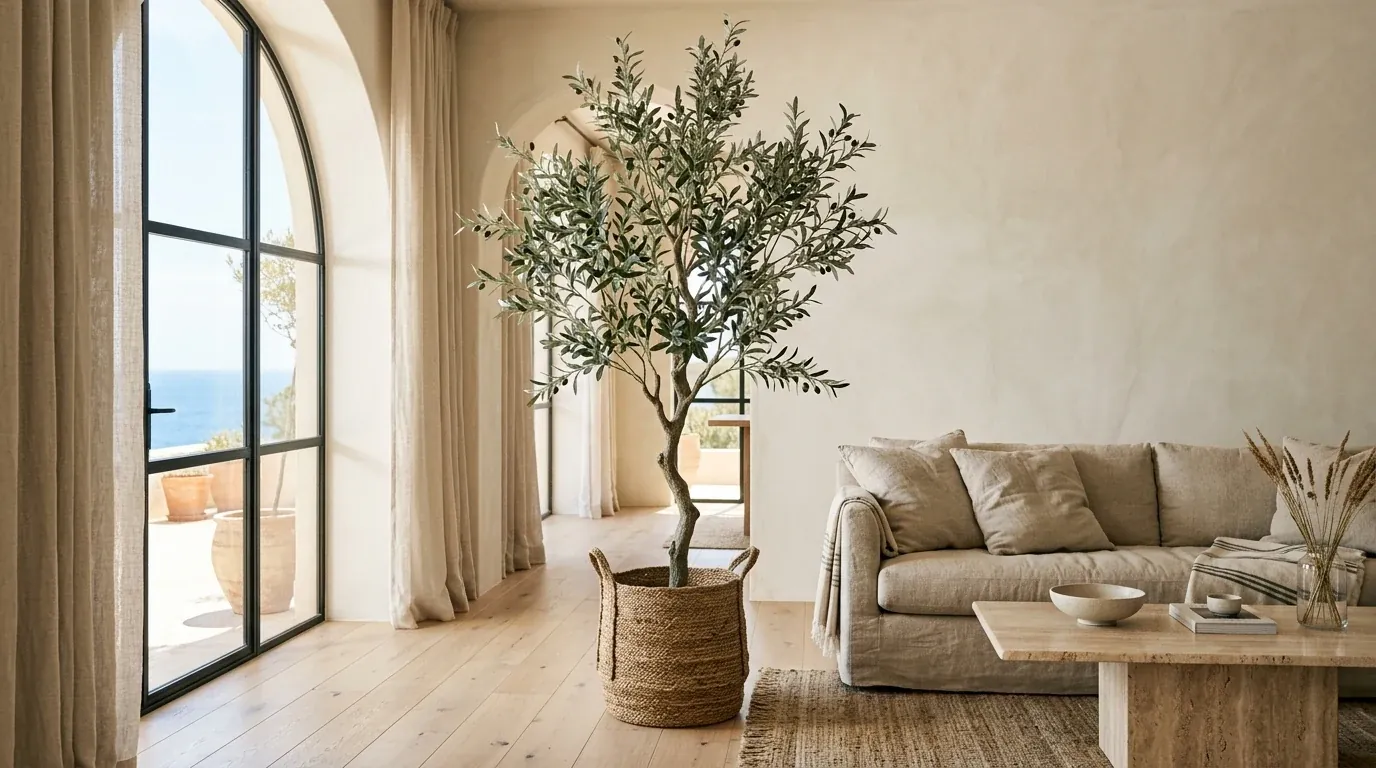
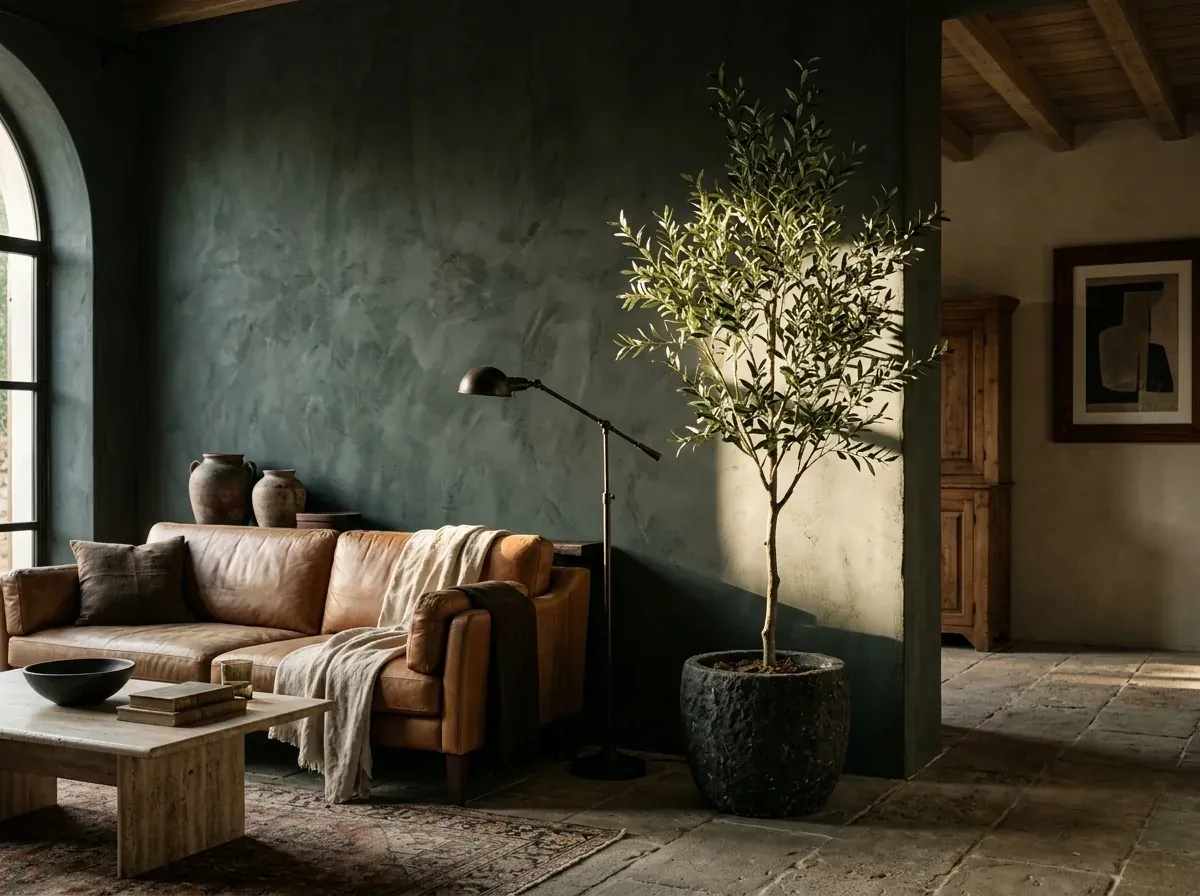
The default and the best. Stand a 6 to 7 foot tree in the corner beside the sofa or next to an accent chair by the window. Pair it with a woven basket planter, a jute or wool rug, and one warm timber piece nearby so the materials rhyme. This is also the easiest room to pull a whole scheme together around the tree.
Entryway and staircase
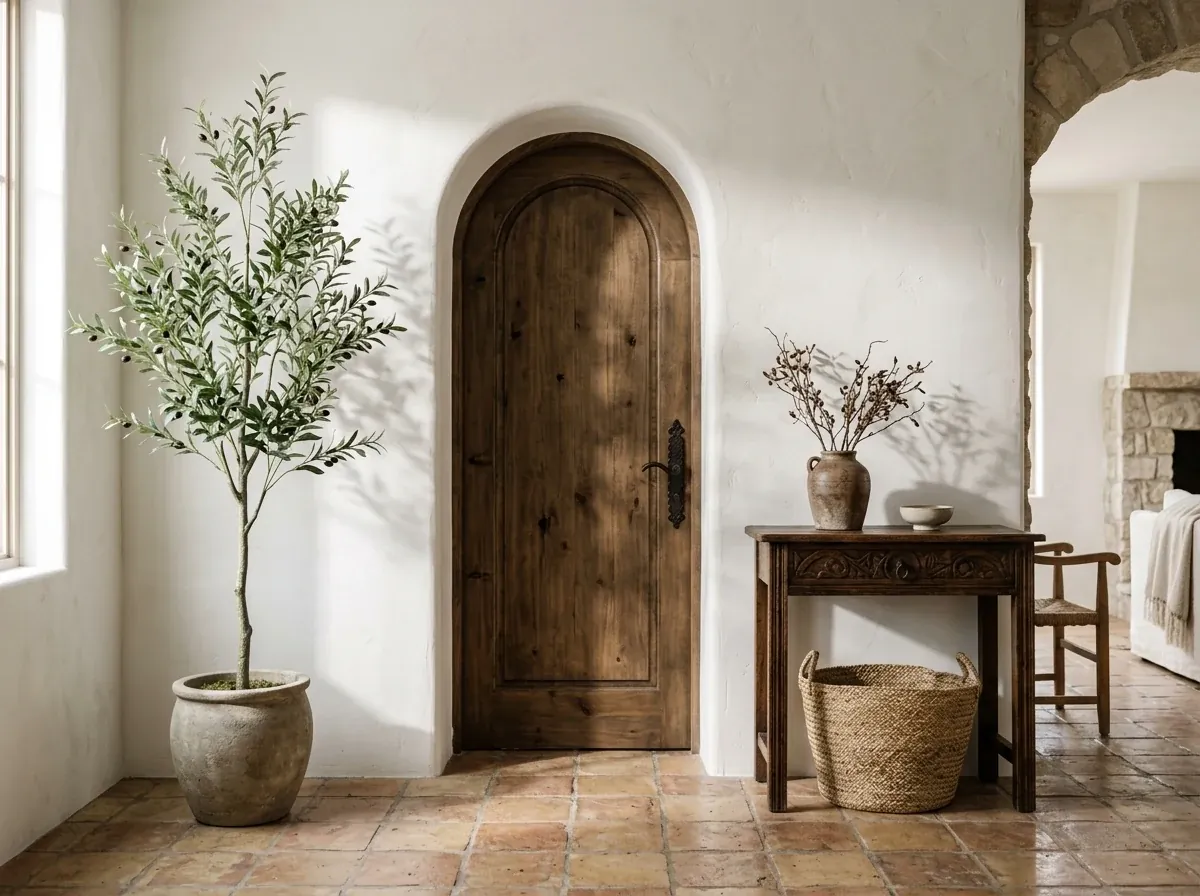
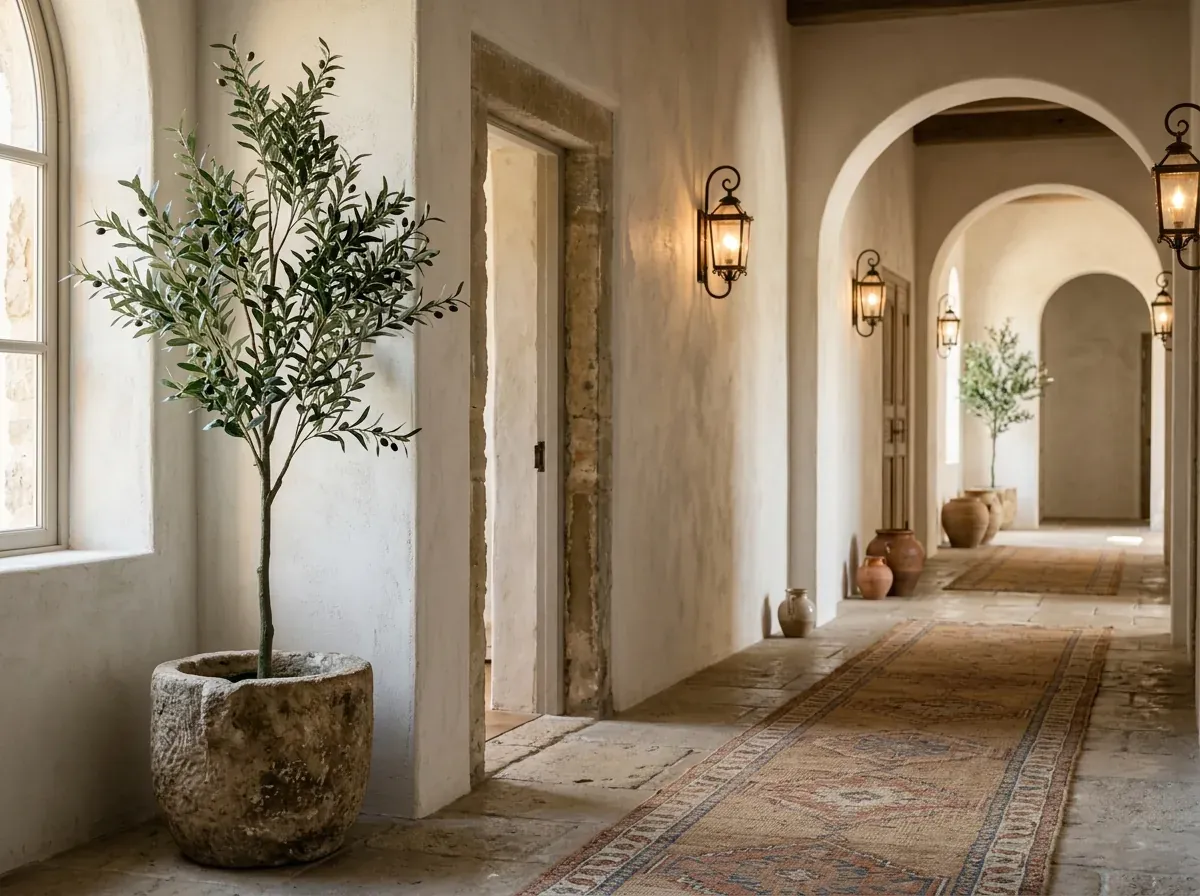
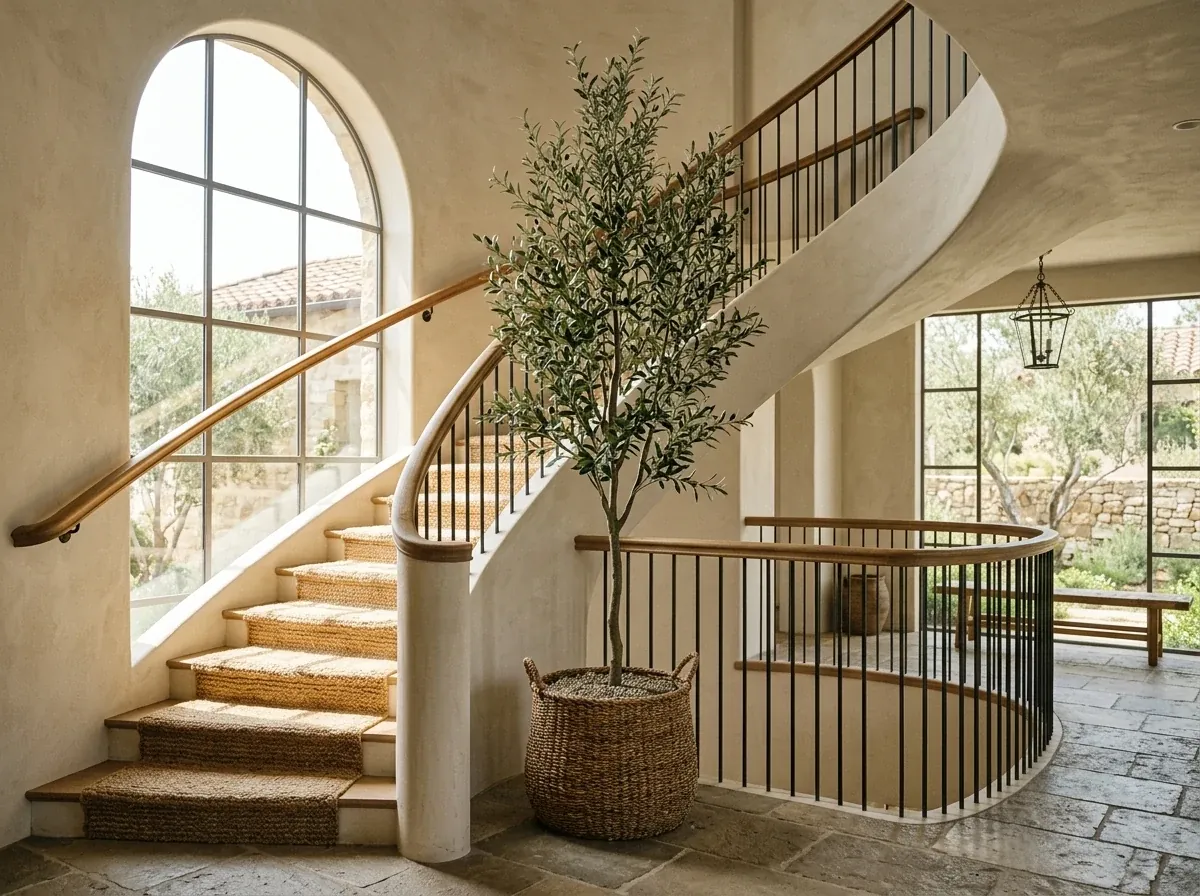
An entry is the first impression, and an olive tree beside an arched doorway or at the turn of a staircase gives it instant Mediterranean warmth. Go slightly slimmer here so it does not block the walkway, and lift it in a taller stone or ceramic pot so the canopy meets you at eye level.
Dining room
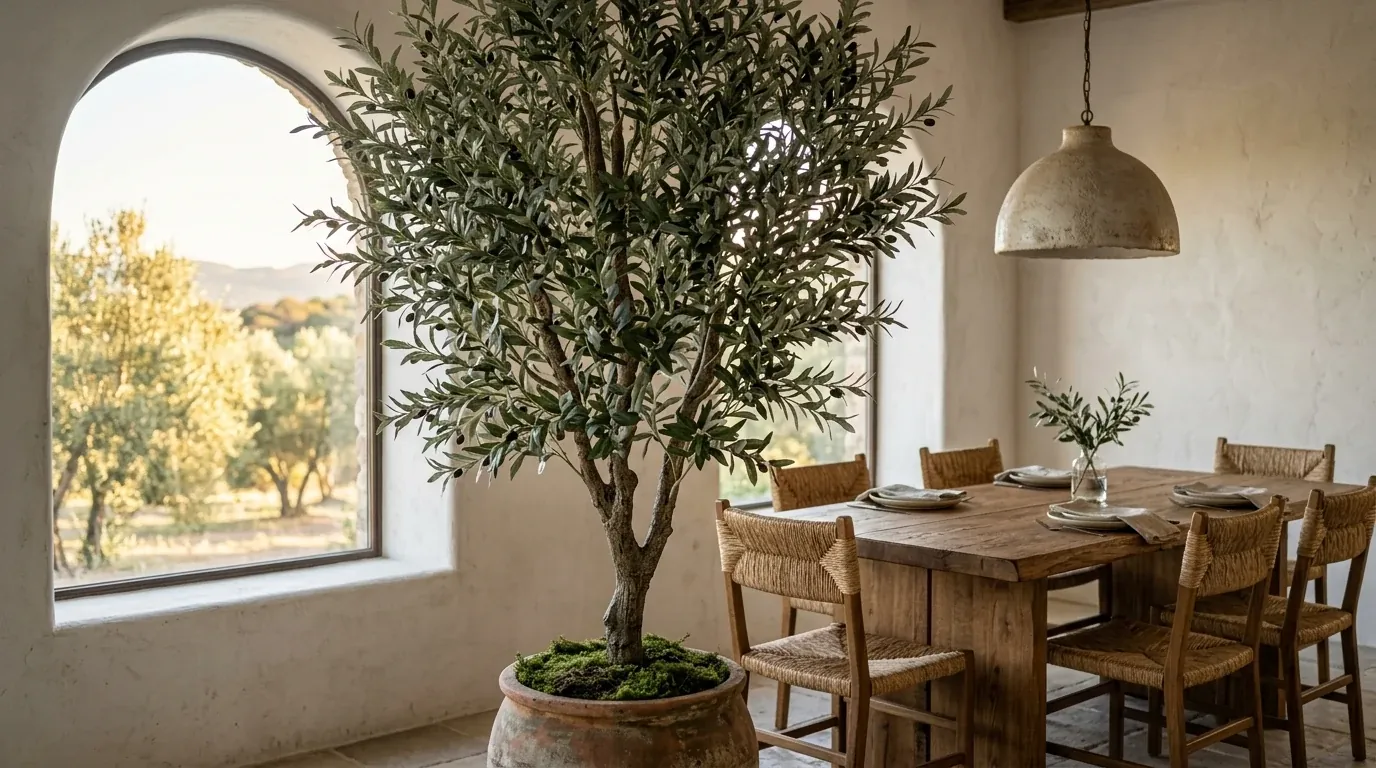
Anchor an empty corner near the table so the leaves catch the light over dinner. A large ceramic or aged terracotta pot echoes a rustic table beautifully. It softens all the hard edges of chairs and a big table without needing another piece of furniture.
Bedroom
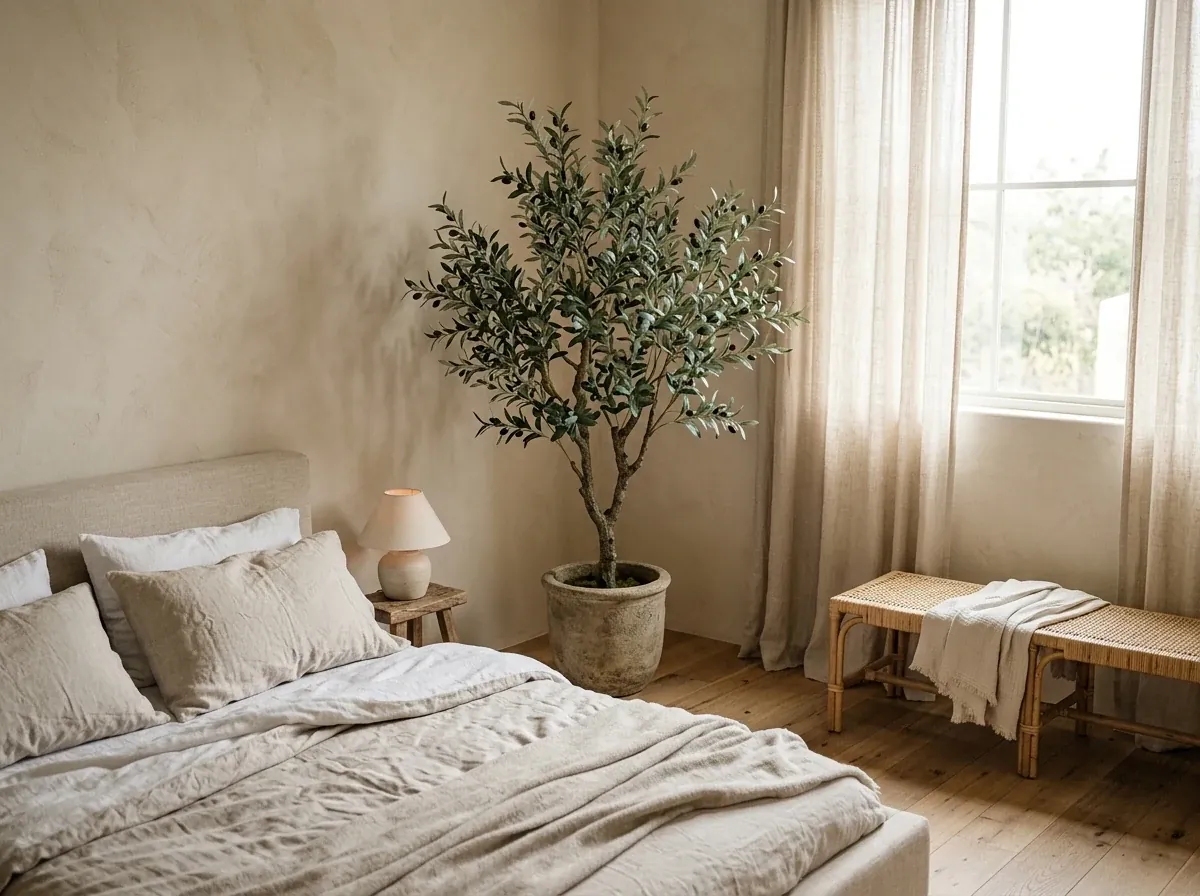
A calmer, quieter olive tree in the corner of a bedroom adds life without the humidity or bugs of a real plant, which is exactly why faux makes sense next to a bed. Keep the pot simple and low-key so the room stays restful. It pairs naturally with the warm minimalist bedroom palette.
Bathroom
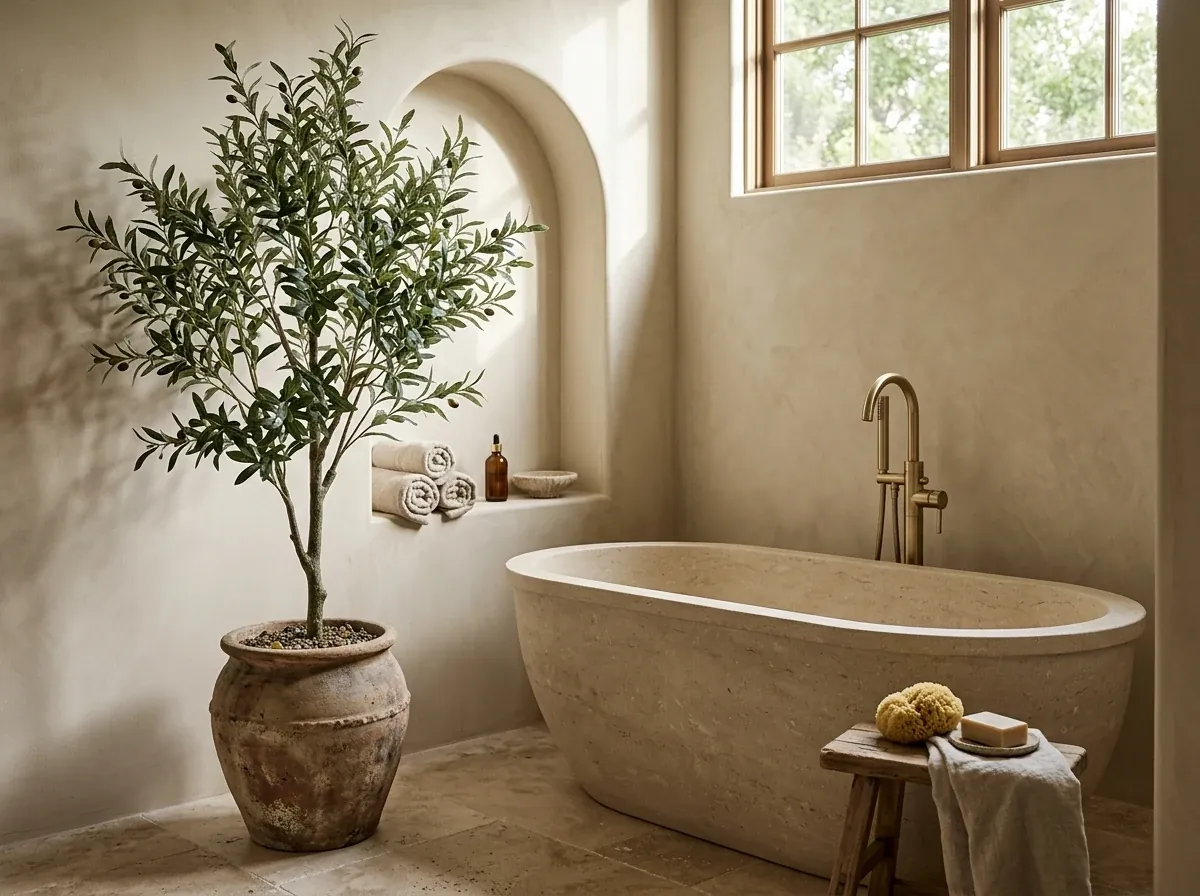
A spa-like bathroom is the sleeper hit. An olive tree beside a freestanding tub, in a textured clay pot, turns a functional room into a retreat. Faux is the practical call here because real olives hate the swinging humidity and low light of most bathrooms.
Kitchen, office and reading nooks
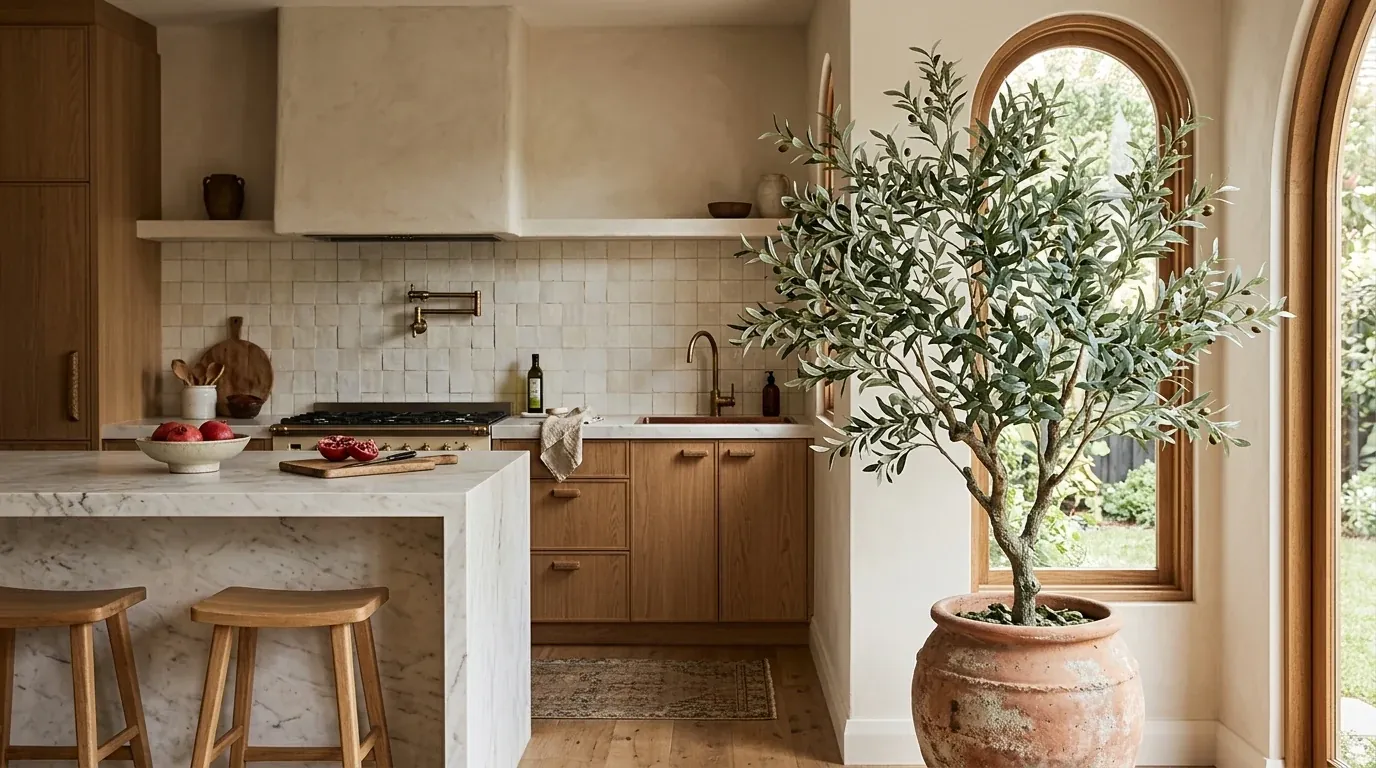
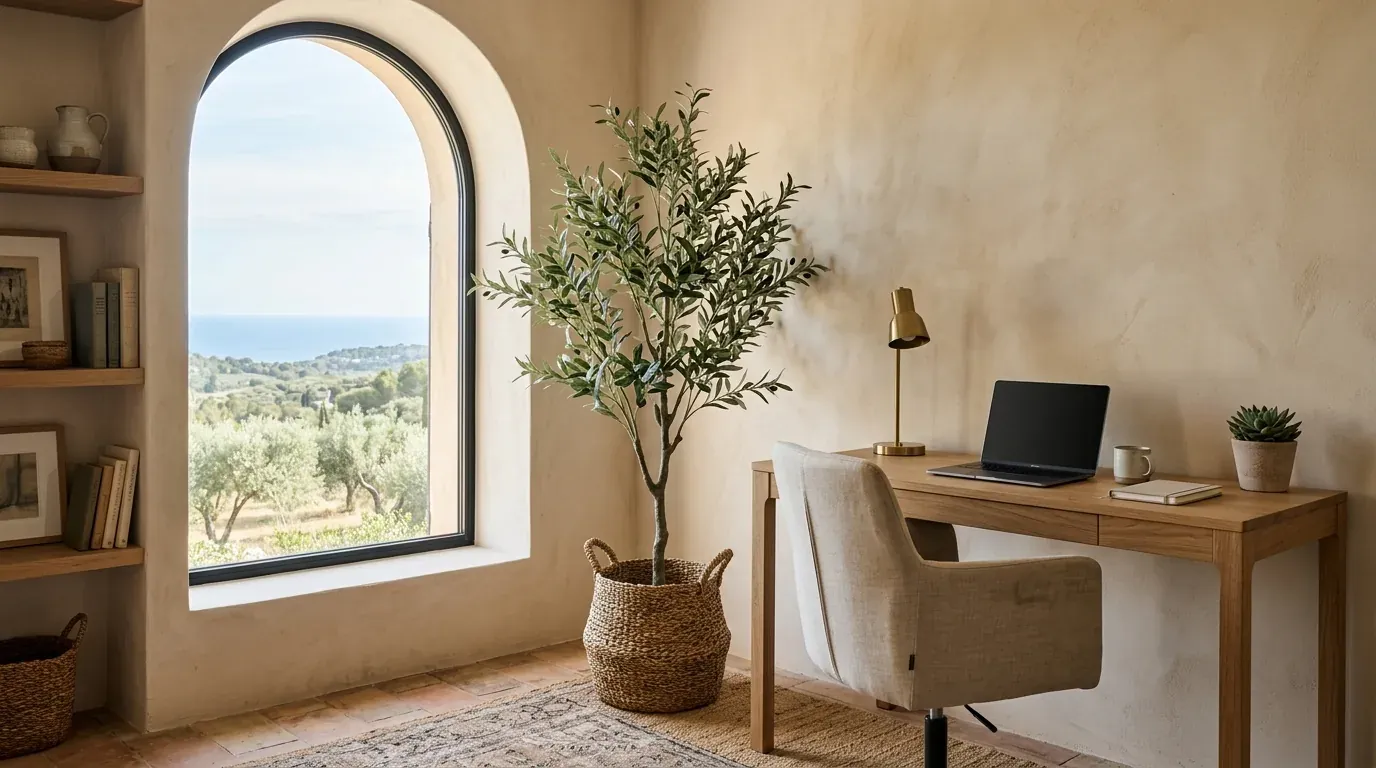
At the end of a run of cabinets, an olive tree softens a hard-working kitchen. In a home office it brings the calm that helps you focus. And tucked beside a reading nook or an arched window, a smaller tree filters the light and makes the corner feel finished. Anywhere you have an awkward empty corner and a bit of daylight is a candidate.
How to Make a Faux Olive Tree Look Real
This is where most people go wrong, and it has nothing to do with how much they spent. A $600 tree straight out of the box can look worse than a $90 one that has been styled. The fix is three steps.
- Shape the canopy. Faux trees ship compressed, with branches bent flat and inward. Real olive trees are asymmetric: they lean toward light, drop branches at uneven heights, and leave gaps you can see the trunk through. Spend ten minutes bending every branch outward and downward, pulling the canopy open, and creating deliberate holes. This single step does more than the price tag.
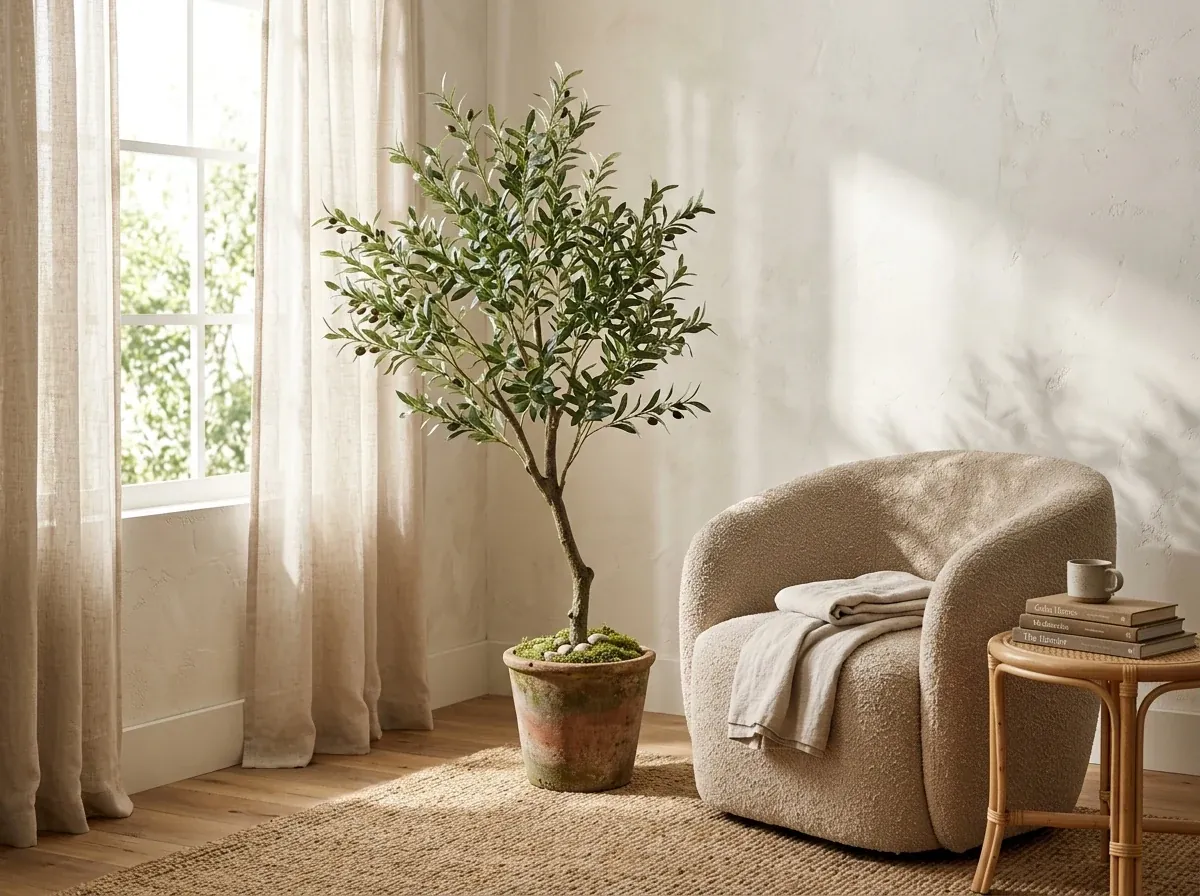
- Hide the pot. The plastic nursery pot is the biggest giveaway. Drop the whole tree into a woven basket, an aged terracotta pot, or a stone planter. Natural materials sell the Mediterranean story; shiny ones break it.
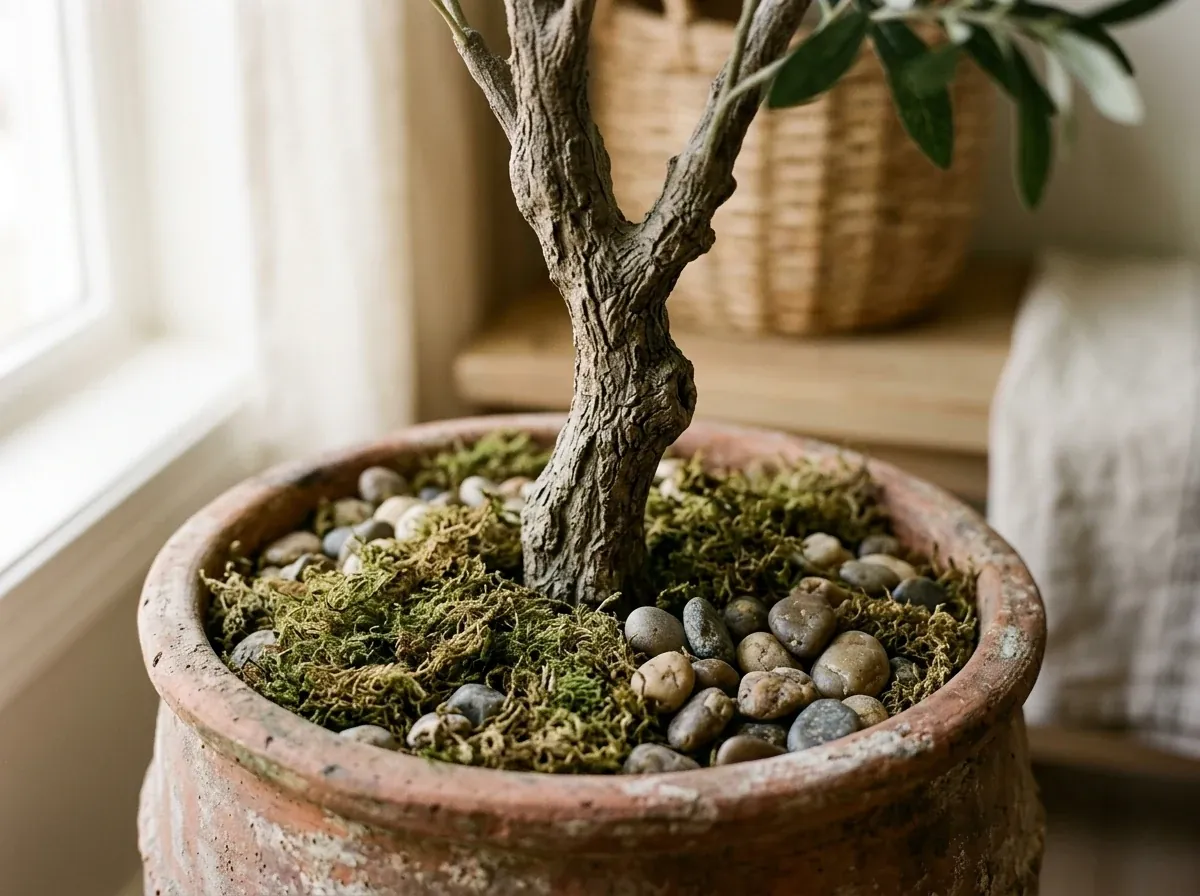
- Dress the base. Bright green foam or exposed plastic at the soil line ends the illusion instantly. Cover it with dried sheet moss, then a few smooth river stones. Moss is the most forgiving and reads the most real.
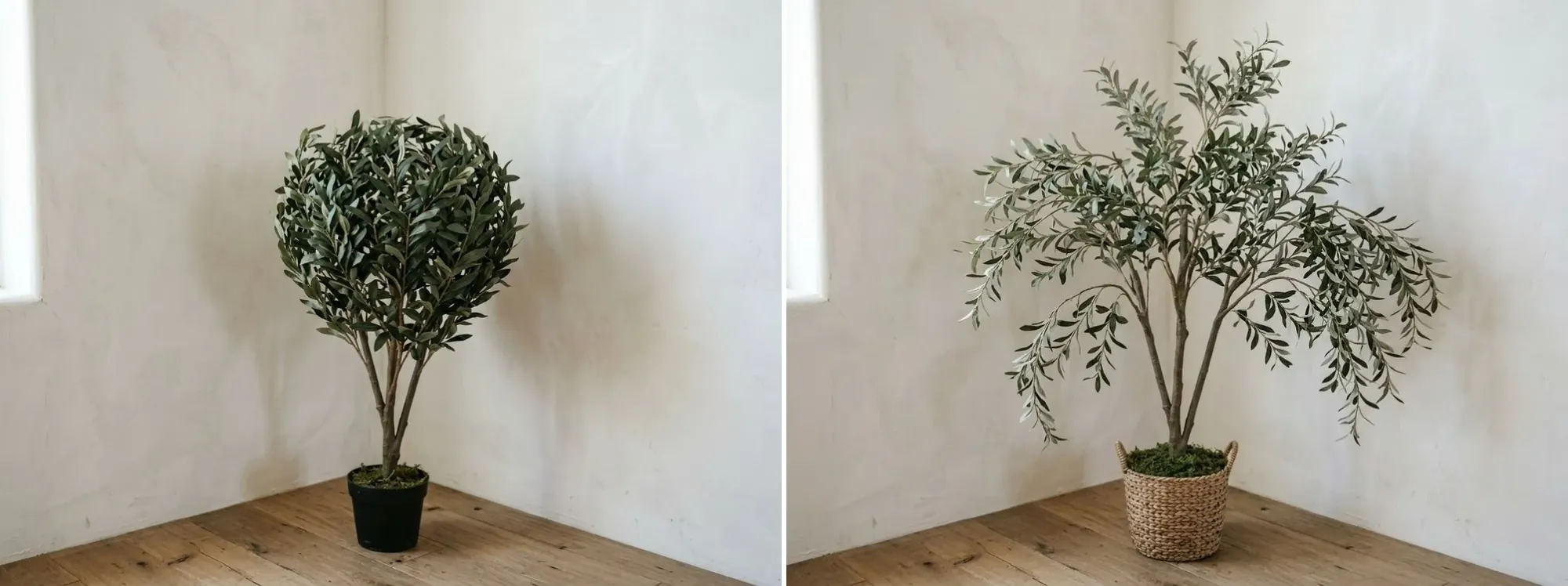
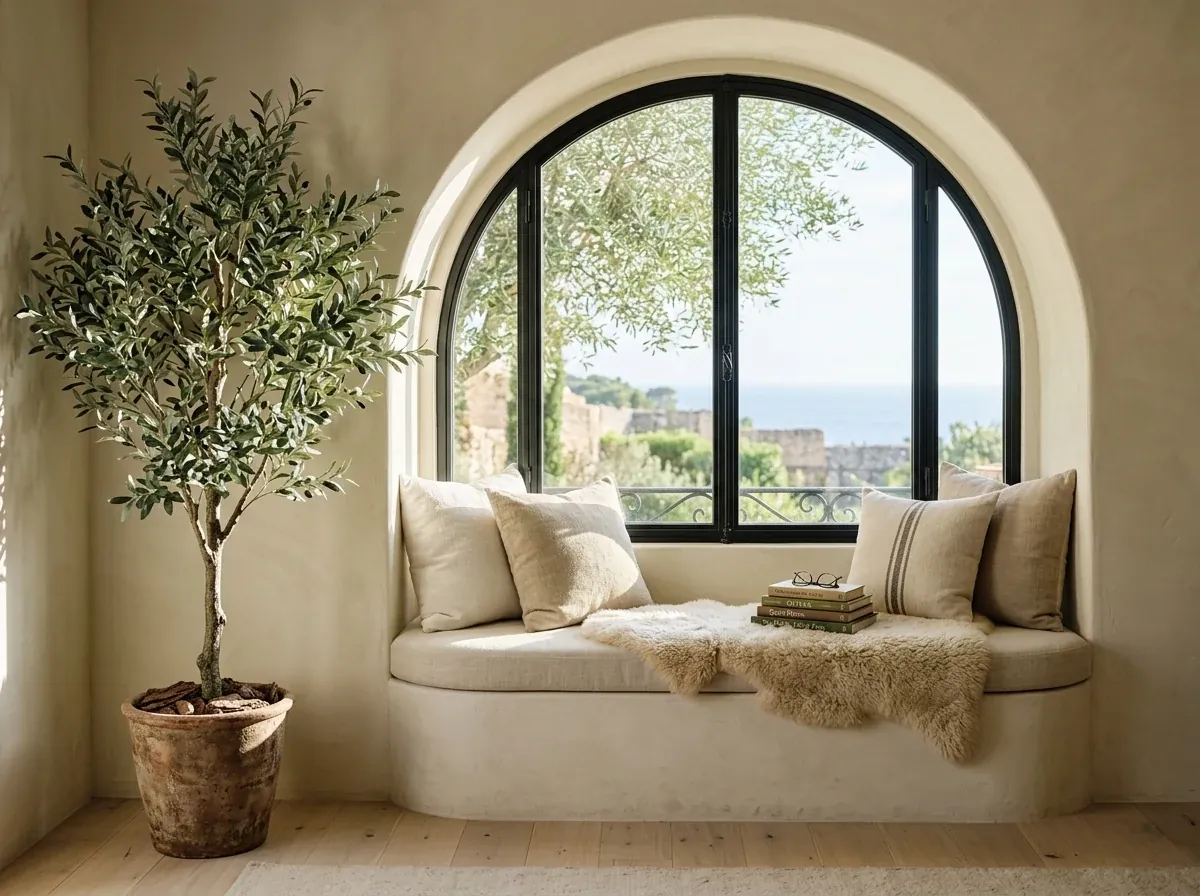
One more free upgrade: put the tree in real, warm daylight. Our eyes read the soft shadow of leaves on a wall as “alive.” The detail shot below is the whole game in one frame.
Choosing the Right Faux Olive Tree
Once you know the styling matters more than the sticker, buying gets simpler. Judge a faux olive tree on four things, in order.
- Leaves. Real-touch, matte, two-tone grey-green foliage looks alive. Flat, uniformly bright, plasticky leaves never will. This is the number one tell, so check it first.
- Trunk. A natural, gnarled, tapering trunk with visible bark texture sells the whole thing. A perfectly straight green pole is a red flag.
- Fullness and branch count. More branches mean you can shape a natural, open canopy. Sparse trees always look sparse.
- Height for your ceiling. A 5 to 7 foot tree suits an 8 to 9 foot ceiling with a foot of headroom. Small space or a console? A 2 to 3 foot tabletop olive tree gives the same note.
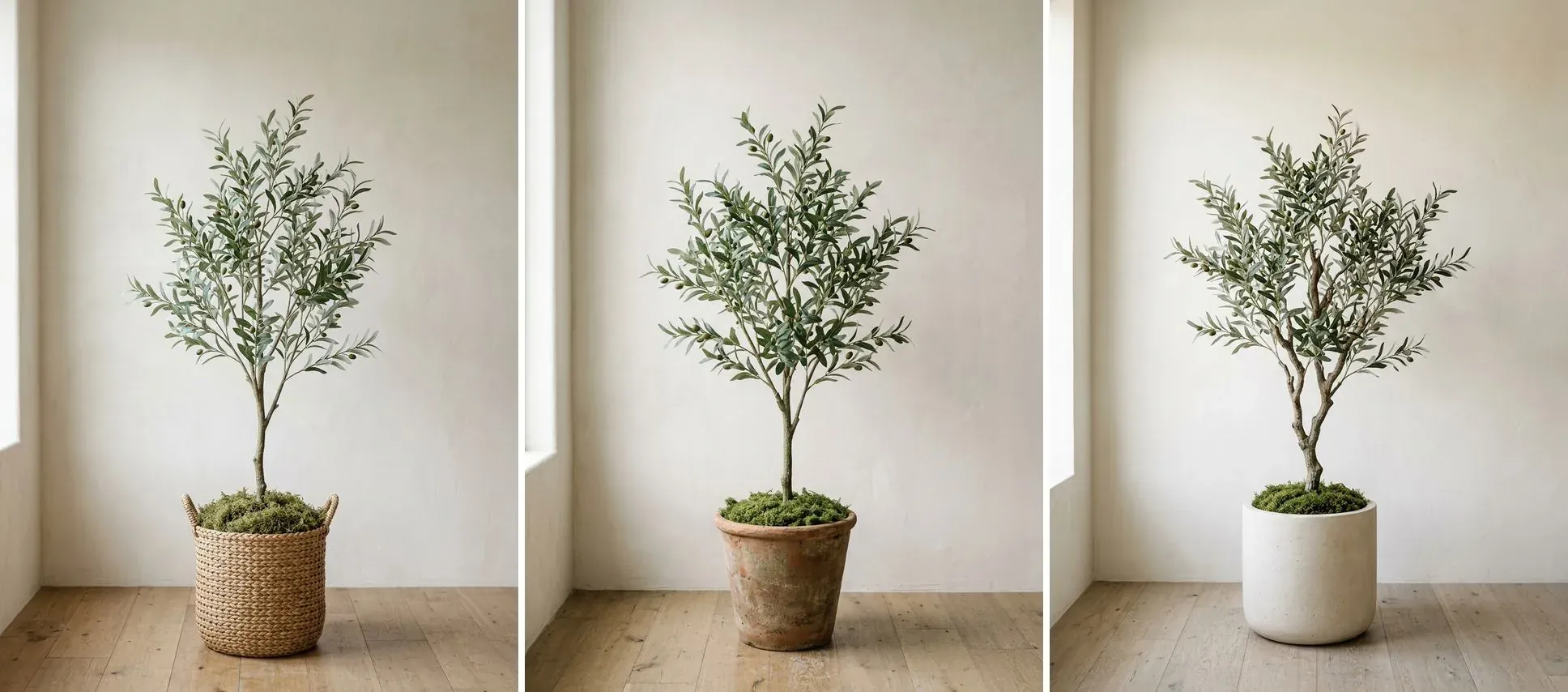
On budget: expect $80 to $120 for a decent big-box 5-footer, $200 to $450 for mid-range real-touch trees, and $500 plus for designer-grade pieces. Spend on leaves and trunk before you spend on sheer size.
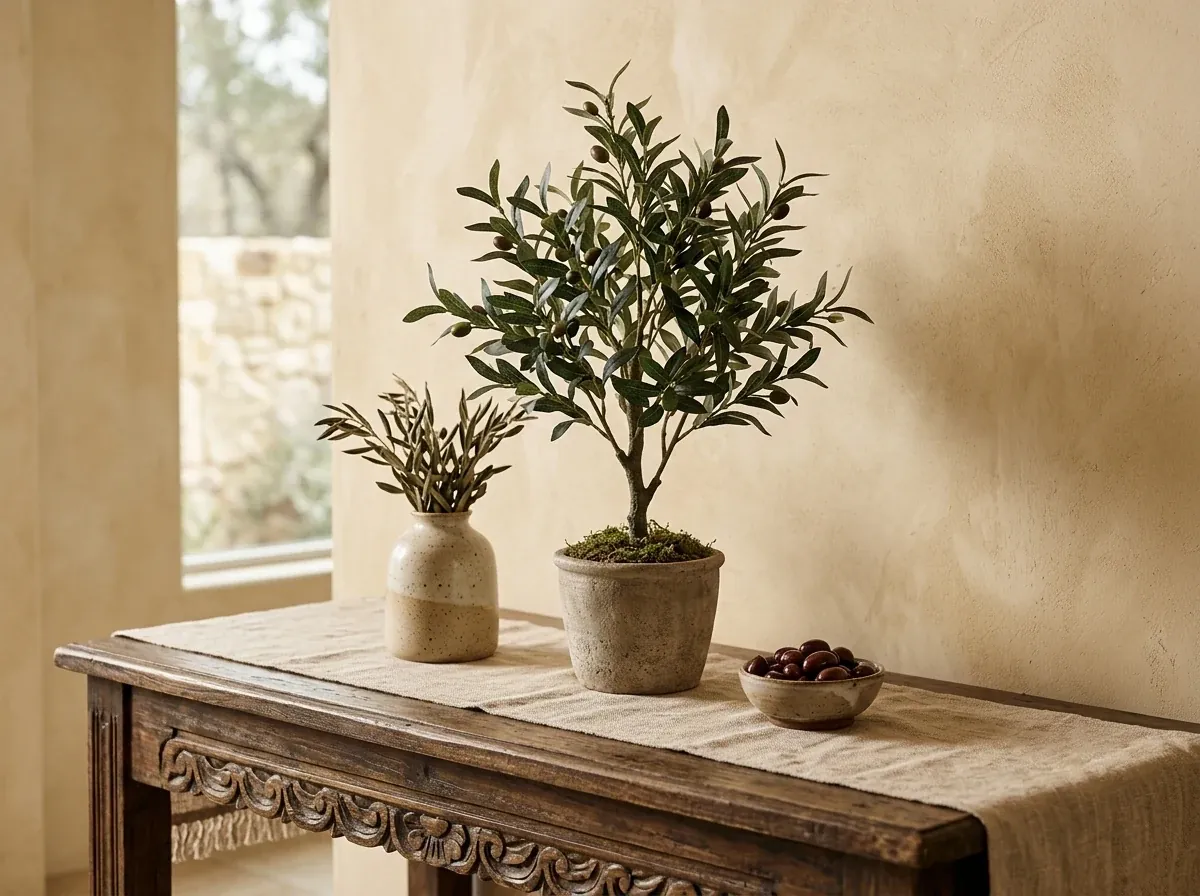
See an Olive Tree in Your Room Before You Buy
Here is the part that saves you money. The most common olive-tree regret is size and placement: a tree that looked perfect online turns up too tall, too sparse, or wrong for the corner, and back it goes. Roughly 20 to 30% of furniture bought online gets returned, and oversized or ill-fitting is a top reason (National Retail Federation).
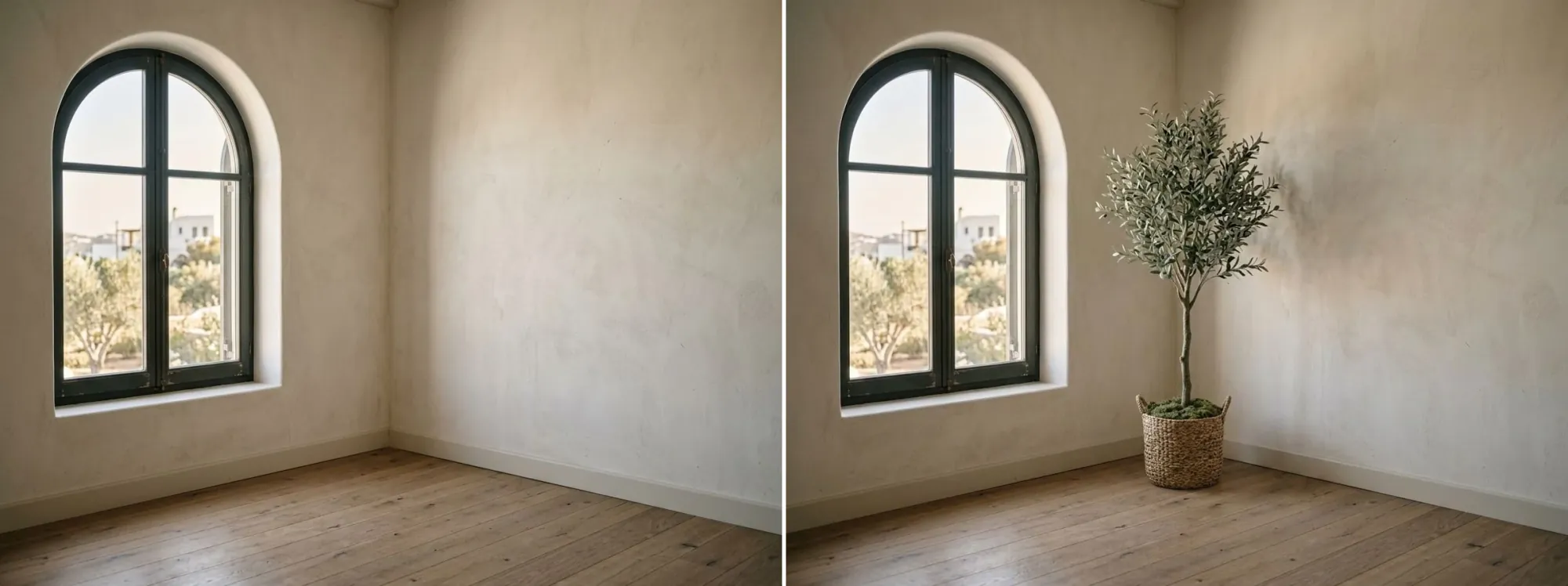
You can skip that gamble. Take a photo of your actual room, upload it to MeltFlex, and add an olive tree to the exact corner you are considering. In under 30 seconds you get a photorealistic preview of your real space with the tree in it, so you can test a tall tree versus a tabletop one, a basket versus a stone pot, and left corner versus right, before you spend anything. The example below is one empty corner, then the same corner with an olive tree added by AI.
Try an olive tree in your own room free →
Watch: Styling a Faux Olive Tree So It Looks Real
If you are more of a show-me person, this short makeover walks through the same shaping-and-styling tricks on a real faux tree, before and after.
The Verdict
The olive tree earns its 2026 hype: it is the rare plant that reads as calm, expensive and effortless all at once, and it fits almost every warm, natural palette out there. For indoor use, a well-chosen and, crucially, well-styled artificial olive tree beats a struggling real one for nearly everyone. Shape it, hide the pot, dress the base, and it will fool most guests. Preview it in your room first, and you will buy the right one the first time.
Frequently Asked Questions
Are faux olive trees still in style in 2026?
Yes, more than ever. The olive tree has quietly replaced the fiddle-leaf fig as the defining indoor tree of 2026, driven by the Mediterranean Modern and quiet-luxury looks. Searches for “faux olive tree” are up about 26% year over year at more than 12,000 a month, and designers now use it as a sculptural, calming anchor rather than a loud statement plant.
Real or artificial olive tree indoors, which is better?
For most homes, a high-quality artificial olive tree is the smarter indoor choice. Real olive trees want six or more hours of direct sun, dislike central heating, drop leaves under stress, and rarely fruit inside. A good faux tree looks convincing year round, needs zero water or pruning, and works in dark corners where a live tree would slowly die. Choose real only if you have a bright sunroom and enjoy the upkeep.
How do you make a fake olive tree look real?
Shape it, hide the pot, and dress the base. Bend the branches outward and down for an open, asymmetric canopy; drop the nursery pot inside a basket, terracotta or stone planter; and cover the soil line with dried sheet moss and river stones. Placing it in warm natural light seals the illusion.
How tall should an indoor olive tree be?
For a floor tree in a living or dining room, 5 to 7 feet is the sweet spot: architectural but comfortable under an 8-foot ceiling. In a small space or on a console, a 2 to 3 foot tabletop olive tree gives the same note. Match the height to your ceiling and leave about a foot of clearance above the canopy.
Can I see an olive tree in my room before buying?
Yes. Upload a photo of your room to MeltFlex, add an olive tree to the corner you have in mind, and get a photorealistic preview in under 30 seconds. Test a tall tree versus a tabletop one and different pots and corners, so you buy the right size once instead of returning a tree that overwhelmed the space.
Keep Reading
- Quiet luxury interior design, the understated, expensive-looking palette the olive tree lives in.
- Biophilic interior design, how to bring nature into every room, with real and faux greenery.
- Warm minimalism, the pared-back, tactile look that pairs perfectly with an olive tree.
- Try an olive tree in your own room, upload a photo and see it in 30 seconds.



)