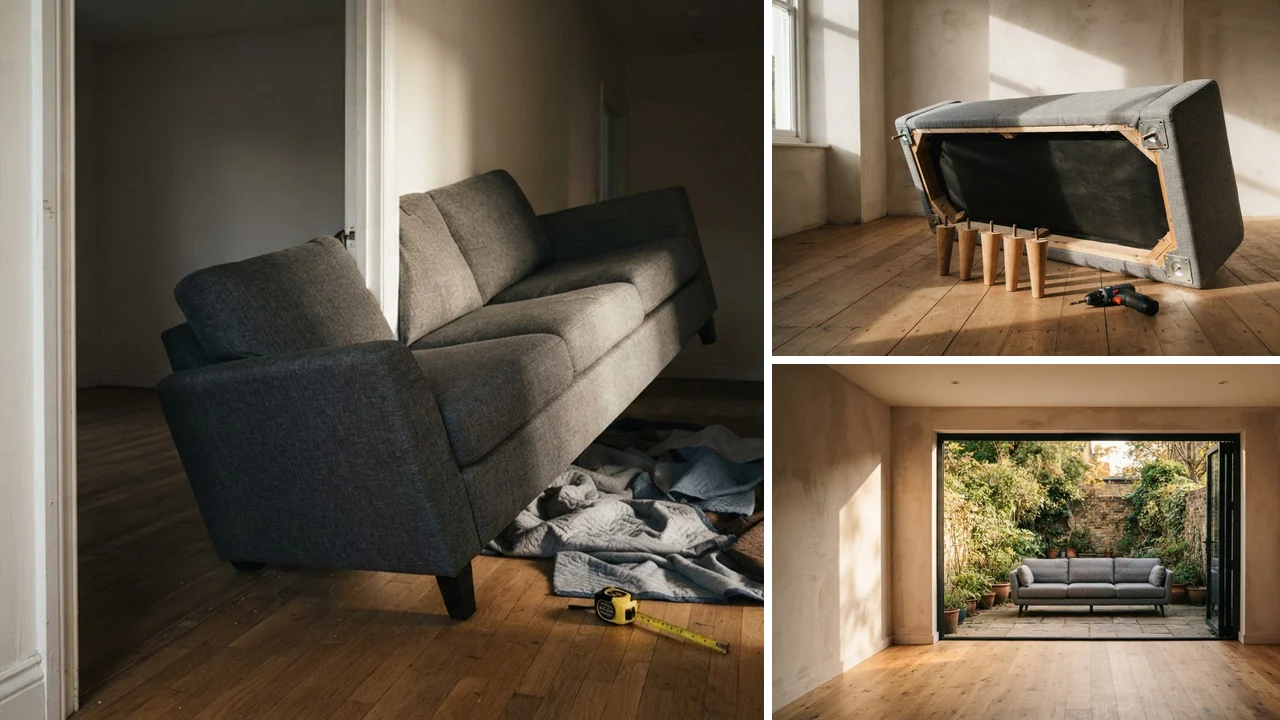
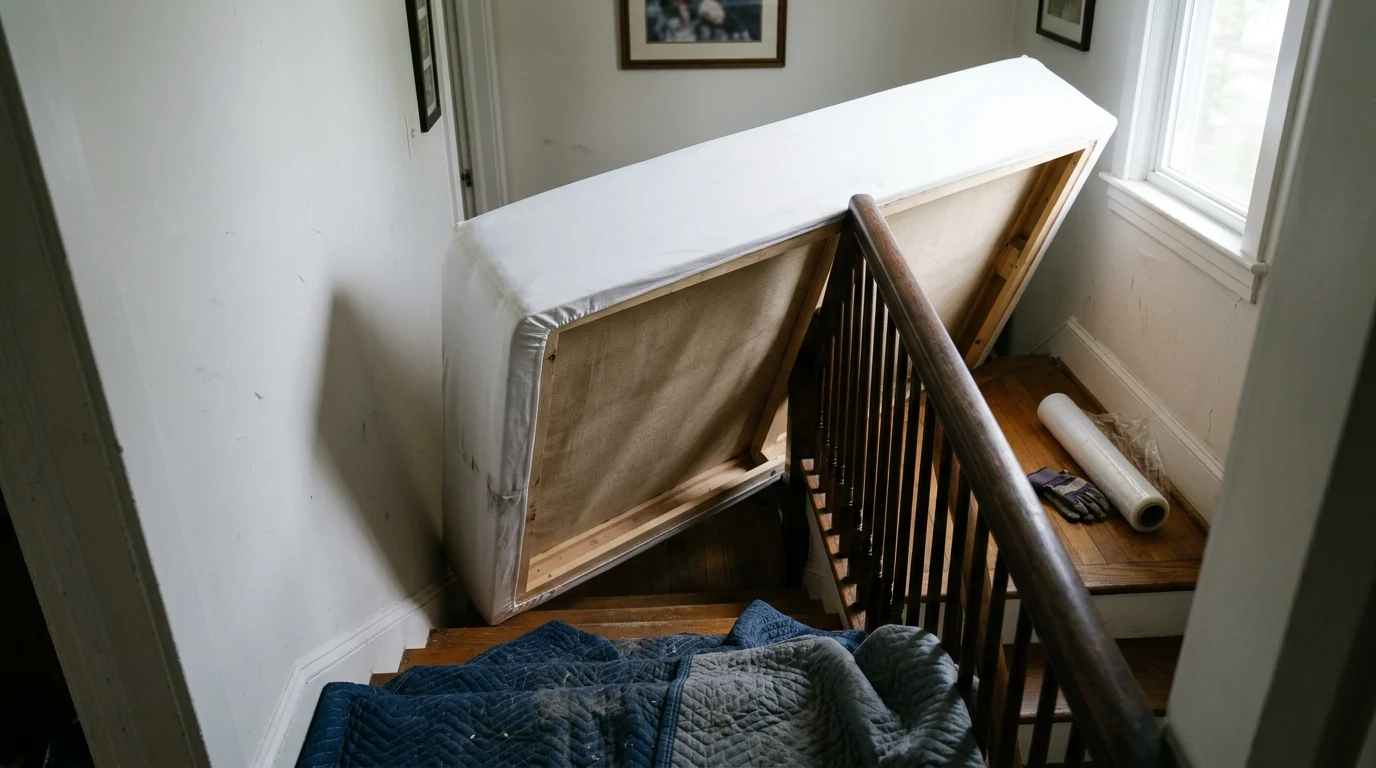
The moving day scene is always the same: the mattress made it upstairs twenty minutes ago, flexed politely around the landing, and is leaning against the bedroom wall. The box spring made it to the first turn and stopped. It is now wedged between the handrail and the ceiling, and no amount of rotating is changing that.
Our articles are still written by humans!
Get human written articles in your Google feed.
A box spring gets stuck because it is a rigid rectangle that cannot bend, compress or fold: if the staircase turn is too tight for its full length, no carrying technique will fix it, and the real solutions are a split box spring, a folding foundation, or skipping the box spring entirely. That is the honest version, and it is why this guide is ordered the way it is: first the fixes that cost nothing, then the ones that cost a little, and a clear line where technique stops working and geometry wins. If the piece stuck on your stairs is a sofa rather than a bed base, the fixes are different and they are in our guide to what to do when furniture will not fit through the door. We built the mattress version of this problem into our mattress fit guide, and the short answer there was "stand it on edge and flex it". A box spring grants you the first half of that advice and refuses the second, which changes everything.
Box spring sizes: know exactly what you are carrying
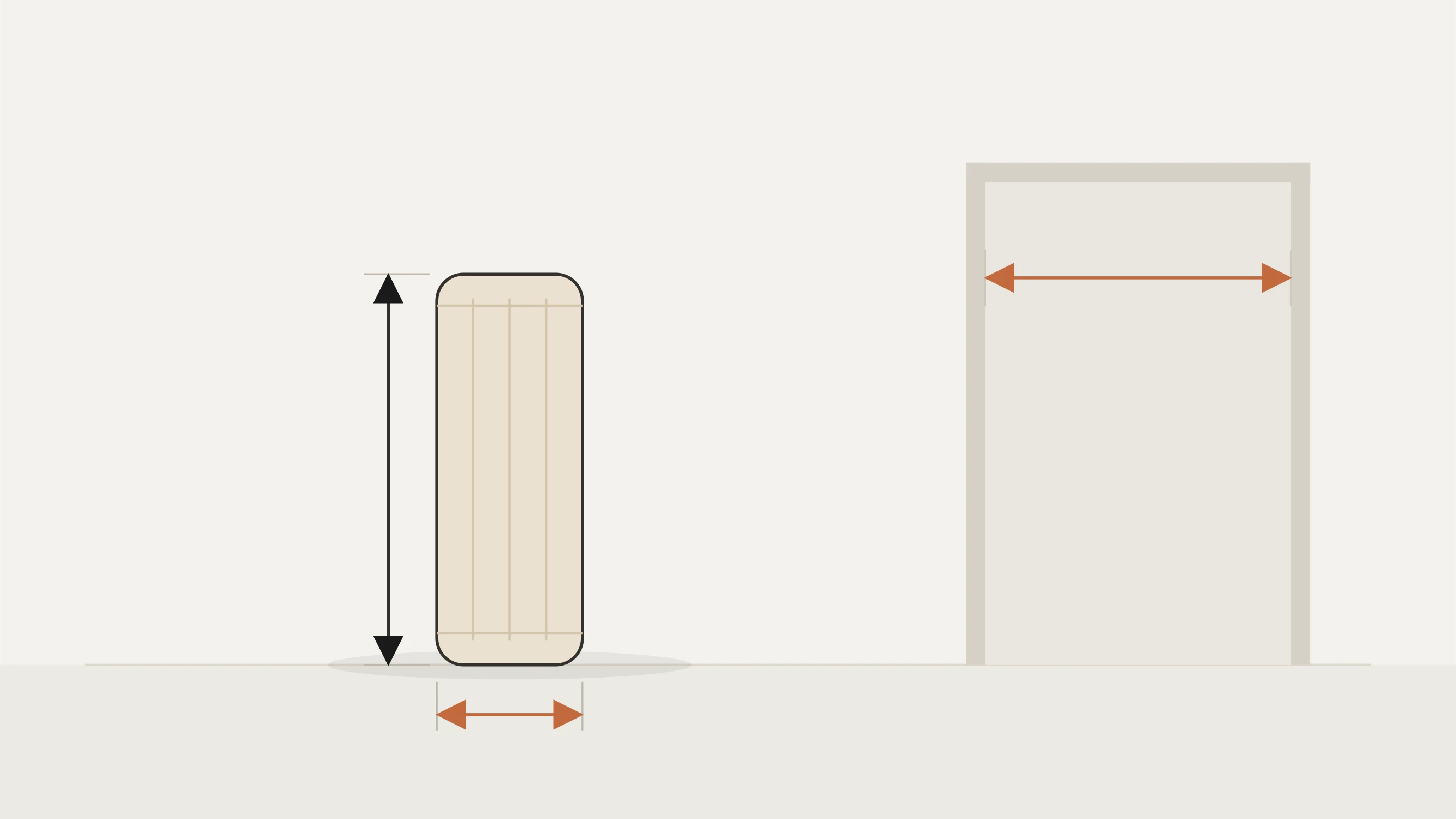
Before any technique, the numbers. A box spring has the same footprint as its mattress and a rigid depth of about 9 inches (a low-profile version runs 5 to 5.5 inches). Unlike the mattress, every one of these inches is non-negotiable.
Notice the pattern: king box springs are sold split by default, precisely because a 76 inch wide rigid panel would never make it into most bedrooms. The queen is the trap. It is the one common size still sold as a single rigid piece that is genuinely too big for many staircases, which is why "queen box spring won't fit upstairs" is the version of this problem everyone types at midnight.
Before buying anything or lifting anything again, run your actual numbers. Our free furniture fit calculator now has box spring presets built in, every standard size, one-piece and split, and it checks the doorway, the hallway turn, the stairwell and the elevator against real geometry. It also knows the one rule that matters here: for a box spring, a "tight" verdict means no.
Why the stairs beat the box spring (it is not the width)
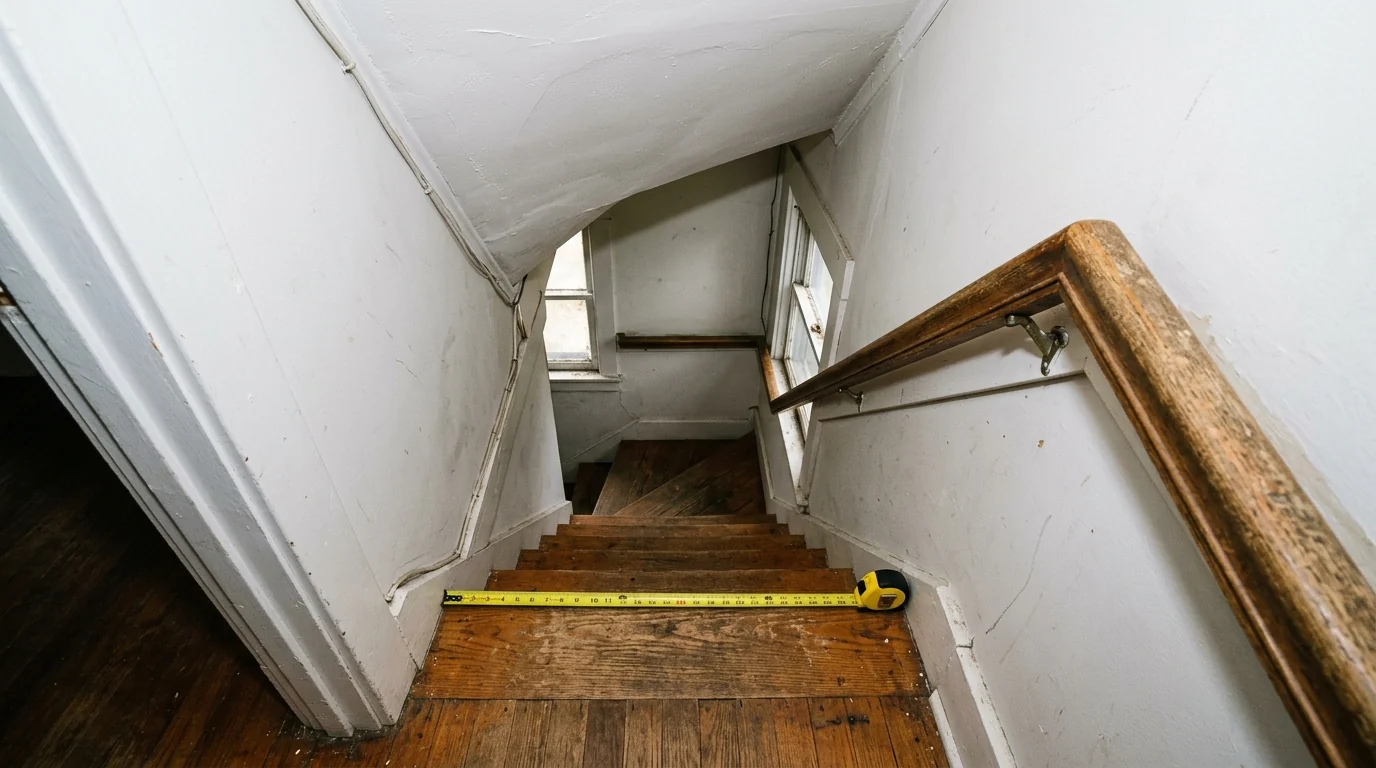
A box spring travels on its edge, so it presents its 9 inch thickness to the staircase. Width is almost never the problem; even the residential building-code minimum of 36 inches of stair width swallows 9 inches easily. The killer is length at the turn. An 80 inch rigid panel rotating around a landing needs clearance its whole length at once, and three things eat that clearance: a landing shallower than roughly 36 inches, a handrail that steals 3 inches of swing, and the sloped ceiling or soffit that sits over so many staircase turns. The mattress survives this because it bends through the arc. The box spring has to fit the arc rigidly, at every degree of the rotation, and one pinch point anywhere in that sweep ends the attempt.
That is also why the fixes below split into two families: the first three claw back an inch or two of clearance, which is enough only when you were barely stuck. The rest change the geometry of what you are carrying, which works every time.
1. Re-Angle It: The Vertical Corner Technique
Worth one careful attempt before spending money. Stand the box spring fully vertical on its short end, lead with a bottom corner, and rotate it around the inside corner of the landing like a compass needle, tilting the top out over the handrail into the open stairwell void if your staircase has one. The open void above the rail is free clearance most people never use. Two people, stretch wrap so the fabric slides, slow rotation. The full step-by-step is in the how-to above. If it binds at two points at the same time, stop; you are in geometry territory now, and forcing a rigid frame only costs you drywall.
2. Take the Door Off Its Hinges
When the stuck point is a doorway rather than the stairs, removal is a two-minute fix that buys real space: tapping the hinge pins out and lifting the door away typically adds 1.5 to 2 inches of clear opening. Combined with leading corner-first through the diagonal of the frame, this solves nearly every door-related box spring jam, because on edge the piece only needs 9 inches plus knuckles.
3. Remove the Door Stop Trim
The thin strip of wood the door closes against sits proud of the jamb by about half an inch per side. Prying it off with a flat bar adds a final inch of width and nails back on in five minutes. This is a finishing move, useful when you are less than an inch short, pointless when the problem is the staircase turn. Measure the gap you are missing before you start pulling trim.
4. Swap to a Split Box Spring (the real answer)
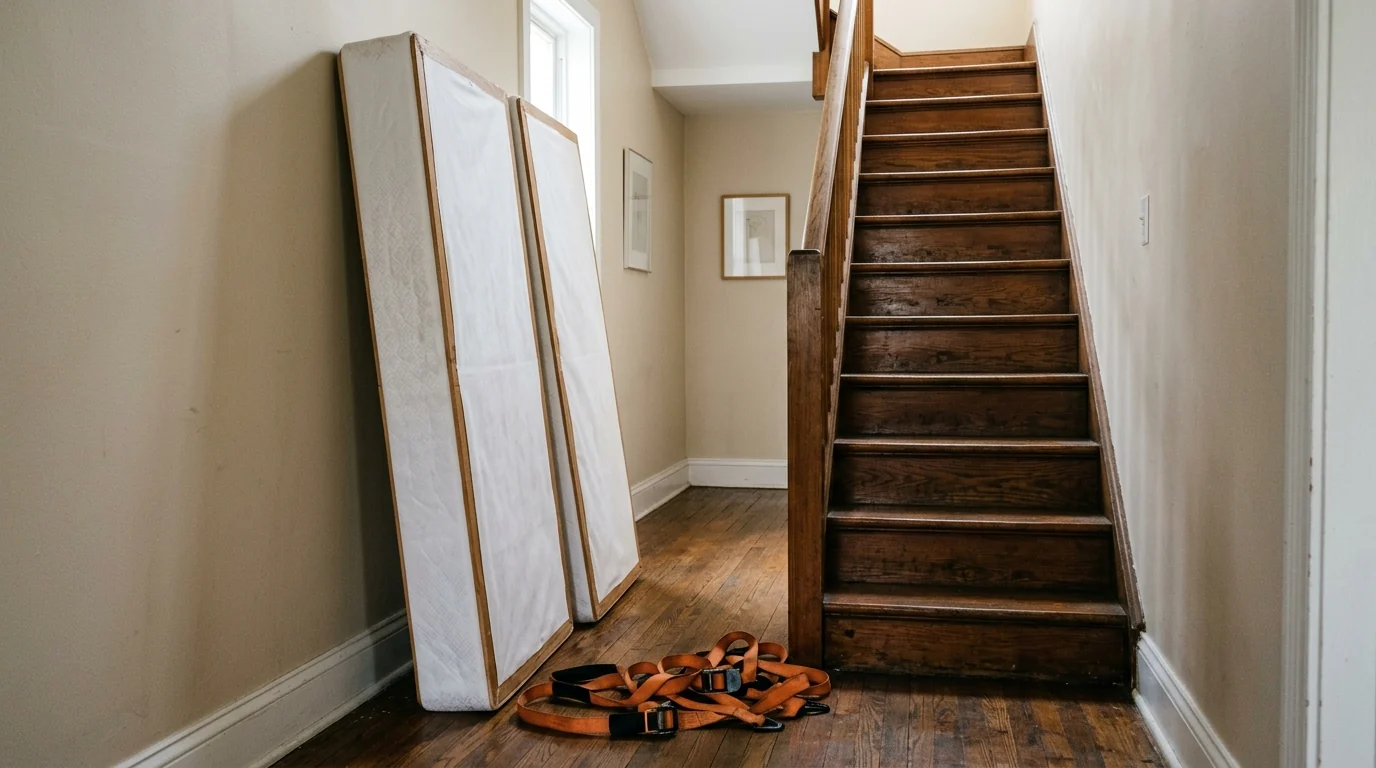
A split queen replaces the single 60 by 80 panel with two 30 by 80 halves that sit side by side on the same frame under the same mattress. Each half carries like an oversized twin: it rounds landings, rides elevators, and fits through anything a human fits through. Once the mattress is on top, the seam is invisible and the support is identical. Expect around $150 to $300 for a decent split queen, and sell or donate the one-piece rather than fighting it. If your staircase failed the calculator check, skip fixes 1 to 3 and come straight here; this is the fix the industry itself uses, which is why kings ship split by default.
5. Use a Folding Foundation
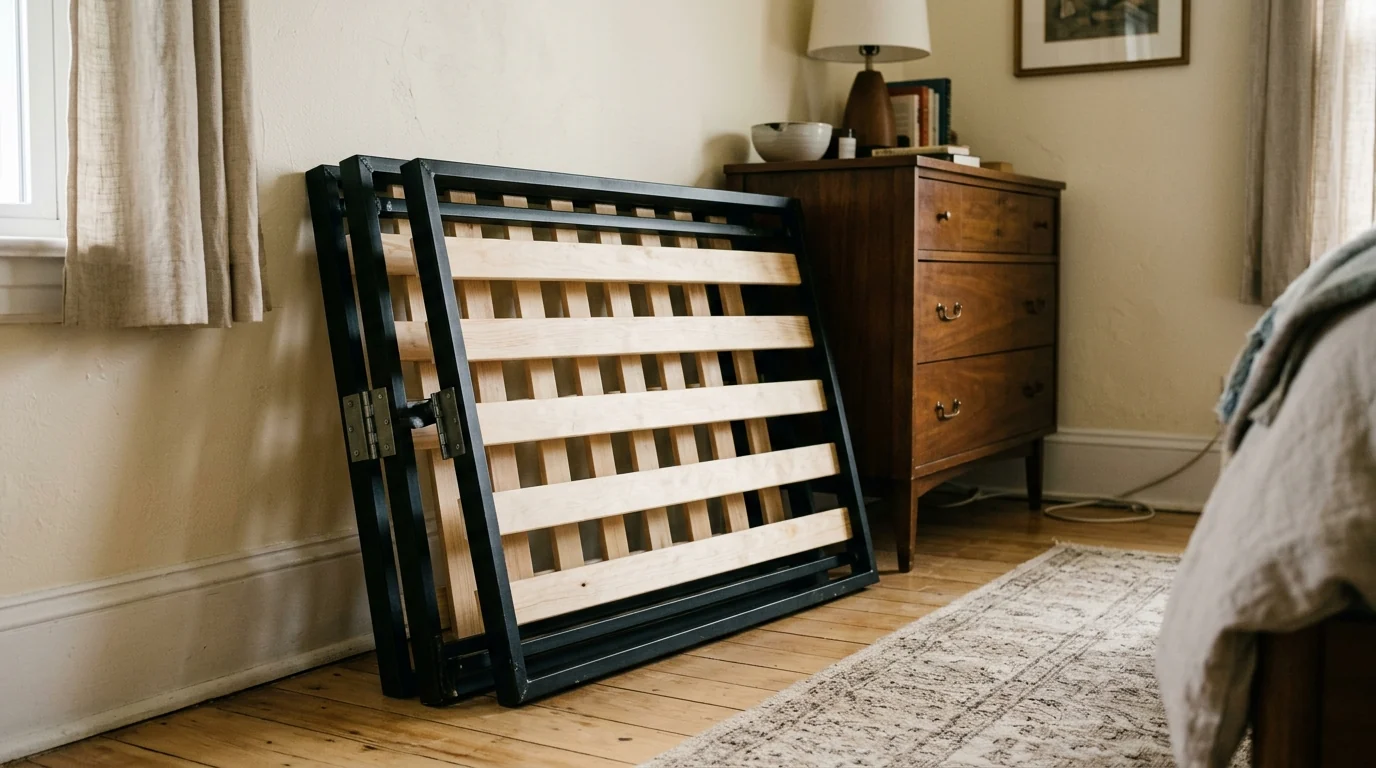
A folding foundation is a steel frame with wood slats, hinged across the middle so it carries folded at half length, about 40 by 60 inches for a queen, then opens flat in the bedroom. It does the same job as a box spring for any mattress that wants a firm deck, typically costs less than a split, and stores flat when you move again. The honest trade-off: it is a minimalist metal frame, not an upholstered piece, so on an open metal rail frame you may want a dust ruffle if you care how the underside looks.
6. Go Low-Profile
A low-profile box spring drops the depth from 9 inches to about 5. That is not primarily a fit fix, the footprint stays 60 by 80, but the thinner section changes marginal cases: it slips under lower headroom at a stair turn and needs less swing room rotating through the arc. Buy it for a marginal miss, or because modern thick mattresses sit too tall on a full-height box spring anyway. If you missed the turn by several inches, go back to the split.
7. Replace It With a Bunkie Board
A bunkie board is a 2 inch slim slatted or solid panel, often fabric-wrapped, that gives a mattress a firm flat deck without the height or the bulk of a box spring. Many fold or come in two pieces, and even the one-piece versions carry like a big cutting board. On a platform frame or over an old box spring it is a support fix; on a metal rail frame it needs a frame with enough cross support underneath. Around $50 to $150, and for most foam and hybrid mattresses it is all the "box spring" they ever needed.
8. Skip the Box Spring: Platform Bed
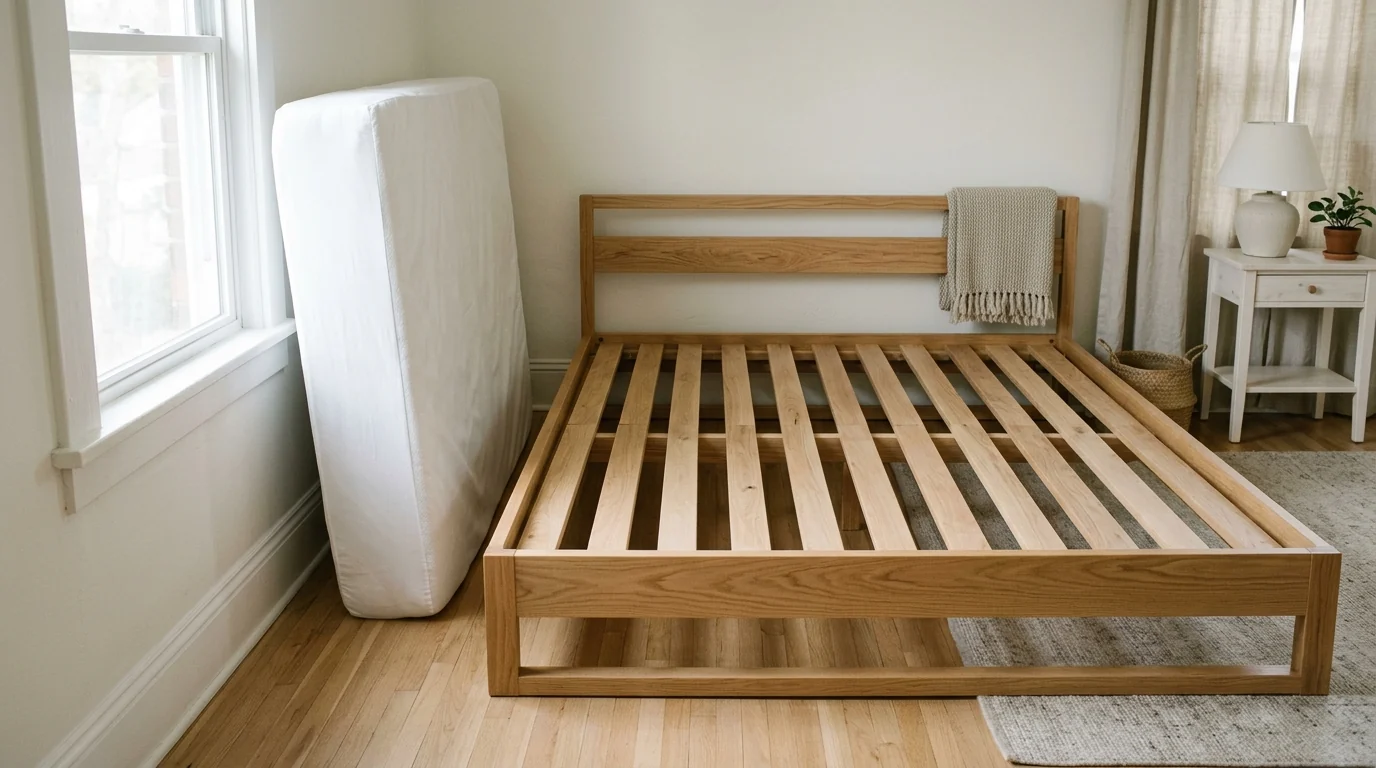
The structural reason box springs exist, giving an innerspring mattress a sprung deck on an open rail frame, does not apply to most modern mattresses. Foam and hybrid mattresses want a firm, flat, ventilated surface, which is exactly what a slatted platform bed provides, and platform frames arrive in flat boxes that walk up any staircase. If the box spring that will not fit belongs to a bed you were replacing anyway, this is the moment to stop owning the problem. Check your mattress warranty for its required slat spacing (usually 3 inches or less), and see how a platform bed actually looks in your bedroom with MeltFlex on a photo of the room before you commit.
9. The Window or Balcony Hoist
The last resort for a one-piece that absolutely must go up: in through a second-floor window or over a balcony rail. Professional movers do this routinely with lifting straps and two experienced people, and in cities with tight stairwells (Amsterdam built hoist beams into its gables for exactly this reason) it is a standard service that typically runs $150 to $400. As a DIY job with ropes it is how box springs end up in emergency rooms and windows end up in pieces, so our honest advice is: if you have reached fix 9, price a split box spring against a moving crew and let the numbers decide. They usually say split.
Watch: the professional last resort, done properly
There is one more option we deliberately left off the numbered list: cutting the frame so the box spring folds through the stairwell, then reinforcing it upstairs. We keep it off the list because for most people a $200 split box spring beats an afternoon of careful carpentry, but if you are going to do it, do it the way a professional does. Here is general contractor Tom Silva demonstrating the full technique on Ask This Old House, which cuts to make, which wires to never touch, and how to brace the frame afterwards; the companion write-up is in This Old House's step-by-step guide.
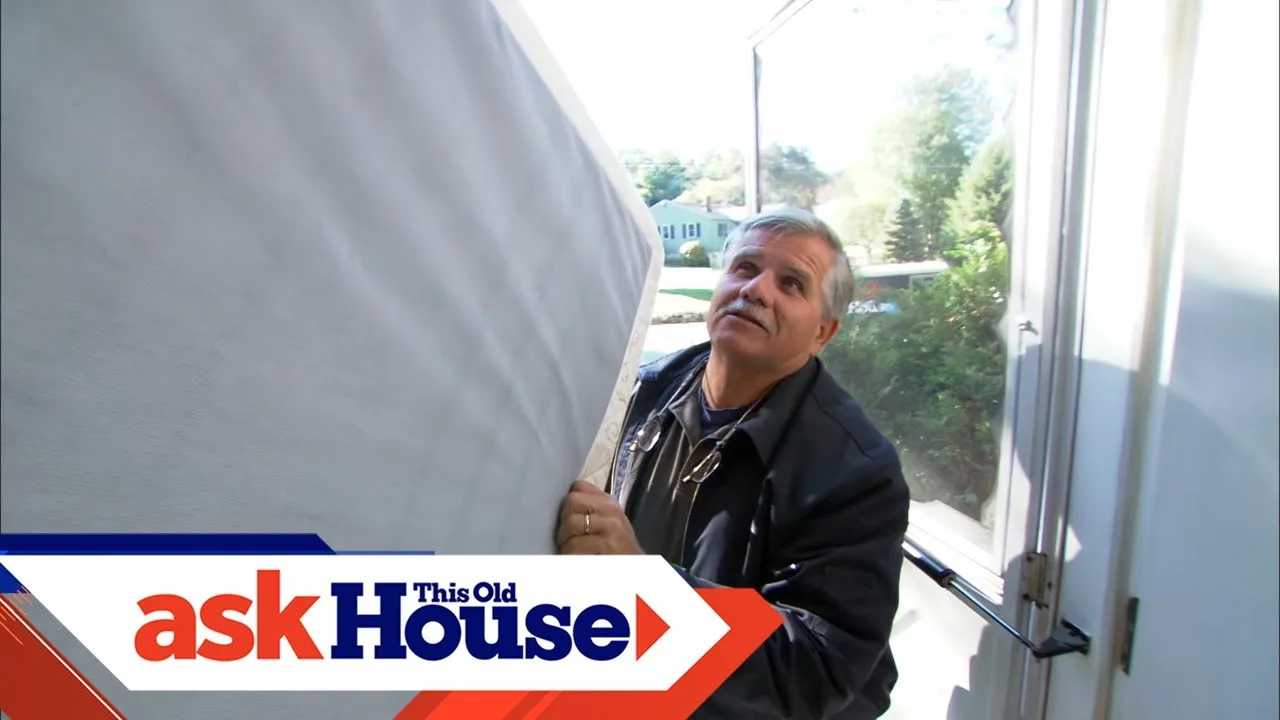
Video: “How to Move a Box Spring Up a Narrow Staircase” by This Old House.
Getting it home in the first place: box springs vs cars
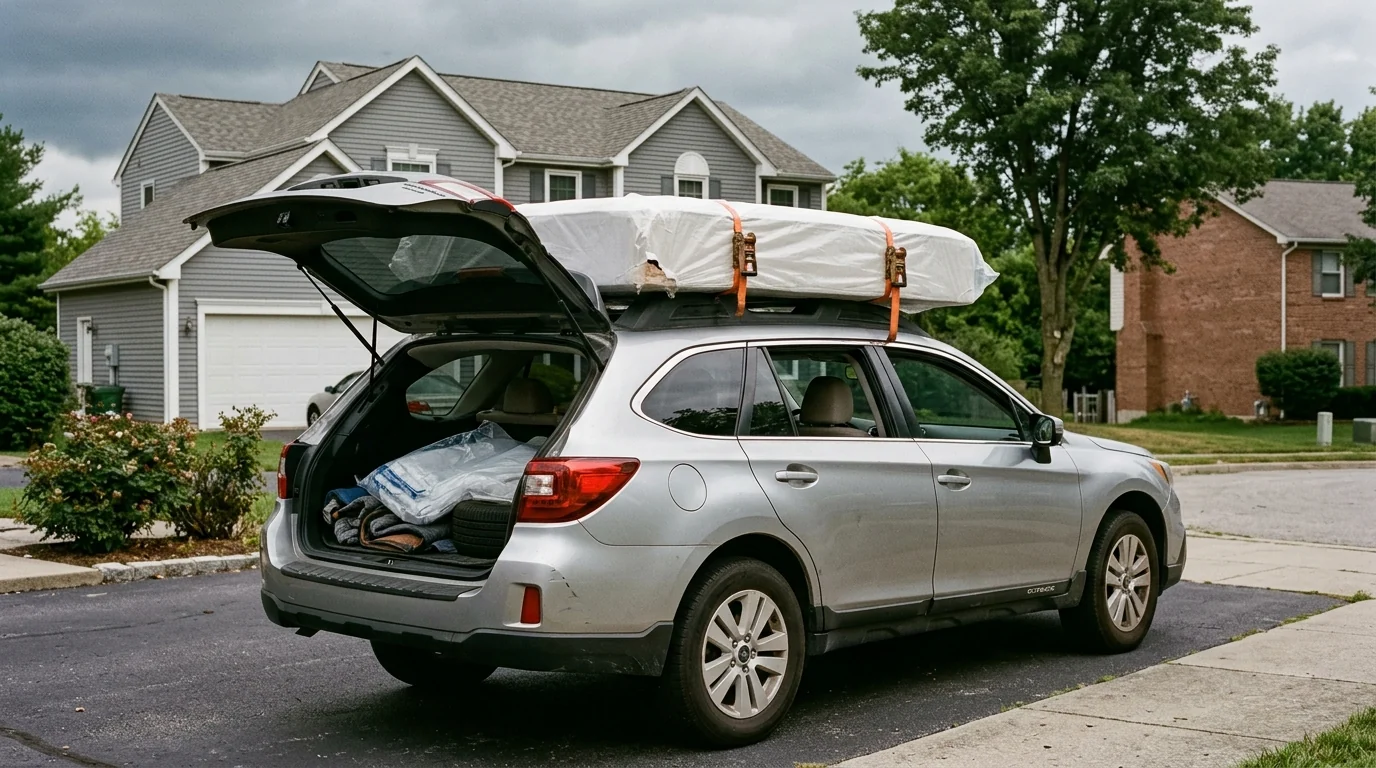
The same rigidity ruins car transport. A mattress squeezes and folds into a surprising number of vehicles; a one-piece queen box spring does not enter a mid-size SUV, whose cargo opening is around 40 to 48 inches wide, in any orientation. Realistic options: a roof rack with two ratchet straps front and back (drive slowly, the piece is a sail), a pickup or a rented cargo van for an hour, or, once again, the split, whose 30 inch halves slide into most SUVs with the seats folded. If you are buying new, have it delivered and make the retailer's crew solve the staircase; if they fail, most will take it back, which converts your problem into a free return.
Box Spring FAQ
Will a queen box spring fit up the stairs?
A one-piece queen box spring, 60 by 80 inches and rigid, fails on many residential staircases: not because of the stair width, but because its 80 inch length cannot rotate around a landing turn or under low headroom. Straight, wide stairs are usually fine. If your staircase has a 90 or 180 degree turn, a landing shallower than about 36 inches, or a sloped ceiling over the turn, plan on a split box spring from the start.
Will a box spring fit through a standard door?
Almost always yes, and this surprises people. On its edge, a box spring presents only its 9 inch thickness to the opening, so even a narrow 28 inch interior door clears it with ease. Doors are rarely the problem; staircases with turns, tight hallway corners and low ceilings are where one-piece box springs get stuck.
What is a split box spring?
A split box spring divides the same foundation into two narrow halves that sit side by side on the bed frame. A split queen is two 30 by 80 inch pieces and a king is normally sold as two 38 by 80 halves anyway. Each half moves like a twin, fits stairwells and elevators a one-piece never will, and once the mattress is on top you cannot tell the difference.
Can you bend or fold a box spring to get it in?
No. A box spring is a rigid frame of wood or steel under fabric, and bending it breaks it: the frame cracks, the corners rack out of square, and the warranty is gone. This is the key difference from a mattress, which can flex around a tight turn. If a box spring does not fit rigid, the answer is a different foundation, not force.
Can you cut a box spring to fit and reassemble it?
It is physically possible: people cut the frame, fold it on the fabric hinge, and screw plywood plates over the cuts upstairs. But it is hours of work, the result is weaker, and it usually saves nothing, because a new split queen box spring costs around $150 to $300 and a folding foundation even less. Cutting only makes sense for an expensive foundation you cannot replace. If you do attempt it, watch the This Old House demonstration above first; the cuts have to miss the wire.
Do I actually need a box spring?
Often not. Box springs matter for traditional innerspring mattresses and metal rail frames that need a deck. Most foam and hybrid mattresses do better on a solid or slatted surface: a platform bed, a slatted foundation or a bunkie board. If your box spring will not fit, check the mattress warranty first; the fix may be to not replace it at all.
Will a queen box spring fit in an SUV?
Not inside a typical mid-size SUV: the cargo opening is around 40 to 48 inches wide and a one-piece queen is a rigid 60 by 80 inches that cannot fold down like a mattress. Your options are a roof rack with ratchet straps, a pickup or cargo van, or a split queen, where each 30 by 80 half slides into most SUVs with the seats down.
The rest of the fit-check family: the free furniture fit calculator with box spring, mattress and sofa presets, the mattress fit guide for the piece that does bend, the sofa fit calculator for the living room version of this day, and what size furniture fits your room once everything is finally upstairs.