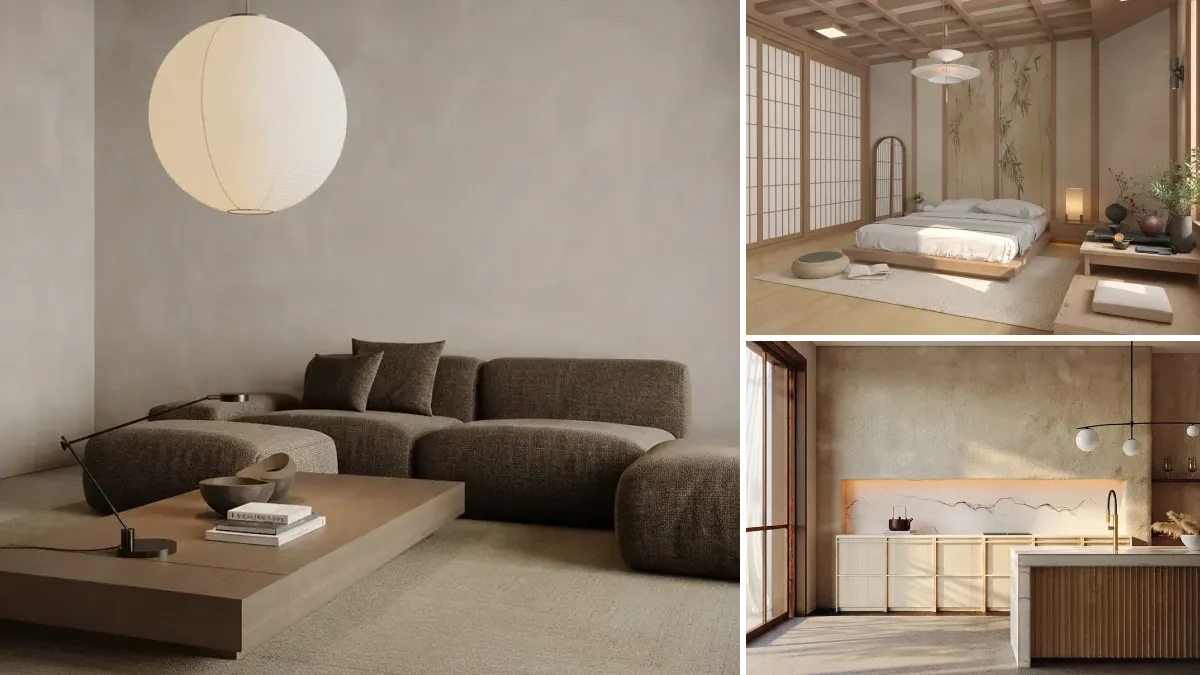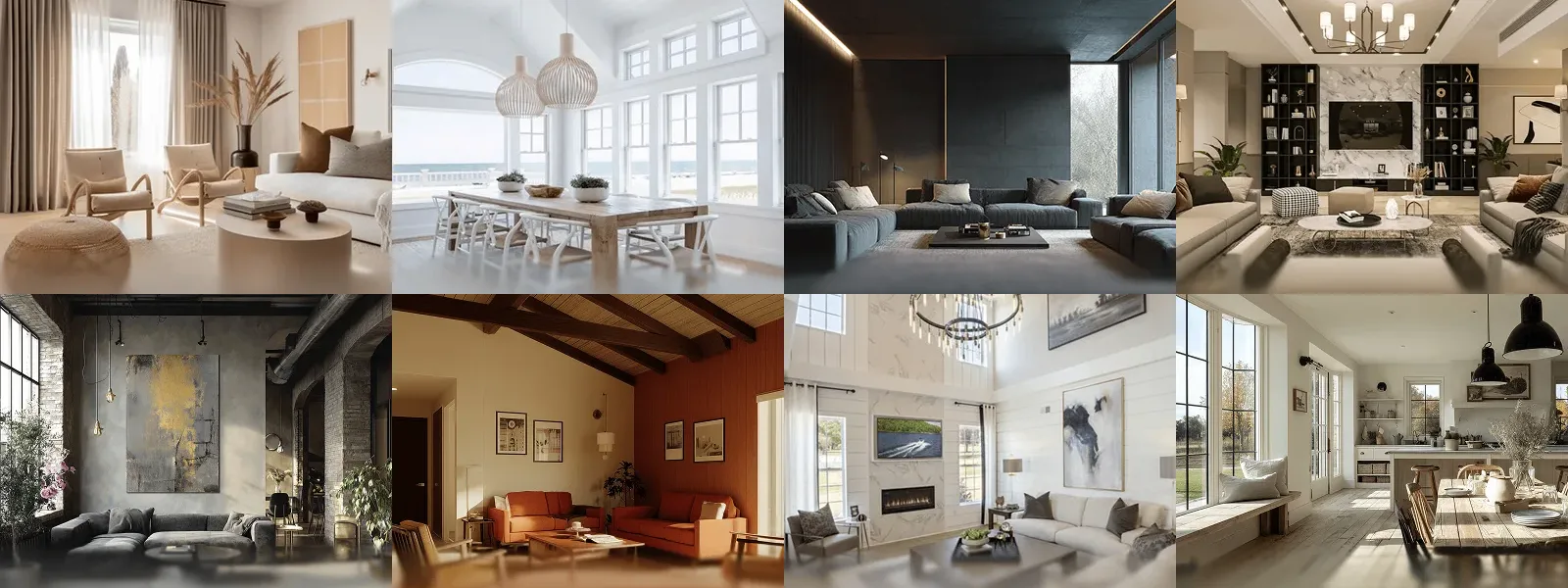
Modern interior design is a specific historical style, born out of the Bauhaus and mid-century modern movements between roughly the 1920s and the 1970s: strong clean lines, natural materials, and warm neutral colors that do not change with the season. Contemporary design has no fixed era at all. It means whatever is current right now, so it borrows from a dozen styles at once and keeps shifting as tastes shift. The short version: modern is a destination, contemporary is a moving target, and most rooms people call "modern" today are actually both at the same time.
Our articles are still written by humans!
Get human written articles in your Google feed.
FreeUpload photo · freeRedesign my room for freeUpload a photo and let MeltFlex design your space. Your first AI design is free, no card needed.“Every week someone asks us to make their living room ‘more modern,’ and half the time what they actually mean is contemporary. Once you see the two side by side in your own room, the confusion disappears in about ten seconds.”
Matúš Koleják, Co-Founder, MeltFlex
What is modern interior design?
Modern interior design refers to a specific design movement, not a vibe. It traces back to the Bauhaus school founded by Walter Gropius in Germany in 1919, which set out to strip decoration away from furniture and buildings and let function dictate form. After the Second World War, designers like Florence Knoll, Le Corbusier and Ludwig Mies van der Rohe carried those ideas to the United States and Scandinavia, and the style matured into what we now call mid-century modern, roughly 1945 to 1970. That lineage is why modern furniture still looks the way it does: strong horizontal and vertical lines, tapered wooden legs, organic curves used sparingly, leather and natural wood, and a warm, grounded palette. Nothing about a modern room is trend-chasing. It is a fixed set of principles from a specific era, which is exactly why it has aged so well. See real examples of the look in our modern interior design gallery and its closest relative, mid-century modern.
What is contemporary interior design?
Contemporary design is whatever look is dominant right now, full stop. It is not attached to any single decade or designer, so it pulls freely from modern, minimalist, industrial, Scandinavian and midcentury influences and recombines them into whatever reads as current. That also means contemporary design is a genuinely moving target: the stark, cool, grey-and-white contemporary look of 2015 is not the same as contemporary in 2026, which has swung toward softer curves, warm neutrals like putty and sage, and natural textures such as bouclé, rattan and travertine. The one constant is currency, not aesthetics. A contemporary room today will need a refresh in a decade simply because "now" will have moved on without it. Right now the label mostly points to a handful of specific looks: Scandinavian, Japandi, organic luxe, warm minimalism and quiet luxury are the styles doing most of the heavy lifting in 2026’s version of contemporary.
Modern vs contemporary: the key differences
Side by side, the two styles split cleanly across five practical categories.
See it in a real living room
Descriptions only get you so far, so we took one real living room and furnished it twice with MeltFlex, once fully modern and once fully contemporary, keeping the exact same walls, window and kitchenette so nothing but the furniture and palette changes.
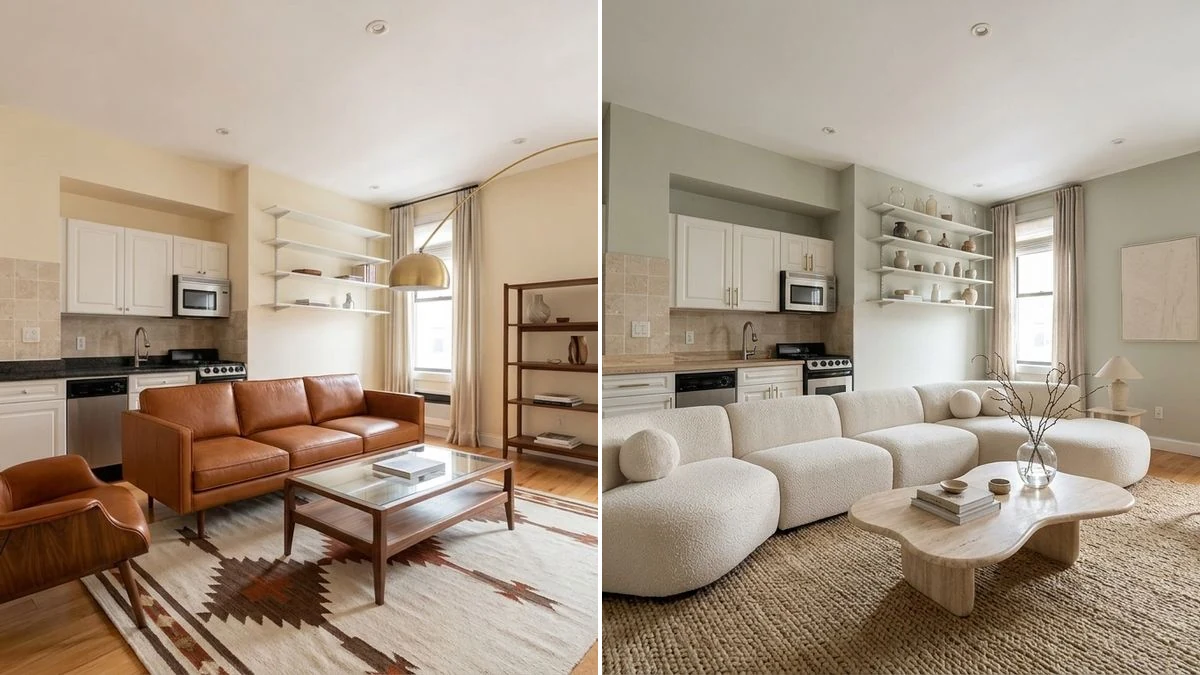
Left: modern, a cognac leather sofa and a walnut-and-glass coffee table. Right: contemporary, a curved bouclé sectional and an organic travertine coffee table.
On the modern side: a low, cognac leather sofa on slim wood legs, a walnut-and-glass coffee table, and a single curved leather lounge chair, all against warm cream walls. On the contemporary side, the same room turns soft: a curved bouclé sectional, an organic-shaped travertine coffee table, a rattan accent chair and a chunky jute rug, in the putty-and-sage palette that defines contemporary rooms right now. Same floor plan, same light, two completely different design languages. For more layouts and furniture picks once you have settled on a direction, see our living room design ideas guide.
Color palettes, materials and lines
If you only remember one distinction, make it this: modern colors are warm and fixed, contemporary colors are warm and current. A modern room reaches for cream, walnut brown, camel and a rust or olive accent, the same handful of tones it has used for eighty years. A contemporary room in 2026 reaches for putty, soft sage and warm white, a noticeably softer palette than the stark grey and white contemporary rooms favored a decade ago, according to design coverage from Livingetc’s interior designer roundup on the two styles. Materials tell the same story from a different angle. Modern furniture is almost always solid wood, leather and metal, chosen because those materials are durable and do not date. Contemporary furniture experiments more freely with bouclé, rattan, linen, travertine and brushed brass, materials chosen because they read as current, not because they will still feel current in twenty years.
Lines are the fastest tell in a photograph. Modern furniture is built on strong horizontals and verticals, tapered legs and clean geometry, a direct legacy of the mid-century modern movement and the Bauhaus principles it grew from. Contemporary furniture in 2026 favors soft, organic curves instead, rounded sofa arms, kidney-shaped coffee tables and curved headboards. Look at the silhouette before you look at anything else and you can usually tell which one you are looking at in under five seconds.
See it in a real bedroom
The same test holds up in a bedroom. We took one real bedroom and generated both looks off the same base photo, so the window, the view of the trees and the flooring are identical in both images.
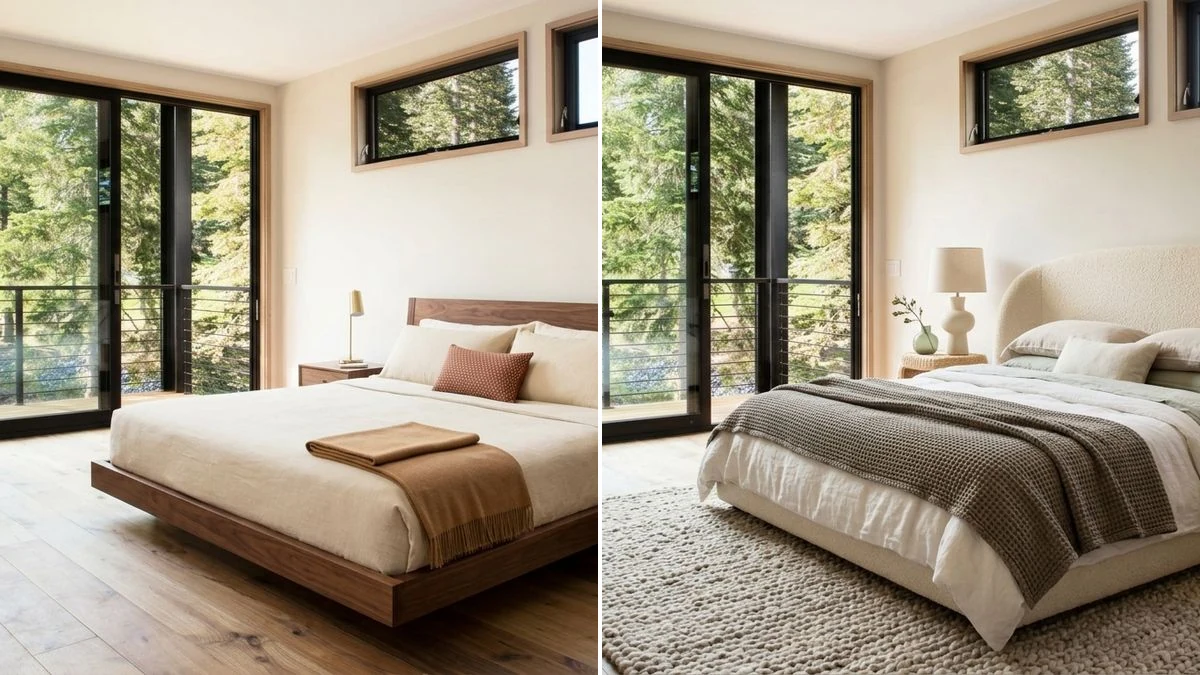
Left: modern, a walnut platform bed with a straight geometric headboard. Right: contemporary, a curved bouclé headboard and a chunky handwoven rug.
The modern bedroom keeps a low, floating walnut platform bed with a perfectly straight headboard and tailored cream and camel bedding, the kind of bed frame that would not look out of place in a 1958 catalogue or a 2026 showroom. The contemporary bedroom softens every edge: a curved, upholstered bouclé headboard, an organic rattan nightstand, and a thick, textural wool rug. Neither is more "correct." They are simply answering different questions, one asks what will last, the other asks what feels current. For more layout ideas in either direction, see our bedroom design ideas guide and our modern master bedroom ideas for 2026.
See it in a real dining room
Same test again, this time on an open-plan dining area, with the kitchen behind it left untouched in both versions so you can see exactly how much a change of furniture and lighting does on its own.
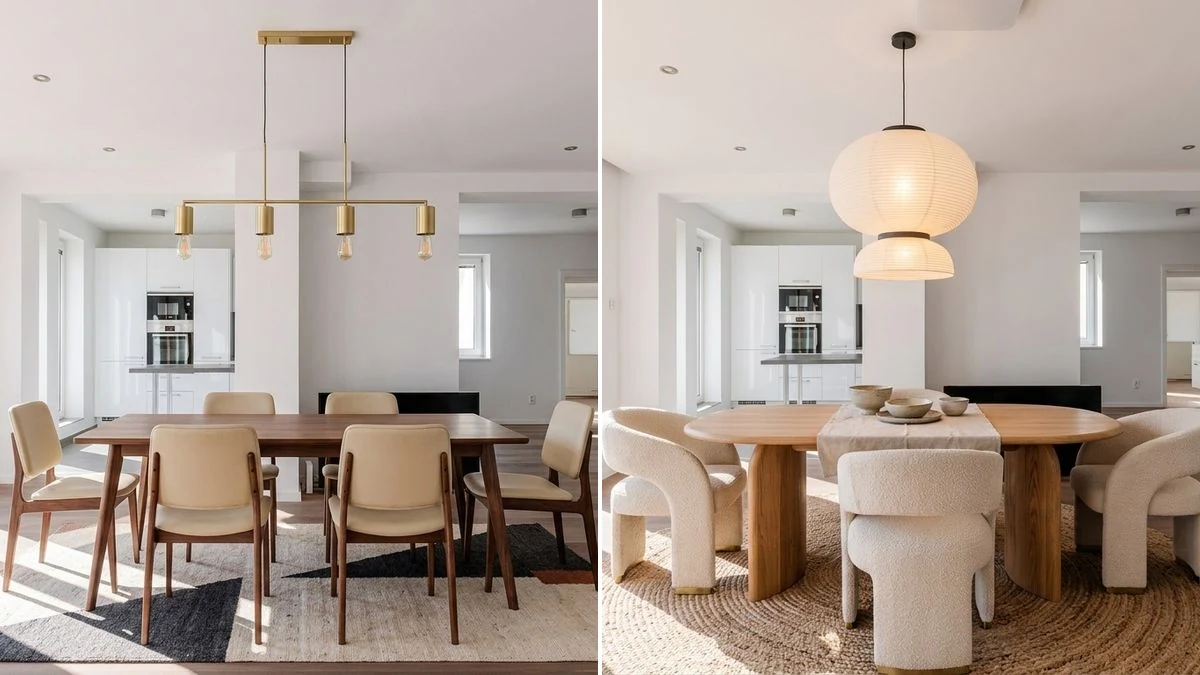
Left: modern, a rectangular walnut table under a brass linear pendant. Right: contemporary, a rounded oak table under a paper-lantern-style pendant.
The modern dining set is all straight edges: a rectangular walnut table, tan leather-back chairs, and an exposed-bulb brass pendant hung dead centre. The contemporary version keeps the same table position and the same six-seat capacity, but every line softens: a rounded oak table, curved bouclé-upholstered chairs, and a soft paper-lantern pendant instead of exposed brass. Same footprint, same kitchen in the background, a completely different mood. For place settings and layout, see our dining room design ideas guide.
Can a room be both modern and contemporary?
Yes, and honestly, most well-designed rooms today are. Contemporary design currently borrows heavily from modern and mid-century modern furniture, so a room can be on-trend, meaning contemporary, while being furnished almost entirely with modern pieces. The two labels describe different things, one describes an era and the other describes currency, so they are not mutually exclusive. The confusion mostly comes from marketing copy, where "modern" and "contemporary" get used interchangeably to mean nothing more specific than "not old-fashioned." If you want help placing your own taste more precisely, our guide to finding your interior design style walks through the broader landscape, and the complete guide to interior design styles breaks down 15 more looks in the same amount of detail.
See it in a real home office
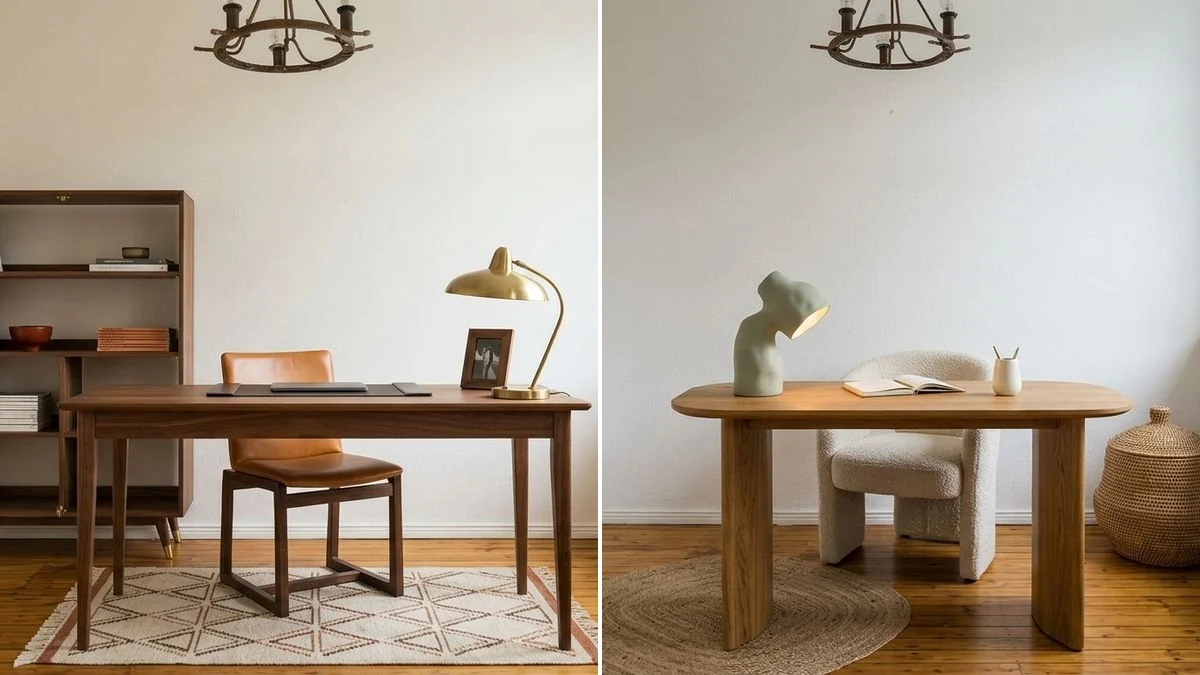
The photo at the top of this article is the same test run on a small home office corner: the wall, light fixture and rug placement stay put in both versions and only the furniture changes. Because a desk and one chair are so few pieces, this is the fastest of the five comparisons to scan and the easiest to hold in your head. The modern desk is a straight rectangle on tapered legs with a boxy leather chair, brass task lamp and a graphic geometric rug underneath. The contemporary desk keeps the same footprint but every edge is rounded, the chair is upholstered in bouclé instead of leather, and the desk lamp is a soft sculptural ceramic form instead of a brass articulated arm. Same job, same corner of the room, two entirely different design vocabularies. If you are setting one up, our room by room design guides covers desk placement and lighting in more depth.
See it in a real living room with a fireplace
One more comparison, because a fireplace is exactly the kind of fixed architectural feature that shows the difference between the two styles best: everything else in the room has to be arranged around it.
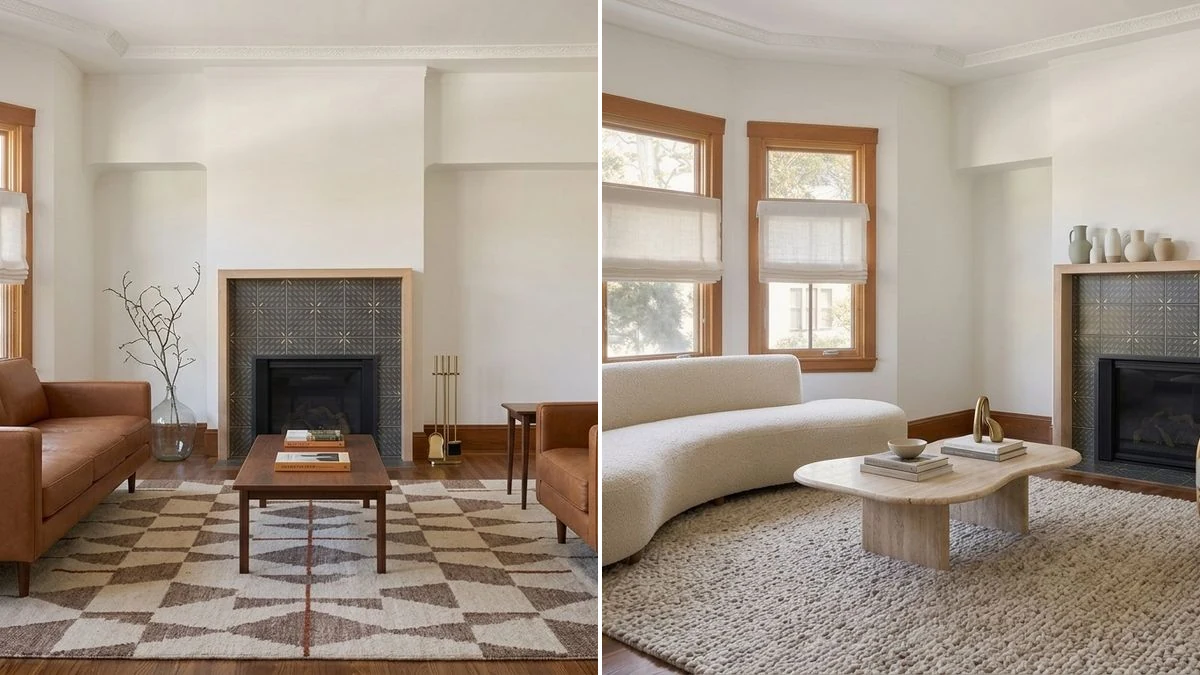
Left: modern, leather sofas arranged symmetrically around the fireplace. Right: contemporary, a curved bouclé sofa and an asymmetrical, styled mantel.
The modern living room treats the fireplace like an architectural anchor and mirrors the seating around it, a leather sofa and a matching armchair in a formal, symmetrical layout with a plain mantel. The contemporary version breaks the symmetry on purpose: one curved sofa, an asymmetrical rattan chair, and a mantel styled with ceramics and candles the way a stylist would dress it for a shoot. Same fireplace, same windows, two very different ideas of what "finished" looks like. For more ways to lay out seating around a focal point, see our furniture arrangement guide.
Which one should you choose?
Choose modern if you want to buy furniture once and still like it in twenty years, and you do not mind that it will never feel "new." Choose contemporary if you enjoy refreshing your space as trends move and you are willing to replace pieces every five to ten years to keep that feeling. Most people land somewhere in between, and the practical version of that middle path is: spend on modern furniture for the big, expensive, structural pieces, the sofa, the bed frame, the dining table, since those hold up and hold value, then use contemporary pieces for the cheap, easy-to-swap layer: cushions, throws, a rug, art and lighting. That gives you a room with a foundation that will not date and a surface that can keep up with whatever comes after putty and sage. For a look at how the ratio shifts your budget, see our breakdown of what it costs to furnish a living room by style.
Mistakes that mix up the two styles
The most common mistake is buying an entire room of trend-driven contemporary furniture and expecting it to feel timeless, then being disappointed when it looks dated in five years. That is not a failure of taste, it is just what contemporary furniture is built to do. The second mistake runs the other way: filling a room entirely with strict modern pieces and finding it feels a little cold or museum-like, because pure modern design was never meant to include much softness or personal clutter. The fix for both is the same layering approach above. The third mistake is mixing undertones, pairing a warm modern walnut sofa with a cool grey contemporary rug, which reads as an accident rather than an intentional blend. Keep your metals, woods and textiles on the same temperature, warm with warm, and the mix reads as deliberate even when it is combining two different eras.
Preview both styles in your own room with AI
The fastest way to settle a modern versus contemporary debate is not a mood board, it is seeing both in your actual room. Upload a photo of your space to MeltFlex and generate a modern version and a contemporary version of the same room, keeping your real walls, windows and layout exactly as they are. Comparing both in your own light, at your own scale, makes the decision obvious in a way that Pinterest boards never do.
FAQ
What is the difference between modern and contemporary interior design?
Modern interior design is a fixed historical style that runs from roughly the 1920s to the 1970s, rooted in the Bauhaus and mid-century modern movements, with strong clean lines, natural materials and warm neutral colors. Contemporary design has no fixed era. It means whatever look is current right now, so it keeps changing as trends shift. Modern is a defined destination, contemporary is a moving target.
Is mid-century modern the same as contemporary?
No. Mid-century modern is a specific sub-style of modern design that developed in the United States roughly between 1945 and 1970, built on tapered wooden legs, organic curves and warm walnut tones. Contemporary is not tied to any single era or look. A room can be mid-century modern and also happen to be on-trend right now, which is exactly why people mix the two terms up.
What colors are used in modern vs contemporary interior design?
Modern rooms lean on warm, earthy neutrals that do not change: cream, walnut brown, camel and the occasional rust or olive accent. Contemporary palettes shift with the moment. Right now, in 2026, contemporary favors softer, warmer neutrals like putty, sage and warm white rather than the stark grey and white of a decade ago. In ten years the contemporary palette will look different again, while the modern one will not.
Can you mix modern and contemporary furniture in the same room?
Yes, and most real rooms already do. A practical approach is to build the room around modern furniture, the sofa, bed frame and case goods, since those pieces are expensive and their clean lines age well, then layer in contemporary accents through rugs, cushions, art and lighting, which are cheap to swap when the trend moves on.
Which is more expensive, modern or contemporary furniture?
Neither style is inherently pricier, since both range from budget to designer. In practice, modern pieces built on real wood, leather and simple joinery tend to hold resale value and last decades, so the cost per year of ownership is often lower even when the sticker price is higher. Contemporary pieces tied to a specific trend are more likely to look dated once that trend passes, so budget for replacing them sooner.
How do I know if my room is modern or contemporary?
Look at your furniture lines and your palette. Straight, geometric silhouettes on tapered wood legs in warm earthy tones point to modern. Softer, curved silhouettes in a mixed, of-the-moment palette with materials like bouclé, rattan or travertine point to contemporary. If your room mixes both, which is common, it is best described as contemporary with a modern foundation.
Will modern interior design go out of style?
Modern design has already survived a century, which is the whole point of it. Because it is defined by function-first, uncluttered principles rather than a specific trend, it keeps returning to relevance instead of aging out. Mid-century modern furniture from the 1950s is more sought-after today than it was in the 1990s. Contemporary design, by definition, will always look dated eventually, because something else will become the new current look.
What does contemporary interior design look like in 2026?
Contemporary in 2026 has moved away from the cold, stripped-back minimalism of the early 2020s toward something warmer and softer: curved furniture silhouettes, bouclé and linen upholstery, rattan and travertine, and a putty-and-sage palette instead of stark grey and white. It still values restraint and intentional rooms, it just no longer values coldness.



)