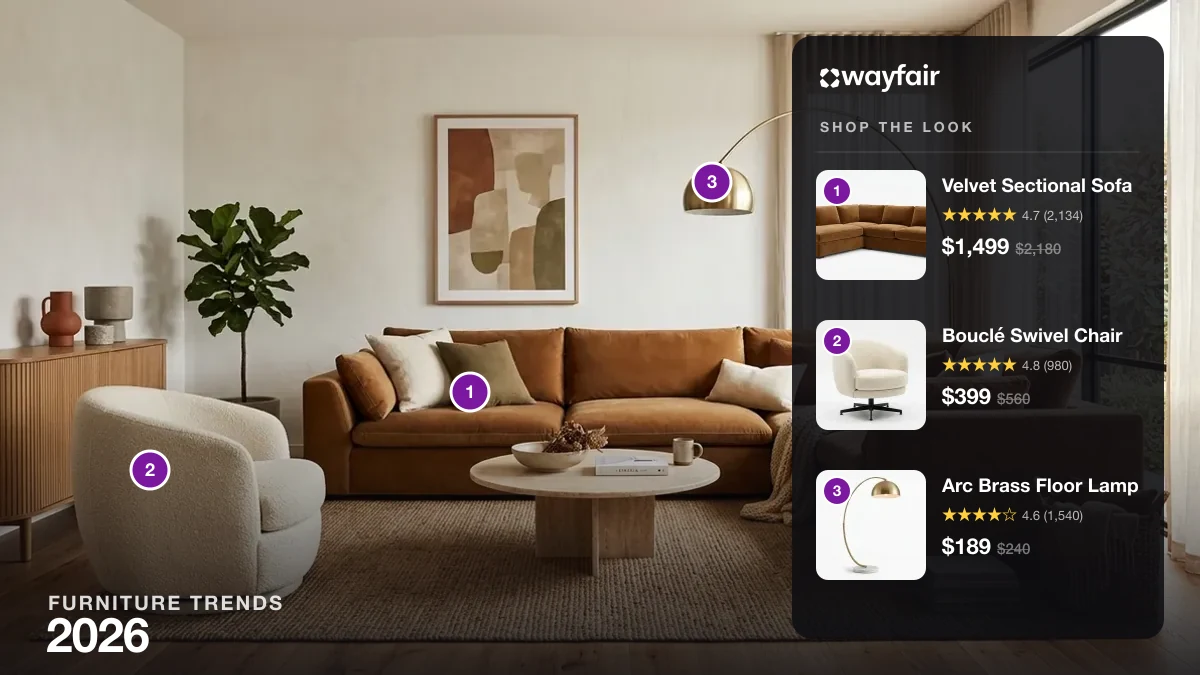
Wayfair is not a brand so much as a universe. Tens of thousands of sofas, hundreds of styles, prices that swing wildly between a Tuesday and a Way Day sale. That selection is the best and worst thing about it: you can find almost anything, which also means it is easy to buy the wrong thing, especially a big piece that is a genuine pain to return.
Our articles are still written by humans!
Get human written articles in your Google feed.
So we did the filtering for you. We went through Wayfair’s 2026 trend guidance and its best-selling categories to find the 10 trends that actually matter this year: what is worth buying, roughly what it costs, and how to style it. And because the real risk with Wayfair is committing to furniture you have only seen in a perfectly lit studio photo, we will show you how to see any piece in your own room first.
One honest caveat up front: most of these trends are genuinely good, but a couple are easy to overspend on and one or two only work in the right room. We will say so as we go, instead of pretending everything is a must-buy. Here is what is actually worth your attention in 2026, and how to avoid the kind of mistake that ends up in your hallway waiting for a return pickup.
The 2026 Wayfair cheat sheet
- Comfort wins. Oversized, deep-seated modular sectionals are the year’s defining piece.
- The Cloud Couch look is everywhere, and Wayfair has dupes from ~$800 to under $3,000.
- Performance velvet is the practical hero: pet-proof, kid-proof, easy to clean.
- Warm is back. Espresso brown, khaki and muted jewel tones replace cold grey.
- See it before you buy it. A too-big sectional is the most expensive return in the house. Visualise it in your real room first.
1. Oversized, deep-seated Wayfair sectionals
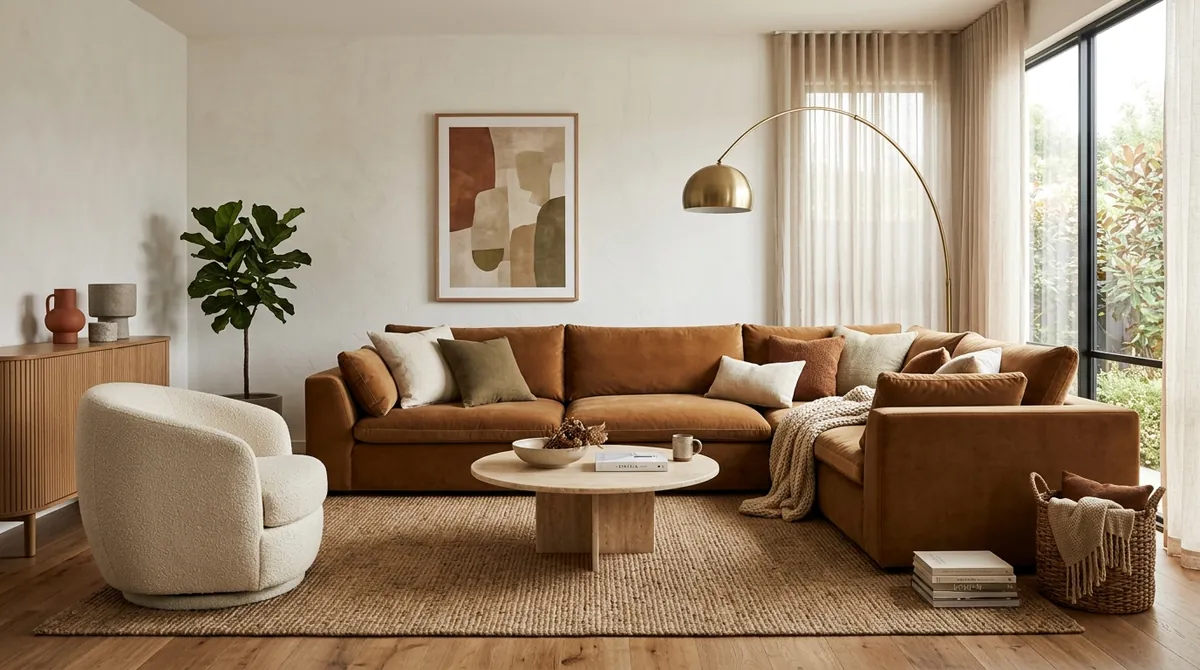
If 2026 has a signature Wayfair piece, it is the big, deep, sink-into sectional. Think modular and reversible-corner designs that seat five or six, with ottomans that double as footrests or overflow seating. The mood is comfort-first: sofas you live on, not sofas you perch on.
Real examples range from budget modular pieces like the Annai reversible corner sectional (around $800) up to roomier builds in the $1,500 to $2,500 range. Look for solid wood frames and eight-way hand-tied springs. That is the difference between a sofa that holds its shape and one that sags by year two.
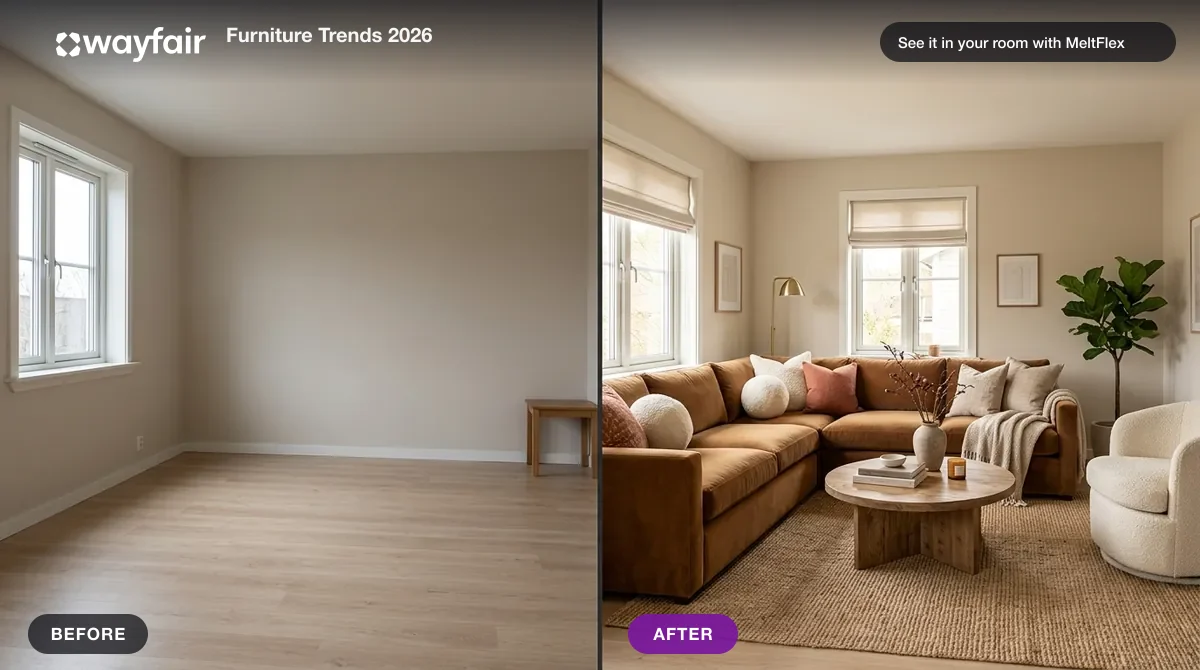
How to use it: Measure first, then measure again. Deep sectionals eat floor space fast, and the number one regret is buying one too big for the room. Before you order, drop the exact piece into a photo of your room with MeltFlex to check the scale at a glance.
2. The Cloud Couch look: Wayfair’s best dupes
Restoration Hardware’s Cloud Couch defined the pillowy, slipcovered, feather-soft silhouette, and Wayfair is now full of dupes that capture it for a fraction of the price. The look is low, soft, and almost edgeless, the kind of sofa that swallows you whole.
The Orren Ellis Humnah corner sectional (around $2,480) is marketed directly as a Cloud Couch alternative under $3,000, while chenille and modular options chase the same brioche-bun softness lower down the price ladder. Just know the trade-off: the softest dupes need their cushions fluffed and rotated to keep that cloud shape.
Honest take: this is one of the easiest trends to overspend on. The mid-priced dupes are the sweet spot. The very cheapest go flat within a year, and you do not need to pay full Cloud Couch money to get the look. What you do need is the right room for it.
How to use it: The Cloud look needs breathing room and a low-slung rug to ground it. It can overwhelm a small or busy room, so this is one to preview in your actual space before you commit.
3. Performance velvet sofas that survive pets and kids
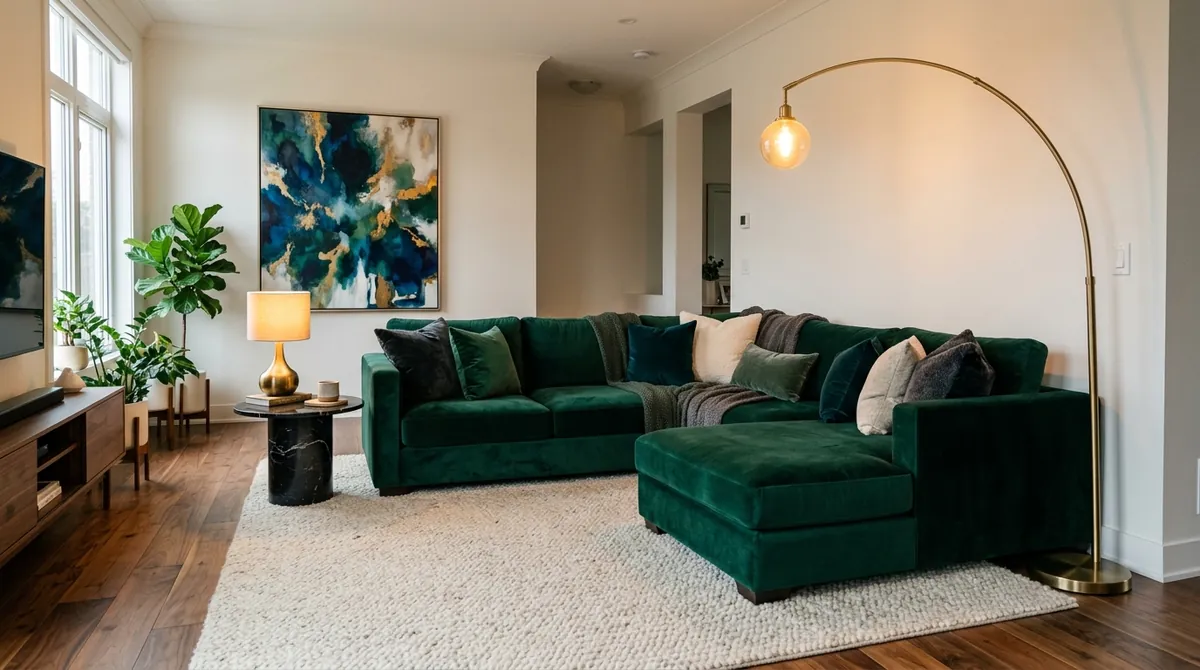
Velvet is back, but the 2026 version is practical. Performance velvet with a high rub count (around 100,000) is easy to wipe clean and, crucially, pet-friendly: claws slide right off it instead of catching. Pieces like the widely sold Geo Velvet Sofa pair that durable fabric with multilayer, reversible foam cushions.
How to use it: Velvet reads completely differently depending on light: a deep emerald or navy can look near-black in a dim corner and jewel-bright by a window. Test the colour against your room’s actual light before buying, because returning a sofa over a colour surprise is the worst kind of return.
4. Glam revival: metallics, velvet and satin
A modern glam look is making a comeback: low-profile furniture, flashes of brass and chrome, and luxe materials like velvet and satin. It is the antidote to a decade of flat, cool minimalism: warmer, softer, a little more grown-up.
How to use it: Keep it to accents unless you really mean it. One brass arc lamp, a satin cushion, a velvet chair, layered against neutral walls, gives you the glam hit without the room turning into a hotel lobby.
5. Bouclé swivel chairs and accent seating
Bouclé’s nubby, textured weave is still going strong, and in 2026 it shows up most on swivel accent chairs that borrow the high-end look of Arhaus or West Elm. A single bouclé swivel in cream or oatmeal is one of the fastest ways to make a room feel considered.
How to use it: Bouclé loves contrast: pair a cream swivel with warm wood and a darker sofa so the texture pops instead of disappearing into a beige blur.
6. Wayfair’s 2026 colour trends: espresso brown and warm neutrals
Cold grey is finally on its way out. Wayfair’s 2026 palette leans into espresso brown and warmer neutrals, alongside a cloud-like off-white, classic khaki, cool blue, and a few muted jewel tones. Brown furniture, of all things, is having a genuine moment.
How to use it: Espresso anchors a room beautifully but can darken a small space, so balance it with off-white walls and plenty of light wood. Not sure brown works in your room? Try the palette on a photo of your space before you repaint or re-buy.
7. Natural materials: solid wood, leather and stone
The quality story for 2026 is natural materials that last: solid wood, real leather, and stone tops. After years of veneer and particleboard, shoppers are paying a little more for pieces that age well: a leather chair that patinas, an oak table that takes a knock and keeps going.
How to use it: You do not need a whole room of it. One solid-wood or leather hero piece raises the perceived quality of everything around it, even budget pieces.
8. Upholstered headboard beds
As the bed becomes a place to read, watch and work, the upholstered headboard has become a top bedroom seller: tall, padded, and comfortable to lean against. In 2026 the shapes are softer and the fabrics warmer (bouclé, linen, velvet) than the tufted grey of a few years ago.
How to use it: Scale the headboard to the wall, not just the mattress. A tall headboard on a short wall looms; in a room with high ceilings it grounds the space.
9. Designer dupes: West Elm and Restoration Hardware looks for less
This is arguably Wayfair’s real superpower in 2026: designer dupes. Pieces that echo West Elm’s mid-century lines, Restoration Hardware’s Cloud silhouette, or an Eames-style lounge, for a fraction of the original. The AllModern Rae armchair, for instance, reads as a West Elm mid-century piece at a Wayfair price.
How to use it: Dupes live or die on proportion. The fabric and frame might match the original, but a slightly off scale gives it away, so previewing the exact piece in your room is the trick to getting a designer look that actually reads as designer.
10. Curved and organic shapes
Hard, boxy furniture is softening. Curved sofas, rounded coffee tables, and organic, pebble-shaped seating are everywhere in 2026, part of the same comfort-first mood driving the deep sectionals. Curves make a room feel calmer and more inviting, and they soften the hard lines of modern apartments.
How to use it: One curved piece is plenty: a single arc sofa or round table against straight walls does the work. An entire room of curves starts to feel like a soft-play area.
Are Wayfair sofas good quality?
The honest answer is that it depends, because Wayfair is a marketplace, not a single factory. Quality tracks the brand and the price, not the Wayfair name. The reliable middle ground is Wayfair’s own house brands, AllModern, Joss & Main and Birch Lane, which land around Crate & Barrel quality for roughly 30 to 50 percent less (our guide to the best Wayfair furniture and brands breaks down which house brand to buy for each room). The pieces to be wary of are the cheapest no-name sofas, where the recurring complaints are cushions that flatten within months and frames that range from solid to flimsy.
What to check before you buy a Wayfair sofa: a solid, kiln-dried hardwood frame, eight-way hand-tied springs (or quality sinuous springs), high-density or fibre-wrapped foam, and a high rub count on the fabric. Read the reviews on the specific product, not the brand, because on Wayfair quality is decided piece by piece. And remember the studio photo tells you nothing about how the sofa actually sits in your room, which is the problem we solve at the end of this guide.
When to buy: Wayfair Way Day and the 2026 sales
Wayfair is rarely the cheapest at full price, but it runs the deepest discounts of any major retailer during Way Day, its twice-yearly mega-sale. In 2026 the spring Way Day ran from 25 to 27 April, with early access for Wayfair Rewards members a couple of days before, and the next Way Day is expected in late October 2026. Expect 50 to 70 percent off across furniture, with select items up to 80 percent.
If you are eyeing a big-ticket piece like a sectional, timing it to Way Day or one of Wayfair’s frequent flash sales is the single biggest lever on price. New deals drop each day of the event, so check early, and decide in advance which piece you actually want, so you are not panic-buying the wrong sofa just because it is cheap. Previewing it in your room first, which we cover next, is how you make that call with confidence.
Wayfair vs IKEA: which should you buy?
They win at different things. IKEA is cheaper at full price and more consistent, because everything is designed in-house, and its engineered-wood pieces typically last three to eight years. Wayfair is a marketplace with far more style variety and the deepest sale prices, but quality swings by brand, so it rewards a little homework. The genuinely smart move is to use both: IKEA for storage and basics, Wayfair on sale for the statement sofa or sectional you want to build the room around. For the budget side of the story, see our companion guide to the 10 IKEA furniture trends for 2026.
How to see any Wayfair piece in your room before you buy
Here is the honest problem with buying furniture online: the studio photo is designed to sell, not to tell you whether this sofa fits your room, your light, and your existing pieces. With small décor that is a minor risk. With a $1,500 sectional that needs white-glove delivery and is a nightmare to return, it is the whole ballgame.
Wayfair knows this, which is why it built its own tools. Decorify restyles a photo of your room into a whole look and surfaces shoppable matches, and View in Room 3D uses your phone’s camera to drop an item into the space with AR (for the items that have a 3D model). Both are genuinely useful for inspiration.
What they do not quite solve is the specific buying decision: does this exact piece work in my actual room? That is where MeltFlex fits. You upload a photo of your real room and a photo of the Wayfair piece you are eyeing, and the AI places that exact item into your space at realistic scale, lighting and perspective, keeping your real walls, windows and floor. MeltFlex’s built-in furniture catalog also carries real Wayfair pieces alongside IKEA, Amazon and other brands, so on paid plans you can pull a Wayfair product straight from the sidebar instead of hunting down its photo first. Instead of a styled mood board, you get a straight answer to the only question that matters before you click buy.
Here is how the three stack up, so you can pick the right one for the job:
| Criteria | Wayfair Decorify | Wayfair View in Room (AR) | MeltFlex |
|---|---|---|---|
| What it does | Restyles your room into a whole look | Drops a 3D item into your live camera view | Places a specific product into your room photo |
| Best for | Finding a style you like | Checking fit live, in the room | Deciding if this exact piece works |
| A specific product? | Approximate matches | Yes, if it has a 3D model | Yes, from any product photo |
| Keeps your real room? | Restyled, not kept | Yes (live view) | Yes, real walls and windows |
| Needs an app or 3D model? | No | App + a 3D model of the item | No, just one photo |
- What it does
- Restyles your room into a whole look
- Best for
- Finding a style you like
- A specific product?
- Approximate matches
- Keeps your real room?
- Restyled, not kept
- Needs app or 3D model?
- No
- What it does
- Drops a 3D item into your live camera view
- Best for
- Checking fit live, in the room
- A specific product?
- Yes, if it has a 3D model
- Keeps your real room?
- Yes (live view)
- Needs app or 3D model?
- App + a 3D model of the item
- What it does
- Places a specific product into your room photo
- Best for
- Deciding if this exact piece works
- A specific product?
- Yes, from any product photo
- Keeps your real room?
- Yes, real walls and windows
- Needs app or 3D model?
- No, just one photo
Before you buy that sectional
- Your real room, the real piece. Drop the exact Wayfair product into a photo of your space at true scale.
- Catch mistakes for free. A too-big sectional or a clashing colour is obvious on screen, and costs nothing to fix there.
- Test the trend. Try espresso brown, a Cloud-look sofa, or a velvet sectional before you commit a cent.
- Works from one photo. No 3D model required, unlike AR.
Frequently asked questions
Are Wayfair sofas good quality?
It varies, because it is a marketplace. The better pieces use solid wood frames, eight-way hand-tied springs, and high-rub-count performance velvet. The catch is inconsistency across sellers and flattering photos, so seeing a piece at true scale in your room before buying is the best protection.
What are the best Wayfair Cloud Couch dupes?
Pieces like the Orren Ellis Humnah corner sectional (around $2,480) are sold as Cloud Couch alternatives under $3,000, with budget modular options like the Annai sectional near $800. Prices swing with sales, so confirm before buying.
How can I see Wayfair furniture in my room before buying?
Wayfair’s own Decorify (AI restyling) and View in Room 3D (AR) help with inspiration. To check a specific piece, upload your room photo and the product photo to MeltFlex and it places that exact item into your real room at true scale.
What are Wayfair’s 2026 colour trends?
Warmer tones lead: espresso brown and warm neutrals, plus cloud off-white, classic khaki, cool blue, and a few muted jewel tones. Cold grey is on the way out.
When is Wayfair Way Day 2026?
Way Day is Wayfair’s twice-yearly mega-sale. The spring 2026 event ran 25 to 27 April, and the next one is expected in late October 2026, with discounts of roughly 50 to 70 percent and some items up to 80 percent. It is the best window to buy a big piece like a sectional.
Is Wayfair cheaper than IKEA?
Not usually at full price, where IKEA tends to win, but Wayfair’s Way Day and flash-sale prices often undercut IKEA while offering far more variety. Many people use IKEA for basics and Wayfair on sale for the statement sofa.
Keep reading
- 10 IKEA furniture trends for 2026, the budget-side companion to this guide.
- The best Wayfair furniture and house brands, which AllModern, Joss & Main and Birch Lane pieces to buy per room.
- How to find any furniture from a photo, plus cheaper alternatives.
- Average US furniture prices, piece by piece, so you know what a fair Wayfair price actually is.
- Will the sofa fit through the door?, the check to run before any sectional order.
- Try MeltFlex on your room, see real, shoppable furniture in your space before you buy.