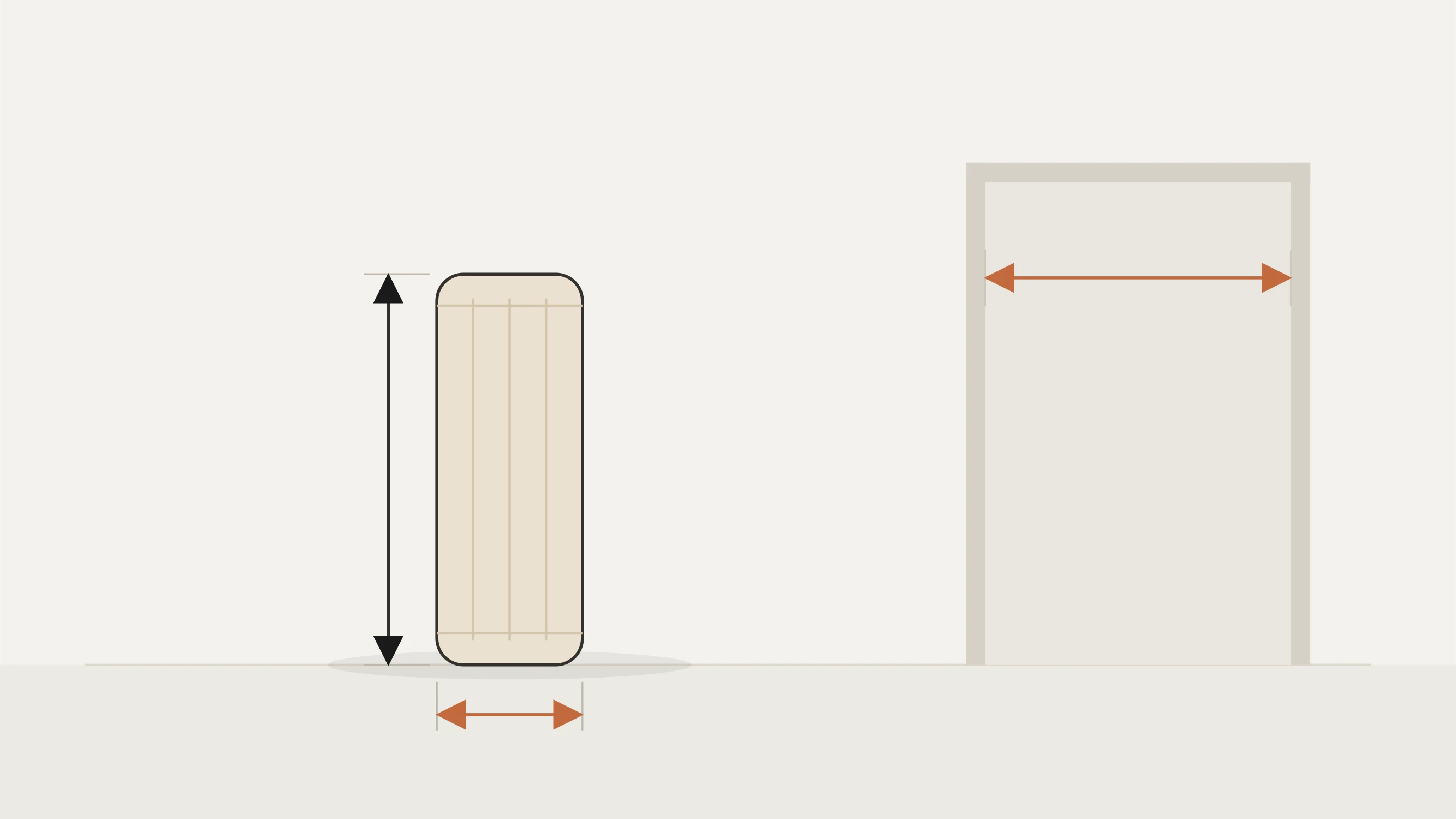
Quick answer: Your refrigerator fits through the door if its cabinet width, measured across the body without the handles, is under the doorway's clear opening. A standard 32-inch interior door gives about 30 to 31 inches of clear opening, and most fridges are 28 to 36 inches wide, so popping the handles off (1 to 2 inches) and the doors off (2 to 3 inches of depth) gets most tight ones through. Check your exact numbers in the free furniture fit calculator.
Our articles are still written by humans!
Get human written articles in your Google feed.
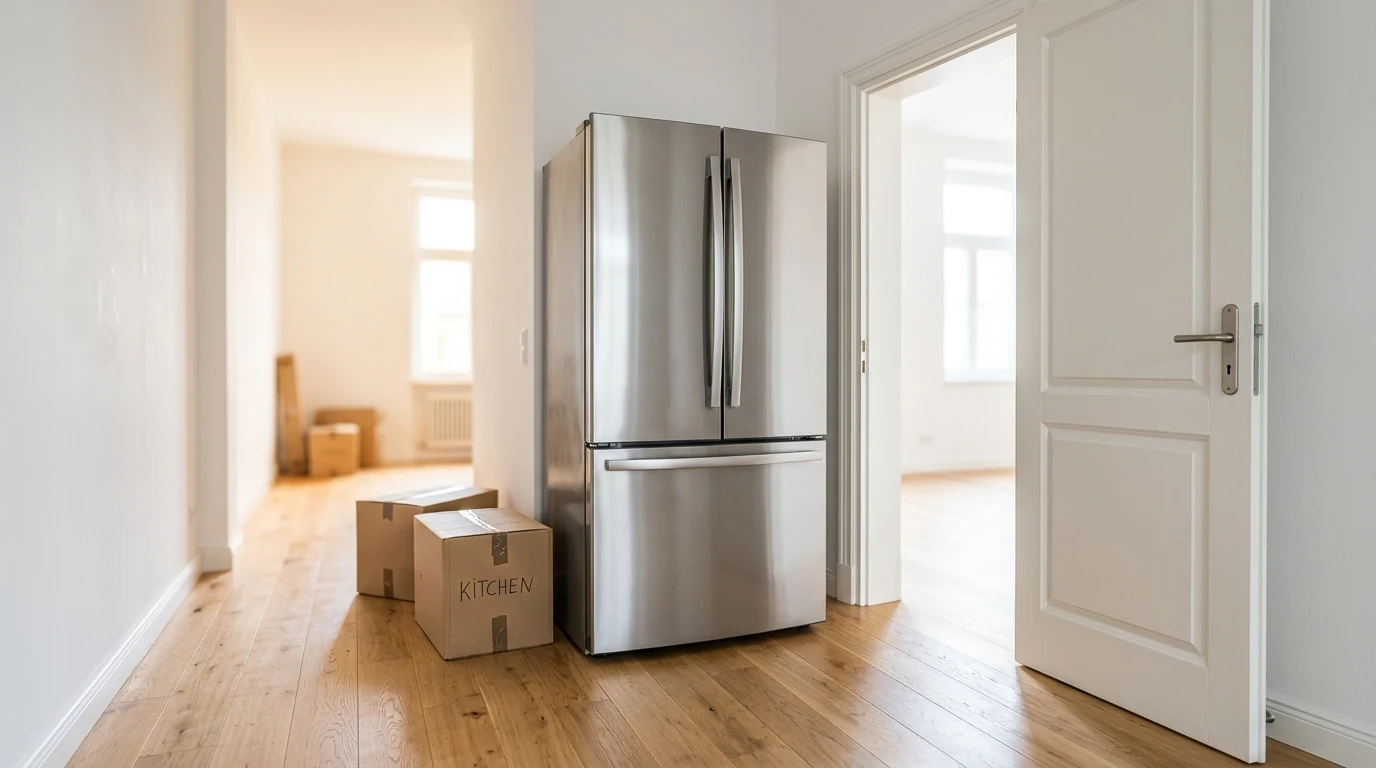
A refrigerator is the heaviest, most awkward thing that has to get from the delivery truck to your kitchen, and it is the appliance most likely to end up stranded in a hallway. Delivery teams will not force it, take your doors off, or risk denting it, so a fridge that is an inch too wide simply goes back on the van. Wrong size is the biggest reason big items get returned, and a returned appliance is not free: the retailer eats the freight both ways, a cost that gets baked into what everyone pays (ecommerce returns data).
The whole thing comes down to two numbers and two minutes with a tape measure. Skip the guesswork and run your fridge and doorway through the free furniture fit calculator for an instant verdict, then use the guide below to measure right and get a tight one through. Every number here follows manufacturer dimension specs and professional mover technique, cited throughout, and the calculator is one we built at MeltFlex to plan real furniture at true scale.
The one number that decides it: width, minus the handles
When a fridge gets stuck, it is almost always the width that fights the door, because that is the face that meets the opening as you wheel it through. If it is already wedged in the frame, the general furniture will not fit through the door playbook applies to appliances too. The trap is measuring the handles. Spec sheets and tape measures both catch the handles, which stick out 1 to 2 inches, but handles unscrew in minutes and should never be the reason a fridge does not fit. Measure the cabinet, the solid body, and treat the handles as removable.
Depth matters second, because you often tilt the fridge and take it through on its side, and the doors add 2 to 3 inches to that depth. Height almost never matters at a doorway, since it runs along the tall 80 inch side of the frame.
Standard refrigerator dimensions
Before you measure anything, the type of fridge tells you how much trouble to expect at the door. These are typical cabinet dimensions, handles not included, in line with manufacturer sizing guides (refrigerator dimension guide).
A standard interior door gives a clear opening of about 30 to 31 inches, so a top or bottom freezer usually slides through, while a wide side by side or French door lands right on the edge and leans on the handles-off, doors-off tricks below.
Measure your fridge, and the doorway, in four numbers
Take these at the widest points, round the fridge up and the opening down, so any error works in your favour.
- Cabinet width: side to side, ignoring the handles. This is the number that fights the door.
- Depth: front to back, and note how much the doors add, since you may take them off for the tilt.
- Height: floor to top, for the route and the truck, rarely for the doorway.
- Clear opening: the real gap of the narrowest door on the route, measured with the door wide open, not the size on the label.
Once you have the four numbers, the furniture fit calculator turns them into a straight verdict and shows the tilt diagonal too, so you know whether the pivot through the frame will clear.
The fit check, in 5 steps
The whole check takes about two minutes:
- Measure the fridge cabinet width side to side, ignoring the handles (they unscrew and add 1 to 2 inches). This is the number that fights the door.
- Measure the narrowest clear opening on the route from the truck to the kitchen, with the door held wide open, not the size printed on it.
- Compare the two. If the cabinet width is under the clear opening, it goes through. A standard 32-inch door gives about 30 to 31 inches clear.
- If it is tight, strip it down: handles off (1 to 2 in), fridge doors off (2 to 3 in of depth), room door off its hinges (about 1 in).
- Check the whole route, not just the door: the 90 degree hallway turn, the stair half-landing and a tight galley kitchen catch a fridge more often than the doorway.
Do you have to take the doors off?
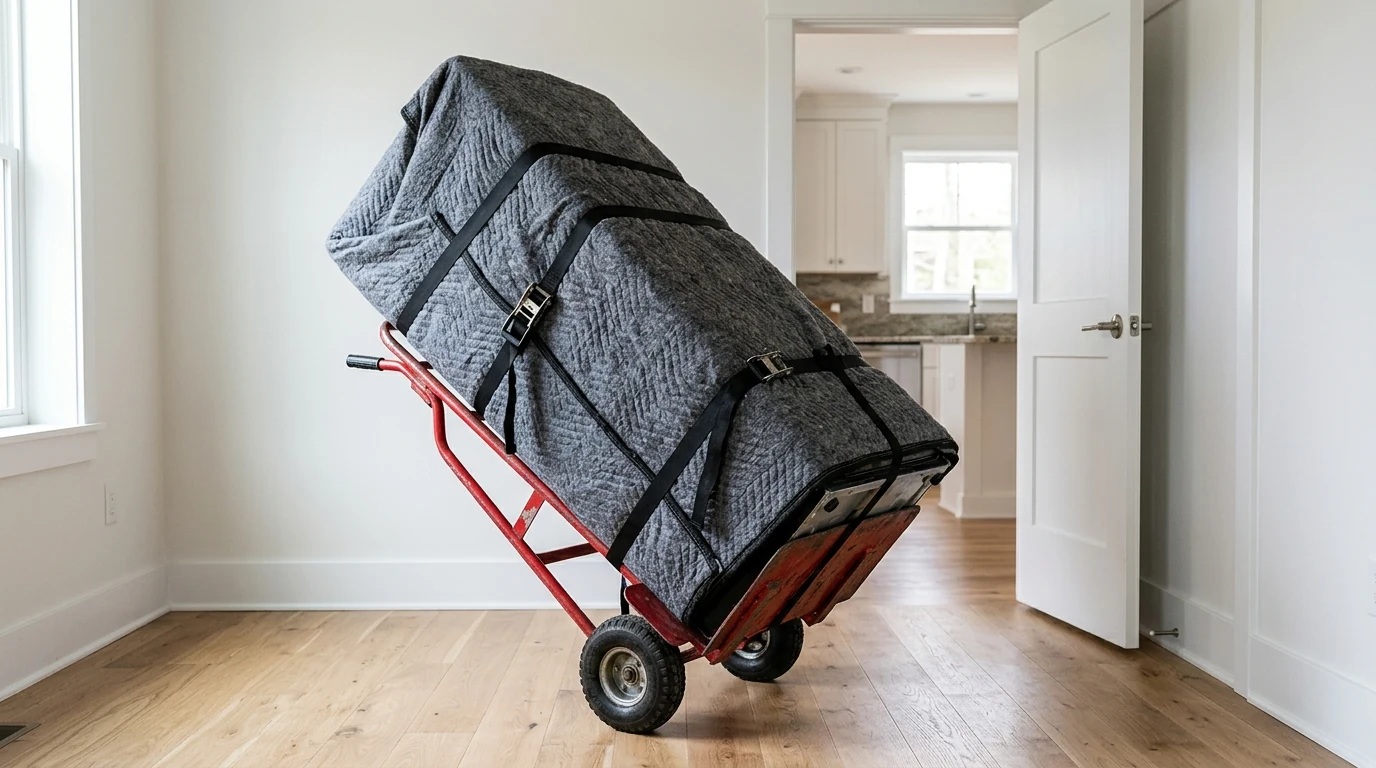
Only when it is tight, and there are two sets of doors in play. The room door lifts off its hinges in a minute and gives you another inch or so of clear opening. The fridge doors come off when the appliance has to go through on its side and the depth is the problem: removing them takes 2 to 3 inches off, which is often the difference. For most top and bottom freezers you can leave the fridge doors on and just remove the handles. French door and some side by side models route a water line through the door, so check the owner manual and a step-by-step door-removal guide before you start (how to remove refrigerator doors).

How to move a refrigerator that will not go through the door, by Rescue Moving Services on YouTube. A clear walkthrough of taking the doors off and easing a tight fridge through the frame.
The clearance people forget: the air gap and the turn
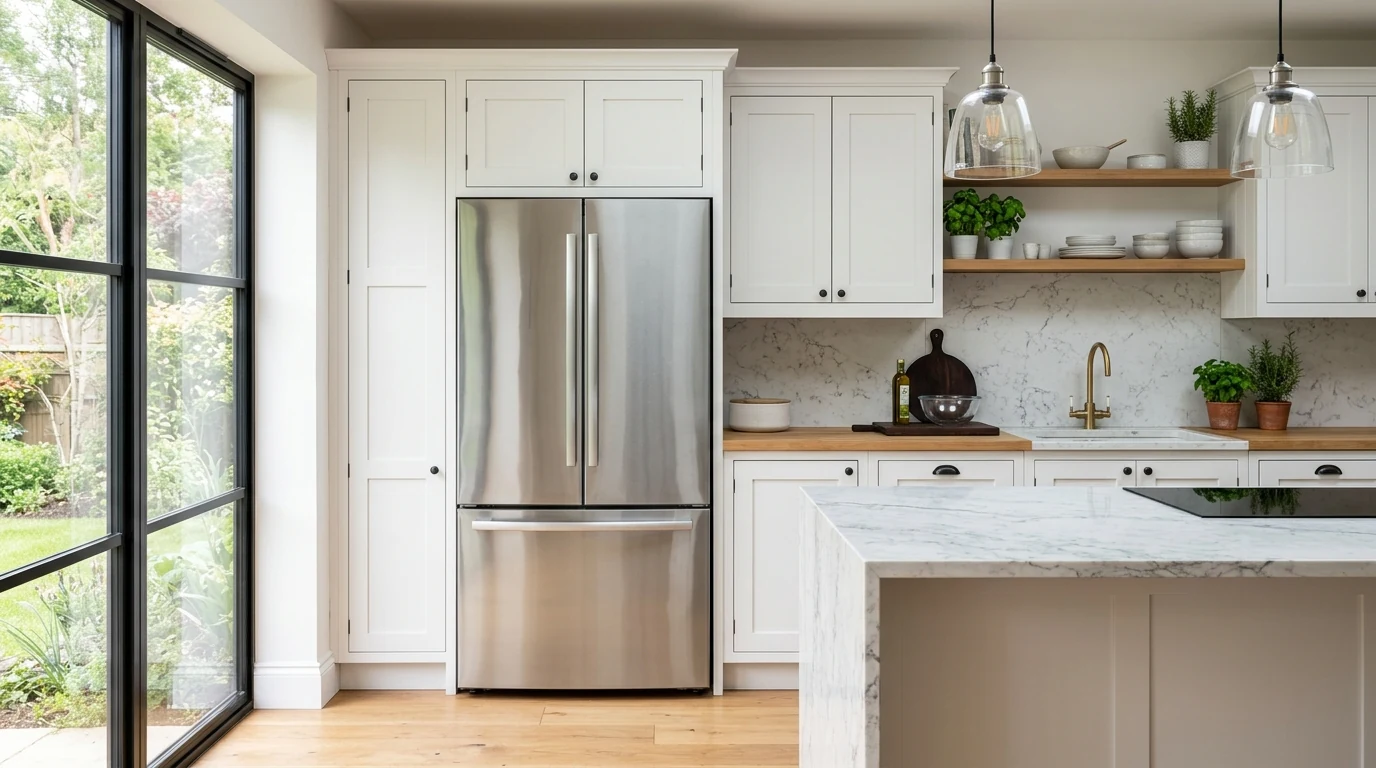
Two things trip people up after the doorway. First, getting a fridge through the door and finding it a home are different clearances. To pass the door, the opening just has to beat the cabinet width. To install it, leave about 1 inch of air gap at the sides and top and 1 to 2 inches at the back, or it runs hot and wastes energy. Second, the doorway is rarely where a fridge gets stuck. The 90 degree hallway turn, the stair half-landing, and a tight galley kitchen catch it far more often, so measure the whole route, not just the door.
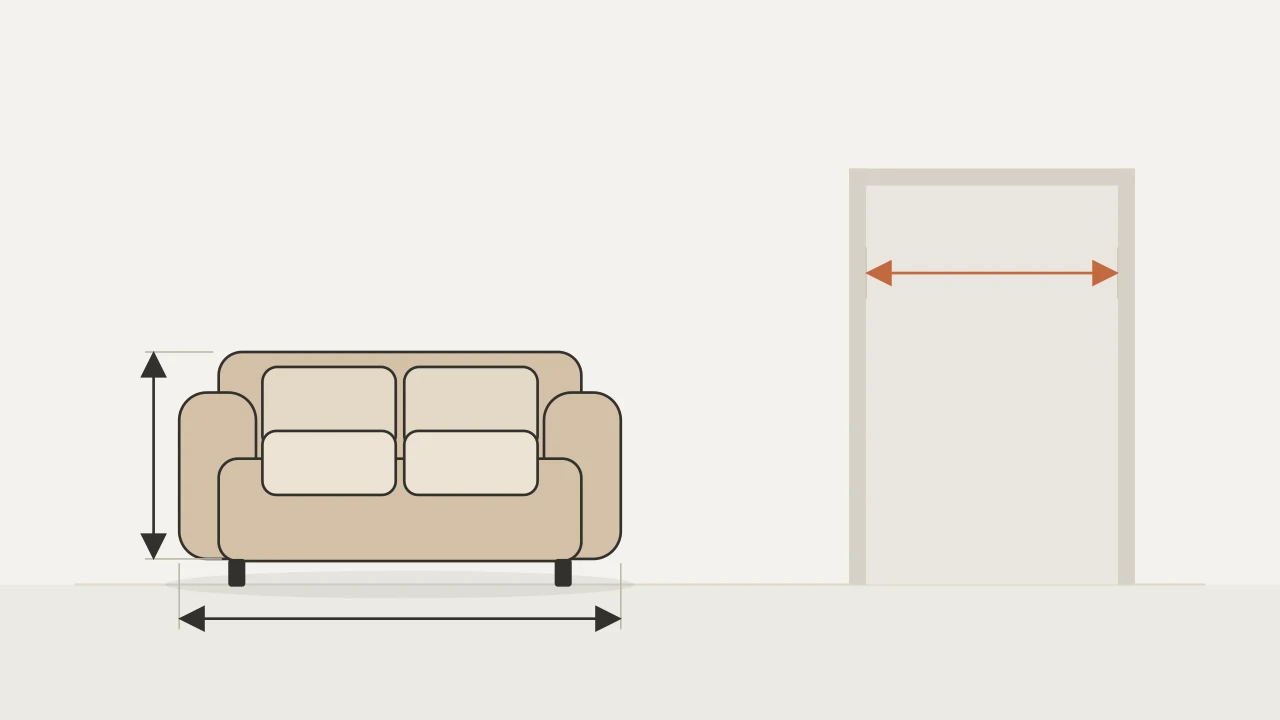
The same logic decides a sofa or a mattress, just with different numbers. If those are on your moving list too, run them through the sofa doorway calculator and the mattress doorway calculator.
If it will not fit: your options
- Handles and doors off: the first move, and often the only one you need. 1 to 2 inches from the handles, 2 to 3 from the fridge doors, another inch from lifting the room door off its hinges.
- A wider entry: a patio door, sliding door or ground floor window is frequently wider than any internal door and skips the tight turns.
- Go counter-depth or smaller: counter-depth trims 6 or more inches of depth for the tilt, and a top freezer is the narrowest body if width is the wall you keep hitting.
- Pro delivery or a hoist: for a genuinely tight home, a delivery team with a hoist or a stair dolly is cheaper than a fridge that will not go in.
Check it before delivery day
A fridge is a two minute measurement away from being a non event or a wasted delivery slot. Measure the cabinet width without the handles, measure the narrowest opening on the route, and run both through the furniture fit calculator before you order. While you are planning the kitchen, you can also visualize the new layout with AI so the fridge lands in a spot that actually works.
Frequently asked questions
Will a refrigerator fit through a 32 inch door?
Usually yes, but it is close. A 32 inch door gives a real clear opening of about 30 to 31 inches once you account for the stop and the open door. Most fridges are 28 to 36 inches wide at the cabinet, so a top or bottom freezer generally goes through, while a wide side by side or French door often needs the handles off and sometimes the doors off. Measure the cabinet width without the handles and compare it to the actual clear opening, not the 32 inch label.
Do you have to take the doors off a fridge to get it through a doorway?
Only when it is tight. Removing the fridge doors takes 2 to 3 inches off the depth and is the standard move when it has to go through sideways or the opening is narrow. For most top and bottom freezers you can leave the doors on and just pop the handles off for 1 to 2 inches of width. Check the owner manual, since door removal on French door models can involve a water line.
How much clearance does a refrigerator need to fit through a door?
To pass the door, the clear opening only has to beat the cabinet width with the handles off, so even a small margin is enough. To install it, leave about 1 inch of air gap at the sides and top and 1 to 2 inches at the back for ventilation. So there are two clearances: the tight one for the doorway and the generous one for where it lives.
How do I measure my fridge to see if it fits?
Take four numbers: cabinet width (ignoring handles), depth (noting how much the doors add), height, and the diagonal of the front face for tilting. Then measure the narrowest clear opening on the route with the door open. If the cabinet width is under that opening, it goes through. The furniture fit calculator runs it for you.
What if my fridge is too wide for every door in the house?
Take the handles off (1 to 2 inches), the fridge doors off (2 to 3 inches of depth for the tilt), and lift the room door off its hinges. If it still will not pass, use a wider entry such as a patio door or a ground floor window, or have it hoisted. If none of that works, a counter-depth or smaller top freezer model is the reliable fix.
Does a counter-depth fridge fit through doors more easily?
Yes on depth, not always on width. Counter-depth models are 24 to 30 inches deep instead of 33 to 36, which makes the sideways tilt through a doorway easier. But many counter-depth French door units are still 35 to 36 inches wide, so the width can still need the handles off. Depth helps the route, width decides the doorway, so check both.