The short answer to the question everyone is asking: AI is not replacing interior designers, it is replacing the boring 60% of their workflow. The U.S. Bureau of Labor Statistics still projects designer employment to grow through 2034, while a third of design professionals already use AI tools themselves. What AI has genuinely changed is who gets access to design: in 2026, anyone with a smartphone and a floor plan can produce the visualizations that used to require a paid professional.
Our articles are still written by humans!
Get human written articles in your Google feed.
This article covers both sides of that shift. First, real before-and-after examples of AI-furnished apartments and how the technology works. Then the data on what AI means for design jobs, what it automates, and what stays stubbornly human.
The Problem: Empty Rooms, Endless Decisions
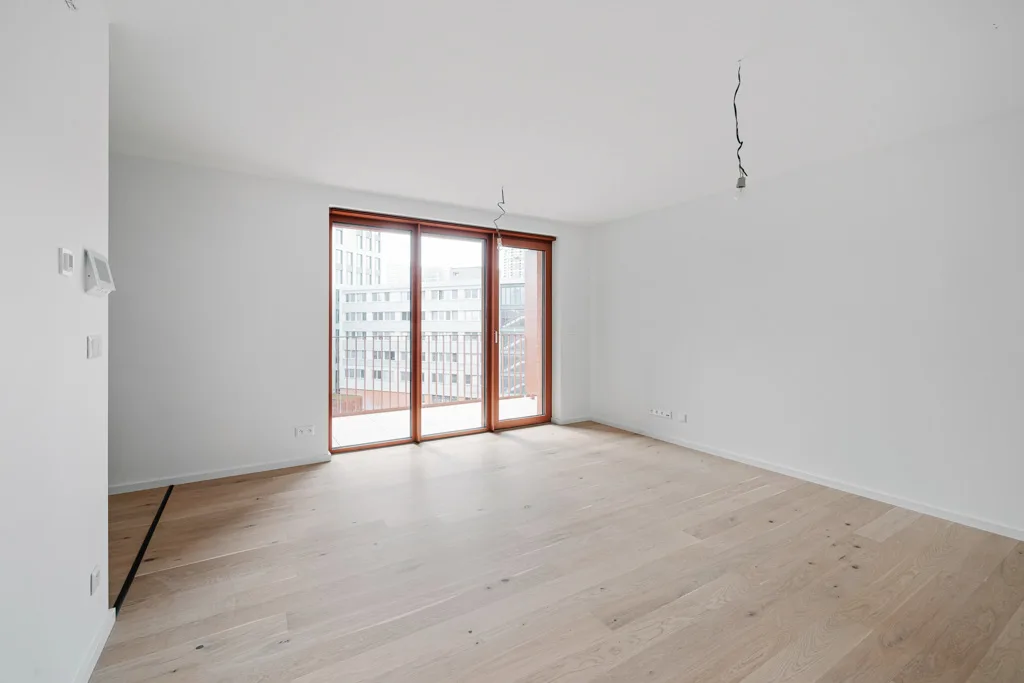
You've just signed the lease on a beautiful new apartment. The floors are pristine oak, the walls are freshly painted, natural light floods through floor-to-ceiling windows. It's perfect, and completely empty.
Now what? You face the same overwhelming questions every new homeowner faces: What sofa fits this space? What dining table won't look too big? What color scheme ties everything together? Traditional interior design solves this, but at $3,000-$15,000 per room and weeks of waiting. That's where AI steps in.
The Solution: AI That Sees Your Space and Furnishes It
Modern AI interior design tools like MeltFlex work in three simple steps: upload your floor plan or room photo, let AI analyze the space, and receive a fully furnished visualization with real furniture you can actually buy.
The AI understands room dimensions, natural light direction, traffic flow, and furniture proportions. It doesn't just drop random items into a room, it designs with spatial intelligence, ensuring every piece fits both physically and aesthetically.
Real Results: Before and After AI Design
Let's look at a real example. This apartment in Bratislava was handed over as a developer-standard shell, beautiful bones, zero furniture. Using MeltFlex, the entire apartment was designed and visualized in under 10 minutes.
Living Room: From Empty Shell to Designer Space

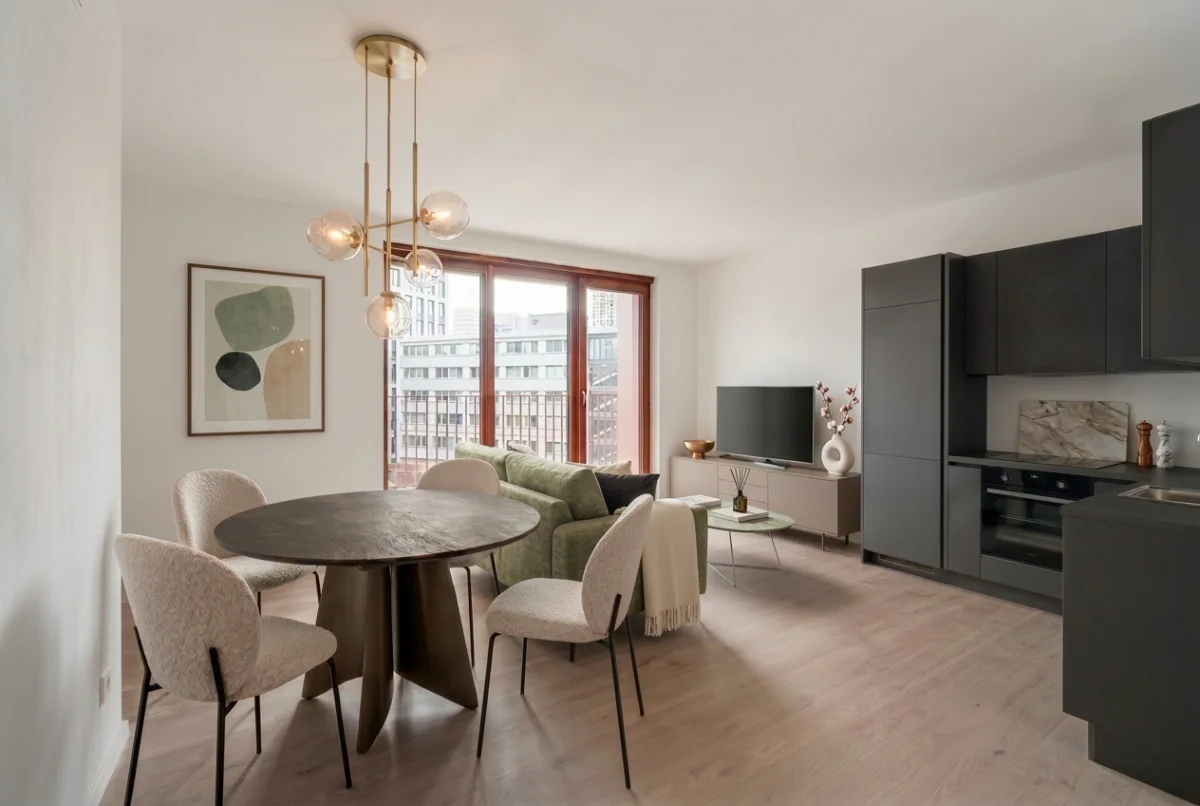
The transformation is striking. AI selected a green velvet sofa as the anchor piece, paired it with a dark ceramic extending dining table, bouclé dining chairs, and a brass globe pendant light. The dark kitchen cabinetry was complemented with warm metallics and natural textures. Every item is a real product with real pricing, no concept renders, no guessing.
The Furniture Behind the Design
What makes AI interior design practical, not just pretty, is that every item shown is purchasable. Here's the actual furniture selection for the living room:
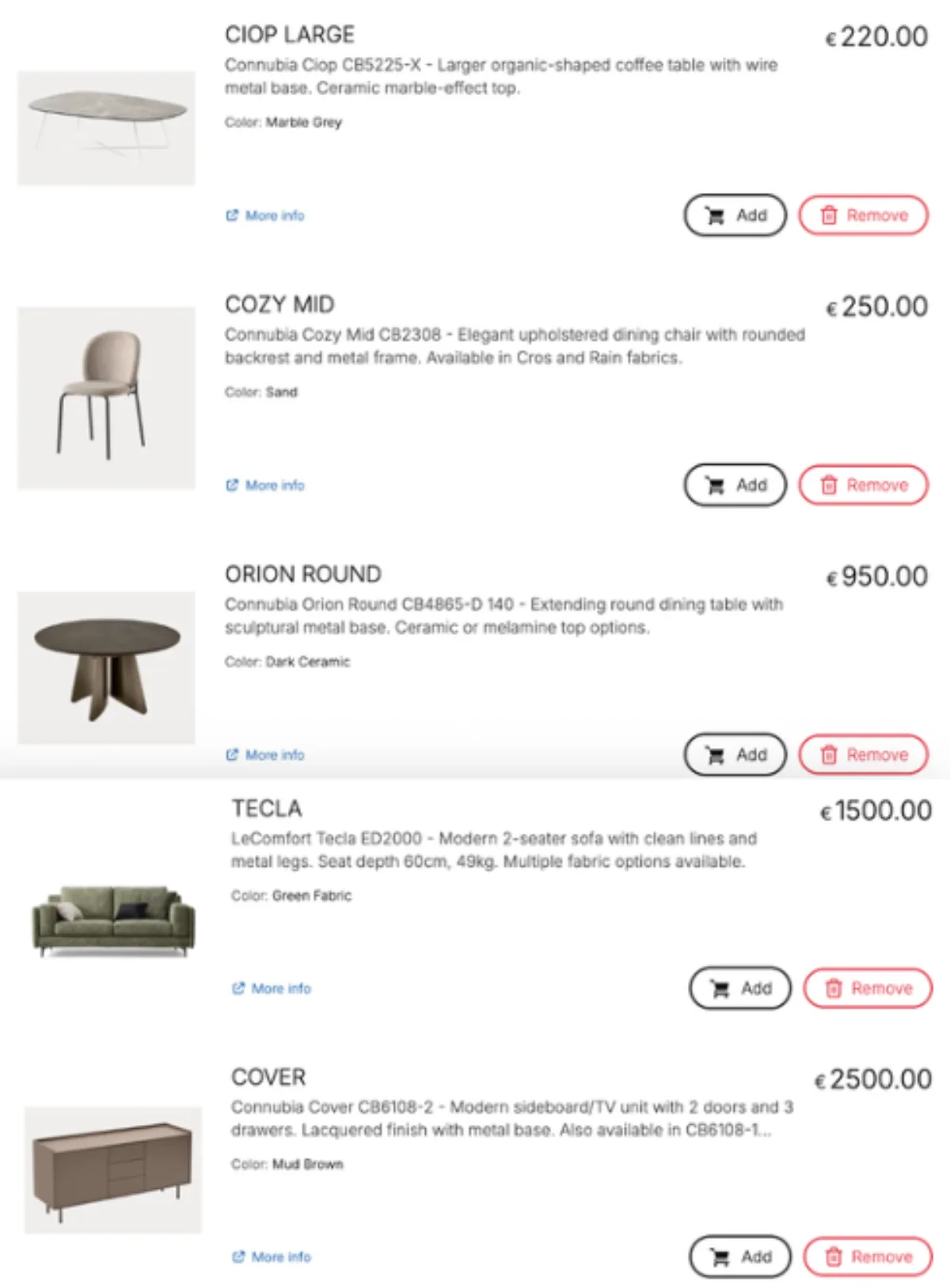
From the Ciop Large marble-effect coffee table at €220 to the Tecla green fabric sofa at €1,500, you see exact products, exact prices, exact dimensions. No surprises when the delivery arrives.
Bedroom: Calm, Warm, Intentional
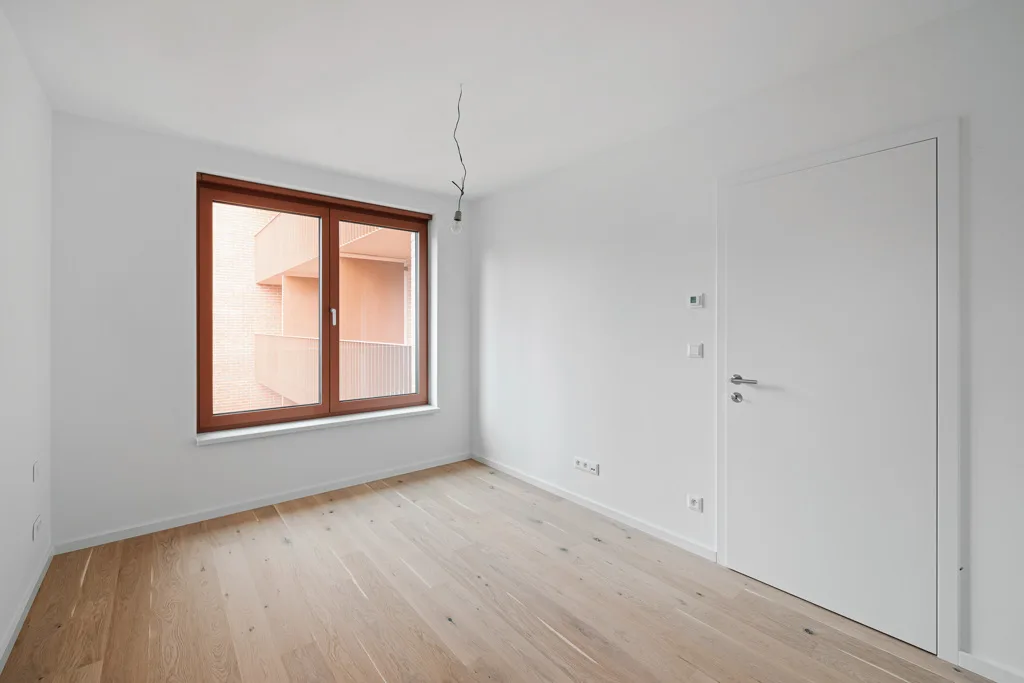
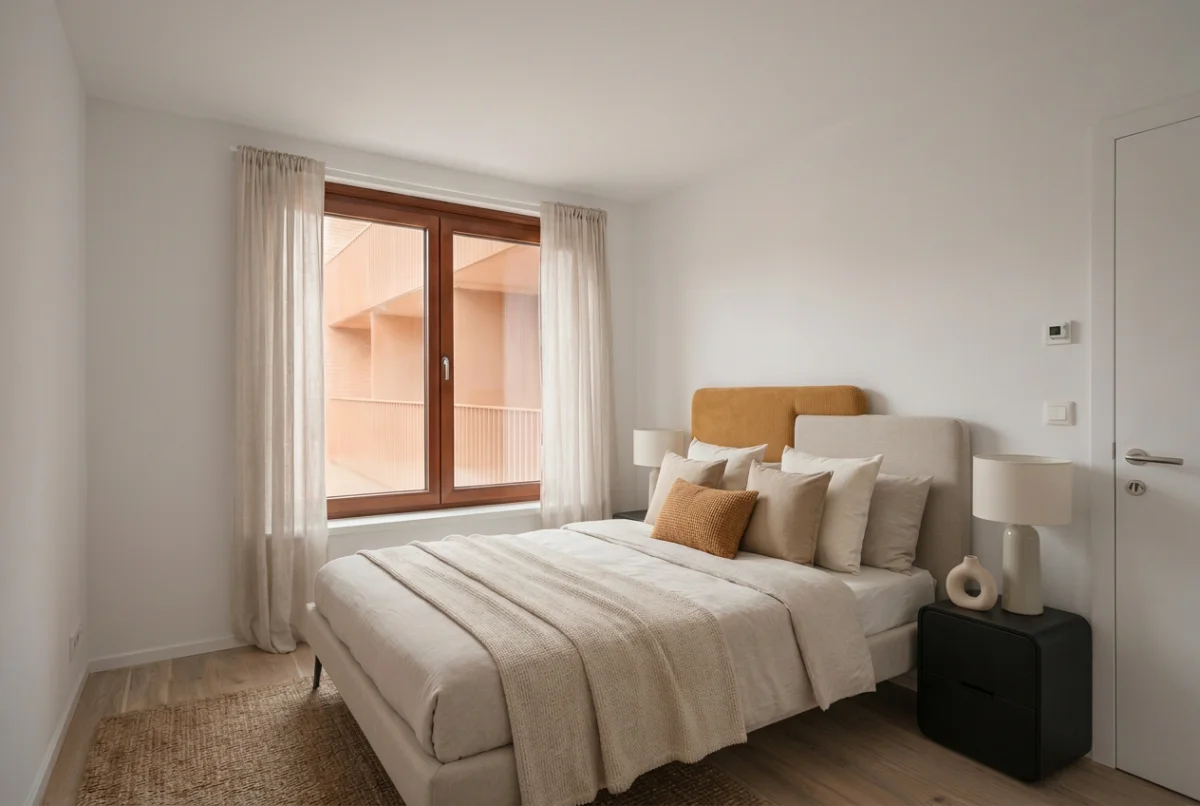
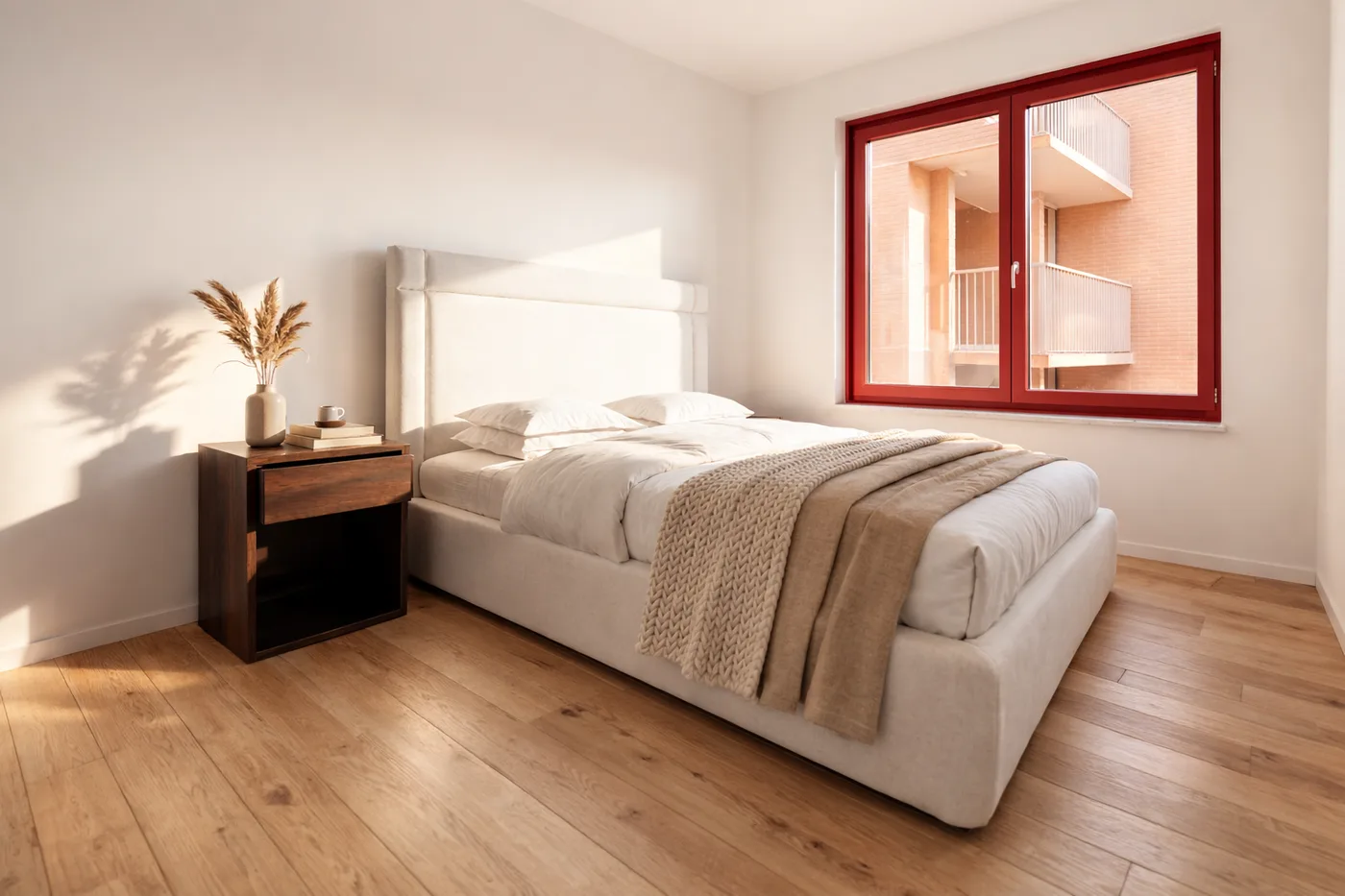
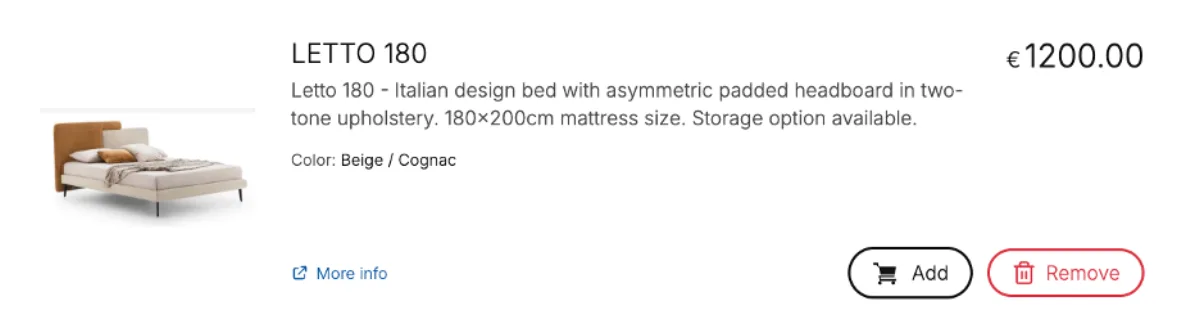
The bedroom went from a blank box to a warm, layered retreat. The AI chose the Letto 180, an Italian-designed bed with an asymmetric two-tone headboard in beige and cognac. It layered neutral linen bedding with textured throws, added a minimalist black bedside table, a ceramic lamp, and anchored the space with a natural jute rug. The result feels curated by a professional designer.
Why 2026 Is the Tipping Point for AI Interior Design
AI design tools have existed since 2023, but 2026 is the year they become genuinely useful. Here's what changed:
1. AI Now Understands Spatial Context
Early AI tools generated pretty images that ignored room dimensions. A sofa might be rendered 3 meters wide in a 2.5-meter room. In 2026, AI processes actual floor plans and room measurements, placing furniture at real-world scale. The result is designs that actually work when you buy the furniture.
2. Real Products, Not Concept Art
The biggest limitation of early AI design was that generated rooms showed fictional furniture. You'd love the sofa in the render, but it didn't exist. MeltFlex solves this by connecting AI visualization to a real furniture catalog with real prices and dimensions. What you see is what you can buy.
3. From Floor Plan to Furnished in Minutes
The complete workflow, upload floor plan, convert to 3D, place furniture, generate photorealistic renders, now takes under 10 minutes. Compare that to the traditional process: 2-4 weeks for a designer consultation, another 2-4 weeks for mood boards and revisions, then months of furniture sourcing and delivery coordination.
4. Cost: Free vs. Thousands
Professional interior design in Europe costs €50-150 per hour, with full-apartment projects running €3,000-15,000+. AI design tools offer the core experience, visualization, furniture selection, space planning, for free or near-free. This democratization is the single biggest driver of adoption.
Will AI Replace Interior Designers? What the Data Actually Says
This is the question behind most searches about the future of interior design, so let us answer it with numbers instead of vibes.
The U.S. Bureau of Labor Statistics projects employment of interior designers to grow 3% from 2024 to 2034, about as fast as the average for all occupations, from a base of roughly 87,100 jobs, with about 7,800 openings per year. That is not the curve of a profession being automated away. Travel agents lost more than half their jobs to the internet; designers are not on that path.
What the numbers do show is a profession adopting the tools fast. In the inaugural Houzz State of AI report, 34% of construction and design pros already used AI, and 66% expect it to transform the industry within five years. AI users in the survey saved over 3 hours per week, which Houzz values at an average productivity gain of more than $108,000 per firm per year. Our own analysis of how much time AI saves architects found the biggest wins in exactly one place: visualization.
The pattern is the same one photography went through with digital cameras: the technical barrier collapsed, the profession did not. Designers who fold AI into their process, like the 8-stage workflow in our AI workflow guide for interior designers, deliver more options faster and win more clients. And for homeowners deciding between the two, we have broken down the real numbers in AI versus hiring a designer: what each actually costs.
As for what people are designing with all this new capability, warm minimalism, mixed materials, and biophilic touches keep leading; the full picture is in our 2026 interior design trends report.
How to Design Your Home with AI Today
Ready to experience the future of interior design? Here's how to get started with MeltFlex:
- Upload your floor plan, architect's drawing, hand sketch, or real estate listing photo. Start here.
- AI converts it to 3D, walls, doors, windows, and rooms are identified automatically.
- Browse and place real furniture, drag items from the furniture catalog directly into your rooms.
- Generate photorealistic renders, see your design as a professional-quality image.
- Buy what you love, every item has real pricing and links to purchase.
The entire process takes less time than scrolling through a furniture website, and you end up with a complete, cohesive design instead of a cart full of mismatched impulse buys.
The Bottom Line
The future of interior design isn't about replacing human creativity, it's about giving everyone access to tools that were previously reserved for professionals. AI handles the technical heavy lifting, dimensions, proportions, spatial planning, so you can focus on what matters: creating a home that feels like yours.
In 2026, there's no reason to move into an empty apartment and spend months guessing. Upload your floor plan, let AI do the spatial math, and see your future home before you spend a single euro on furniture.
Try MeltFlex free, upload your floor plan and see your space transformed in minutes. Browse thousands of real furniture products and design every room with confidence.
For more design inspiration, explore our guides on AI living room design prompts, bedroom design, new-build apartment interiors, and the 8 most popular interior design styles.