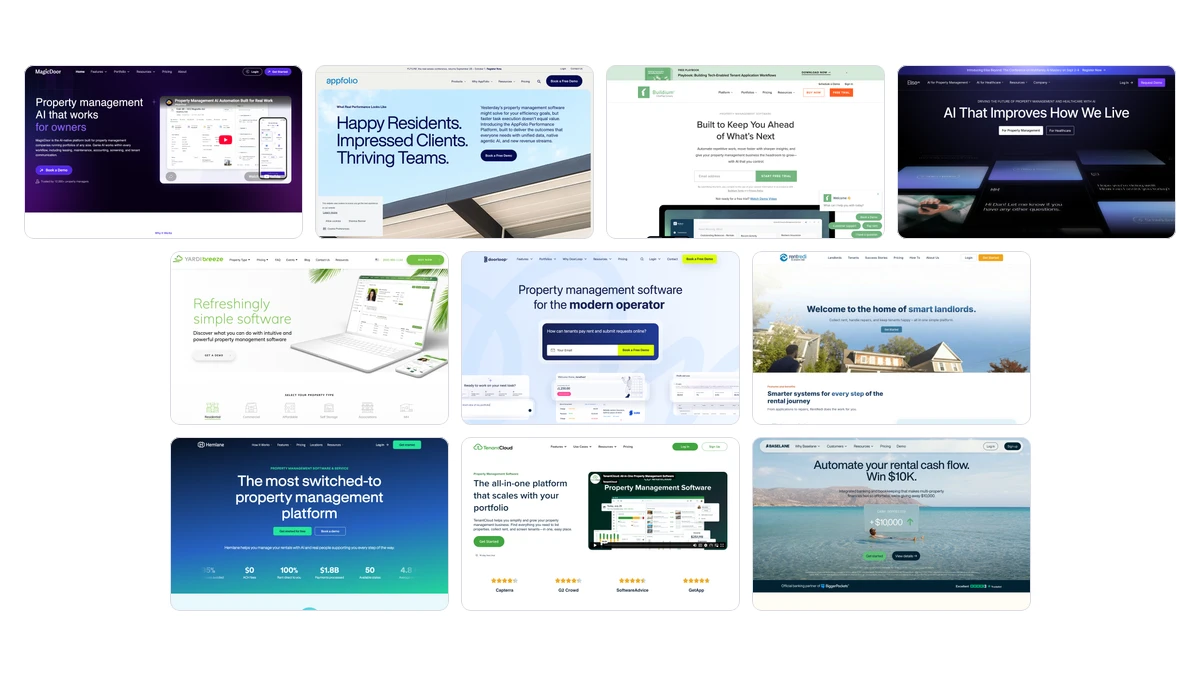

AI adoption in property management went from 20 percent to 58 percent in eighteen months. Over the same period, only 8 percent of firms said they had fully automated any workflow. That gap, not the tool choice, is the actual problem. Almost everyone has started; almost nobody has finished. The fix is unglamorous: pick one workflow, pick the one that removes vacant days rather than staff hours, map its exceptions before its happy path, and do not begin a second one until the first is closed out. What follows is the five workflows worth finishing in order of payback, what finished actually looks like for each, and the specific thing that stops each one.
Our articles are still written by humans!
Get human written articles in your Google feed.
The short version
- Adoption is not the differentiator any more. 58 percent of property management firms use AI. Eight percent have finished a workflow with it.
- Projects stall because AI does the fast 80 percent. Drafting and extracting were never the bottleneck. Deciding, approving and exceptions are.
- Automate what removes days, not hours. A vacant day costs about $58 and lost rent is 35 to 50 percent of a turnover. Invoice coding saves hours; getting the unit listed saves days.
- The listing is the finishable one. Photos, video and copy can all be produced before the tenant has moved out, which removes the dependency that creates most of the vacancy.
- The test for “finished”: name who no longer touches the task. If nobody drops out, you bought an assistant.
- Two things stay human: anything jurisdictional (notice periods, fees, deposits) and anything describing a person, which is Fair Housing territory.
Those numbers come from Buildium’s 2026 State of the Property Management Industry Report, produced with NARPM, which puts it plainly: “18 months ago, just 1 in 5 property management companies we surveyed were using AI. Today, it’s 3 in 5.” And then, a paragraph later: “Just 8% of survey respondents said they’d been able to fully automate any workflows.” If you want the tooling question rather than the workflow question, that is a separate piece: the best AI property management software ranks ten platforms by the same days-vacant logic used here, and states our conflict of interest in the same way this one does.
FreeUpload listing photo · freeStage my listing photo for freeUpload an empty room and MeltFlex furnishes it for the listing, walls, windows and floor untouched. Your first AI design is free, no card needed.


The 58 percent who started and the 8 percent who finished
The survey numbers are worth sitting with, because they contradict the way this category talks about itself.
Read the first two rows together and the picture is a whole industry holding a tool it has not put down and has not finished a job with. Read the third row and you can see why: the most adopted use is the one with the lowest ceiling. Writing a listing description faster is genuinely useful and it does not shorten a vacancy by an hour.
Why the projects stall
Because the part AI does brilliantly was never the bottleneck.
Every one of these workflows has a fast 80 percent and a slow 20 percent. The fast part is producing: drafting the message, summarising the thread, pulling fields out of a PDF, writing the description. AI is now excellent at all of it. The slow part is deciding, approving, and handling the cases that do not fit, and that is where the calendar time actually goes. Automating the fast part and leaving the slow part untouched produces a workflow that feels transformed and takes the same number of days.
You can spot it in your own operation with one question: after the AI does its bit, how many people still touch this? If the answer is the same as before, you have bought an assistant, not an automation. Both are fine. Only one of them shows up in a metric.
The five worth finishing, in order of payback
Ordered by what finishing them does to money, not by how impressive the demo is. The logic is the same one used in the software comparison: a vacant day costs about $58 at the 2026 national average asking rent of $1,740, lost rent is 35 to 50 percent of the total cost of a turnover, and the average stabilised unit now sits empty over 34 days between residents. Days beat hours.
Most firms start at five and work up, because it is the least frightening. Starting at one is uncomfortable and pays several times better.
Workflow one, in detail, because it is the finishable one
Here is the situation this solves. The tenant gives notice on the first. They move out on the thirtieth. The unit cannot be photographed until it is empty, the photographer has a two week lead time, and the listing goes up somewhere in the second week of the following month. You have manufactured three weeks of vacancy out of scheduling, which at $58 a day is roughly $1,200 of rent for a unit that had a tenant queued up in principle.

Left, the unit while it is still occupied. Middle, the same photograph with the contents removed. Right, the same room restaged for the listing. None of these steps required the tenant to have left.
Finished, this workflow means the listing is live before the moving van arrives. Working from the photo you already have, the departing tenant’s furniture can be removed and the floor, skirting and wall rebuilt behind it, an empty unit can be virtually staged so a bare room reads as somewhere people live, a tired floor or wall can be shown as it will look after the turn, and the plan can be turned into a 3D view for prospects who cannot read a 2D one.
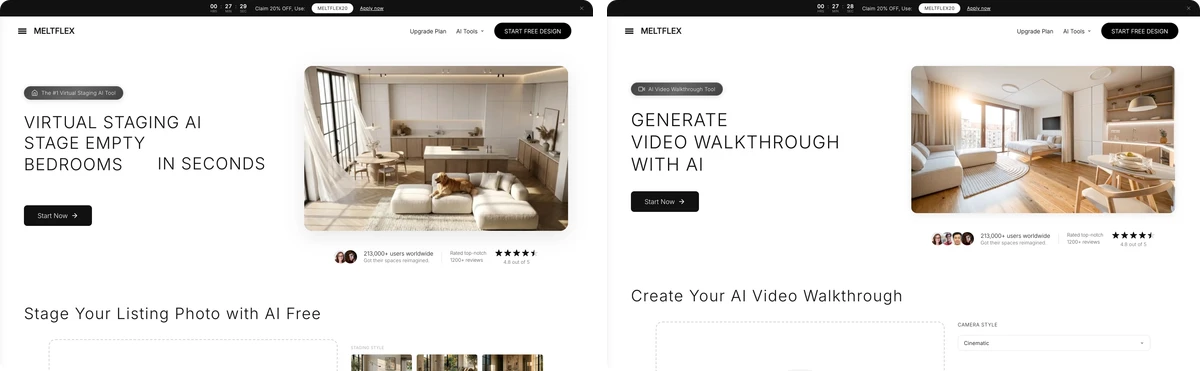
The two steps that matter most for a turn, as they actually look. Staging on the left, video walkthrough on the right, both captured 12 August 2026.
The step most managers skip is the moving one. A walkthrough video generated from a single still gives you a listing asset and a vertical clip in the same pass, 16:9 for the portal and 9:16 for Reels and Shorts, which matters because a growing share of leasing enquiries now arrive from social rather than from a portal search. If you want the wider comparison of what else does this, including tools we do not build, the AI video generators for real estate covers it.
This is our product, so treat the recommendation accordingly and read the limits with it. These are clips of roughly four to eight seconds per shot, so they are a hero asset and a Reel, not a substitute for a Matterport style tour someone walks at their own pace. It will not make an unlettable unit lettable, and used that way it costs more in wasted viewings than it saves in vacancy. And every edit in this section is an alteration that has to be disclosed, which is the next section. What it does do is remove the dependency between “the tenant has left” and “the listing is live”, and that dependency is where the three weeks come from.
There is a neat irony in the survey data here. The most common AI use in the industry is drafting property descriptions, which is the text half of a listing. The picture half, which is what a prospect actually looks at first, is being left undone by the same people. Our guide to AI real estate photo editing covers which of those picture edits are corrections and which are transformations, and staging for short lets covers the furnished end of the market.
How to actually finish one
Six steps, roughly a month, and the discipline is in steps two and six.
1. Pick the workflow that pays in days
Use the table above. If two candidates look equal, take the one closer to a prospect, because that is the one whose delay shows up in the rent roll rather than in a timesheet.
2. Write down what finished looks like
In the form of who no longer touches this. If nobody drops out of the chain, you are building an assistant rather than an automation. That single sentence is what separates the 8 percent from the 58 percent, and it takes two minutes to write and a quarter to discover you skipped.
3. Map the exceptions before the happy path
The happy path is already solved, by every vendor, in every demo. List the awkward ones instead: the out of hours emergency, the tenant replying in another language, the invoice with no purchase order, the applicant whose income is seasonal. Decide which of those route to a human before you switch anything on.
4. Set the approval gate deliberately
Anything with a legal deadline, a fee, a deposit figure or a decision on an application stays human approved. Not because the model is careless, but because it will state a jurisdiction specific number with complete confidence whether or not it is right for your state, and because an automated decision on an application is a fair housing problem waiting for a complaint.
5. Run it on one property for a month
One property is enough to surface the exceptions and small enough to unwind if it goes badly. Record your metric on day one and day thirty, plus the number of times a human had to step in.
6. Only then start the second
Two half finished automations is how a firm stays in the 58 percent for three years running. Close one out, write down what it cost and what it returned, and then choose the next one from the table rather than from whatever a vendor demoed last.
What to measure, and what not to
Pick the metric before you switch anything on, because measuring after the fact turns into a story about how it feels faster.
That last row is the honest one. Time saved is easy to feel and easy to imagine. Interventions are countable, and if the count is not going down, nothing has been automated.
Resist the urge to benchmark yourself against the industry here. There is one figure worth knowing, from AppFolio’s 2026 Property Management Benchmark Report, which surveyed 1,617 US residential property management professionals between 26 September and 3 November 2025: “Firms that have broadly adopted AI expect an average portfolio growth of 31% in 2026”, against 12 percent for those who have not. Note the verb. That is what firms expect, self reported, by the group most invested in the answer. It is a signal about confidence, not a measured outcome, and it is a different survey from the Buildium one above.
Two places AI stays out
Anything jurisdictional. Notice periods, deposit caps, late fees, eviction timelines. The model will produce a confident, specific, wrong answer for your state as readily as a right one, and it has no way of knowing which lease it is looking at unless you tell it.
Anything that describes a person. This is the expensive one. AI drafted listing copy reaches instinctively for perfect for young professionals, ideal for a small family, a short walk from the station. Each describes the tenant, or assumes an ability, rather than describing the property, and that is the line the Fair Housing Act draws. The model is not being reckless. It is imitating thousands of listings that were. Describe the flat, never the person you imagine in it, and never publish a generated description unread.
On the picture side the equivalent duty is disclosure. Adding furniture, removing it or changing a floor are alterations, and they have to be labelled: a statutory duty in California since AB 723 took effect on 1 January 2026, and across the EU since Article 50 of the AI Act began applying on 2 August 2026. Both are covered in the virtual staging disclosure rules and the EU AI Act guide.
Where to start this week
Take the next unit giving notice and run workflow one on it. Photograph it while the tenant is still in it, remove the contents, stage it, generate the walkthrough, and put the listing up the day the notice lands rather than the week after the van leaves. Record two numbers: days from notice to listing live, and days vacant. Compare against your last five turns.
If that works, you have finished one workflow, which puts you in a group the industry survey sized at 8 percent. The first design is free, and if the comparison shows your old process was already fast, keep your money and go automate invoice coding instead.
Sources, and what we could not verify
Every figure above was read from the organisation that published it rather than from another article quoting it, which is worth doing in this category: checking the primary sources for this piece corrected two numbers we had taken from secondary pages. The 20 to 58 percent shift is over eighteen months, not twelve, and the growth figure belongs to AppFolio’s survey rather than Buildium’s. Both were being reported the other way round elsewhere.
Written by Matúš Koleják, co-founder of MeltFlex, on 12 August 2026. MeltFlex builds the listing visuals described in workflow one and sells nothing in the other four, which is the bias to read this with. The tool screenshots in this article are our own product, captured the same day.
Frequently asked questions
How is AI actually being used in property management right now?
Mostly for writing. Buildium’s 2026 State of the Industry Report, run with NARPM found the most common use is drafting property descriptions and customer communications. That is a real time saver and it is also the easiest thing on the list, which is why it is the most adopted. The harder uses, leasing enquiry handling, maintenance triage, invoice coding and lease abstraction, are where the reported gains sit, and they are far less finished. Adoption jumped from 20 to 58 percent over eighteen months, while only 8 percent of firms said they had fully automated any workflow.
Why do most AI projects in property management stall?
Because the part AI does well was never the bottleneck. Drafting a message, summarising a thread and extracting fields from a PDF are the fast 80 percent of a workflow. The slow 20 percent is deciding, approving and handling the exceptions, and that is the part nobody maps before starting. A team ends up with an assistant that produces drafts a human still reviews one by one, which feels like progress and removes almost no cycle time. Finishing means naming who no longer touches the task at all.
Which AI workflow should a property manager automate first?
The one that removes vacant days rather than staff hours, because those are worth different money. A vacant day costs about $58 at the 2026 national average asking rent, lost rent is 35 to 50 percent of the total cost of a turnover, and the average stabilised unit now sits empty over 34 days between residents. Getting a unit listed properly and answering enquiries instantly both attack that number. Invoice coding, however satisfying, does not. The software comparison ranks the platforms by the same logic.
Can AI write my rental listing description?
It can, and it is the single most common use in the industry, but it is also where the legal exposure is highest. AI drafted copy reaches for phrases like perfect for young professionals, ideal for a small family or a short walk to the station, and each of those describes the tenant or assumes an ability rather than describing the property, which is the line the Fair Housing Act draws. Use it for a first draft, then edit every sentence so it describes the flat and nothing else. Never publish a generated description unread.
What can AI do about listing photos and video for a rental?
More than most managers realise, and it is the half of the listing that AI adopters are leaving undone while they use it to write the text. From a photo you already have, the furniture of a departing tenant can be removed and the floor, skirting and wall behind it rebuilt, an empty unit can be virtually staged, a tired floor or wall can be shown as renovated, and a still can be turned into a short walkthrough video in both 16:9 for the portal and 9:16 for Reels. It is the one part of the turnover that does not have to wait for the tenant to move out.
Do I have to disclose AI edited listing photos?
Yes, for anything that changes what a viewer sees. Adding furniture, removing it, changing a floor or converting a daytime exterior to dusk are all alterations. Every major US MLS requires them to be labelled, California made it a statutory duty when AB 723 took effect on 1 January 2026, and in the EU Article 50 of the AI Act has applied since 2 August 2026. Corrections like exposure, white balance and straightening verticals do not need disclosing, because they make the photo represent the room more accurately rather than less.
How do I measure whether the AI actually worked?
Pick the metric before you start and record it on the same day you switch anything on. For leasing workflows, days vacant and lead to lease rate. For maintenance, time from request to dispatch. For finance, hours of coding a week. Then count human interventions, because that number is what separates an automated workflow from an assisted one. There is no reliable industry benchmark for that last figure, so compare against your own previous quarter rather than against a number from a vendor deck.
Is AI worth it for a small landlord with a few units?
For platform automation, no. At five doors the coordination load fits in your head and every per-unit AI product carries a monthly minimum that dwarfs the fee. The exception is the listing itself, because that cost does not scale with portfolio size: one badly photographed unit sitting empty three extra weeks costs roughly the same whether you own five or five hundred. Do the marketing side properly, keep the admin manual, and revisit the platforms somewhere around thirty to fifty doors.