A pool renovation cost in 2026 has a usable average of about $15,000 with a typical range of $10,000 to $20,000, according to Fixr, which also records a $2,500 floor for a paint-and-tidy job and a $150,000 ceiling for a full rebuild. That spread is not vagueness, it is the difference between four or five genuinely separate jobs that all get called a pool renovation. This guide prices each one on its own, starting with the decision that matters most and is almost always made on the wrong basis: which surface finish to put back in.
Our articles are still written by humans!
Get human written articles in your Google feed.
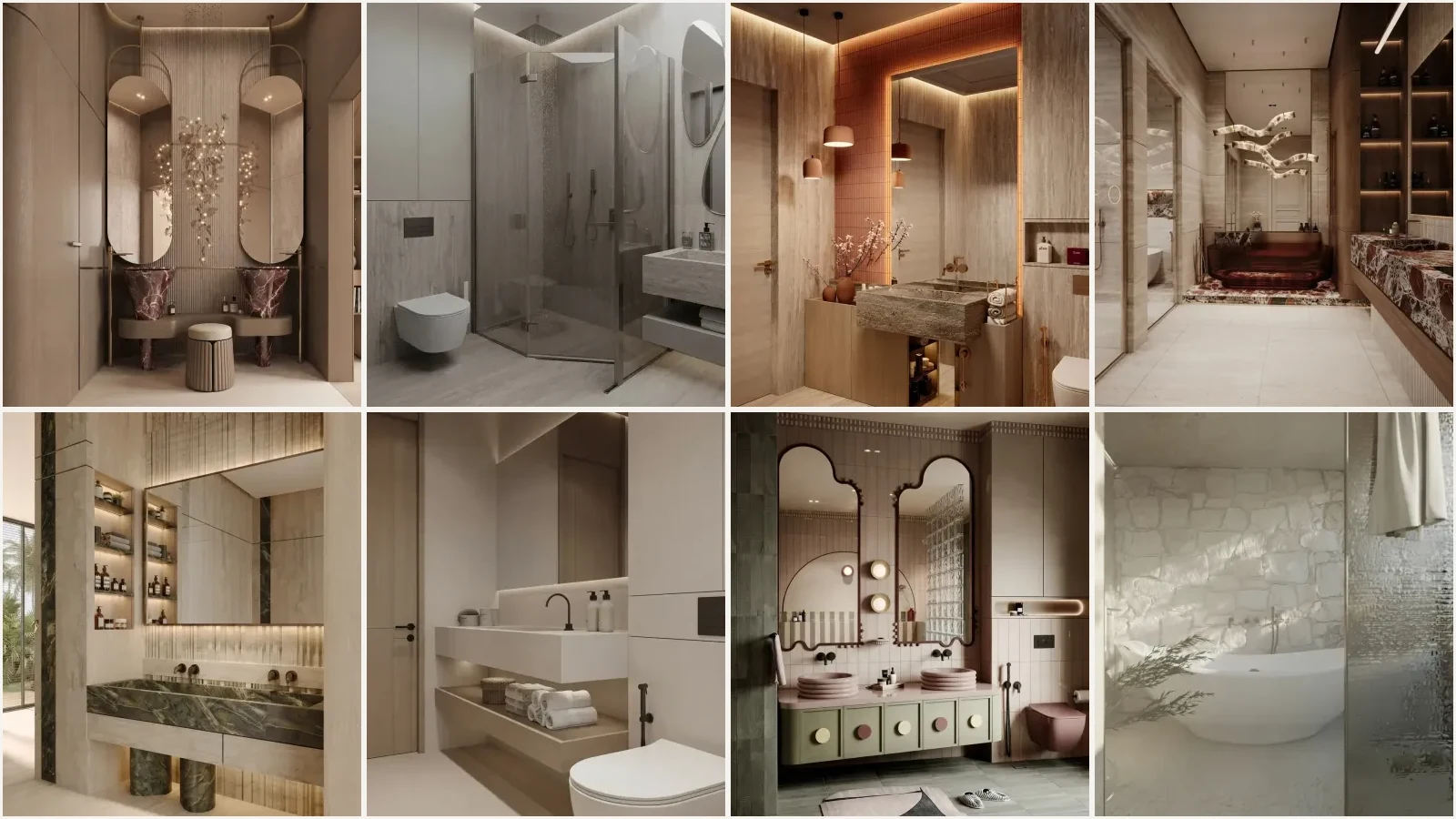
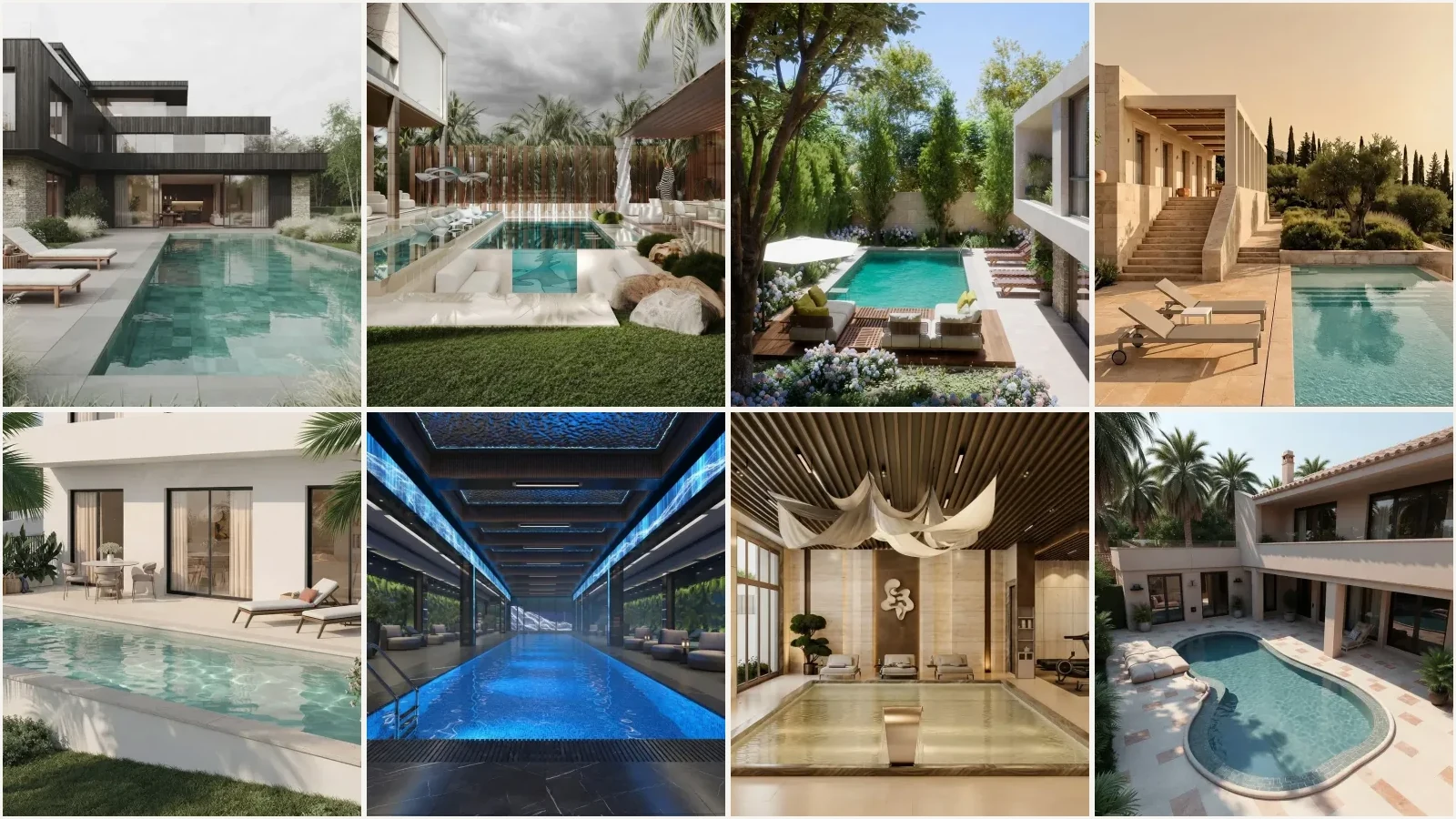
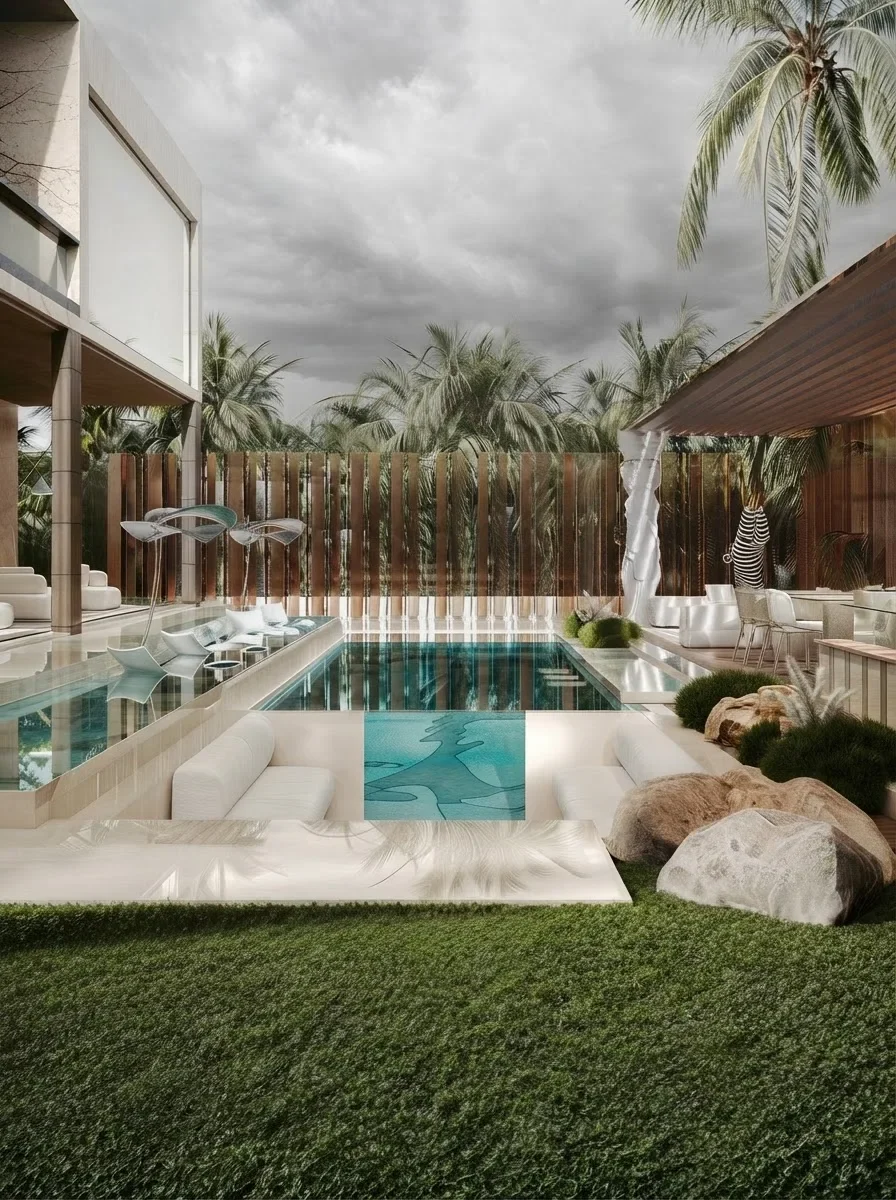
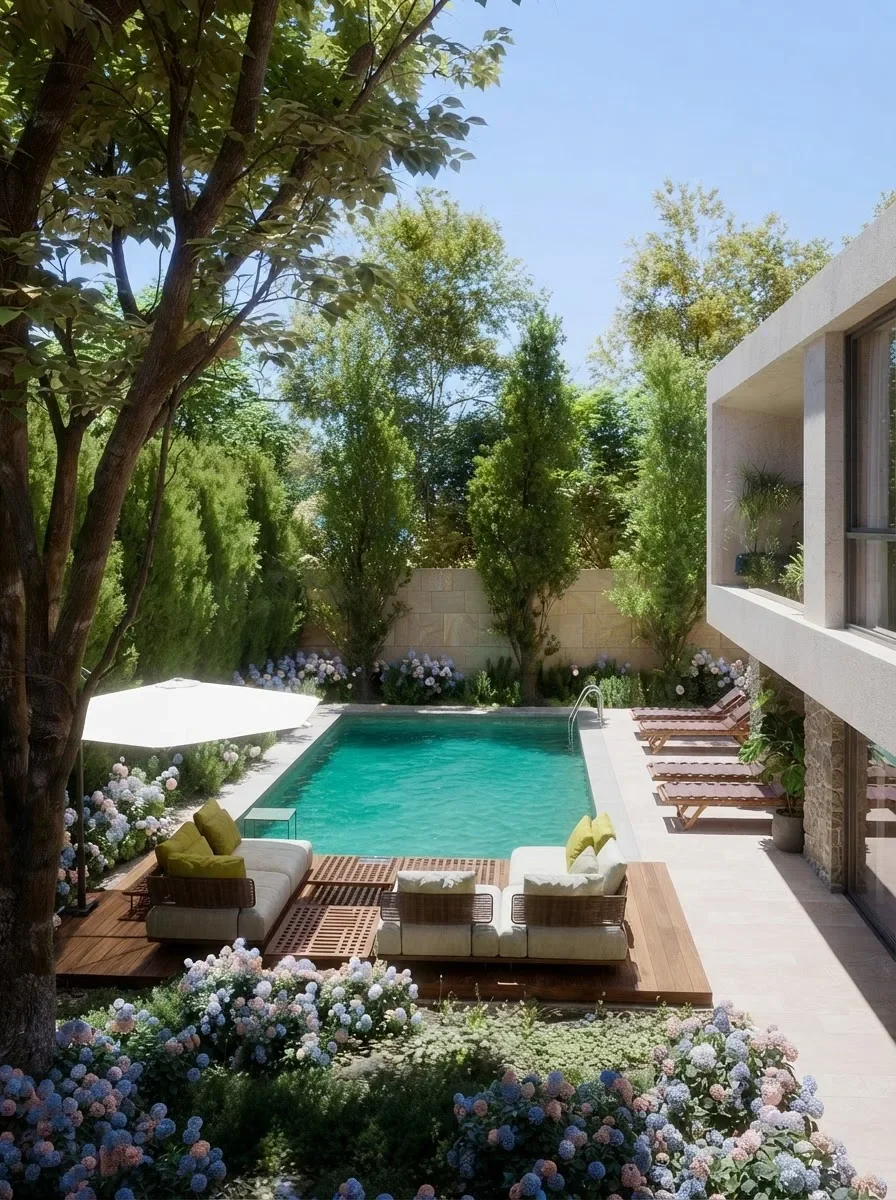
The cover shows eight pools from our own gallery, arranged from a simple lap pool and surround through to full renovations with new decking and water features.
“A pool is the only part of a property where the cheap option is reliably the expensive one. Owners would look at two resurfacing quotes, take the lower number, and then be back in the same conversation nine years later. Nobody ever divides the quote by the years it buys, and that one piece of arithmetic changes which quote you accept.”
Branislav Hrivnák, Co-Founder, MeltFlex
The short version
- About $15,000 average, $10,000 to $20,000 typical, $2,500 floor and $150,000 ceiling (Fixr).
- Divide the resurfacing quote by its lifespan. Plaster lasts 7 to 12 years, pebble 15 to 25+, which inverts the price comparison.
- Decking is often the biggest line, at $13,000 to $38,000+ to replace, more than the pool work itself.
- Equipment gives the best return, because a variable-speed pump and LEDs cut running costs from day one.
- Pool resale value data is weak. There is no Cost vs Value equivalent for pools, so nobody can give you an honest recouped percentage.
Jump to: Overall cost · Resurfacing · Tile and coping · Decking · Equipment · Water features · Renovate or rebuild · Seeing the finish first · FAQ
FreeUpload garden photo · freeRedesign my garden for freeUpload a photo of your garden, patio or backyard and MeltFlex lays out the planting, paving and seating. Your first AI design is free, no card needed.
What a pool renovation costs overall
Fixr breaks the category down by project type, which is more useful than an average because almost nobody buys the average.
Figures from Fixr, last updated 31 January 2025. Fixr also puts labour at roughly $6,000 of the $15,000 average project, with hourly rates of $40 to $200.
Industry guides published through 2026 describe the same shape in bands: about $15,000 for a straightforward resurfacing plus deck refresh, $25,000 to $60,000 for a mid-range renovation including tile and equipment, and $100,000 upward for a comprehensive makeover with new decking, water features and automation. Those bands and the Fixr table agree, which is more than can be said for the bathroom data in our bathroom remodel cost guide.
Resurfacing, and the cost per year that actually matters
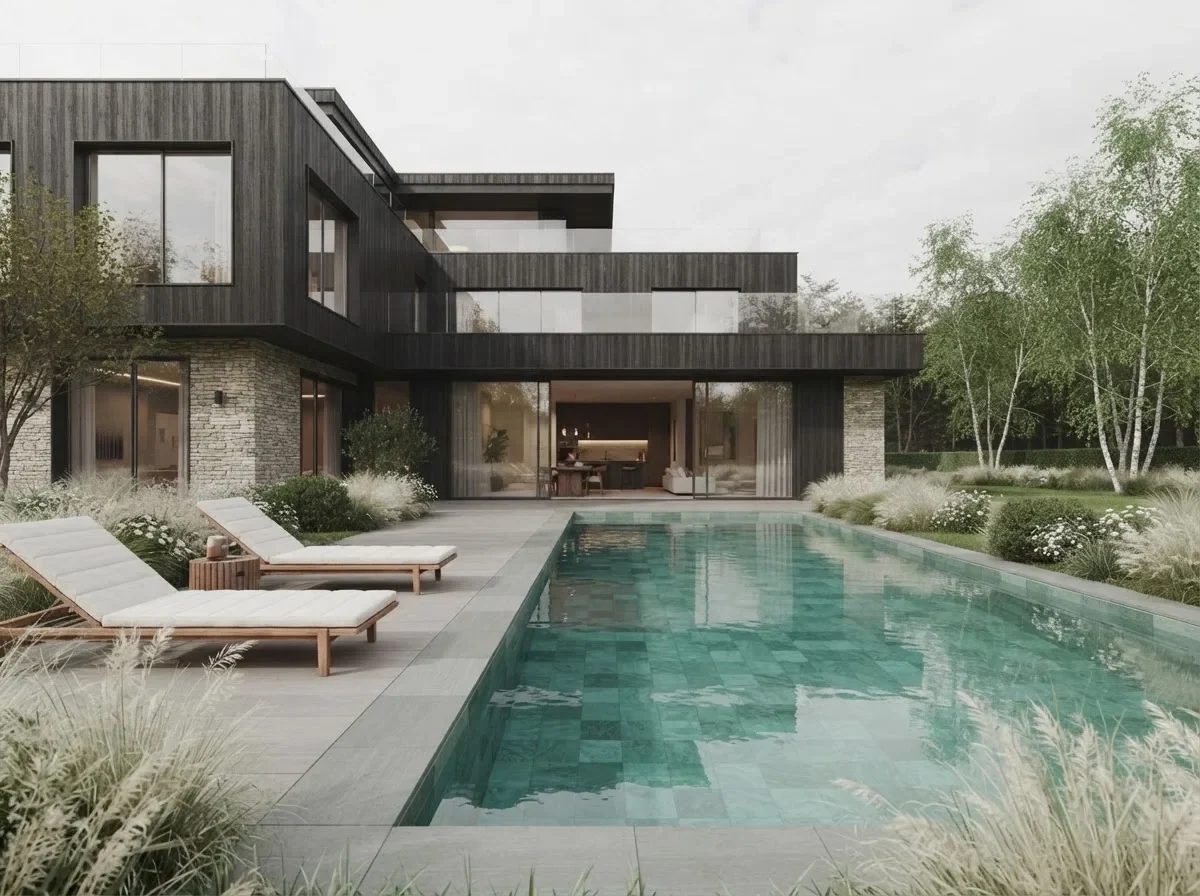
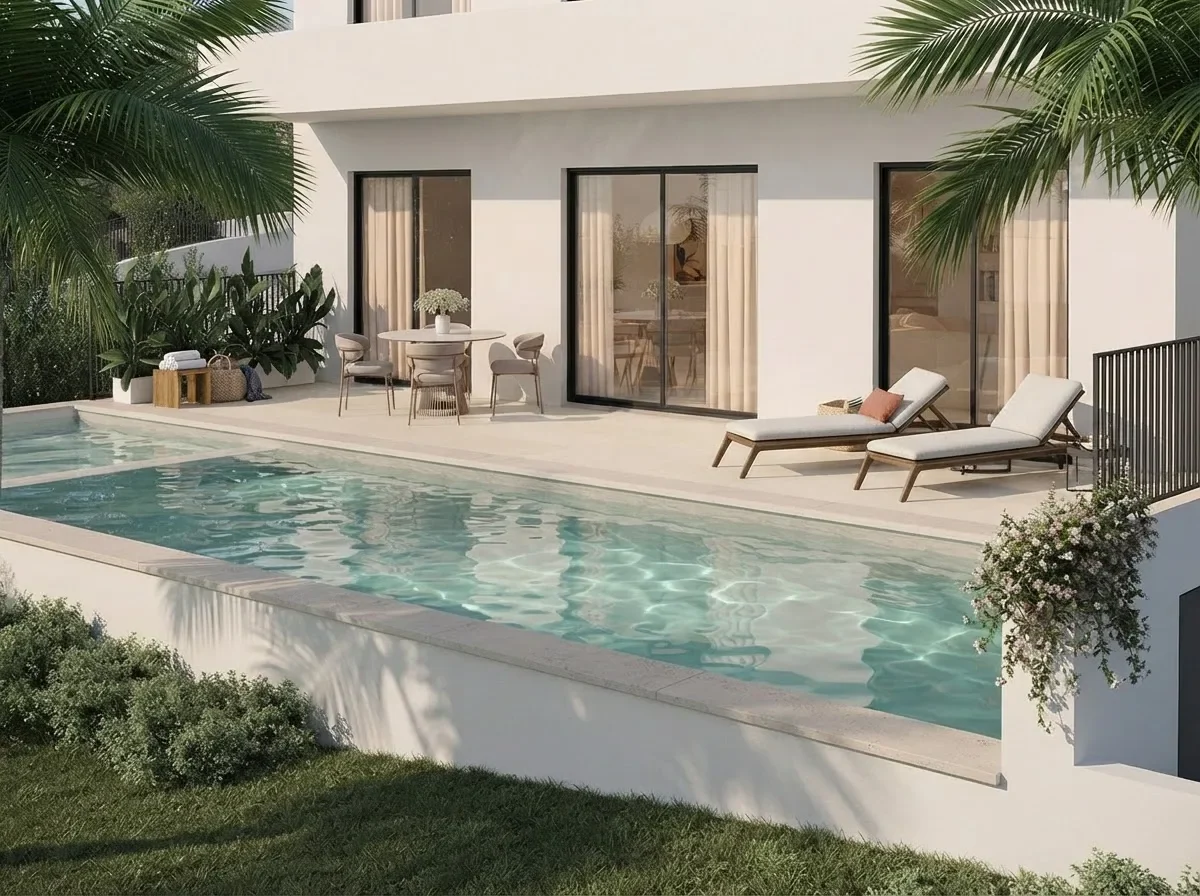
Every pool surface wears out. The question is never whether to resurface but what to put back, and that decision is routinely made on sticker price when it should be made on cost per year.
Fixr column last updated 31 January 2025. The 2026 column, per-square-foot rates and lifespans are from current HomeGuide and Angi pool resurfacing guidance. Cost per year is our own arithmetic on the midpoint of each range divided by the midpoint of its lifespan, shown to make the comparison, not as a quoted figure.
Run the middle column against the lifespan column and the ranking flips. Plaster is the cheapest quote and roughly the most expensive surface per year of service. A pebble finish costs more than plaster on the day and less than plaster over any horizon beyond about a decade. Full tile is genuinely expensive on both measures and is bought for how it looks, not for value, which is a perfectly good reason as long as you know that is what you are doing.
The practical rule: if you intend to keep the house for more than ten years, plaster is usually a false economy. If you are selling within two or three, plaster is the rational choice and anything more is money you will not see again.
Tile, coping and the waterline
Waterline tile is the band that shows scale and mineral staining first, and replacing it is often what makes an old pool read as renovated. Fixr groups tile and coping under replacements at $250 to $50,000, which is too wide to plan with, so the useful numbers are the material ones: tile runs about $30 or more per square foot, and a full interior tile job lands at $25,000 or more.
Coping is the capping stone at the pool edge, and it is worth understanding as a separate decision because it interacts with everything else. Replacing coping usually means disturbing the first course of deck, so a coping job and a deck job done together cost meaningfully less than the same two done years apart. If your coping is cracked or your deck is coming up, sequence them into a single visit.
Decking, the line most people forget to price
A pool renovation quote that surprises people is usually a deck quote in disguise. Current 2026 industry figures put refreshing an existing slab with an overlay or coating at about $3,000 to $10,000, and replacing the deck with new pavers, stone or porcelain at about $13,000 to $38,000 or more.
The reason is simple geometry. A 12 by 24 foot pool is 288 square feet of water, and a comfortable surround with a lounging area on one side is easily 600 to 800 square feet of hard landscaping. You are buying two to three times the area of the pool in paving, so the material rate compounds in a way it never does inside the pool. Choosing travertine over brushed concrete is a bigger financial decision than choosing pebble over plaster.
Because the deck is really a landscaping decision wearing a pool budget, it is worth planning it with the rest of the garden rather than as an afterthought. Our how to design a garden layout guide covers the zoning step, backyard ideas without grass compares hard surfaces on cost and heat, and outdoor furniture ideas covers what goes on top once the paving is down.
Equipment and conversions
The cheapest part of a pool renovation and usually the part with the fastest payback, because equipment affects running cost every day while a surface only affects how the pool looks.
One caveat on saltwater that sales conversations tend to skip: salt is corrosive to certain coping stones, ladders, handrails and heat exchangers. The conversion itself is cheap, and the long-term cost sits in what it does to the metal and stone around it. Ask specifically about your coping material before converting.
Water features and additions
Fixr prices these as a group and the ranges are wide because the category runs from a spout to a structure.
- Fountain: $200 to $15,000
- Waterfall: $250 to $15,000
- Additional lighting: $450 to $1,200
- Spa area: $6,500 to $15,000
Attached spas are the addition that most changes how often a pool gets used in a cool climate, and they are the one worth pricing seriously. A tanning ledge is the other, and it is best done during resurfacing since the shell is already being worked on. Adding either later means breaking into a surface you have just paid for.
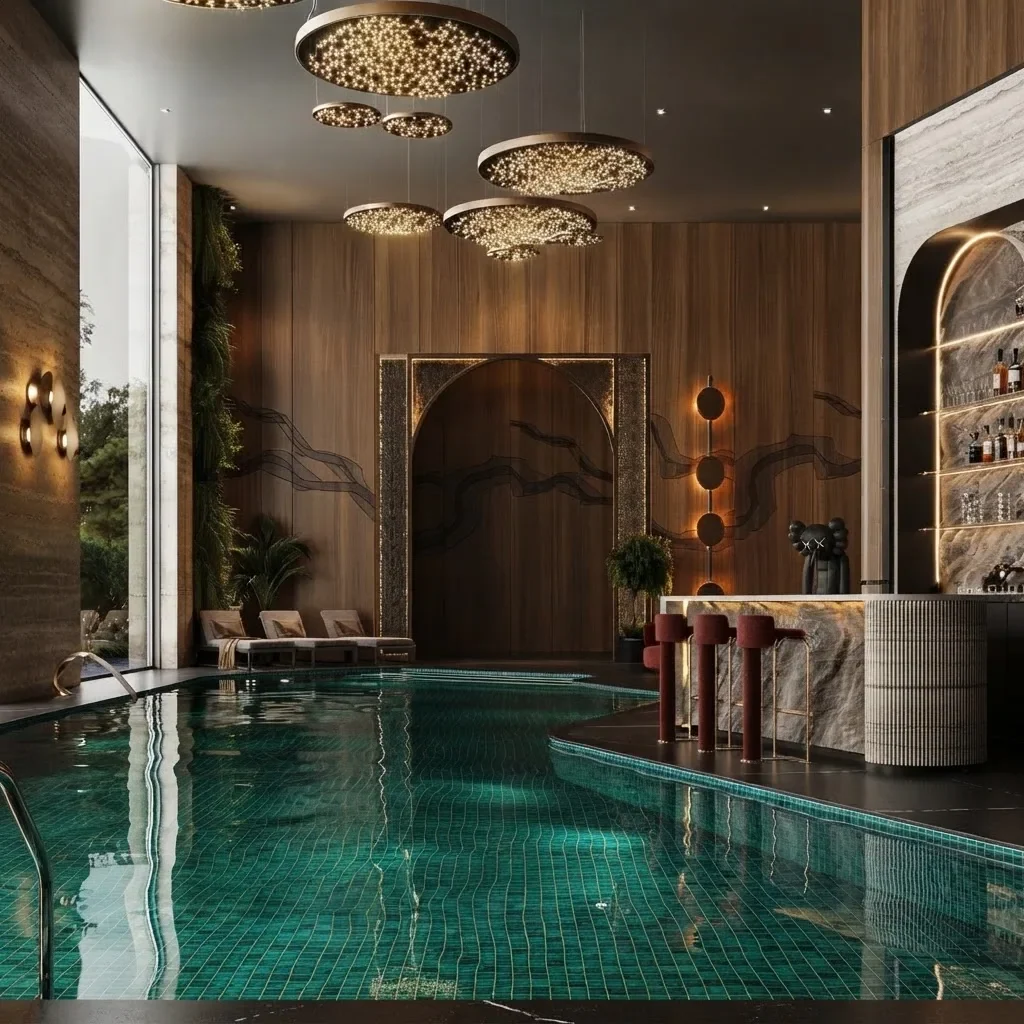
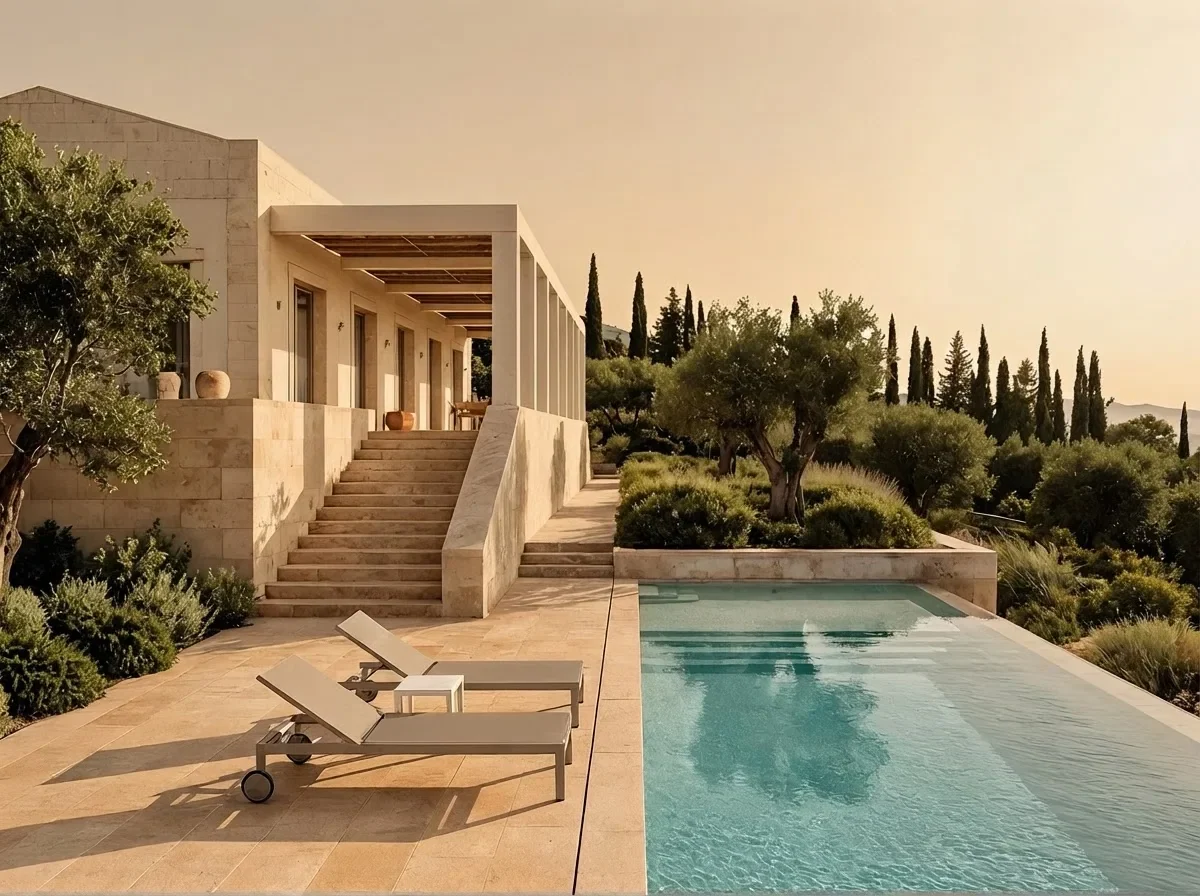
Renovate or rebuild
The dividing line is the shell. If the structure is sound and only the surface, tile and equipment have aged, renovation is uncomplicated value: Fixr’s $10,000 to $20,000 typical range covers a lot of ground. The moment you want a different shape, depth or position, the numbers change character. Fixr puts expansion at $20,000 to $70,000 and reshaping at $50,000 to $100,000, and at that point you are paying close to new-build prices with demolition on top.
Three questions settle it. Is the shell structurally sound, or is it losing water through cracks rather than through evaporation? Does the existing shape actually stop you using the pool the way you want, or is it just dated? And is the equipment pad old enough that it needs replacing regardless? If the answers are sound, dated and yes, renovate. If the shell is failing, you are choosing between a rebuild and filling it in.
Seeing the finish before you commit to it
Pool finishes are unusually hard to judge from samples, more so than kitchen or bathroom materials, because water changes everything. A pebble sample in your hand is a grey-brown speckle; the same finish under two metres of water reads deep blue-green. Waterline tile that looks bold on a board disappears at full length. And the deck material, which is the biggest spend, is the one nobody ever mocks up.
Photograph the pool and terrace as they stand, then render the combinations you are actually pricing: existing coping with a new interior finish, new stone terrace with the existing pool, mosaic waterline against plain. Our AI garden design tool carries a pool area preset and works from a photo of the real space, and the general AI interior design tool covers everything indoors. For the facade and the wider plot, AI exterior design handles the same job at building scale.
Mock up the deck, not just the water
- Render the resurface only: same coping, same terrace, new interior finish.
- Render the mid scope: new waterline tile and coping with the existing surround.
- Render the full scope: new stone or porcelain terrace, planting and lighting.
- Price the one you want rather than describing three of them to a contractor.
The honest limit, same as everywhere else on this site: a render settles appearance and proportion. It cannot tell you whether the shell is sound, whether the deck has subsided or what condition the plumbing runs are in, and those are the things that decide whether your quote holds. Use it to stop guessing about finish, then have a pool contractor pressure-test the structure. We were direct about where these images fail in why AI renders look fake.
A word on resale value
Most pool cost articles end with a confident percentage. We are not going to, because the data does not exist in the form it does for interiors. Kitchens and bathrooms have the annual Cost vs Value report giving national recouped percentages by defined scope; pools have nothing equivalent, and the effect swings wildly with climate, lot size and what buyers in your area expect. In warm markets a well-kept pool protects value and a tired one actively costs you buyers. In cold markets many buyers price a pool as a liability.
So the defensible advice is narrow: renovate a pool because you want to swim in it. If you are renovating purely to sell, do the cheapest work that removes the word tired from a viewing, which usually means resurfacing in plaster, replacing waterline tile and cleaning up the deck, and stop there.
If your project runs indoors as well, the same tier-by-tier logic drives the kitchen remodel cost and bathroom remodel cost guides. For the rest of the garden, backyard privacy ideas, AI garden design tools and AI landscape design tools pick up where this one stops, and AI garden furniture design covers the loungers and shade once the terrace is finished.
Where these numbers come from
The project-type table, resurfacing by material, equipment prices, water feature ranges, labour share and the expansion and reshaping figures are from Fixr, last updated 31 January 2025. The 2026 comparison column, per-square-foot rates, finish lifespans, decking ranges, heater and LED figures and the saltwater conversion narrower range are from current HomeGuide and Angi pool resurfacing and pool remodel guidance published through 2026. Cost per year in the resurfacing table is our own arithmetic on range and lifespan midpoints, labelled as such, and is shown to make a comparison rather than as a quoted market figure. Where two sources gave different ranges for the same item we printed both columns instead of averaging them. We have deliberately not given a resale recouped percentage for pools because no dataset comparable to Cost vs Value exists for them. The rendering tools named above are ours.
Pool renovation cost FAQ
How much does a pool renovation cost in 2026?
Fixr puts the average pool remodel at about $15,000, with a typical range of $10,000 to $20,000, a low end of $2,500 for a paint-and-tidy job and a high end of $150,000 for a full rebuild. Industry cost guides in 2026 describe a similar shape: roughly $15,000 for a straightforward resurfacing plus deck refresh, $25,000 to $60,000 for a mid-range renovation that includes tile and equipment, and $100,000 or more for a comprehensive makeover with new decking, water features and automation. The single biggest variable is whether you are only touching the shell or also replacing the deck around it.
How much does it cost to resurface a pool?
It depends almost entirely on the finish you choose. Fixr puts resurfacing at $4,000 to $30,000 across all materials, broken down as plaster $4,000 to $10,000, aggregate $6,500 to $13,000, fiberglass $7,500 to $15,000, concrete $10,000 to $20,000 and tile $20,000 to $30,000. HomeGuide-based 2026 figures give tighter working numbers: replastering $6,000 to $8,000, quartz $7,000 to $10,000 and pebble finishes such as Pebble Tec $9,000 to $13,000, with a national average around $11,000. Per square foot, plaster runs about $4, aggregate $5 to $7 and pebble about $10.
How often does a pool need resurfacing?
Standard plaster lasts roughly 7 to 12 years, while aggregate and pebble finishes last 15 years or more, and Pebble Tec is commonly cited at 25 years or more. That lifespan gap is the whole argument, because it inverts the price comparison. Plaster at $7,000 over 10 years is about $700 a year. A pebble finish at $11,000 over 20 years is about $550 a year. The cheaper finish is the more expensive choice on any horizon longer than about a decade, which is why the sticker price is the wrong way to pick a pool surface.
How much does it cost to convert a pool to saltwater?
Sources cluster around one to two thousand dollars. Fixr puts a chlorine to saltwater conversion at $600 to $2,500 for the salt chlorine generator and its installation, while 2026 guides give a narrower $1,100 to $2,200 for an existing inground pool. It is one of the cheapest meaningful upgrades in a pool renovation because it changes how the water is sanitised without touching the shell, the deck or the plumbing. Budget separately for the fact that salt is corrosive to some coping stones, ladders and heaters, which is a maintenance cost rather than an installation one.
How much does new pool decking cost?
This is the line people underestimate and it frequently exceeds the cost of the pool work itself. 2026 industry figures put refreshing an existing slab with an overlay or coating at roughly $3,000 to $10,000, while replacing the deck with new pavers, stone or porcelain runs about $13,000 to $38,000 or more. The deck is usually a much larger area than the pool surface, so material choice compounds fast. If a renovation quote seems high relative to the pool, check how many square feet of surround it includes before assuming the pool work is overpriced.
Is it cheaper to renovate a pool or build a new one?
Renovating is almost always cheaper, and the gap is large. Fixr places a full pool remodel at $10,000 to $20,000 typically with a $150,000 ceiling, while reshaping an existing pool alone runs $50,000 to $100,000 and expansion $20,000 to $70,000. New construction starts well above the typical renovation range. The practical test is the shell: if the structure is sound and only the surface, tile and equipment have aged, renovation is straightforward value. If you want a different shape, a different depth or a different position, you are effectively paying new-build prices with demolition on top.
How much does pool equipment cost to replace?
Individually, less than most people fear. Fixr prices a replacement filter at $250 to $1,500, a pump at $700 to $1,300, a heater at $2,525 to $5,550, a light at $550 to $1,700 and a skimmer at $1,500 to $3,000. Other 2026 guides put heaters at $1,600 to $5,200 and LED light replacement at $300 to $800 per light. Equipment is usually the highest-return part of a pool renovation because a modern variable-speed pump and LED lighting cut running costs immediately, whereas a new surface simply looks better.
Does a swimming pool add value to your home?
Far less reliably than a kitchen or bathroom remodel, and we would rather say so than invent a number. Unlike kitchens and bathrooms, pools have no equivalent of the Cost vs Value report giving national recouped percentages, and the effect varies enormously by climate, lot size and local expectations. In warm markets where a pool is close to standard, a well-kept pool protects value and a visibly tired one costs you buyers. In cold markets a pool is often treated as a maintenance liability. Renovate a pool because you want to use it, and treat any resale benefit as a bonus rather than a return. A garage conversion is the opposite case: there the industry data is almost too clear, since converting a garage trades away the single highest-ROI line item a house has for a solidly average one.